4 Best Practices for Email Signature Management for Enterprises
While often overlooked, effective email signature management is vital for reinforcing brand identity and enhancing communication. Adopting strategic best
Sophie Grant
Email Signature Specialist, Scribe

On this page
- Introduction
- Establish Brand Consistency Through Effective Email Signature Management
- Create On-Brand Signature Templates for Cohesive Messaging
- Integrate Email Signature Management with Existing Tools for Seamless Operations
- Measure the Impact of Email Signatures on Engagement and Lead Generation
- Conclusion
- Frequently Asked Questions
- List of Sources
Introduction
While often overlooked, effective email signature management is vital for reinforcing brand identity and enhancing communication. Adopting strategic best practices allows enterprises to ensure that every email conveys essential information and reflects their values and professionalism. Managing email signatures across large teams can be challenging while ensuring brand consistency and maximizing engagement. This article explores four essential practices that empower organizations to optimize their email signatures, transforming them into powerful tools for brand recognition and lead generation.
Establish Brand Consistency Through Effective Email Signature Management
To achieve brand consistency through email signature management, enterprises must adopt strategic best practices:
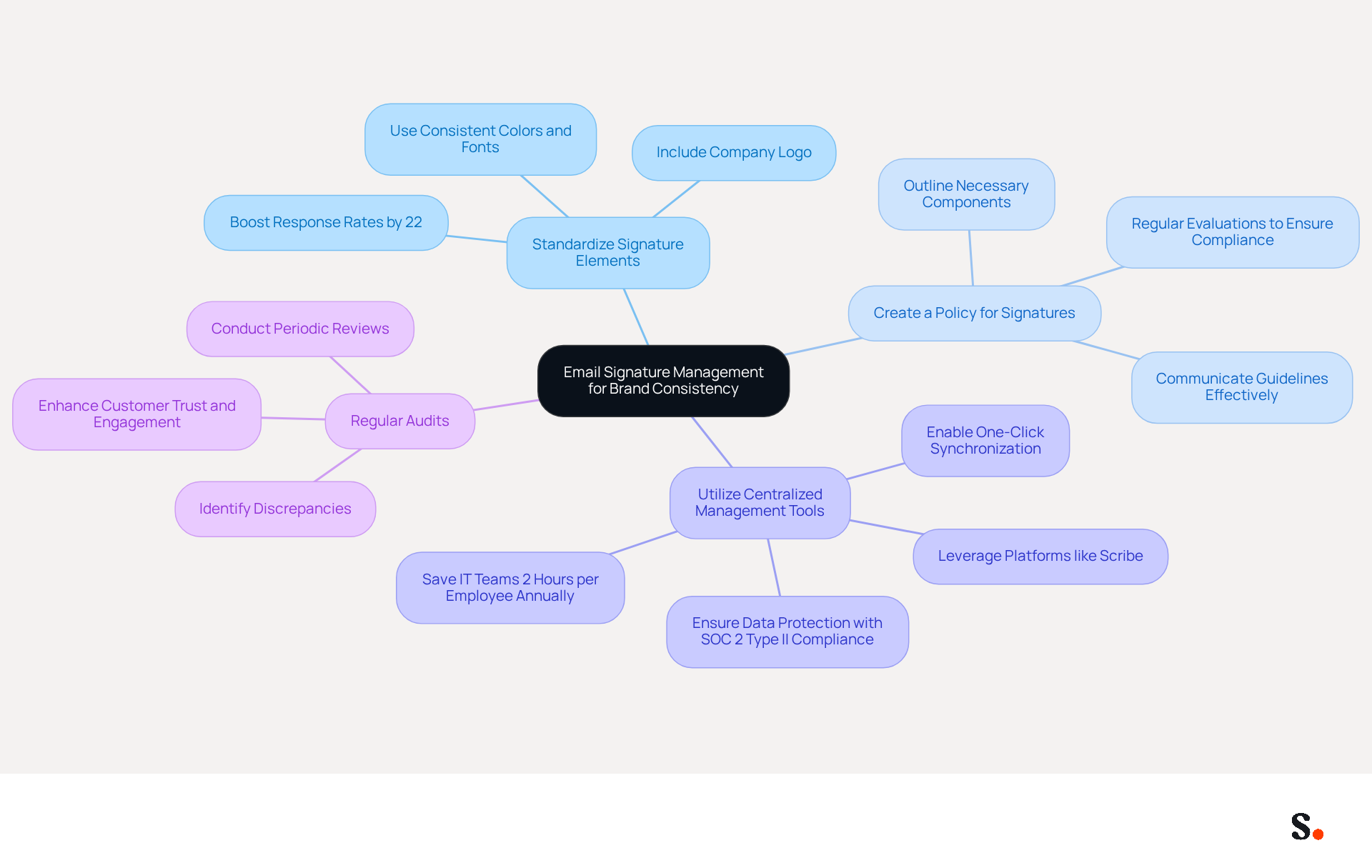
- Standardize Signature Elements: Ensure that all electronic correspondences include essential components such as the company logo, colors, and fonts. This creates a cohesive look that recipients can easily recognize, reinforcing brand identity. Consistent digital identifiers can boost response rates by 22%, highlighting their importance in communication.
- Create a Policy for Signatures: Develop a clear guideline that outlines the necessary components of digital identifiers for all employees. This policy should be communicated effectively to ensure compliance across the organization. Without regular evaluations, inconsistencies in digital identifiers may go unnoticed, undermining brand integrity.
- Utilize Centralized Management Tools: Leverage platforms like Scribe to manage digital identifiers centrally. With Scribe, you can enable one-click synchronization with Google Workspace, allowing for automatic updates of teammate information. This feature streamlines updates and saves IT teams an average of two hours per employee each year, enhancing operational efficiency. Moreover, Scribe's SOC 2 Type II compliance guarantees that your data stays protected while optimizing management of digital identifiers across various clients and companies.
- Regular Audits: Conduct periodic reviews of electronic communications to ensure compliance with branding guidelines. This helps identify any discrepancies and allows for timely corrections. Organizations that maintain consistent communication standards are perceived as more organized, which can positively impact customer trust and engagement. This streamlined approach not only boosts efficiency but also reinforces brand recognition.
Implementing email signature management for enterprises ensures that every email communication reinforces the brand's identity and values, ultimately fostering stronger connections with clients.
Create On-Brand Signature Templates for Cohesive Messaging
To create signature templates that resonate with your audience, it’s essential to ensure cohesive messaging.
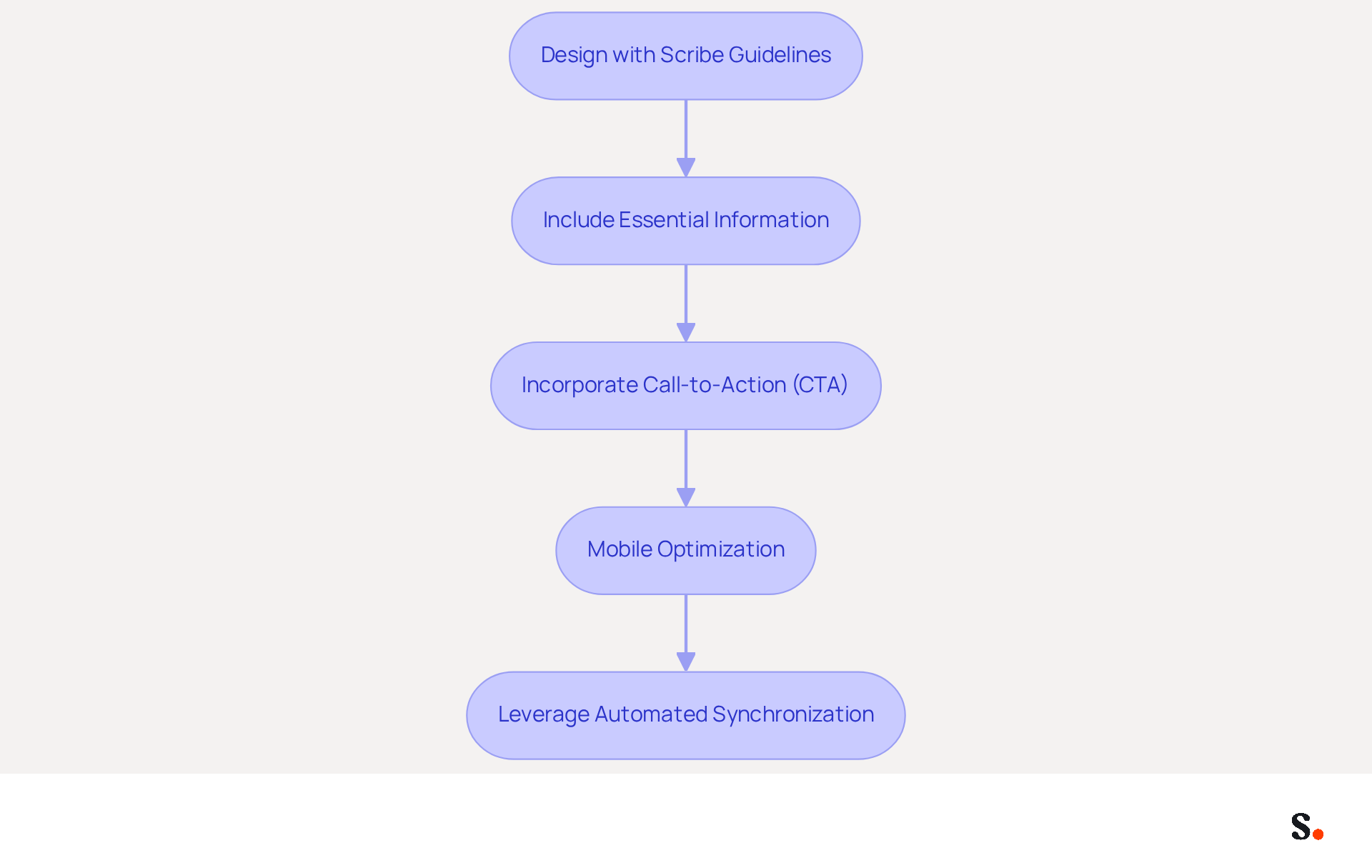
- Design with Scribe Guidelines: Utilize Scribe's guidelines to develop unique templates that incorporate approved colors, fonts, and logos. Aligning with brand identity is crucial; in fact, 80% of businesses believe that branded communication builds trust.
- Include Essential Information: Each endorsement should feature key details such as the employee's name, title, contact information, and links to social media profiles. This not only offers clarity but also boosts engagement opportunities, as 64% of consumers anticipate contact information in correspondence.
- Incorporate Call-to-Action (CTA): Adding a CTA, such as a link to a current campaign or newsletter signup, can transform contact details into effective marketing tools. Ensure that the CTA is visually distinct yet harmonious with the overall design, as personalized messages can achieve an engagement rate of 40%, significantly higher than traditional marketing campaigns.
- Mobile Optimization: Ensure that template designs are mobile-friendly, as many recipients will view messages on their mobile devices. Testing templates across different devices and messaging clients is crucial for compatibility. Not including identification can frustrate 70% of consumers, leading to a loss of trust.
- Leverage Automated Synchronization: With Scribe, you can automate the synchronization of digital identifiers with your business phone system, such as Aircall. This guarantees that any modifications made in your Aircall configuration are automatically reflected in your Scribe identifiers, preserving consistency without necessitating extra effort from your team. Additionally, Scribe's SOC 2 Type II compliance ensures that your data is protected, fulfilling employee data handling requirements for secure automation.
By prioritizing these strategies, businesses can significantly enhance their brand perception and foster lasting consumer relationships.
Integrate Email Signature Management with Existing Tools for Seamless Operations
Managing email signatures can often lead to inconsistencies and inefficiencies without proper integration. To effectively integrate email signature management with existing tools, consider the following best practices:
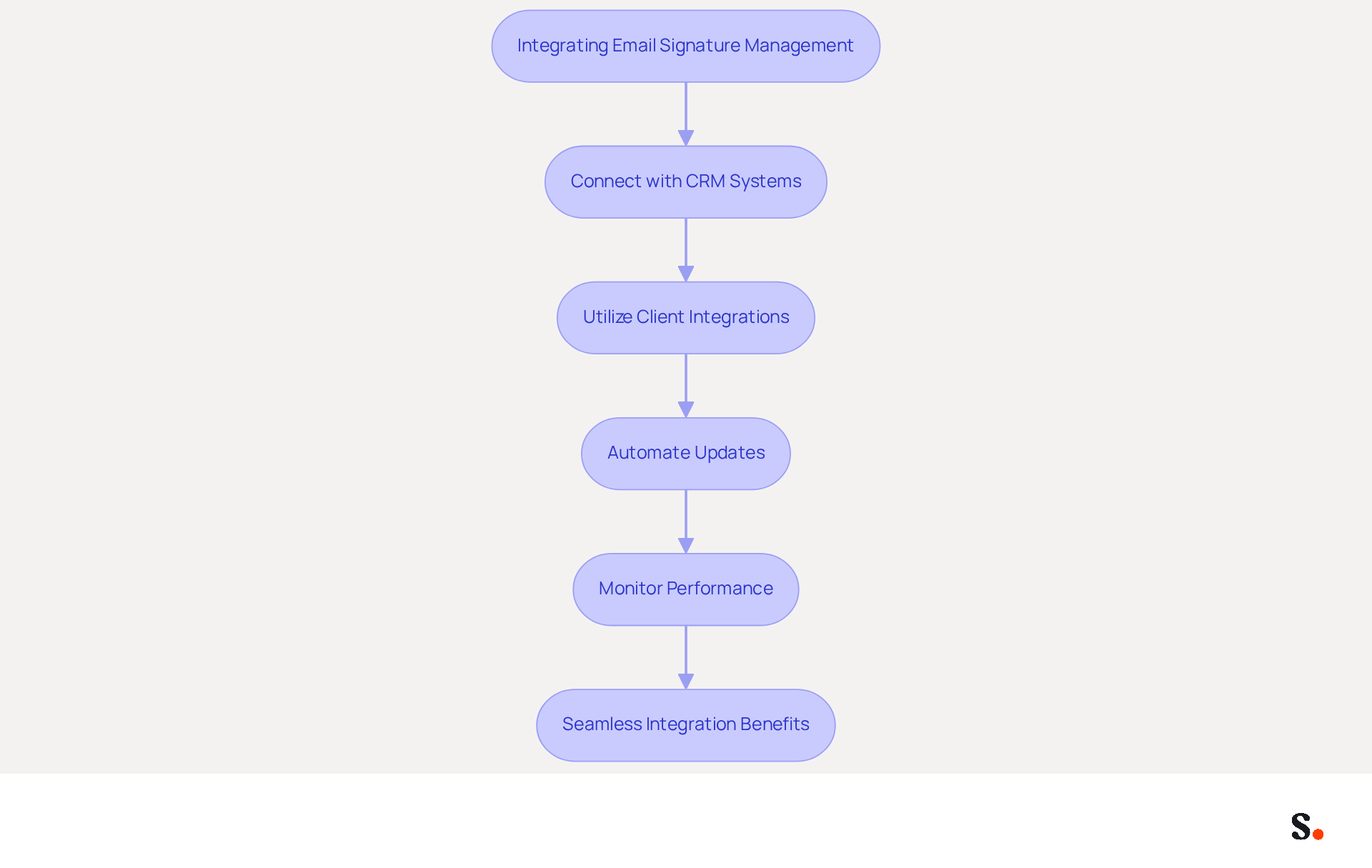
- Connect with CRM Systems: Integrate tools for handling signatures with CRM platforms such as Salesforce or HubSpot. This integration allows for automatic updates of identifiers based on user data, ensuring that they remain precise and pertinent.
- Utilize Client Integrations: Ensure that the tool for handling signatures seamlessly connects with popular clients like Microsoft 365 and Google Workspace. This compatibility enables easy deployment and management of identifiers across the organization.
- Automate Updates: Implement automated updates for digital identifiers to reflect any changes in branding or employee information. This practice reduces the risk of outdated marks being used and ensures adherence to branding guidelines.
- Monitor Performance: Utilize analytics tools to assess the effectiveness of digital identifiers, concentrating on engagement rates and click-through rates. This data can guide future adjustments and enhancements to design and content.
When you integrate digital identifier management with your existing tools, you not only streamline operations but also keep your brand consistent. Ultimately, seamless integration transforms email signature management from a challenge into a strategic advantage.
Measure the Impact of Email Signatures on Engagement and Lead Generation
To effectively measure the impact of email signatures on engagement and lead generation, enterprises should adopt the following strategies:
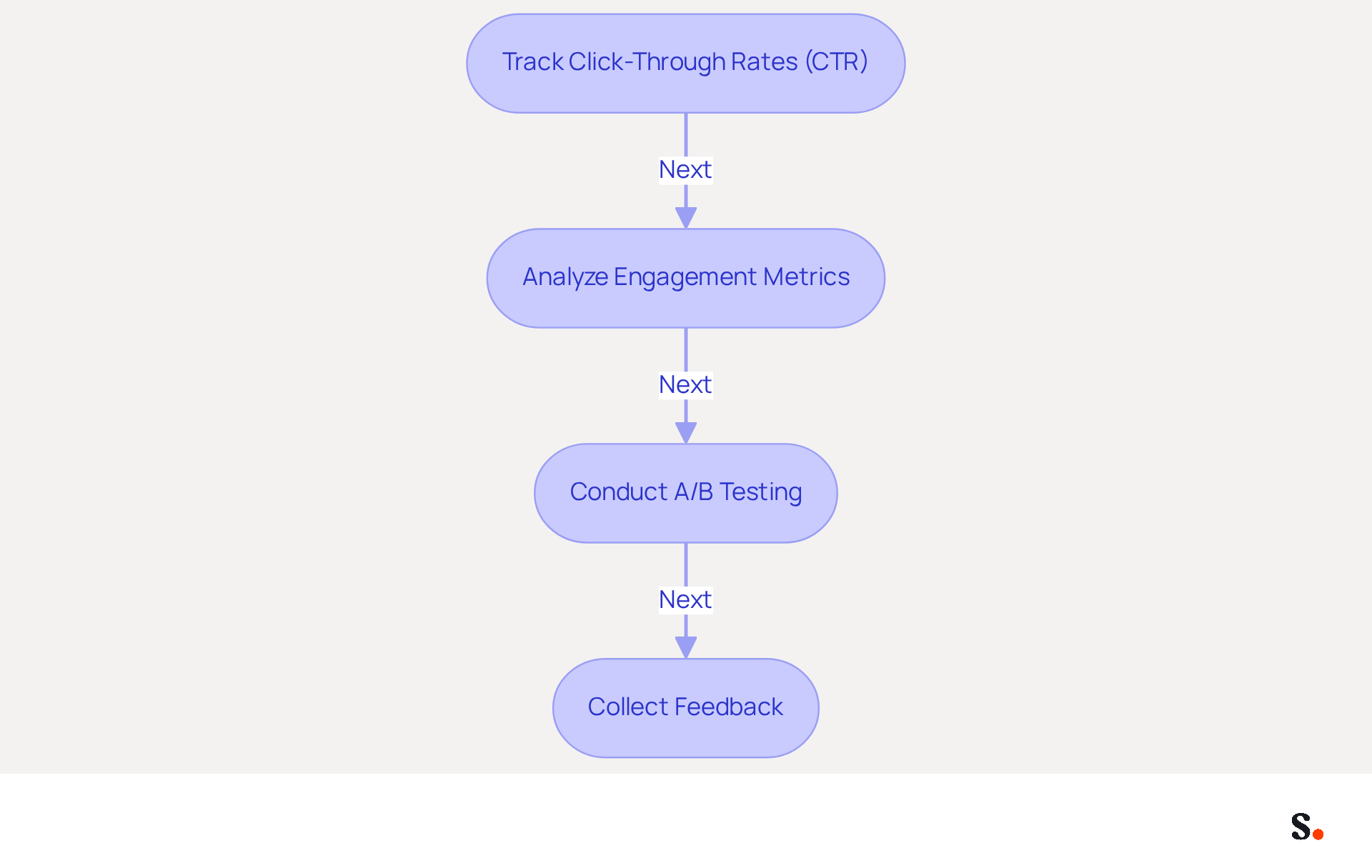
- Track Click-Through Rates (CTR): Integrate tracking mechanisms within digital identifiers to monitor CTR on links, calls-to-action (CTAs), and banners. This metric is crucial for understanding how branded identifiers boost engagement; research indicates they can increase CTR to company websites by 15%.
- Analyze Engagement Metrics: Utilize analytics tools to evaluate key metrics such as open rates, response rates, and conversion rates associated with emails featuring branded logos. Research shows that consistent branding can lead to over a 22% increase in response rates.
- Conduct A/B Testing: Experiment with various design styles and content to identify which versions yield the best results in terms of engagement and lead generation. A/B testing enables businesses to acquire valuable insights into audience preferences, enhancing the overall effectiveness of communications.
- Collect Feedback: Actively seek input from recipients regarding their perceptions and interactions with the identifiers. By understanding how recipients perceive and interact with the identifiers, businesses can make informed design and content choices that truly resonate with their audience.
By implementing these measurement strategies, enterprises can optimize their email marketing efforts, particularly through effective email signature management for enterprises. Without these strategies, enterprises risk underutilizing a powerful tool for engagement and lead generation through email signature management for enterprises.
Conclusion
Effective email signature management is not just a detail; it is a strategic necessity for enterprises aiming to enhance brand consistency and engagement. By implementing strategic best practices, organizations can ensure that every email sent reinforces their brand identity, ultimately fostering stronger connections with clients and stakeholders.
Key strategies include:
- Standardizing signature elements to create a cohesive look.
- Developing clear policies for compliance.
- Utilizing centralized management tools like Scribe for efficient updates.
- Conducting regular audits to help maintain brand integrity.
- Creating on-brand signature templates.
- Integrating with existing tools.
- Measuring the impact of email signatures on engagement metrics.
In today's competitive landscape, the importance of consistent branding through email signatures is paramount, as it directly influences client perceptions and engagement. By prioritizing these best practices, enterprises can transform their email signature management into a powerful marketing tool that not only enhances brand recognition but also drives engagement and lead generation. By embracing these strategies, organizations can ensure that every email interaction not only reflects their brand but also contributes meaningfully to their marketing objectives.
Frequently Asked Questions
What is the importance of standardizing email signature elements?
Standardizing email signature elements, such as the company logo, colors, and fonts, creates a cohesive look that recipients can easily recognize, reinforcing brand identity. Consistent digital identifiers can boost response rates by 22%.
How can organizations create a policy for email signatures?
Organizations should develop a clear guideline that outlines the necessary components of digital identifiers for all employees. This policy must be communicated effectively to ensure compliance across the organization.
What tools can be used for centralized management of email signatures?
Platforms like Scribe can be utilized for centralized management of digital identifiers. Scribe allows for one-click synchronization with Google Workspace, enabling automatic updates of teammate information.
What are the benefits of using Scribe for email signature management?
Using Scribe enhances operational efficiency by saving IT teams an average of two hours per employee each year. Additionally, Scribe's SOC 2 Type II compliance ensures that data remains protected while managing digital identifiers.
Why are regular audits important for email signature management?
Regular audits help organizations ensure compliance with branding guidelines by identifying discrepancies in electronic communications. Maintaining consistent communication standards positively impacts customer trust and engagement.
How does effective email signature management contribute to brand identity?
Implementing email signature management ensures that every email communication reinforces the brand's identity and values, ultimately fostering stronger connections with clients.
List of Sources
- Establish Brand Consistency Through Effective Email Signature Management
- The impact of email signatures on your branding (https://signitic.com/en/resources/the-impact-of-email-signatures-on-your-branding)
- Why Email Signatures Must Be In Your 2026 Marketing Plan | Rocketseed (https://rocketseed.com/blog/what-are-the-biggest-email-trends-for-2026)
- The Complete Email Signature Guide 2026: Best Practices and Policy (https://opensense.com/complete-email-signature-guide)
- How Consistent Email Signatures Strengthen Company Identity - Signite (https://signite.io/blog/how-consistent-email-signatures-strengthen-company-identity)
- Create On-Brand Signature Templates for Cohesive Messaging
- The impact of email signatures on your branding (https://signitic.com/en/resources/the-impact-of-email-signatures-on-your-branding)
- 15 Ways Email Signatures Can Boost Your Brand | Rocketseed (https://rocketseed.com/blog/15-ways-email-signature-branding-can-boost-your-brand)
- Research Recap: Branded Email Signatures Increase Company Recognition, Trust - Demand Gen Report (https://demandgenreport.com/industry-news/research-recap-branded-email-signatures-increase-company-recognition-trust/47252)
- Integrate Email Signature Management with Existing Tools for Seamless Operations
- CRM Email Signature Integration (https://exclaimer.com/email-signature-handbook/integrating-email-signatures-with-crm-platforms)
- Top Software Integrations to Supercharge Your Email Signature Management (https://mysignature.io/blog/software-for-email-signature-management)
- 40+ Email Signature Statistics for 2026 (Data + Insights) (https://wavecnct.com/blogs/email-signature-statistics)
- Salesforce Connector: Now Live! (https://letsignit.com/blog/salesforce-integration)
- Measure the Impact of Email Signatures on Engagement and Lead Generation
- 40+ Email Signature Statistics for 2026 (Data + Insights) (https://wavecnct.com/blogs/email-signature-statistics)
- Email Signature Analytics: Unlocking Potential for Business Growth (https://wisestamp.com/blog/email-signature-analytics)
- Why Email Signatures Must Be In Your 2026 Marketing Plan | Rocketseed (https://rocketseed.com/blog/2026-marketing-plan-email-signatures)
- Why Team Email Signatures Matter More Than You Think: The Hidden Impact on Brand Trust and Customer Experience (https://getmailbird.com/why-team-email-signatures-matter-brand-trust)
- Research Recap: Branded Email Signatures Increase Company Recognition, Trust - Demand Gen Report (https://demandgenreport.com/industry-news/research-recap-branded-email-signatures-increase-company-recognition-trust/47252)
Get started with Scribe
Manage signatures across your whole team
Free 14-day trial — no credit card.