4 Best Practices for Enterprise Email Signature Management
For enterprises, establishing a strong brand identity is essential, and email signatures are a key component of this strategy. Implementing effective email
Sophie Grant
Email Signature Specialist, Scribe

On this page
- Introduction
- Establish Brand Consistency Through Effective Email Signature Management
- Leverage Automation for Streamlined Email Signature Updates
- Integrate Email Signatures into Marketing Campaigns for Enhanced Engagement
- Ensure Compliance and Security in Email Signature Management
- Conclusion
- Frequently Asked Questions
- List of Sources
Introduction
For enterprises, establishing a strong brand identity is essential, and email signatures are a key component of this strategy. Implementing effective email signature management practices can help organizations ensure brand consistency, enhance marketing engagement, and maintain compliance with legal standards. This complexity often leads to inconsistencies and missed opportunities. How can enterprises streamline this process while maximizing the impact of their email communications? This article outlines four best practices that simplify email signature management while enhancing brand visibility and trust.
Establish Brand Consistency Through Effective Email Signature Management
To achieve brand consistency through email signatures, organizations must adopt strategic best practices that reinforce their identity:
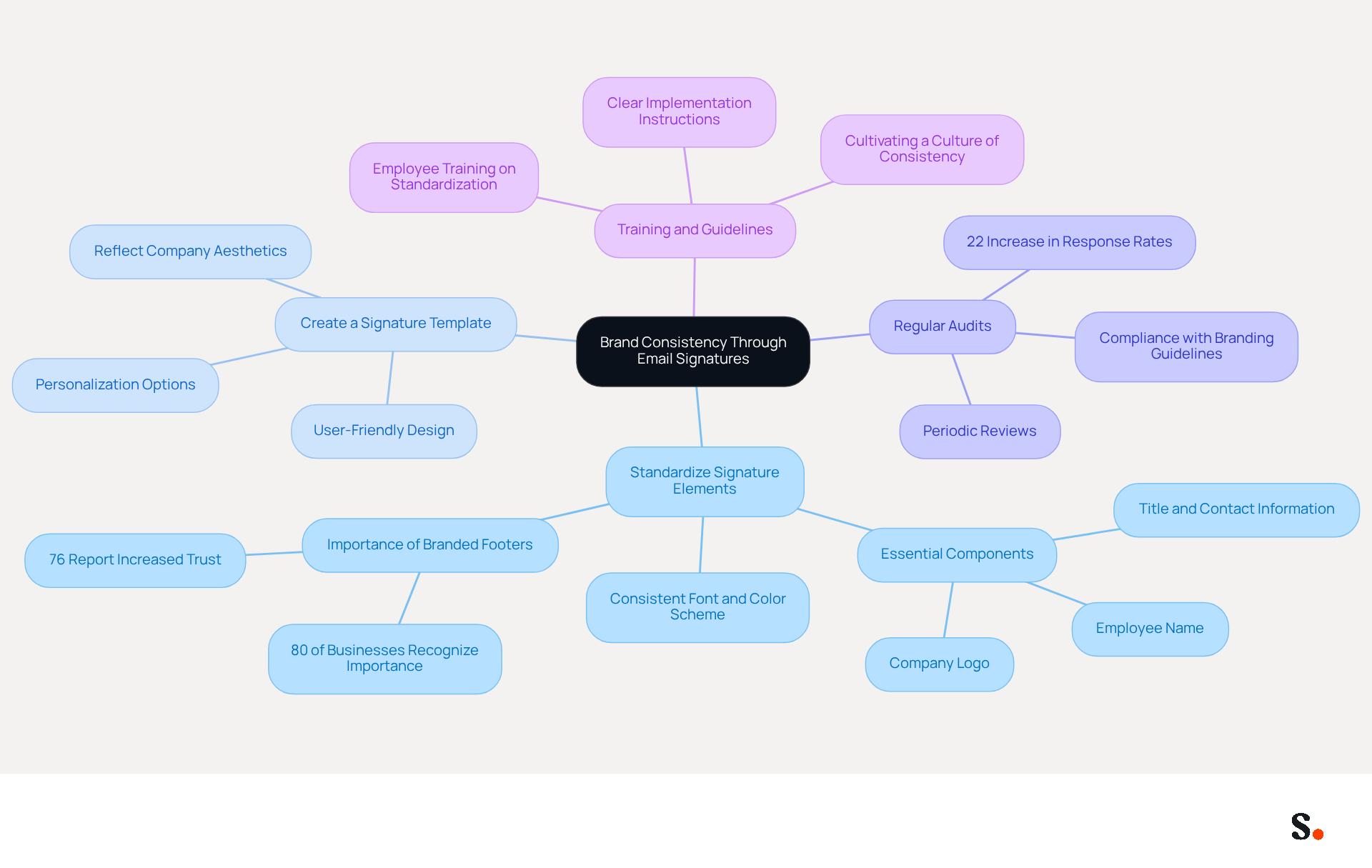
- Standardize Signature Elements: It is essential to use a consistent font, color scheme, and layout that aligns with the visual identity. Ensure that all sign-offs include essential components such as the company logo, employee name, title, and contact information. A striking 80% of businesses recognize the importance of branded email footers for effective branding, and 76% of recipients report increased trust in the sender when footers are professionally branded.
- Create a Signature Template: Develop a user-friendly template that all employees can easily adopt. This template should reflect the company's aesthetics while allowing for personalization, such as including individual employee details. A well-crafted mark can enhance brand recognition and ensure that essential information is readily accessible, contributing to a cohesive brand experience.
- Regular Audits: Conduct periodic reviews of digital identifiers to ensure compliance with branding guidelines and that they contain current information. Regular audits are crucial for spotting discrepancies and ensuring everyone is on the same page. Consistent email formats, facilitated by enterprise email signature management, can lead to a 22% increase in email response rates, highlighting the importance of maintaining accuracy and relevance.
- Training and Guidelines: Provide training for employees on the importance of using standardized marks and offer clear instructions for implementation. This can include visual examples and a step-by-step process for setting up their identifiers. Educating employees on the effect of professional identifiers can cultivate a culture of consistency, ultimately enhancing customer trust and engagement.
Ultimately, a cohesive approach to email signatures not only strengthens brand identity but also fosters trust and engagement with every communication.
Leverage Automation for Streamlined Email Signature Updates
To optimize email signature management, organizations must adopt effective automation strategies:
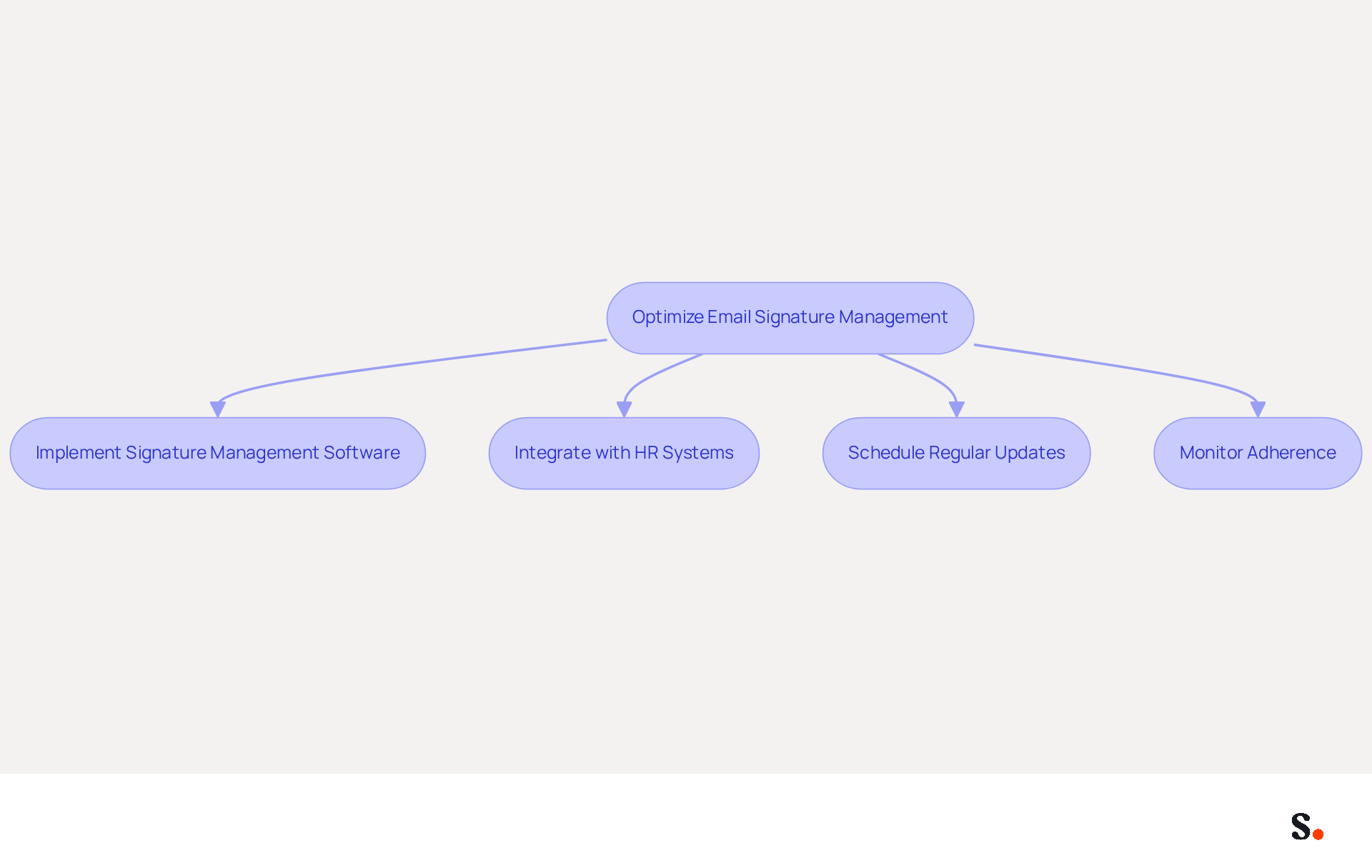
- Implement Signature Management Software: Use tools like Scribe that enable centralized control of email identifiers. This software automatically refreshes identifiers for all employees, ensuring consistency and compliance. With Scribe, teammates' identification information is auto-filled using your business phone system as a data source, eliminating manual updates entirely.
- Integrate with HR Systems: Connect the document management tool with HR systems to automatically pull employee data. Without integration, keeping employee data up-to-date can be a cumbersome task, but this integration ensures that endorsements reflect the latest information, such as job titles and contact details. Scribe's automated synchronization with platforms like Aircall ensures that any changes made in your configuration are reflected in real-time, enhancing brand consistency.
- Schedule Regular Updates: Establish a timetable for consistent updates to email branding, particularly when there are modifications in branding or legal requirements. Automation can facilitate these updates without requiring manual intervention. Scribe's SOC 2 Type II certification ensures that your data is managed securely during these processes.
- Monitor Adherence: Utilize analytics features within the document management software to track adherence and identify any discrepancies. This assists in maintaining product integrity and ensuring that all communications meet legal standards. With Scribe, you can be confident that your management of digital identifiers meets the highest security standards, including adherence to GDPR and CCPA.
Ultimately, embracing these practices not only streamlines operations but also strengthens enterprise email signature management, thereby fortifying brand integrity.
Integrate Email Signatures into Marketing Campaigns for Enhanced Engagement
To maximize the impact of email signatures in marketing campaigns, organizations must adopt strategic best practices:
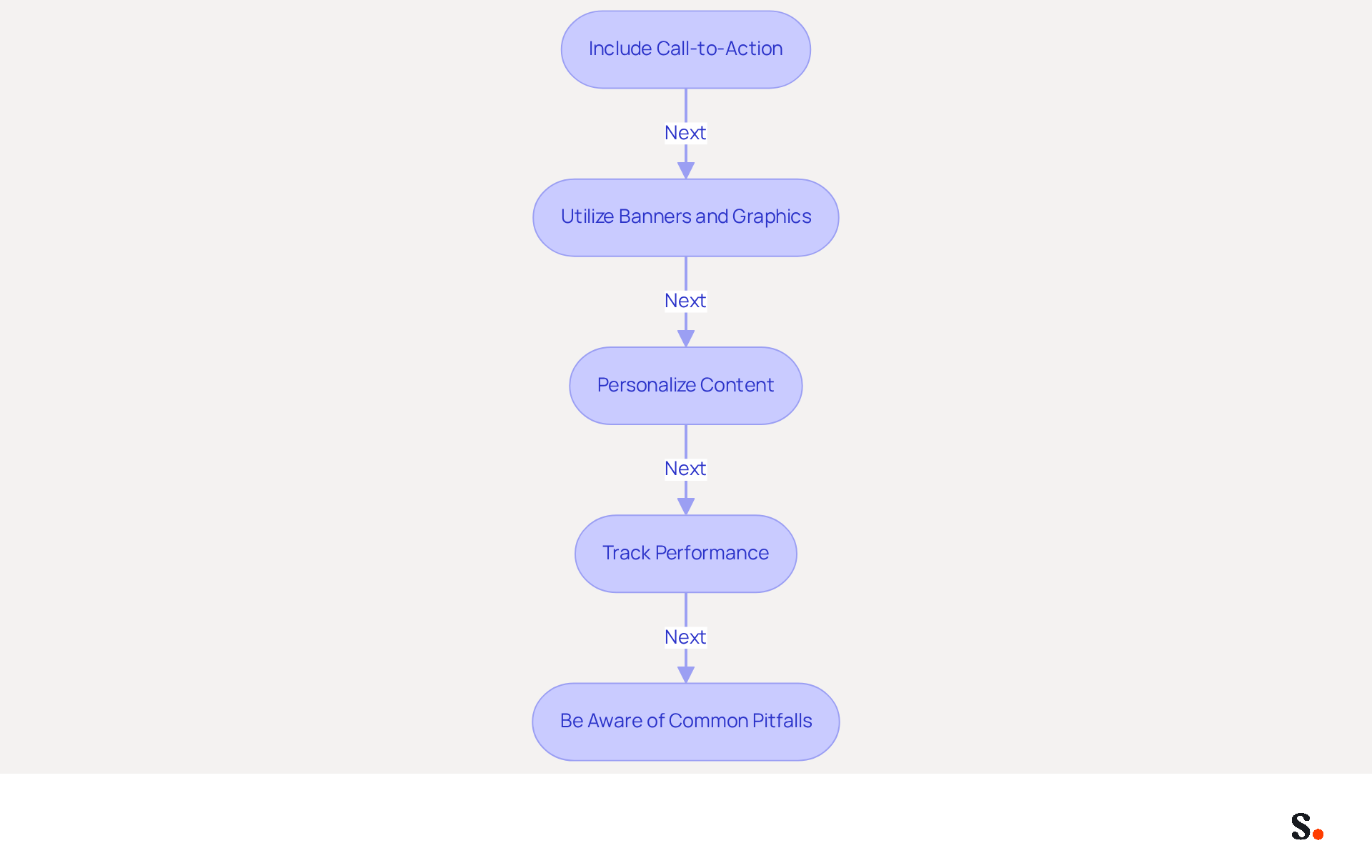
- Include Call-to-Action (CTA): Incorporate a clear and compelling CTA in the message footer, such as links to promotional offers, upcoming events, or new product launches. This method can result in a 22% increase in clicks and a 32% rise in responses, encouraging recipients to engage with the brand (source: Newoldstamp).
- Utilize Banners and Graphics: Add visually appealing banners or graphics that align with current marketing campaigns. Visually appealing graphics enhance the message footer's appearance and draw attention. This can lead to higher interaction rates. Research indicates that using contrasting colors in banners effectively captures attention (source: Sophia Bernazzani Barron).
- Personalize Content: Tailor the message content based on the recipient's demographics or previous interactions. Personalized sign-offs can achieve a 29% open rate and a 41% click-through rate, fostering a stronger connection with the audience and increasing engagement (source: Newoldstamp).
- Track Performance: Implement tracking tools to measure the effectiveness of the marketing elements within digital communications. By analyzing metrics like click-through rates and conversions, organizations can gain insights and adjust their strategies accordingly. Regular analysis of campaigns helps identify effective formats and refine approaches (source: Newoldstamp).
- Be Aware of Common Pitfalls: While incorporating digital identifiers into marketing campaigns, be cautious of potential misapplications. Misapplications can undermine the effectiveness of your marketing efforts, such as overloading them with too much information or failing to update them regularly.
By implementing these strategies, organizations can transform routine communications into powerful marketing tools that enhance brand visibility. Ultimately, these practices can lead to improved customer interactions and increased brand awareness.
Ensure Compliance and Security in Email Signature Management
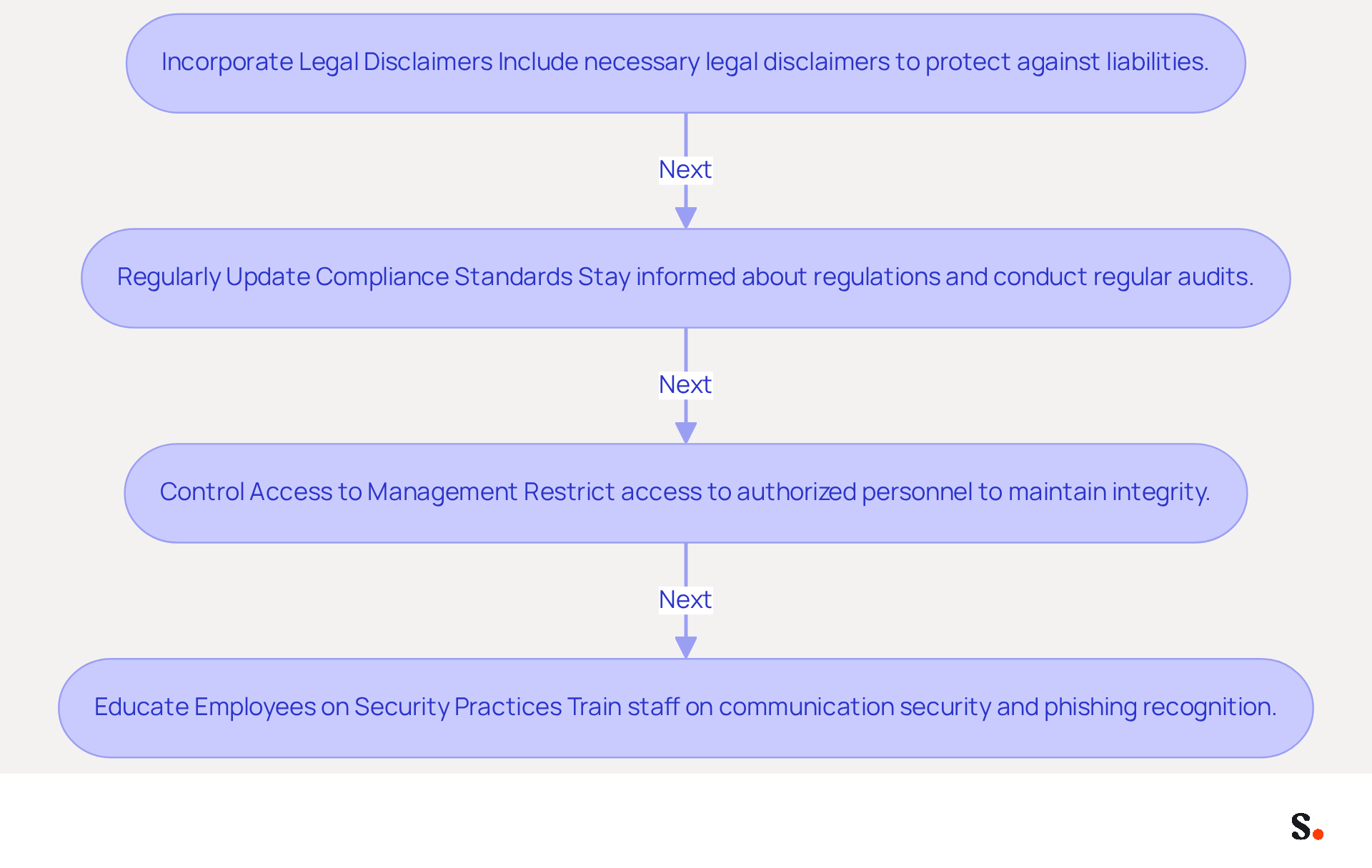
Effective enterprise email signature management is essential for maintaining compliance and security in organizational communications. To ensure compliance and security in email signature management, organizations should implement the following best practices:
- Incorporate Legal Disclaimers: Including necessary legal disclaimers, such as confidentiality notices or regulatory statements, is crucial. This practice not only protects the organization from potential legal liabilities but also ensures transparency in communications. In regulated sectors, electronic identifiers function as adherence tools, ensuring that all outgoing messages meet stringent standards.
- Regularly Update Compliance Standards: Organizations must stay informed about relevant regulations, including GDPR and HIPAA, and revise their contact details accordingly. Regular audits can assist in identifying compliance gaps, ensuring that all approvals align with legal requirements. Without regular audits, organizations risk falling out of compliance, which can lead to significant legal repercussions. For example, companies in the financial sector must comply with SEC and FINRA regulations, where deceptive communications can result in regulatory penalties.
- Control Access to Management: Restricting access to the management system for signatures to authorized personnel only is crucial. Implementing role-based access controls prevents unauthorized modifications, preserving the integrity of the documents. Failure to control access can lead to unauthorized changes, jeopardizing compliance and exposing the organization to legal risks. This is especially crucial in sectors where electronic correspondence must contain specific legal wording to prevent regulatory risks.
- Educate Employees on Security Practices: Providing training for staff on the significance of communication security and adherence is essential. This training should cover best practices for handling sensitive information and recognizing potential phishing attempts. Studies indicate that having consistent branding and professional signatures boosts trust and credibility, so it’s vital for employees to understand their role in maintaining these standards.
By adhering to these compliance and security protocols, organizations can safeguard their reputation and ensure that their enterprise email signature management reflects professionalism and legal soundness. Ultimately, neglecting these protocols can expose organizations to legal challenges and damage their professional reputation.
Conclusion
Effective email signature management is essential for enterprises striving to uphold brand integrity and enhance communication. Implementing best practices - like standardizing signature elements and leveraging automation - helps organizations create a cohesive and professional image that resonates with their audience.
Key strategies discussed include:
- The importance of using a consistent template
- Conducting regular audits
- Providing employee training to foster a culture of adherence to branding guidelines
Using tools like Scribe for automation streamlines management and keeps signatures up-to-date and compliant with GDPR and CCPA. The integration of email signatures into marketing efforts can further amplify engagement, driving higher click-through rates and enhancing brand visibility.
In conclusion, prioritizing email signature management is a critical strategy for enhancing brand perception and customer trust. Organizations should take proactive steps to implement these best practices, ensuring that every email sent reflects their commitment to professionalism and compliance. By embracing these strategies, organizations can elevate their communications and foster stronger relationships with their audience.
Frequently Asked Questions
Why is brand consistency important in email signatures?
Brand consistency in email signatures reinforces the organization's identity and enhances trust among recipients. Studies show that 76% of recipients report increased trust in senders with professionally branded footers.
What elements should be standardized in email signatures?
Email signatures should have a consistent font, color scheme, and layout that align with the company's visual identity. Essential components include the company logo, employee name, title, and contact information.
How can organizations create a signature template?
Organizations should develop a user-friendly template that reflects the company's aesthetics while allowing for personalization, such as individual employee details. This helps enhance brand recognition and ensures essential information is accessible.
Why are regular audits of email signatures necessary?
Regular audits are crucial for ensuring compliance with branding guidelines and that email signatures contain current information. They help spot discrepancies and maintain consistent email formats, which can lead to a 22% increase in email response rates.
What training should be provided to employees regarding email signatures?
Employees should receive training on the importance of using standardized email signatures, along with clear instructions for implementation. This can include visual examples and a step-by-step process for setting up their identifiers.
How does effective email signature management impact brand identity?
A cohesive approach to email signatures strengthens brand identity and fosters trust and engagement with every communication, ultimately enhancing customer relationships.
List of Sources
- Establish Brand Consistency Through Effective Email Signature Management
- Email Signature Best Practices for 2026 (+ 15 Pro Examples) (https://wavecnct.com/blogs/email-signature-best-practices-2026)
- The impact of email signatures on your branding (https://signitic.com/en/resources/the-impact-of-email-signatures-on-your-branding)
- Research Recap: Branded Email Signatures Increase Company Recognition, Trust - Demand Gen Report (https://demandgenreport.com/industry-news/research-recap-branded-email-signatures-increase-company-recognition-trust/47252)
- Why Email Signatures Must Be In Your 2026 Marketing Plan | Rocketseed (https://rocketseed.com/blog/what-are-the-biggest-email-trends-for-2026)
- Email Signatures and Brand Consistency: A Guide for Small Businesses (https://designhill.com/design-blog/email-signature-brand-consistency-guide)
- Leverage Automation for Streamlined Email Signature Updates
- Email Signature Trends 2026: Centralized Control & Automation | SIGNandGO posted on the topic | LinkedIn (https://linkedin.com/posts/signngo_email-signature-trends-to-watch-in-2026-activity-7401523471786217473-zAVL)
- 4 Best Practices for Your Email Signature Management Solution (https://scribe-mail.com/en-US/blog/4-best-practices-for-your-email-signature-management-solution)
- How to Automate Email Signature Updates | Exclaimer (https://exclaimer.com/email-signature-handbook/automate-email-signature-updates)
- 40+ Email Signature Statistics for 2026 (Data + Insights) (https://wavecnct.com/blogs/email-signature-statistics)
- Integrate Email Signatures into Marketing Campaigns for Enhanced Engagement
- 12 clever ways to use your email signature to support your marketing campaigns (https://blog.hubspot.com/blog/tabid/6307/bid/31054/10-clever-ways-your-email-signature-can-support-your-marketing.aspx)
- 10 ideas for marketing campaigns in email signatures (https://signitic.com/en/resources/10-ideas-for-marketing-campaigns-in-email-signatures)
- 6 Ways to Use Email Signature to Support Marketing Campaigns (https://clearout.io/blog/use-email-signature-to-support-marketing-campaigns)
- How to Leverage an Email Signature Marketing Campaign for CX (https://gorgias.com/blog/email-signature-marketing)
- How to Run a Successful Email Signature Marketing Campaign - NEWOLDSTAMP - NEWOLDSTAMP (https://newoldstamp.com/blog/email-signature-marketing-guide)
- Ensure Compliance and Security in Email Signature Management
- Best Practices for Email Signatures for Business Owners (https://scribe-mail.com/en-US/blog/best-practices-for-email-signatures-for-business-owners)
- Why Email Signature Management Matters for Your Business (https://vectorchoice.com/blog/why-email-signature-management-is-more-important-than-you-think)
- Email Signature Management for US Financial Services (https://rocketseed.com/blog/email-signature-management-us-financial-services)
- Stay Compliant, Consistent, and Secure with INKY’s Email Signatures (https://inky.com/en/blog/stay-compliant-consistent-and-secure-with-inkys-email-signatures)
Get started with Scribe
Manage signatures across your whole team
Free 14-day trial — no credit card.