Maximize Impact with an On Behalf of Email Signature Strategy
In a digital landscape where every email interaction matters, maximizing the impact of communications is essential. An effective "On Behalf of" email signature
Sophie Grant
Email Signature Specialist, Scribe

Introduction
In a digital landscape where every email interaction matters, maximizing the impact of communications is essential. An effective "On Behalf of" email signature strategy not only enhances brand visibility but also serves as a powerful marketing tool that can drive engagement and foster trust.
Despite recognizing the importance of email signatures, organizations often find themselves lost in the complexities of implementation, often overlooking essential components and best practices that can transform their email signatures into compelling brand ambassadors.
Understanding these key elements can transform email signatures into strategic assets that enhance brand engagement.
Get started with Scribe
Manage signatures across your whole team
Free 14-day trial — no credit card.
Identify Essential Components of an Email Signature
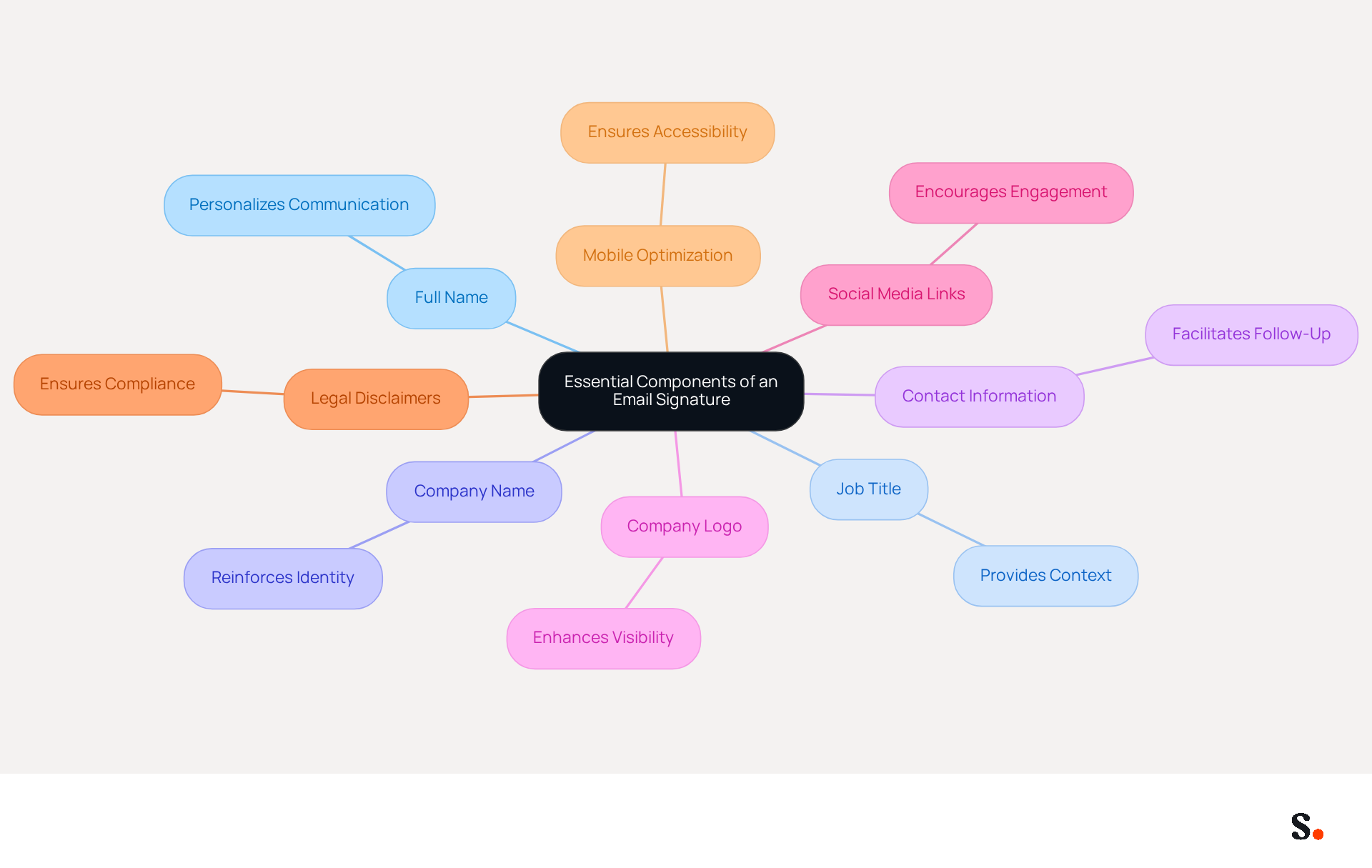
To maximize the impact of email communications, an effective email signature must include several essential components:
- Full Name: Clearly stating the sender's name personalizes the communication, making it more relatable.
- Job Title: Including the sender's position provides context about their role within the company, enhancing credibility.
- Company Name: Reinforcing identity helps recipients recognize the organization and fosters trust.
- Contact Information: Providing a phone number and email address facilitates easy follow-up, ensuring that recipients can reach out without hassle.
- Company Logo: Incorporating a logo enhances visibility and professionalism, making the signature visually appealing.
- Social Media Links: Adding links to relevant social media profiles encourages further engagement and connection with the brand.
- Legal Disclaimers: Including necessary legal disclaimers ensures compliance with regulations, protecting the organization legally.
- Mobile Optimization: Ensuring that contact details are mobile-friendly is essential, as many recipients will view messages on their mobile devices.
Managing email signatures manually can lead to inconsistencies and wasted time. Scribe makes it easy to manage these components through automated synchronization with your business phone system, ensuring that any modifications made in your Aircall configuration are automatically reflected in your correspondence. This not only saves time but also guarantees brand consistency across all communications. Moreover, Scribe's SOC 2 Type II compliance ensures that your data is protected, fulfilling employee data management requirements for secure automation of identifiers.
Research shows that incorporating a call-to-action (CTA) in message footers can increase clicks by 371% and sales by 1617%. By integrating Scribe's capabilities, businesses can leverage these statistics to enhance engagement, as strategic CTAs convert 40% better than generic links. Furthermore, organizations employing effective management of their digital identifiers have reported an average click-through rate of 12% on banners, illustrating the tangible advantages of well-structured elements. Ultimately, leveraging Scribe's capabilities transforms email signatures into powerful tools for engagement and brand representation on behalf of email signature.
Incorporate Branding Elements for Consistency
To effectively establish a brand identity through email signatures, organizations must adhere to specific best practices:
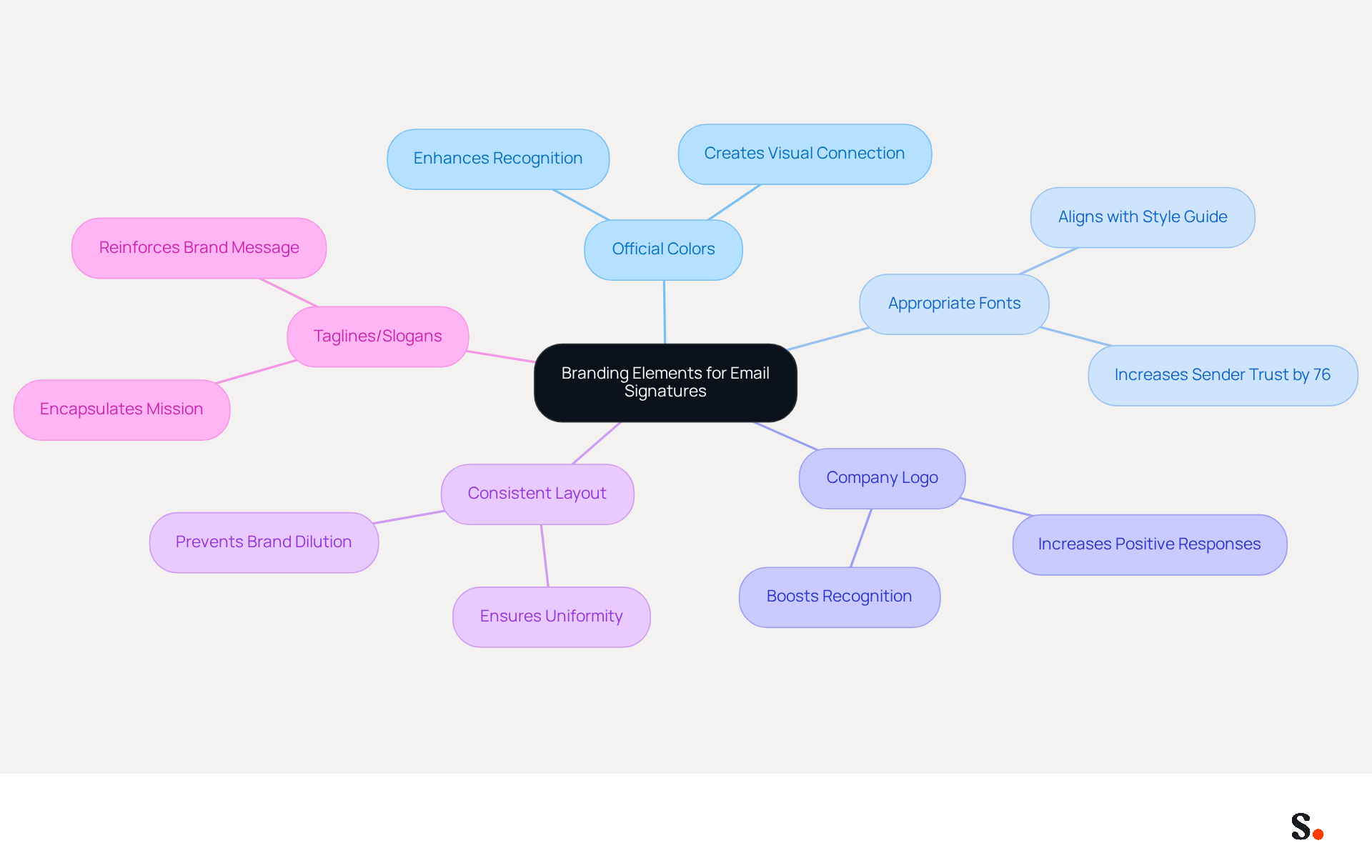
- Use Official Colors: Incorporate your company's designated colors in the signature design to create a visual connection with your identity. Studies show that using consistent color schemes significantly enhances recognition.
- Select Appropriate Fonts: Choose fonts that align with your style guide to ensure readability and professionalism. Research indicates that using consistent fonts can enhance sender trust by up to 76%.
- Include the Company Logo: Position the logo prominently to enhance recognition. When you place your logo well, it not only reinforces your identity but also boosts the chances of getting positive responses from recipients.
- Maintain a Consistent Layout: Use a uniform structure for all signatures within the organization to ensure consistency. Without a uniform structure, organizations risk diluting their brand identity.
- Add Taglines or Slogans: If applicable, include a tagline that encapsulates your organization's mission or values. Taglines can serve as a quick reminder of your company's purpose, further solidifying your message.
By implementing these branding elements, organizations can create a strong visual identity that resonates with recipients and reinforces their brand message. For example, a multinational corporation that standardized its digital communication identifiers worldwide experienced a 25% rise in traffic to targeted landing pages, showing how consistent branding boosts engagement in digital correspondence. Furthermore, companies that implement consistent branding see a 22% rise in response rates, emphasizing the marketing potential of well-designed communication identifiers. With Scribe, every modification made in your Aircall setup will automatically be reflected in your communication identifiers, ensuring that your branding stays consistent and current across all interactions. This seamless integration not only saves time but also enhances the overall user experience, allowing marketing teams to maintain control over their branding elements. As Sophie Grant, an Email Signature Specialist, observes, 'A well-designed email footer, particularly one that includes a headshot, can significantly enhance memorability, credibility, and personal connection in every email sent.' Ultimately, the effectiveness of your email signatures, particularly on behalf of email signature, can significantly influence how your brand is perceived in the digital landscape.
Leverage Email Signatures as Marketing Opportunities
Email identifiers represent untapped marketing potential that organizations can leverage for greater impact. Here are some strategies to effectively utilize them:
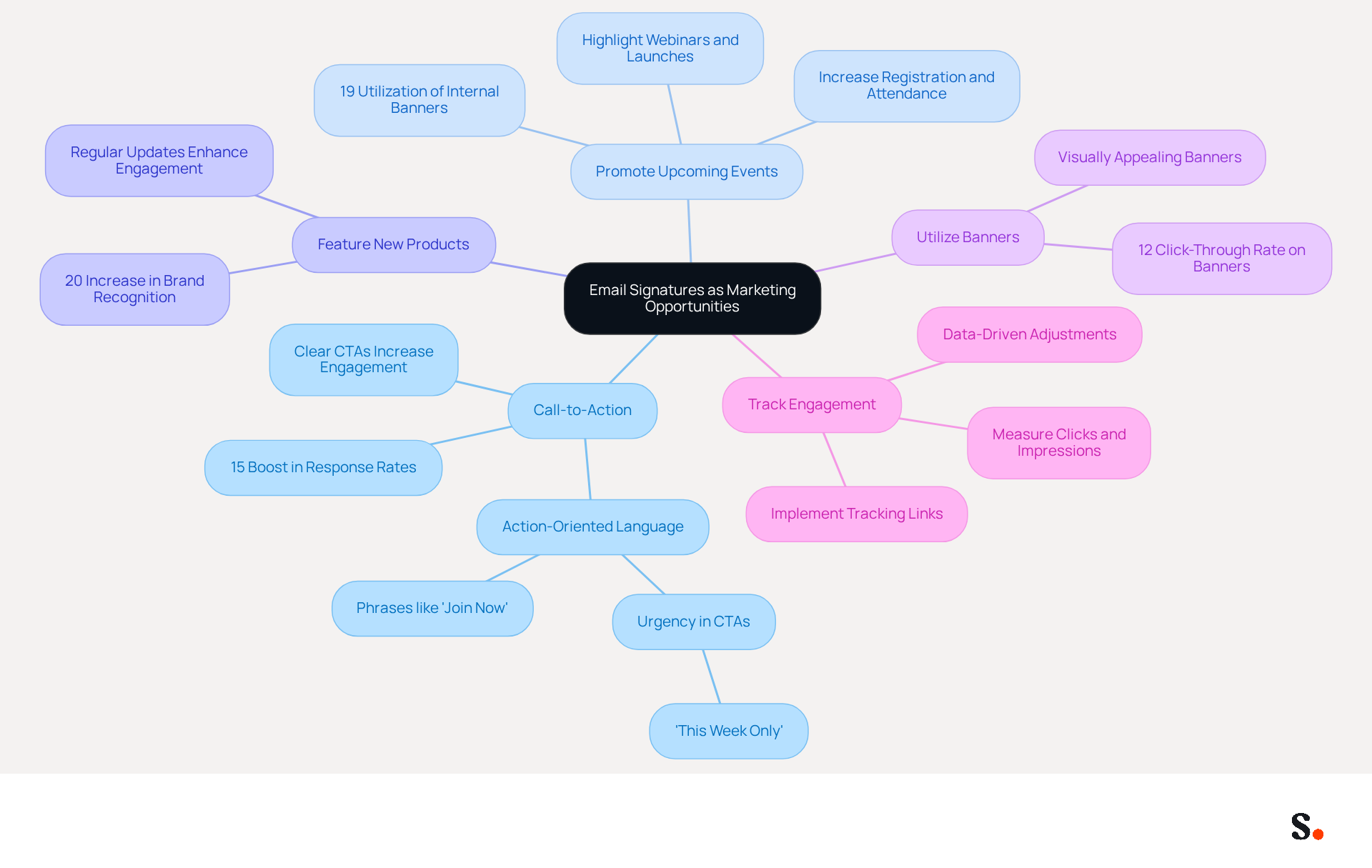
- Include a Call-to-Action (CTA): Adding a clear CTA directs recipients to specific actions, such as visiting a website or signing up for a newsletter. Studies indicate that action-oriented language in CTAs can lead to a notable increase in engagement rates.
- Promote Upcoming Events: Highlighting webinars, product launches, or special promotions in the email footer can drive attendance and interest. This underutilization represents a gap in potential engagement strategies, as only 19% of organizations currently utilize internal banners.
- Feature New Products or Services: Regularly updating the branding to showcase new offerings keeps the content fresh and engaging, which can lead to a 20% increase in brand recognition, as supported by research on effective communication strategies.
- Utilize Banners: Incorporating visually appealing banners that promote current campaigns or initiatives can enhance visibility. Scribe's average click-through rate on banners is 12%, demonstrating the effectiveness of strategic CTA incorporation.
- Track Engagement: Implementing tracking links allows businesses to measure the effectiveness of marketing elements in the email footer, enabling data-driven adjustments. Organizations that assess their messaging performance observe significant enhancements in marketing efficiency and customer interaction.
By optimizing these strategies, organizations can transform their email footers into powerful marketing assets that drive measurable results. Furthermore, sustaining a unified visual identity through consistent design elements is essential for enhancing brand recognition and professionalism, as emphasized in best practices for digital communication design.
Implement Best Practices for Design and Functionality
To create effective email signatures, a strategic approach to design and functionality is essential, focusing on clarity and engagement.
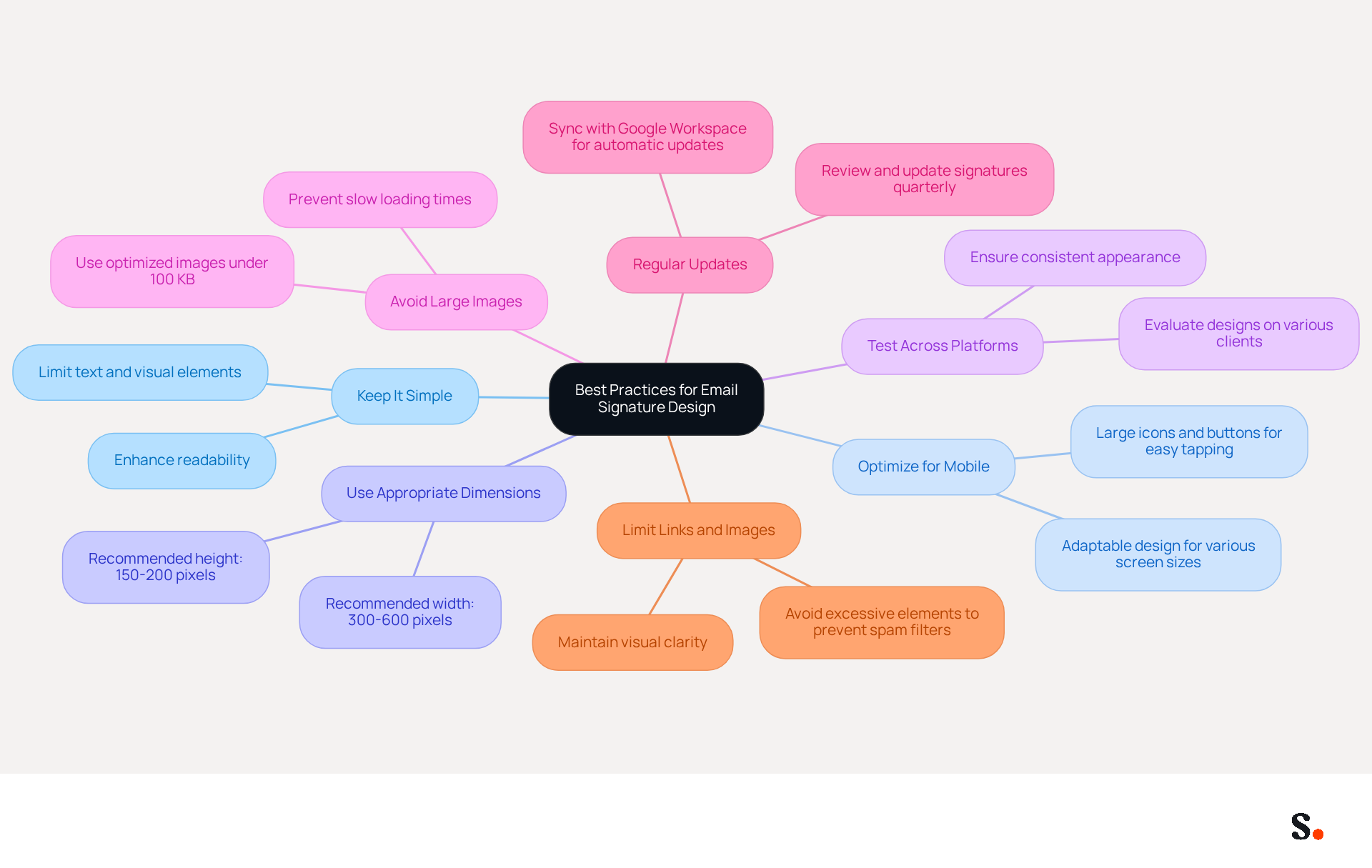
- Keep It Simple: Limit text and visual elements to avoid clutter. A clean design enhances readability and ensures that essential information stands out.
- Optimize for Mobile: With over 50% of messages accessed on mobile devices, ensure that identifiers are adaptable and display correctly across various screen sizes. This includes using large enough icons and buttons for easy tapping.
- Use Appropriate Dimensions: Stick to recommended dimensions, ideally between 300-600 pixels wide and 150-200 pixels high, to ensure compatibility across various clients and devices.
- Test Across Platforms: Regularly evaluate designs on various messaging clients and devices to ensure consistent appearance and functionality. Ensuring that email signatures appear consistently across all platforms can be challenging due to varying rendering engines.
- Avoid Large Images: Use optimized images under 100 KB to prevent slow loading times and ensure that the attachment does not exceed size limits. This is crucial for maintaining deliverability and user experience.
- Regular Updates: Regularly review and update email identifiers to prevent decay and ensure compliance with current regulations. By syncing your Google Workspace with Scribe, any changes in your team’s information will be automatically reflected in their profiles, eliminating the need for manual updates. Additionally, the integration with Aircall ensures that any adjustments made in your Aircall configuration will also be reflected in Scribe branding, enhancing brand consistency.
- Limit Links and Images: Be cautious with the number of links and images included in the footer, as excessive elements can lead to spam filters or visual clutter.
By applying these optimal methods, organizations can create digital identifiers that are visually appealing and effective in communication. One case study found that including a digital business card in email footers led to a remarkable 28% increase in engagement, enabling users to monitor views and capture leads effectively. Additionally, using a standardized template enhances brand recognition and builds credibility, especially in professional settings. Adhering to these guidelines can significantly improve communication effectiveness and strengthen brand presence.
Conclusion
Many organizations face challenges in maintaining brand consistency across email communications, making an effective "On Behalf of" email signature strategy crucial. By incorporating key components such as full names, job titles, and company logos, businesses can create a professional and recognizable identity that resonates with recipients. Utilizing Scribe's capabilities ensures that these elements are consistently managed and updated, allowing marketing teams to maintain control over their branding while saving time and effort.
The article highlights several best practices for designing email signatures that not only reflect brand identity but also serve as powerful marketing tools. From incorporating branding elements like official colors and appropriate fonts to leveraging strategic calls-to-action, organizations can significantly boost engagement rates. The impressive 12% average click-through rate on banners highlights the potential of well-structured email signatures to drive measurable results.
By adopting a comprehensive approach to email signature management, organizations can turn these digital identifiers into effective marketing assets. By prioritizing brand consistency and functionality, organizations can enhance their communication effectiveness and foster stronger connections with their audience. By viewing email signatures as strategic marketing assets, organizations can unlock new opportunities for engagement and brand loyalty.
Frequently Asked Questions
What are the essential components of an effective email signature?
An effective email signature should include the following components: Full Name, Job Title, Company Name, Contact Information, Company Logo, Social Media Links, Legal Disclaimers, and Mobile Optimization.
Why is it important to include a full name in an email signature?
Including a full name personalizes the communication, making it more relatable to the recipient.
How does a job title in an email signature enhance credibility?
A job title provides context about the sender's role within the company, which enhances their credibility.
What role does the company name play in an email signature?
The company name reinforces identity, helping recipients recognize the organization and fostering trust.
Why should contact information be included in an email signature?
Providing a phone number and email address facilitates easy follow-up, ensuring that recipients can reach out without hassle.
How does incorporating a company logo benefit an email signature?
A company logo enhances visibility and professionalism, making the signature visually appealing.
What is the advantage of adding social media links to an email signature?
Adding links to relevant social media profiles encourages further engagement and connection with the brand.
Why are legal disclaimers important in an email signature?
Legal disclaimers ensure compliance with regulations, protecting the organization legally.
What is the significance of mobile optimization in email signatures?
Mobile optimization ensures that contact details are easily accessible and readable on mobile devices, which many recipients use to view messages.
How does Scribe help manage email signatures?
Scribe automates the management of email signature components through synchronization with your business phone system, ensuring brand consistency and saving time.
What compliance does Scribe offer regarding data protection?
Scribe is SOC 2 Type II compliant, ensuring that your data is protected and fulfilling employee data management requirements for secure automation of identifiers.
How can a call-to-action (CTA) in an email signature impact engagement?
Incorporating a CTA can increase clicks by 371% and sales by 1617%, making it a powerful tool for enhancing engagement.
What are the benefits of effective management of digital identifiers in email signatures?
Organizations that effectively manage their digital identifiers have reported an average click-through rate of 12% on banners, illustrating the advantages of well-structured email signature elements.
List of Sources
- Identify Essential Components of an Email Signature
- 4 Best Practices for an Effective Email Signature with Address (https://scribe-mail.com/en-US/blog/4-best-practices-for-an-effective-email-signature-with-address)
- The ultimate guide to email signatures in 2026 (https://signitic.com/en/resources/email-signature)
- The Complete Email Signature Guide 2026: Best Practices and Policy (https://opensense.com/complete-email-signature-guide)
- Best practices for business email signatures in 2026 (https://bybrand.io/blog/best-practices)
- Email Signature Best Practices for 2026 (+ 15 Pro Examples) (https://wavecnct.com/blogs/email-signature-best-practices-2026)
- Incorporate Branding Elements for Consistency
- The impact of email signatures on your branding (https://signitic.com/en/resources/the-impact-of-email-signatures-on-your-branding)
- Is Your Customer Rebrand Stuck on Email Signatures? (https://wisestamp.com/blog/rebrand-email-signatures)
- Best Practices for an Email Signature with Headshot That Boosts Branding (https://scribe-mail.com/en-US/blog/best-practices-for-an-email-signature-with-headshot-that-boosts-branding)
- Email Signature Branding: Consistency and Impact | Crossware365 (https://crossware365.com/blog/mastering-email-signature-branding-market-presence)
- Email Signatures and Brand Consistency: A Guide for Small Businesses (https://designhill.com/design-blog/email-signature-brand-consistency-guide)
- Leverage Email Signatures as Marketing Opportunities
- Maximize Marketing Impact with Your Email Signature and Degree (https://scribe-mail.com/en-US/blog/maximize-marketing-impact-with-your-email-signature-and-degree)
- Why Email Signatures Must Be In Your 2026 Marketing Plan | Rocketseed (https://rocketseed.com/blog/2026-marketing-plan-email-signatures)
- 6 Ways to Use Email Signature to Support Marketing Campaigns (https://clearout.io/blog/use-email-signature-to-support-marketing-campaigns)
- Using Email Signatures as a Marketing Tool: Ideas for Generating Leads and Promoting Business (https://blog.ringostat.com/en/using-email-signatures-as-a-marketing-tool-ideas-for-generating-leads-and-promoting-business)
- 2026 Marketing Trends: Email Signatures as a Marketing Tool (https://bluechiptt.com/blog/5-marketing-trends-for-2026-and-how-your-email-signature-fits-in)
- Implement Best Practices for Design and Functionality
- The Complete Email Signature Guide 2026: Best Practices and Policy (https://opensense.com/complete-email-signature-guide)
- Email Signature Best Practices - NEWOLDSTAMP (https://newoldstamp.com/blog/email-signature-best-practices)
- Top 10+ best practices for email signatures design in 2026 (https://mysignature.io/blog/email-signature-best-practices)
- Email Signature Best Practices for 2026 (+ 15 Pro Examples) (https://wavecnct.com/blogs/email-signature-best-practices-2026)
- 20 best email signature design examples for 2026 — Stripo.email (https://stripo.email/blog/10-best-email-signature-design-examples)
Get started with Scribe
Manage signatures across your whole team
Free 14-day trial — no credit card.