10 Email Ending Examples to Enhance Your Professional Communication
The effectiveness of an email often hinges on its closing, which can either engage the recipient or leave them indifferent. With the rise of remote
Sophie Grant
Email Signature Specialist, Scribe
On this page
- Introduction
- Scribe: Automate Your Email Signatures for Consistency
- Formal Sign-Offs: Establish Professionalism in Your Emails
- Gratitude-Focused Sign-Offs: Strengthen Professional Relationships
- Casual Sign-Offs: When to Keep It Light and Friendly
- Call-to-Action Sign-Offs: Drive Engagement with Your Emails
- Sign-Offs to Avoid: Maintain Professional Integrity
- Match Your Sign-Off to the Message Tone: Tailor Your Communication
- Personalize Your Sign-Offs: Create Meaningful Connections
- Enhance Your Email Signatures: Complement Your Sign-Offs
- Proofread Your Email Endings: Ensure Clarity and Professionalism
- Conclusion
- Frequently Asked Questions
- List of Sources
Introduction
The effectiveness of an email often hinges on its closing, which can either engage the recipient or leave them indifferent. With the rise of remote communication, the significance of professional sign-offs has never been more pronounced, as they not only reflect the sender's tone but also influence the recipient's perception. This article explores ten impactful email ending examples that can elevate professional communication, enhance relationships, and drive engagement. Understanding the impact of a well-crafted sign-off is crucial for maximizing the effectiveness of email communication.
Scribe: Automate Your Email Signatures for Consistency
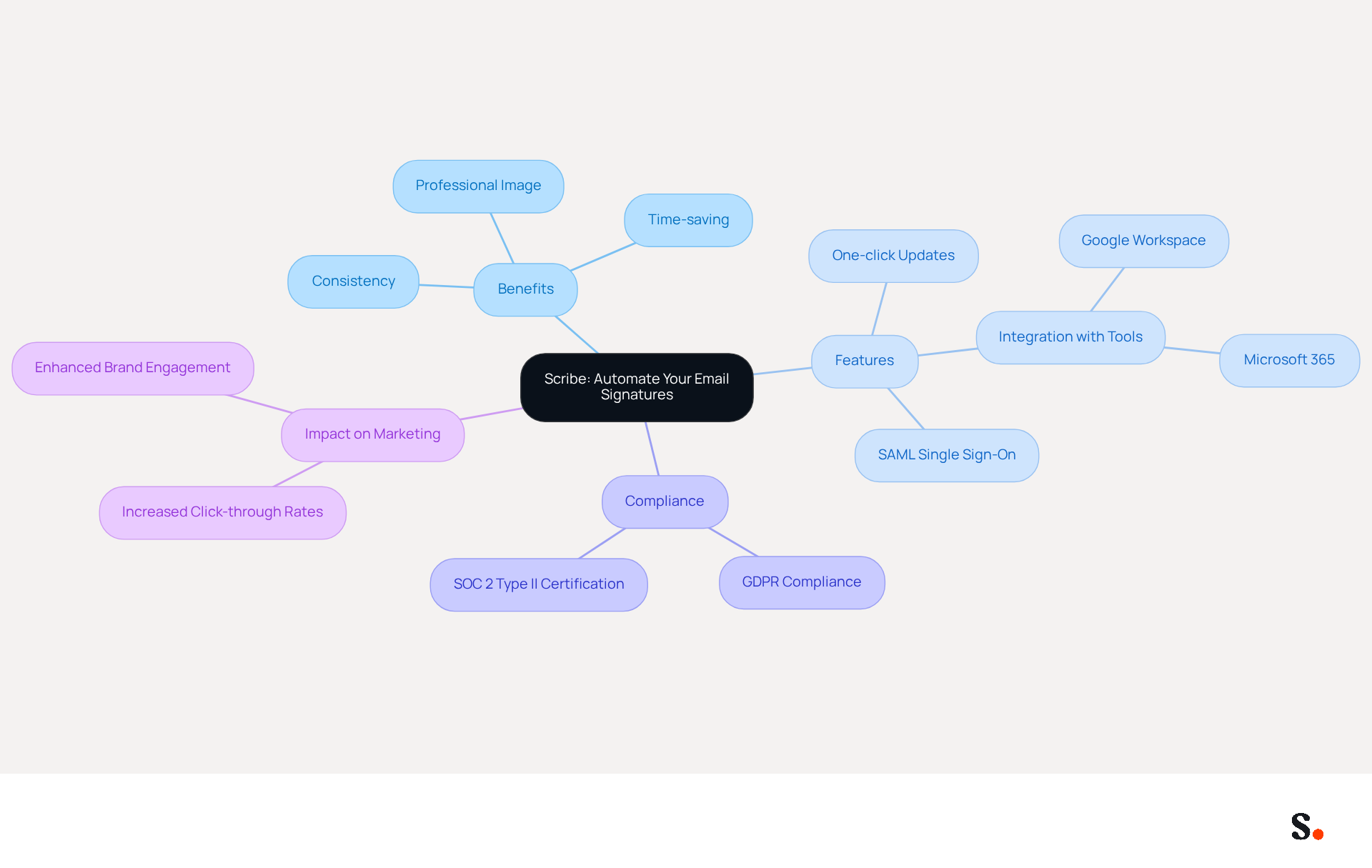
Maintaining consistent branding across all communications is a challenge many businesses face. Scribe offers a strong solution for organizations looking to ensure uniform communication identifiers across their teams. By automating the creation and management of electronic correspondences, Scribe alleviates the daunting task of maintaining consistent branding. This automation saves time and boosts the organization's professional image.
With features such as one-click updates and seamless integration with popular tools like Google Workspace and Microsoft 365, Scribe simplifies the process of keeping messaging identifiers current. Significantly, Scribe enables Marketing teams to handle messaging branding independently after the initial IT configuration, ensuring agility and responsiveness to branding requirements.
Additionally, Scribe's SAML Single Sign-On integration allows employees to access the platform securely through their identity provider, ensuring a streamlined experience. Scribe is also GDPR compliant, safeguarding user data and privacy, while its SOC 2 Type II certification ensures that your data is handled with the highest security standards.
Recent trends indicate that automated signatures can lead to a 12% average click-through rate on signature banners, underscoring the effectiveness of Scribe's solution in transforming communications into strategic marketing opportunities. This comprehensive approach allows businesses to concentrate on their core activities while maximizing their marketing potential, all while ensuring compliance with varying state regulations. Ultimately, Scribe empowers businesses to enhance their brand image while focusing on their core operations.
Formal Sign-Offs: Establish Professionalism in Your Emails
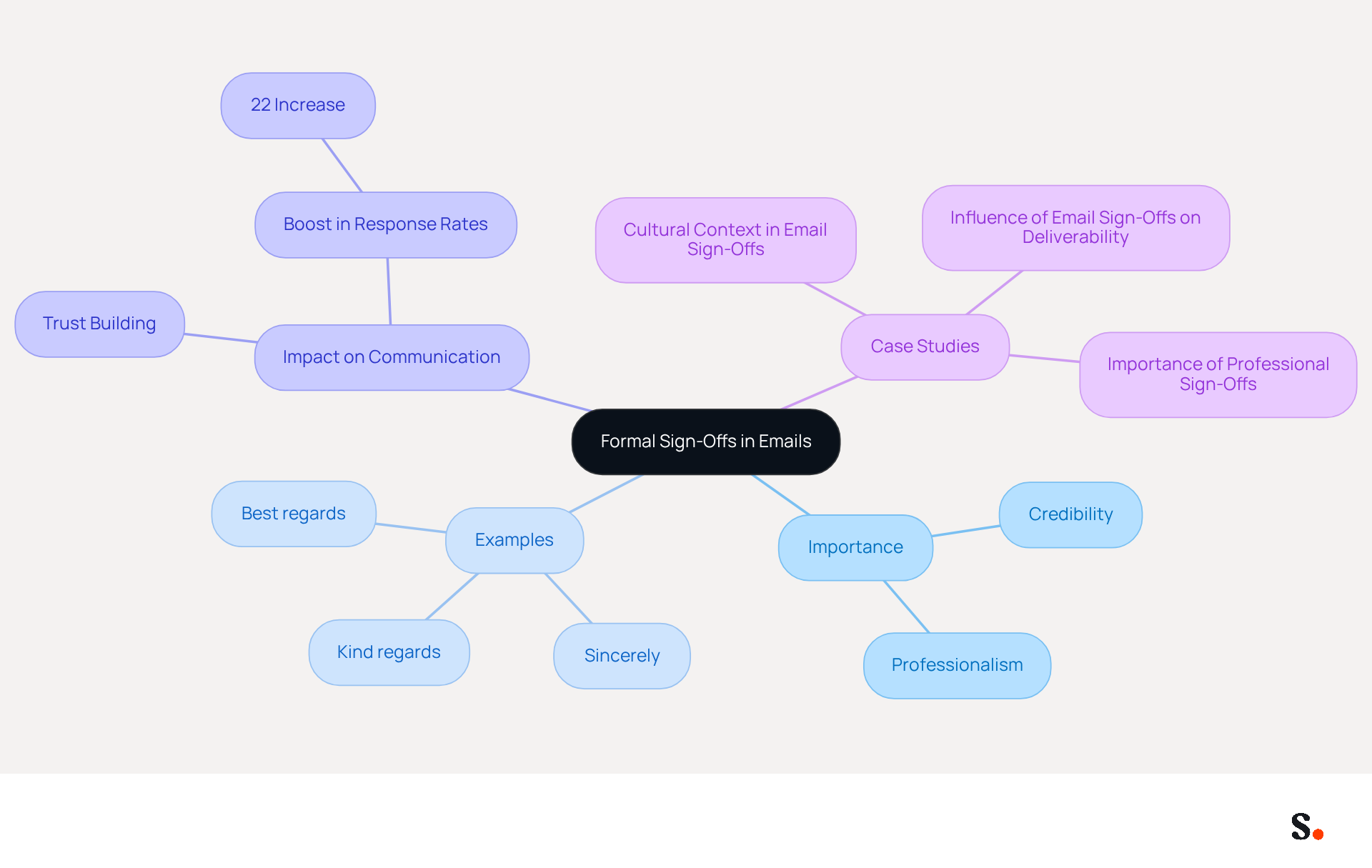
In professional correspondence, the choice of email ending examples can significantly impact the perception of your message. Employing formal closings such as 'Sincerely,' 'Best regards,' or 'Kind regards' is crucial. These sign-offs convey respect and establish a tone of professionalism, making them particularly suitable for business interactions with clients, superiors, or unfamiliar contacts.
Using appropriate email ending examples can enhance the overall impression of your email, reinforcing your credibility and the seriousness of your message. Studies indicate that using formal sign-offs can boost response rates by 22%. In contrast, failing to use branded identifiers can lead to misunderstandings and a lack of trust among consumers, underscoring the importance of professionalism in communication.
Moreover, case studies indicate that regular use of formal closures enhances brand recognition and trust, facilitating easier identification of messages from a brand. For example, the 'Importance of Professional Sign-Offs' case study illustrates how a well-structured sign-off increases the chances of messages being delivered successfully and enhances overall effectiveness.
In high-stakes situations, such as proposals or executive outreach, it is crucial for polished professionalism to use classic email ending examples like 'Sincerely' or 'Best regards'. Sophie Grant, a Signature Specialist, notes that choosing the right professional closing can enhance your image and communication effectiveness. Ultimately, the right sign-off can transform your communication, leading to stronger professional relationships and increased engagement.
Gratitude-Focused Sign-Offs: Strengthen Professional Relationships
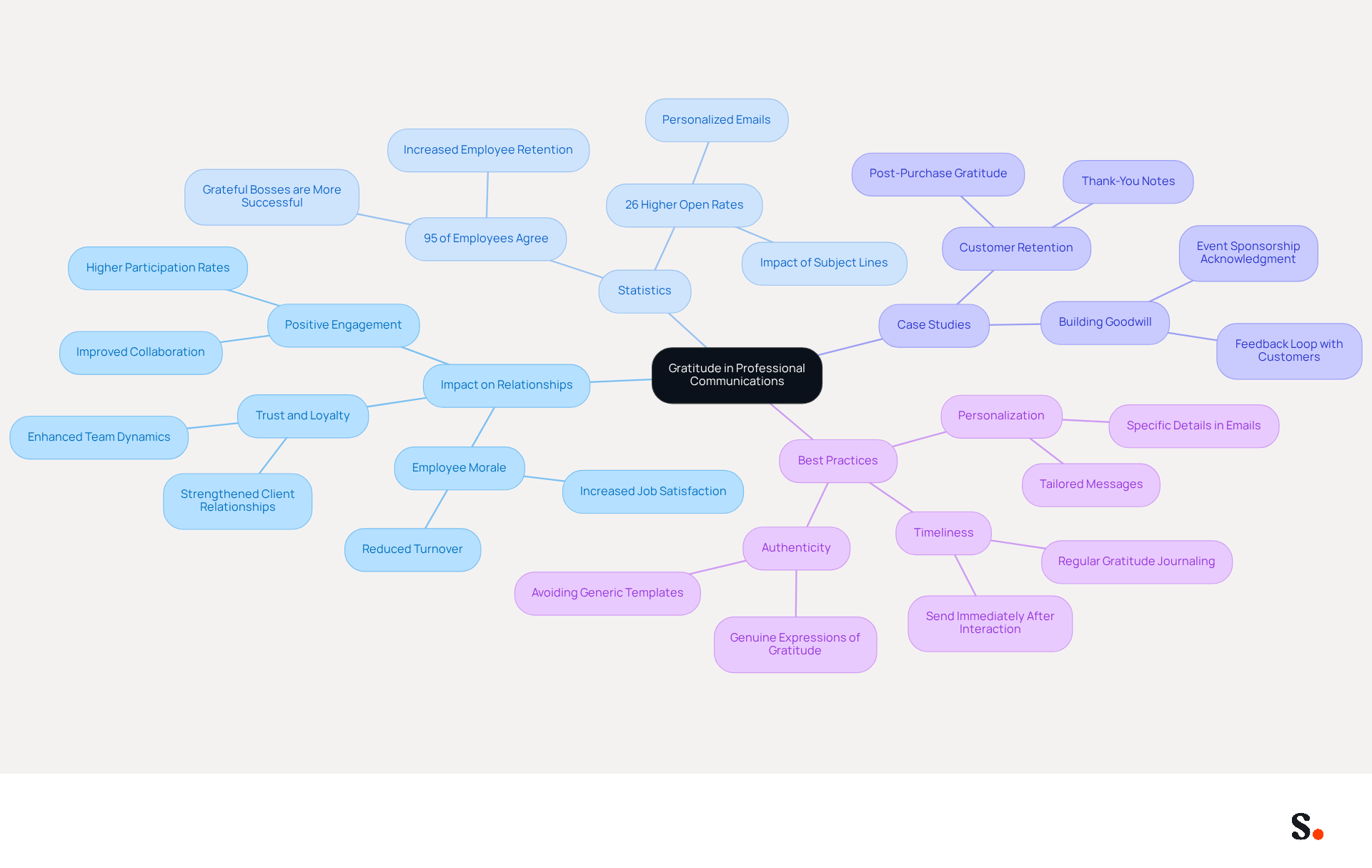
Incorporating gratitude into message closings can transform professional relationships and enhance engagement. Phrases like 'Thank you for your assistance' or 'I appreciate your support' not only express appreciation but also foster goodwill. These sign-offs help recipients feel valued, encouraging them to engage more positively in future interactions. This strategy proves especially beneficial in follow-up communications, reinforcing positive interactions after assistance is provided, as it cultivates a culture of appreciation and respect.
Research indicates that many professionals struggle with maintaining strong relationships, but expressing gratitude can significantly enhance these connections and boost employee morale. For instance, 95% of employees agree that a grateful boss is more likely to be successful, and gratitude can significantly improve job satisfaction and overall happiness. Furthermore, personalized gratitude messages achieve higher open rates, with statistics indicating that they are 26% more likely to be opened than generic communications, highlighting the significance of personalization in correspondence.
Case studies illustrate the effectiveness of gratitude-focused conclusions. For instance, the case study on 'Using Appreciation Messages for Customer Retention' demonstrates how sending thank-you notes after significant interactions not only acknowledges contributions but also strengthens relationships, paving the way for future opportunities. This practice has been shown to enhance trust and loyalty, making it a strategic tool in professional settings.
Ultimately, by embedding gratitude into your communications, you not only strengthen connections but also cultivate a thriving workplace culture. Emails that genuinely express appreciation, along with appropriate email ending examples, create a lasting emotional connection, fostering a sense of belonging and appreciation, which contributes to a positive workplace culture and long-term engagement.
Casual Sign-Offs: When to Keep It Light and Friendly
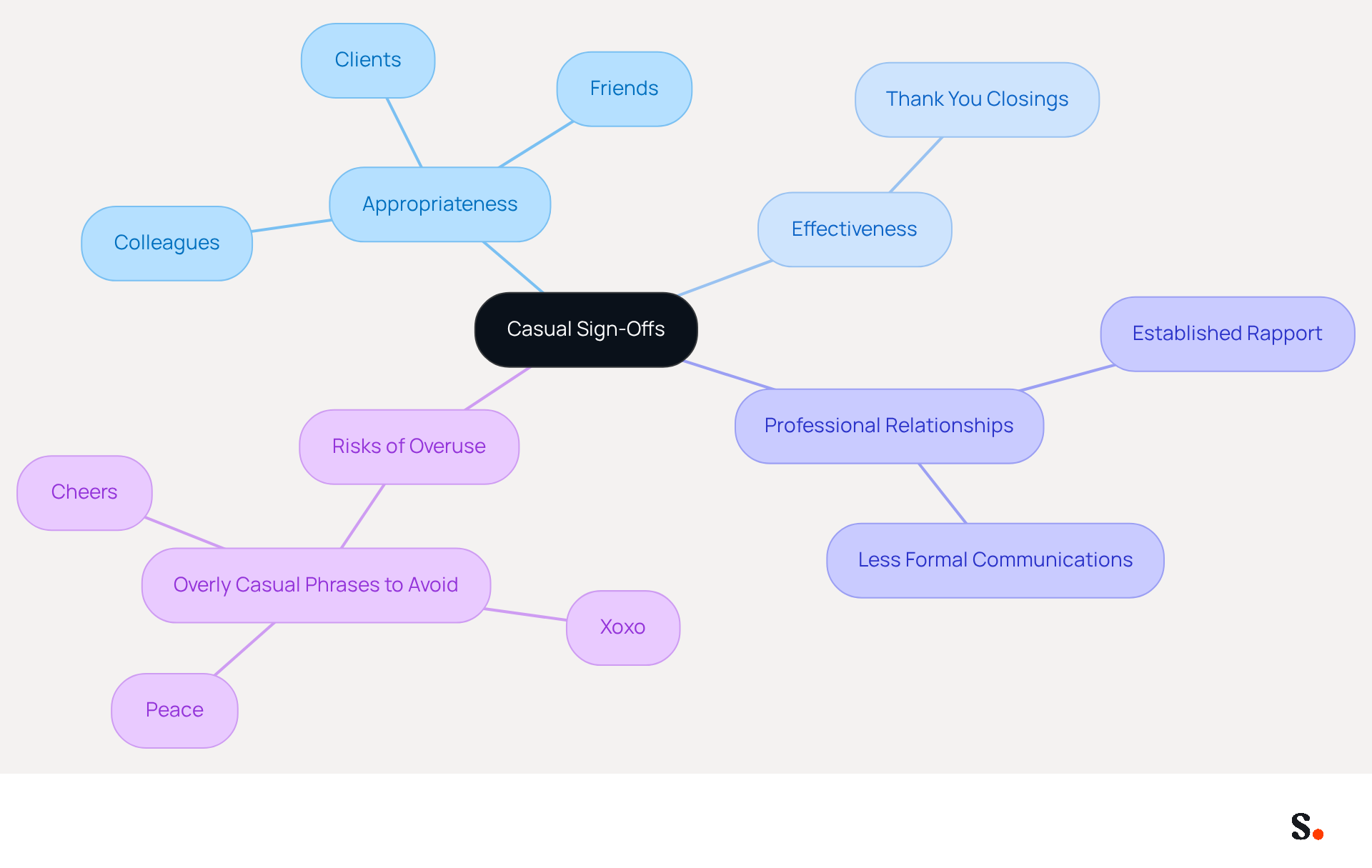
While casual closings can foster a friendly tone, their appropriateness varies based on the relationship and context. These sign-offs are most effective with colleagues, friends, or clients with whom you have an established rapport, as they help create a relaxed atmosphere and make your communication feel more personal. However, choosing the right sign-off can be challenging, especially when navigating different professional relationships.
Research indicates that emails that conclude with a thank you receive significantly more responses than those that do not, highlighting the importance of considerate closings. Acknowledgments that convey gratitude can significantly enhance rapport and encourage further dialogue. In professional environments, using informal closings should be approached with caution; they are best reserved for established relationships or less formal communications.
Experts suggest that while casual farewells can create a friendly connection, using them too freely might come off as unprofessional. Overly casual phrases like 'xoxo,' 'peace,' and 'cheers' may lead to perceptions of unprofessionalism and should be avoided in initial contacts or serious discussions. Ultimately, selecting the right email ending examples not only reflects your professionalism but also affects how the recipient perceives your message.
Call-to-Action Sign-Offs: Drive Engagement with Your Emails
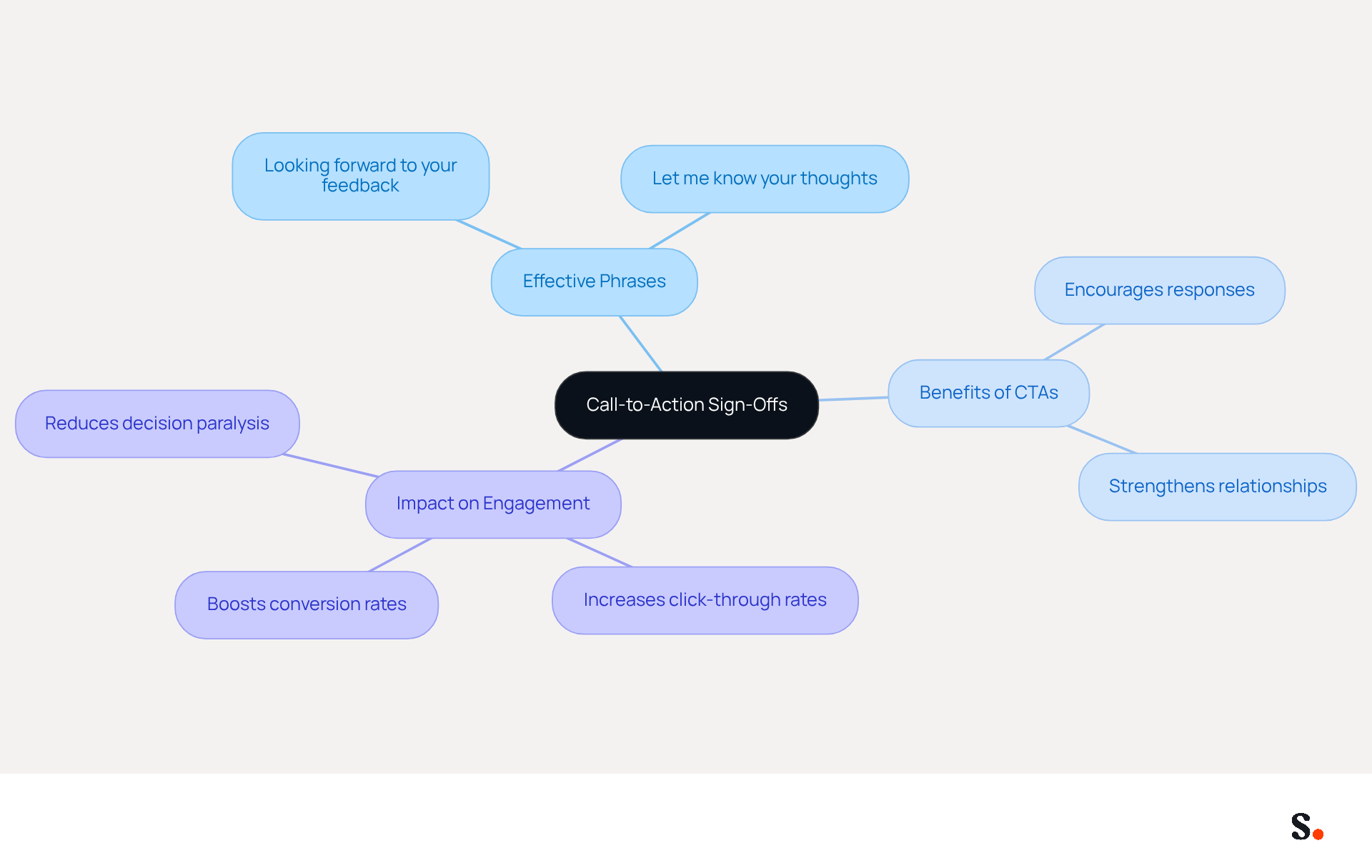
Effective communication strategies, such as incorporating call-to-action (CTA) sign-offs, can enhance engagement in professional correspondence. Phrases such as 'Looking forward to your feedback' and 'Let me know your thoughts' prompt recipients to respond or engage with your content. This strategy is particularly effective in follow-up messages or when soliciting input on a project. Without effective CTAs, messages may go unanswered, leading to missed opportunities for collaboration. By incorporating CTAs, you can transform passive recipients into active participants in the conversation. Ultimately, the inclusion of CTAs not only fosters dialogue but also strengthens professional relationships, paving the way for future collaboration.
Sign-Offs to Avoid: Maintain Professional Integrity
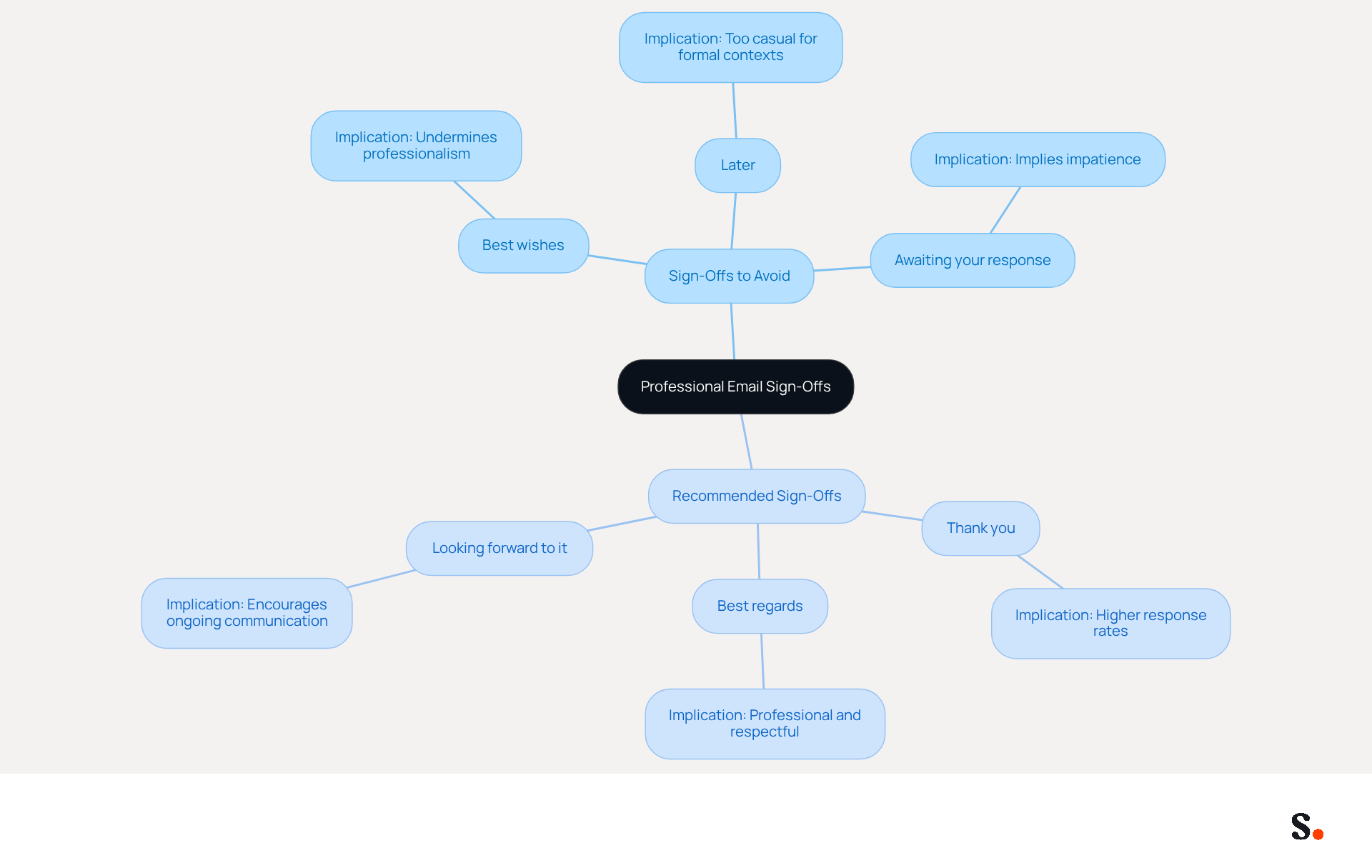
To uphold professionalism in email communications, it is crucial to avoid certain email ending examples. Phrases like 'Best wishes' or overly casual closures such as 'Later' can undermine the professionalism of your communication, particularly in formal contexts. Additionally, messages that imply impatience, like 'Awaiting your response,' often lead to negative perceptions. Emails lacking a closing statement often receive fewer replies, highlighting the importance of thoughtful endings.
Instead, it is advisable to choose neutral or positive email ending examples that convey respect and professionalism. Emails concluding with a form of 'thank you' have been shown to receive significantly higher response rates, further emphasizing the importance of carefully selecting your closing phrases to ensure that your message is received positively and maintains the integrity of your professional image.
Match Your Sign-Off to the Message Tone: Tailor Your Communication
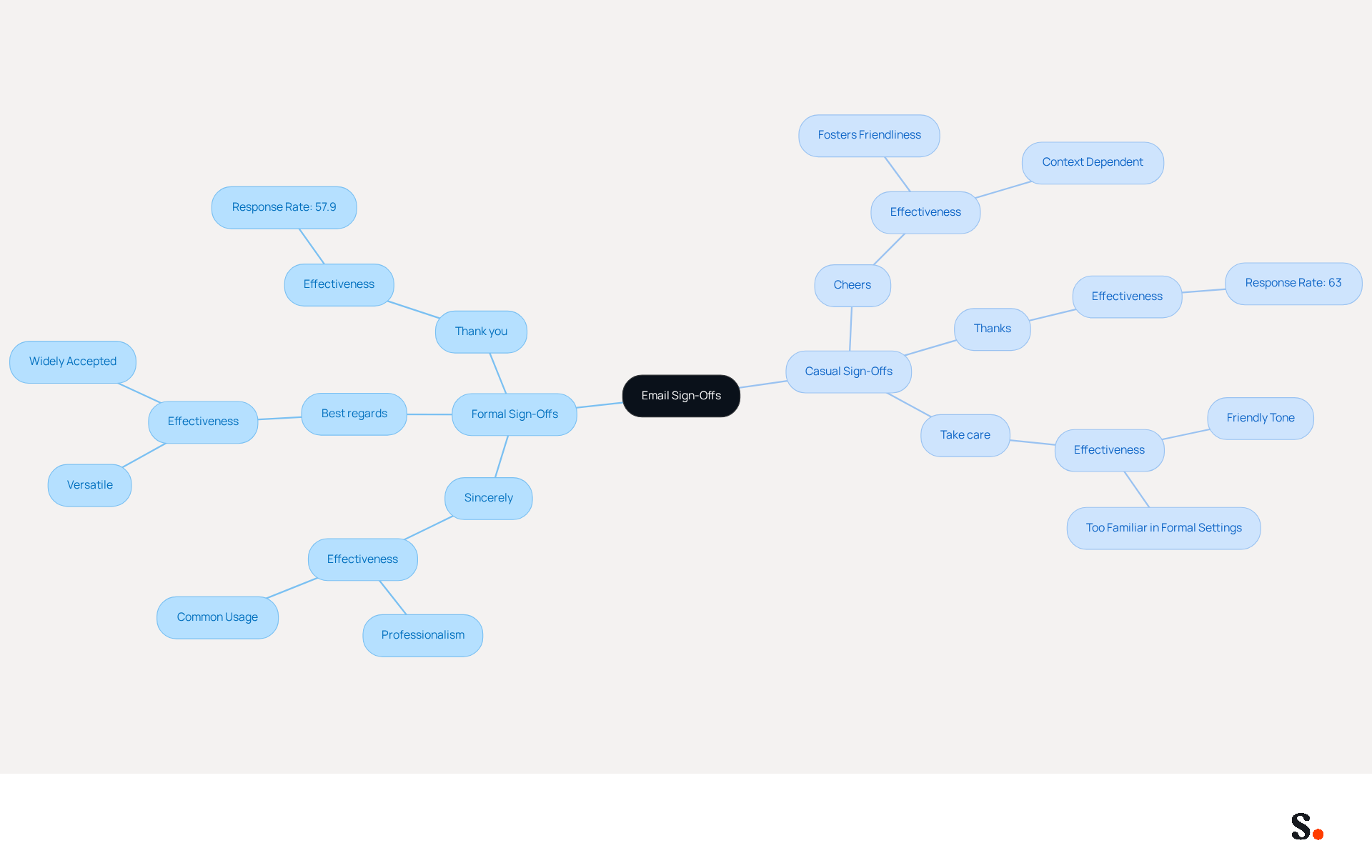
Choosing the right email ending examples is essential for effective communication, as they set the tone for the entire message. Formal emails should conclude with professional closings like 'Sincerely' or 'Best regards,' while casual emails can appropriately end with 'Cheers' or 'Thanks,' which are all email ending examples. Aligning your sign-off reinforces your message and makes your communication clearer and more impactful.
According to research from Boomerang, expressing gratitude, like saying 'Thanks in advance,' can lead to higher response rates - 65.7% to be exact. Additionally, 'Thanks' achieves a response rate of 63%, and 'Thank you' follows closely with 57.9%. A study examining over 350,000 messages discovered that using the right email ending examples can greatly affect the recipient's perception and reaction.
For instance, using a formal sign-off in a professional context helps maintain respect and trust, while a casual sign-off can foster a friendly atmosphere among colleagues. It's also important to consider cultural differences; casual sign-offs like 'Cheers' may be inappropriate in certain corporate settings. Customizing your sign-off to the tone of the message ensures that your communication resonates with the recipient, ultimately enhancing engagement and response rates.
When in doubt, consider the relationship with the recipient and the context of your communication. Ultimately, the right sign-off can transform your communication, making it more effective and engaging.
Personalize Your Sign-Offs: Create Meaningful Connections
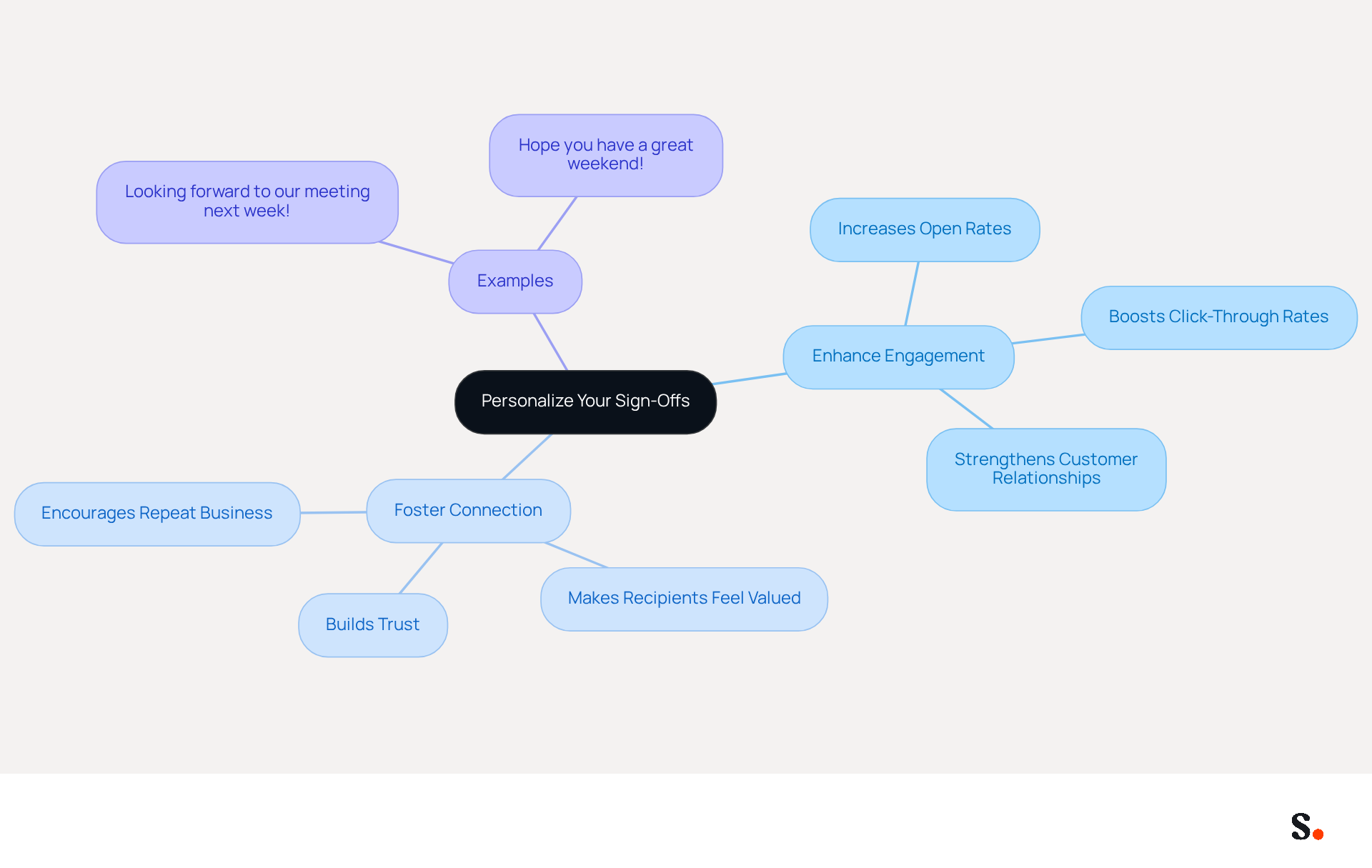
Personalizing your message closings can significantly enhance engagement with your recipients. Instead of using generic phrases, incorporate a personal touch, such as referencing a shared experience or expressing genuine interest in the recipient's well-being. For example:
- 'Looking forward to our meeting next week!'
- 'Hope you have a great weekend!'
Personalized closings not only enhance engagement but also foster a sense of connection that can lead to more fruitful interactions.
Enhance Your Email Signatures: Complement Your Sign-Offs
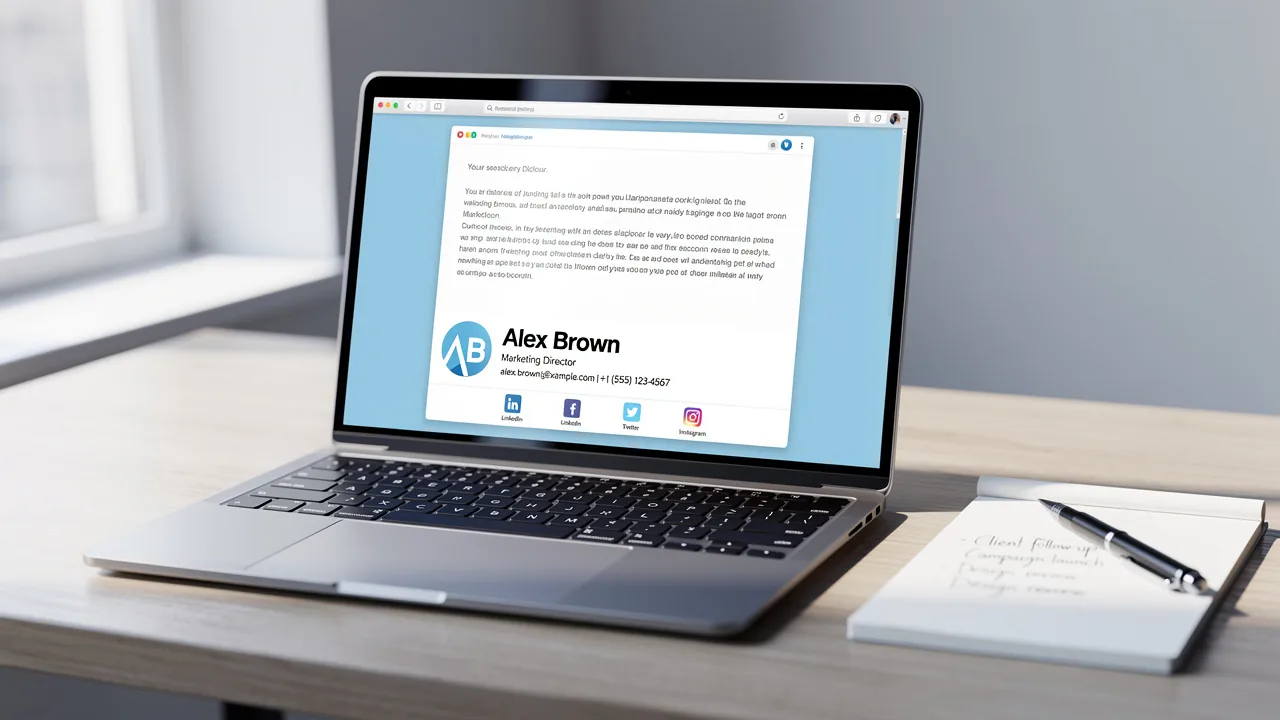
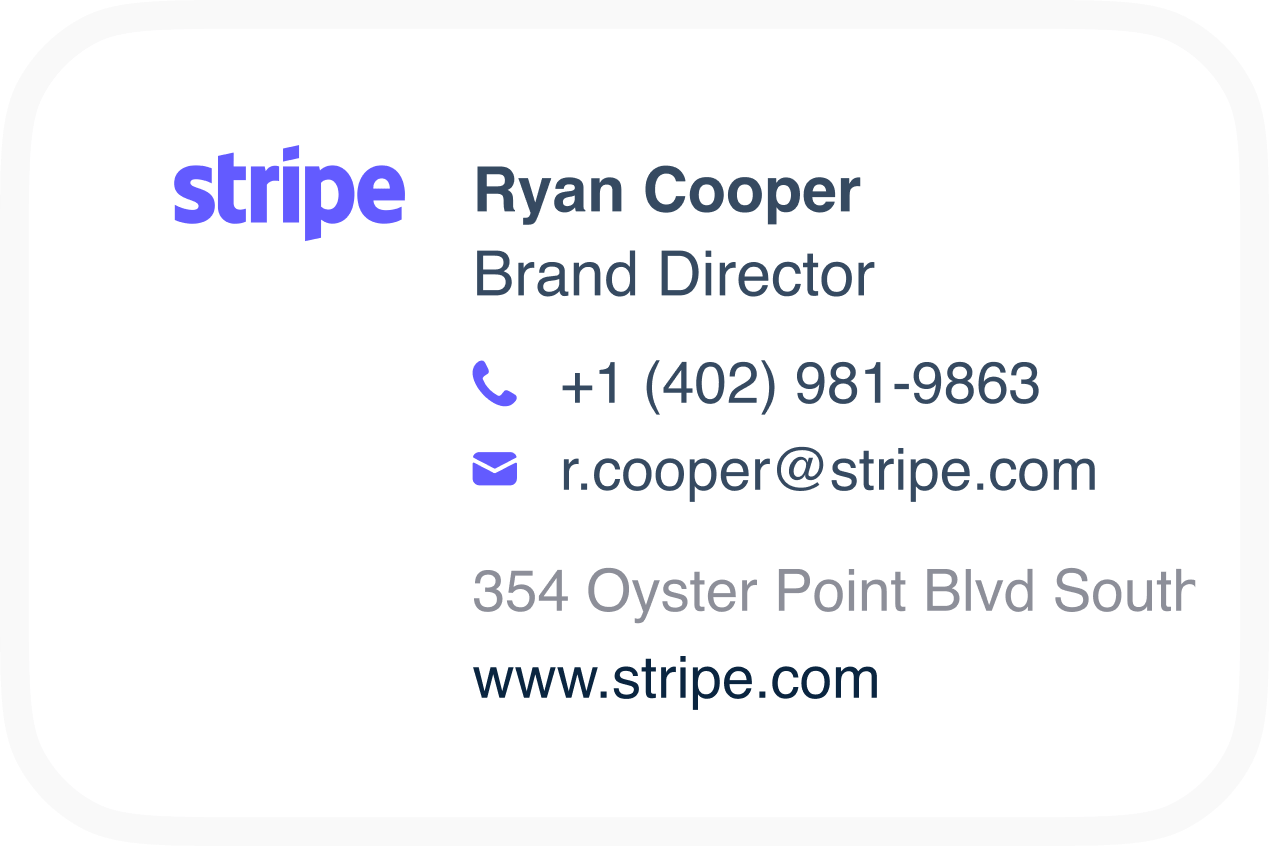
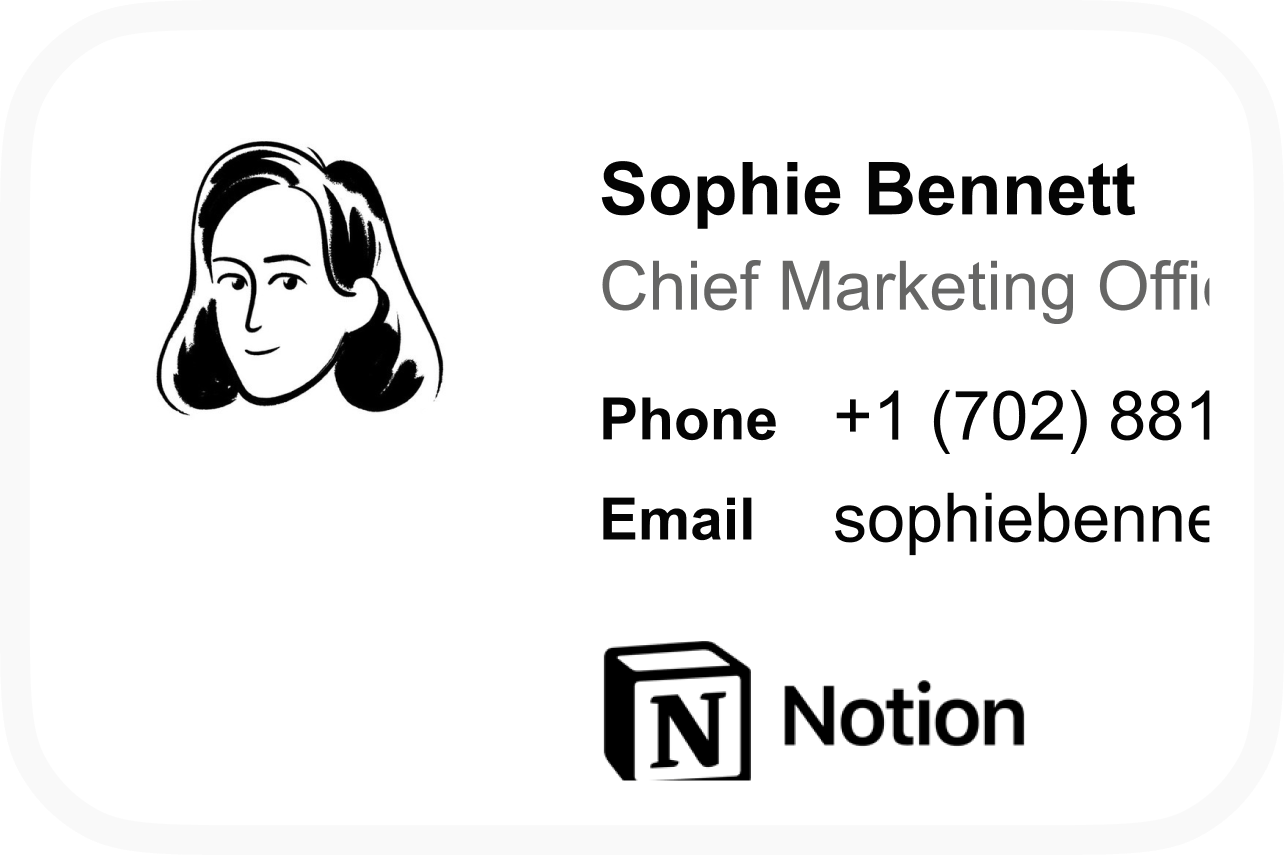
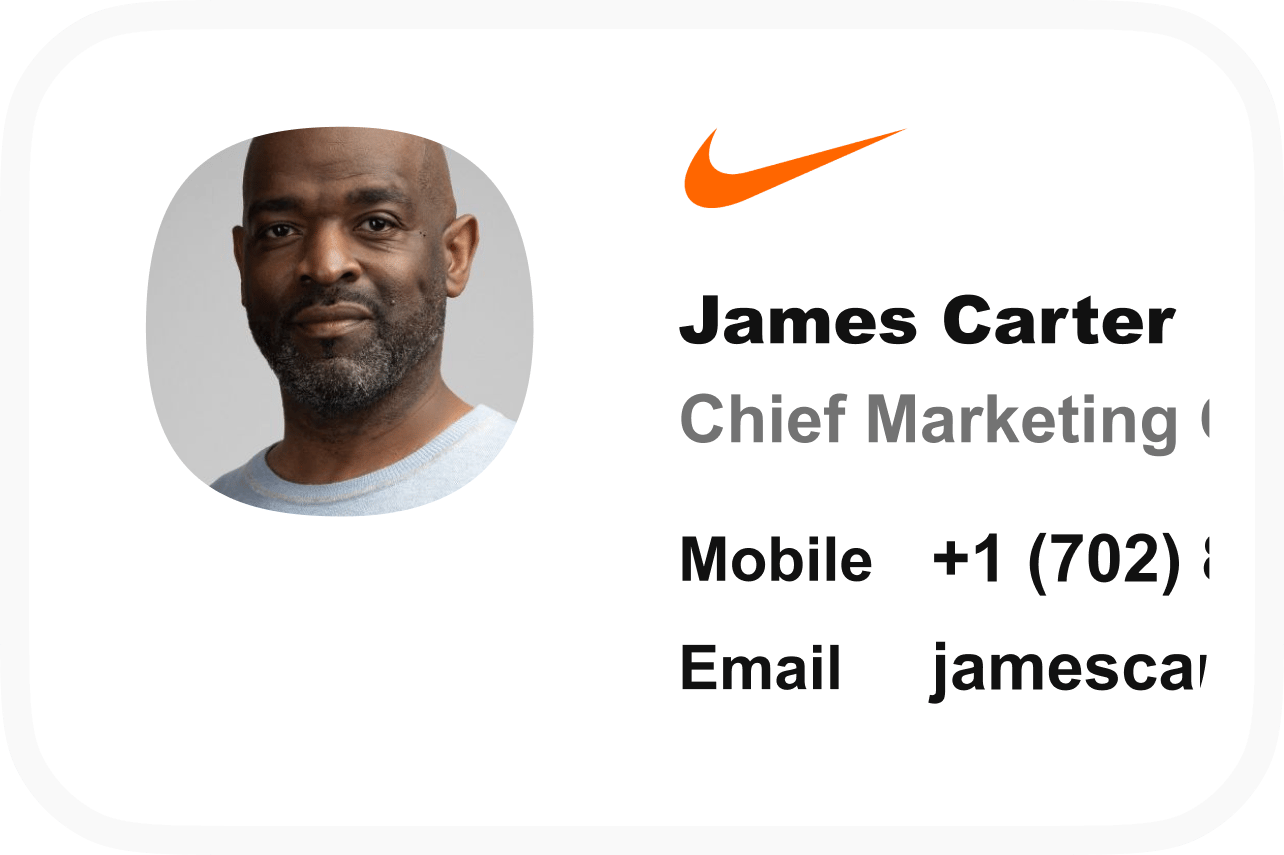
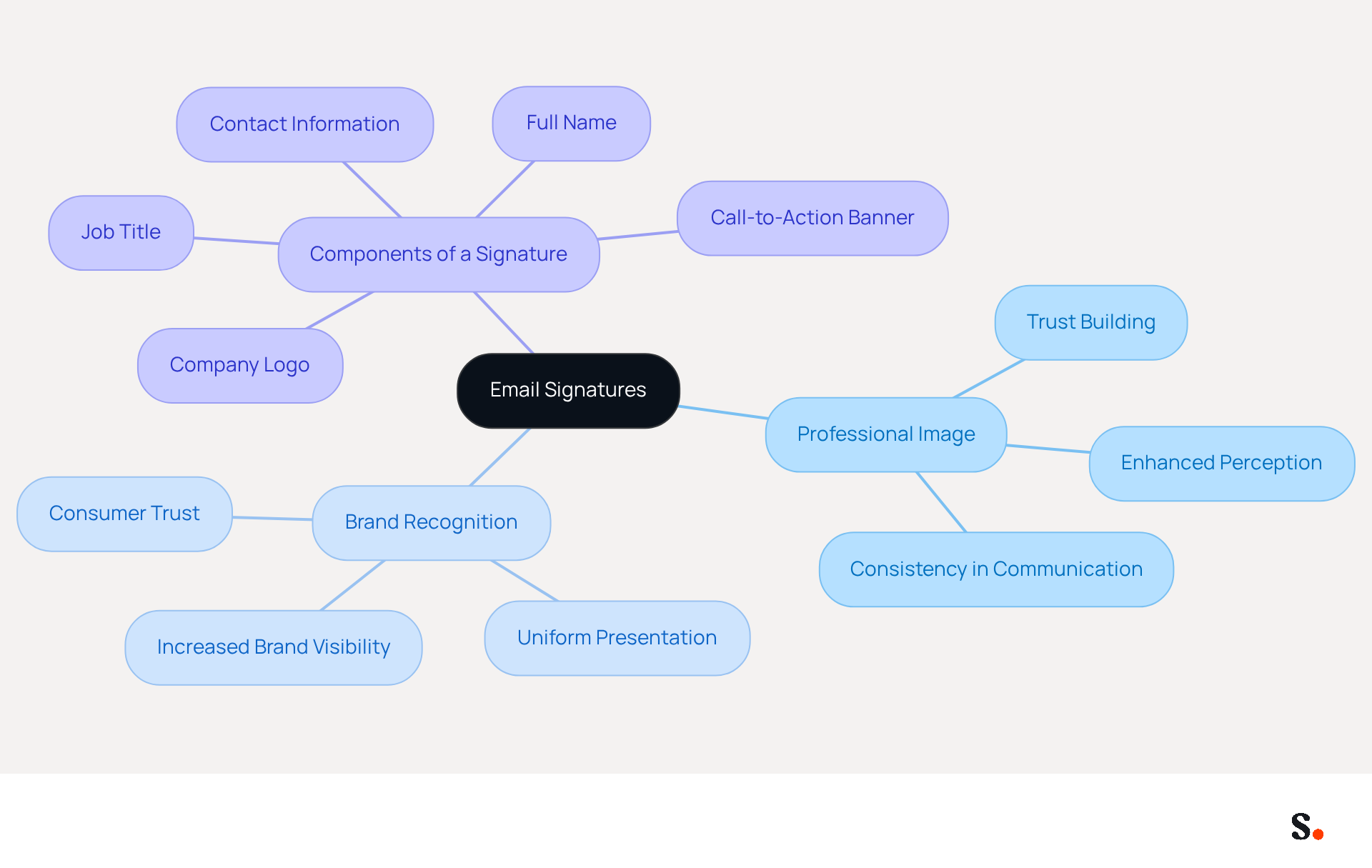
Using effective email ending examples is essential for establishing a polished professional image and enhancing brand recognition. Each modification made in your Aircall configuration will automatically be reflected in your Scribe branding, ensuring brand consistency across all communications. A well-designed sign-off should include your full name, job title, and contact information, all while aligning with your company's branding. Incorporate specific elements like your company logo or a call-to-action banner that aligns with your current marketing initiatives.
For instance, organizations that have standardized their electronic correspondence identifiers often utilize email ending examples to report enhanced brand recognition and trust among recipients. This investment not only reinforces your sign-off but also transforms every message into a branding opportunity.
Proofread Your Email Endings: Ensure Clarity and Professionalism
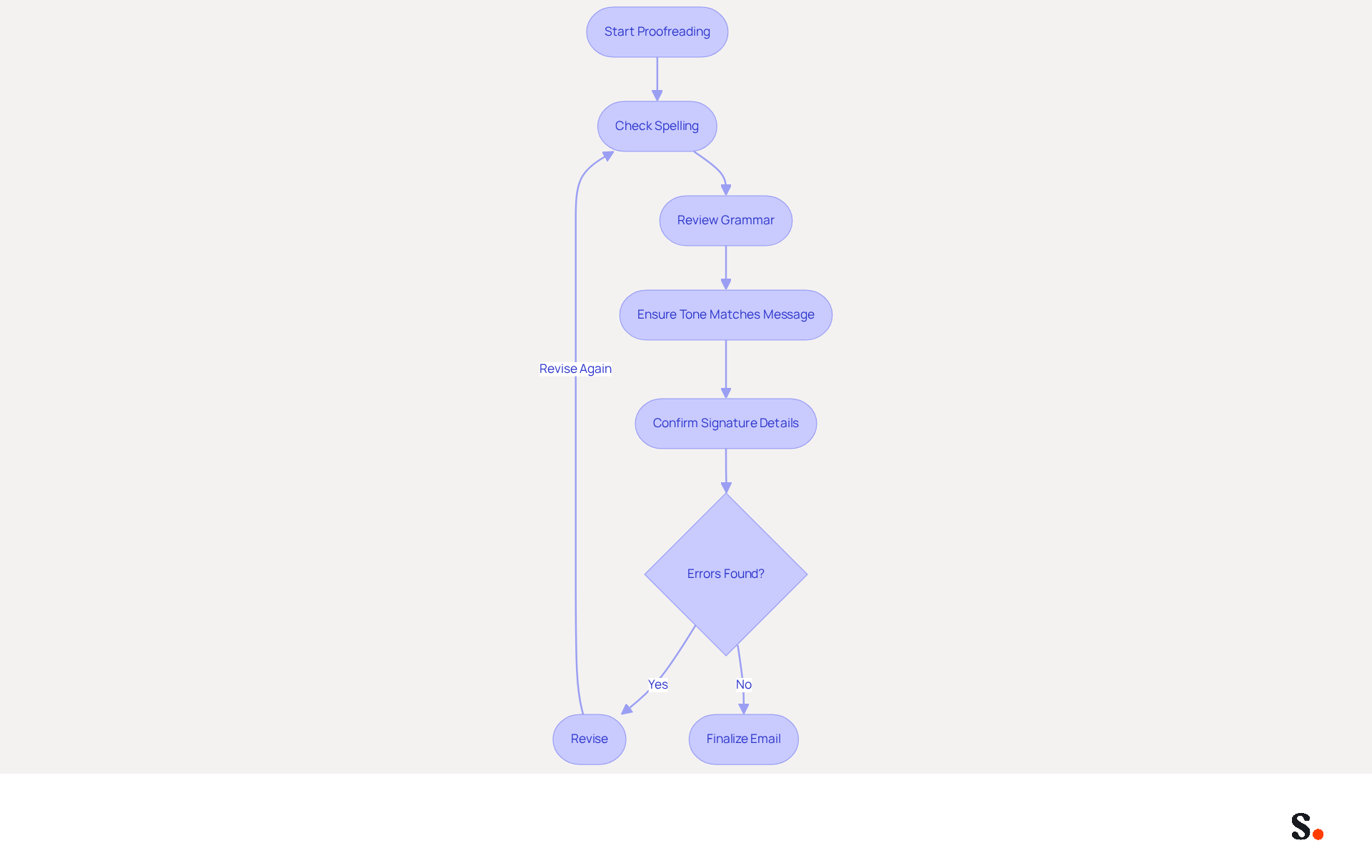
Proofreading your message endings is crucial for maintaining professionalism and clarity. Spelling and grammatical errors can undermine your credibility and distract from your message. A well-crafted email ending examples should be free of mistakes and reflect the tone of your message. Setting aside time to proofread during planning and production enhances your professionalism and shows respect for the recipient. This attention to detail increases the likelihood that your message will be received positively.
Studies indicate that clear communication significantly improves the effectiveness of correspondence, and a tidy, uniform closing can greatly improve your professional image. When you sync your Google Workspace with Scribe, you simplify how you manage your messaging identifiers, ensuring that any updates to your teammates' information are automatically reflected in your identifiers. This encompasses the capability to auto-fill signature details using our attribute feature, conserving time and ensuring brand consistency across all interactions.
Incorporating a standardized proofreading protocol can help maintain quality across all email communications, such as email ending examples, reducing the likelihood of errors and improving overall effectiveness. Neglecting to proofread can lead to misunderstandings that damage your professional relationships.
Conclusion
The conclusion of an email can either enhance or undermine the message's effectiveness. Crafting the perfect email ending is essential for effective professional communication. The right sign-off not only reflects your professionalism but also reinforces your message's tone and intent. Using different email ending examples - like formal, gratitude-focused, casual, and call-to-action sign-offs - can help individuals improve their correspondence and build stronger relationships.
This article highlights how crucial it is to:
- Match your sign-offs to the context of your message
- Personalize closings to create meaningful connections
- Maintain professionalism by avoiding unprofessional phrases
Additionally, integrating Scribe's email signature automation ensures that branding remains consistent and effective, allowing marketing teams to manage their signatures independently while adhering to compliance standards like GDPR and CCPA.
Without effective sign-offs, emails may fail to engage recipients, leading to missed opportunities. This can result in better response rates and stronger professional relationships. By implementing thoughtful sign-offs and leveraging tools like Scribe, professionals can elevate their communication, enhance brand recognition, and cultivate a positive workplace culture. Consider how your email endings can either open doors or close them, shaping the future of your professional relationships.
Frequently Asked Questions
What is Scribe and how does it help businesses?
Scribe is a tool that automates the creation and management of email signatures, ensuring consistent branding across all communications. It saves time and enhances the professional image of organizations by allowing Marketing teams to manage messaging branding independently after initial IT setup.
What features does Scribe offer for email signature management?
Scribe offers features such as one-click updates, seamless integration with tools like Google Workspace and Microsoft 365, and SAML Single Sign-On integration for secure access. It also ensures GDPR compliance and holds SOC 2 Type II certification for data security.
How effective are automated email signatures in terms of marketing?
Automated email signatures can lead to a 12% average click-through rate on signature banners, transforming communications into strategic marketing opportunities.
Why are formal sign-offs important in professional emails?
Formal sign-offs, such as 'Sincerely' or 'Best regards,' convey respect and professionalism, enhancing the overall impression of the email and reinforcing the sender's credibility. They can boost response rates by 22%.
How do formal sign-offs impact brand recognition?
Regular use of formal closures enhances brand recognition and trust, making it easier for recipients to identify messages from a brand, which can lead to more successful message delivery.
What role does gratitude play in email sign-offs?
Incorporating gratitude into email closings, such as 'Thank you for your assistance,' fosters goodwill and strengthens professional relationships, encouraging positive engagement in future interactions.
What are the benefits of personalized gratitude messages?
Personalized gratitude messages achieve higher open rates, being 26% more likely to be opened than generic communications, which highlights the importance of personalization in professional correspondence.
How can gratitude-focused sign-offs improve workplace culture?
Expressing gratitude in communications can enhance connections, boost employee morale, and contribute to a positive workplace culture, fostering a sense of belonging and appreciation among team members.
List of Sources
- Scribe: Automate Your Email Signatures for Consistency
- Why Email Signatures Must Be In Your 2026 Marketing Plan | Rocketseed (https://rocketseed.com/blog/what-are-the-biggest-email-trends-for-2026)
- Automating Email Signatures: How IT Teams Streamline Processes & Reduce Risk (https://exclaimer.com/blog/streamlining-it-processes-automated-email-signatures)
- The impact of email signatures on your branding (https://signitic.com/en/resources/the-impact-of-email-signatures-on-your-branding)
- Maximize Your Email Signature Program with These 4 Best Practices (https://scribe-mail.com/en-US/blog/maximize-your-email-signature-program-with-these-4-best-practices)
- Formal Sign-Offs: Establish Professionalism in Your Emails
- Mastering Professional Email Sign-Offs in 2026 (https://linkedin.com/pulse/mastering-professional-email-sign-offs-2026-bulksignature-qsr4e)
- Email Sign Offs Professional: Best Practices for Business Emails (https://mailwarm.com/blog/professional-email-sign-offs-best-practices)
- Email Sign Offs for Every Industry and Situation | Mailchimp (https://mailchimp.com/resources/email-sign-offs)
- 4 Best Practices for Effective Professional Email Closings (https://scribe-mail.com/en-US/blog/4-best-practices-for-effective-professional-email-closings)
- How to Sign Off on an Email Correctly | Rocketseed (https://rocketseed.com/blog/correct-way-to-sign-off-emails)
- Gratitude-Focused Sign-Offs: Strengthen Professional Relationships
- Gratitude emails build relationships (https://worktalk.com/gratitude-emails-build-relationships)
- 10 Amazing Statistics to Celebrate National Gratitude Month (https://halo.com/10-amazing-statistics-to-celebrate-national-gratitude-month)
- 5 Science-Backed Reasons to Express Gratitude, according to UC San Diego Research (https://today.ucsd.edu/story/5-science-backed-reasons-to-express-gratitude-according-to-uc-san-diego-research)
- The power of gratitude: How appreciation email can transform your marketing — Stripo.email (https://stripo.email/blog/the-power-of-gratitude-how-appreciation-email-can-transform-your-marketing)
- 32 Professional Thank You Email Templates for Any Occasion (https://respona.com/blog/thank-you-email)
- Casual Sign-Offs: When to Keep It Light and Friendly
- 50 Best Email Sign-Offs to End an Email Properly in [year] (https://elementor.com/blog/best-email-sign-offs)
- email sign-offs (https://wisestamp.com/signature-examples/email-sign-offs)
- The 37 best ways to close emails (https://signitic.com/en/resources/email-sign-offs)
- 36+ essential workplace communication statistics for 2026 (https://zoom.com/en/blog/workplace-communication-statistics)
- Call-to-Action Sign-Offs: Drive Engagement with Your Emails
- Effective calls-to-action for reader engagement - BlueLena (https://bluelena.io/2023/08/01/best-practices-for-calls-to-action-or-ctas)
- How to Craft an Effective Call to Action for Your Emails (https://schnepsmedia.com/insights/call-to-action-emails)
- A Strategic Guide to Calls-to-Action (CTAs) in Email Marketing: Best Practices for Success (https://litmus.com/blog/click-tap-and-touch-a-guide-to-cta-best-practices)
- Call to Action Ideas: Get Clicks That Drive Real Results (https://constantcontact.com/blog/call-to-action-ideas)
- Sign-Offs to Avoid: Maintain Professional Integrity
- Stop using these 6 unprofessional phrases in your work emails - AOL (https://aol.com/news/stop-using-6-unprofessional-phrases-163330849.html)
- Gen Z is transforming office email etiquette — but it could backfire (https://businessinsider.com/gen-z-office-emails-etiquette-changing-backfire-experts-2024-7)
- 100 Email Sign-Off Ideas (+10 Golden Rules for Marketing Pros) - MailerLite (https://mailerlite.com/blog/email-sign-offs)
- The 2 biggest mistakes people make in work emails—and how to avoid them (https://nbcwashington.com/news/business/money-report/the-2-biggest-mistakes-people-make-in-work-emails-and-how-to-avoid-them/3588507)
- The 9 Email Sign-Offs You Should Stop Using in 2026, According to an Etiquette Expert (https://parade.com/living/email-sign-offs-you-should-stop-using-according-to-etiquette-expert)
- Match Your Sign-Off to the Message Tone: Tailor Your Communication
- How to Sign Off on an Email Correctly | Rocketseed (https://rocketseed.com/blog/correct-way-to-sign-off-emails)
- email sign-offs (https://wisestamp.com/signature-examples/email-sign-offs)
- Different Sign-offs & When You Should Use Them | Heinz Marketing (https://heinzmarketing.com/blog/different-sign-offs-when-you-should-use-them)
- How to end an email: 70+ professional sign-offs & examples (https://blog.superhuman.com/how-to-end-an-email)
- Best Email Sign-Offs: 15 Examples for Every Situation (https://beanstalkconsulting.co/blogs/best-email-sign-offs)
- Personalize Your Sign-Offs: Create Meaningful Connections
- Personalized Email Marketing: Benefits, Tips, and Tools For Small Businesses | HoneyBook (https://honeybook.com/blog/personalized-email-marketing)
- Personalized emails: Why it's more important than ever (https://braze.com/resources/articles/why-its-more-important-than-ever-to-personalize-emails)
- Personalized Communication: The Key to Stronger Customer Relationships - Keylane (https://keylane.com/personalized-communication-the-key-to-stronger-customer-relationships)
- Email marketing personalization improves customer engagement (https://business.adobe.com/blog/basics/personalized-email)
- Improving Customer Engagement with Personalized Communications (https://pitneybowes.com/us/shipping-and-mailing/case-studies/personalized-communications-for-better-customer-retention.html)
- Enhance Your Email Signatures: Complement Your Sign-Offs
- The impact of email signatures on your branding (https://signitic.com/en/resources/the-impact-of-email-signatures-on-your-branding)
- Research Recap: Branded Email Signatures Increase Company Recognition, Trust - Demand Gen Report (https://demandgenreport.com/industry-news/research-recap-branded-email-signatures-increase-company-recognition-trust/47252)
- 4 Essential Email Signature Ideas to Boost Marketing Engagement (https://scribe-mail.com/en-US/blog/4-essential-email-signature-ideas-to-boost-marketing-engagement)
- Email signature statistics: Why every business should optimize their email signatures — Stripo.email (https://stripo.email/blog/email-signature-statistics-why-every-business-should-optimize-their-email-signatures)
- Proofread Your Email Endings: Ensure Clarity and Professionalism
- Email Etiquette in the Workplace (https://adminvc.ucla.edu/news/email-etiquette-workplace)
- Proofread Emails to Guarantee Clarity and Impact | Mailchimp (https://mailchimp.com/resources/proofreading-email)
- 4 Best Practices for Effective Professional Email Closings (https://scribe-mail.com/en-US/blog/4-best-practices-for-effective-professional-email-closings)
- Importance of Proofreading Emails (https://linkedin.com/top-content/communication/email-etiquette-in-professional-settings/importance-of-proofreading-emails)
Get started with Scribe
Build a professional email signature
Free 14-day trial — no credit card.