4 Best Practices for an Appropriate Business Email Signature
Email signatures represent a critical yet often overlooked element of professional communication that can significantly impact brand perception. By
Sophie Grant
Email Signature Specialist, Scribe

Introduction
Email signatures represent a critical yet often overlooked element of professional communication that can significantly impact brand perception. By incorporating essential components and adhering to effective design principles, businesses can create signatures that convey important information while elevating their marketing efforts. Many organizations fail to recognize the untapped potential of email signatures, resulting in missed opportunities for brand engagement. By strategically designing email signatures, companies can significantly improve brand consistency and engagement.
Define Essential Components of a Business Email Signature
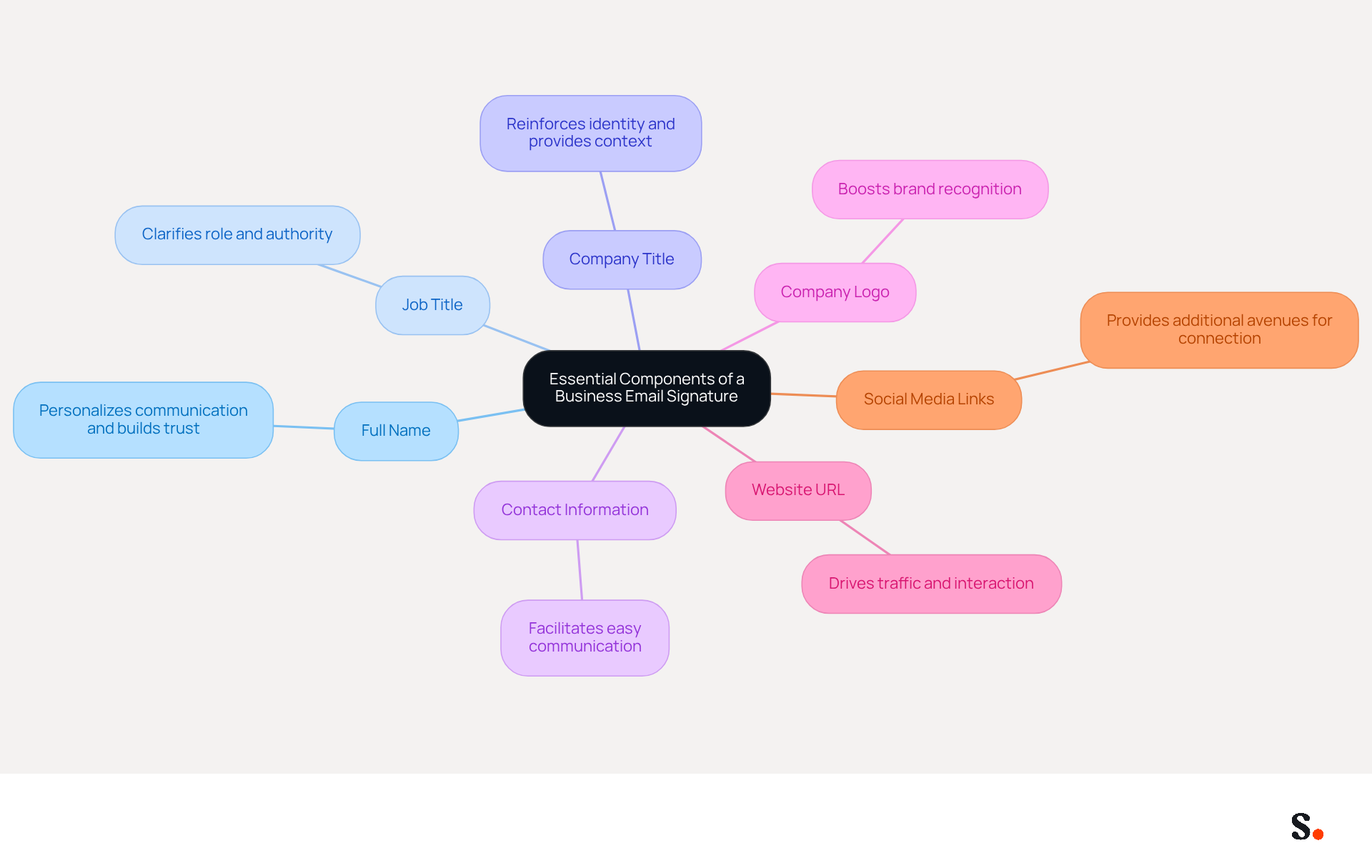
An appropriate business email signature is not just a formality; it is a crucial element that enhances communication and strengthens brand identity. A well-crafted email signature should encompass several essential components to effectively convey information and reinforce brand identity:
- Full Name: Clearly stating the sender's full name personalizes communication and builds trust with recipients.
- Job Title: Including the sender's job title clarifies their role and authority within the organization, helping recipients understand the context of the message.
- Scribe: The company title reinforces identity and provides context for the message, enhancing recognition.
- Contact Information: A direct phone number and email address facilitate easy communication, ensuring recipients can reach out without hassle.
- Company Logo: Incorporating a logo boosts brand recognition and adds a visual element that can make the signature more memorable.
- Website URL: A link to the company website enables recipients to discover more about the organization, driving traffic and interaction.
- Social Media Links: Including links to professional social media profiles boosts interaction and provides additional avenues for connection.
Studies indicate that well-crafted digital identifiers can achieve an impressive 12% average click-through rate on banner links, showcasing their effectiveness as marketing tools. Moreover, organizations that adopt centralized management of digital signatures see 85% improved consistency in their identity and three times greater campaign interaction. By combining these elements, businesses can develop identifiers that not only communicate vital information but also effectively represent their brand identity, including an appropriate business email signature. Ultimately, neglecting to utilize a professional email signature can hinder your organization's ability to connect effectively with clients and partners.
Incorporate Effective Design Principles for Visual Appeal
Creating an effective email signature requires careful consideration of design principles that enhance both functionality and visual appeal.
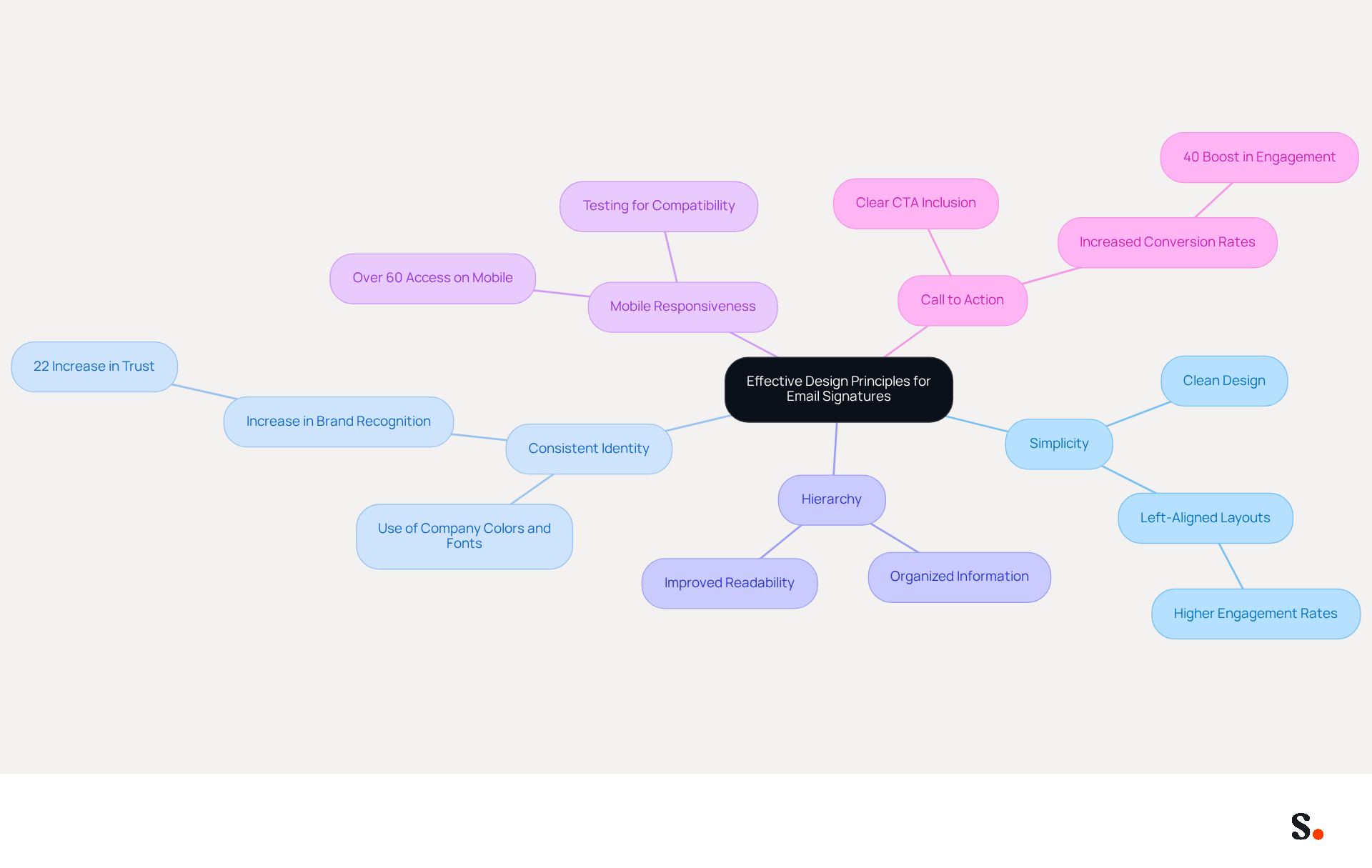
- Simplicity: A clean and uncluttered design is essential. Avoid excessive graphics or text that can distract from key information. Research shows that simpler designs boost engagement, with left-aligned, single-column layouts outperforming multi-column formats in click-through rates.
- Consistent Identity: Utilize company colors, fonts, and logos to ensure alignment with overall visual identity. Consistency not only strengthens brand awareness but also improves professionalism; businesses with branded communication tools report a 22% increase in brand recognition and trust.
- Hierarchy: Organize information to guide the reader's eye effectively. Differentiate between the sender's name, title, and contact details using varying font sizes and styles. This structured approach improves readability and ensures that essential information stands out.
- Mobile Responsiveness: Since more than 60% of business communications are viewed on mobile devices, it's essential to make sure signatures look good on all email clients and devices. Testing designs for mobile compatibility can significantly enhance user experience and interaction.
- Call to Action: Including a clear call to action (CTA), such as a link to a current promotion or event, can drive interaction and participation. Data suggests that well-placed CTAs in email signatures can increase conversion rates significantly, making them a valuable addition to your design.
By adhering to these principles, businesses can significantly elevate their communication effectiveness and brand image.
Ensure Legal Compliance and Include Necessary Disclaimers
To navigate the complexities of legal compliance in email signatures, businesses must adopt specific best practices:
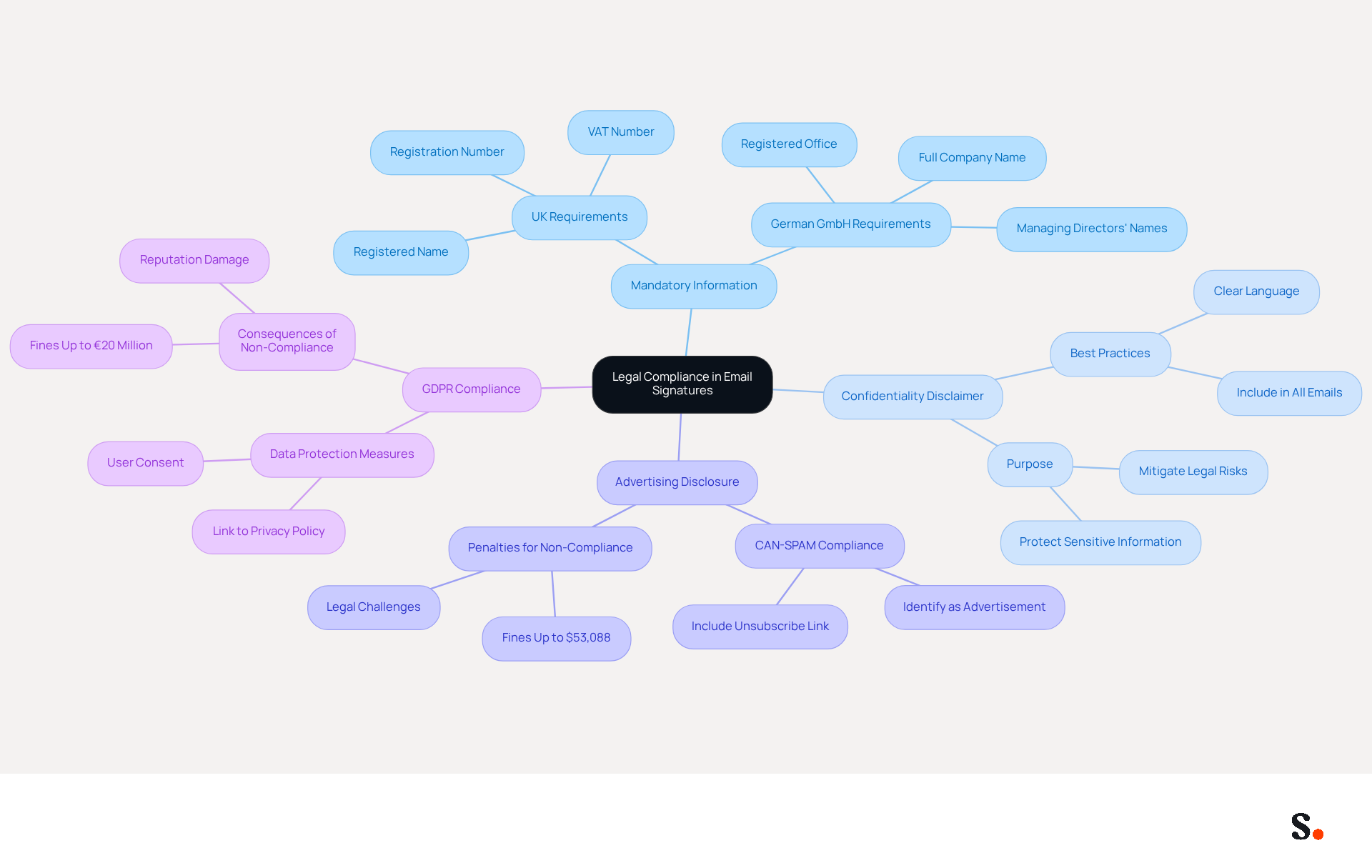
- Mandatory Information: Depending on the jurisdiction, essential details such as the company's registration number, physical address, and legal entity type should be included. For instance, UK companies must display their registered name, registration number, and VAT number in their footer to avoid penalties. Similarly, GmbHs in Germany are required to include their full company name, registered office, and managing directors' names.
- Confidentiality Disclaimer: Including a confidentiality disclaimer can safeguard sensitive information shared in messages. This disclaimer informs recipients that the content is intended solely for them and should not be disclosed without permission, thereby mitigating potential legal risks. Failing to include a confidentiality disclaimer may expose businesses to legal challenges if sensitive information is inadvertently shared.
- Advertising Disclosure: If the message contains promotional content, it is crucial to include a statement indicating that the message is an advertisement. This practice is crucial for compliance with anti-spam laws like the CAN-SPAM Act, which requires clear identification of commercial messages. Failure to do so can result in fines up to $53,088 per violation.
- GDPR Compliance: For businesses operating in or engaging with clients in the EU, ensuring compliance with GDPR regulations is vital. This involves integrating data protection measures and privacy considerations in digital communication footers. A recommended practice is to include a link to the privacy policy, enhancing transparency and aligning with GDPR requirements. Non-compliance with GDPR can lead to significant fines and damage to a company's reputation.
Incorporating these legal elements into an appropriate business email signature helps businesses protect themselves from legal issues while demonstrating their commitment to compliance. Regular audits and updates to these identifiers are essential to maintain alignment with evolving regulations, as highlighted by case studies showing that companies conducting regular compliance checks significantly reduce their risk of violations.
Leverage Email Signatures as Marketing Tools
Email signatures represent an underutilized opportunity for businesses to enhance their marketing efforts:
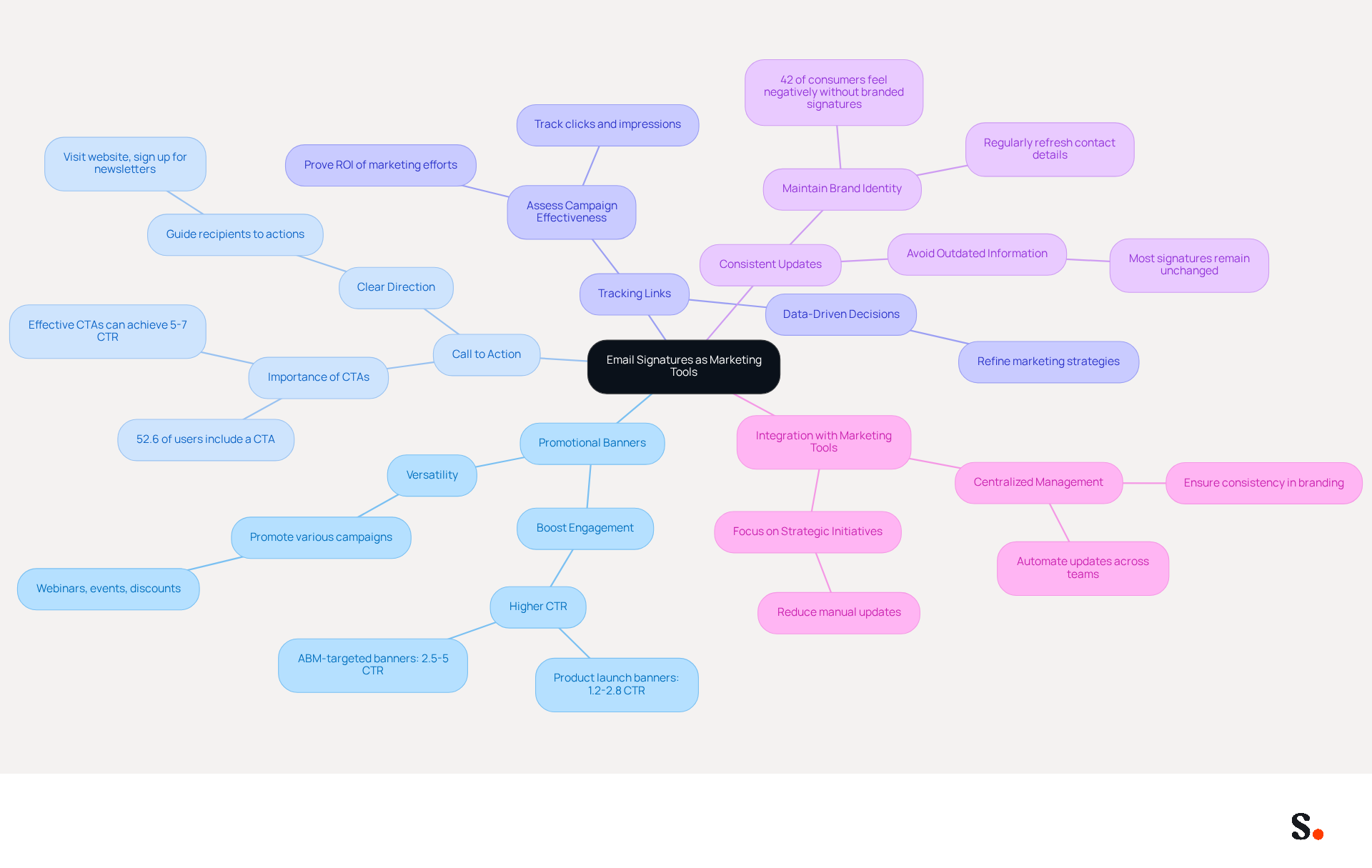
- Promotional Banners: Incorporate banners that showcase current promotions, events, or new products. These visual elements can capture the recipient's attention, as research indicates that banner graphics significantly boost engagement rates compared to standard marketing messages.
- Call to Action: Embed clear calls to action (CTAs) that guide recipients toward specific actions, such as visiting the website, signing up for newsletters, or following the company on social media. Yet, many businesses still overlook the potential of CTAs in their communications, with over half of users (52.6%) incorporating a CTA in their correspondence, demonstrating how effective this approach can be.
- Tracking Links: Use tracking links to assess the effectiveness of campaigns involving electronic correspondence. This data provides valuable insights into engagement levels, allowing businesses to refine their marketing strategies based on real performance signals. This shift allows businesses to make data-driven decisions that enhance their marketing efforts.
- Consistent Updates: Regularly refresh contact details to reflect new campaigns or branding changes. Consistency in branding is essential, as 42% of consumers indicate feeling negatively toward businesses that do not utilize branded identifiers, which underscores the importance of having an appropriate business email signature to keep identifiers relevant.
- Integration with Marketing Tools: Utilize platforms like Scribe to automate the management of digital identifiers throughout the organization. Every modification made in your Aircall setup will automatically be reflected in your Scribe identifiers, ensuring consistency and maximizing marketing opportunities. This integration allows teams to focus on strategic initiatives rather than manual updates.
By embracing these strategies, companies can turn everyday communications into significant marketing assets.
Conclusion
A well-crafted email signature is more than just a digital formality; it is a strategic tool for enhancing brand identity and communication. Incorporating key elements like the sender's full name, job title, company name, and contact details helps organizations create a professional image. This fosters trust and engagement with recipients. The integration of visual elements such as logos and social media links can enhance brand visibility and customer interaction, which can be a powerful asset in any marketing strategy.
Throughout the article, best practices for crafting effective email signatures have been highlighted. These include:
- Adhering to design principles that prioritize simplicity and mobile responsiveness
- Ensuring legal compliance with necessary disclaimers
- Leveraging signatures as marketing tools through promotional banners and calls to action
Many businesses face challenges in maintaining effective communication and brand consistency. By following these guidelines, they can overcome these hurdles, significantly improving their communication effectiveness and brand consistency. This can ultimately result in increased customer trust and higher conversion rates.
In a world where digital communication is paramount, the importance of a well-designed email signature cannot be overstated. Organizations should view their email signatures not merely as a formality but as an opportunity to strengthen their brand presence and drive marketing results. Using tools like Scribe makes it easier for businesses to manage their email signatures and stay compliant. Embracing these best practices will empower organizations to transform everyday communications into impactful marketing opportunities. Organizations that overlook the potential of their email signatures may miss out on significant opportunities to engage and connect with their audience.
Frequently Asked Questions
What is the purpose of a business email signature?
A business email signature enhances communication and strengthens brand identity, serving as a crucial element in professional correspondence.
What are the essential components of a business email signature?
The essential components include the sender's full name, job title, company title (Scribe), contact information, company logo, website URL, and social media links.
Why is it important to include the sender's full name in an email signature?
Including the sender's full name personalizes communication and builds trust with recipients.
How does a job title in an email signature benefit the recipient?
A job title clarifies the sender's role and authority within the organization, helping recipients understand the context of the message.
What role does the company title (Scribe) play in an email signature?
The company title reinforces identity and provides context for the message, enhancing recognition.
Why should contact information be included in an email signature?
Including a direct phone number and email address facilitates easy communication, ensuring recipients can reach out without hassle.
How does incorporating a company logo in an email signature help?
A company logo boosts brand recognition and adds a visual element that can make the signature more memorable.
What is the benefit of including a website URL in an email signature?
A link to the company website enables recipients to discover more about the organization, driving traffic and interaction.
How do social media links in an email signature enhance communication?
Including links to professional social media profiles boosts interaction and provides additional avenues for connection.
What impact do well-crafted digital identifiers have on marketing?
Studies indicate that well-crafted digital identifiers can achieve an impressive 12% average click-through rate on banner links, showcasing their effectiveness as marketing tools.
What are the advantages of centralized management of digital signatures?
Organizations that adopt centralized management of digital signatures see 85% improved consistency in their identity and three times greater campaign interaction.
What can happen if a professional email signature is neglected?
Neglecting to utilize a professional email signature can hinder an organization's ability to connect effectively with clients and partners.
List of Sources
- Define Essential Components of a Business Email Signature
- All the Best Email Signature Practices for Marketing Success (https://scribe-mail.com/en-US/blog/all-the-best-email-signature-practices-for-marketing-success)
- Email Signature Best Practices for 2026 (+ 15 Pro Examples) (https://wavecnct.com/blogs/email-signature-best-practices-2026)
- 20 best email signature design examples for 2026 — Stripo.email (https://stripo.email/blog/10-best-email-signature-design-examples)
- Best practices for business email signatures in 2026 (https://bybrand.io/blog/best-practices)
- Incorporate Effective Design Principles for Visual Appeal
- The impact of email signatures on your branding (https://signitic.com/en/resources/the-impact-of-email-signatures-on-your-branding)
- Email Signature Trends 2026: What Designers Are Actually Using (https://markaplugin.com/blog/email-signature-trends-2026)
- Email Design Trends and Best Practices in 2026 | Mailjet (https://mailjet.com/blog/email-best-practices/email-design-trends)
- 4 Best Practices for a Typical Email Signature That Boosts Marketing (https://scribe-mail.com/en-US/blog/4-best-practices-for-a-typical-email-signature-that-boosts-marketing)
- Email Signature Best Practices for 2026 (+ 15 Pro Examples) (https://wavecnct.com/blogs/email-signature-best-practices-2026)
- Ensure Legal Compliance and Include Necessary Disclaimers
- Email Signature Compliance Requirements | 2026 Update (https://signandgo.io/blog/email-signature-compliance-requirements-us-uk-canada)
- Email Signature Mandatory Information 2026: Rules for GmbH & Co. (https://conbool.com/blog/e-mail-signatur-pflichtangaben-unternehmen-dsgvo-en)
- CAN-SPAM Act: A Compliance Guide for Business (https://ftc.gov/business-guidance/resources/can-spam-act-compliance-guide-business)
- Checklist for Email Privacy Compliance 2026 (https://mailforge.ai/blog/checklist-for-email-privacy-compliance)
- Leverage Email Signatures as Marketing Tools
- 12 email signature marketing examples that drive clicks (2026) (https://signitic.com/en/resources/12-email-signature-marketing-examples-that-actually-drive-clicks)
- 40+ Email Signature Statistics for 2026 (Data + Insights) (https://wavecnct.com/blogs/email-signature-statistics)
- Email Signature Trends 2026: Centralized Control & Automation | SIGNandGO posted on the topic | LinkedIn (https://linkedin.com/posts/signngo_email-signature-trends-to-watch-in-2026-activity-7401523471786217473-zAVL)
- Email Signature Banners: Turn Every Email Into a Marketing Channel (https://bulksignature.com/blog/email-signature-banners-turn-every-email-into-a-marketing-channel)
- Why Email Signatures Must Be In Your 2026 Marketing Plan | Rocketseed (https://rocketseed.com/blog/2026-marketing-plan-email-signatures)
Get started with Scribe
See why teams switch to Scribe
Free 14-day trial — no credit card.