4 Best Practices for an Effective Police Email Signature
Establishing a professional email signature is essential for law enforcement agencies to build trust and authority in their communications. Incorporating
Sophie Grant
Email Signature Specialist, Scribe

Introduction
Establishing a professional email signature is essential for law enforcement agencies to build trust and authority in their communications. Incorporating agency logos, standardized fonts, and clear call-to-action features can significantly improve public perception and engagement, as evidenced by successful implementations in various law enforcement agencies. Yet, ensuring these signatures comply with legal standards and remain secure from data breaches poses a significant challenge.
How can police agencies effectively balance professionalism, compliance, and community interaction in their email communications?
Establish Brand Consistency and Professionalism
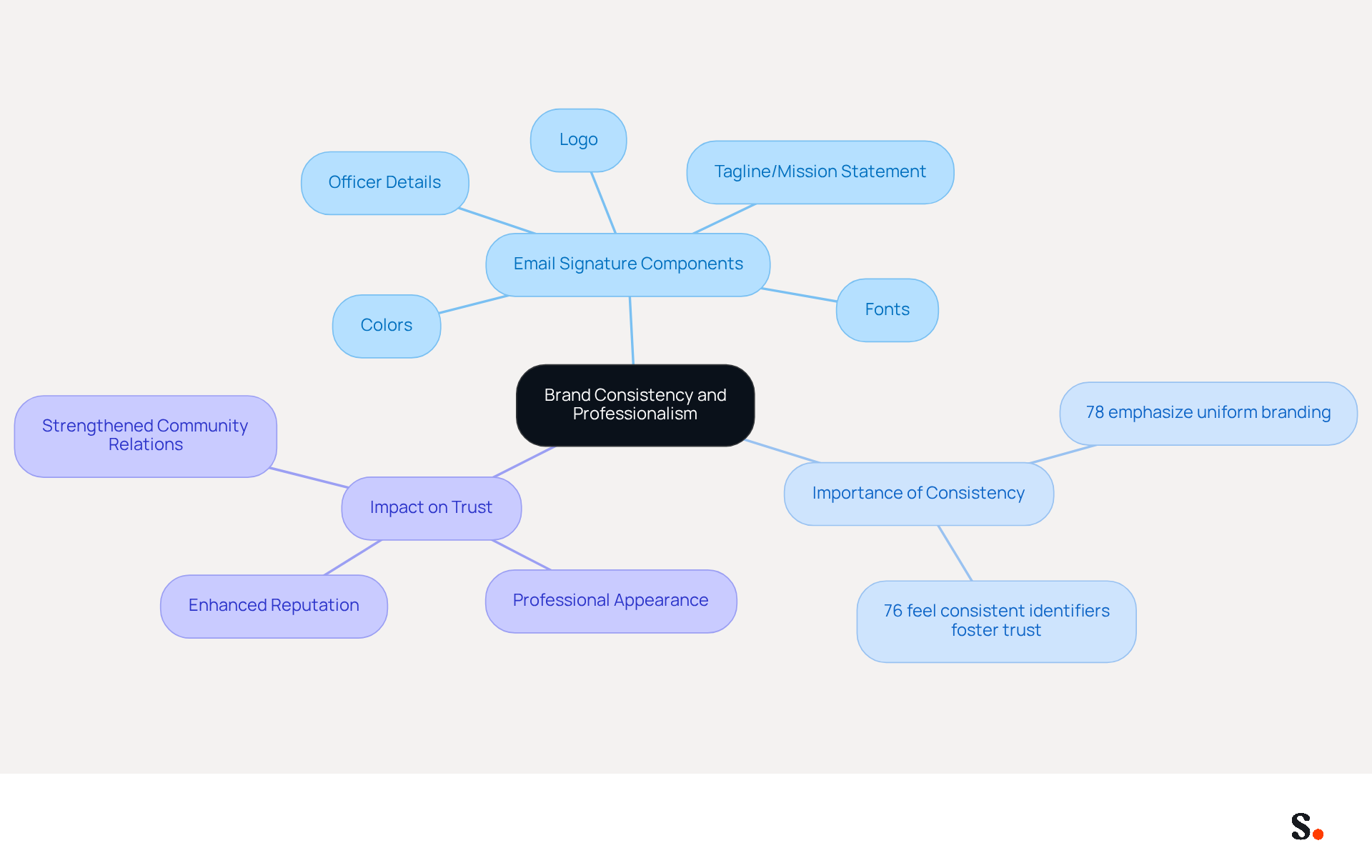
To foster trust and professionalism in police communications, it is essential to establish a consistent police email signature. Incorporating the agency's logo, official colors, and standardized fonts in the police email signature enhances visual appeal and ensures that every email consistently represents the agency. A well-crafted endorsement should include the officer's name, rank, unit name, contact details, and a police email signature, ensuring everything is formatted clearly and legibly. For instance, using a consistent format across all identifiers, such as the police email signature, allows recipients to quickly recognize the sender as a representative of the law enforcement agency, promoting trust and authority.
Additionally, with Scribe's automated synchronization feature with Aircall, any changes made in your Aircall configuration will automatically reflect in your Scribe signatures. This ensures that police agencies can effortlessly maintain uniformity and brand consistency with their police email signature. Incorporating elements such as a tagline or mission statement can further reinforce the team's commitment to community service and public safety. Notably, studies indicate that 76% of individuals feel a consistent communication identifier fosters trust, and 78% of marketers emphasize the importance of uniform branding in all interactions. By maintaining a professional appearance in written communications, law enforcement agencies can enhance their reputation and strengthen community relations, ultimately leading to improved public perception and engagement.
Incorporate Effective Call-to-Action Elements
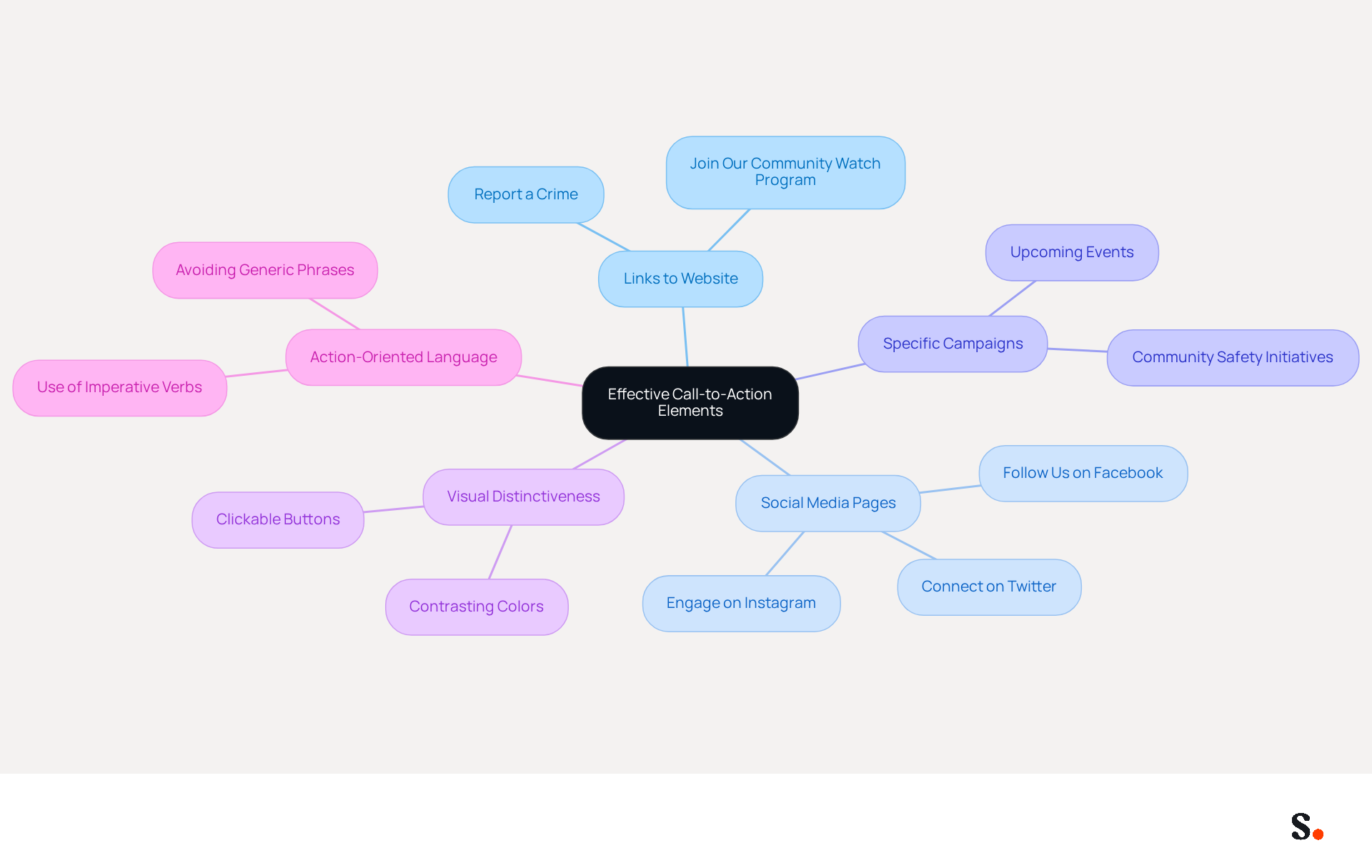
To enhance the police email signature, the integration of effective call-to-action (CTA) elements is crucial. This can include links to the department's website, social media pages, or specific campaigns such as community safety initiatives or upcoming events. For instance, CTAs like 'Report a Crime' or 'Join Our Community Watch Program' can be incorporated as clickable buttons or hyperlinks within the footer.
Using action-oriented language and clear instructions, such as 'Activate' or 'Grab,' significantly increases the likelihood of recipients engaging with the content. Research indicates that messages featuring branded identifiers can see a 22% boost in response rates, highlighting the importance of effective CTAs in law enforcement communications. Ensuring that CTAs are visually distinct - through contrasting colors or buttons - can draw attention and encourage clicks. It is also crucial to avoid generic CTAs like 'click here' or 'sign up,' as specificity enhances engagement. By strategically placing CTAs in communication footers and regularly auditing for branding consistency, law enforcement agencies can boost community interaction and awareness, thereby enhancing public safety and trust.
Utilize Automation for Efficient Signature Management
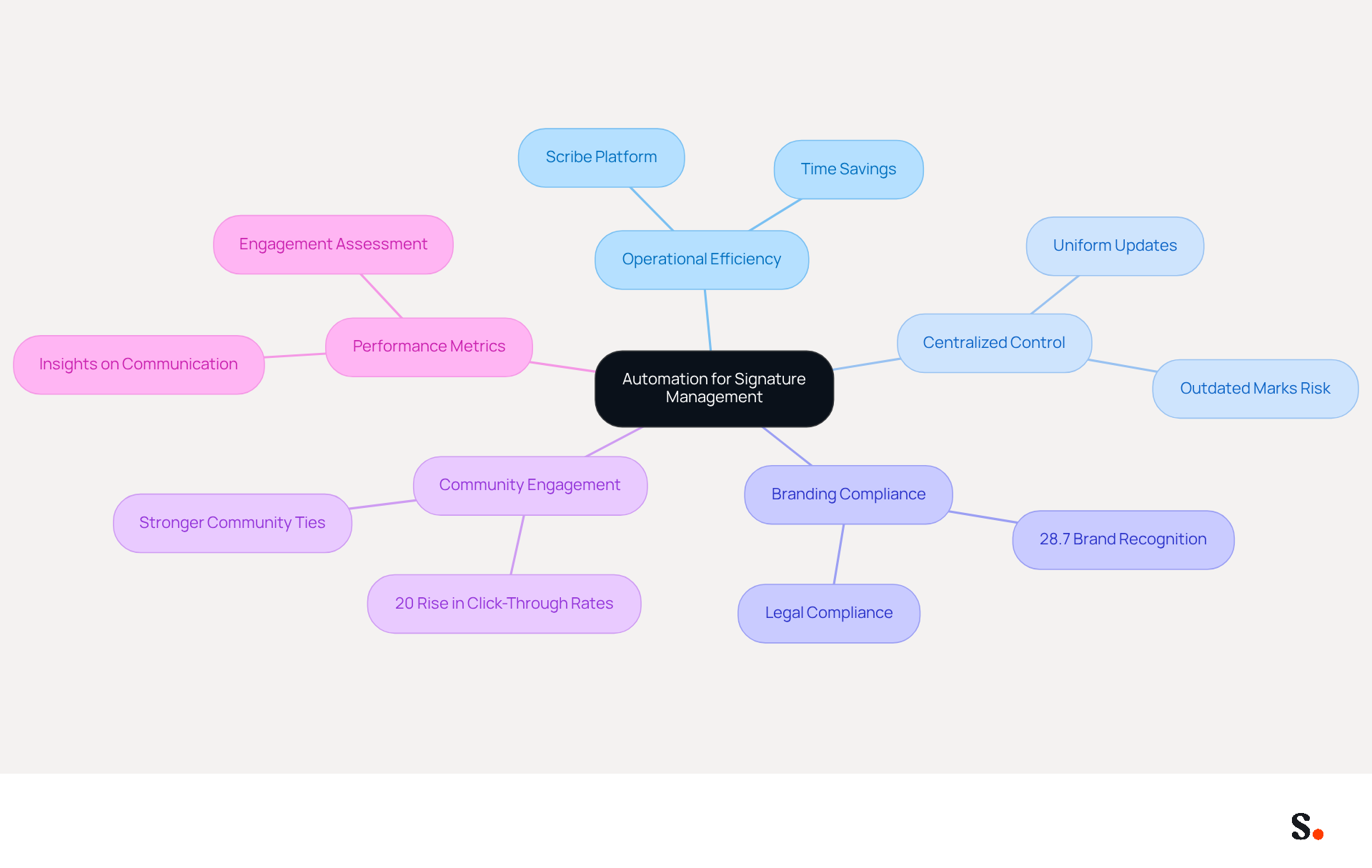
An automated email management system is crucial for police departments to enhance operational efficiency, particularly in managing their police email signature. These systems offer centralized control over all marks, ensuring that updates-whether due to personnel changes or branding modifications-are uniformly applied across the organization. Without a centralized system, departments risk using outdated marks, which can damage their credibility. This approach is essential for maintaining professionalism and trust in official communications, such as those that include a police email signature.
For example, using a platform like Scribe enables teams to create and implement a standardized police email signature with just a few clicks. This not only saves valuable time but also ensures compliance with branding and legal requirements, including Scribe's SOC 2 Type II certification and adherence to GDPR and CCPA. Furthermore, automated systems can provide insights on performance metrics, allowing departments to assess how their communications are perceived by the public. This improvement can lead to stronger community ties and enhanced public trust.
Evidence indicates that organizations utilizing automated messaging solutions can see a [20% rise in click-through rates](https://55% of a brand’s first impression comes from visuals alone.), highlighting the potential for improved engagement with the community. Moreover, the capability to uphold consistent branding throughout all communications is essential, as 28.7% of businesses mainly utilize digital identifiers to enhance brand recognition. By adopting such systems, law enforcement can not only improve their operations but also build lasting trust within their communities. Scribe's unique positioning allows Marketing teams to manage their digital identifiers independently after the initial IT setup, further enhancing operational efficiency.
Ensure Compliance and Security in Design
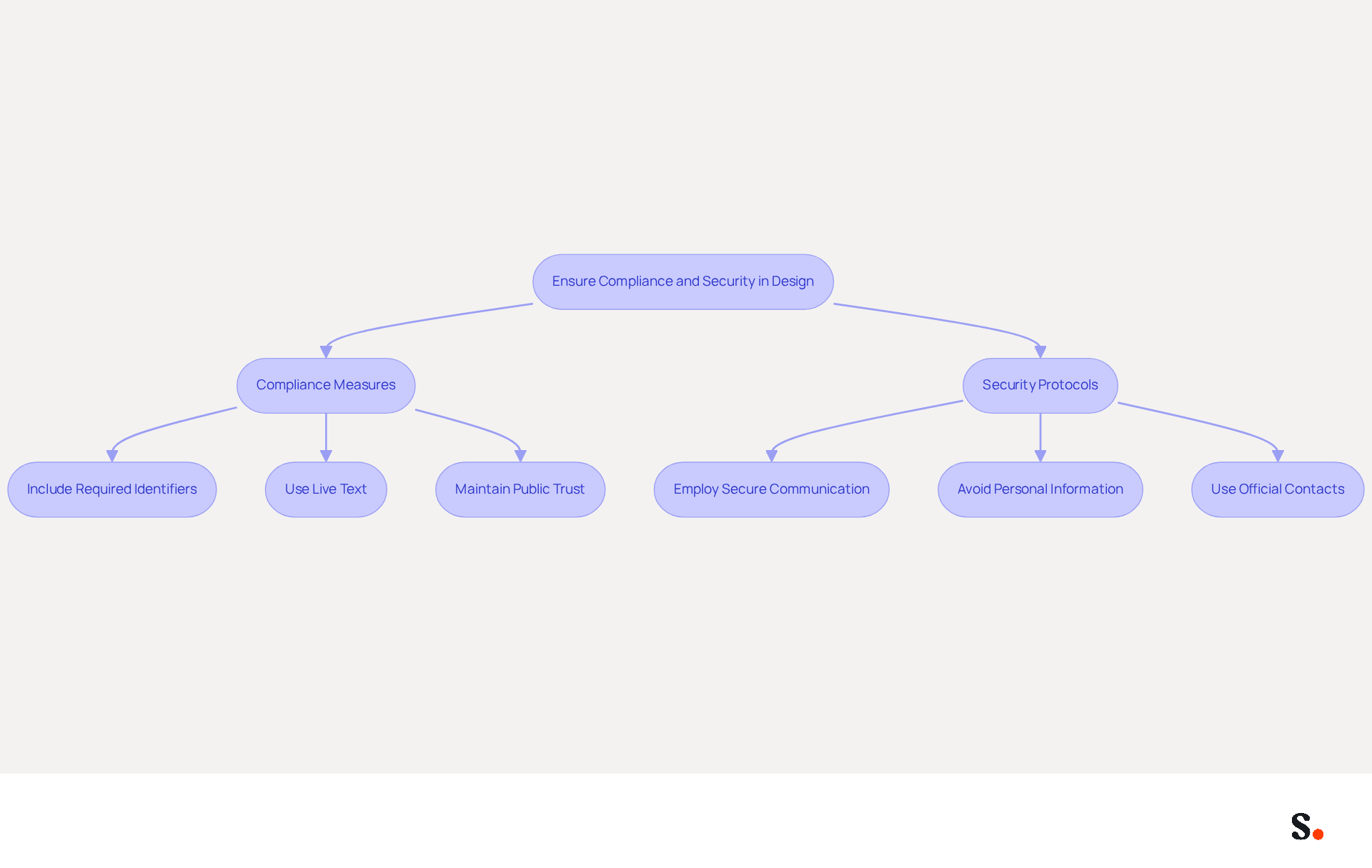
In law enforcement, ensuring compliance with communication regulations is paramount for maintaining public trust and operational integrity. To ensure adherence and security in police communication identifiers, it is essential to include all legally required information, such as the unit's full name, address, and any necessary disclaimers. This practice fulfills legal obligations and builds trust with the public. For example, the legal stipulations for electronic communications in law enforcement agencies frequently require the inclusion of specific identifiers, such as the sender's name, agency identification, and contact details, which must be presented as live text rather than images to comply with accessibility standards.
It's essential to implement strong security measures to safeguard sensitive information. Law enforcement agencies should employ secure communication protocols and refrain from including personal phone numbers or addresses in their contact details, choosing instead to use official agency contact information. This approach mitigates the risk of personal data exploitation while maintaining professionalism in communications. By focusing on compliance and secure communication design, law enforcement agencies can protect their messages and maintain the integrity of their professional image.
By integrating Scribe with Google Workspace, police departments can streamline their email management. This synchronization allows for automatic updates, ensuring that any changes in team member information-such as job positions or group assignments-are reflected in real-time without manual input. This not only saves time but also improves compliance by ensuring that all approvals are current and consistent. Scribe's SOC 2 Type II certification and compliance with GDPR and CCPA further bolster security and compliance efforts. Non-compliance with legal standards can result in significant consequences for law enforcement agencies. Ultimately, the choice of a centralized signature management system can be a decisive factor in upholding the professionalism and security of law enforcement communications.
Conclusion
A professional email signature is essential for law enforcement agencies to establish credibility and trust in their communications. Integrating the agency's logo, official colors, and standardized fonts allows police email signatures to represent the agency's identity effectively. Utilizing automation tools like Scribe simplifies the management of these signatures and ensures compliance with legal standards, enhancing the overall professionalism of communications.
Key practices discussed include the importance of incorporating effective call-to-action elements. This approach can enhance community engagement significantly. By using specific and visually distinct CTAs, police departments can encourage public interaction and raise awareness of safety initiatives. Additionally, implementing automated systems for email signature management allows for efficient updates and compliance with security regulations, ensuring that all communications remain current and trustworthy.
In conclusion, the significance of a well-crafted police email signature cannot be overstated. It serves as a critical touchpoint for community relations and public trust. Ultimately, these strategies empower agencies to build lasting relationships with the communities they serve.
Frequently Asked Questions
Why is it important to establish a consistent police email signature?
A consistent police email signature fosters trust and professionalism in police communications, ensuring that every email represents the agency effectively.
What elements should be included in a police email signature?
A well-crafted police email signature should include the officer's name, rank, unit name, contact details, and the agency's logo, official colors, and standardized fonts.
How does a consistent email signature enhance recognition?
Using a consistent format across all identifiers, such as the police email signature, allows recipients to quickly recognize the sender as a representative of the law enforcement agency, promoting trust and authority.
What feature does Scribe offer to help maintain email signature consistency?
Scribe's automated synchronization feature with Aircall ensures that any changes made in the Aircall configuration automatically reflect in Scribe signatures, helping police agencies maintain uniformity.
How can incorporating a tagline or mission statement benefit police email signatures?
Including a tagline or mission statement can reinforce the team's commitment to community service and public safety, enhancing the overall message of the email signature.
What do studies indicate about the impact of consistent communication identifiers?
Studies indicate that 76% of individuals feel a consistent communication identifier fosters trust, and 78% of marketers emphasize the importance of uniform branding in all interactions.
How does maintaining a professional appearance in written communications affect law enforcement agencies?
Maintaining a professional appearance can enhance the agency's reputation and strengthen community relations, ultimately leading to improved public perception and engagement.
List of Sources
- Establish Brand Consistency and Professionalism
- 4 Best Practices for Your Work Email Signature Strategy (https://scribe-mail.com/en-US/blog/4-best-practices-for-your-work-email-signature-strategy)
- Email Signature Branding: Consistency and Impact | Crossware365 (https://crossware365.com/blog/mastering-email-signature-branding-market-presence)
- Branding statistics you need to know in 2026 (https://dash.app/blog/branding-statistics)
- Is Your Customer Rebrand Stuck on Email Signatures? (https://wisestamp.com/blog/rebrand-email-signatures)
- The impact of email signatures on your branding (https://signitic.com/en/resources/the-impact-of-email-signatures-on-your-branding)
- Incorporate Effective Call-to-Action Elements
- Community Engagement | San Francisco Police Department (https://sanfranciscopolice.org/your-sfpd/explore-department/community-engagement)
- The Ultimate Guide to Email Signature Call-to-Action - NEWOLDSTAMP (https://newoldstamp.com/blog/the-ultimate-guide-to-email-signature-call-to-action)
- Email signature statistics: Why every business should optimize their email signatures — Stripo.email (https://stripo.email/blog/email-signature-statistics-why-every-business-should-optimize-their-email-signatures)
- Community Engagement and Collaboration with Key Stakeholders (https://csgjusticecenter.org/publications/expanding-first-response/topics/stakeholder-collaboration)
- Utilize Automation for Efficient Signature Management
- The benefits of E-signature technology for police departments (https://police1.com/police-administration/articles/the-benefits-of-e-signature-technology-for-police-departments-WHakbgRwfrqEjVCR)
- e-Forms and e-Signatures Help Law Enforcement Operations (https://softdocs.com/blog/how-eforms-and-esignatures-reduce-law-enforcement-inefficiencies-and-streamline-operations)
- Email signature statistics and trends in 2024 (https://wisestamp.com/blog/email-signature-statistics)
- Email signature statistics: Why every business should optimize their email signatures — Stripo.email (https://stripo.email/blog/email-signature-statistics-why-every-business-should-optimize-their-email-signatures)
- Ensure Compliance and Security in Design
- Ensuring Email Signature Compliance: Legal Requirements | Crossware365 (https://crossware365.com/blog/ensuring-email-signature-compliance-legal-requirements)
- Interagency communication in the age of email, YouTube and Zoom (https://apbweb.com/2025/02/interagency-communication-in-the-age-of-email-youtube-and-zoom)
- Email Signature Compliance for Government Agencies (IT Guide) (https://wisestamp.com/guides/how-to-ensure-email-signature-compliance-for-government-agencies)
- Email Signature Compliance: What IT & Legal Needs to Know (https://exclaimer.com/blog/email-signature-compliance-what-it-and-legal-teams-need-to-know)
- Operational Security: The Backbone of Effective Police Communication - Salt | Secure Communications (https://saltcommunications.com/news/operational-security-the-backbone-of-effective)
Get started with Scribe
Manage signatures across your whole team
Free 14-day trial — no credit card.