4 Best Practices for Choosing a Professional Email Signature Font
Choosing the right font for a professional email signature is crucial for shaping perceptions and enhancing communication. With many organizations struggling
Sophie Grant
Email Signature Specialist, Scribe

On this page
- Introduction
- Choose Standard Fonts for Compatibility and Professionalism
- Prioritize Font Size and Readability for Effective Communication
- Implement Font Pairing and Design Best Practices for Visual Appeal
- Ensure Brand Consistency with Appropriate Font Choices
- Conclusion
- Frequently Asked Questions
- List of Sources
Introduction
Choosing the right font for a professional email signature is crucial for shaping perceptions and enhancing communication. With many organizations struggling to maintain brand consistency across various platforms, understanding the best practices for font selection can significantly enhance professionalism and readability. Organizations often face challenges in navigating the many font options available to ensure their email signatures reflect their brand identity and engage recipients effectively.
Choose Standard Fonts for Compatibility and Professionalism
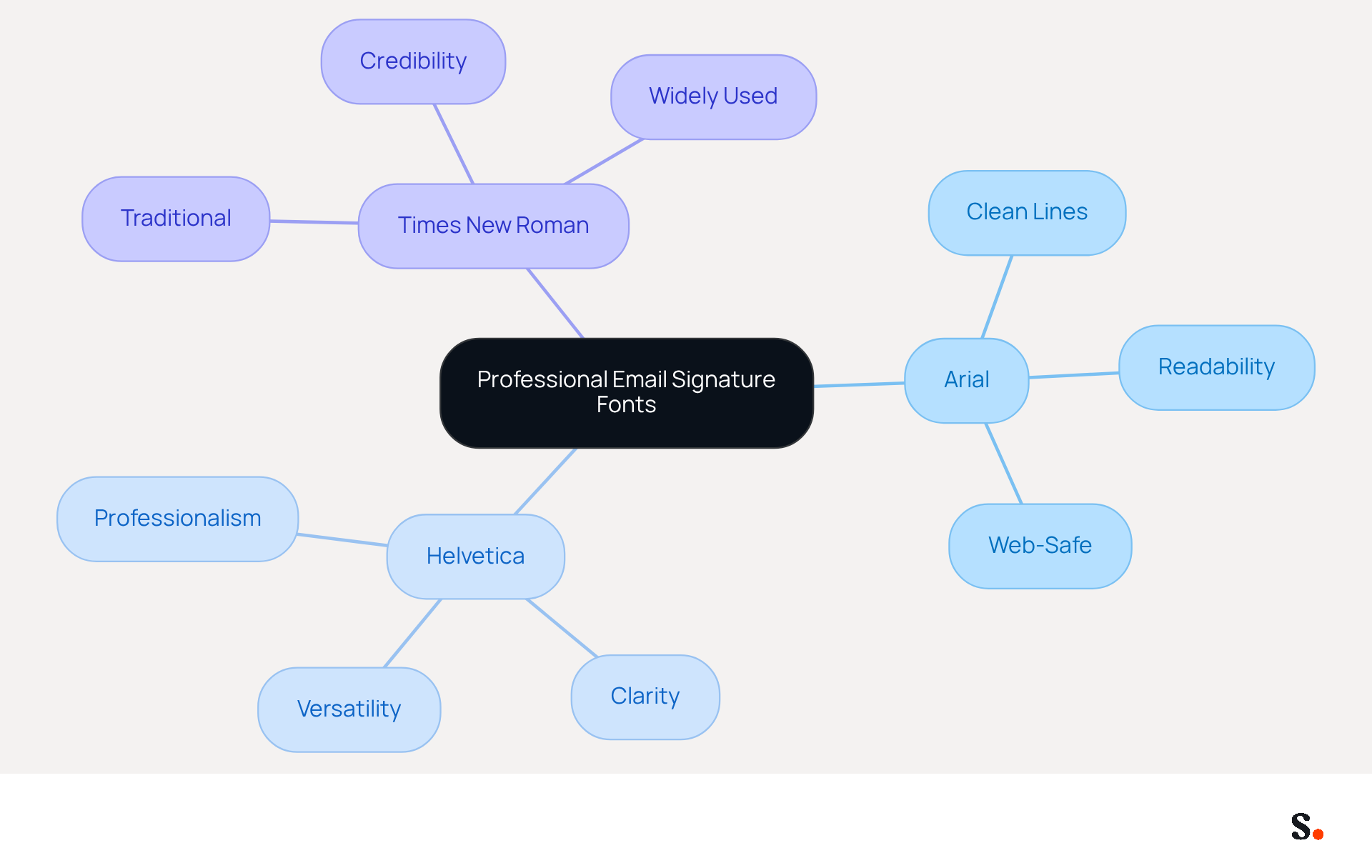
Choosing the appropriate professional email signature font for your correspondence closing is crucial for maintaining a professional image. Choose standard, web-safe styles such as:
- Arial
- Helvetica
- Times New Roman
These typefaces are widely compatible across various messaging clients and devices, ensuring that your signature appears uniform and professional to all recipients. Arial, known for its clean lines and readability, is a recommended choice for business communications. Avoid using decorative or custom typefaces, as they can result in an inconsistent appearance that undermines your brand's professionalism. Sticking to standard typefaces not only enhances readability but also ensures your message comes through clearly, no matter how the recipient views it. Ultimately, the choice of professional email signature font can significantly influence the perception of your brand in professional communications.
Prioritize Font Size and Readability for Effective Communication
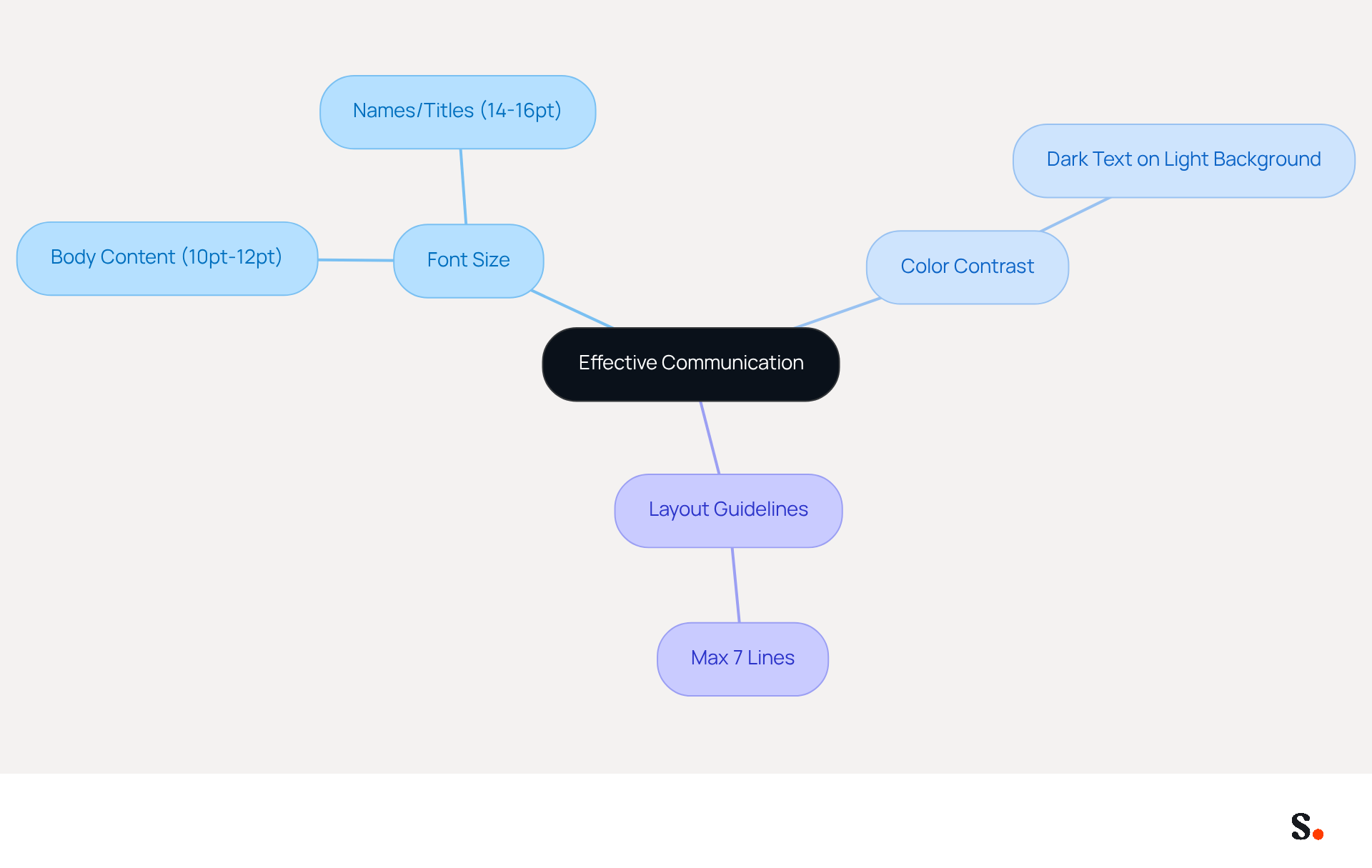
Choosing the right font size is crucial for ensuring your email signature is both readable and professional. Use a text size between 10pt and 12pt for body content to ensure clarity, while names or titles should be slightly larger, around 14-16pt, to establish a visual hierarchy. This approach guarantees that your contact information is easily readable without overwhelming the recipient.
Ensure there is a strong contrast between the text color and the background; dark text on a light background is typically the most legible. For instance, using black or dark grey text on a white background maximizes contrast and enhances readability.
Moreover, keep a maximum of seven lines in your message footer to prevent clutter and ensure clarity. Utilizing web-safe typefaces is also advisable to maintain consistency across various devices. By adhering to these guidelines, you enhance the professionalism of your correspondence.
Implement Font Pairing and Design Best Practices for Visual Appeal
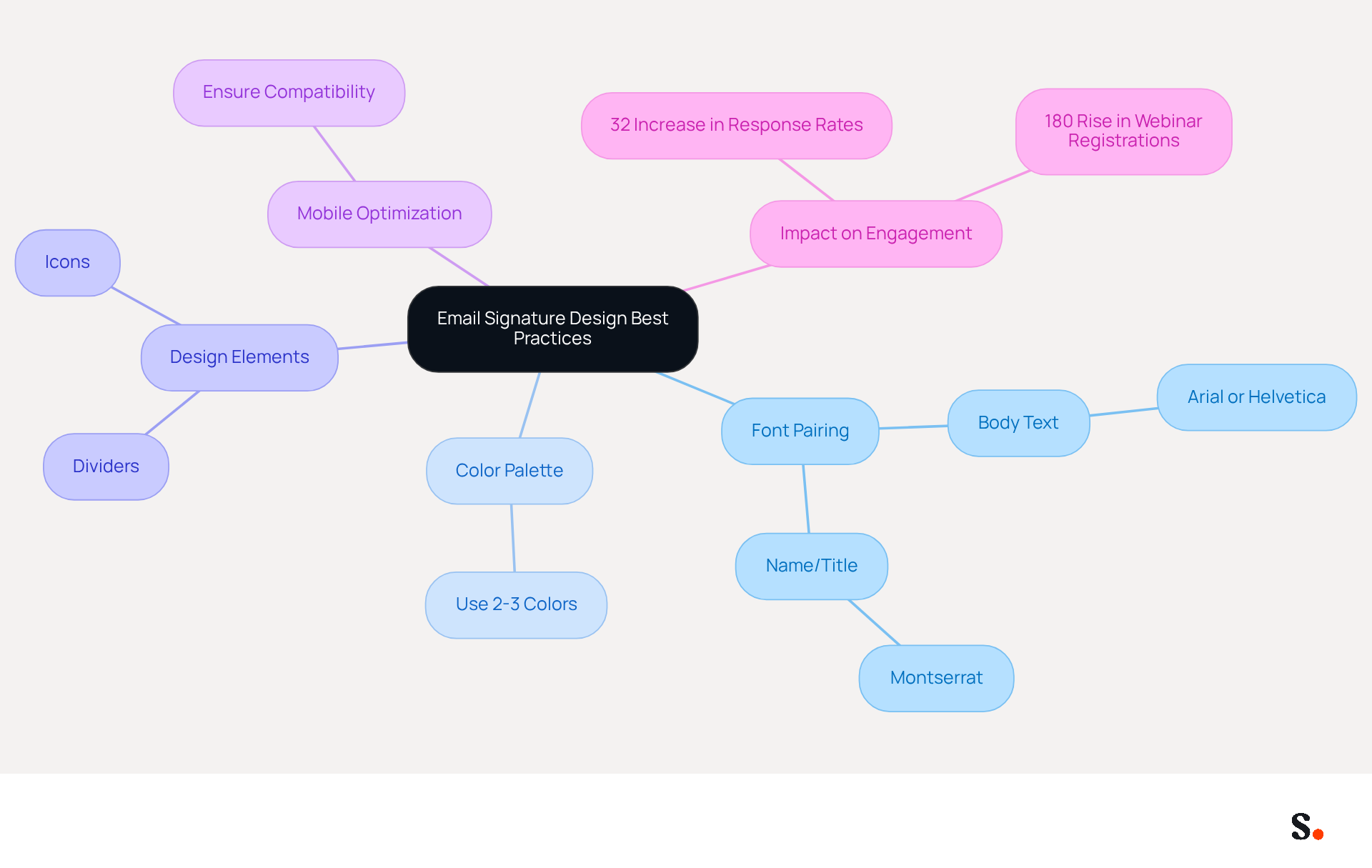
Creating a visually appealing professional email signature font is essential for effective communication. One effective approach is to use a clean, sans-serif typeface for the body text and a distinctive professional email signature font for your name or title. For example, pairing Arial or Helvetica at 14-16px for the body text with a bold font like Montserrat for your name can create a striking contrast that captures attention and ensures readability across email clients.
Maintaining a consistent color palette that aligns with your brand's identity is also crucial. Limiting the use of colors to two or three helps avoid overwhelming the recipient and ensures clarity. Incorporating design elements such as dividers or icons can further enhance the overall appearance of your signature. Furthermore, it is essential to optimize electronic communication identifiers for mobile devices, ensuring they display correctly on smaller screens.
Research shows that a high-quality headshot can increase response rates by 32%, while well-crafted email footers can significantly enhance engagement. For instance, a tech firm reported a 180% rise in webinar registrations after refreshing their contact details with registration links. By following these design best practices and ensuring a standardized email signature template across Scribe, you can create an email signature using a professional email signature font that not only appears professional but also effectively conveys your organization's personality. Ultimately, a well-crafted email signature can transform your communication strategy and enhance your brand's image.
Ensure Brand Consistency with Appropriate Font Choices
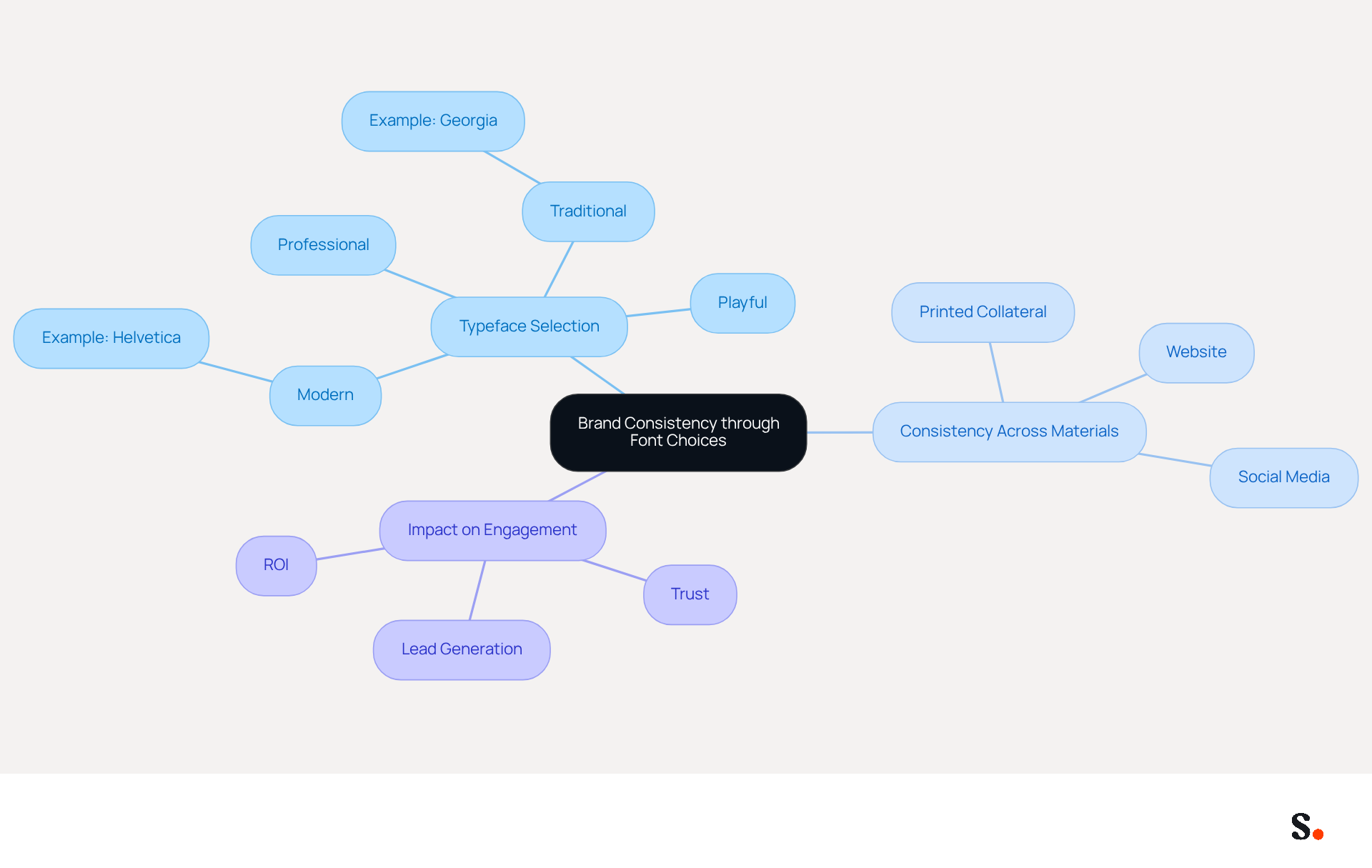
Choosing the right typefaces is essential for reinforcing your brand identity. It is crucial to select typefaces that align with your overall image-whether modern, traditional, playful, or professional. For instance, a label recognized for its innovative approach may choose a clean sans-serif typeface like Helvetica, while a more traditional label might find a serif typeface like Georgia more suitable.
Consistency in typeface usage across all marketing materials, including your website, social media, and printed collateral, strengthens your identity and fosters trust with your audience. Research indicates that 76% of recipients feel more confident when messages include branded identifiers, highlighting the critical role of visual consistency.
By aligning your professional email signature font selections with your organization's overall aesthetic, you create a cohesive and professional image that resonates with recipients, ultimately enhancing engagement and loyalty. However, many organizations struggle to ensure that every message sent accurately reflects their identity.
With Scribe's automated signature management, organizations can maintain this consistency across their teams effectively, eliminating the risk of discrepancies and maximizing marketing impact. This consistency not only fosters trust but also significantly impacts lead generation and ROI. Scribe's compliance with SOC 2 Type II, GDPR, and CCPA further establishes trust in your email communications, ensuring that your brand is not only consistent but also secure.
Conclusion
The choice of font in a professional email signature significantly influences brand perception. Selecting standard, web-safe fonts, prioritizing readability, and ensuring brand consistency are crucial for creating email signatures that communicate professionalism and enhance engagement. The right font choice can significantly influence how recipients perceive your messages, making this decision warrant careful consideration.
Key insights from the article emphasize the importance of:
- Using standard fonts like Arial and Helvetica for compatibility
- Maintaining appropriate font sizes for clarity
- Implementing design best practices for visual appeal
Additionally, aligning font choices with brand identity fosters trust and recognition among recipients. With Scribe's automated signature management, organizations can ensure that their email signatures remain consistent and secure, reinforcing their brand image across all communications.
Ultimately, the impact of a well-designed email signature extends beyond mere aesthetics; it can enhance engagement, improve response rates, and contribute to lead generation. Implementing these best practices allows organizations to use their email signatures as effective marketing tools that showcase their professionalism and dedication to quality. Embrace the opportunity to refine your email signature strategy and watch as it transforms your communication efforts into a cohesive and impactful representation of your brand.
Frequently Asked Questions
Why is it important to choose the right font for a professional email signature?
Choosing the appropriate font for your professional email signature is crucial for maintaining a professional image and ensuring that your signature appears uniform and professional to all recipients.
What are some recommended fonts for professional email signatures?
Recommended fonts for professional email signatures include standard, web-safe styles such as Arial, Helvetica, and Times New Roman.
What are the benefits of using standard fonts in email signatures?
Standard fonts enhance readability and ensure that your message comes through clearly, regardless of how the recipient views it. They are widely compatible across various messaging clients and devices.
What type of fonts should be avoided in professional email signatures?
Decorative or custom typefaces should be avoided, as they can result in an inconsistent appearance that undermines your brand's professionalism.
How does the choice of font influence brand perception in communications?
The choice of professional email signature font can significantly influence the perception of your brand in professional communications, as it reflects your attention to detail and commitment to professionalism.
List of Sources
- Choose Standard Fonts for Compatibility and Professionalism
- 10 Best Fonts for Email Signature That Enhance Professionalism (https://scribe-mail.com/en-US/blog/10-best-fonts-for-email-signature-that-enhance-professionalism)
- How to Choose Best Email Signature Fonts for Professionalism - NEWOLDSTAMP (https://newoldstamp.com/blog/how-to-choose-the-best-email-signature-fonts-to-make-your-email-look-professional)
- The Best Fonts for Email Signatures: A Professional Guide (https://linkedin.com/pulse/best-fonts-email-signatures-professional-guide-bulksignature-tmvuf)
- Best fonts for Email Signatures: 7 Email-Safe Options (https://wisestamp.com/guides/what-are-the-best-fonts-for-email-signatures)
- The Best Fonts for Email Signatures That Look Clean and Professional (https://bulksignature.com/blog/the-best-fonts-for-email-signatures)
- Prioritize Font Size and Readability for Effective Communication
- Research Recap: Branded Email Signatures Increase Company Recognition, Trust - Demand Gen Report (https://demandgenreport.com/industry-news/research-recap-branded-email-signatures-increase-company-recognition-trust/47252)
- Email Signature Best Practices - NEWOLDSTAMP (https://newoldstamp.com/blog/email-signature-best-practices)
- Email Signature Best Practices for 2026 (+ 15 Pro Examples) (https://wavecnct.com/blogs/email-signature-best-practices-2026)
- The Best Fonts for Email Signatures That Look Clean and Professional (https://bulksignature.com/blog/the-best-fonts-for-email-signatures)
- Implement Font Pairing and Design Best Practices for Visual Appeal
- Email Signature Best Practices - NEWOLDSTAMP (https://newoldstamp.com/blog/email-signature-best-practices)
- Why Email Signatures Must Be In Your 2026 Marketing Plan | Rocketseed (https://rocketseed.com/blog/what-are-the-biggest-email-trends-for-2026)
- 20 best email signature design examples for 2026 — Stripo.email (https://stripo.email/blog/10-best-email-signature-design-examples)
- Email Signature Best Practices for 2026 (+ 15 Pro Examples) (https://wavecnct.com/blogs/email-signature-best-practices-2026)
- Ensure Brand Consistency with Appropriate Font Choices
- Email Signature Branding: Consistency and Impact | Crossware365 (https://crossware365.com/blog/mastering-email-signature-branding-market-presence)
- Best Practices for Email Signature O365 to Boost Brand Consistency (https://scribe-mail.com/en-US/blog/best-practices-for-email-signature-o365-to-boost-brand-consistency)
- The impact of email signatures on your branding (https://signitic.com/en/resources/the-impact-of-email-signatures-on-your-branding)
- Why Are Email Signatures Key to Brand Awareness? | QuickMail (https://quickmail.com/role-of-email-signatures-in-brand-awareness)
- Research Recap: Branded Email Signatures Increase Company Recognition, Trust - Demand Gen Report (https://demandgenreport.com/industry-news/research-recap-branded-email-signatures-increase-company-recognition-trust/47252)
Get started with Scribe
Manage signatures across your whole team
Free 14-day trial — no credit card.