4 Best Practices for Outlook Signature Creation to Boost Engagement
In a marketplace saturated with competition, many businesses overlook a critical opportunity to enhance their brand presence. Email signatures can actually be
Sophie Grant
Email Signature Specialist, Scribe

Introduction
In a marketplace saturated with competition, many businesses overlook a critical opportunity to enhance their brand presence. Email signatures can actually be a powerful way to reinforce brand identity and boost engagement. Implementing best practices for email signature creation allows organizations to maintain consistency while leveraging these digital identifiers as effective marketing tools. Transforming email signatures into strategic assets can be the key differentiator that elevates a brand's visibility and engagement.
Establish Brand Consistency in Email Signatures
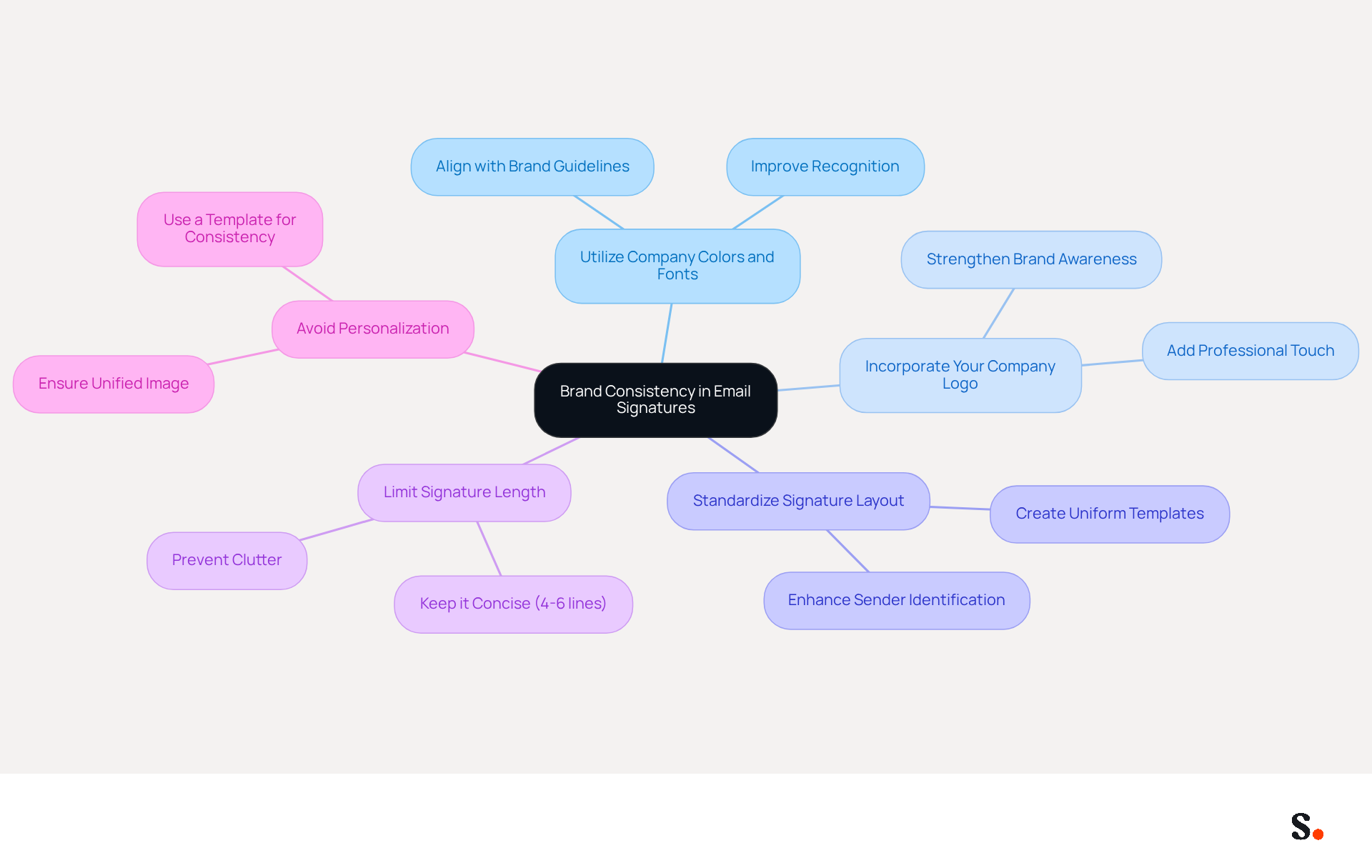
Inconsistent email signatures can undermine a company's professional image and brand recognition. To establish brand consistency in email signatures, follow these best practices:
- Utilize Company Colors and Fonts: Ensure that the colors and fonts applied in the email align with your guidelines. This creates a clear connection between your emails and your brand identity, improving recognition.
- Incorporate Your Company Logo: Always include your company logo in the email footer. This not only strengthens brand awareness but also adds a professional touch to your correspondence, making it more reliable.
- Standardize Signature Layout: Create a standardized layout for all employees to follow. This includes the placement of the logo, contact information, and any additional elements like social media links. A consistent layout helps recipients quickly identify the sender's affiliation, improving engagement.
- Limit Signature Length: Keep the sign-off concise, ideally within 4-6 lines. This prevents clutter and ensures that the sign-off does not overshadow the content of the message, maintaining focus on the communication.
- Avoid Personalization: While personal touches can be appealing, they can lead to inconsistencies. Stick to a template that all employees can utilize to maintain consistency throughout the organization, ensuring a unified image.
Ultimately, a unified email signature strategy not only enhances brand perception but also fosters trust among clients and partners. Centralized management of email branding can lead to an 85% improvement in brand consistency, making it a strategic asset for organizations. Furthermore, case studies indicate that companies with standardized formats experience significantly higher engagement rates, reinforcing the significance of these best practices.
Implement Effective Signature Management Techniques
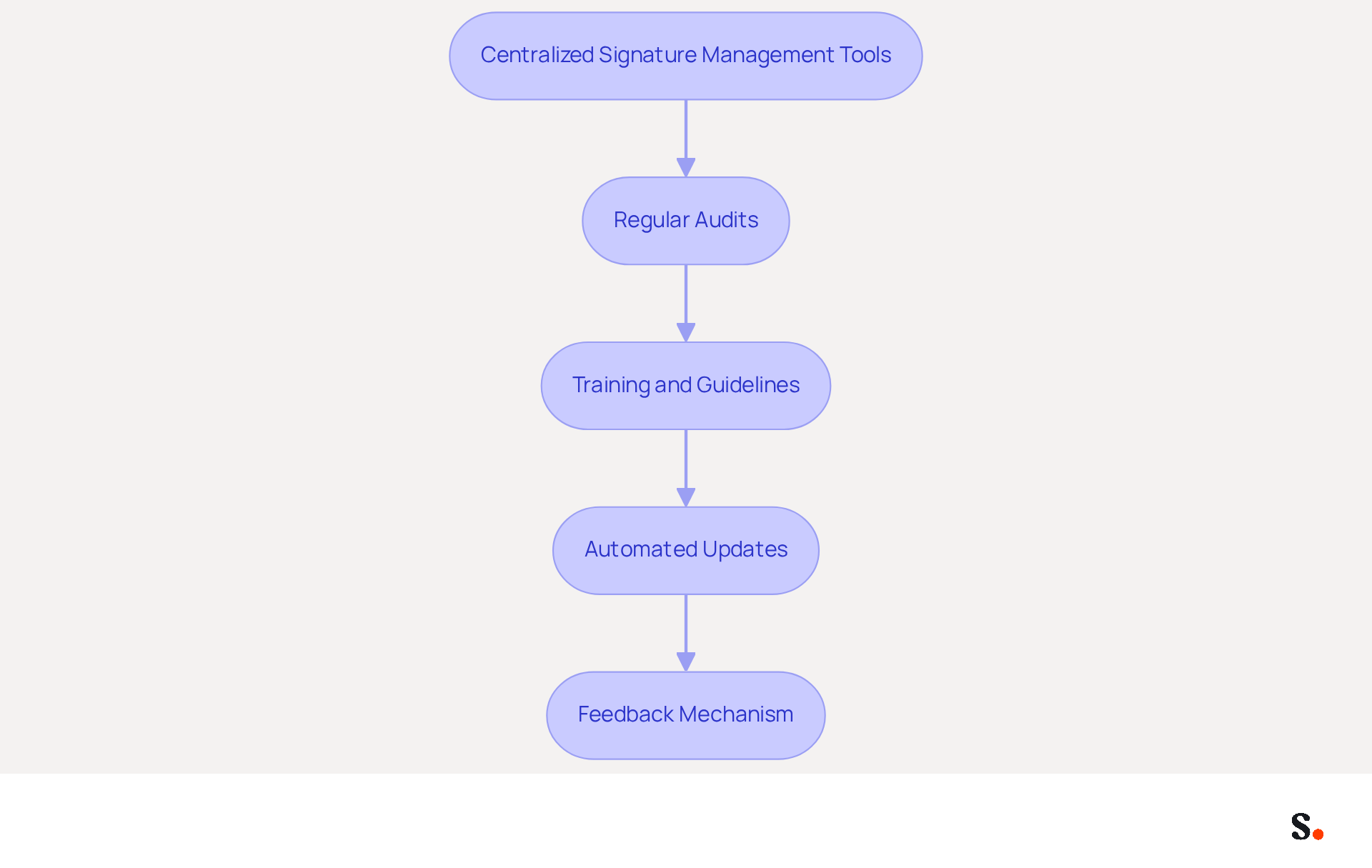
Effective signature management is crucial for maintaining a professional brand image across all communications. To implement effective signature management techniques, consider the following strategies:
- Centralized Signature Management Tools: Utilize centralized tools such as Scribe to manage digital identifiers efficiently. This method allows for easy updates, ensuring all employees use the latest logo version automatically, which improves consistency in communications.
- Regular Audits: Conduct periodic reviews of electronic identifiers to verify compliance with branding guidelines. Without regular audits, discrepancies may go unnoticed, leading to a fragmented brand image.
- Training and Guidelines: Provide thorough instruction for employees on using the email branding tool and the importance of maintaining brand consistency. Establish clear guidelines to assist employees in understanding the essential components to include in their sign-offs, fostering a professional appearance.
- Automated Updates: Implement automated updates for identifiers whenever there are changes in branding or employee information. Automated updates ensure that outdated information is eliminated, enhancing professionalism in communications.
- Feedback Mechanism: Establish a feedback system that enables employees to report issues or propose enhancements concerning the management process of the electronic identification. Encouraging engagement in this way helps refine the system over time and promotes a culture of continuous improvement.
When organizations adopt these techniques, they can streamline communication management, ensuring that every interaction is consistent and professional. These strategies not only enhance professionalism but also solidify brand identity in the marketplace.
Leverage Signatures for Marketing and Engagement
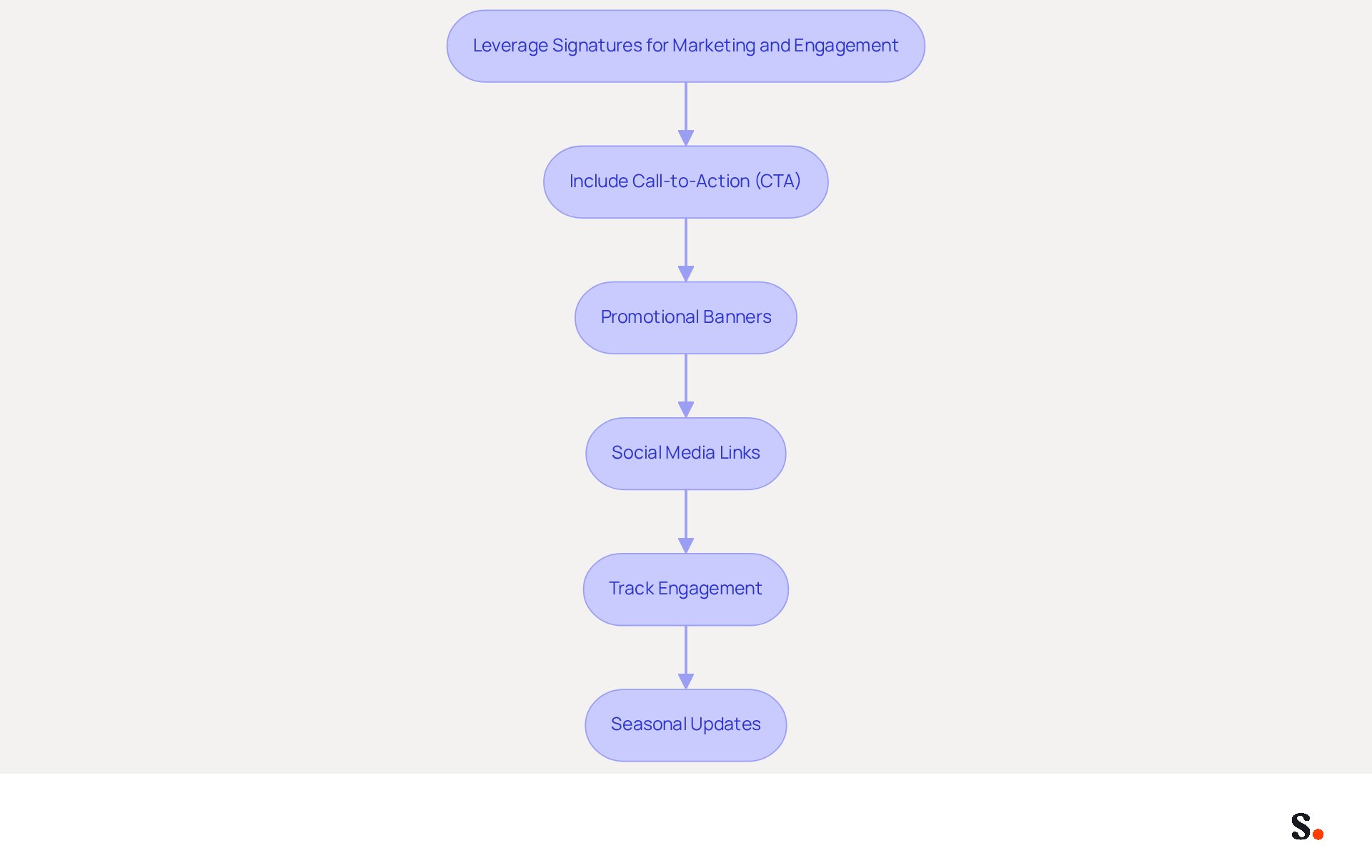
To maximize the impact of email signatures as marketing tools, businesses should adopt strategic best practices:
- Include Call-to-Action (CTA): Integrate a clear and compelling CTA within the email footer, directing recipients to a new product, newsletter signup, or promotional event. This encourages immediate action following the email. Studies indicate that incorporating a well-placed CTA can significantly boost both visibility and conversion rates.
- Promotional Banners: Utilize visually appealing promotional banners in the email footer to showcase special offers or upcoming events. Make sure these banners fit your brand's style to keep things consistent and grab attention. Without proper alignment, your marketing efforts may confuse recipients, leading to reduced effectiveness.
- Social Media Links: Incorporate links to your company's social media profiles in the email footer. This facilitates connections across multiple platforms, enhancing engagement and increasing brand visibility.
- Track Engagement: Utilize tracking tools to assess the effectiveness of marketing components within your correspondence. Key metrics to analyze include click-through rates (CTR) and conversion rates. Analyzing this data allows businesses to pinpoint effective strategies and identify areas for improvement, emphasizing the measurable effect of marketing through branding, which can impact 8 to 22% of total pipeline for B2B teams after two quarters of consistent operation. Furthermore, with Scribe's automated synchronization with Aircall, any modifications made in your Aircall settings will automatically be reflected in your email templates, ensuring consistency in your identity.
- Seasonal Updates: Keep your signature fresh by updating it for seasonal promotions or campaigns. Regular updates help reflect changes in branding or contact information, ensuring consistency across communications.
By implementing these strategies, businesses can transform their digital identifiers into powerful marketing tools that enhance engagement and drive conversions. Ultimately, these practices can redefine how businesses engage with their audience and drive measurable results.
Utilize Automation for Streamlined Signature Management
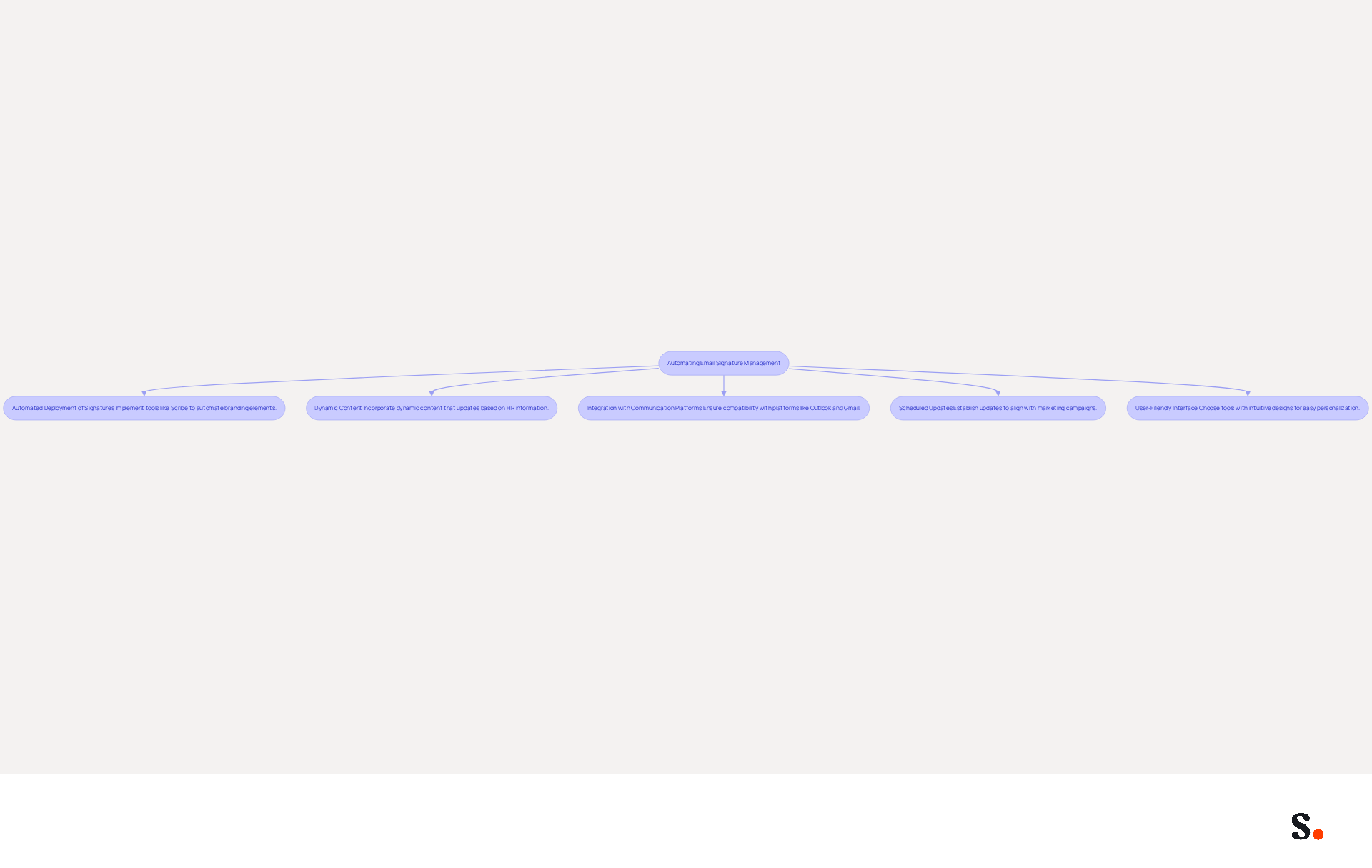
To optimize email signature management, organizations must adopt automation best practices that enhance efficiency and accuracy:
- Automated Deployment of Signatures: Implement tools like Scribe to automate the deployment of branding elements across your organization. This guarantees that all employees have the correct authorization without needing manual updates, significantly reducing errors. Scribe's one-click synchronization feature allows for seamless updates, ensuring that all changes made in your email provider directory are automatically reflected in your email footers.
- Dynamic Content: Incorporate dynamic content in email footers that automatically updates based on employee information sourced from HR systems. This includes essential details such as names, titles, and contact information, which helps maintain accuracy, as demonstrated by case studies showing improved communication effectiveness. Scribe simplifies the process of keeping teammate information up-to-date, ensuring approvals are always current.
- Integration with Communication Platforms: Ensure that your signature management tool integrates seamlessly with your communication platform, such as Outlook or Gmail. Scribe's compatibility with major email providers facilitates easy implementation and minimizes the potential for mistakes during deployment, enhancing overall efficiency. Furthermore, Scribe's integration with platforms like Microsoft Entra ID enables automated updates, saving time and ensuring uniformity.
- Scheduled Updates: Establish scheduled updates for endorsements to align with marketing campaigns or branding changes. This practice ensures that all communications consistently reflect the latest branding and promotional efforts, maximizing marketing opportunities. With Scribe, you can easily manage these updates to ensure brand uniformity across all communications.
- User-Friendly Interface: Choose a management tool that features an intuitive interface, enabling employees to easily personalize their email footers while following company guidelines. Scribe's intuitive design encourages compliance and minimizes the likelihood of errors, fostering a professional image.
By utilizing automation, organizations can greatly improve their management processes for digital identifiers, ensuring consistency and professionalism while conserving valuable time and resources. Ultimately, effective email signature management can significantly elevate a company's professional image and client trust.
Conclusion
Establishing effective email signatures is essential for maintaining brand consistency and enhancing engagement in professional communications. Following best practices allows organizations to present a cohesive brand image that builds trust with clients and partners. This article highlights the need for a standardized approach to email signatures. Such consistency ensures that every interaction strengthens the company's professional image.
Key insights include:
- The necessity of utilizing company colors and logos
- Standardizing layouts
- Implementing effective management techniques
Centralized tools like Scribe facilitate seamless updates and compliance with branding guidelines, while automated features enhance efficiency and accuracy. Additionally, leveraging email signatures as marketing tools through CTAs and promotional banners can significantly boost engagement and conversion rates, demonstrating the multifaceted benefits of a well-managed email signature strategy.
In a competitive landscape, many organizations face challenges in maintaining a consistent brand image across their email communications. Without a standardized approach, organizations may inadvertently damage their professional image and client trust. By investing in effective signature management and automation, businesses can not only maintain brand consistency but also see real marketing results. Ultimately, organizations that prioritize email signature management will find themselves better positioned to leverage this often-overlooked asset for competitive advantage.
Frequently Asked Questions
Why is brand consistency important in email signatures?
Brand consistency in email signatures is important because inconsistent signatures can undermine a company's professional image and brand recognition.
What are the best practices for establishing brand consistency in email signatures?
Best practices include utilizing company colors and fonts, incorporating your company logo, standardizing signature layout, limiting signature length, and avoiding personalization.
How should company colors and fonts be used in email signatures?
Company colors and fonts should align with your brand guidelines to create a clear connection between your emails and your brand identity, improving recognition.
Why is it important to include a company logo in email signatures?
Including a company logo in the email footer strengthens brand awareness and adds a professional touch to correspondence, making it more reliable.
What should a standardized signature layout include?
A standardized signature layout should include the placement of the logo, contact information, and any additional elements like social media links to help recipients quickly identify the sender's affiliation.
What is the recommended length for email signatures?
The recommended length for email signatures is ideally within 4-6 lines to prevent clutter and maintain focus on the content of the message.
Why should personalization be avoided in email signatures?
Personalization should be avoided because it can lead to inconsistencies; sticking to a template helps maintain a unified image throughout the organization.
What are the benefits of a unified email signature strategy?
A unified email signature strategy enhances brand perception, fosters trust among clients and partners, and can lead to an 85% improvement in brand consistency.
How does centralized management of email branding impact engagement rates?
Centralized management of email branding can lead to significantly higher engagement rates, reinforcing the significance of standardized formats in email signatures.
List of Sources
- Establish Brand Consistency in Email Signatures
- Email Signature Best Practices for 2026 (+ 15 Pro Examples) (https://wavecnct.com/blogs/email-signature-best-practices-2026)
- Top 10+ best practices for email signatures design in 2026 (https://mysignature.io/blog/email-signature-best-practices)
- Email Signature Best Practices - NEWOLDSTAMP (https://newoldstamp.com/blog/email-signature-best-practices)
- Why Email Signatures Must Be In Your 2026 Marketing Plan | Rocketseed (https://rocketseed.com/blog/what-are-the-biggest-email-trends-for-2026)
- Why Team Email Signatures Matter More Than You Think: The Hidden Impact on Brand Trust and Customer Experience (https://getmailbird.com/why-team-email-signatures-matter-brand-trust)
- Implement Effective Signature Management Techniques
- Why Email Signatures Must Be In Your 2026 Marketing Plan | Rocketseed (https://rocketseed.com/blog/what-are-the-biggest-email-trends-for-2026)
- Email Signature Trends 2026: Centralized Control & Automation | SIGNandGO posted on the topic | LinkedIn (https://linkedin.com/posts/signngo_email-signature-trends-to-watch-in-2026-activity-7401523471786217473-zAVL)
- 5 Effective Ways To Manage Email Signatures For Large Firms (https://paayatech.com/blog/5-effective-ways-to-manage-email-signatures)
- Company-Wide Email Signature Management | CloudM (https://cloudm.io/resources/blog/optimize-your-process-with-company-wide-email-signature-management)
- 5 Benefits of Using Centrally Managed Email Signatures | Crossware365 (https://crossware365.com/blog/5-benefits-of-using-centrally-managed-email-signatures)
- Leverage Signatures for Marketing and Engagement
- 2026 Marketing Trends for Business Emails Outreach | Rocketseed (https://rocketseed.com/blog/2024-marketing-trends-for-business-emails)
- What is email signature marketing? Complete B2B efinition (2026) (https://signitic.com/en/resources/what-is-email-signature-marketing-a-complete-definition-for-b2b-teams)
- Email signature statistics: Why every business should optimize their email signatures — Stripo.email (https://stripo.email/blog/email-signature-statistics-why-every-business-should-optimize-their-email-signatures)
- Why and how to add an effective CTA to your email signature? (https://signitic.com/en/resources/why-and-how-to-add-an-effective-cta-to-your-email-signature)
- Utilize Automation for Streamlined Signature Management
- Automate Email Signature Setup in Outlook Using PowerShell (https://o365reports.com/automate-email-signature-setup-in-outlook-using-powershell)
- Company-Wide Email Signature Management | CloudM (https://cloudm.io/resources/blog/optimize-your-process-with-company-wide-email-signature-management)
- Email Signature Trends 2026: Centralized Control & Automation | SIGNandGO posted on the topic | LinkedIn (https://linkedin.com/posts/signngo_email-signature-trends-to-watch-in-2026-activity-7401523471786217473-zAVL)
- 5 Effective Ways To Manage Email Signatures For Large Firms (https://paayatech.com/blog/5-effective-ways-to-manage-email-signatures)
Get started with Scribe
Create your signature in minutes
Free 14-day trial — no credit card.