4 Best Practices for Proper Email Closings That Impress
Crafting effective email closings is crucial for impactful professional communication, yet their significance is often underestimated. By mastering the art of
Sophie Grant
Email Signature Specialist, Scribe

Introduction
Crafting effective email closings is crucial for impactful professional communication, yet their significance is often underestimated. By mastering the art of sign-offs, individuals can enhance their rapport with recipients and ensure their messages resonate. Finding the right balance between professionalism and approachability in email closings is essential. This article delves into four best practices that not only elevate email sign-offs but also reinforce brand consistency and engagement, ultimately enhancing everyday emails into effective communication strategies.
Match Tone to Context
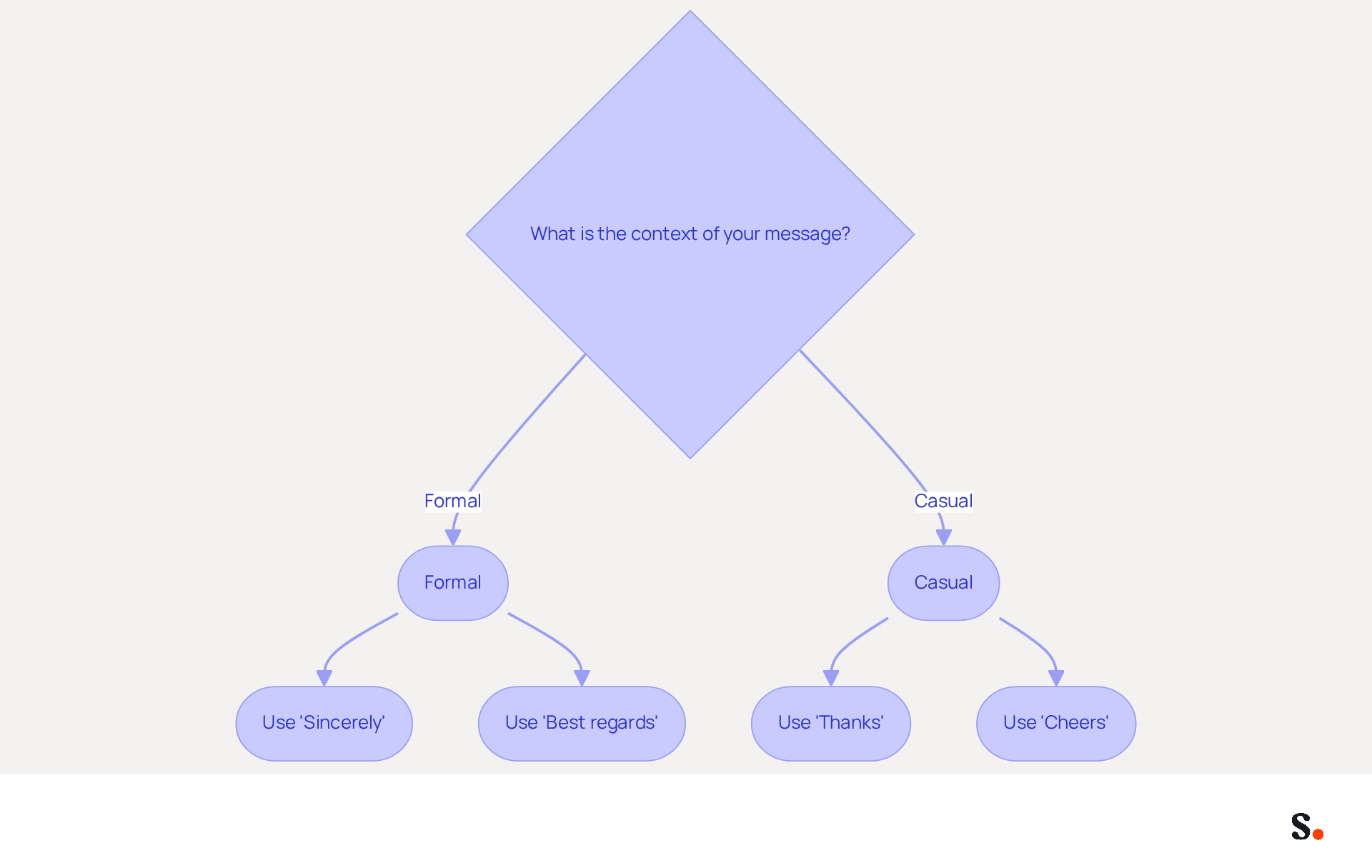
Closing a message effectively hinges on aligning your tone with the communication context. For formal correspondence directed at clients, maintaining a professional tone is crucial, and using proper email closings such as 'Sincerely' or 'Best regards' is suitable. Conversely, casual messages to colleagues can conclude with 'Thanks' or 'Cheers,' reflecting a more relaxed relationship. This alignment shows respect and enhances message clarity.
Reflect on the nature of your connection with the individual and the message's purpose. For instance, when following up on a project, a friendly yet professional tone can encourage collaboration, while a more formal tone may be necessary for contractual discussions. Research indicates that personalized closings can lead to more favorable reactions from recipients, with communications expressing gratitude attaining higher engagement rates - messages concluding with 'Thanks' reach a 63% engagement rate, whereas those without any expression of appreciation have a response rate of only 46%.
Mastering proper email closings is essential for effective interaction. Using vague closings can hinder effective communication and reduce engagement rates. By choosing proper email closings carefully, you reinforce your point and strengthen professional connections, which enhances effectiveness. Incorporating these strategies can transform standard communications into opportunities for deeper engagement.
Choose Appropriate Sign-Offs
Selecting proper email closings is crucial for establishing a positive rapport with your recipients. Proper email closings commonly include:
- 'Best regards,'
- 'Sincerely,'
- 'Thank you.'
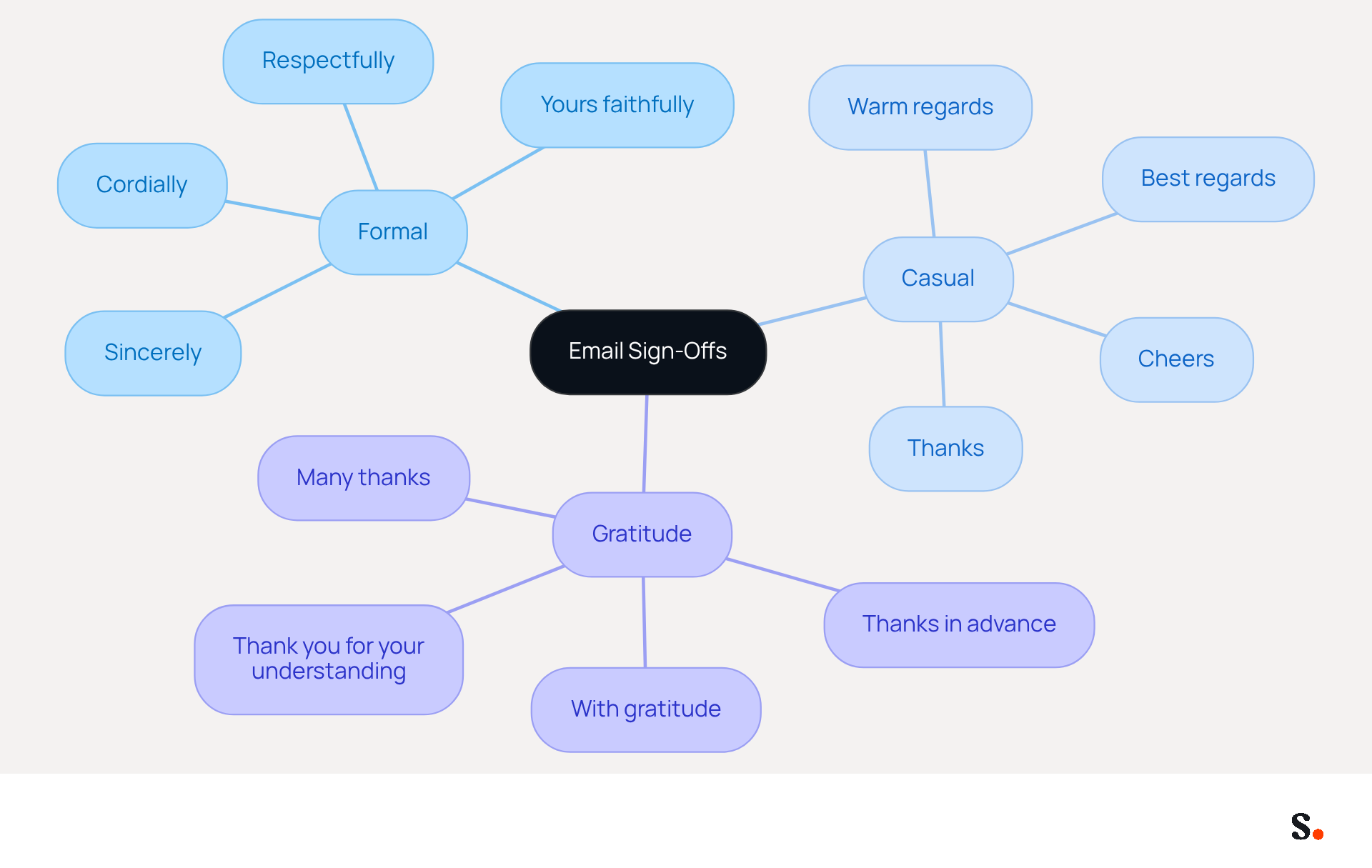
It's important to let the context and your relationship with the recipient guide your choice of proper email closings. For instance, 'Warm regards' is fitting for colleagues with whom you share a friendly rapport, while 'Respectfully' is more suitable for formal communications. As Diana Bocco notes, 'Match your sign-off to your relationship with the person (formal vs. casual).'
Sign-offs that express gratitude, such as 'Thanks in advance,' often lead to quicker responses by creating a sense of obligation. Studies indicate that messages ending with gratitude can achieve response rates as high as 65.7%, significantly above the average of 47.5%.
To maximize the effectiveness of your messages, it is important to use proper email closings, as an inappropriate sign-off can diminish your professionalism and affect the recipient's perception of your message. Adapting your sign-off not only enhances engagement but also strengthens your professional relationships. Additionally, avoid common pitfalls such as overly casual sign-offs in formal contexts, which can undermine your professionalism. By refining your sign-off strategy, you can significantly enhance your communication effectiveness and foster more meaningful connections.
Create a Professional Signature
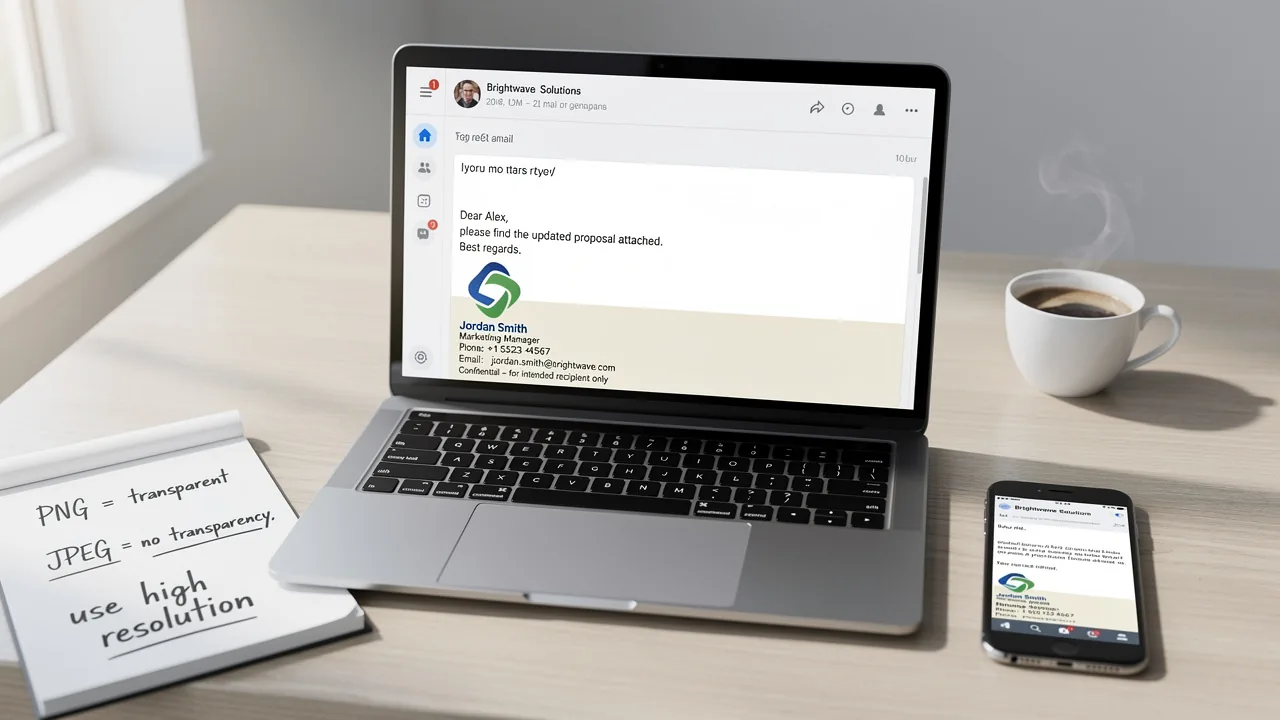
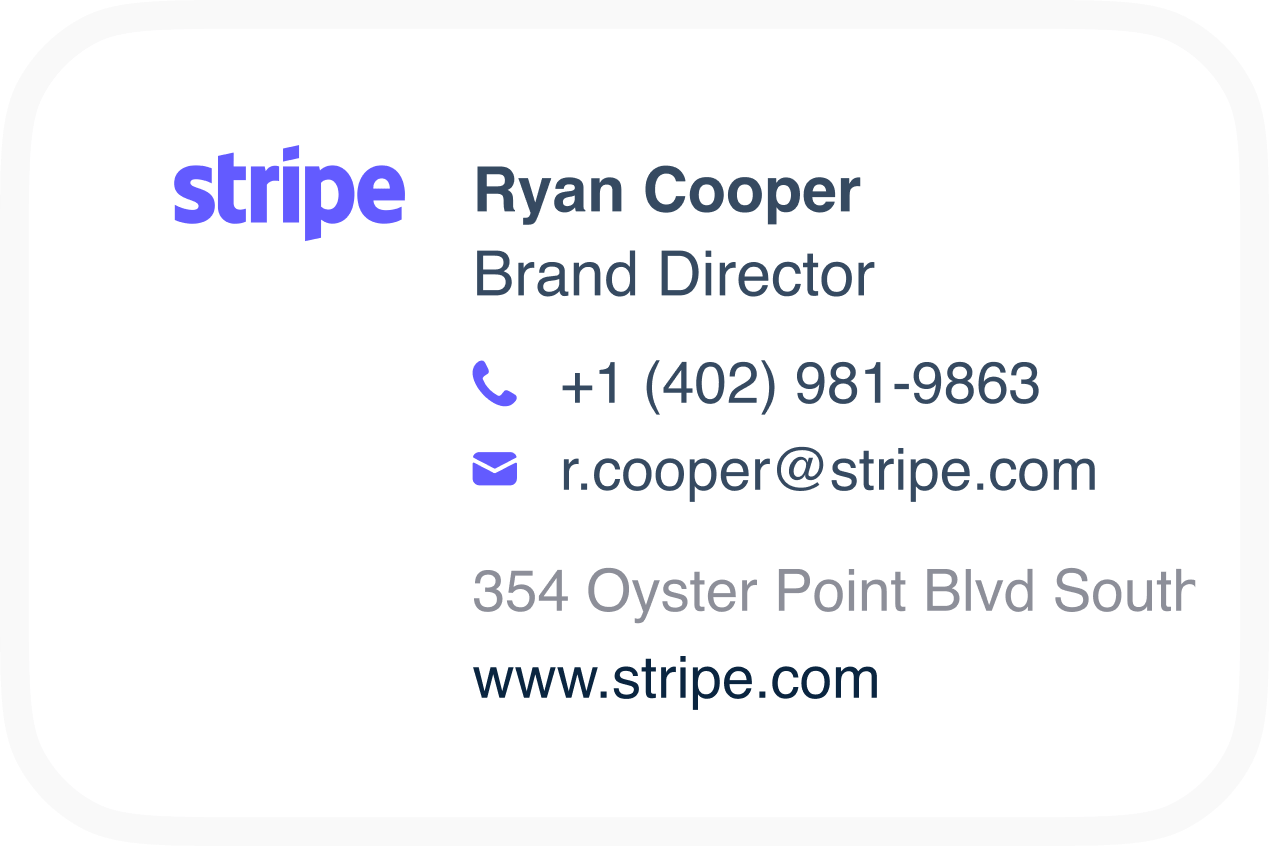
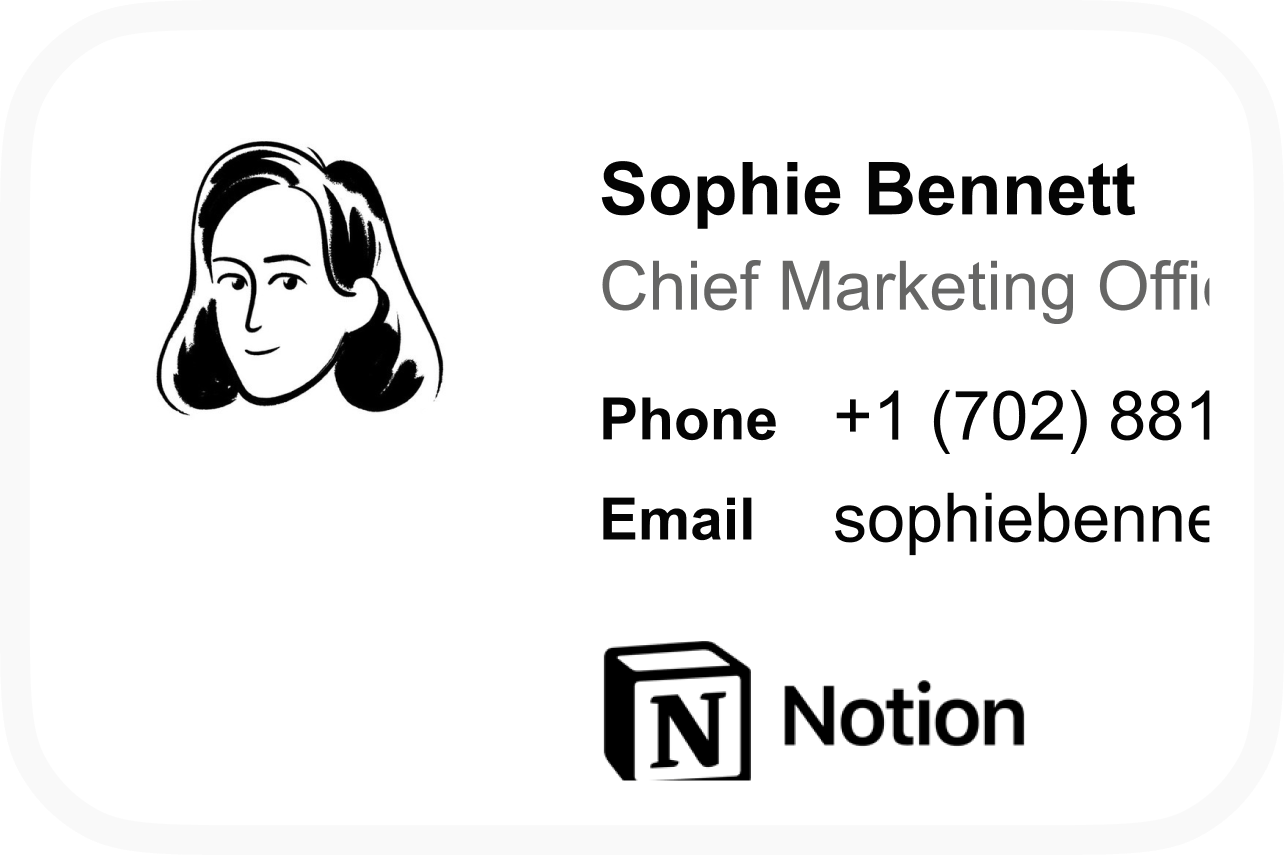
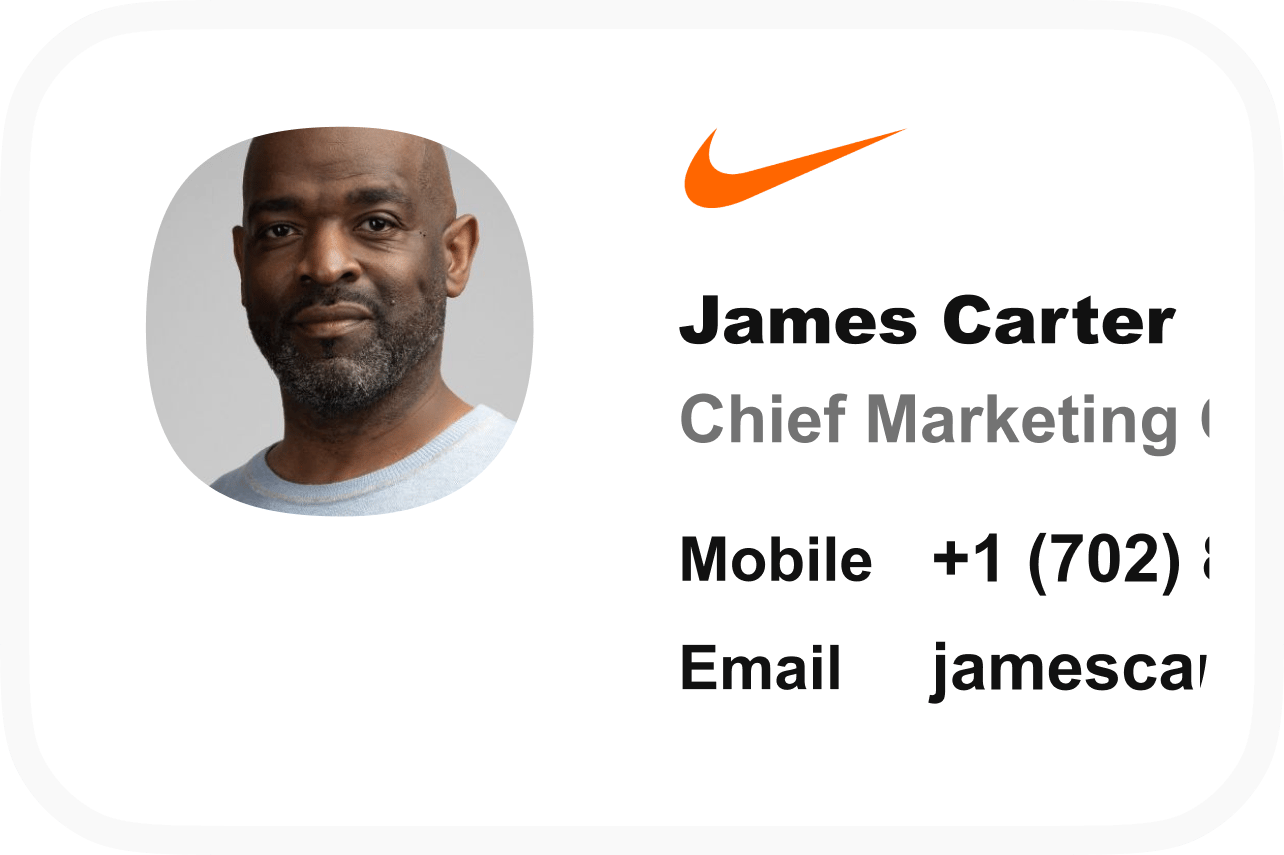
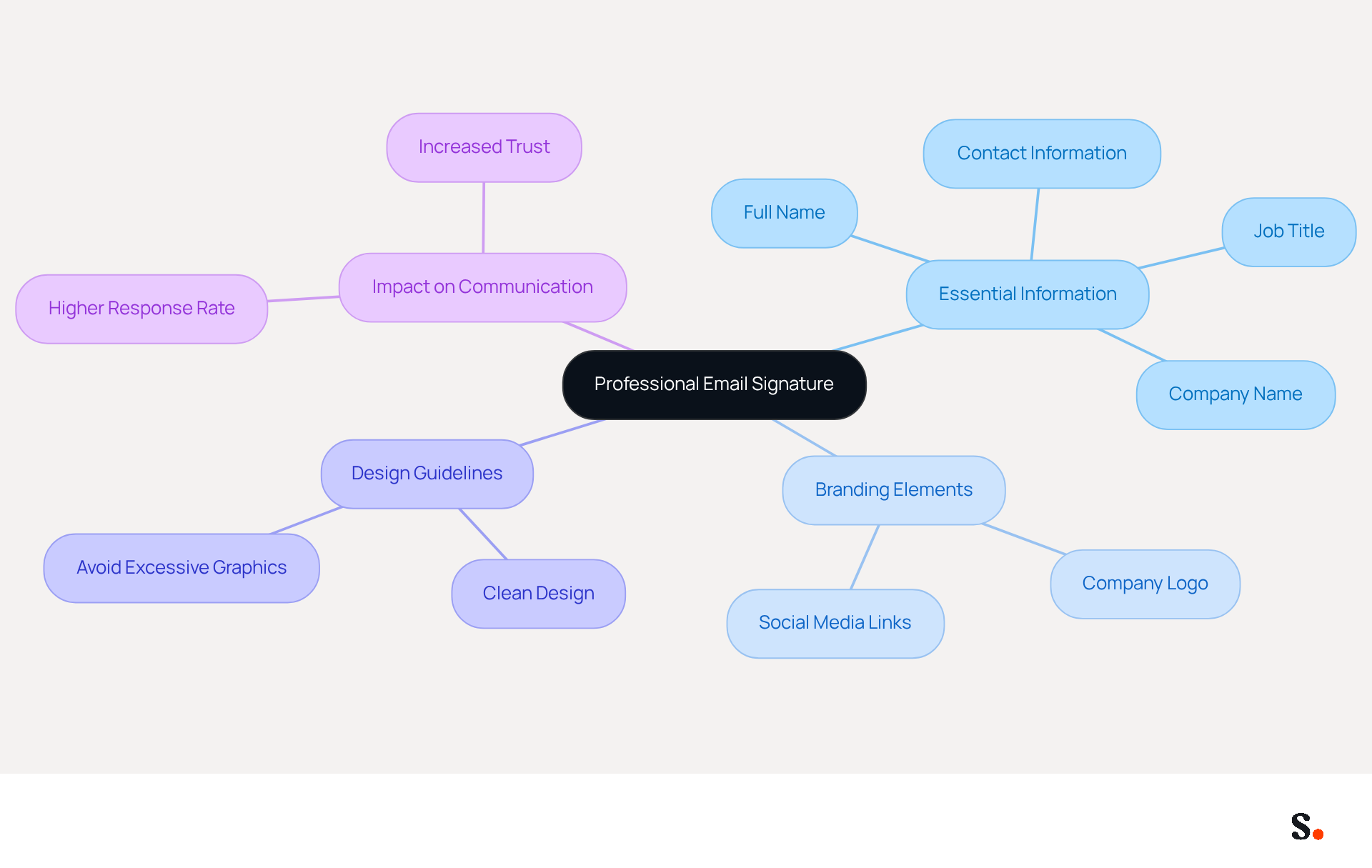
A well-crafted digital identifier is essential for effective professional communication, serving as a virtual business card that enhances brand visibility and trust. With Scribe, every modification made in your Aircall configuration is automatically reflected in your email branding, ensuring seamless synchronization and brand consistency. To ensure effective communication, your sign-off should consist of proper email closings, including your full name, job title, company name, and contact information. Adding your company logo and social media links directly enhances your brand's visibility. The design should be clean and straightforward, avoiding excessive graphics or fonts that may distract from the message. For instance, a signature might look like this:
John Doe
Marketing Manager
Scribe
johndoe@scribe.com
(123) 456-7890
www.scribe.com
This format not only provides essential information but also reinforces your brand identity. Regular updates to your email footer, along with proper email closings, are essential to reflect any changes in your role or contact information, ensuring that individuals always have the most current details. Research shows that messages featuring branded identifiers achieve a 22% higher response rate, underscoring the importance of a professional email signature. Furthermore, 76% of recipients believe that branded identifiers increase their trust in the sender, while 47% of prospects indicate that professional email footers enhance their trust in the brand. By following these best practices, including the possibility of clickable banners and calls to action, you can greatly enhance your professional image and interaction effectiveness, maximizing lead generation and brand consistency with Scribe's automated management of digital signatures.
Include Relevant Contact Information
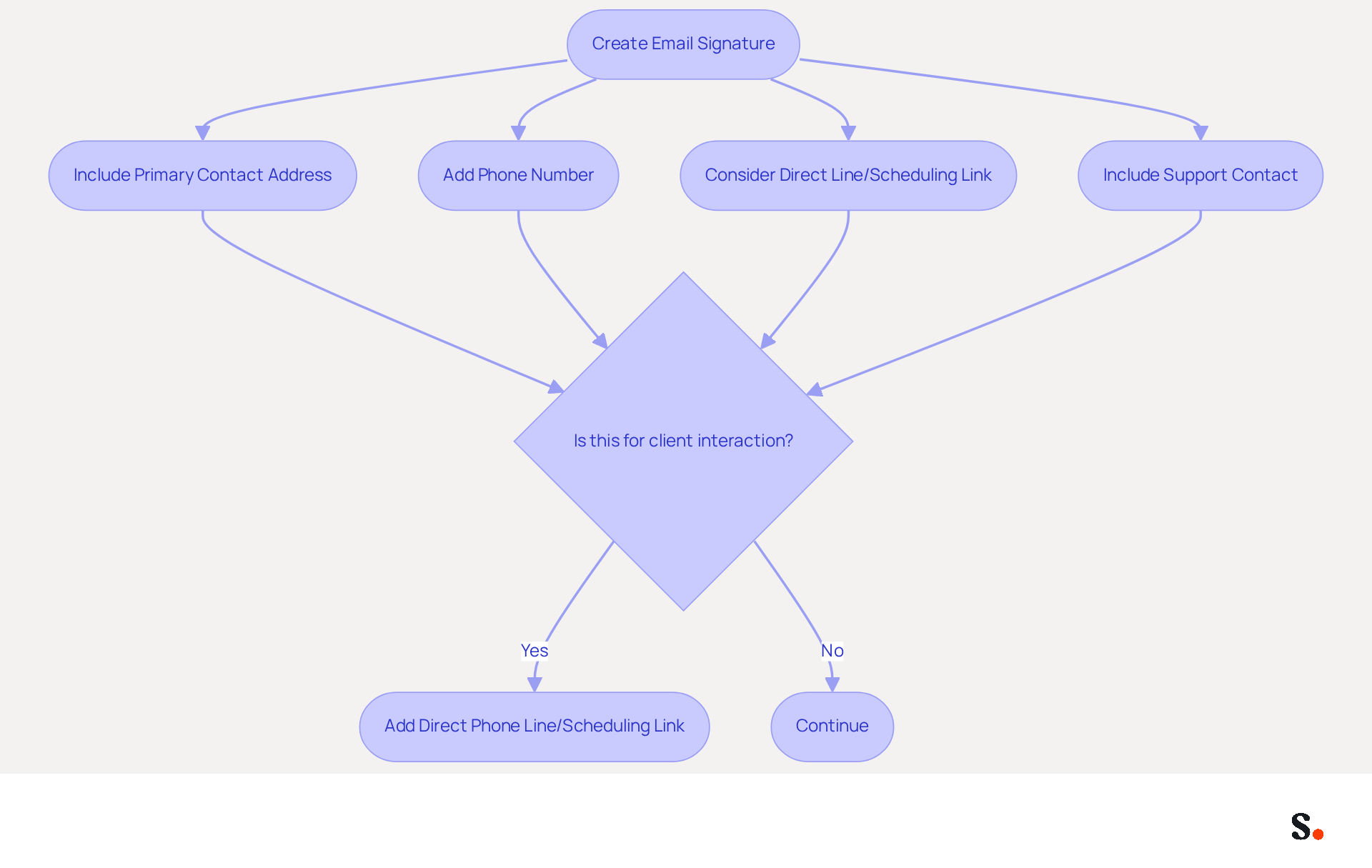
Effective communication hinges on the clarity of your contact details in your email signature. Including relevant contact details is essential for effective communication. Key components to include are your primary contact address, phone number, and any other relevant communication methods. For roles that require frequent client interaction, consider adding a direct phone line or a scheduling link for easy access. Including a general contact address or support line can also be advantageous for individuals needing assistance. Here’s an example of how to structure your contact information:
Contact Information:
Email: johndoe@scribe.com
Phone: (123) 456-7890
Support: support@scribe.com
Providing clear and accessible contact details facilitates smoother communication and demonstrates professionalism, making it easier for recipients to reach out when needed. In fact, messages featuring branded identifiers see a 22% increase in response rates compared to those without, emphasizing the significance of well-organized contact details. Moreover, 52% of professionals think a robust digital footer is essential for establishing trust and effective interaction with clients. Regular evaluations of contact information ensure that details remain up-to-date and pertinent, further improving communication efficiency.
To streamline this process, for one-click synchronization, simply grant Scribe permission to connect with your service provider. Remember, only a Super Admin can provide these permissions. You will have the choice to select which teammates you wish to sync with Scribe, and all modifications made in your provider directory will be automatically synced with Scribe. This integration not only saves time but also ensures your communication remains professional and effective. Be mindful to limit your email signature to seven lines to avoid clutter, as too much information in your signature can create confusion and detract from your professionalism.
Conclusion
Effective email closings are crucial for enhancing communication and fostering professional relationships. By aligning the tone of your sign-offs with the context of your message, you can enhance clarity and engagement. Whether opting for formal closings like 'Sincerely' or casual ones such as 'Cheers,' the right choice reflects your respect for the recipient and the nature of your relationship.
Key strategies discussed include:
- Selecting appropriate sign-offs that resonate with your audience
- Creating a professional email signature that reinforces your brand identity
- Ensuring your contact information is clear and accessible
Each of these elements contributes to a polished and effective communication style, ultimately leading to higher engagement rates and stronger connections. Research shows that expressing gratitude in sign-offs leads to significantly higher response rates.
Implementing these techniques can enhance your email closings, making them effective tools for engagement and relationship-building. As organizations strive for brand consistency and measurable marketing ROI, leveraging tools like Scribe can streamline the management of email signatures, ensuring that every interaction reflects your brand's professionalism. By refining your email closings, you not only enhance your communication but also reinforce your professional image.
Frequently Asked Questions
Why is it important to match tone to context in closing a message?
Matching tone to context is crucial because it shows respect and enhances message clarity. A professional tone is necessary for formal correspondence, while a casual tone is suitable for messages to colleagues.
What are appropriate email closings for formal correspondence?
Suitable email closings for formal correspondence include 'Sincerely' and 'Best regards.'
What are some casual email closings for messages to colleagues?
Casual email closings for colleagues can include 'Thanks' or 'Cheers.'
How does the nature of the relationship with the recipient affect the tone of the message?
The nature of the relationship influences the tone; a friendly yet professional tone can encourage collaboration, while a more formal tone may be needed for serious discussions, such as contractual matters.
What impact do personalized closings have on recipient engagement?
Personalized closings can lead to more favorable reactions, with messages expressing gratitude achieving higher engagement rates. For example, messages that conclude with 'Thanks' have a 63% engagement rate compared to 46% for those without expressions of appreciation.
What are the consequences of using vague email closings?
Using vague email closings can hinder effective communication and reduce engagement rates, making it important to choose closings carefully to reinforce points and strengthen professional connections.
List of Sources
- Match Tone to Context
- Email Tone Matters More Than You Think — Here's Why (https://simaraguard.com/blog/tone-matters-professional-communication)
- How Your Email Tone Impacts Email Marketing Results (https://netatlantic.com/resources/articles/how-your-email-tone-impacts-email-marketing-results)
- Is 'Best' a Good Way to End an Email? Compare Sign-Offs Here (https://scribe-mail.com/en-US/blog/is-best-a-good-way-to-end-an-email-compare-sign-offs-here)
- How to Sign Off on an Email Correctly | Rocketseed (https://rocketseed.com/blog/correct-way-to-sign-off-emails)
- Email Etiquette: Best Practices for Professional Communication (https://memberportal.gfwc.org/news/communications-public-relations/111/111-Email-Etiquette-Best-Practices-for-Professional-Communication)
- Choose Appropriate Sign-Offs
- 110 Best Ways to Sign Off an Email Correctly - Warmup Inbox (https://warmupinbox.com/blog/email-marketing/email-sign-offs)
- 80+ Professional Email Sign-Offs for Every Situation, Role, and Industry (https://syncsignature.com/blog/email-sign-offs)
- How to end an email: 70+ professional sign-offs & examples (https://blog.superhuman.com/how-to-end-an-email)
- Email Sign Offs for Every Industry and Situation | Mailchimp (https://mailchimp.com/resources/email-sign-offs)
- 100 Email Sign-Off Ideas (+10 Golden Rules for Marketing Pros) - MailerLite (https://mailerlite.com/blog/email-sign-offs)
- Create a Professional Signature
- The impact of email signatures on your branding (https://signitic.com/en/resources/the-impact-of-email-signatures-on-your-branding)
- Email signature statistics: Why every business should optimize their email signatures — Stripo.email (https://stripo.email/blog/email-signature-statistics-why-every-business-should-optimize-their-email-signatures)
- Exclaimer Research: 67% of Marketers Expect Email Signatures to Support With Lead Gen In 2023 (https://businesswire.com/news/home/20230612141095/en/Exclaimer-Research-67-of-Marketers-Expect-Email-Signatures-to-Support-With-Lead-Gen-In-2023)
- Include Relevant Contact Information
- Email Signature Contact Details: 10 Best Practices (https://exclaimer.com/email-signature-handbook/email-signature-contact-details-top-10-dos-and-donts)
- Contact Info in Email Signatures: Best Practice | Rocketseed (https://rocketseed.com/blog/best-practices-for-adding-contact-information-on-an-email-signature)
- Email signature statistics: Why every business should optimize their email signatures — Stripo.email (https://stripo.email/blog/email-signature-statistics-why-every-business-should-optimize-their-email-signatures)
- Email Signature Best Practices - NEWOLDSTAMP (https://newoldstamp.com/blog/email-signature-best-practices)
- What to Include in a Business Email Signature (https://rocketseed.com/blog/email-signature-what-to-include)
Get started with Scribe
See why teams switch to Scribe
Free 14-day trial — no credit card.