4 Best Practices for Your Auto-Reply Message Out of Office
Many professionals overlook the importance of crafting effective out-of-office messages, leading to missed opportunities for clear communication. An effective
Sophie Grant
Email Signature Specialist, Scribe
Introduction
Many professionals overlook the importance of crafting effective out-of-office messages, leading to missed opportunities for clear communication. An effective out-of-office message is not merely a courtesy; it serves as a vital component of professional communication that reflects an organization’s commitment to clarity and responsiveness. By implementing best practices, individuals can ensure their auto-replies convey essential information while maintaining brand consistency and professionalism.
So, what really makes an out-of-office message stand out and serve as a powerful communication tool? This article will explore best practices that can help you create impactful out-of-office messages, ensuring they resonate with recipients and uphold your professional image.
Identify Essential Components of an Out-of-Office Message
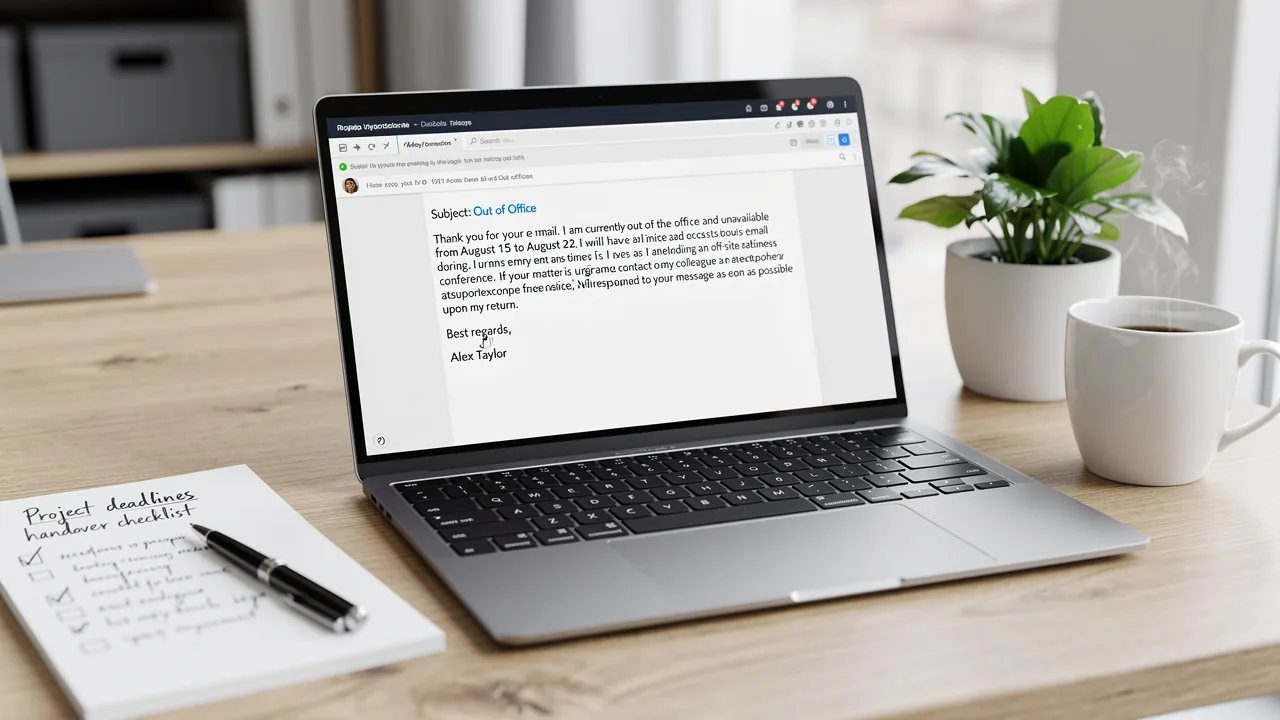
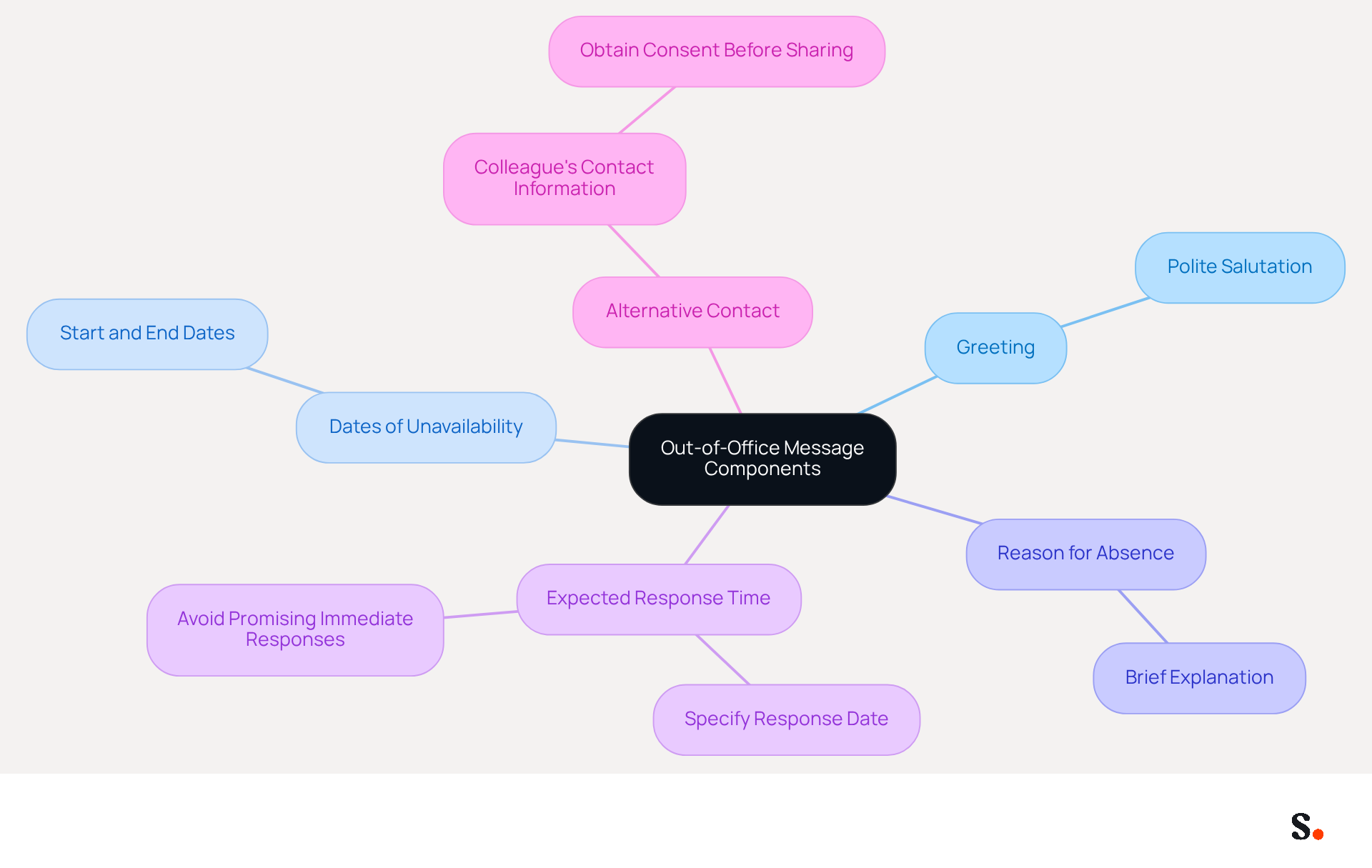
Crafting an effective auto-reply message out-of-office is essential for maintaining professionalism and clarity in communication. An effective out-of-office message should encompass several essential components to ensure clarity and professionalism:
- Greeting: Begin with a polite salutation to establish a positive tone.
- Dates of Unavailability: Clearly indicate the start and end dates of your unavailability, informing the sender when they can expect a response.
- Reason for Absence: While extensive details are unnecessary, a brief explanation (e.g., vacation or business trip) can provide context.
- Expected Response Time: Specify when you will be able to respond to emails, such as 'I will respond upon my return on [date].' It is crucial to avoid promising immediate responses upon your return, as this may not be feasible.
- Alternative Contact: If applicable, include the name and details of a colleague who can assist in your absence, ensuring urgent matters are addressed promptly. However, be cautious not to share a colleague's contact information without their consent, as this can be unprofessional.
Including these components ensures your message is clear and professional. Effective auto-reply message out-of-office responses anticipate the needs of recipients, guiding them on how to proceed in the sender's absence. For example, a well-organized communication can prioritize the needs of students or clients, maintaining professionalism and showing a commitment to addressing their needs. Furthermore, it is crucial to avoid spelling mistakes in your communication, as they can diminish your professionalism and attention to detail. Implementing these best practices not only maintains your professionalism but also builds trust with your audience.
Customize Messages for Specific Absences
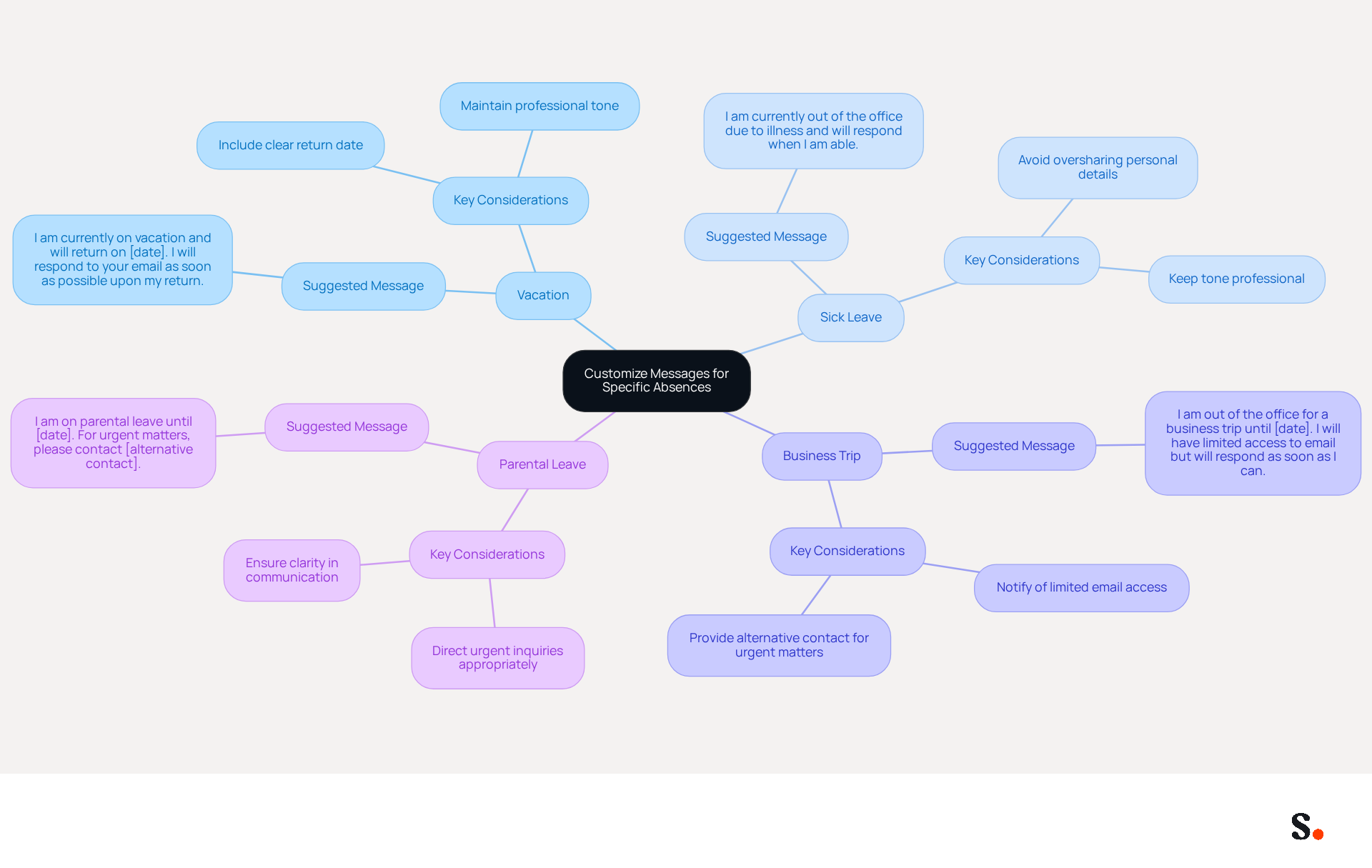
Customizing your auto-reply message out of-office is crucial for effective communication and brand consistency. Here are some best practices to consider:
- Vacation: For a vacation, you might say, 'I am currently on vacation and will return on [date]. I will respond to your email as soon as possible upon my return.' This clearly communicates your availability and reinforces your company's professional image.
- Sick Leave: If you're on sick leave, a clear note like, 'I am currently out of the office due to illness and will respond when I am able,' conveys your situation without oversharing. Remember to keep the tone professional to reflect your brand.
- Business Trip: When traveling for work, you could mention, 'I am out of the office for a business trip until [date]. I will have limited access to email but will respond as soon as I can.' This notifies individuals of your limited availability while upholding professionalism and brand consistency.
- Parental Leave: For parental leave, consider a note such as, 'I am on parental leave until [date]. For urgent matters, please contact [alternative contact].' This not only provides clarity but also directs urgent inquiries appropriately, ensuring that your brand's communication remains seamless.
Important Considerations:
- Be cautious about disclosing too much information in your out-of-office messages, as oversharing can lead to potential security vulnerabilities.
- A friendly yet professional tone can improve how recipients view your brand.
- Always include a clear subject line indicating your absence duration.
Customizing your communication not only enhances clarity but also demonstrates consideration for the sender's needs, fostering better interaction and understanding. As Jeanna Raffa, a specialist in digital marketing, highlights, an effective auto-reply message out of-office is essential for upholding professionalism and clarity in communication. Ultimately, thoughtful communication strategies can significantly enhance your professional image and foster positive interactions.
Include Contact Information and Alternatives
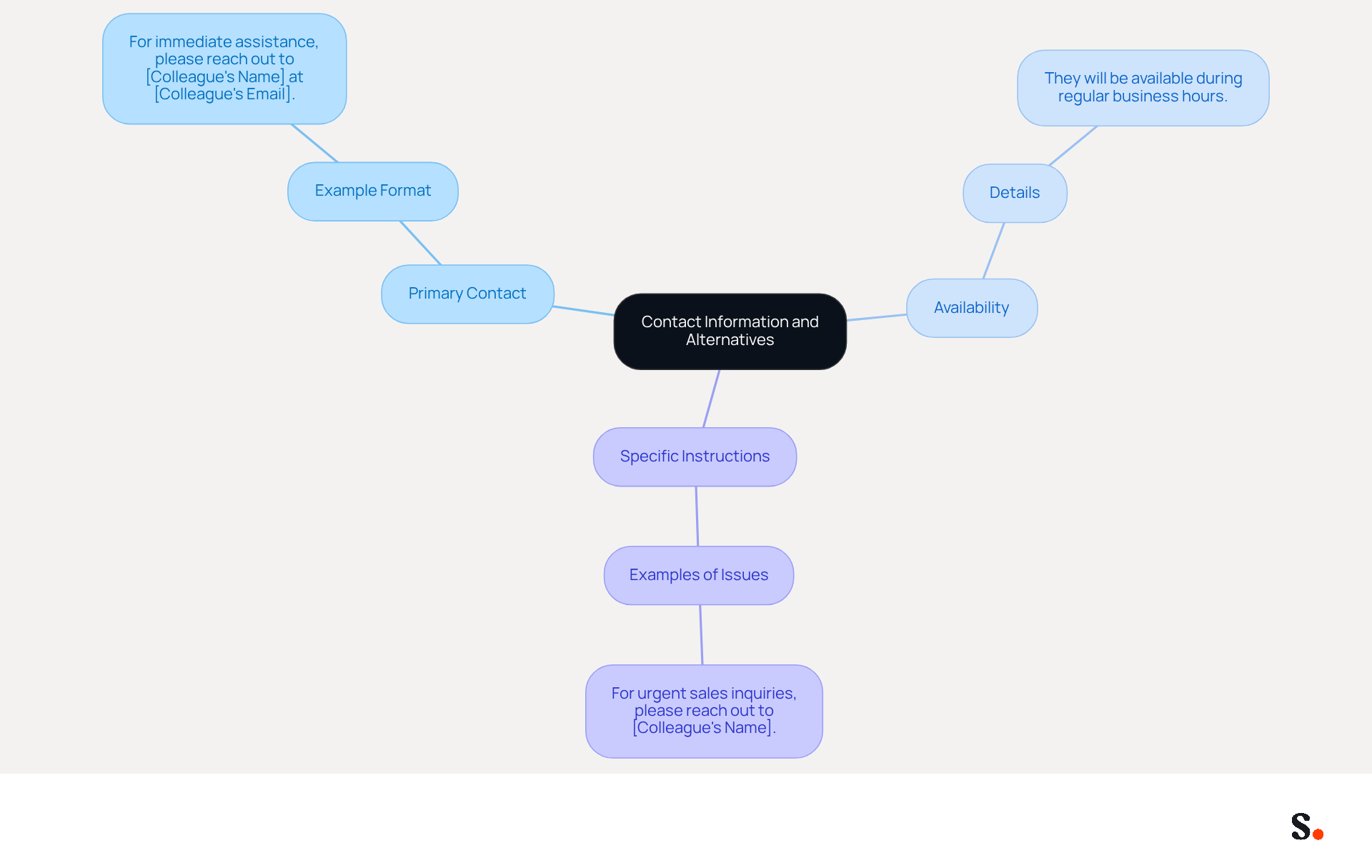
To maintain seamless communication during your absence, it is crucial to include comprehensive contact information in your out-of-office message:
- Primary Contact: Clearly state who the sender should reach out to in your absence. For example, 'For immediate assistance, please reach out to [Colleague's Name] at [Colleague's Email].'
- Availability of the Alternative Representative: Briefly mention the availability of the alternative representative, such as 'They will be available during regular business hours.'
- Specific Instructions: If there are particular issues that the alternative representative can assist with, mention those to guide the sender effectively. For instance, 'For urgent sales inquiries, please reach out to [Colleague's Name].'
This proactive approach ensures that important communications are addressed promptly, even in your absence. By implementing these strategies, you not only uphold professionalism but also ensure that critical communications are managed effectively.
Avoid Common Mistakes in Out-of-Office Messages
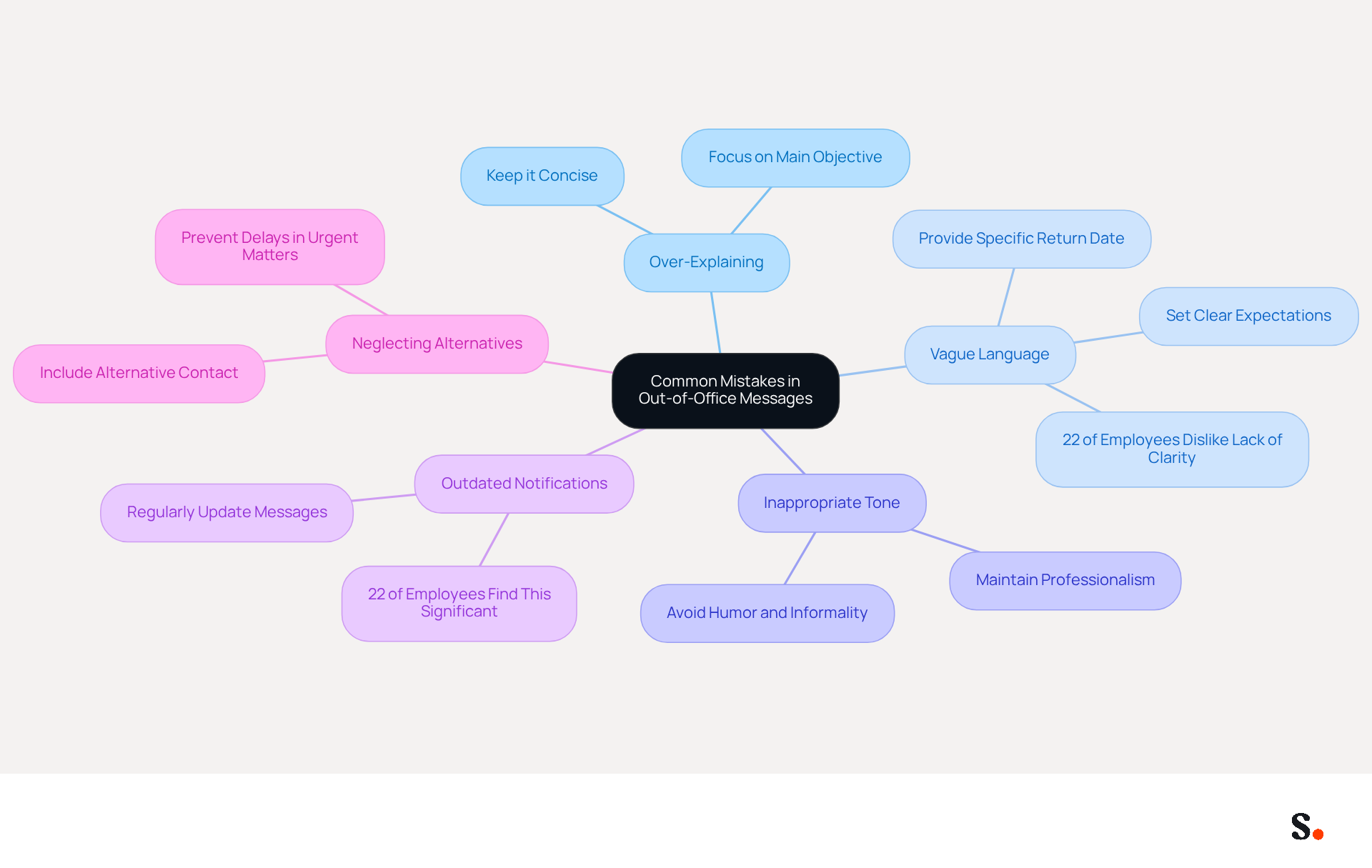
To enhance the effectiveness of your out-of-office message, it is crucial to avoid common pitfalls:
- Over-Explaining: Concise explanations about your absence keep the focus on the main objective of the communication.
- Vague Language: Phrases like 'I will get back to you soon' create uncertainty. Instead, provide a specific return date or timeframe to set clear expectations. A survey indicates that 22% of Canadian employees view not providing a clear return date as the worst offense in out-of-office notifications.
- Inappropriate Tone: Maintain a professional tone. Humor or excessively informal language may not be appropriate for all recipients and can diminish the effectiveness of your communication.
- Outdated Notifications: Regularly refresh your out-of-office notification to reflect your current status. An outdated message can create confusion and frustration for senders, as the survey indicates, where 22% of Canadian employees view this as a significant issue.
- Neglecting to Include an Alternative Person: Always provide an alternative individual for urgent matters. This oversight can lead to delays in urgent matters, leaving senders without support during your absence.
Furthermore, consider establishing distinct automated replies for internal and external contacts to convey suitable information. Ginger Christ emphasizes the importance of clearly stating your absence duration and when recipients can expect a reply. By implementing these strategies, you can ensure your auto-reply message out of office is both effective and professional.
Conclusion
Crafting an effective out-of-office auto-reply message is crucial for maintaining professionalism and ensuring clear communication during absences. Incorporating key components like:
- A polite greeting
- Specific unavailability dates
- A brief reason for absence
- Expected response times
- Alternative contact information
helps individuals create informative messages that uphold their professional image. These elements guide recipients on how to proceed, showing that you care about their needs even when you're away.
The article highlights the importance of customizing messages for various situations, such as vacations, sick leave, or business trips, while also emphasizing the need to avoid common mistakes like vague language or outdated notifications. Vague messages can leave recipients confused and unsure of how to proceed. By tailoring auto-reply messages to specific circumstances and maintaining a professional tone, individuals can enhance clarity and foster positive interactions. Additionally, providing comprehensive contact information ensures that urgent matters are addressed promptly, further reinforcing professionalism.
Ultimately, implementing these best practices for out-of-office messages not only enhances communication but also strengthens the overall brand image. Failing to implement these strategies can damage professional relationships and hinder effective communication. As organizations strive for consistency and professionalism in their communications, adopting these strategies can significantly improve interactions with clients and colleagues alike. By prioritizing thoughtful communication during absences, professionals can build trust and strengthen their relationships with clients and colleagues.
Frequently Asked Questions
What is the purpose of an out-of-office message?
An out-of-office message serves to maintain professionalism and clarity in communication while informing senders of your unavailability.
What are the essential components of an effective out-of-office message?
An effective out-of-office message should include a greeting, dates of unavailability, a brief reason for absence, expected response time, and an alternative contact if applicable.
How should I start my out-of-office message?
Begin with a polite salutation to establish a positive tone.
Why is it important to include dates of unavailability in my message?
Clearly indicating the start and end dates of your unavailability informs the sender when they can expect a response.
Do I need to provide a detailed reason for my absence?
No, extensive details are unnecessary; a brief explanation (e.g., vacation or business trip) can provide context.
What should I specify regarding my expected response time?
You should specify when you will be able to respond to emails, such as stating, 'I will respond upon my return on [date].' Avoid promising immediate responses upon your return.
What should I do if I want to provide an alternative contact?
Include the name and details of a colleague who can assist in your absence, but ensure you have their consent to share their contact information.
Why is it important to avoid spelling mistakes in my out-of-office message?
Spelling mistakes can diminish your professionalism and attention to detail, which is crucial for building trust with your audience.
List of Sources
- Identify Essential Components of an Out-of-Office Message
- How To Write An Out of Office Message (https://blog.mattiejames.com/how-to-write-an-out-of-office-message)
- How to craft an effective out-of-office message - Early Bird (https://early-bird.msudenver.edu/how-to-craft-an-effective-out-of-office-message)
- Top 6 examples of professional out-of-office messages (https://nethunt.com/blog/best-out-of-office-messages)
- Customize Messages for Specific Absences
- The perfect out of office message: examples and helpful tips (https://ionos.com/digitalguide/e-mail/technical-matters/perfect-out-of-office-message-examples-and-templates)
- How To Write An Out of Office Message (https://blog.mattiejames.com/how-to-write-an-out-of-office-message)
- Out of Office Email Template: Best Examples for Work | Geekbot (https://geekbot.com/blog/out-of-office-email-template)
- 11 out-of-office message templates [+ generator] | Zapier (https://zapier.com/blog/out-of-office-message-examples)
- Include Contact Information and Alternatives
- Top 6 examples of professional out-of-office messages (https://nethunt.com/blog/best-out-of-office-messages)
- Sales Response Time Statistics: 20 Stats That Define Success in 2026 - Setter AI (https://trysetter.com/blog/sales-response-time-statistics-2026)
- The perfect out of office message: examples and helpful tips (https://ionos.com/digitalguide/e-mail/technical-matters/perfect-out-of-office-message-examples-and-templates)
- How To Write An Out of Office Message (https://blog.mattiejames.com/how-to-write-an-out-of-office-message)
- Avoid Common Mistakes in Out-of-Office Messages
- STMP2GO | Out of Office Message Examples: 22 Copy-Paste Templates (https://smtp2go.com/blog/effective-out-of-office-messages)
- Out of the office or out of touch? Workers share auto reply pet peeves (https://hrdive.com/news/workers-share-away-message-pet-peeves/703766)
- The secret history of the Out of Office message and other fun facts about this workplace staple - Stories (https://news.microsoft.com/features/the-secret-history-of-the-out-of-office-message-and-other-fun-facts-about-this-workplace-staple)
- Out-Of-Office Message Mistakes - On The Right Track (https://on-the-right-track.com/out-of-office-message-mistakes)
Get started with Scribe
See why teams switch to Scribe
Free 14-day trial — no credit card.