4 Best Practices for Your Company Email Signature Strategy
Crafting a professional email signature is crucial for effective branding and communication, yet many organizations overlook its potential impact. When
Sophie Grant
Email Signature Specialist, Scribe

Introduction
Crafting a professional email signature is crucial for effective branding and communication, yet many organizations overlook its potential impact. When approached strategically, email signatures can become powerful marketing tools for companies, enhancing brand visibility and fostering trust. Despite the importance of email signatures, many organizations find it challenging to implement a cohesive strategy. This oversight can lead to missed opportunities for brand engagement and compliance.
What strategies can businesses adopt to ensure their email signatures reflect their brand identity while maximizing engagement and compliance?
Define Essential Elements of an Email Signature
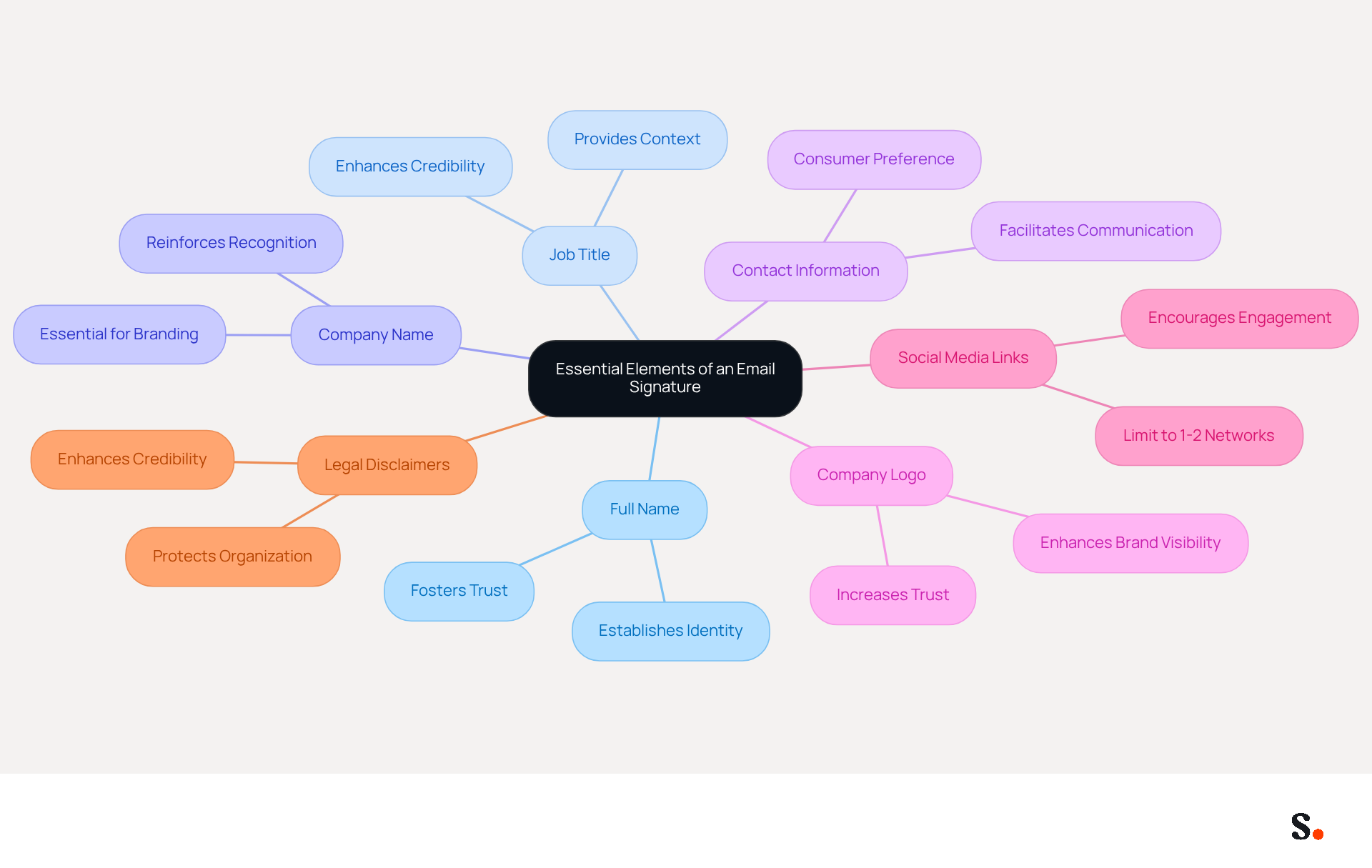
In 2026, an effective email signature must integrate key elements that elevate professionalism and reinforce branding:
- Full Name: Clearly stating the sender's full name establishes identity and fosters trust.
- Job Title: Including the sender's position provides context about their role within the organization, enhancing credibility.
- Company Name: Mentioning the company name reinforces recognition, which is crucial as 69% of UK consumers view a consistent professional identity as essential.
- Contact Information: Providing a phone number and an address facilitates easy communication, with 64% of consumers seeking contact details in correspondence.
- Company Logo: Incorporating the company logo enhances brand visibility and recognition, as branded digital identifiers can increase trust in the sender by 76%.
- Social Media Links: Adding links to professional social media profiles encourages further engagement, but it’s advisable to limit these to 1-2 relevant networks to avoid clutter.
- Legal Disclaimers: Including any necessary legal disclaimers relevant to your industry protects the organization and enhances credibility.
Ensure these elements are included to create a professional-looking mark that serves as a reliable point of contact for recipients. Scribe makes it easy to manage these approvals with just a click, syncing directly with your provider. Granting permission to connect with your service provider may seem complex, but Scribe streamlines this with a straightforward process. All modifications made in your provider directory will be automatically synced with Scribe, ensuring branding consistency and adherence to security standards. By ensuring branding consistency and adhering to security standards, Scribe not only simplifies management but also strengthens your organization's credibility in the digital landscape.
Incorporate Branding for Consistency and Recognition
To effectively communicate your brand's identity, your email signature must adhere to specific best practices:
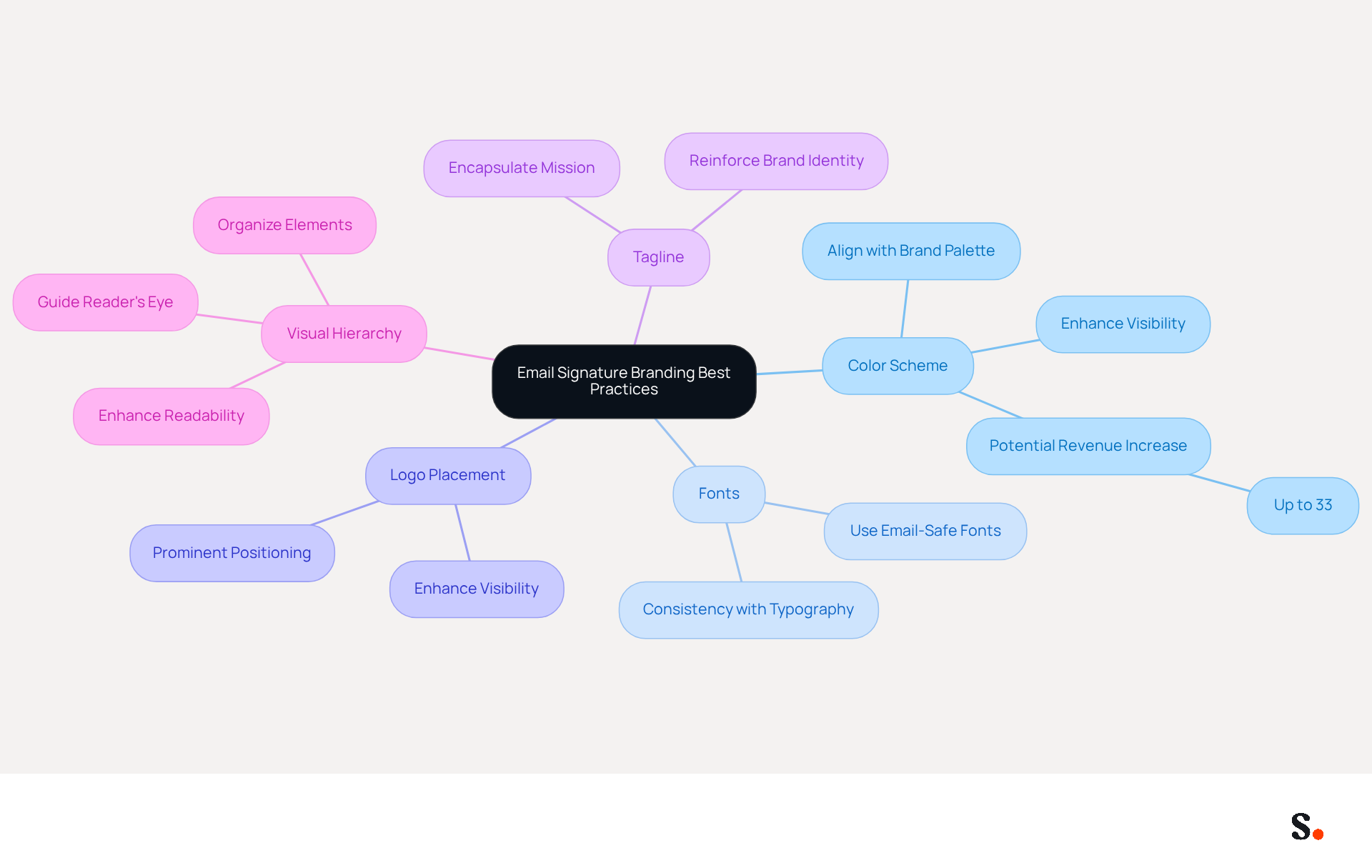
- Color Scheme: Utilize colors that align with your identity's palette to create a cohesive and recognizable look. Consistent use of company colors can enhance visibility and recognition, contributing to a potential revenue increase of up to 33%.
- Fonts: Select fonts that are consistent with your brand's typography. Utilizing email-safe fonts guarantees that your email footer displays correctly across different email clients, preserving a professional look.
- Logo Placement: Position your logo prominently within the signature. A well-placed logo enhances visibility and reinforces your identity without overwhelming the overall design.
- Tagline: If applicable, include a company tagline that encapsulates your organization's mission or values. This can serve as a quick reminder of what your identity represents, further solidifying your presence in the recipient's mind.
- Visual Hierarchy: Organize elements in a way that guides the reader's eye, ensuring that the most important information stands out. Effective segmentation in your email can direct focus and enhance readability, making it easier for recipients to find key details.
Using these branding elements conveys key information and strengthens your identity with each message. With Scribe, any changes you make in your Aircall settings will automatically update your digital identifiers, making it easy to maintain brand consistency. When brands maintain consistent messaging, they can boost response rates by 22%. Furthermore, Scribe's SOC 2 Type II compliance guarantees secure data management, providing you with reassurance as you handle your digital identities. Ultimately, a well-crafted email signature can significantly enhance your brand's perception and effectiveness in communication.
Utilize Automation for Efficient Signature Management
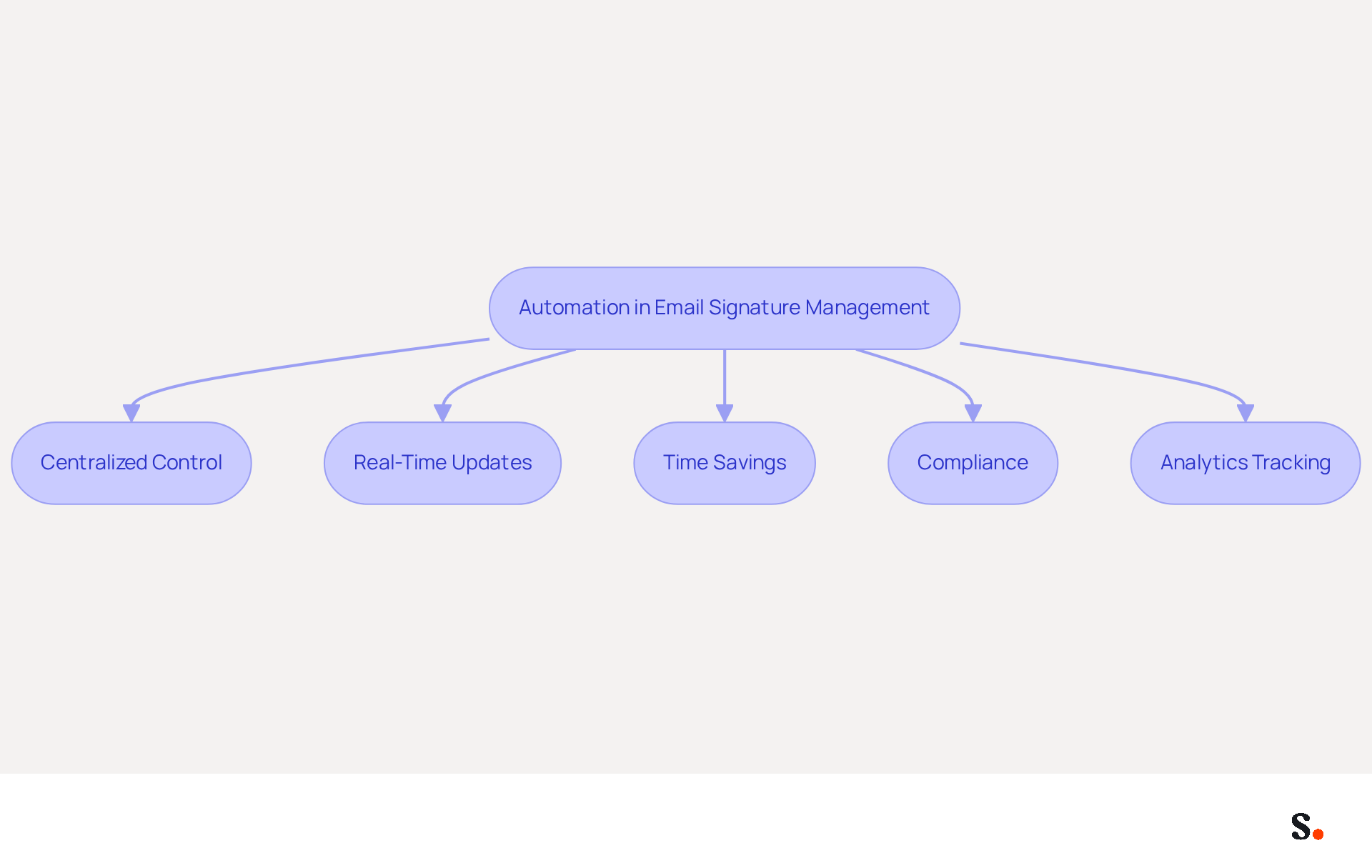
Implementing automation in company email signature management addresses the challenges of brand consistency and operational efficiency.
- Centralized Control: Utilizing a centralized platform like Scribe allows organizations to manage approvals uniformly, ensuring brand consistency across all communications. In larger organizations, inconsistent branding can lead to confusion and a lack of professionalism, especially when employees manage their own identifiers.
- Real-Time Updates: Automation enables instant modifications to identifiers when team members change roles or contact details, effectively removing outdated identifiers. This ability is essential for keeping things professional and compliant, especially in the context of a company email signature during transitions such as mergers or employee onboarding.
- Time Savings: By reducing the time spent on manual updates, automation enables teams to focus on more strategic tasks. IT departments can reclaim hours previously dedicated to managing digital identifiers, allowing them to invest in higher-priority projects that drive business innovation. As a result, teams can redirect their efforts toward strategic initiatives that foster growth.
- Compliance: Automated systems ensure that all approvals adhere to legal and branding requirements, significantly reducing the risk of non-compliance. This is especially crucial in regulated sectors where electronic identifiers must adhere to specific criteria, such as HIPAA for healthcare organizations.
- Analytics Tracking: Utilizing analytics to assess the effectiveness of footers in promotional campaigns enables data-driven modifications. Statistics show that 64-70% of participants believe a professional branded sign enhances trust and credibility, positioning it as a valuable resource in promotional efforts.
Ultimately, embracing automation not only streamlines processes but also fortifies brand integrity across all communications.
Leverage Email Signatures as Marketing Opportunities
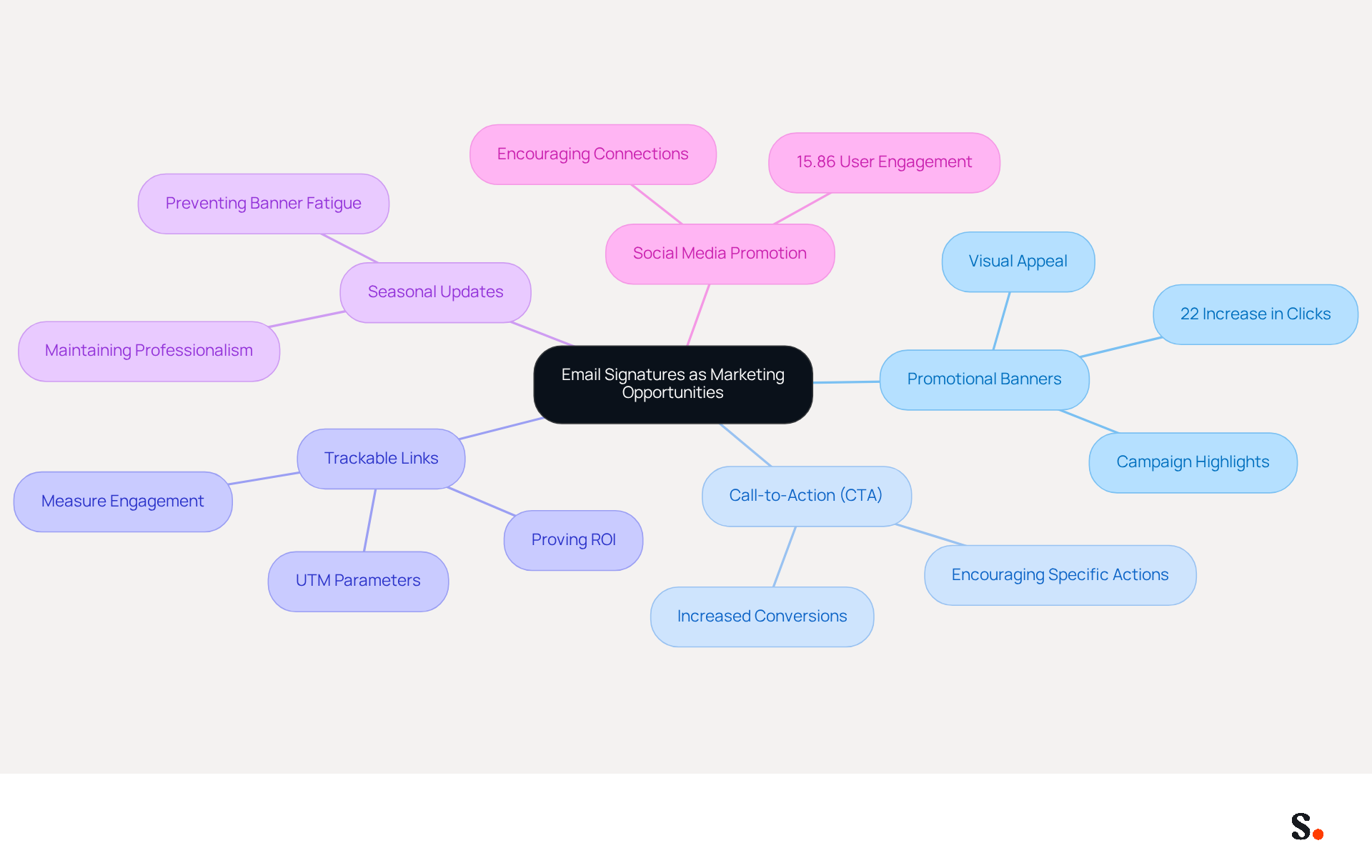
Email signatures represent an often-overlooked opportunity for impactful marketing when leveraged correctly:
- Promotional Banners: Incorporate banners that highlight current campaigns, events, or special offers. This visual component captures recipient interest and can greatly enhance engagement rates, with campaigns utilizing digital signatures demonstrating a 22% rise in clicks. Scribe automatically syncs with Aircall, ensuring that any changes in your configuration are quickly reflected in your communication identifiers, which helps maintain brand consistency.
- Call-to-Action (CTA): Include a clear CTA that encourages recipients to take specific actions, such as visiting a website or signing up for a newsletter. Incorporating CTAs can transform routine emails into promotional channels, directing traffic to essential resources.
- Trackable Links: Utilize trackable links to measure engagement and evaluate the effectiveness of the promotional efforts included in the footer. Implementing UTM parameters allows businesses to analyze impressions and clicks, helping to optimize future campaigns and demonstrate ROI.
- Seasonal Updates: Regularly refresh branding elements to reflect seasonal promotions or new product launches. Keeping content current prevents banner fatigue and maintains professionalism, ensuring that recipients receive relevant information. As Naimh Bennett observes, "Each of those messages represents a lost marketing chance if your identifiers aren’t optimized."
- Social Media Promotion: Encourage recipients to connect with Scribe on social media by including links in the email footer. This strategy boosts brand visibility and fosters engagement across multiple platforms, with 15.86% of users utilizing digital identifiers for social media promotion.
By using message footers for promotion, companies can transform each email into an opportunity to engage with their audience and increase conversions. Real-world instances, such as Voxpopme's strategic use of electronic footers, illustrate how centralized management can transform employee communications into consistent promotional touchpoints, enhancing overall outreach efforts. With Scribe, organizations can ensure that their email signatures are not only effective marketing tools but also compliant with SOC 2 Type II standards, ensuring secure data handling. By optimizing the company email signature, organizations can unlock significant marketing potential that may otherwise go untapped.
Conclusion
A well-implemented email signature strategy is crucial for organizations seeking to elevate their professional image and enhance brand recognition. Focusing on essential elements in email signatures enables organizations to create communications that are informative, visually appealing, and consistent with their branding. Tools like Scribe help organizations manage their email signatures effectively, making sure each email reflects their identity and values.
The article highlights several best practices, including the importance of incorporating essential elements such as:
- Contact information
- Branding consistency through color schemes and fonts
- The strategic use of promotional opportunities within email signatures
Automation plays a crucial role in maintaining brand integrity and compliance, allowing organizations to save time and reduce the risk of outdated information. Furthermore, leveraging email signatures as marketing tools can significantly enhance engagement and drive traffic to key resources.
In conclusion, optimizing email signatures is a strategic move that can lead to significant marketing ROI and a stronger brand presence. Organizations should embrace these best practices and consider the potential of their email signatures as powerful communication and marketing assets. By doing so, they can transform routine correspondence into impactful interactions that resonate with their audience and drive business growth.
Frequently Asked Questions
What are the essential elements of an effective email signature in 2026?
An effective email signature must include the following elements: Full Name, Job Title, Company Name, Contact Information, Company Logo, Social Media Links, and Legal Disclaimers.
Why is it important to include the sender's full name in an email signature?
Including the sender's full name establishes identity and fosters trust with the recipient.
How does a job title in an email signature enhance credibility?
A job title provides context about the sender's role within the organization, which enhances their credibility.
What role does the company name play in an email signature?
Mentioning the company name reinforces recognition, which is crucial as 69% of UK consumers view a consistent professional identity as essential.
Why is contact information important in an email signature?
Providing a phone number and an address facilitates easy communication, with 64% of consumers seeking contact details in correspondence.
How does incorporating a company logo benefit an email signature?
A company logo enhances brand visibility and recognition, increasing trust in the sender by 76%.
What is the recommendation regarding social media links in an email signature?
It is advisable to add links to 1-2 relevant professional social media profiles to encourage engagement while avoiding clutter.
Why should legal disclaimers be included in an email signature?
Including necessary legal disclaimers protects the organization and enhances its credibility.
How does Scribe assist in managing email signatures?
Scribe simplifies the management of email signatures by syncing directly with your provider, ensuring branding consistency and adherence to security standards.
What is the process for granting permission to connect with Scribe?
Granting permission to connect with your service provider may seem complex, but Scribe streamlines this with a straightforward process, automatically syncing modifications made in your provider directory.
List of Sources
- Define Essential Elements of an Email Signature
- What to Include in Your Email Signature for Maximum Impact (https://scribe-mail.com/en-US/blog/what-to-include-in-your-email-signature-for-maximum-impact)
- Email Signature Best Practices for 2026 (+ 15 Pro Examples) (https://wavecnct.com/blogs/email-signature-best-practices-2026)
- Research Recap: Branded Email Signatures Increase Company Recognition, Trust - Demand Gen Report (https://demandgenreport.com/industry-news/research-recap-branded-email-signatures-increase-company-recognition-trust/47252)
- 4 Best Practices for a Proper Email Signature That Boosts Branding (https://scribe-mail.com/en-US/blog/4-best-practices-for-a-proper-email-signature-that-boosts-branding)
- 20 Tips for Creating an Effective Email Signature — SitePoint (https://sitepoint.com/creating-an-effective-email-signature)
- Incorporate Branding for Consistency and Recognition
- 18 Email Signature Designs for Better Brand Recognition (https://blog.designcrowd.com/article/1888/18-email-signature-designs-for-better-brand-recognition)
- The benefits of a branded email signature (https://bybrand.io/blog/branded-email-signature)
- Boost Brand Image with Cute Email Signatures: Best Practices (https://scribe-mail.com/en-US/blog/boost-brand-image-with-cute-email-signatures-best-practices)
- The impact of email signatures on your branding (https://signitic.com/en/resources/the-impact-of-email-signatures-on-your-branding)
- Branded signature for business - what it is & how it's done (https://wisestamp.com/blog/email-signature-branding)
- Utilize Automation for Efficient Signature Management
- Automating Email Signatures: How IT Teams Streamline Processes & Reduce Risk (https://exclaimer.com/blog/streamlining-it-processes-automated-email-signatures)
- Email signature statistics: Why every business should optimize their email signatures — Stripo.email (https://stripo.email/blog/email-signature-statistics-why-every-business-should-optimize-their-email-signatures)
- Maximizing Efficiency with Automated Email Signatures for Internal and External Communications | Crossware365 (https://crossware365.com/blog/maximizing-efficiency-with-automated-email-signatures-for-internal-and-external-communications)
- 40+ Email Signature Statistics for 2026 (Data + Insights) (https://wavecnct.com/blogs/email-signature-statistics)
- Central and automatic email signatures for Office 365 (https://codetwo.com/email-signatures/central-and-automatic)
- Leverage Email Signatures as Marketing Opportunities
- Using Email Signatures as a Marketing Tool: Ideas for Generating Leads and Promoting Business (https://blog.ringostat.com/en/using-email-signatures-as-a-marketing-tool-ideas-for-generating-leads-and-promoting-business)
- Exclaimer Research: 67% of Marketers Expect Email Signatures to Support With Lead Gen In 2023 (https://businesswire.com/news/home/20230612141095/en/Exclaimer-Research-67-of-Marketers-Expect-Email-Signatures-to-Support-With-Lead-Gen-In-2023)
- Email Signature Marketing Examples That Drive ROI | CloudM (https://cloudm.io/resources/blog/email-signature-marketing-examples-that-drive-roi)
- How to Use Email Signature Marketing: 10 Dos and Don’ts (https://exclaimer.com/email-signature-handbook/top-10-email-signature-marketing-dos-donts)
- 10 ideas for marketing campaigns in email signatures (https://signitic.com/en/resources/10-ideas-for-marketing-campaigns-in-email-signatures)
Get started with Scribe
Manage signatures across your whole team
Free 14-day trial — no credit card.