4 Essential Tips: Can You End an Email with 'Best'?
Choosing the right email sign-off can significantly impact the tone of your communication and future interactions. This article will provide essential tips for
Sophie Grant
Email Signature Specialist, Scribe
Introduction
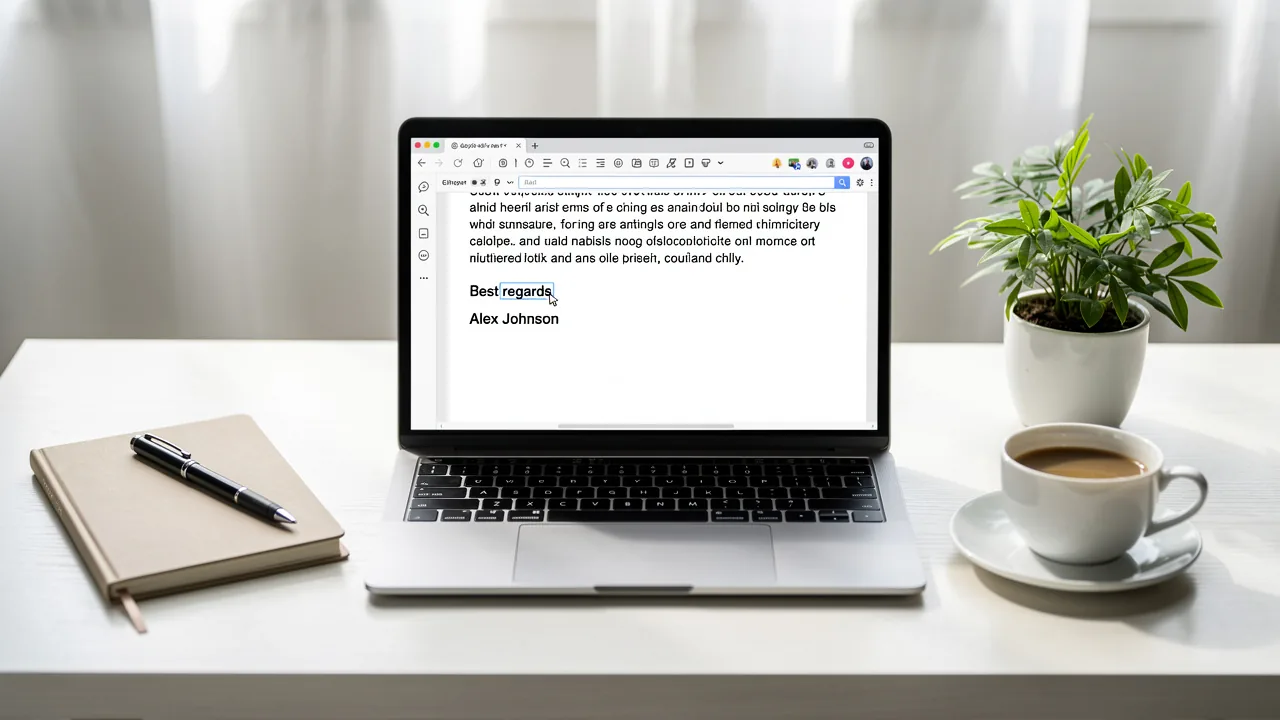
Choosing the right email sign-off can significantly impact the tone of your communication and future interactions. This article will provide essential tips for selecting effective email closures, emphasizing the importance of the right sign-off in various contexts and the incorporation of branding elements. With numerous options available, determining the most appropriate way to conclude an email is crucial.
Identify Key Components for Email Closures
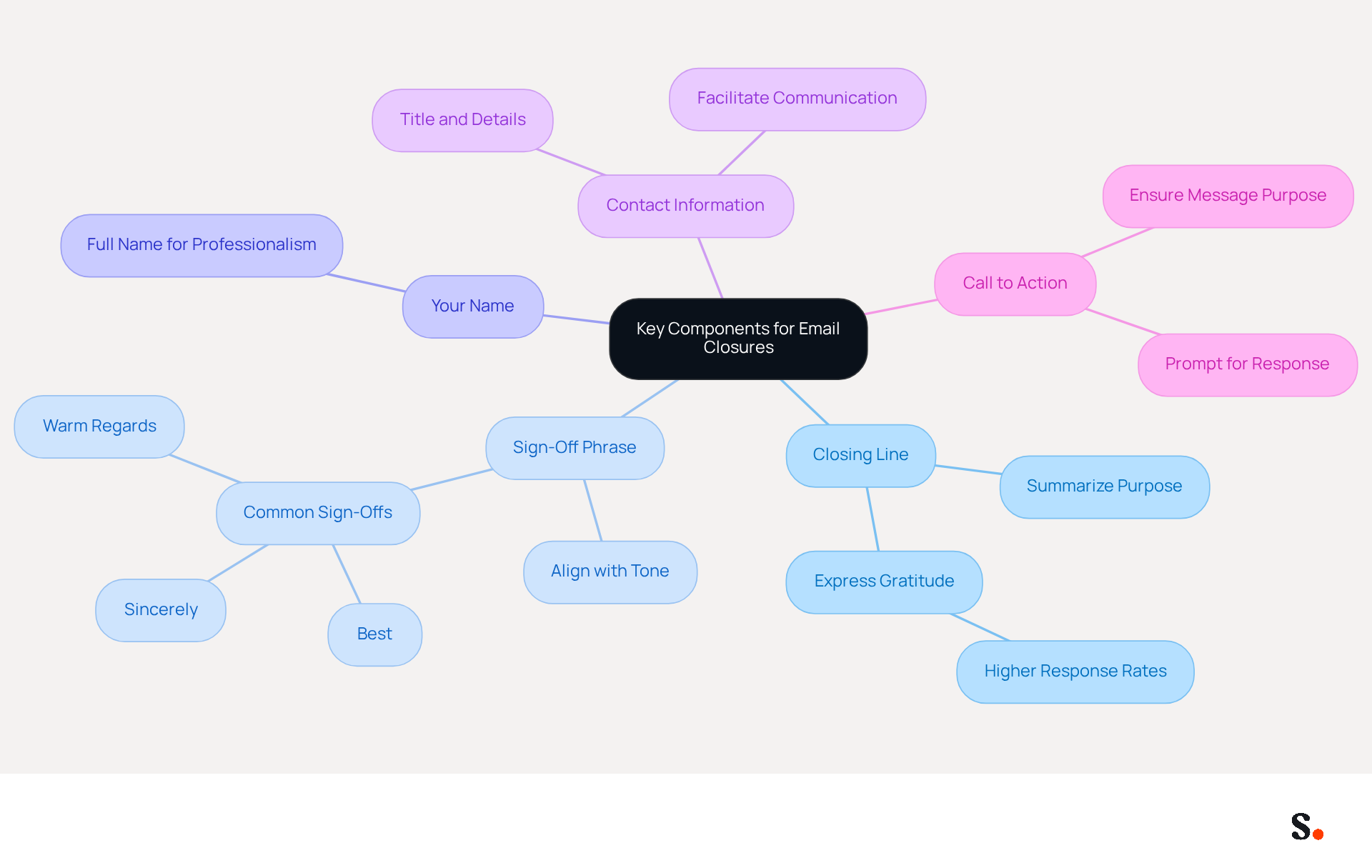
Effective message closures are crucial for professionalism and clarity in communication. Here are the critical elements to consider:
- Closing Line: Ensure your closing line succinctly summarizes the email's purpose or expresses gratitude. This reinforces the message and leaves a positive impression. Studies indicate that emails ending with gratitude tend to receive more responses than those that do not.
- Sign-Off Phrase: Choose a sign-off that aligns with the email's tone. For instance, many people wonder, can you end an email with best, as it is widely accepted in professional settings and effective in about 95% of cases, while 'Sincerely' may come off as outdated in many contexts. Experts suggest that your sign-off should align with both your relationship with the recipient and the context of your message.
- Your Name: Always include your full name to maintain professionalism. This is especially significant in formal exchanges, where clarity regarding the sender's identity is essential.
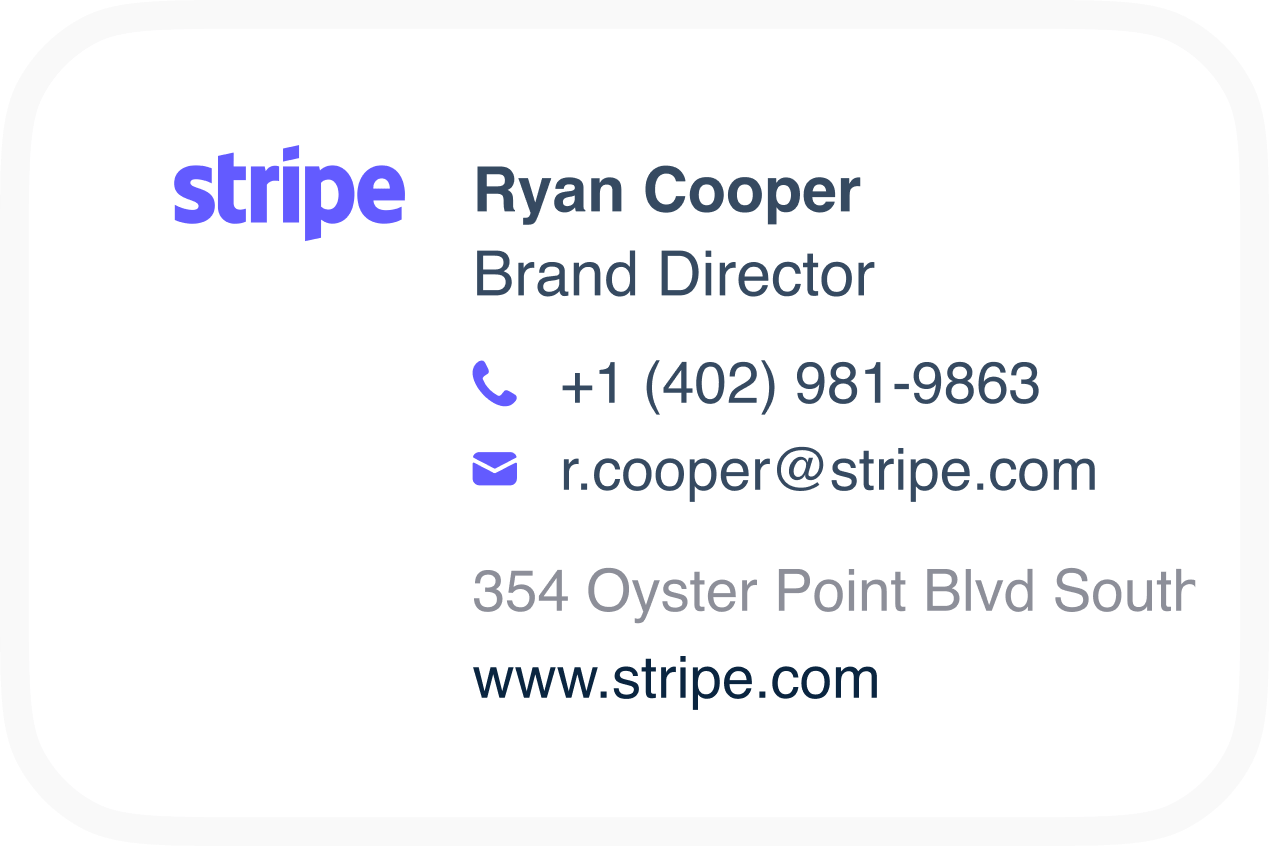
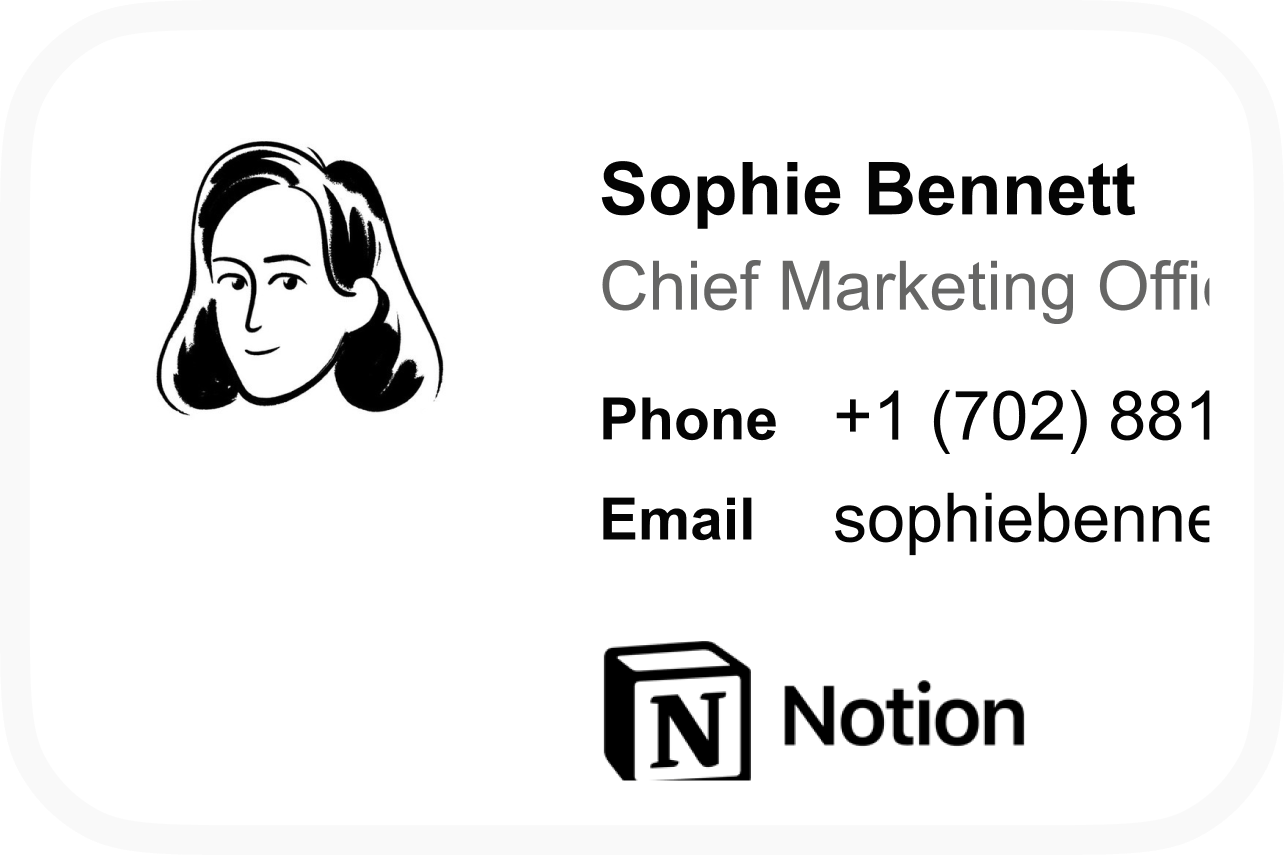
- Contact Information: If necessary, add your title and contact details to facilitate further communication. This not only provides the recipient with a way to reach you but also reinforces your professional standing.
- Call to Action: If applicable, include a prompt for the recipient to respond or take action. This promotes involvement and guarantees that your message fulfills its intended purpose. Case studies indicate that messages concluding with clear calls to action and expressions of gratitude yield higher response rates, reinforcing the importance of thoughtful message endings.
Incorporating these components can significantly enhance the effectiveness of your message closures, fostering better communication and stronger professional relationships. Furthermore, managing email signatures can often be cumbersome and inconsistent, but this integration simplifies the process and ensures your brand remains consistent and compliant.
Choose Contextual Sign-Offs for Different Scenarios
When considering effective communication in various contexts, one might ask, can you end an email with best?
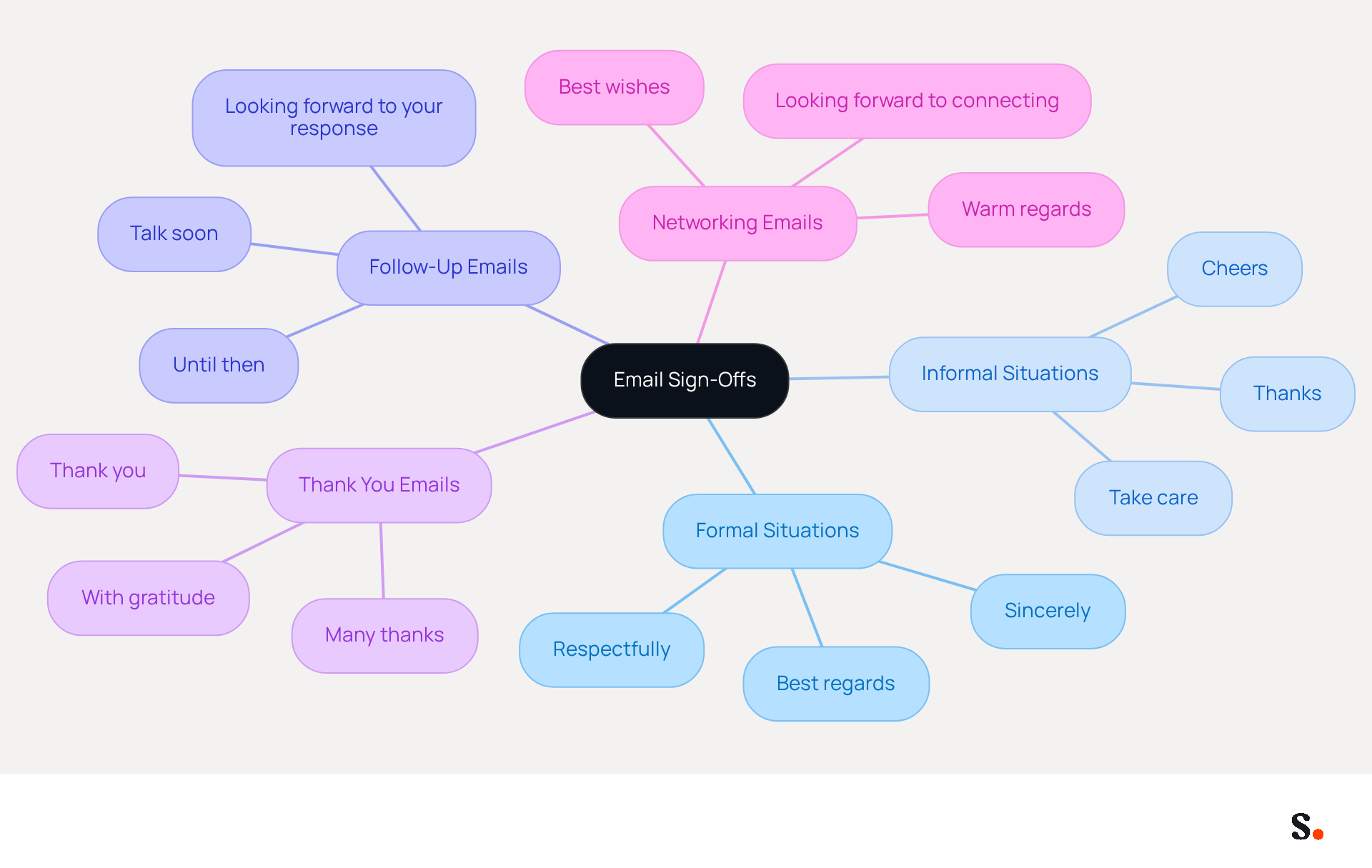
Formal Situations: For official messages, use sign-offs like 'Sincerely,' 'Best regards,' or 'Respectfully' to convey professionalism and respect. These formal sign-offs are widely accepted in business contexts and help maintain a serious tone. As Payman Taei observes, a clear and professional email conclusion, like asking can you end an email with best, is vital for effective interaction.
Informal Situations: Casual sign-offs, such as 'Cheers' or 'Thanks,' can effectively maintain a collegial atmosphere in professional interactions. These closings are suitable for ongoing professional relationships.
Follow-Up Emails: To encourage engagement, consider using 'Looking forward to your response.' This sign-off expresses anticipation and invites further communication, making it effective for follow-ups.
Thank You Emails: Express appreciation with sign-offs like 'Thank you' or 'Thanks again.' These phrases not only convey gratitude but also enhance the likelihood of a positive response from the recipient. Research indicates that message endings expressing gratitude, such as 'Thanks in advance,' 'Appreciate your help,' and asking, 'Can you end an email with best,' have the highest response rates.
Networking Emails: Use 'Best wishes' or 'Warm regards' to build rapport in networking situations. These sign-offs strike a balance between professionalism and friendliness, making them ideal for establishing connections. It's important to align the sign-off with the emotional tone of the message to enhance the effectiveness of your communication. Selecting an appropriate sign-off not only reflects your professionalism but also influences the recipient's response.
Incorporate Branding Elements in Email Signatures
Effective branding in digital identifiers is essential for projecting a professional image and ensuring consistency across communications. Here are some tips to enhance your email signatures:
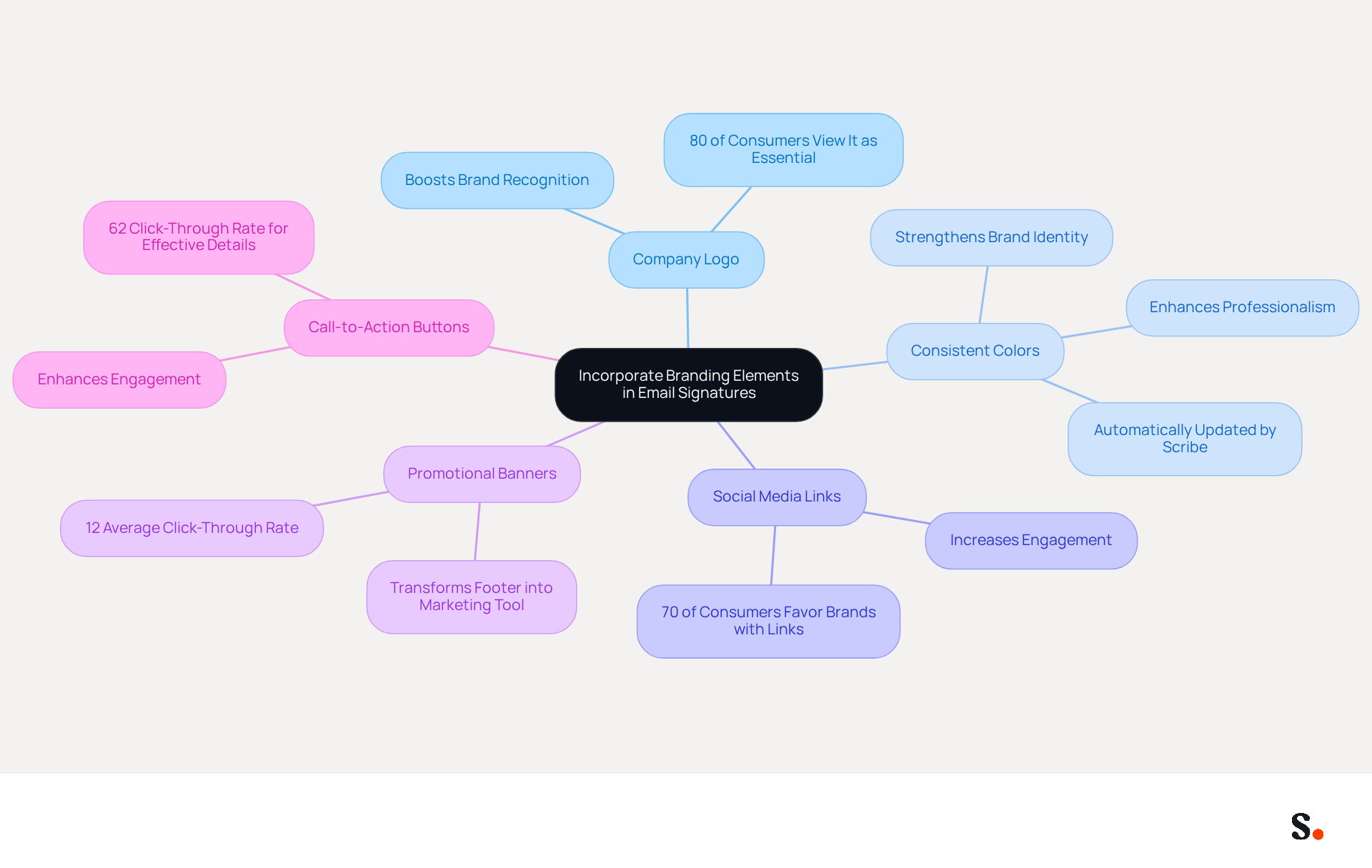
- Company Logo: Incorporating your company logo in email signatures significantly boosts brand recognition, as 80% of consumers consider a branded email signature an essential aspect of a company's identity.
- Consistent Colors: Using consistent brand colors strengthens your identity and enhances professionalism, making your communications easily recognizable. This can be effortlessly handled through Scribe, which automatically updates contact details, so any changes are reflected instantly without requiring extra effort from your team.
- Social Media Links: Adding links to your company's social media profiles can increase engagement. Research shows that 70% of consumers favor brands that offer contact information, including social media links, in their correspondence.
- Promotional Banners: Including a banner for current promotions or campaigns can transform your message footer into a marketing tool. Scribe's digital identifiers have demonstrated a 12% average click-through rate on banner displays, making them an effective marketing tool that drives traffic and awareness without requiring additional effort from employees.
- Call-to-Action Buttons: Implementing buttons for scheduling meetings or accessing resources can enhance engagement. A particular call to action in your contact information motivates recipients to take the next step, resulting in higher click-through rates, which are at 62% for effective contact details.
By leveraging Scribe, companies can effortlessly maintain a cohesive brand image across all communications, enhancing both credibility and marketing impact.
Avoid Common Mistakes in Email Closures
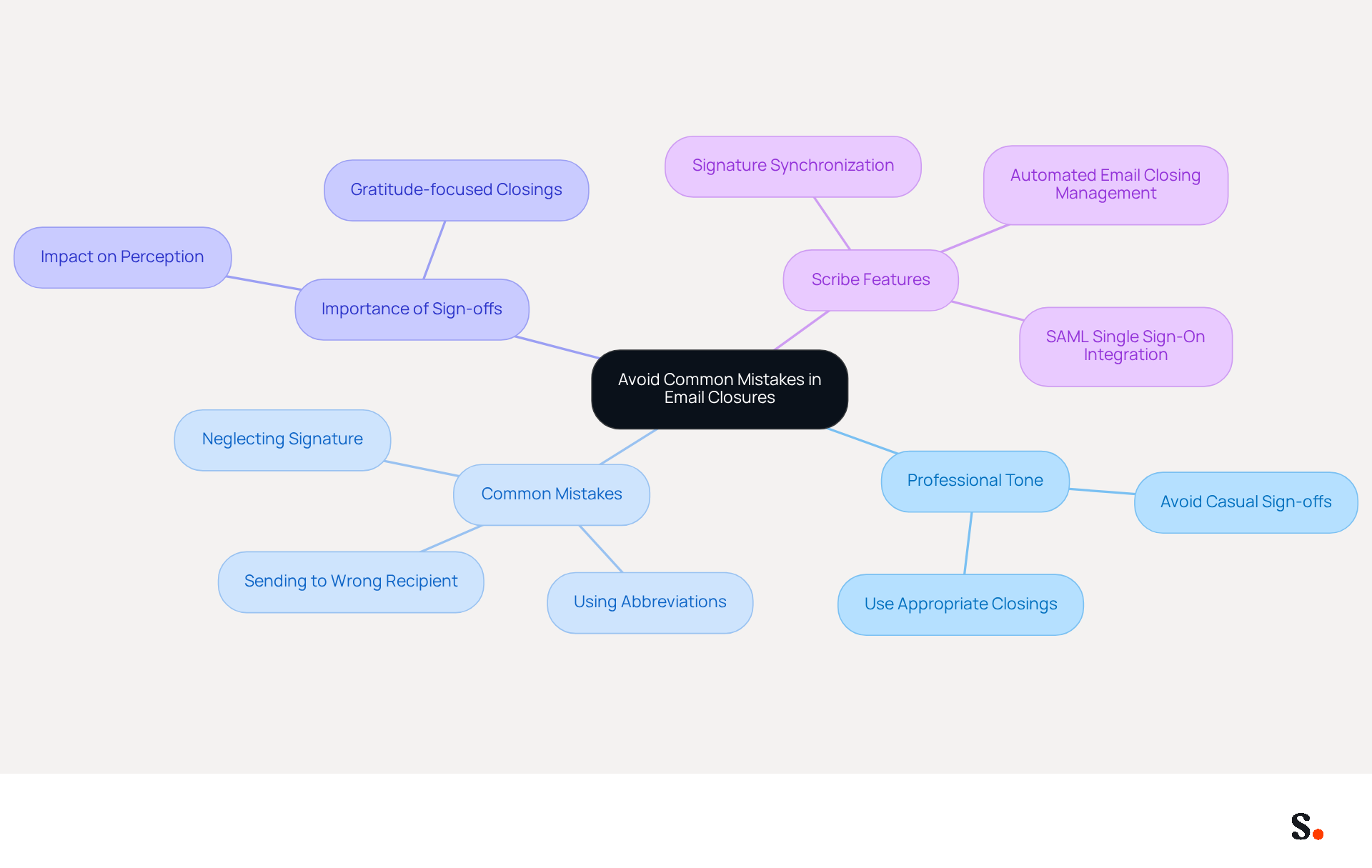
Maintaining a professional tone in email correspondence is crucial to avoid misunderstandings and uphold respectability. It's best to avoid casual sign-offs like 'Cheers' in formal emails, as they might come off as less professional. Research indicates that 58 percent of people have sent emails to the wrong person, underscoring the importance of a consistent professional tone to prevent miscommunication.
Always include a sign-off to uphold professionalism; for instance, can you end an email with best? A well-designed mark not only provides essential contact details but also strengthens brand identity. With Scribe's automated email closing management, you can ensure that your closings are always up-to-date and consistent across your organization. Neglecting a signature can lead to confusion and a lack of clarity in correspondence, as highlighted in the case study 'Avoiding Common Mistakes in Email Closings.'
Avoid abbreviations such as 'Rgds' or 'Thx' in business correspondence. These can seem unprofessional and may result in misunderstandings, particularly since individuals spend 28 percent of their working week reading and responding to messages. Scribe's SOC 2 Type II compliance guarantees that your data management is secure, further enhancing the professionalism of your correspondence.
When writing an email, consider if you can you end an email with best to ensure your closing line is clear and pertinent to the message's content. An unclear or perplexing sign-off can leave recipients unsure about the intended message, which can be harmful to effective interaction. With Scribe's features, you can auto-fill signature information, ensuring clarity and consistency in your communications.
To prevent mixed signals, consider if you can end an email with best, aligning your sign-off with the tone of the message. For example, a friendly message may warrant a warmer sign-off, while a formal request should conclude with a more traditional closing. As mentioned by Sophie Grant, gratitude-focused sign-offs, such as 'Thanks in advance,' yield higher response rates, reinforcing the significance of thoughtful closures. By utilizing Scribe's automated synchronization capabilities, you can maintain brand consistency and professionalism in every message sent. Additionally, Scribe's SAML single sign-on integration enhances security and streamlines access, ensuring that your email signature management is both efficient and compliant with GDPR standards.
Conclusion
Ending an email effectively is essential for clear and impactful professional communication. This article highlights the need to choose the right closing lines and sign-off phrases while incorporating branding elements for consistent and professional email communication. Key insights include:
- Aligning your sign-off with the email's context, whether formal or informal.
- The importance of including essential contact information and calls to action.
- The potential for misunderstandings and damage to professional relationships when using inappropriate sign-offs.
- Leveraging tools like Scribe to streamline the process of managing email signatures, ensuring that branding remains consistent and compliant with security standards.
Mastering how to close an email not only shows professionalism but also helps you communicate better and build stronger relationships. By applying these strategies, you can ensure that your emails not only convey your message but also reinforce your professional image.
Frequently Asked Questions
Why are effective message closures important in emails?
Effective message closures are crucial for professionalism and clarity in communication, leaving a positive impression and reinforcing the email's purpose.
What should a closing line in an email include?
A closing line should succinctly summarize the email's purpose or express gratitude, as emails ending with gratitude tend to receive more responses.
How should I choose a sign-off phrase for my email?
Choose a sign-off that aligns with the email's tone and your relationship with the recipient. Common options include "Best," which is widely accepted, while "Sincerely" may seem outdated in some contexts.
Is it necessary to include my full name in an email?
Yes, always include your full name to maintain professionalism, especially in formal exchanges where clarity regarding the sender's identity is essential.
Should I add my contact information in emails?
If necessary, include your title and contact details to facilitate further communication and reinforce your professional standing.
What is the purpose of including a call to action in an email?
Including a call to action prompts the recipient to respond or take action, ensuring that your message fulfills its intended purpose and can lead to higher response rates.
How can managing email signatures be simplified?
Integrating key components into your email signatures can simplify the process and ensure consistency and compliance with your brand.
List of Sources
- Identify Key Components for Email Closures
- How to End an Email Professionally (With Examples) (https://iconnect.isenberg.umass.edu/blog/2024/07/10/how-to-end-an-email-professionally-with-examples)
- 89 Ways To Sign Off On An Email (https://forbes.com/sites/susanadams/2014/10/08/89-ways-to-sign-off-on-an-email)
- Email Sign Offs for Every Industry and Situation | Mailchimp (https://mailchimp.com/resources/email-sign-offs)
- How to Properly End an Email: 4 Steps for Professional Sign-Offs (https://scribe-mail.com/en-US/blog/how-to-properly-end-an-email-4-steps-for-professional-sign-offs)
- How to End an Email: 43 Ways to Sign Off on an Email (2026) (https://respona.com/blog/how-to-end-an-email)
- Choose Contextual Sign-Offs for Different Scenarios
- Best Email Sign-Offs for Any Correspondence (https://wisestamp.com/examples/email-sign-offs)
- How to End an Email: 43 Ways to Sign Off on an Email (2026) (https://respona.com/blog/how-to-end-an-email)
- Email Sign Offs for Every Industry and Situation | Mailchimp (https://mailchimp.com/resources/email-sign-offs)
- Different Sign-offs & When You Should Use Them | Heinz Marketing (https://heinzmarketing.com/blog/different-sign-offs-when-you-should-use-them)
- 50 Best Email Sign-Offs to End an Email Properly in [year] (https://elementor.com/blog/best-email-sign-offs)
- Incorporate Branding Elements in Email Signatures
- How email signatures can drive brand awareness and organic traffic - NEWOLDSTAMP (https://newoldstamp.com/blog/email-signature-brand-awareness)
- Why Are Email Signatures Key to Brand Awareness? | QuickMail (https://quickmail.com/role-of-email-signatures-in-brand-awareness)
- 12 clever ways to use your email signature to support your marketing campaigns (https://blog.hubspot.com/blog/tabid/6307/bid/31054/10-clever-ways-your-email-signature-can-support-your-marketing.aspx)
- Research Recap: Branded Email Signatures Increase Company Recognition, Trust - Demand Gen Report (https://demandgenreport.com/industry-news/research-recap-branded-email-signatures-increase-company-recognition-trust/47252)
- The benefits of a branded email signature (https://bybrand.io/blog/branded-email-signature)
- Avoid Common Mistakes in Email Closures
- How to Properly End an Email: 4 Steps for Professional Sign-Offs (https://scribe-mail.com/en-US/blog/how-to-properly-end-an-email-4-steps-for-professional-sign-offs)
- 10 Common Email Mistakes - Mindtools Membership (https://mindtools.com/at253lr/10-common-email-mistakes)
- Home - Oklahoma Bar Association (https://okbar.org/cm_articles/avoid-these-common-email-mistakes)
- The 2 biggest mistakes people make in work emails—and how to avoid them (https://cnbc.com/amp/2024/04/10/the-biggest-mistakes-people-make-over-email-and-how-to-avoid-them.html)
- 11 Common Email Mistakes Everyone Makes (https://linkedin.com/pulse/11-common-email-mistakes-everyone-makes-betty-liu)
Get started with Scribe
Manage signatures across your whole team
Free 14-day trial — no credit card.