All the Best Signature Email Practices for Effective Marketing
Many organizations overlook the significant role email signatures can play in enhancing brand visibility and communication effectiveness. By strategically
Sophie Grant
Email Signature Specialist, Scribe

Introduction
Many organizations overlook the significant role email signatures can play in enhancing brand visibility and communication effectiveness. By strategically managing email signatures and adhering to best practices, businesses can transform these digital footers into powerful marketing tools that convey professionalism and drive engagement. Many organizations fail to recognize the full potential of their email signatures, leading to missed opportunities for brand enhancement.
How can businesses leverage this often-overlooked asset to create a cohesive brand image while simultaneously boosting their marketing efforts? By strategically managing email signatures, businesses can unify their brand image and amplify their marketing efforts.
Identify Essential Components of Email Signatures
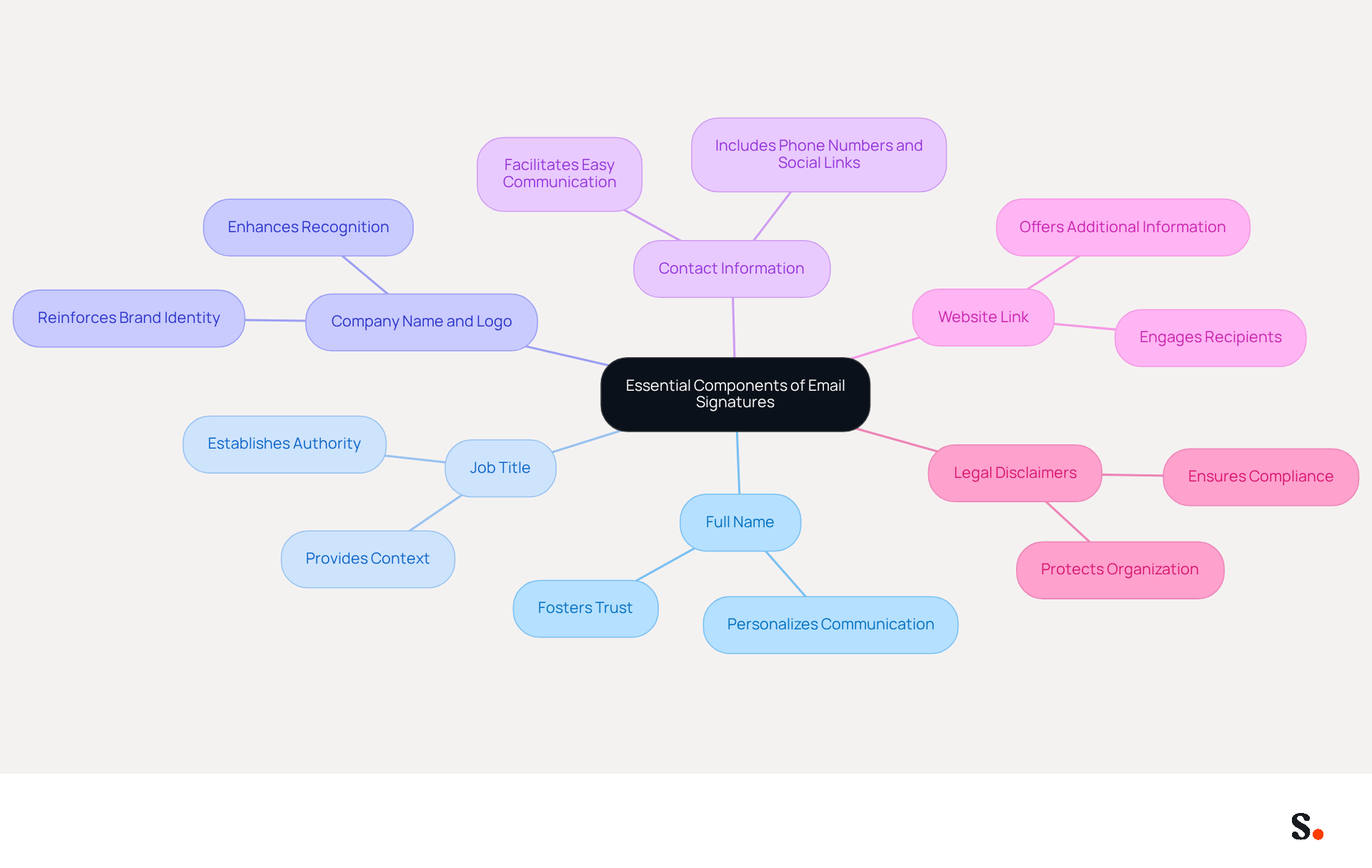
To create an effective email signature, it is essential to include key components that enhance communication and professionalism:
- Full Name: Clearly stating the sender's name personalizes communication and fosters trust, making it a critical element.
- Job Title: Including your position establishes authority and context, helping recipients understand the sender's role.
- Company Name and Logo: This reinforces brand identity and recognition, crucial for maintaining a professional image.
- Contact Information: Providing phone numbers, addresses, and links to social media profiles facilitates easy communication and enhances accessibility.
- Website Link: Directing recipients to your company’s website offers additional information and resources, further engaging them.
- Legal Disclaimers: Including any necessary legal disclaimers protects your organization and ensures compliance with regulations.
Including these elements makes digital communication informative and boosts the professional image of businesses. Nearly 90% of recipients keep at least one personal identifier updated, highlighting the importance of relevance in communication. Research indicates that well-organized digital identifiers can greatly enhance visibility and marketing efficiency, turning them into effective acquisition channels. Without an efficient management system, keeping email signatures updated can become a tedious task. With Scribe's automated synchronization features, organizations can easily keep their email signatures up to date, ensuring that any updates are seamlessly integrated without manual input. Failing to manage these identifiers effectively can lead to missed opportunities and diminished brand presence.
Design Visually Appealing Email Signatures
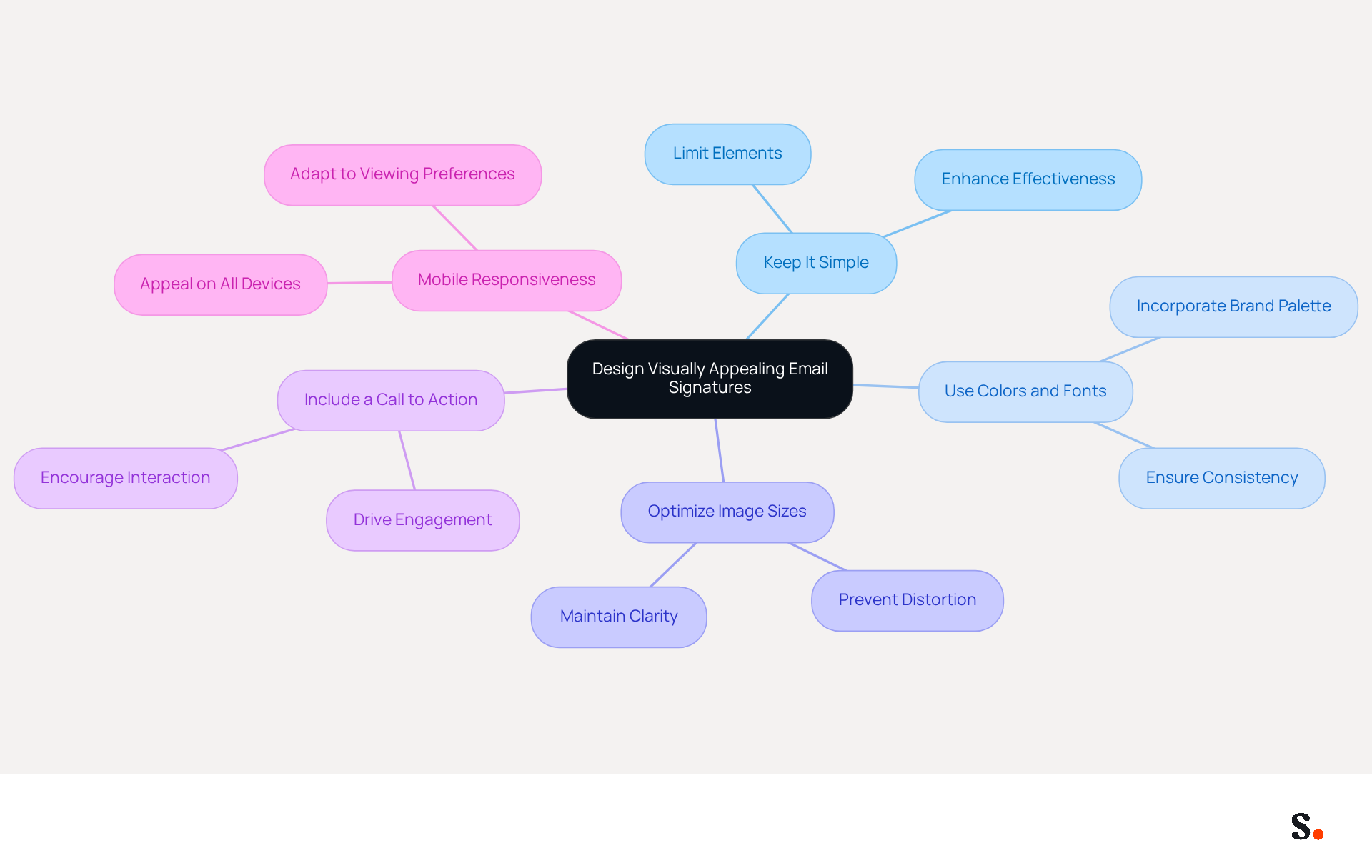
Without a well-designed email footer, your professional identity may be undermined. With Scribe's automated synchronization with Aircall, every modification made in your Aircall settings will automatically be reflected in your Scribe profiles, ensuring consistency in your identity. To enhance your email signatures, consider the following best practices:
- Keep It Simple: Limit the number of elements to avoid clutter. A clean design enhances effectiveness and professionalism.
- Use Colors and Fonts: Incorporate your organization's color palette and typefaces to ensure consistency across all promotional materials, reinforcing identity.
- Optimize Image Sizes: Ensure logos and images are appropriately sized to prevent distortion and maintain clarity, which is crucial for a polished appearance.
- Include a Call to Action (CTA): A simple CTA, such as a link to your latest blog post or a promotional offer, can drive engagement and encourage interaction with your content.
- Mobile Responsiveness: Create designs that appear appealing on both desktop and mobile devices, as a large percentage of messages are viewed on smartphones.
By following these guidelines, you can significantly improve your email communication and brand recognition.
Ensure Consistency Across Team Email Signatures
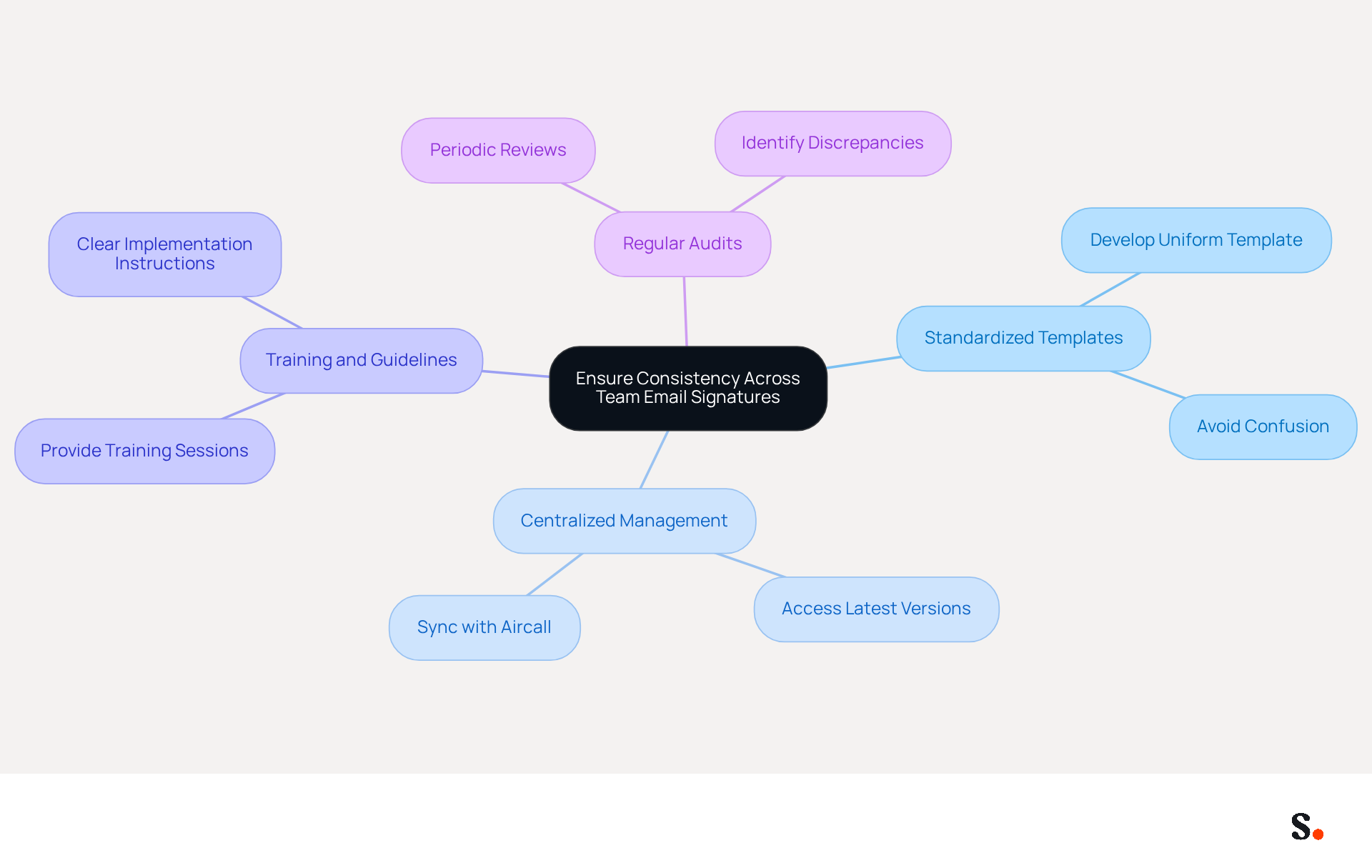
To ensure a cohesive brand image across all team email signatures, organizations must adopt strategic measures:
- Standardized Templates: Develop a uniform template that all employees must use. Organizations risk confusing recipients and weakening their brand identity without a standardized template for all the best signature email.
- Centralized Management: With Scribe's centralized management, every team member can easily access the latest version, reducing the chances of using outdated or non-compliant approvals. Scribe's integration with Aircall ensures that any modifications made in your Aircall configuration automatically sync with your Scribe branding, enhancing brand consistency and communication efficiency.
- Training and Guidelines: Provide training sessions and clear instructions on effectively implementing the template for electronic correspondence. This ensures that all employees understand the importance of consistency and how to adhere to all the best signature email standards.
- Regular Audits: Conduct periodic reviews of electronic correspondence identifiers to verify compliance with branding standards. Regular checks help identify discrepancies and allow for timely adjustments, reinforcing a cohesive brand image.
This consistency not only fosters trust but also can lead to a 22% increase in email response rates. Moreover, organizations should be aware of the potential regulatory risks linked to unregulated content and ensure compliance with GDPR, CCPA, and other regulations to safeguard their brand integrity. By prioritizing these strategies, organizations can not only safeguard their brand integrity but also unlock significant marketing potential.
Leverage Email Signatures for Marketing Opportunities
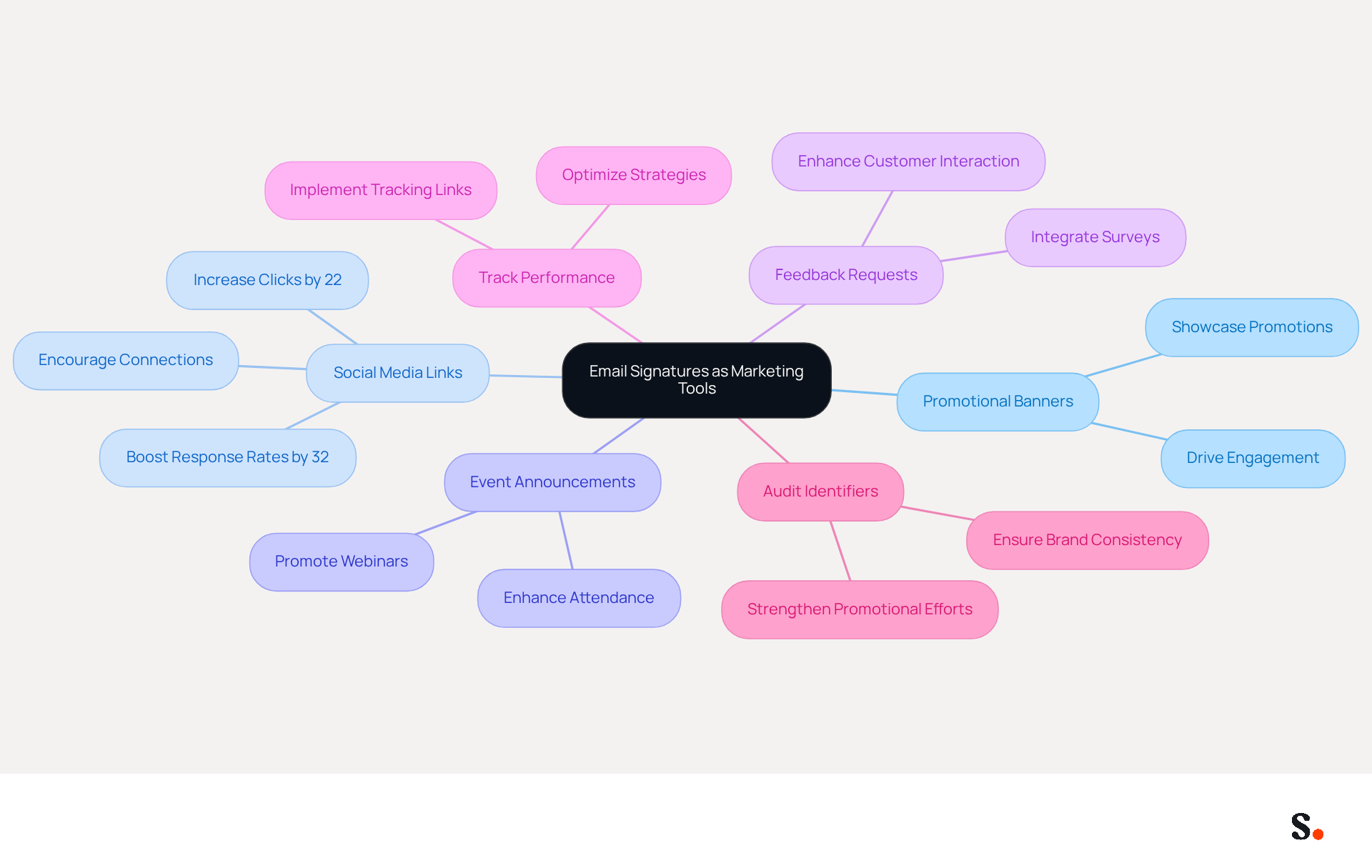
Many businesses overlook the potential of email footers as a strategic marketing asset. Email footers can act as a powerful marketing tool when utilized effectively. Here are several strategies to maximize their potential:
- Promotional Banners: Incorporate banners that showcase current promotions, events, or new products, capturing recipient interest and driving engagement.
- Social Media Links: Include icons that link to your social media profiles, encouraging recipients to connect and engage with your brand across platforms. When personalized, this approach can increase clicks by 22% and response rates by 32%.
- Event Announcements: Utilize digital identifiers to promote upcoming webinars, conferences, or other events, which can significantly enhance attendance and audience engagement.
- Feedback Requests: Integrate links to surveys or feedback forms, allowing recipients to share their insights and enhancing customer interaction.
- Track Performance: Implement tracking links to assess the effectiveness of your correspondence branding campaigns. This data-driven approach enables businesses to make informed adjustments, optimizing their strategies for better results.
- Audit Identifiers: Regularly review your communication identifiers to ensure they are on-brand and consistent across all departments. This practice not only strengthens brand identity but also improves the overall effectiveness of your promotional efforts.
Incorporating these strategies into your emails can really enhance how you connect with your audience. The effectiveness of email signatures as marketing tools is underscored by their ability to achieve an average click rate of 4%, which is significantly higher than traditional marketing emails, leading to a 32% increase in responses when personalized. Harnessing the power of email signatures can transform routine communications into impactful marketing opportunities.
Conclusion
Effective email signatures serve as more than just a visual element; they are a strategic asset in communication and branding. By incorporating essential components, designing visually appealing signatures, ensuring consistency across teams, and leveraging these signatures for marketing opportunities, organizations can leverage email signatures to enhance engagement and promote their brand effectively.
Key insights from this article highlight the importance of including vital elements such as full names, job titles, and contact information, while also emphasizing the need for a clean and professional design. Consistency across team signatures is crucial, as it fosters trust and can significantly improve response rates. Moreover, utilizing email signatures as marketing assets - through promotional banners, social media links, and event announcements - can lead to increased engagement and measurable marketing ROI.
Despite their potential, many organizations overlook the strategic value of email signatures. Organizations are encouraged to adopt best practices and tools like Scribe, which not only streamline the management of email signatures but also ensure compliance with regulations such as GDPR and CCPA. By embracing these strategies, organizations can unlock significant benefits in brand visibility and engagement through every email sent.
Frequently Asked Questions
What are the essential components of an effective email signature?
The essential components of an effective email signature include your full name, job title, company name and logo, contact information, website link, and legal disclaimers.
Why is including a full name important in an email signature?
Including a full name personalizes communication and fosters trust, making it a critical element in establishing a connection with the recipient.
How does a job title in an email signature benefit communication?
A job title establishes authority and context, helping recipients understand the sender's role and the relevance of their communication.
What role does the company name and logo play in an email signature?
The company name and logo reinforce brand identity and recognition, which is crucial for maintaining a professional image.
Why should contact information be included in an email signature?
Providing contact information, such as phone numbers and social media links, facilitates easy communication and enhances accessibility for recipients.
How does a website link in an email signature benefit recipients?
A website link directs recipients to the company’s website, offering additional information and resources that further engage them.
What is the purpose of including legal disclaimers in an email signature?
Legal disclaimers protect the organization and ensure compliance with regulations, which is important for maintaining professionalism.
How can Scribe help with managing email signatures?
Scribe offers automated synchronization features that allow organizations to easily keep their email signatures up to date, ensuring that any updates are seamlessly integrated without manual input.
What are the consequences of failing to manage email signatures effectively?
Failing to manage email signatures effectively can lead to missed opportunities and diminished brand presence, impacting overall communication and marketing efficiency.
List of Sources
- Identify Essential Components of Email Signatures
- 4 Best Looking Email Signatures to Boost Your Brand Visibility (https://scribe-mail.com/en-US/blog/4-best-looking-email-signatures-to-boost-your-brand-visibility)
- 12 email signature marketing examples that drive clicks (2026) (https://signitic.com/en/resources/12-email-signature-marketing-examples-that-actually-drive-clicks)
- 20 best email signature design examples for 2026 — Stripo.email (https://stripo.email/blog/10-best-email-signature-design-examples)
- Best Practices for a Standard Email Signature That Boosts Marketing ROI (https://scribe-mail.com/en-US/blog/best-practices-for-a-standard-email-signature-that-boosts-marketing-roi)
- Design Visually Appealing Email Signatures
- The impact of email signatures on your branding (https://signitic.com/en/resources/the-impact-of-email-signatures-on-your-branding)
- Research Recap: Branded Email Signatures Increase Company Recognition, Trust - Demand Gen Report (https://demandgenreport.com/industry-news/research-recap-branded-email-signatures-increase-company-recognition-trust/47252)
- Email Signature Branding: Consistency and Impact | Crossware365 (https://crossware365.com/blog/mastering-email-signature-branding-market-presence)
- Why Email Signatures Must Be In Your 2026 Marketing Plan | Rocketseed (https://rocketseed.com/blog/what-are-the-biggest-email-trends-for-2026)
- Why Are Email Signatures Key to Brand Awareness? | QuickMail (https://quickmail.com/role-of-email-signatures-in-brand-awareness)
- Ensure Consistency Across Team Email Signatures
- Consistent email signatures for the whole team | Guide + tool (https://signitic.com/en/resources/how-to-ensure-consistent-email-signatures-for-your-entire-team-even-when-working-remotely)
- Email Signature Standardization & Centralization Guide - Signitic (https://signitic.com/en/resources/email-signature-checklist)
- Company-Wide Email Signature Management | CloudM (https://cloudm.io/blog/optimize-your-process-with-company-wide-email-signature-management)
- Why Team Email Signatures Matter More Than You Think: The Hidden Impact on Brand Trust and Customer Experience (https://getmailbird.com/why-team-email-signatures-matter-brand-trust)
- Email Signature Branding: Consistency and Impact | Crossware365 (https://crossware365.com/blog/mastering-email-signature-branding-market-presence)
- Leverage Email Signatures for Marketing Opportunities
- 12 email signature marketing examples that drive clicks (2026) (https://signitic.com/en/resources/12-email-signature-marketing-examples-that-actually-drive-clicks)
- 6 Ways to Use Email Signature to Support Marketing Campaigns (https://clearout.io/blog/use-email-signature-to-support-marketing-campaigns)
- 10 ideas for marketing campaigns in email signatures (https://signitic.com/en/resources/10-ideas-for-marketing-campaigns-in-email-signatures)
- Using Email Signatures as a Marketing Tool: Ideas for Generating Leads and Promoting Business (https://blog.ringostat.com/en/using-email-signatures-as-a-marketing-tool-ideas-for-generating-leads-and-promoting-business)
- Why Email Signatures Must Be In Your 2026 Marketing Plan | Rocketseed (https://rocketseed.com/blog/2026-marketing-plan-email-signatures)
Get started with Scribe
Manage signatures across your whole team
Free 14-day trial — no credit card.