Best Practices for a Professional Nursing Student Email Signature
In the competitive landscape of healthcare, nursing students face the challenge of establishing their identity and credibility through effective email
Sophie Grant
Email Signature Specialist, Scribe
On this page
Introduction
In the competitive landscape of healthcare, nursing students face the challenge of establishing their identity and credibility through effective email communication. A professional email signature is more than just a digital sign-off; it serves as a vital tool for enhancing their professional image and networking opportunities. By incorporating essential components such as:
- Full name
- Academic program
- Contact information
students can project a polished image. Nursing students must navigate the complexities of professionalism, legal standards, and branding opportunities in their email signatures. This article will explore how to craft an impactful email signature that resonates with peers and potential employers.
Get started with Scribe
Manage signatures across your whole team
Free 14-day trial — no credit card.
Identify Essential Components of a Nursing Student Email Signature
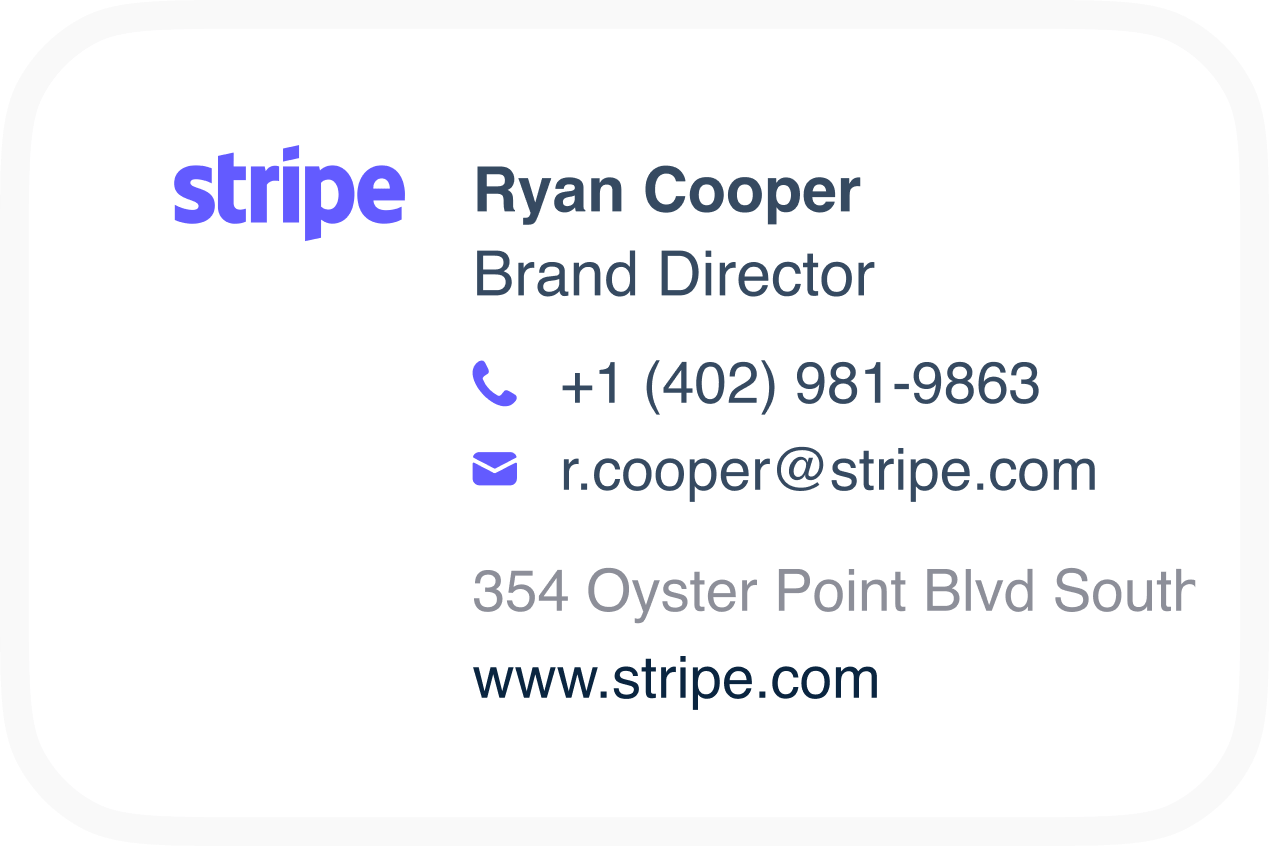
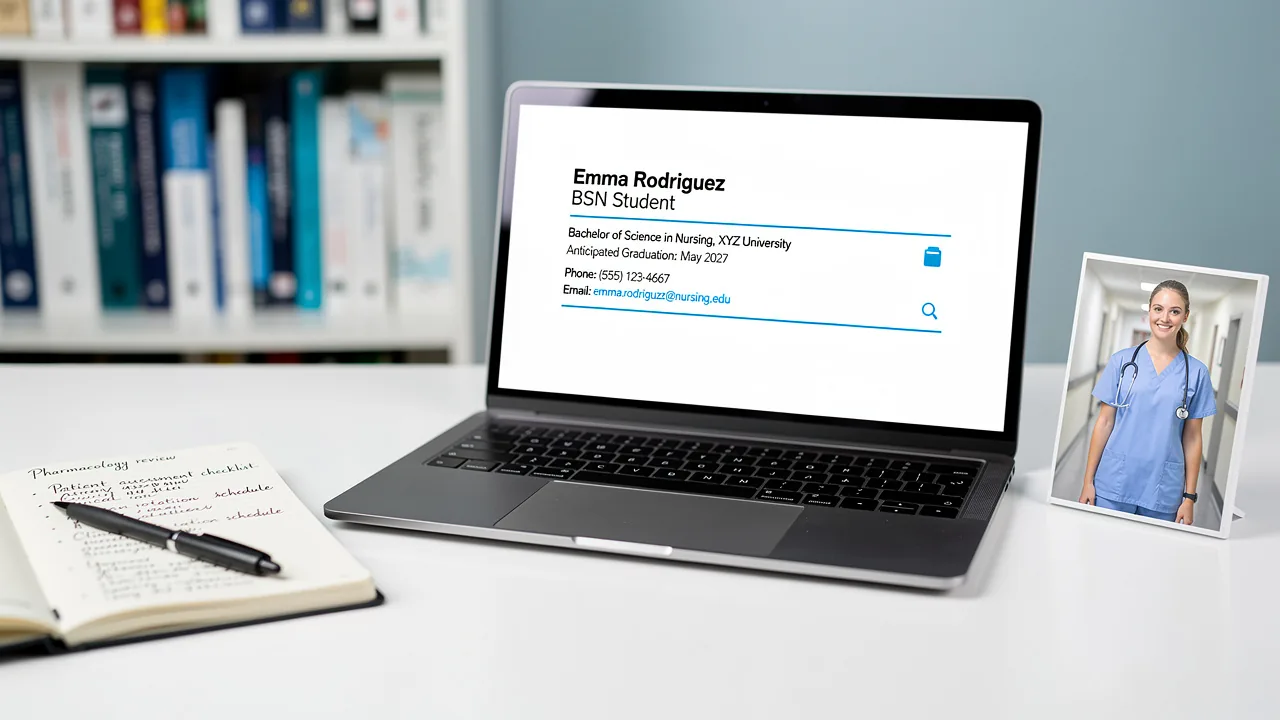
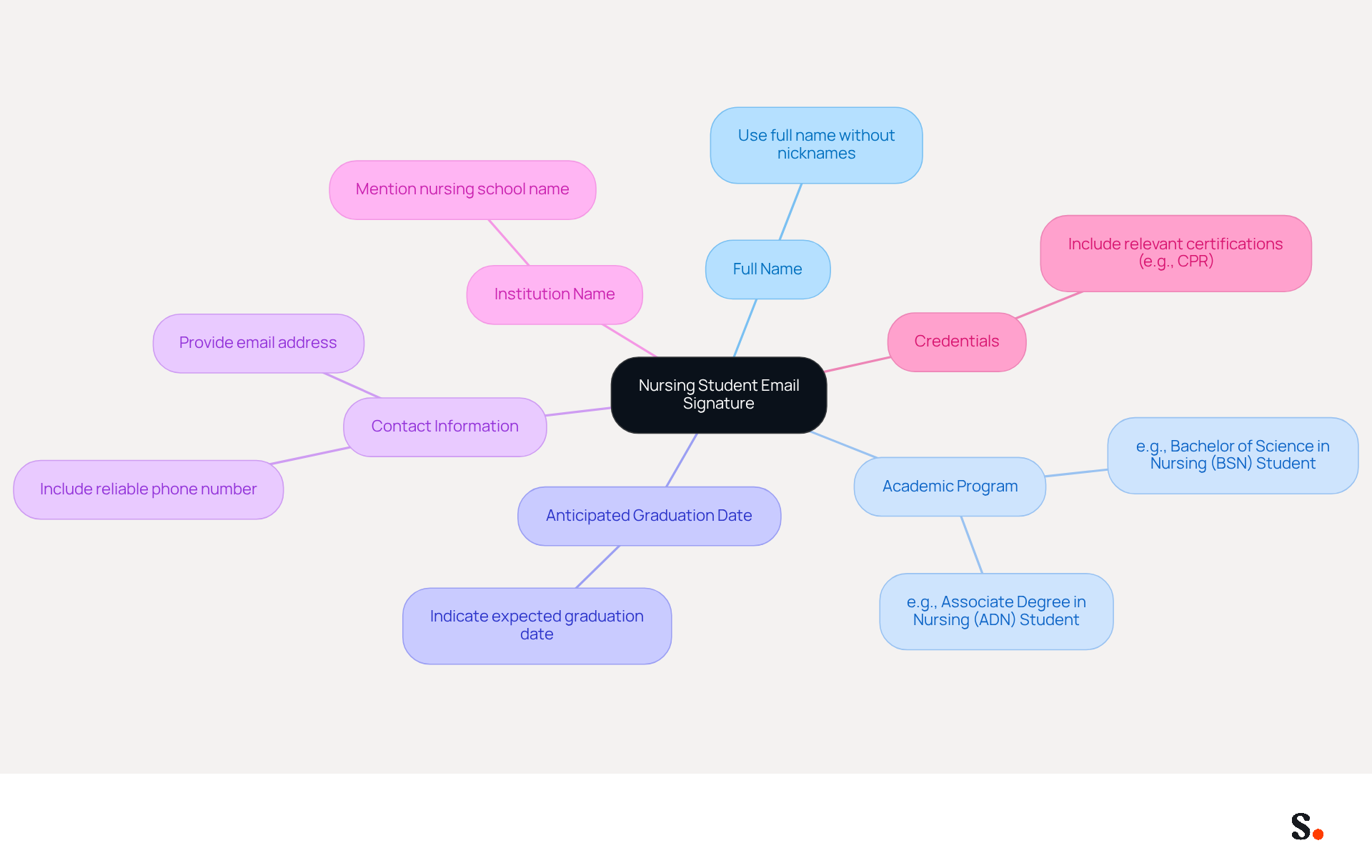
In a competitive healthcare landscape, having a nursing student email signature is crucial for establishing a professional identity for nursing students. A professional nursing student email signature should include the following essential components:
- Full Name: Always use your full name to maintain professionalism. Avoid nicknames or abbreviations.
- Academic Program: Clearly state your current program, such as "Bachelor of Science in Nursing (BSN) Student" or "Associate Degree in Nursing (ADN) Student."
- Anticipated Graduation Date: Including your expected graduation date provides context about your current status in the program and signals future availability for employment.
- Contact Information: Provide a reliable phone number and email address to facilitate communication. Including both mobile and landline numbers can enhance accessibility.
- Institution Name: Mention the name of your nursing school to establish your educational background and reinforce credibility.
- Credentials: If applicable, include any relevant certifications or licenses, such as CPR or First Aid certifications, to enhance your image.
Including these elements in your nursing student email signature helps you present yourself professionally and enhances your image in every communication. Research indicates that 76% of individuals feel more trust towards those who use branded marks in their communications, highlighting the significance of a well-designed digital identifier for students in the healthcare field. Furthermore, students who employ professional digital identifiers can greatly enhance their networking prospects and create a trustworthy online identity, which is essential in the competitive medical sector. Additionally, incorporating a call-to-action (CTA) in your email footer can further engage recipients, as more than half of users (52.6%) include a CTA in their footer. A well-crafted nursing student email signature can unlock valuable networking opportunities in your nursing career.
Maintain Professionalism and Consistency in Formatting
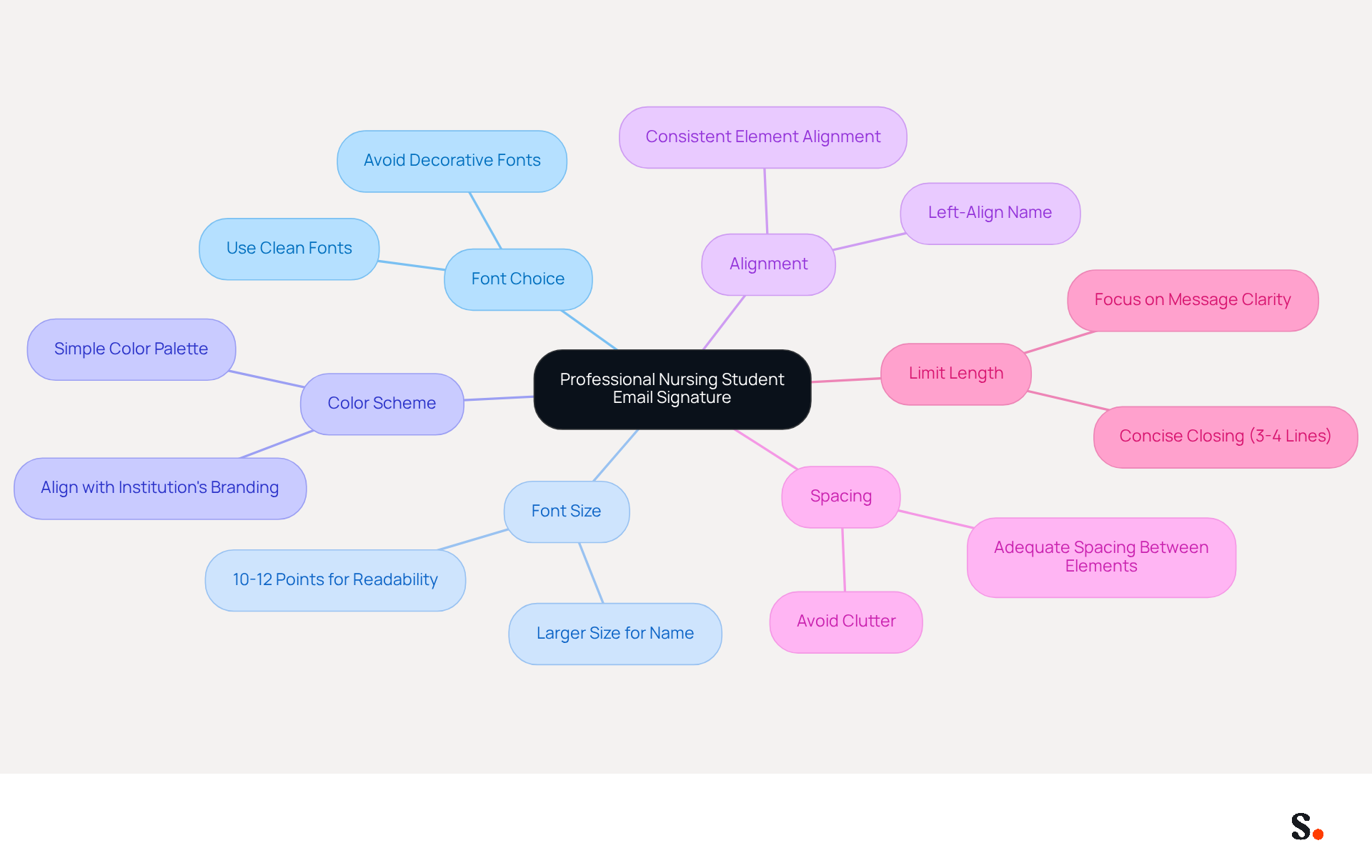
Crafting a professional nursing student email signature is essential for nursing students aiming to make a strong impression in their academic and professional communications. To maintain professionalism and consistency in your nursing student email signature, consider the following formatting guidelines:
- Font Choice: Use a clean, suitable font such as Arial or Times New Roman. Avoid decorative fonts that may distract from the content.
- Font Size: Keep the font size between 10-12 points for readability. Ensure that your name stands out, possibly by using a slightly larger size.
- Color Scheme: Stick to a simple color scheme that aligns with your institution's branding. Avoid overly bright or distracting colors, as a consistent palette enhances professionalism.
- Alignment: Left-align your name for a clean look. Ensure that all elements are aligned consistently to create a cohesive appearance, which is crucial for effective communication.
- Spacing: Use adequate spacing between elements to avoid clutter. A well-spaced autograph is easier to read and appears more professional, contributing to a positive impression.
- Limit Length: Aim for a closing that is concise, ideally no more than 3-4 lines. This maintains the emphasis on your message instead of your name, enhancing clarity and engagement.
Adding a call to action in your emails can boost interaction rates significantly; research shows a 40% increase in engagement with such elements. Moreover, frequently updating your contact information is crucial; studies indicate that 44.4% of users refresh their details two to four times annually, ensuring that your credentials remain up-to-date and professional. As an expert in email signatures, Sophie Grant observes, 'A well-designed email signature plays a key role in showcasing your professionalism and identity in both academic and career settings.' By following these formatting guidelines, nursing students can develop a nursing student email signature that reflects their professionalism and attention to detail, ultimately enhancing their communication effectiveness.
Incorporate Legal and Ethical Compliance Elements
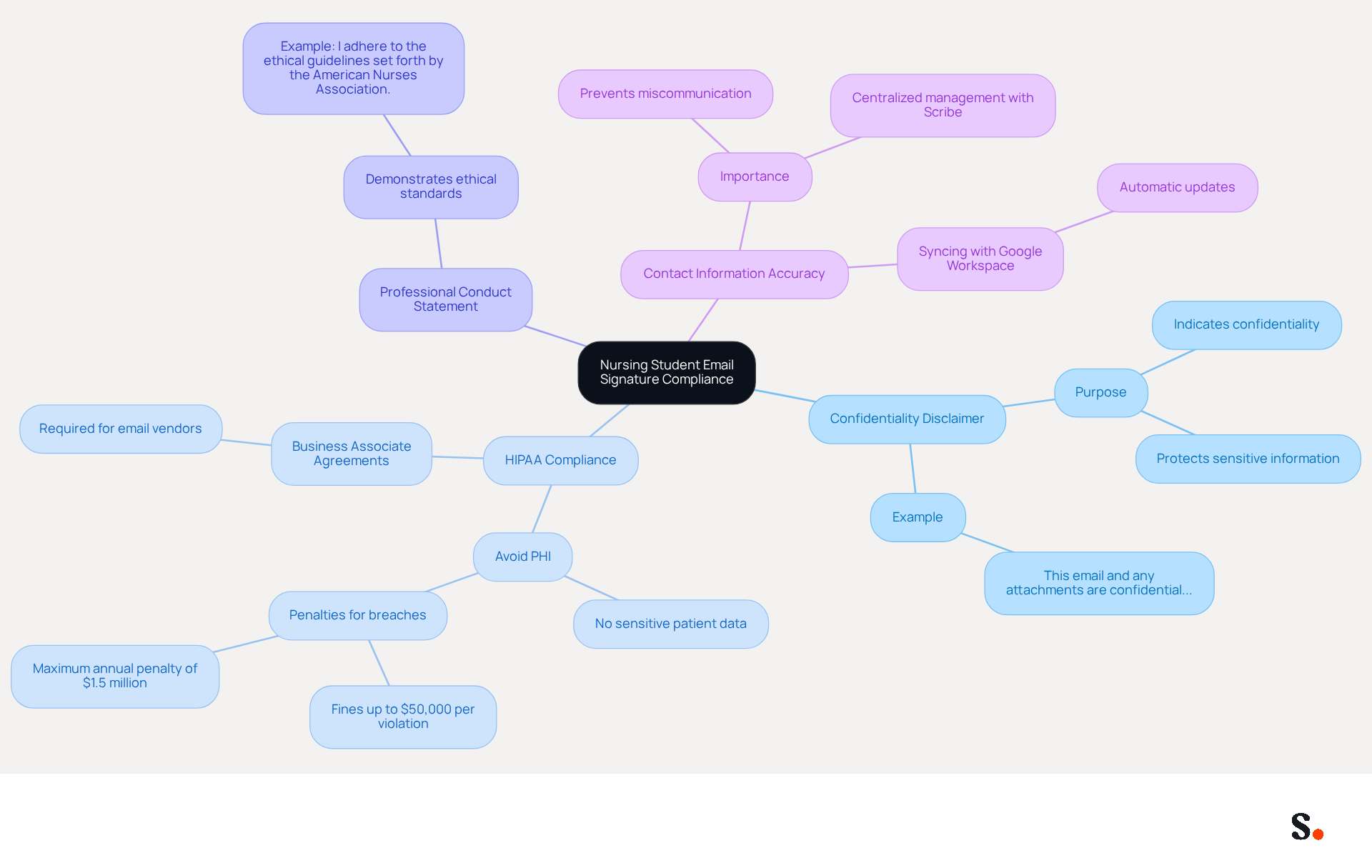
Nursing students must prioritize legal and ethical compliance in their email signatures to protect their professional integrity and communication effectiveness:
- Confidentiality Disclaimer: Incorporate a concise disclaimer indicating that the message is intended solely for the recipient and may contain confidential information. For instance: "This email and any attachments are confidential and intended solely for the use of the individual or entity to whom they are addressed."
- HIPAA Compliance: It is crucial to ensure that your mark does not include any Protected Health Information (PHI) or sensitive patient data, as this could lead to violations of HIPAA regulations. Organizations must adhere to strict guidelines to maintain compliance, with significant penalties for breaches, including fines that can reach up to $50,000 per violation, with a maximum annual penalty of $1.5 million.
- Professional Conduct Statement: Including a declaration that demonstrates your dedication to ethical standards in healthcare can enhance your professionalism. For example: "As a nursing student, I adhere to the ethical guidelines set forth by the American Nurses Association."
- Contact Information Accuracy: Verify that all contact details are accurate and up-to-date to prevent miscommunication. Centralized management of digital communication identifiers with Scribe can help maintain consistency and compliance across interactions, ensuring that all identifiers reflect the latest organizational branding and legal disclaimers. Syncing your Google Workspace with Scribe saves time by automatically updating your teammates' data, ensuring their identification information is always current. Scribe's compliance with SOC 2 Type II, GDPR, and CCPA means you can be confident that your communications are secure. Any changes in your Google Workspace, such as moving teammates from one group to another or updating their information, will be automatically reflected in Scribe without any input on your part.
By integrating these elements, nursing students can enhance their nursing student email signature to demonstrate their commitment to ethical practice and legal compliance, thereby strengthening their professional image.
Leverage Branding and Marketing Opportunities in Signatures
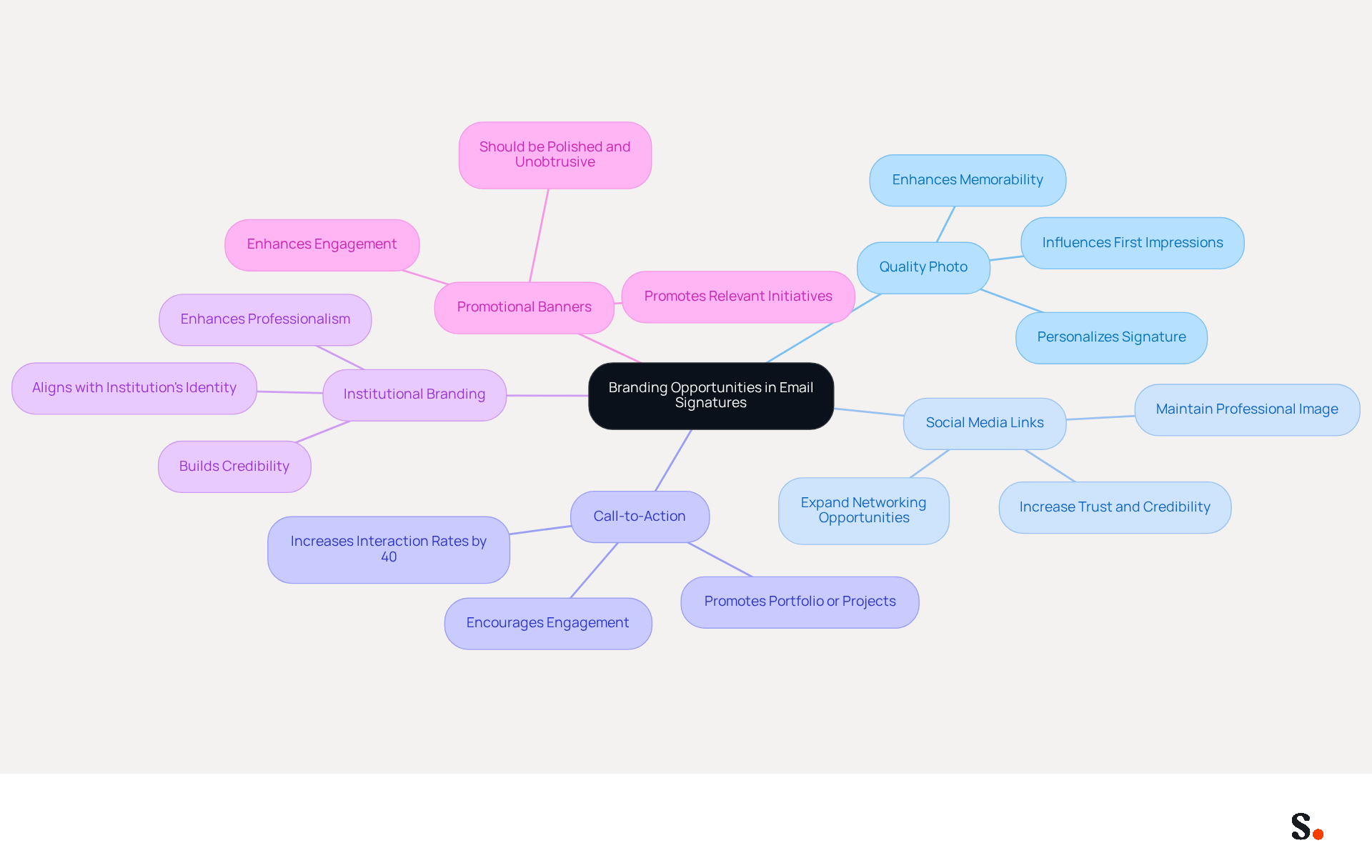
Nursing students often overlook the potential of their nursing student email signature as an essential branding tool. By implementing the following strategies, they can effectively utilize their nursing student email signature to enhance their professional image.
- Including a quality photo personalizes your signature and enhances memorability. Make sure your image is appropriate and reflects your professional demeanor; a polished look can greatly influence first impressions.
- Social Media Links: Incorporate links to career-oriented social media profiles, such as LinkedIn, to expand networking opportunities. Maintaining these profiles current and representative of your professional image is essential, as 64-70% of respondents believe a professional branded email increases trust and credibility.
- Call-to-Action: Adding a call-to-action, such as a link to your portfolio or a relevant project, encourages recipients to engage further with your work. Studies indicate that adding calls to action can increase interaction rates by as much as 40%.
- Institutional Branding: Align your mark with your institution's identity by incorporating logos or branding elements from your nursing program. This not only enhances professionalism but also establishes credibility, as 76% of consumers feel trust increases with branded marks.
- Promotional Banners: If you are involved in relevant initiatives or campaigns, consider adding a small banner to promote these efforts. Ensure that the banner remains polished and unobtrusive, as promotional elements can significantly enhance engagement when designed thoughtfully.
When nursing students utilize a nursing student email signature as part of these branding opportunities, they can create digital identifiers that truly reflect who they are and enhance their professional presence in healthcare. A thoughtfully crafted nursing student email signature can make the difference between being remembered or forgotten in a competitive field. Additionally, it is recommended to keep email signatures concise, ideally limited to fewer than eight lines for clarity.
Conclusion
In a competitive healthcare landscape, a professional email signature is crucial for nursing students to distinguish themselves. By incorporating key components such as:
- Full name
- Academic program
- Anticipated graduation date
- Contact information
students can present themselves effectively in all communications. A well-structured email signature enhances professionalism and opens doors for networking opportunities. This makes it a vital tool for career advancement.
Throughout the article, the importance of maintaining professionalism and consistency in formatting has been emphasized. Adhering to guidelines regarding:
- Font choice
- Color schemes
- Spacing
ensures that the email signature is visually appealing and easy to read. Additionally, integrating legal and ethical compliance elements, such as confidentiality disclaimers and adherence to HIPAA regulations, further solidifies a nursing student's commitment to professionalism and ethical standards.
Leveraging branding and marketing opportunities within email signatures can significantly enhance a nursing student's professional image, as evidenced by increased visibility in job searches. By including elements like:
- A professional photo
- Social media links
- Promotional banners
students can create a memorable digital presence that reflects their dedication to the nursing profession. By embracing these best practices, nursing students can build trust and credibility, setting themselves up for future success.
Frequently Asked Questions
Why is having a nursing student email signature important?
A nursing student email signature is crucial for establishing a professional identity in a competitive healthcare landscape, enhancing credibility and trust in communications.
What essential components should be included in a nursing student email signature?
A professional nursing student email signature should include the following components: Full Name, Academic Program, Anticipated Graduation Date, Contact Information, Institution Name, and Credentials.
How should I format my full name in the email signature?
Always use your full name to maintain professionalism, avoiding nicknames or abbreviations.
What should I include regarding my academic program?
Clearly state your current program, such as "Bachelor of Science in Nursing (BSN) Student" or "Associate Degree in Nursing (ADN) Student."
Why is it important to include my anticipated graduation date?
Including your expected graduation date provides context about your current status in the program and signals future availability for employment.
What contact information should I provide?
Provide a reliable phone number and email address, including both mobile and landline numbers to enhance accessibility.
Why should I mention my institution name?
Mentioning the name of your nursing school establishes your educational background and reinforces your credibility.
Should I include any credentials in my email signature?
Yes, if applicable, include any relevant certifications or licenses, such as CPR or First Aid certifications, to enhance your professional image.
How can a well-designed email signature benefit my networking prospects?
A well-crafted nursing student email signature can enhance your networking prospects and create a trustworthy online identity, which is essential in the competitive medical sector.
What is a call-to-action (CTA) and how can it be used in my email signature?
A call-to-action (CTA) is a prompt that encourages recipients to take a specific action. Incorporating a CTA in your email footer can further engage recipients, as more than half of users include a CTA in their footer.
List of Sources
- Identify Essential Components of a Nursing Student Email Signature
- Email Signature for Nurses: Credential Ordering, HIPAA Templates & Best Practices (https://syncsignature.com/blog/email-signature-for-nurses)
- Correct way of listing nursing credentials and email signatures | Newsroom (https://news.unchealthcare.org/2016/07/listing-credentials-email-signatures)
- 40+ Email Signature Statistics for 2026 (Data + Insights) (https://wavecnct.com/blogs/email-signature-statistics)
- Email Signatures for Nurses - Gimmio (https://blog.gimm.io/email-signatures-for-nurses)
- Nursing Email Signature: Templates & Tips - MySignature (https://mysignature.io/professional-email-signatures/nursing)
- Maintain Professionalism and Consistency in Formatting
- Professional Email Signature Etiquette Dos & Don’ts (https://blinq.me/blog/professional-email-signature-etiquette)
- How to Set Up Professional Email Signatures in College — InternQueen (https://internqueen.com/blog/how-set-professional-email-signatures-college)
- Standard Email Signature Guidelines | Maintain Consistency | Laney College (https://laney.edu/marketing/email-signature-guidelines)
- Email Signature Best Practices Guide With Examples - MailerLite (https://mailerlite.com/blog/email-signature-best-practices)
- What to Put on Your Email Signature as a Student: Key Elements Explained (https://scribe-mail.com/en-US/blog/what-to-put-on-your-email-signature-as-a-student-key-elements-explained)
- Incorporate Legal and Ethical Compliance Elements
- Email and Social Media Disclaimers for Health Professionals (https://jacksonllp.com/disclaimers-for-email-and-social-media-in-healthcare)
- What You Need to Know About HIPAA Email Disclaimer in 2025 - NEWOLDSTAMP (https://newoldstamp.com/blog/hipaa-email-disclaimer)
- HIPAA Compliant Email Communication in US Healthcare | Rocketseed (https://rocketseed.com/blog/hipaa-compliant-email-communication)
- Email Signature Management for Healthcare: A Complete Guide (https://exclaimer.com/email-signature-handbook/email-signature-management-for-healthcare)
- HIPAA Compliance for Email - Updated for 2026 (https://hipaajournal.com/hipaa-compliance-for-email)
- Leverage Branding and Marketing Opportunities in Signatures
- 40+ Email Signature Statistics for 2026 (Data + Insights) (https://wavecnct.com/blogs/email-signature-statistics)
- Best Email Signatures for Students: Key Practices for Success (https://scribe-mail.com/en-US/blog/best-email-signatures-for-students-key-practices-for-success)
- 6 Cool New-School Ways to Leverage Email Signature Banners (https://opensense.com/blog/6-cool-new-school-ways-to-leverage-email-signature-banners)
- Email Signature Tips | Perfecting Your Personal Brand | CSU Global (https://csuglobal.edu/blog/keep-it-professional-nailing-down-perfect-email-signature)
- The impact of email signatures on your branding (https://signitic.com/en/resources/the-impact-of-email-signatures-on-your-branding)
Get started with Scribe
Manage signatures across your whole team
Free 14-day trial — no credit card.