Best Practices for Office 365 Email Signatures Across Your Organization
Establishing a consistent brand presence through email signatures is essential for organizations seeking to enhance their professional image and communication
Sophie Grant
Email Signature Specialist, Scribe
Introduction
Establishing a consistent brand presence through email signatures is essential for organizations seeking to enhance their professional image and communication effectiveness. By implementing best practices for Office 365 email signatures, companies can not only ensure brand consistency but also leverage automation tools like Scribe to streamline management and compliance.
Despite these advantages, organizations must consider how to effectively integrate these signatures into their broader marketing strategies to maximize engagement and ROI. This article explores essential practices and innovative solutions that can turn email signatures into significant marketing assets that drive engagement and return on investment.
Get started with Scribe
Manage signatures across your whole team
Free 14-day trial — no credit card.
Establish Brand Consistency in Email Signatures
To ensure a strong and consistent brand presence, companies must implement effective email signature practices:
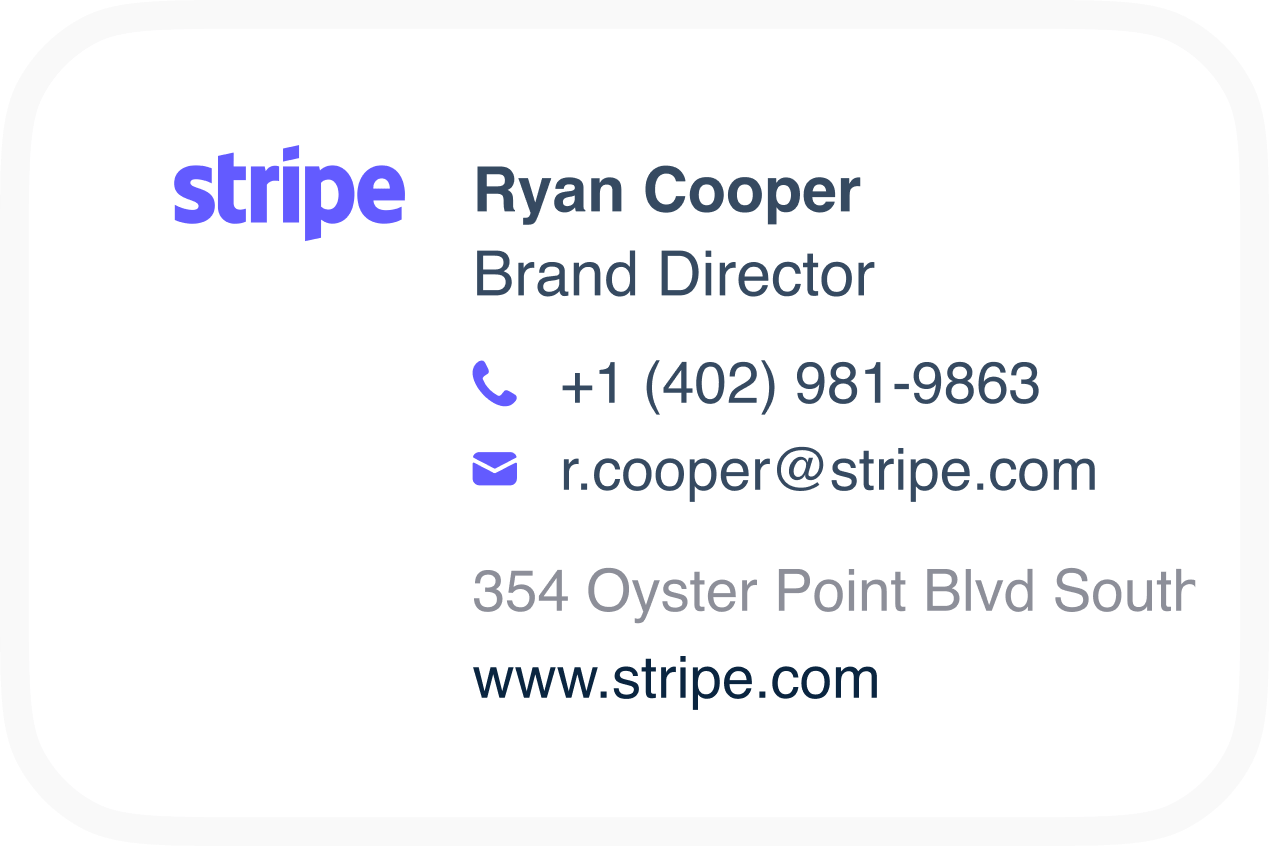
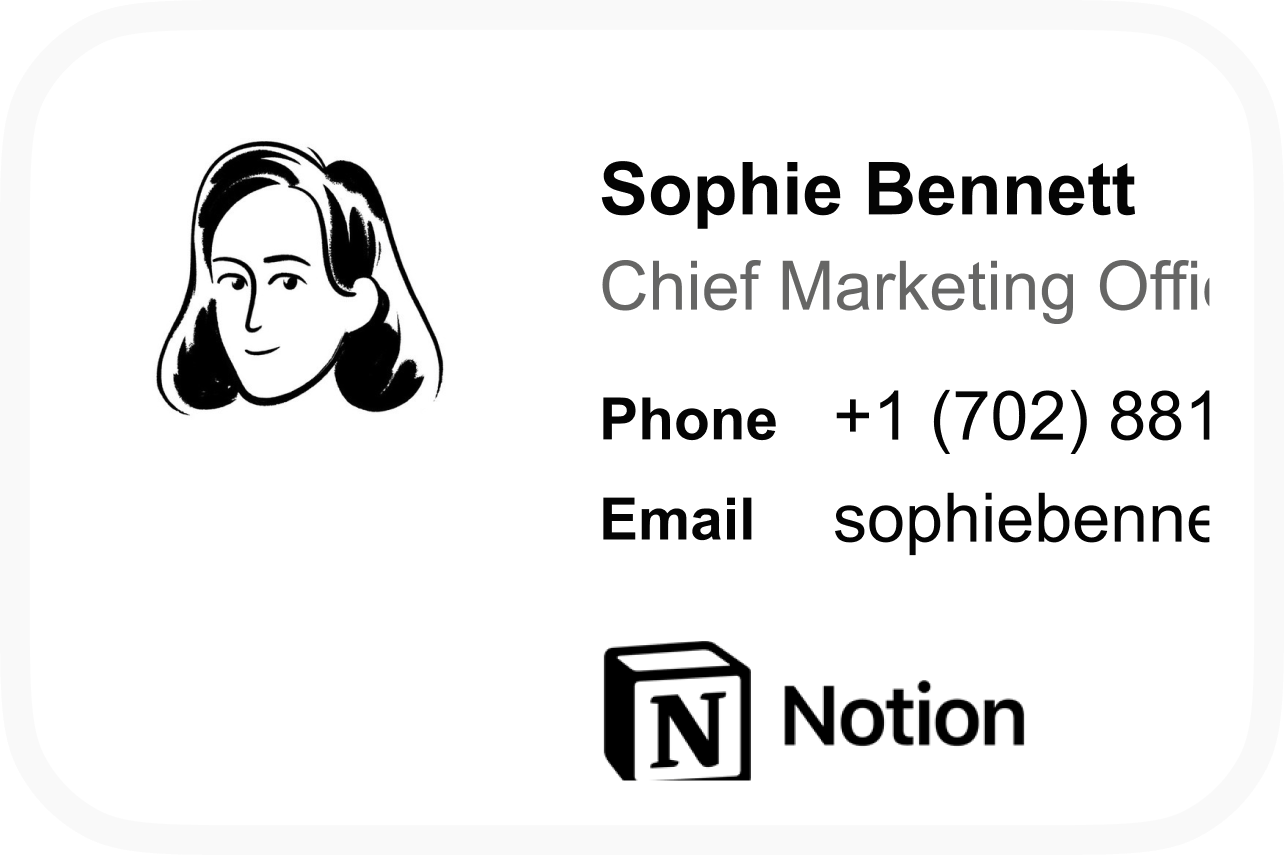
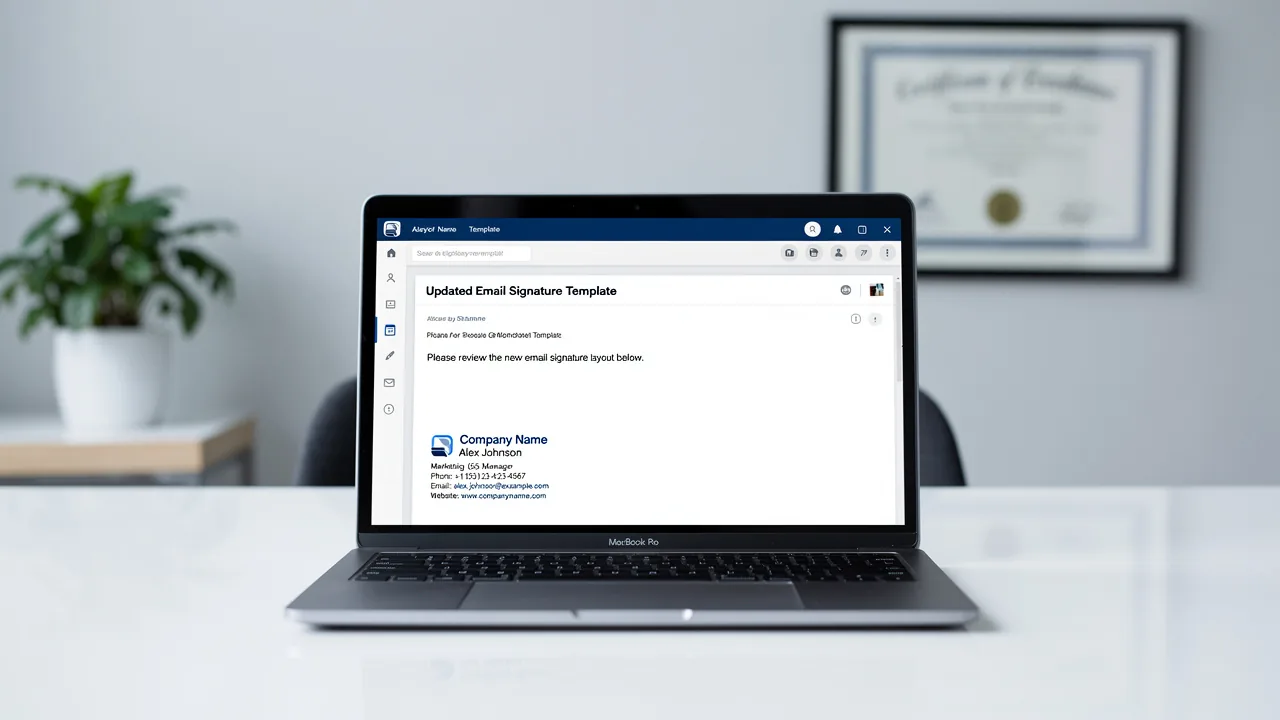
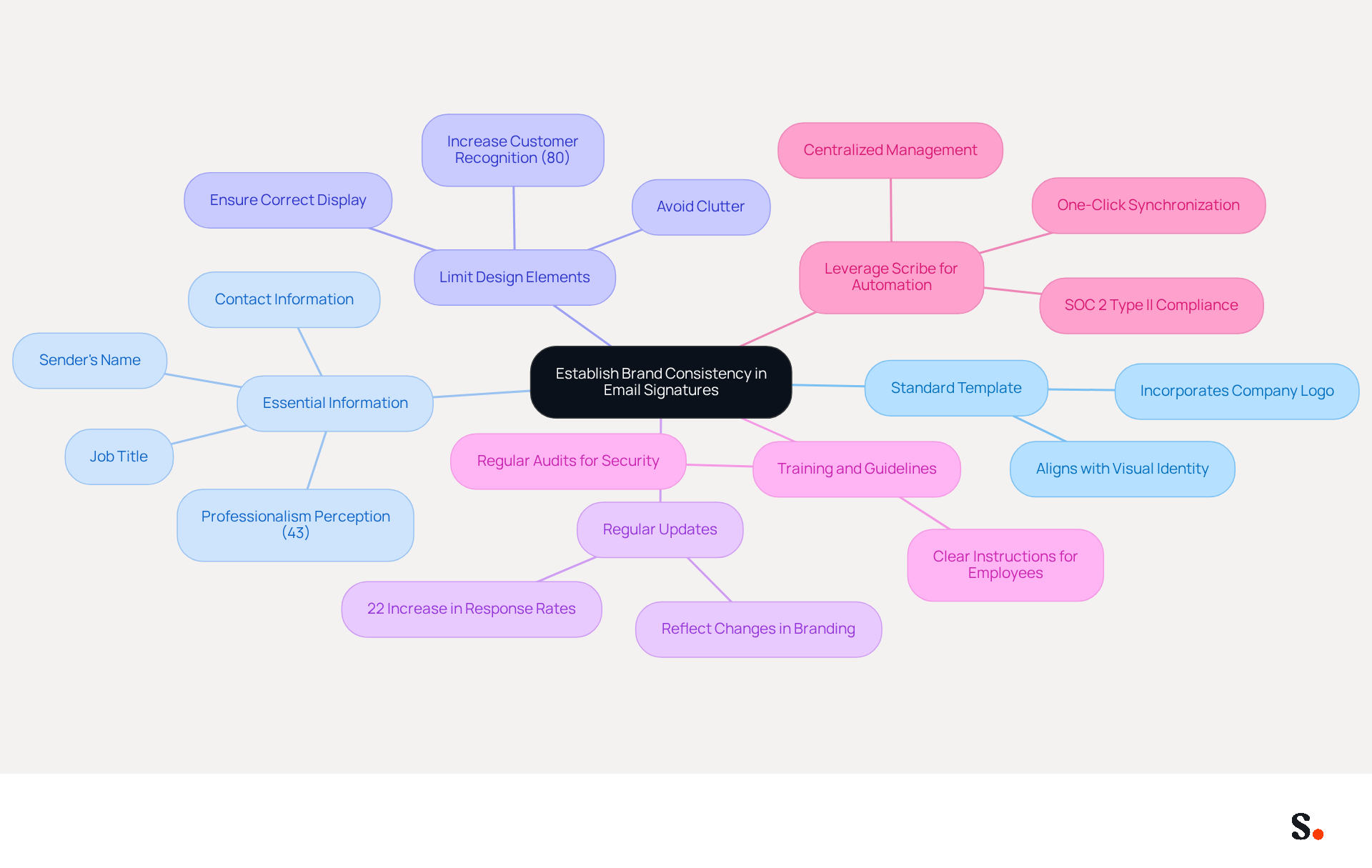
- Use a Standard Template: Develop a standardized email footer template that incorporates the company logo, colors, and fonts. This ensures that every employee's signature aligns with the company's visual identity, enhancing recognition and trust.
- Include Essential Information: Each signature must contain key details such as the sender's name, job title, company name, and contact information. This not only offers clarity but also strengthens the brand's professionalism, contributing to a perception of reliability that 43% of recipients associate with professional signatures.
- Limit Design Elements: Avoid cluttering the signature with excessive graphics or fonts. A tidy, straightforward design is more effective in communicating professionalism and ensuring that the signature displays correctly across various messaging clients. Studies show that consistent branding can increase customer recognition significantly, with some estimates suggesting up to 80% improvement.
- Regular Updates: Periodically review and update the office 365 email signatures for an entire organization to ensure they reflect any changes in branding or company information. Without regular updates, brands risk becoming outdated and losing their impact, as organizations that implement uniform email formats experience a 22% rise in email response rates.
- Training and Guidelines: Provide employees with clear instructions on how to implement the signature correctly. This can include training sessions or written instructions to ensure everyone understands the significance of consistency in branding. Regular audits can assist in identifying and rectifying potential weaknesses in messaging security, further enhancing the brand's image.
- Leverage Scribe for Automation: Utilize Scribe's automated management of digital identifiers to streamline the process. To enable one-click synchronization, you must grant permission to Scribe to connect with your provider, and you need to be a Super Admin to provide these permissions. With one-click synchronization, Scribe enables centralized management of signatures across various clients and organizations, ensuring that all modifications are automatically refreshed. This tool automatically syncs teammate data from your provider daily at your local time, enhancing branding and ensuring compliance with security standards, as it is SOC 2 Type II compliant.
When organizations adopt these practices and leverage Scribe's features, they can build a cohesive brand image that truly resonates with recipients. Ultimately, neglecting these best practices can undermine the brand's credibility and hinder effective communication.
Utilize Automation for Efficient Signature Management
To maximize the effectiveness of email signature management, organizations must adopt strategic automation practices:
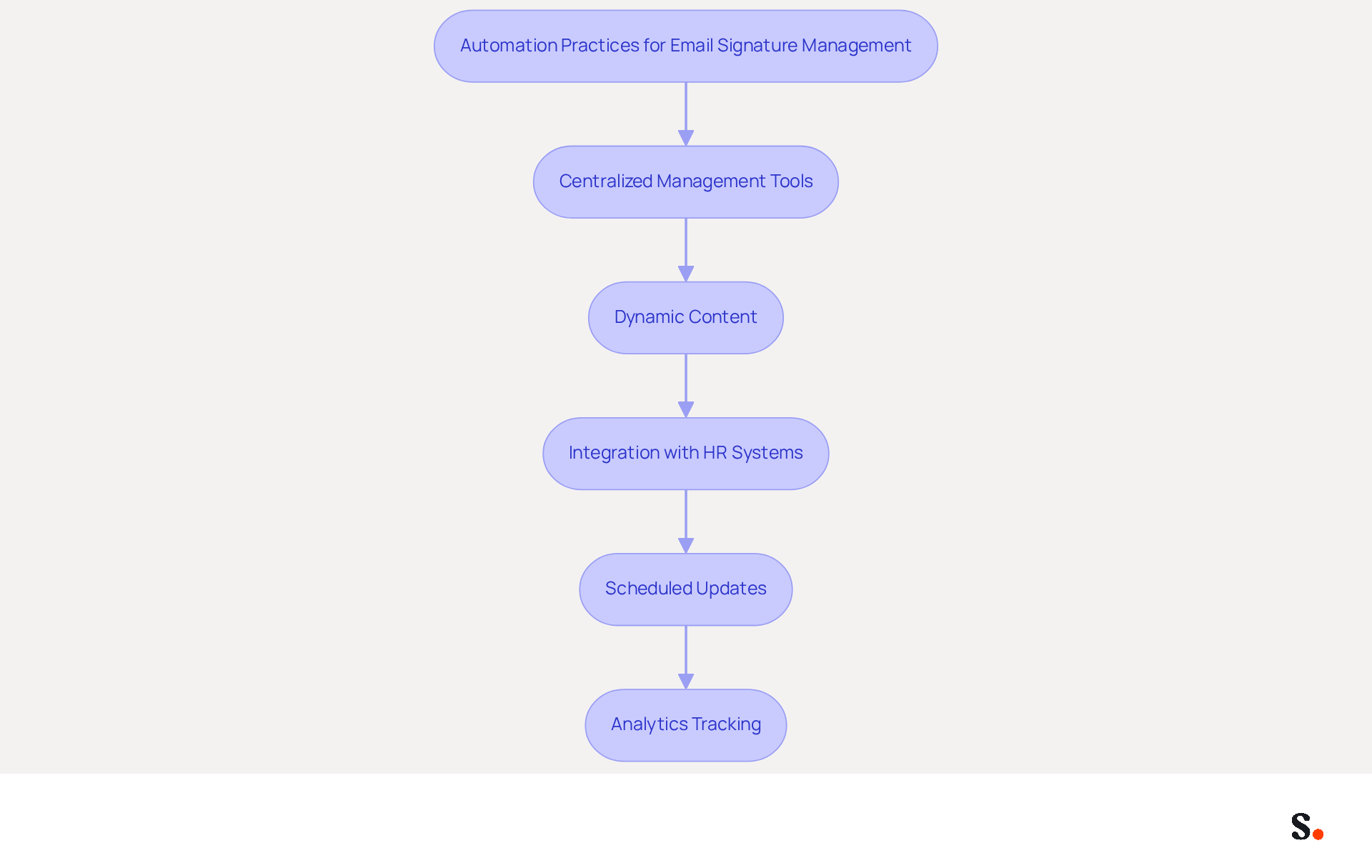
- Centralized Management Tools: Implementing a centralized management tool like Scribe is essential for creating and deploying identifiers across the organization. This approach ensures that all endorsements are consistent and up-to-date, reinforcing identity integrity in every email sent.
- Dynamic Content: Utilize dynamic content features, such as directory attributes and live counters, to personalize email footers based on user roles, departments, or specific campaigns. This strategy allows for targeted messaging while maintaining a cohesive brand image, enhancing engagement with recipients.
- Integration with HR Systems: Connecting Scribe with HR systems automates updates to names whenever employee information changes, such as job titles or contact details. With Scribe's ability to sync data from Google Workspace, any changes-such as moving teammates from one group to another-are automatically reflected in email footers without any manual input. Without this integration, organizations risk sending outdated information in their Office 365 email signatures for an entire organization, which can lead to miscommunication and potential legal issues.
- Scheduled Updates: Regularly scheduled updates to signature templates can coincide with marketing campaigns or important company announcements. For instance, one company that integrated promotional campaigns into their footers reported a 40% increase in engagement rates, ensuring that all outgoing messages reflect current promotions or critical information, maximizing marketing opportunities.
- Analytics Tracking: Utilizing analytics to monitor the performance of signatures-such as click-through rates and conversion rates on links or banners-provides valuable insights. Scribe's average click-through rate of 12% on branding banners emphasizes the effectiveness of this strategy, guiding future updates and enhancements to design and content.
With Scribe's automation, organizations can streamline their processes, reduce errors, and help every employee present a unified image in their emails. Centralized management of messaging branding not only transforms each interaction into a strategic opportunity but also contributes to enhanced brand visibility and engagement. Moreover, Scribe's SOC 2 Type II compliance guarantees that your data is secure, further boosting trust in your communications.
Integrate Email Signatures with Existing Tools
To maximize the effectiveness of email signatures, organizations must strategically integrate them with existing tools.
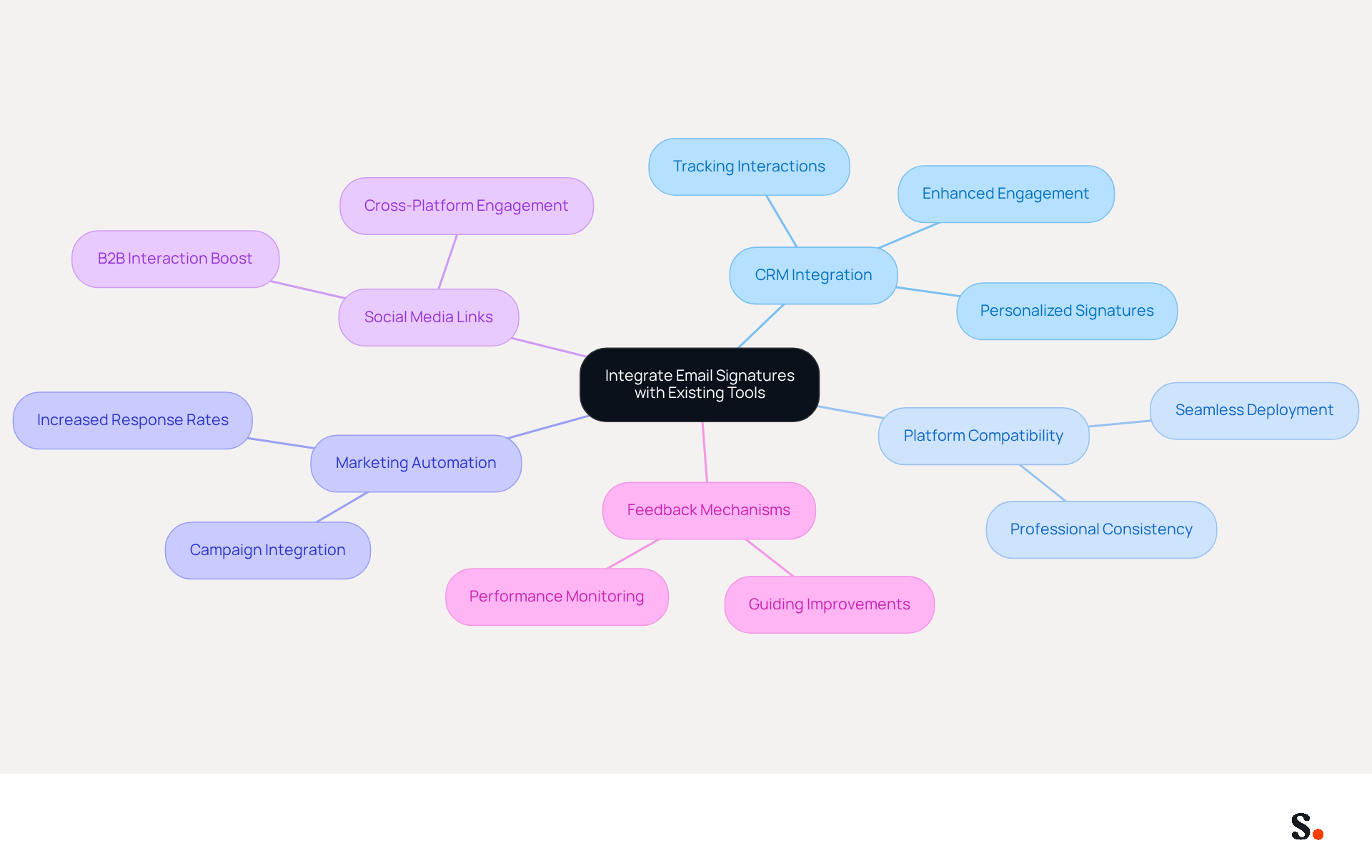
- CRM Integration: Linking the management tool for electronic signatures with customer relationship management (CRM) systems such as Salesforce or HubSpot enables customized signatures based on client data. This enhances engagement, especially since 52% of potential clients prefer email as their main way to communicate with businesses.
- Platform Compatibility: Ensuring that the management solution for identifiers is compatible with the organization's platform, such as Microsoft 365 or Google Workspace, is crucial for seamless deployment and functionality. This compatibility helps maintain professionalism and brand consistency across all communications.
- Marketing Automation: Integrating message identifiers with marketing automation tools allows organizations to run campaigns directly through message identifiers. For instance, organizations can add promotional banners or direct links to landing pages that encourage user interaction, contributing to a 22% increase in response rates from branded email footers.
- Social Media Links: Including links to social media profiles in correspondence and ensuring these links are integrated with social media management tools encourages recipients to engage with the brand across multiple platforms. Research shows that LinkedIn icons in correspondence generate the highest engagement in B2B contexts.
- Feedback Mechanisms: Many organizations struggle to assess the impact of their communication formats, making feedback systems essential for guiding future improvements. Consistently monitoring key metrics such as click-through rates and conversions is crucial for evaluating the success of campaigns.
By addressing these challenges, organizations can significantly enhance their communication strategies, turning routine messages into powerful marketing channels.
Measure the Impact of Email Signatures on Marketing ROI
To effectively measure the impact of email signatures on marketing ROI, organizations must adopt strategic best practices that yield measurable results:
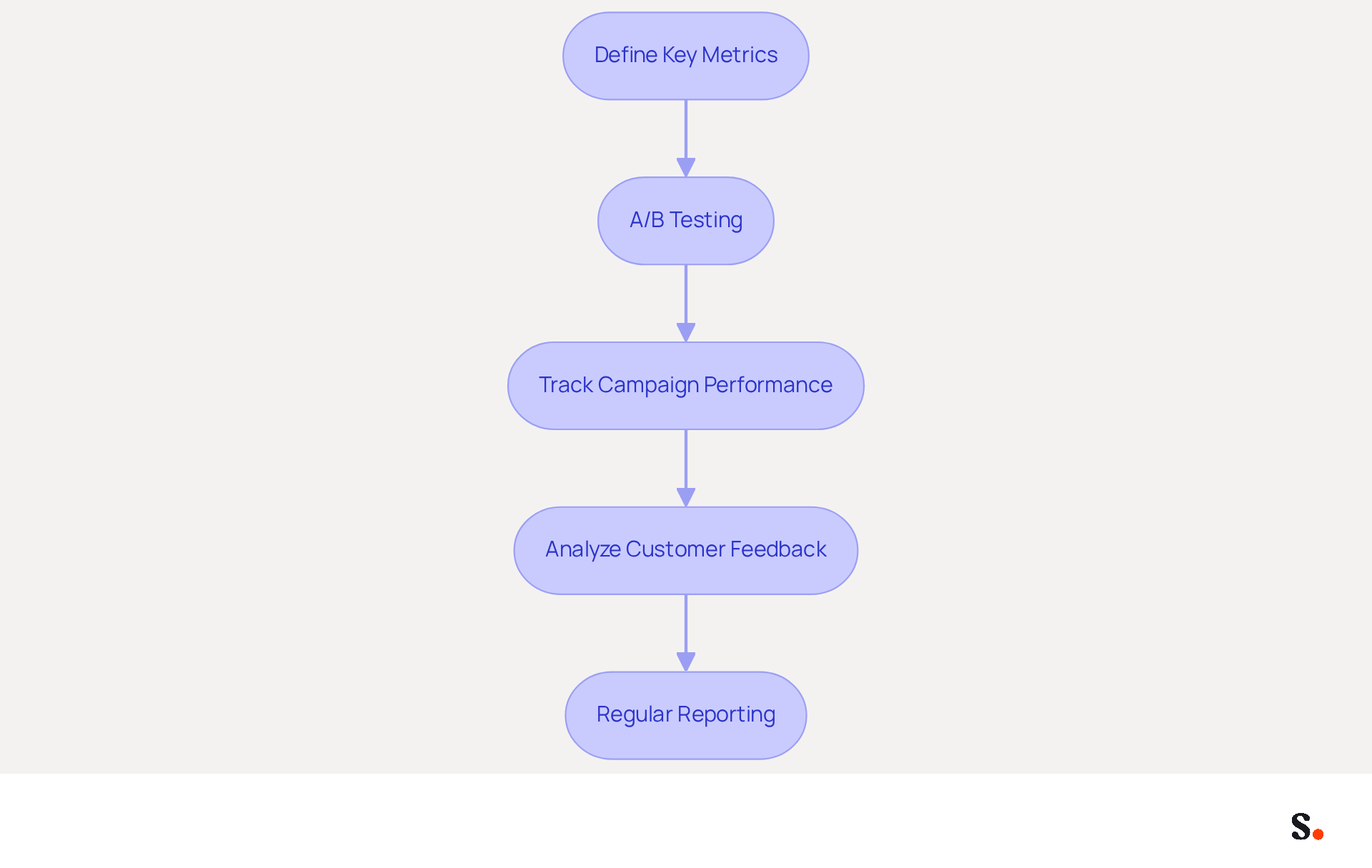
- Define Key Metrics: Establish clear key performance indicators (KPIs) to assess the effectiveness of digital identifiers. Essential metrics include click-through rates (CTR), conversion rates, and overall engagement levels. For instance, many customers achieve click-through rates above 20% with email branding campaigns, highlighting their ability to drive traffic and conversions.
- A/B Testing: Implement A/B testing on various design variations and content to identify which versions yield the best results. This approach helps organizations refine their strategies for better results. Businesses utilizing A/B testing in their messaging campaigns can experience an increase in ROI by up to 83%, demonstrating the significant benefits of iterative improvements.
- Track Campaign Performance: Utilize tracking links within correspondence to monitor the performance of specific campaigns. This allows organizations to measure the number of clicks or conversions generated directly from message footers, offering valuable insights into their effectiveness. For example, integrating UTM parameters can facilitate precise tracking of traffic sources and engagement trends.
- Analyze Customer Feedback: Gather qualitative insights from customers regarding their interactions with digital branding. Understanding recipient perceptions can offer insights into how effectively the brand and its messaging resonate with the audience, ultimately informing future strategies.
- Regular Reporting: Create consistent reports evaluating the performance of messaging identifiers against established KPIs. This practice helps identify trends, successes, and areas for improvement, guiding strategic adjustments. Organizations that regularly assess performance data can refine their strategies and enhance ROI from marketing campaigns.
By adopting these best practices, organizations can ensure their email signature strategies are not only effective but also aligned with broader marketing objectives.
Conclusion
Effective email signature practices are essential for organizations striving to enhance brand presence and communication effectiveness. Implementing standardized templates and essential information, along with regular updates, helps companies maintain brand consistency that resonates with recipients. Using automation tools such as Scribe streamlines email signature management and enables marketing teams to control their branding efforts, ensuring that every email sent reflects the organization's identity.
Key insights from this article highlight the importance of integrating email signatures with existing tools, such as CRM systems and marketing automation platforms, to maximize engagement and effectiveness. Additionally, measuring the impact of email signatures on marketing ROI through defined metrics and A/B testing can provide valuable insights that drive continuous improvement. With Scribe's capabilities, organizations can achieve a cohesive brand image while benefiting from enhanced visibility and engagement.
In the end, adopting best practices for Office 365 email signatures goes beyond aesthetics; it strategically enhances marketing effectiveness and brand perception. By embracing these strategies and tools, organizations can transform their email communications into impactful marketing tools that drive success.
Frequently Asked Questions
Why is brand consistency important in email signatures?
Brand consistency in email signatures enhances recognition and trust, contributing to a professional image that recipients associate with reliability.
What should be included in an email signature?
An email signature should contain the sender's name, job title, company name, and contact information to provide clarity and strengthen professionalism.
How can companies ensure their email signatures are visually consistent?
Companies can ensure visual consistency by developing a standardized email footer template that incorporates the company logo, colors, and fonts.
What design elements should be avoided in email signatures?
Companies should avoid cluttering email signatures with excessive graphics or fonts, as a tidy design is more effective in communicating professionalism.
How often should email signatures be updated?
Email signatures should be periodically reviewed and updated to reflect any changes in branding or company information to maintain their impact.
What benefits can uniform email formats provide?
Implementing uniform email formats can lead to a 22% rise in email response rates, enhancing communication effectiveness.
How can companies train employees on email signature consistency?
Companies can provide clear instructions through training sessions or written guidelines to ensure employees understand the importance of consistent branding.
What role does Scribe play in managing email signatures?
Scribe automates the management of digital identifiers, allowing for one-click synchronization of email signatures across various clients and organizations.
What permissions are needed to use Scribe for email signature management?
To use Scribe for email signature management, a Super Admin must grant permission for Scribe to connect with the provider.
How does Scribe enhance branding and security compliance?
Scribe enhances branding by automatically syncing teammate data daily and ensuring compliance with security standards, as it is SOC 2 Type II compliant.
List of Sources
- Establish Brand Consistency in Email Signatures
- The impact of email signatures on your branding (https://signitic.com/en/resources/the-impact-of-email-signatures-on-your-branding)
- 4 Best Practices for Brand Consistency in Email Signatures (https://scribe-mail.com/en-US/blog/4-best-practices-for-brand-consistency-in-email-signatures)
- Why Email Signatures Must Be In Your 2026 Marketing Plan | Rocketseed (https://rocketseed.com/blog/what-are-the-biggest-email-trends-for-2026)
- 40+ Email Signature Statistics for 2026 (Data + Insights) (https://wavecnct.com/blogs/email-signature-statistics)
- Utilize Automation for Efficient Signature Management
- Implement Centralized Email Signature Management in 6 Simple Steps (https://scribe-mail.com/en-US/blog/implement-centralized-email-signature-management-in-6-simple-steps)
- The Complete Email Signature Guide 2026: Best Practices and Policy (https://opensense.com/complete-email-signature-guide)
- Automating Email Signatures: How IT Teams Streamline Processes & Reduce Risk (https://exclaimer.com/blog/streamlining-it-processes-automated-email-signatures)
- Company-Wide Email Signature Management | CloudM (https://cloudm.io/blog/optimize-your-process-with-company-wide-email-signature-management)
- Integrate Email Signatures with Existing Tools
- 40+ Email Signature Statistics for 2026 (Data + Insights) (https://wavecnct.com/blogs/email-signature-statistics)
- 5 Best Practices for Your Email Signature Marketing Platform (https://scribe-mail.com/en-US/blog/5-best-practices-for-your-email-signature-marketing-platform)
- Email Signature Marketing for Professional Services: Compliance, CRM Integration & Analytics (https://rocketseed.com/blog/email-signature-marketing-for-professional-services)
- CRM Email Signature Integration (https://exclaimer.com/email-signature-handbook/integrating-email-signatures-with-crm-platforms)
- Positive connects Positive Signitic to the CRM – the email signature becomes a marketing channel in its own right (https://positivegroup.com/news/signitic-crm-email-signature-marketing)
- Measure the Impact of Email Signatures on Marketing ROI
- 4 Best Practices Using Email Signature Tools for Lead Generation (https://scribe-mail.com/en-US/blog/4-best-practices-using-email-signature-tools-for-lead-generation)
- Why Scribe is the Best Email Signature Tool for Maximizing ROI (https://scribe-mail.com/en-US/blog/why-scribe-is-the-best-email-signature-tool-for-maximizing-roi)
- Cost effective email signature marketing | Rocketseed (https://rocketseed.com/blog/email-signature-marketing-cost-effectiveness)
- Email Signature Trends 2026: Centralized Control & Automation | SIGNandGO posted on the topic | LinkedIn (https://linkedin.com/posts/signngo_email-signature-trends-to-watch-in-2026-activity-7401523471786217473-zAVL)
- The 5 key metrics to analyze your email signatures (https://signitic.com/en/resources/the-5-key-metrics-to-analyze-your-email-signatures)
Get started with Scribe
Manage signatures across your whole team
Free 14-day trial — no credit card.