Best Practices for an Effective COO Email Signature
Many professionals overlook the significance of an email signature, viewing it merely as a formality; however, for a Chief Operating Officer (COO), it is a
Sophie Grant
Email Signature Specialist, Scribe

Introduction
Many professionals overlook the significance of an email signature, viewing it merely as a formality; however, for a Chief Operating Officer (COO), it is a vital tool for establishing professionalism and enhancing brand visibility. Crafting an effective email signature involves understanding essential components, design principles, and compliance considerations that resonate with both internal and external stakeholders.
So, how can COOs make sure their signatures convey authority while also engaging recipients and meeting legal standards? This article delves into best practices for creating a standout COO email signature that balances professionalism with strategic marketing elements.
Identify Essential Components of a COO Email Signature
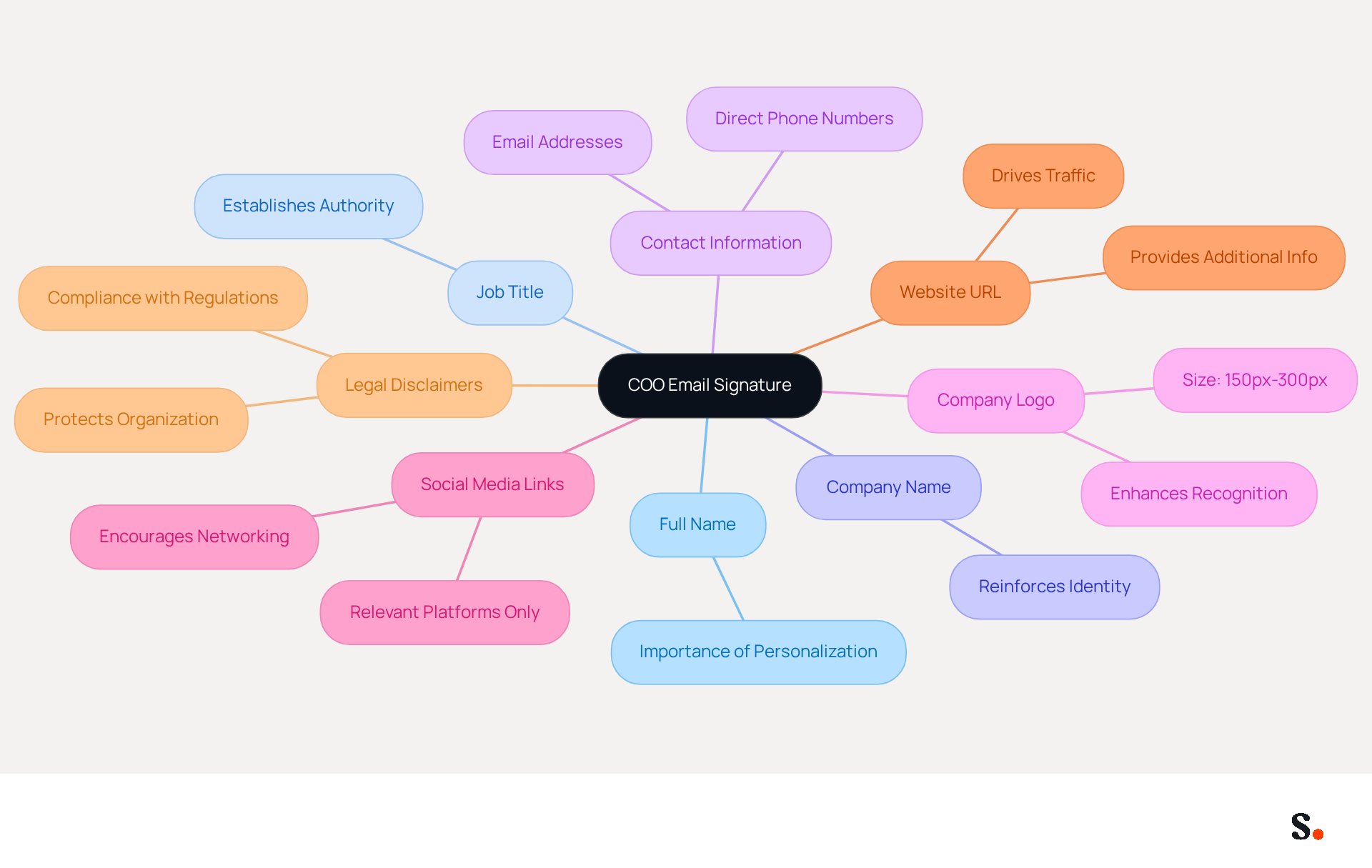
An effective coo email signature is crucial for establishing professionalism and enhancing brand visibility. It should encompass several essential components:
- Full Name: Clearly state your full name to ensure recipients know who they are communicating with.
- Job Title: Include your official title (e.g., Chief Operating Officer) to establish authority and context, which is crucial for professional communication.
- Company Name: Clearly mention the name of your organization to reinforce identity and make it easier for recipients to recognize the organization.
- Contact Information: Provide direct phone numbers and email addresses to facilitate easy communication, ensuring that recipients can reach you without hassle.
- Company Logo: Incorporate the company logo, sized appropriately between 150px and 300px in width, to enhance recognition and professionalism. A well-optimized logo can significantly enhance impressions of the company.
- Social Media Links: Include links to professional social media profiles (e.g., LinkedIn) to encourage networking and engagement, as these links serve as extensions of your brand.
- Website URL: A link to the company website can drive traffic and provide additional information about the organization, enhancing the recipient's understanding of your offerings.
- Legal Disclaimers: Including legal disclaimers in your correspondence footer is essential for compliance with privacy regulations like CAN-SPAM and GDPR, protecting your organization from potential legal issues.
This integration not only elevates professionalism but also strengthens brand visibility. Regularly updating these elements ensures compliance with branding standards and maximizes marketing effectiveness, as organizations that maintain consistent branding can experience a 22% increase in response rates.
Apply Design Principles for Professionalism and Clarity
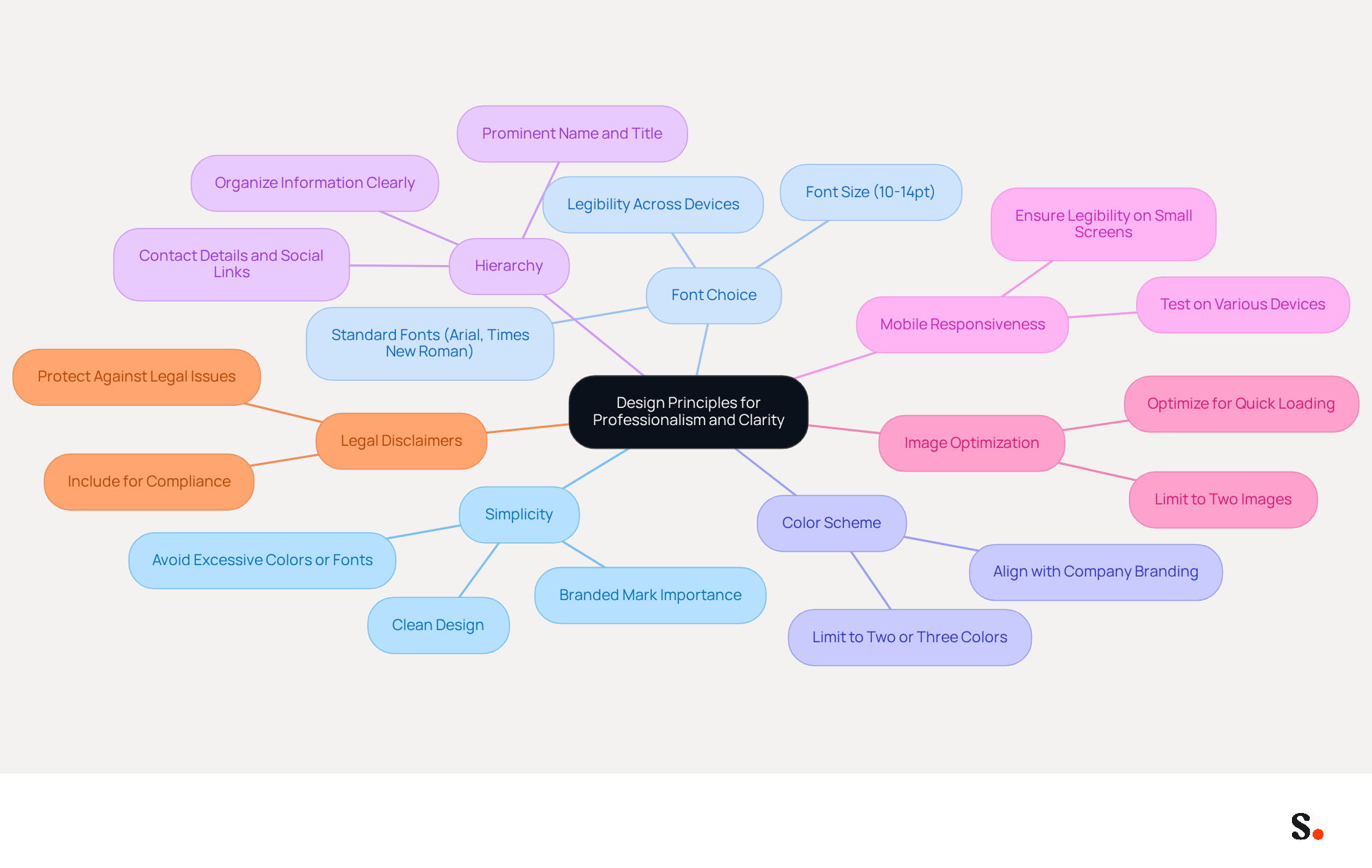
To convey professionalism and clarity, a COO email signature must adhere to specific design principles:
- Simplicity: Maintain a clean and uncluttered design. Avoid excessive colors or fonts that can distract from essential information. Research shows that a branded mark captures more attention than a non-branded one, underscoring the importance of clarity.
- Font Choice: Use standard, legible fonts such as Arial or Times New Roman, sized between 10-14pt for easy readability. Research indicates that using safe fonts enhances professionalism and ensures legibility across devices.
- Color Scheme: Stick to a color palette that aligns with the company’s branding. Limiting the use of colors to two or three maintains a cohesive look, reinforcing brand identity and recognition.
- Hierarchy: Organize information in a clear hierarchy, prominently displaying the name and title, followed by contact details and social links. This structure assists recipients in navigating through the signing process, enhancing user experience.
- Mobile Responsiveness: Given that a significant majority of business communications are accessed on mobile devices, this aspect cannot be overlooked. Testing the mark on various devices is crucial to confirm its appearance and functionality.
- Image Optimization: If using images, such as logos, ensure they are optimized for quick loading and display correctly across various messaging clients. Ensuring images load quickly and display correctly can be challenging across different messaging platforms. A message footer should not contain more than two images to prevent clutter and uphold professionalism.
- Legal Disclaimers: Consider including legal disclaimers in your correspondence footer to ensure compliance and protection, as they may be necessary depending on your industry.
Syncing your Google Workspace with Scribe makes managing your messaging identifiers much simpler. This integration saves time by automatically updating your teammates' information, ensuring that any changes in Google Workspace are reflected in Scribe without manual input. This feature not only improves efficiency but also ensures that your digital identifiers remain consistent and current, further enhancing your professionalism and clarity.
Ultimately, a well-designed email signature can significantly enhance your brand's communication effectiveness.
Incorporate Compliance and Legal Considerations
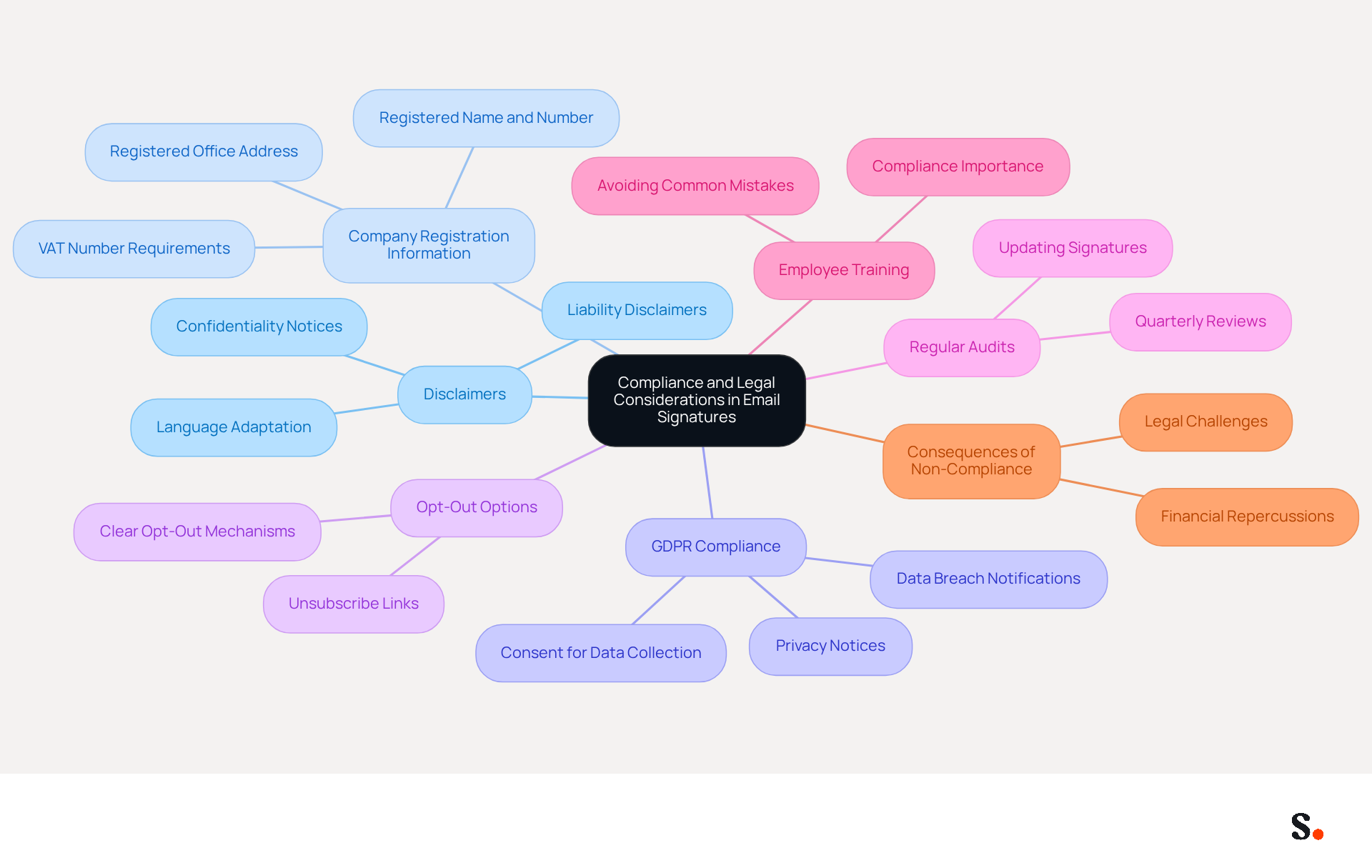
Incorporating essential compliance elements in a coo email signature is crucial for safeguarding the organization against legal challenges. To ensure compliance and address legal considerations, it is essential to include the following elements:
- Disclaimers: Depending on the industry, incorporate disclaimers regarding confidentiality, liability, or other notices to protect the organization. For instance, the healthcare sector mandates specific disclaimers regarding patient confidentiality under HIPAA regulations. Additionally, a disclaimer written only in English may not meet legal requirements for entities in Italy or Germany, highlighting the need for language adaptation in confidentiality clauses.
- Company Registration Information: Businesses in specific jurisdictions must include their registration number and address in their signatures. In the UK, the Companies Act 2006 mandates that all commercial correspondence, including messages, must display the company's full registered name, registration number, country of registration, registered office address, and VAT number if applicable.
- GDPR Compliance: If operating in or dealing with clients in the EU, ensure that the signature complies with GDPR regulations, including privacy notices if applicable. The GDPR mandates that businesses secure approval prior to gathering and utilizing personal information, such as addresses used for promotional purposes. Notably, the CNIL recorded 2,825 personal data breach notifications in 2020, underscoring the importance of data protection compliance.
- Opt-Out Options: For marketing communications, provide recipients with an option to unsubscribe from future messages to comply with anti-spam laws. This is crucial for maintaining compliance with regulations like CAN-SPAM, which necessitates clear opt-out mechanisms.
- Regular Audits: Periodically review and update the electronic correspondence identifier to ensure ongoing compliance with evolving legal requirements. Regular audits should be performed quarterly to ensure compliance, as outdated approvals can lead to significant financial consequences.
- Employee Training: Implement training programs for employees on the significance of compliance in communication. This assists in avoiding typical mistakes and guarantees that all team members comprehend the regulatory consequences of their correspondence.
- Consequences of Non-Compliance: Be aware of the potential legal challenges and financial repercussions associated with non-compliance. Failure to adhere to compliance regulations can lead to severe legal and financial consequences for organizations. Lacking regulatory information in a coo email signature can result in non-compliance penalties, underscoring the critical need for organizations to prioritize compliance in their email signatures.
Ultimately, neglecting compliance can expose organizations to significant risks that could have been easily mitigated.
Utilize Call-to-Action Elements for Engagement
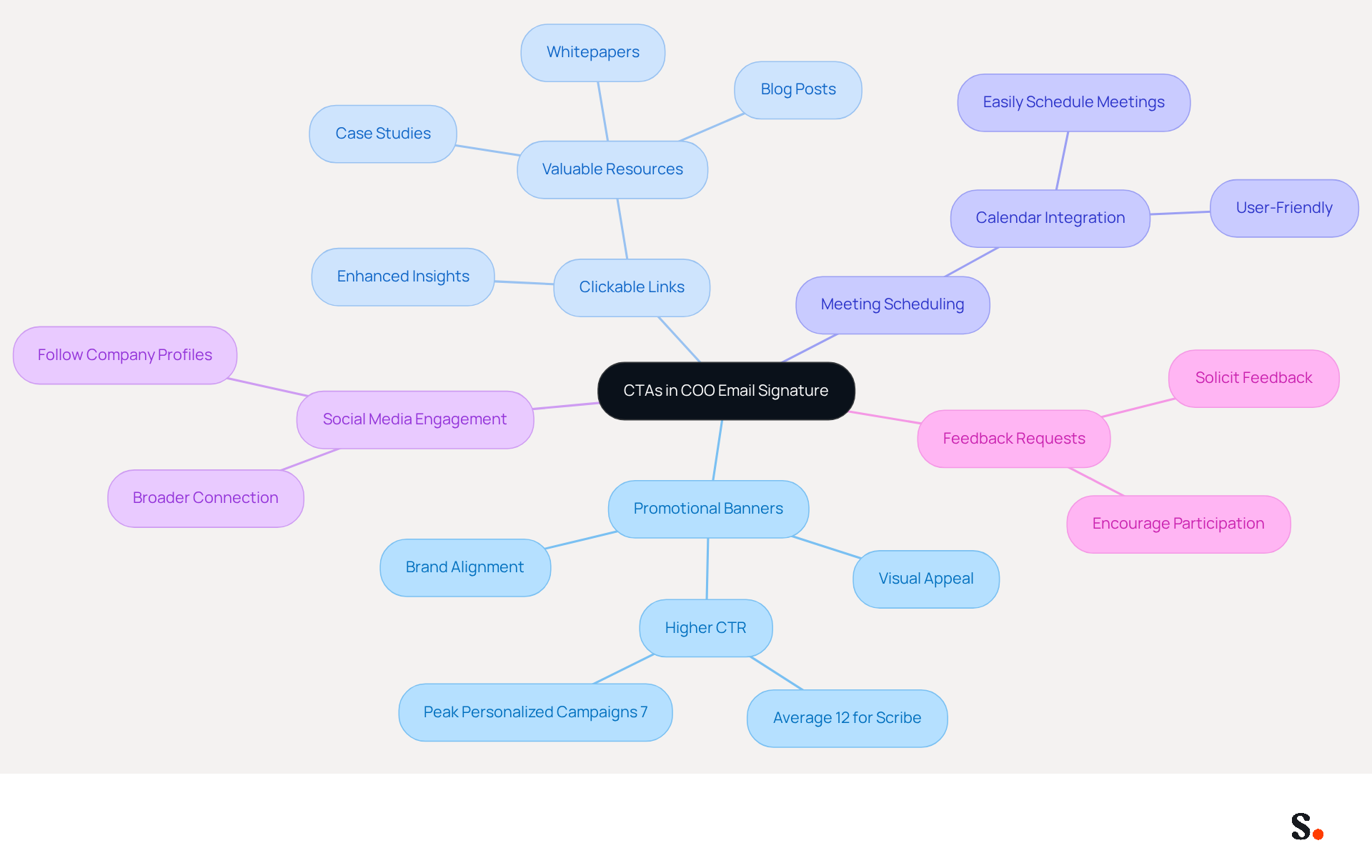
Incorporating call-to-action (CTA) elements in a COO email signature is essential for enhancing engagement and driving results. Here are some effective strategies:
- Promotional Banners: Include a visually appealing banner that highlights current promotions, events, or important announcements, ensuring alignment with brand identity. Research shows that messages with graphics tend to have higher click-through rates (CTR), averaging 12% for Scribe, with peak personalized campaigns hitting 7%.
- Clickable Links: Add links to valuable resources such as whitepapers, case studies, or blog posts, providing recipients with additional insights and information.
- Meeting Scheduling: Integrate a link to a calendar tool (e.g., Calendly) that allows recipients to easily schedule meetings with the COO, streamlining communication. This seamless integration ensures that scheduling is efficient and user-friendly.
- Social Media Engagement: Encourage recipients to follow the company on social media by including icons that link to the company’s profiles, fostering a broader connection.
- Feedback Requests: Utilize the identifier to solicit feedback or encourage participation in surveys, enhancing engagement and gathering valuable insights.
When COOs strategically incorporate these CTAs into their COO email signature, they can really boost engagement and lead generation in their communications. It is essential to test different CTA formats and placements to ensure optimal performance, as effective CTAs can increase clicks by up to 371% and significantly boost sales. Furthermore, with Scribe's automated synchronization with Aircall, any modifications made in the Aircall configuration will automatically reflect in the signatures, ensuring brand consistency and effective communication. Businesses face challenges in ensuring their communications are clear and effective without proper testing. Thus, the thoughtful implementation of CTAs is vital for ensuring effective communication and maximizing engagement.
Conclusion
Many organizations underestimate the impact of a well-designed COO email signature on their professional image and brand visibility. By incorporating essential components such as full name, job title, company name, and contact information, along with design principles that prioritize clarity and simplicity, COOs can create a signature that reflects their authority and reinforces their organization's identity.
Key insights discussed include the importance of compliance with legal requirements, such as including necessary disclaimers and ensuring GDPR adherence. Additionally, the strategic use of call-to-action elements can significantly enhance engagement, driving higher click-through rates and fostering connections with recipients. Utilizing Scribe enables organizations to manage their email signatures efficiently while ensuring compliance with legal standards.
A well-crafted COO email signature does more than look good; it plays a crucial role in communication and branding. Organizations are encouraged to prioritize the development of their email signatures, ensuring they reflect professionalism, comply with legal standards, and engage recipients effectively. Neglecting to optimize email signatures could result in lost opportunities for brand engagement and compliance.
Frequently Asked Questions
Why is an effective COO email signature important?
An effective COO email signature is crucial for establishing professionalism and enhancing brand visibility.
What essential components should be included in a COO email signature?
A COO email signature should include the following components: Full Name, Job Title, Company Name, Contact Information, Company Logo, Social Media Links, Website URL, and Legal Disclaimers.
What should be included in the Full Name section of the email signature?
The Full Name section should clearly state your full name to ensure recipients know who they are communicating with.
Why is it important to include a Job Title in the email signature?
Including your official title (e.g., Chief Operating Officer) establishes authority and context, which is crucial for professional communication.
How does mentioning the Company Name benefit the email signature?
Clearly mentioning the Company Name reinforces identity and makes it easier for recipients to recognize the organization.
What type of Contact Information should be provided?
Direct phone numbers and email addresses should be provided to facilitate easy communication, ensuring that recipients can reach you without hassle.
What role does the Company Logo play in the email signature?
Incorporating the Company Logo enhances recognition and professionalism, and it should be sized appropriately between 150px and 300px in width.
Why should Social Media Links be included in the email signature?
Including links to professional social media profiles (e.g., LinkedIn) encourages networking and engagement, serving as extensions of your brand.
How does including a Website URL benefit the email signature?
A link to the company website can drive traffic and provide additional information about the organization, enhancing the recipient's understanding of your offerings.
What is the importance of Legal Disclaimers in the email signature?
Including legal disclaimers in your correspondence footer is essential for compliance with privacy regulations like CAN-SPAM and GDPR, protecting your organization from potential legal issues.
How can regularly updating the email signature components benefit an organization?
Regularly updating these elements ensures compliance with branding standards and maximizes marketing effectiveness, as consistent branding can lead to a 22% increase in response rates.
List of Sources
- Identify Essential Components of a COO Email Signature
- 4 Best Practices for a Unique Email Signature That Drives Results (https://scribe-mail.com/en-US/blog/4-best-practices-for-a-unique-email-signature-that-drives-results)
- 4 Best Practices for Your Work Email Signature Strategy (https://scribe-mail.com/en-US/blog/4-best-practices-for-your-work-email-signature-strategy)
- Email Signature Best Practices Guide With Examples - MailerLite (https://mailerlite.com/blog/email-signature-best-practices)
- Why email signature for CEO matters and how to create the best one - MySignature (https://mysignature.io/professional-email-signatures/ceo)
- Apply Design Principles for Professionalism and Clarity
- Email Signature Best Practices Guide With Examples - MailerLite (https://mailerlite.com/blog/email-signature-best-practices)
- 4 Best Practices for a Modern Email Signature That Engages (https://scribe-mail.com/en-US/blog/4-best-practices-for-a-modern-email-signature-that-engages)
- Best Practices Designing Email Signatures - Lynne Golodner (https://lynnegolodner.com/articles/best-practices-designing-email-signatures)
- Email Signature Design Guide: Best Practices and Examples (https://designmodo.com/email-signature)
- 10 Essential Email Signature Marketing Principles | Rocketseed (https://rocketseed.com/blog/10-essential-email-signature-marketing-principles)
- Incorporate Compliance and Legal Considerations
- GDPR email signature: what are the best practices for communicating by email? (https://signitic.com/en/resources/gdpr-email-signature-what-are-the-best-practices-for-communicating-by-email)
- Email footers legal requirements in the UK (2024) (https://wisestamp.com/blog/email-footers-legal-requirements-uk)
- How do I ensure my email signature complies with international laws and regulations (e.g., GDPR, CAN-SPAM)? | Email Signature Rescue Blog (https://emailsignaturerescue.com/blog/how-do-i-ensure-my-email-signature-complies-with-international-laws-and-regulations)
- International email signatures: legal obligations France, UK, Germany, Italy (https://signitic.com/en/resources/email-signature-management-for-global-businesses-legal-requirements-and-templates-for-france-uk-germany-italy)
- Ensuring Email Signature Compliance: Legal Requirements | Crossware365 (https://crossware365.com/blog/ensuring-email-signature-compliance-legal-requirements)
- Utilize Call-to-Action Elements for Engagement
- Maximize Marketing Impact with Effective Email Signature Banners (https://scribe-mail.com/en-US/blog/maximize-marketing-impact-with-effective-email-signature-banners)
- A Strategic Guide to Calls-to-Action (CTAs) in Email Marketing: Best Practices for Success (https://litmus.com/blog/click-tap-and-touch-a-guide-to-cta-best-practices)
- Create Effective CTA Email Signatures (Examples & Templates) (https://wisestamp.com/examples/cta-email-signature)
- The Ultimate Guide to Email Signature Call-to-Action - NEWOLDSTAMP (https://newoldstamp.com/blog/the-ultimate-guide-to-email-signature-call-to-action)
- CTAs lead the way in email engagement tactics (https://emarketer.com/content/ctas-lead-way-email-engagement-tactics)
Get started with Scribe
See why teams switch to Scribe
Free 14-day trial — no credit card.