Best Practices for Crafting an Effective Invitation Letter Business
An effective invitation letter is essential for establishing a professional tone in business interactions. By mastering the essential components and best
Sophie Grant
Email Signature Specialist, Scribe
Introduction
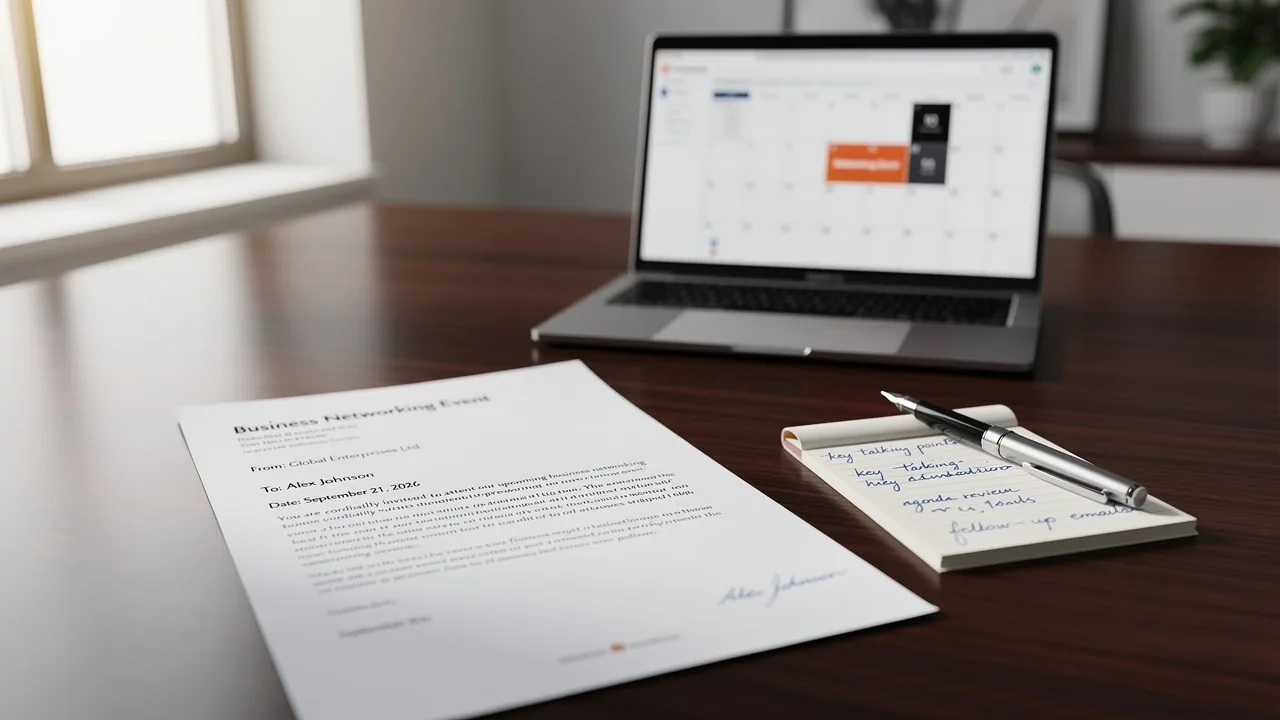
An effective invitation letter is essential for establishing a professional tone in business interactions. By mastering the essential components and best practices of these letters, professionals can ensure clarity, professionalism, and a higher likelihood of positive responses. Identifying the common pitfalls that can hinder this task is essential. Understanding these challenges is key to addressing them, which can significantly improve the effectiveness of your communication efforts.
Identify Essential Components of an Invitation Letter
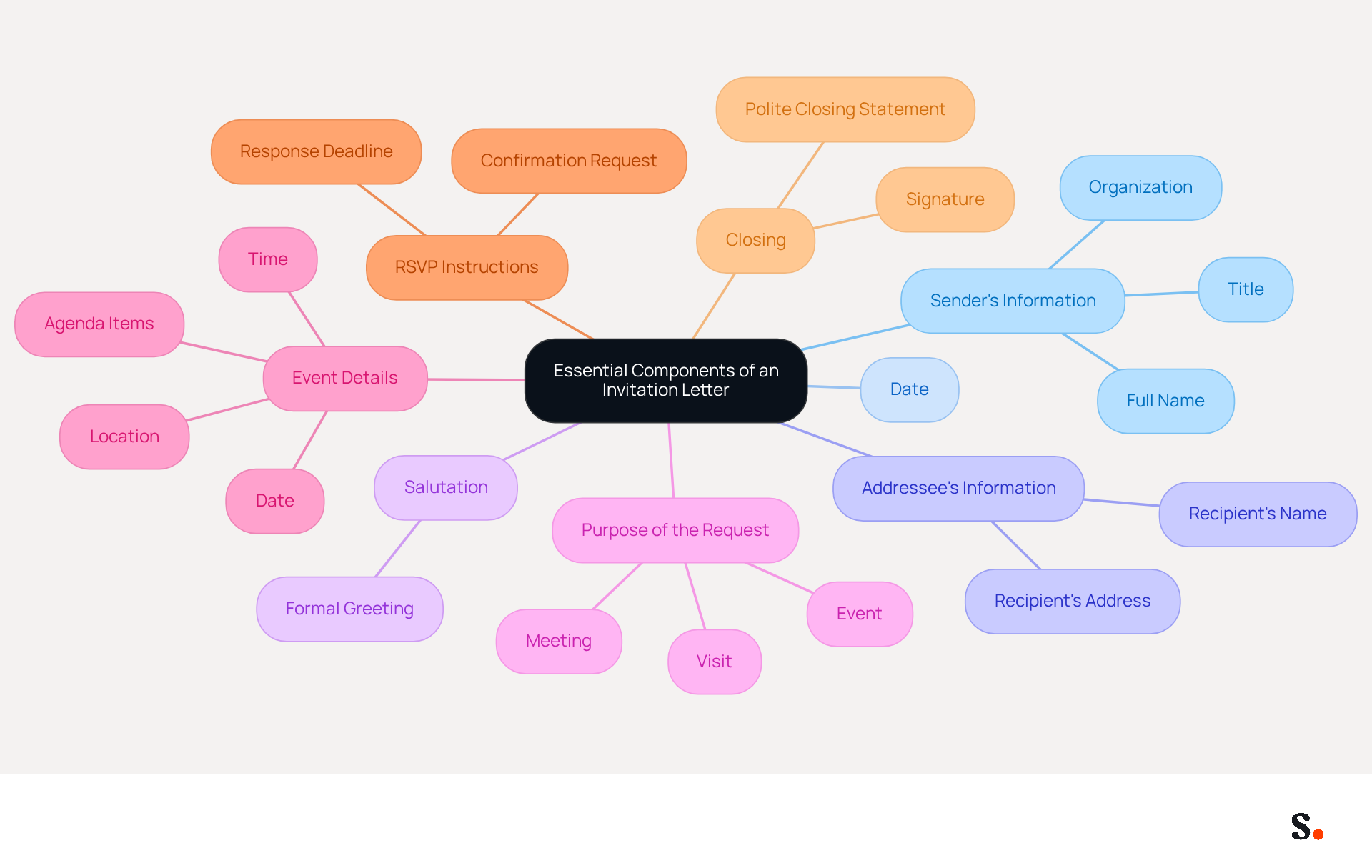
An effective invitation letter business is crucial for ensuring clarity and professionalism in communication. It should encompass several essential components:
- Sender's Information: Clearly state your full name, title, and organization at the top of the document to establish credibility.
- Date: Include the date the document is written to provide context.
- Addressee's Information: Personalize the letter by including the addressee's name and address.
- Salutation: Use a formal greeting, such as 'Dear [Recipient's Name]', to set a respectful tone.
- Purpose of the Request: Clearly articulate the reason for the request, whether it pertains to a meeting, event, or visit.
- Event Details: Provide specific information, including the date, time, location, and any relevant agenda items, to keep the audience informed.
- RSVP Instructions: Clearly request confirmation of attendance, including a deadline for responses to facilitate planning.
- Closing: Conclude with a polite closing statement, such as 'Sincerely' or 'Best regards', followed by your signature.
Including these components in the invitation letter business boosts the professionalism of the announcement and ensures that recipients have the information they need to respond. Mastering the art of creating formal letters is essential for ensuring the success of any occasion, as noted by Sophie Grant, a Specialist in Email Signatures. Taking the time to proofread and verify details can make your announcement more effective, presenting a polished image that builds credibility. Furthermore, case studies such as 'Engagement through Formal Letters' demonstrate how well-crafted requests can transform simple gatherings into memorable experiences, enhancing community involvement and fostering meaningful connections among attendees.
Clarify Purpose and Intent of the Visit
When crafting a letter, articulating the purpose and intent of the visit is essential for effective communication. Here are some best practices to ensure clarity:
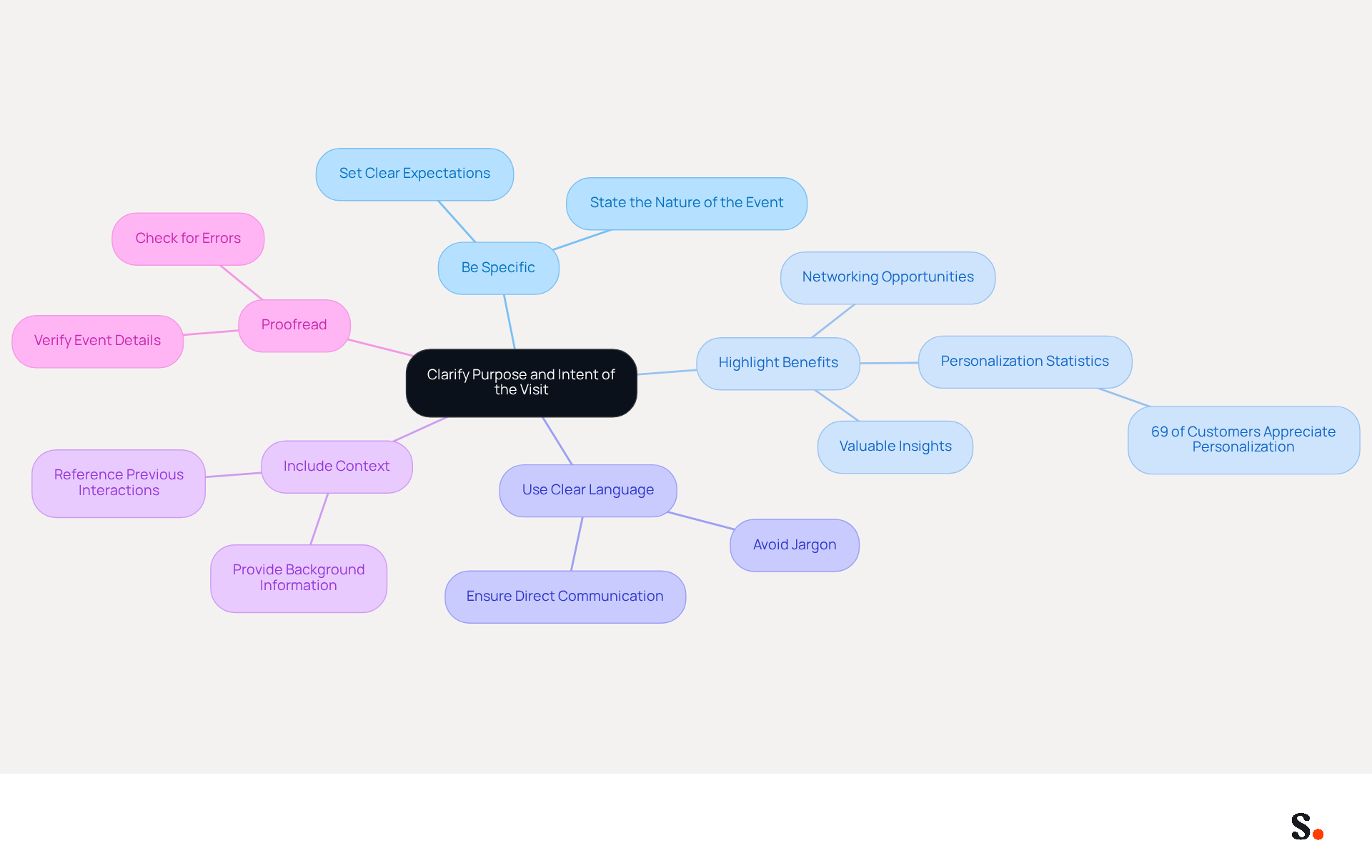
- Be Specific: Clearly state the nature of the event or meeting. For instance, instead of a vague 'We would like to meet', specify 'We would like to meet to discuss potential collaboration opportunities'. This precision helps avoid misunderstandings and sets clear expectations.
- Highlight Benefits: Explain the advantages of attending. Mention potential benefits such as networking opportunities or valuable insights that the individual might gain, enhancing the attractiveness of the invitation. Statistics show that 69% of customers appreciate personalization based on data they have explicitly shared, reinforcing the importance of tailoring your message.
- Use Clear Language: Avoid jargon or overly complex terms. Simple, direct language ensures that the purpose is easily understood, reducing the risk of miscommunication.
- Include Context: Provide background information that helps the recipient understand the significance of the request. This could involve referencing previous interactions or explaining the importance of the occasion.
- Proofread: Before sending, ensure that the document is free of errors and that all event details are accurate. This step is crucial for maintaining professionalism and clarity.
Adhering to these guidelines ensures that the message conveys its purpose effectively, thereby increasing the likelihood of a favorable response from the recipient. Research has indicated that requests that clearly express their intent result in higher attendance rates, as shown in the study titled 'Tips for Writing Business Event Invitations', which emphasizes how effective communication can enhance guest awareness and interest.
Outline Financial Responsibility and Support
Clearly outlining financial responsibilities is essential in business communications. Here are some best practices:
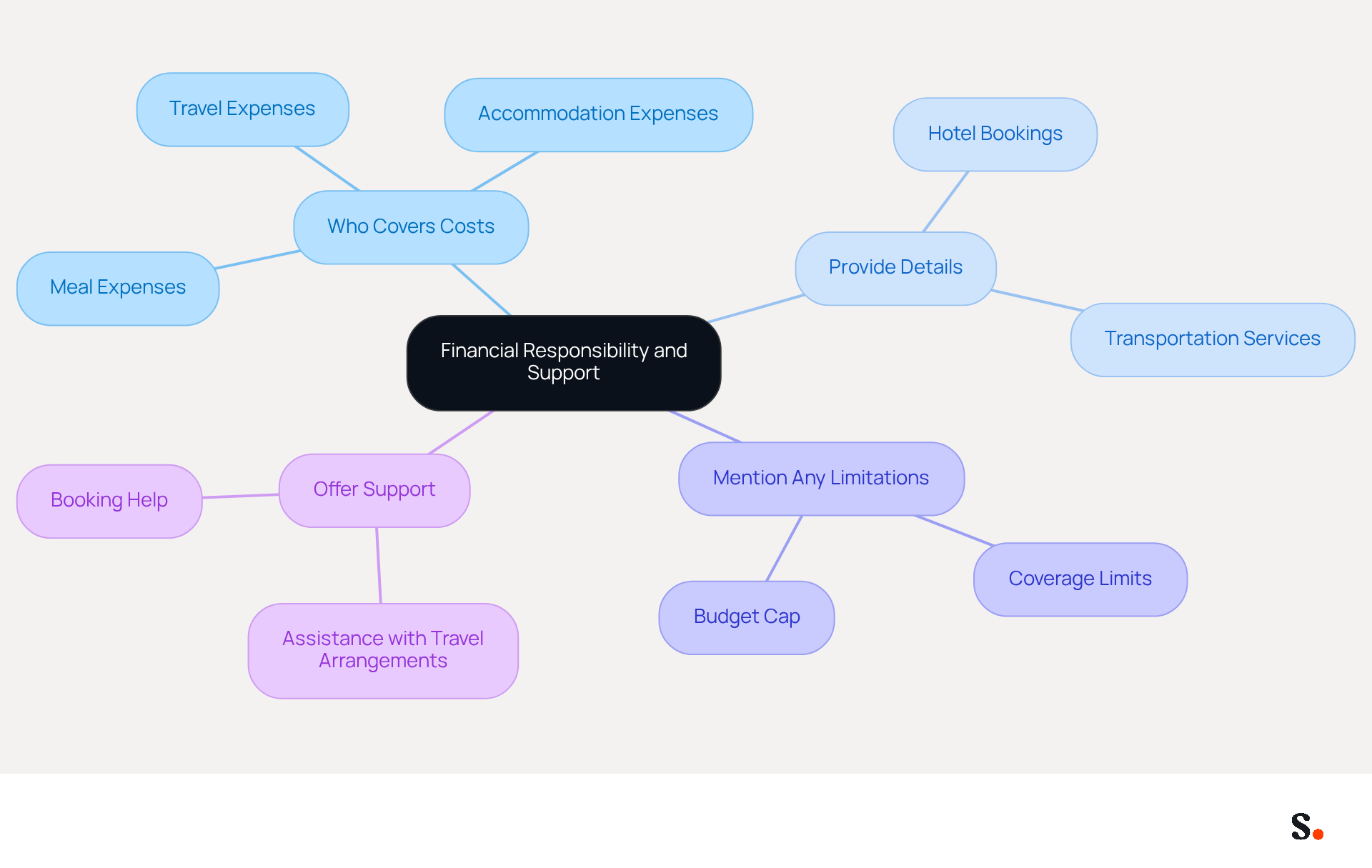
- State Who Covers Costs: Clearly indicate who will be responsible for expenses such as travel, accommodation, and meals. For example, 'We will cover your travel and accommodation expenses during your stay.'
- Provide Details: If applicable, include specifics about the arrangements, such as hotel bookings or transportation services.
- Mention Any Limitations: If there are any limits to what will be covered, such as a budget cap, make sure to communicate this upfront to avoid confusion.
- Offer Support: If you are providing assistance with travel arrangements, mention this in the correspondence. For example, 'Please let us know if you need help with booking your flights.'
By addressing financial responsibilities upfront, you can foster trust and clarity. This proactive approach ensures that all parties are aligned and reduces the potential for disputes.
Avoid Common Mistakes in Invitation Letters
To craft an effective invitation letter, it is crucial to avoid common pitfalls that can undermine its impact:
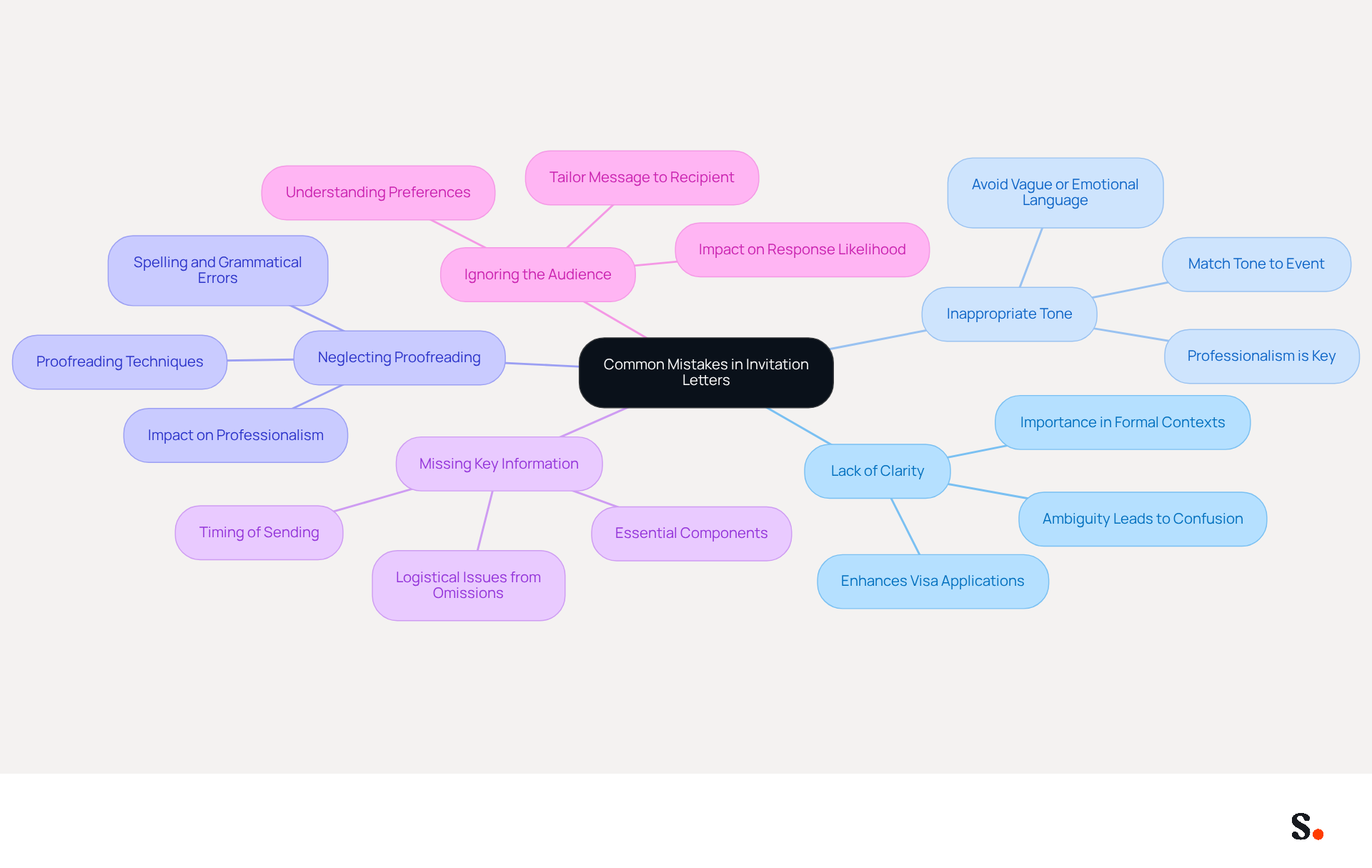
- Lack of Clarity: Clearly articulate the purpose and details of the request. Ambiguity can lead to confusion and missed opportunities, particularly in formal contexts where precision is crucial. As mentioned by Haley Davidson, a well-structured invitation can enhance B-1/B-2 or J-1 visa applications by providing useful context.
- Inappropriate Tone: Match the tone of your correspondence to the nature of the event. A business meeting should maintain a formal tone, while a casual gathering can adopt a more relaxed style. Striking the right balance is essential for engagement. According to Henry Lindpere, vague or overly emotional communications can negatively affect your communication effectiveness, so maintaining professionalism is key.
- Neglecting Proofreading: Spelling and grammatical errors can significantly undermine your professionalism. Research shows that even small errors can significantly impact how your business communication is perceived. Always proofread your document multiple times and consider having someone else review it. Reading text backwards can help catch spelling errors, ensuring clarity and professionalism.
- Missing Key Information: Ensure that all essential components are included, such as date, time, location, and RSVP details. Omitting critical information can lead to misunderstandings and logistical issues. Delays in sending your invitation can lead to skepticism about its relevance, so timing is crucial.
- Ignoring the Audience: Tailor your message to the individual. Understanding their preferences and expectations can enhance the appeal of the request and increase the likelihood of a positive response. For example, understanding whether the recipient is a family member or a business associate can affect the content and tone of your correspondence.
By recognizing these common pitfalls and actively addressing them, you can significantly improve your invitation letter business and foster stronger relationships with your recipients.
Conclusion
An effective invitation letter is not just a formality; it is a crucial tool for fostering professional relationships and ensuring clear communication. Focusing on key components - like sender and recipient information, the invitation's purpose, and specific event details - ensures the letter conveys its intent clearly and encourages a positive response.
In this article, we've highlighted best practices, including:
- The importance of clarity in purpose
- Outlining financial responsibilities
- Avoiding common mistakes
Emphasizing the need for specificity, context, and a professional tone ensures that the invitation resonates with the audience and fosters trust. Additionally, addressing potential pitfalls, such as neglecting proofreading or omitting key information, can significantly enhance the effectiveness of the invitation.
By mastering the art of invitation writing, you not only enhance your professional image but also open doors to meaningful connections and opportunities.
Frequently Asked Questions
What are the essential components of an invitation letter?
An effective invitation letter should include the following components: Sender's Information, Date, Addressee's Information, Salutation, Purpose of the Request, Event Details, RSVP Instructions, and Closing.
Why is it important to include the sender's information in an invitation letter?
Including the sender's information establishes credibility and helps the recipient identify who is inviting them.
What details should be included in the event details section of the invitation letter?
The event details section should provide specific information such as the date, time, location, and any relevant agenda items.
How should the RSVP instructions be presented in the invitation letter?
RSVP instructions should clearly request confirmation of attendance and include a deadline for responses to facilitate planning.
What is the significance of proofreading an invitation letter?
Proofreading ensures that all details are accurate and presents a polished image, which builds credibility and enhances the effectiveness of the announcement.
How can well-crafted invitation letters impact community involvement?
Well-crafted requests can transform simple gatherings into memorable experiences, enhancing community involvement and fostering meaningful connections among attendees.
List of Sources
- Identify Essential Components of an Invitation Letter
- Craft a Formal Invitation Letter in 4 Easy Steps (https://scribe-mail.com/en-US/blog/craft-a-formal-invitation-letter-in-4-easy-steps)
- Invitation Letter for Event: Samples, Templates and Examples (https://glueup.com/blog/invitation-letter-events)
- Review the Basic Elements of an Invitation, Reply Card and Map Insert (https://events.ucla.edu/plan-an-event/review-the-basic-elements-of-an-invitation-reply-card-and-map-insert)
- Clarify Purpose and Intent of the Visit
- Craft a Formal Invitation Letter in 4 Easy Steps (https://scribe-mail.com/en-US/blog/craft-a-formal-invitation-letter-in-4-easy-steps)
- Invitation Letter for Event: Samples, Templates and Examples (https://glueup.com/blog/invitation-letter-events)
- Verification Letter of Invitation under China Visa Process: A Brief Guide (https://china-briefing.com/news/verification-letter-of-invitation-a-brief-guide-china-visa-application)
- Outline Financial Responsibility and Support
- Business Travel Remains Important Despite Rising Costs (https://thesmallbusinessexpo.com/blog/business-travel-still-important)
- Invitation for Financial Planning Seminar • Glue Up (https://glueup.com/blog/invitation-financial-planning-seminar)
- How to Delegate Financial Responsibilities in Business (https://bill.com/blog/delegating-financial-responsibilities)
- 390 Event Statistics Shaping the Industry in 2026 | Cvent (https://cvent.com/en/blog/events/event-statistics)
- Financial Planning Tips for Entrepreneurs & Founders | J.P. Morgan (https://jpmorgan.com/insights/business-planning/financial-planning-tips-for-entrepreneurs-and-founders)
- Avoid Common Mistakes in Invitation Letters
- Common Wedding Invitation Mistakes and How to Avoid Them (https://lilyandroeco.com/blogs/news/common-wedding-invitation-mistakes-and-how-to-avoid-them?srsltid=AfmBOopDBwkedLN7zrqllkf7T3bb8xduqdl9baQE7sU993dIRVZmOBYR)
- The Five Worst Business Writing Mistakes (https://linkedin.com/pulse/five-worst-business-writing-mistakes-margie-zable-fisher)
- How to Write an Invitation Letter for a U.S. Travel Visa (https://manifestlaw.com/blog/invitation-letter-us-visa-update)
- How to Write an Invitation Letter for a U.S. B1/B2 Visitor Visa (https://jeelani-law.com/articles/invitation-letter-for-us-visa)
- Common Mistakes Couples Make with Their Wedding Invitations (https://insideweddings.com/news/planning-design/common-mistakes-couples-make-with-their-wedding-invitations/41644)
Get started with Scribe
Build a professional email signature
Free 14-day trial — no credit card.