Best Practices for Email Signatures for Companies to Boost Branding
While often overlooked, email signatures can be a pivotal element in a company's branding and communication strategy. By transforming these digital sign-offs
Sophie Grant
Email Signature Specialist, Scribe

Introduction
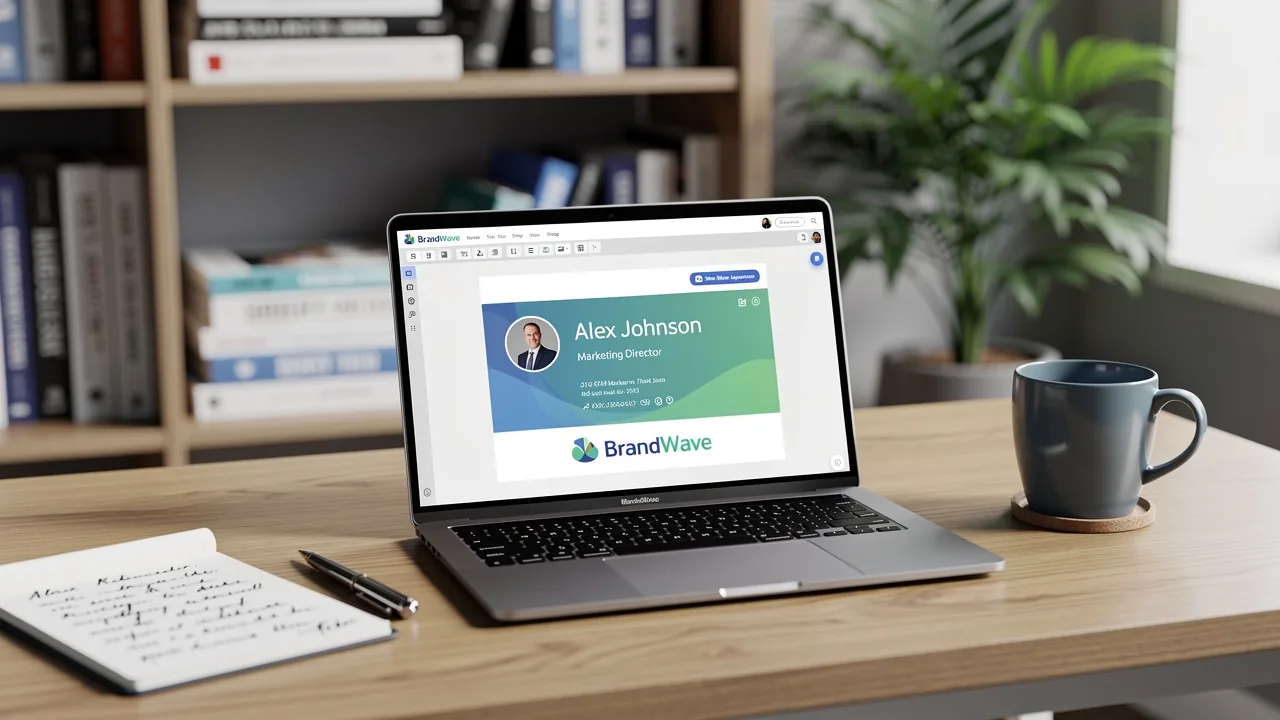
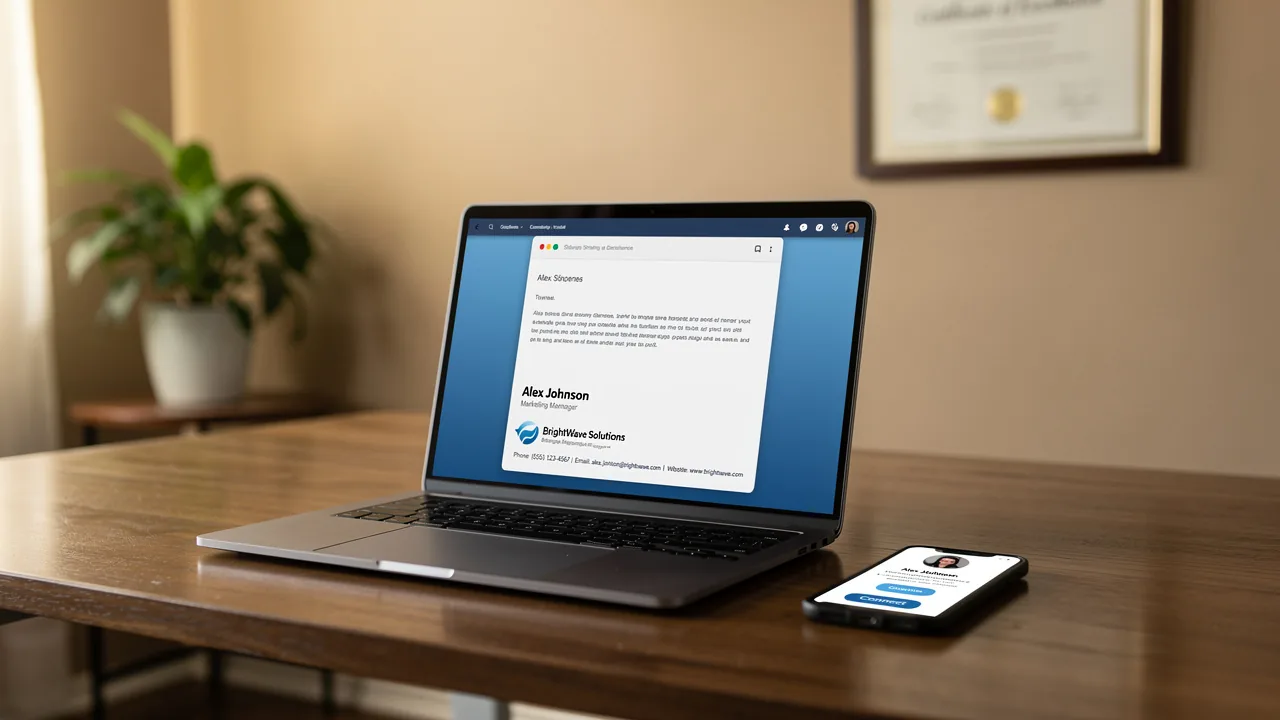
While often overlooked, email signatures can be a pivotal element in a company's branding and communication strategy. By transforming these digital sign-offs into powerful marketing tools, organizations can significantly boost their brand identity and engagement. The real challenge is making sure that every team member's signature aligns with the company's branding guidelines while still being functional and visually appealing.
What strategies can companies implement to standardize their email signatures for maximum impact and consistency in all communications?
Define Essential Elements of an Email Signature
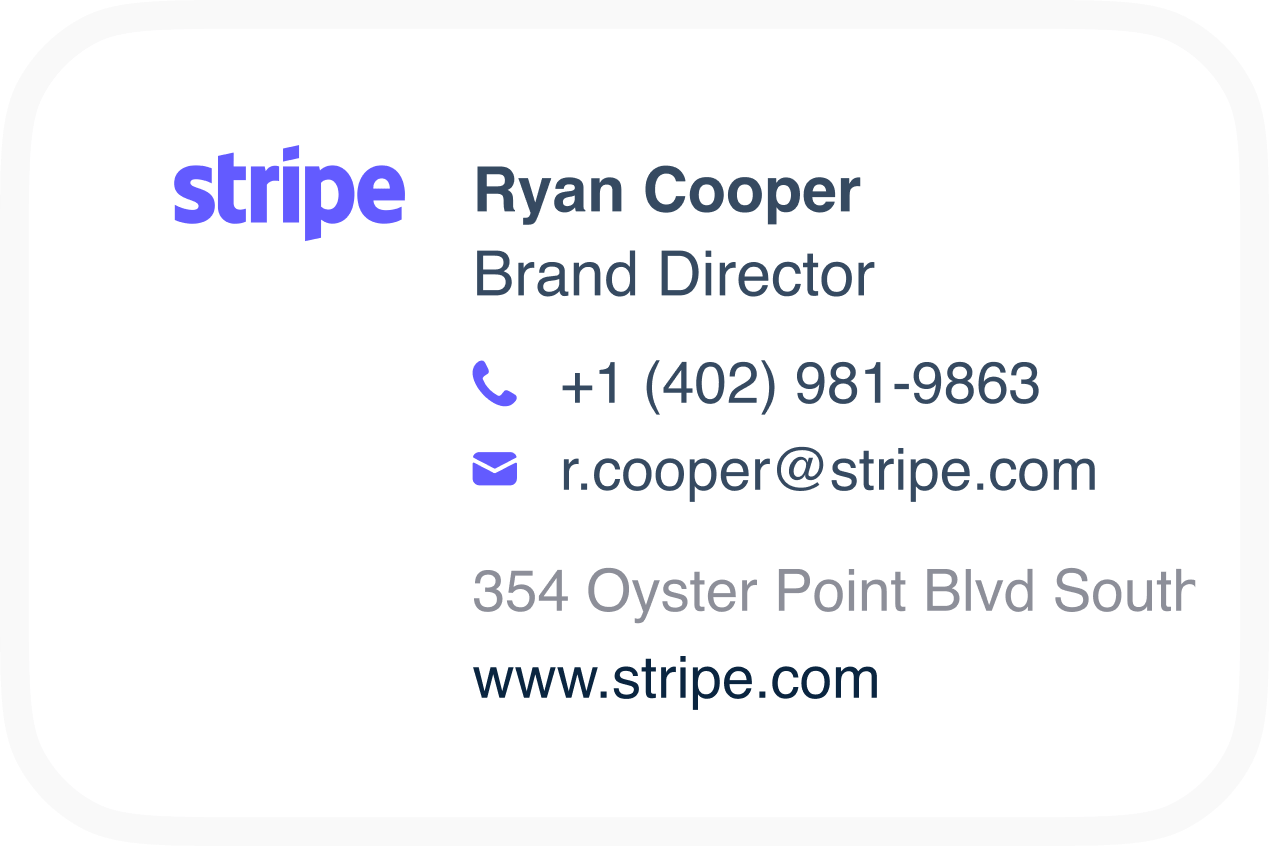
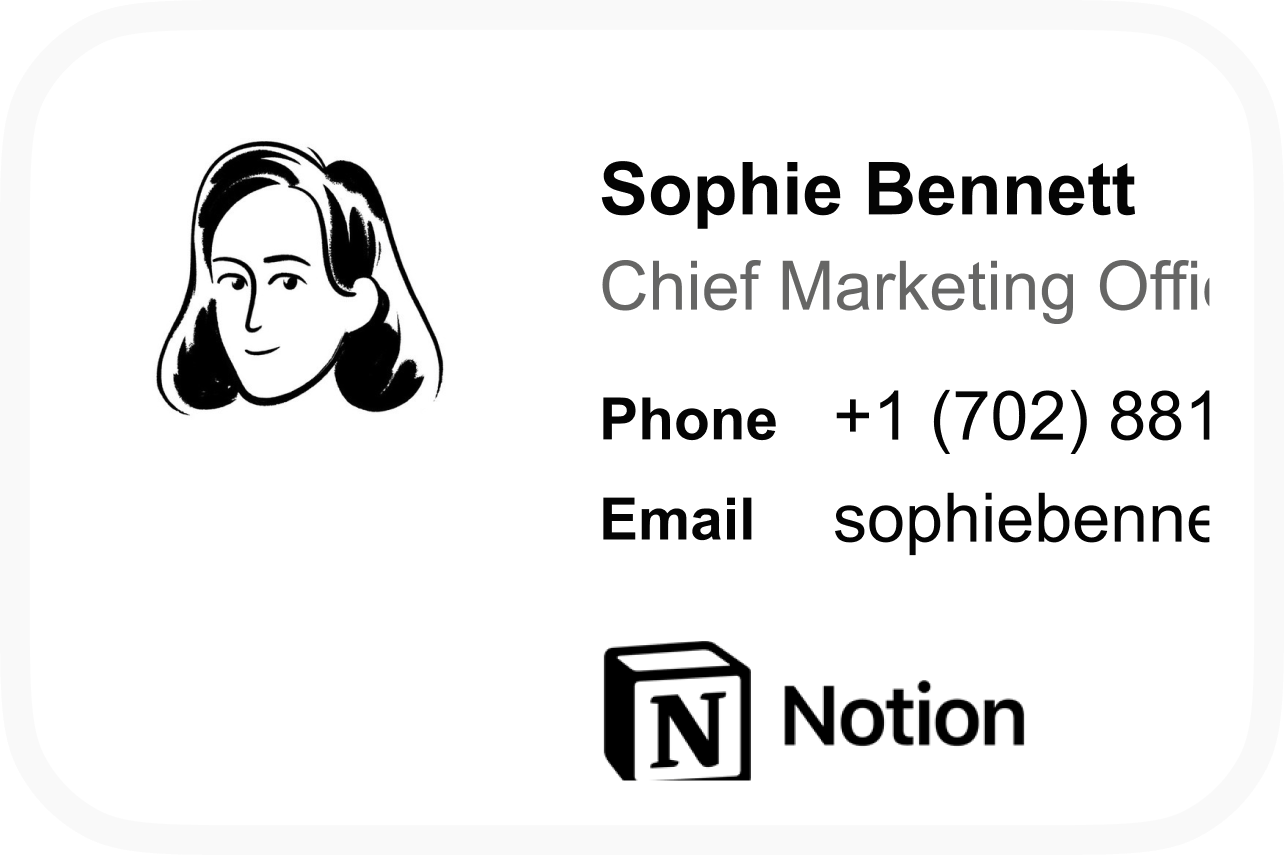
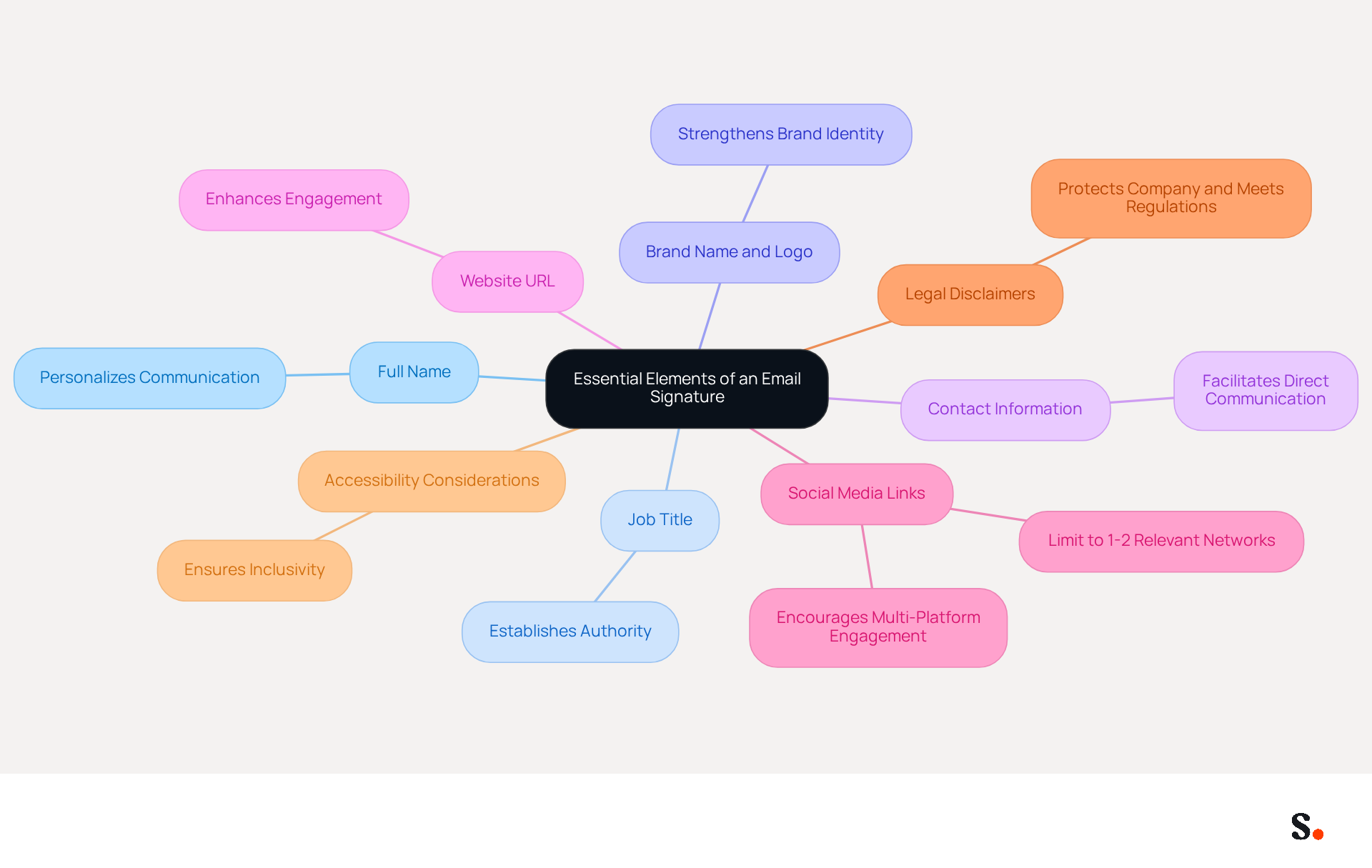
To maximize branding and communication effectiveness, an effective email signature must include several essential elements:
- Full Name: Clearly stating the sender's full name personalizes the communication and fosters a connection with the recipient.
- Job Title: Including the sender's position establishes authority and provides context, helping recipients understand the sender's role within the organization.
- Brand Name and Logo: This strengthens brand identity and ensures instant recognition, making it easier for recipients to connect the message with Scribe.
- Contact Information: Essential details such as phone numbers and email addresses should be included for easy follow-up, facilitating direct communication.
- Website URL: Linking to the Scribe website allows recipients to explore more about the business, enhancing engagement and potential conversions.
- Social Media Links: If applicable, including links to professional social media profiles enhances connectivity and encourages recipients to engage with the brand across platforms. Too many social media links can overwhelm recipients and dilute the message, so it's advisable to limit these to 1-2 relevant networks.
- Legal Disclaimers: Depending on your industry, you might need to include a legal disclaimer to protect your company and meet regulations.
- Accessibility Considerations: Adding alt text to images ensures inclusivity for visually impaired users, enhancing the overall accessibility of the correspondence.
Incorporating these elements ensures that email signatures are informative and effectively represent the organization's identity. Research indicates that well-organized email signatures can significantly boost engagement, with businesses experiencing up to 85% enhanced brand consistency when using centralized management solutions like Scribe. With Scribe, modifications made in your Aircall configuration are automatically reflected in your correspondence, ensuring that your team's details are always current without requiring any action from them. Furthermore, Scribe is SOC 2 Type II compliant, ensuring that your data is safe. Consistently reviewing digital identifiers quarterly and checking links monthly is also essential to maintain their effectiveness. By implementing these strategies, organizations can transform their email signatures into powerful tools for brand engagement.
Implement Design Best Practices for Impactful Signatures
To create impactful email signatures, it is essential to adhere to effective design best practices:
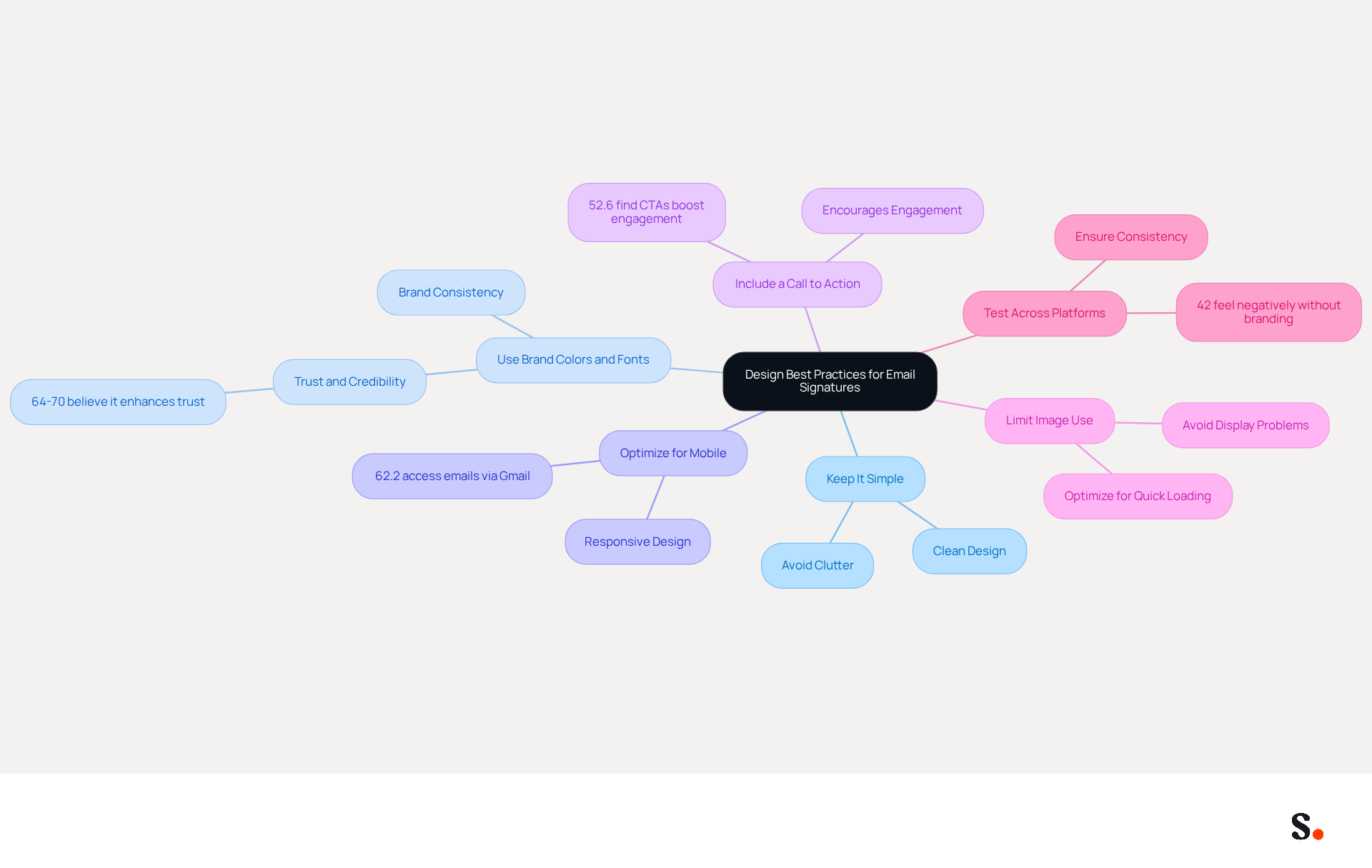
- Keep It Simple: A clean design is more effective. Avoid clutter by limiting the amount of text and visual elements.
- Use Brand Colors and Fonts: Align the Scribe branding with the company’s branding guidelines to maintain consistency across all communications. This is vital, as 64-70% of respondents believe a professional branded email footer enhances trust and credibility, reinforcing the significance of a professional appearance.
- Optimize for Mobile: Ensure that the email footer is responsive and looks good on mobile devices, as 62.2% of users access emails via Gmail, which is predominantly used on smartphones. This underscores the need for mobile optimization in electronic approvals.
- Include a Call to Action (CTA): A subtle CTA can encourage recipients to take action, such as visiting a website or signing up for a newsletter. Notably, 52.6% of users find that including a CTA in their email footers boosts engagement.
- Limit Image Use: While images can enhance design, overusing them can cause display problems, which detracts from professionalism. Use them sparingly and ensure they are optimized for quick loading to avoid clutter and maintain professionalism.
- Test Across Platforms: Check how the mark appears in various messaging clients and devices to ensure consistency and functionality. This is crucial, as 42% of consumers indicate feeling negatively toward a business when they receive a message lacking a branded closing.
By adhering to these design principles, companies can create professional identities, including email signatures for companies, that effectively communicate their brand message and enhance engagement and brand perception. Remember, 'Consider your digital sign-off as your virtual handshake,' emphasizing the importance of a well-crafted closing.
Leverage Email Signatures as Marketing Assets
Email identifiers represent an underutilized asset in marketing strategies, offering significant potential when leveraged effectively. Here are ways to leverage them:
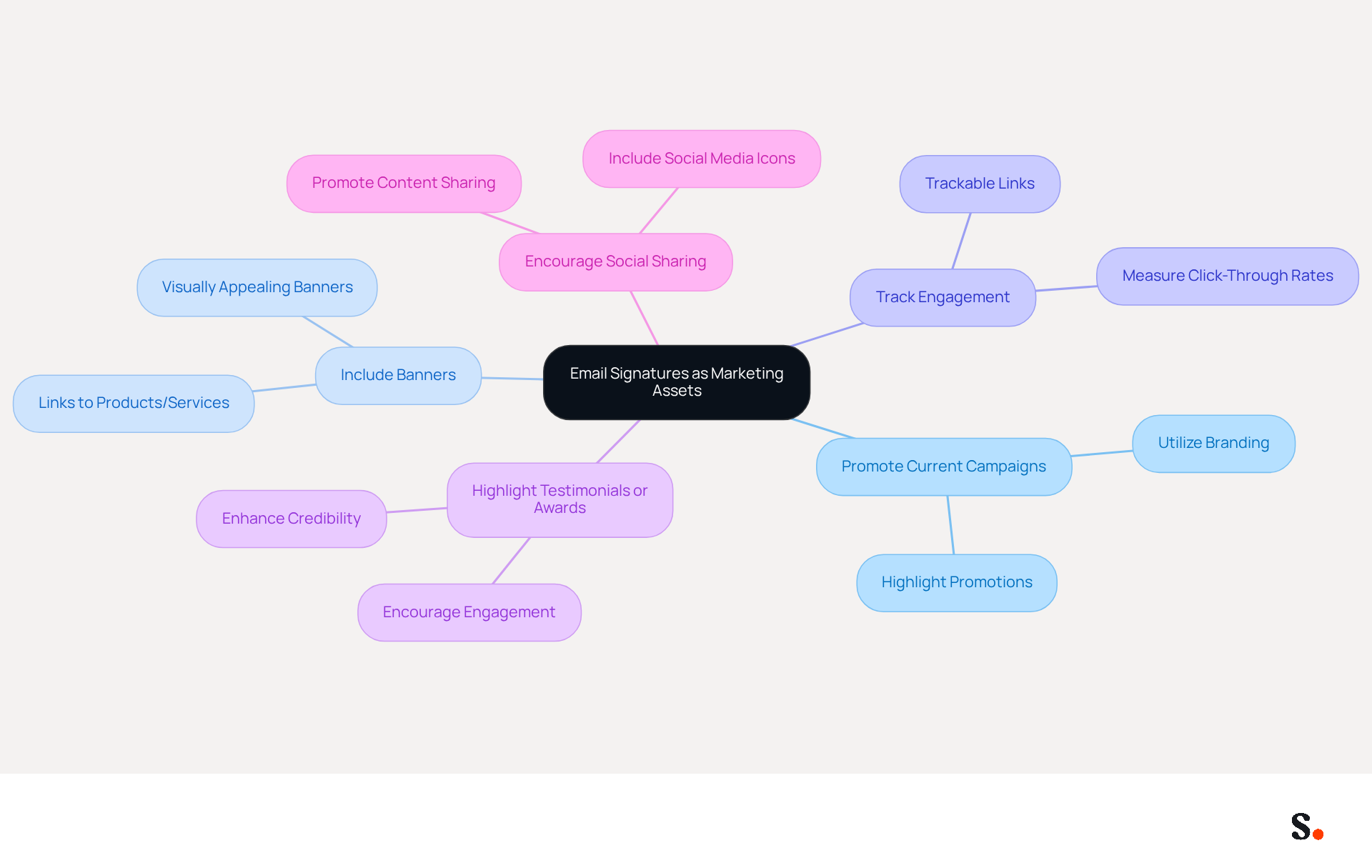
- Promote Current Campaigns: Utilize the branding to highlight ongoing promotions or events, ensuring that every email sent acts as a marketing channel.
- Include Banners: Incorporate visually appealing banners that link to specific products or services, drawing attention to key offerings.
- Track Engagement: Utilize trackable links in email footers to measure click-through rates and assess the effectiveness of marketing efforts.
- Highlight Testimonials or Awards: Adding a brief testimonial or mentioning awards can enhance credibility and encourage engagement.
- Encourage Social Sharing: Include social media icons that link to Scribe profiles, encouraging recipients to connect and share content.
When organizations view email signatures for companies as marketing tools, they can boost visibility and drive engagement with ease.
Ensure Consistency Across Team Email Signatures
To maintain a cohesive brand identity, companies must implement effective strategies for standardizing email signatures:
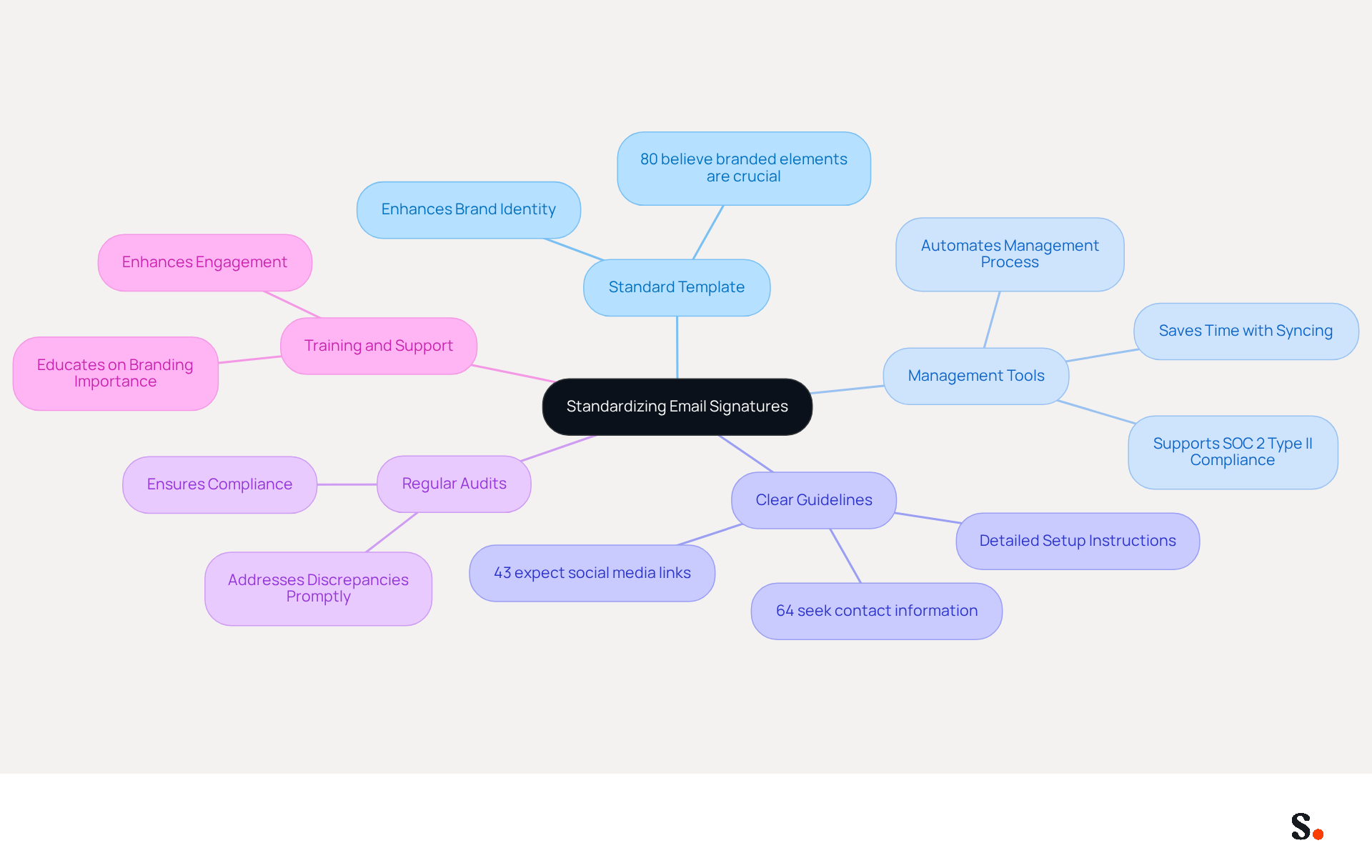
- Create a Standard Template: Develop a standardized electronic communication template that all employees must use. This method enhances brand identity and professionalism. In fact, 80% of respondents believe branded email elements are crucial for brand identity, while 76% feel these elements build trust in the sender.
- Utilize Management Tools: Implement tools like Scribe that automate the management process, allowing for easy updates and compliance with branding guidelines. Syncing your Google Workspace with Scribe saves time by automatically updating your teammates' data. This streamlined one-click synchronization process enhances efficiency and supports SOC 2 Type II compliance, ensuring your data management practices are secure.
- Provide Clear Guidelines: Offer detailed instructions on how to set up and use the messaging footer, including what elements to include and how to format them. Without clear guidelines, companies risk losing brand trust due to outdated or incorrect information. Furthermore, 64% of consumers seek contact information in electronic correspondence, and 43% anticipate social media or website links in such messages.
- Regular Audits: Conduct periodic reviews of email formats to ensure compliance with the established standards and make adjustments as necessary. Regular audits ensure that any discrepancies are promptly addressed, reinforcing brand integrity. For example, Voxpopme, a global video feedback platform, enhanced its communication process through centralized document management, emphasizing the effectiveness of these strategies.
- Training and Support: Provide training sessions for employees on the significance of consistent branding and how to utilize the electronic correspondence footer effectively. Educating staff on the influence of their contact details can enhance engagement, as 64% of consumers seek information in these identifiers, and 43% anticipate promotional materials.
By ensuring consistency in email signatures for companies, they can enhance their professional image and strengthen their identity across all communications. Ultimately, a strategic approach to email signature consistency can significantly impact client perceptions and engagement.
Conclusion
Many companies overlook the potential of email signatures in their branding efforts. Crafting effective email signatures is essential for enhancing branding and communication strategies. By incorporating key elements such as the sender's name, job title, brand logo, and contact information, organizations can create a professional and recognizable digital identity. Furthermore, leveraging design best practices ensures that these signatures not only look appealing but also function effectively across various devices and platforms.
The article highlights several strategies for maximizing the impact of email signatures:
- Utilizing them as marketing assets
- Promoting current campaigns
- Ensuring consistency across team signatures
Each approach contributes to a cohesive brand image. Tools like Scribe facilitate this process by allowing marketing teams to manage signatures independently, ensuring compliance with branding guidelines while maintaining security through SOC 2 Type II certification.
Neglecting to optimize email signatures could mean missing out on vital opportunities for brand engagement and customer trust. By adopting these best practices, companies can enhance their professional image and foster trust and credibility with their audience, making every email a step towards stronger brand identity and customer engagement.
Frequently Asked Questions
What are the essential elements of an effective email signature?
An effective email signature should include the sender's full name, job title, brand name and logo, contact information, website URL, social media links, legal disclaimers, and accessibility considerations.
Why is it important to include the sender's full name in an email signature?
Including the sender's full name personalizes the communication and fosters a connection with the recipient.
How does including a job title in an email signature benefit communication?
Including a job title establishes authority and provides context, helping recipients understand the sender's role within the organization.
What role does the brand name and logo play in an email signature?
The brand name and logo strengthen brand identity and ensure instant recognition, making it easier for recipients to connect the message with Scribe.
Why is contact information important in an email signature?
Contact information, such as phone numbers and email addresses, facilitates easy follow-up and direct communication.
How can including a website URL in an email signature enhance engagement?
Linking to the Scribe website allows recipients to explore more about the business, enhancing engagement and potential conversions.
What should be considered when adding social media links to an email signature?
It's advisable to limit social media links to 1-2 relevant networks to avoid overwhelming recipients and diluting the message.
Are legal disclaimers necessary in email signatures?
Yes, depending on the industry, including a legal disclaimer may be necessary to protect the company and meet regulations.
How can accessibility be improved in email signatures?
Adding alt text to images ensures inclusivity for visually impaired users, enhancing the overall accessibility of the correspondence.
What benefits does Scribe offer for managing email signatures?
Scribe allows modifications made in your Aircall configuration to be automatically reflected in correspondence, ensuring that team details are always current without requiring action from them.
How does using Scribe impact brand consistency?
Research indicates that well-organized email signatures can significantly boost engagement, with businesses experiencing up to 85% enhanced brand consistency when using centralized management solutions like Scribe.
What maintenance practices should be followed for email signatures?
Consistently reviewing digital identifiers quarterly and checking links monthly is essential to maintain their effectiveness.
List of Sources
- Define Essential Elements of an Email Signature
- Email Signature Best Practices for 2026 (+ 15 Pro Examples) (https://wavecnct.com/blogs/email-signature-best-practices-2026)
- Email Signature Best Practices Guide With Examples - MailerLite (https://mailerlite.com/blog/email-signature-best-practices)
- 20 best email signature design examples for 2026 — Stripo.email (https://stripo.email/blog/10-best-email-signature-design-examples)
- Email Signature Best Practices (https://uschamber.com/co/grow/thrive/email-signature-best-practices)
- Why Email Signatures Must Be In Your 2026 Marketing Plan | Rocketseed (https://rocketseed.com/blog/what-are-the-biggest-email-trends-for-2026)
- Implement Design Best Practices for Impactful Signatures
- Email Signature Statistics: A Closer Look at Email Signatures in 2026 (https://mysignature.io/blog/email-signature-statistics)
- Email Signature Best Practices Guide With Examples - MailerLite (https://mailerlite.com/blog/email-signature-best-practices)
- Why Email Signatures Must Be In Your 2026 Marketing Plan | Rocketseed (https://rocketseed.com/blog/what-are-the-biggest-email-trends-for-2026)
- 40+ Email Signature Statistics for 2026 (Data + Insights) (https://wavecnct.com/blogs/email-signature-statistics)
- Email Signature Trends 2026: Centralized Control & Automation | SIGNandGO posted on the topic | LinkedIn (https://linkedin.com/posts/signngo_email-signature-trends-to-watch-in-2026-activity-7401523471786217473-zAVL)
- Leverage Email Signatures as Marketing Assets
- Why Email Signatures Must Be In Your 2026 Marketing Plan | Rocketseed (https://rocketseed.com/blog/what-are-the-biggest-email-trends-for-2026)
- Email signature marketing: everything you need to know (https://templafy.com/email-signature-marketing-everything-you-need-to-know)
- Using Email Signatures as a Marketing Tool: Ideas for Generating Leads and Promoting Business (https://blog.ringostat.com/en/using-email-signatures-as-a-marketing-tool-ideas-for-generating-leads-and-promoting-business)
- Email Signature Marketing Examples That Drive ROI | CloudM (https://cloudm.io/resources/blog/email-signature-marketing-examples-that-drive-roi)
- Ensure Consistency Across Team Email Signatures
- Research Recap: Branded Email Signatures Increase Company Recognition, Trust - Demand Gen Report (https://demandgenreport.com/industry-news/research-recap-branded-email-signatures-increase-company-recognition-trust/47252)
- Email Signature Trends 2026: Centralized Control & Automation | SIGNandGO posted on the topic | LinkedIn (https://linkedin.com/posts/signngo_email-signature-trends-to-watch-in-2026-activity-7401523471786217473-zAVL)
- Company-Wide Email Signature Management | CloudM (https://cloudm.io/resources/blog/optimize-your-process-with-company-wide-email-signature-management)
- How to Centralize and Standardize Email Signatures at Scale (2026) (https://wisestamp.com/guides/how-to-standardize-email-signatures-for-large-company)
- Why Email Signatures Must Be In Your 2026 Marketing Plan | Rocketseed (https://rocketseed.com/blog/2026-marketing-plan-email-signatures)
Get started with Scribe
Manage signatures across your whole team
Free 14-day trial — no credit card.