Best Practices for Gmail Personal Email Signature Templates
Many overlook the significance of a professional email signature, viewing it merely as a digital sign-off. However, it serves as a vital touchpoint for brand
Sophie Grant
Email Signature Specialist, Scribe

Introduction
Many overlook the significance of a professional email signature, viewing it merely as a digital sign-off. However, it serves as a vital touchpoint for brand recognition and trust. With the right practices, individuals can transform their Gmail signatures into powerful marketing tools that enhance engagement and maintain brand consistency.
But how can one ensure that their email signature not only looks appealing but also effectively communicates their brand identity?
Let’s explore how to create Gmail personal email signature templates that captivate recipients and reinforce a cohesive brand image.
Establish Brand Consistency in Email Signatures
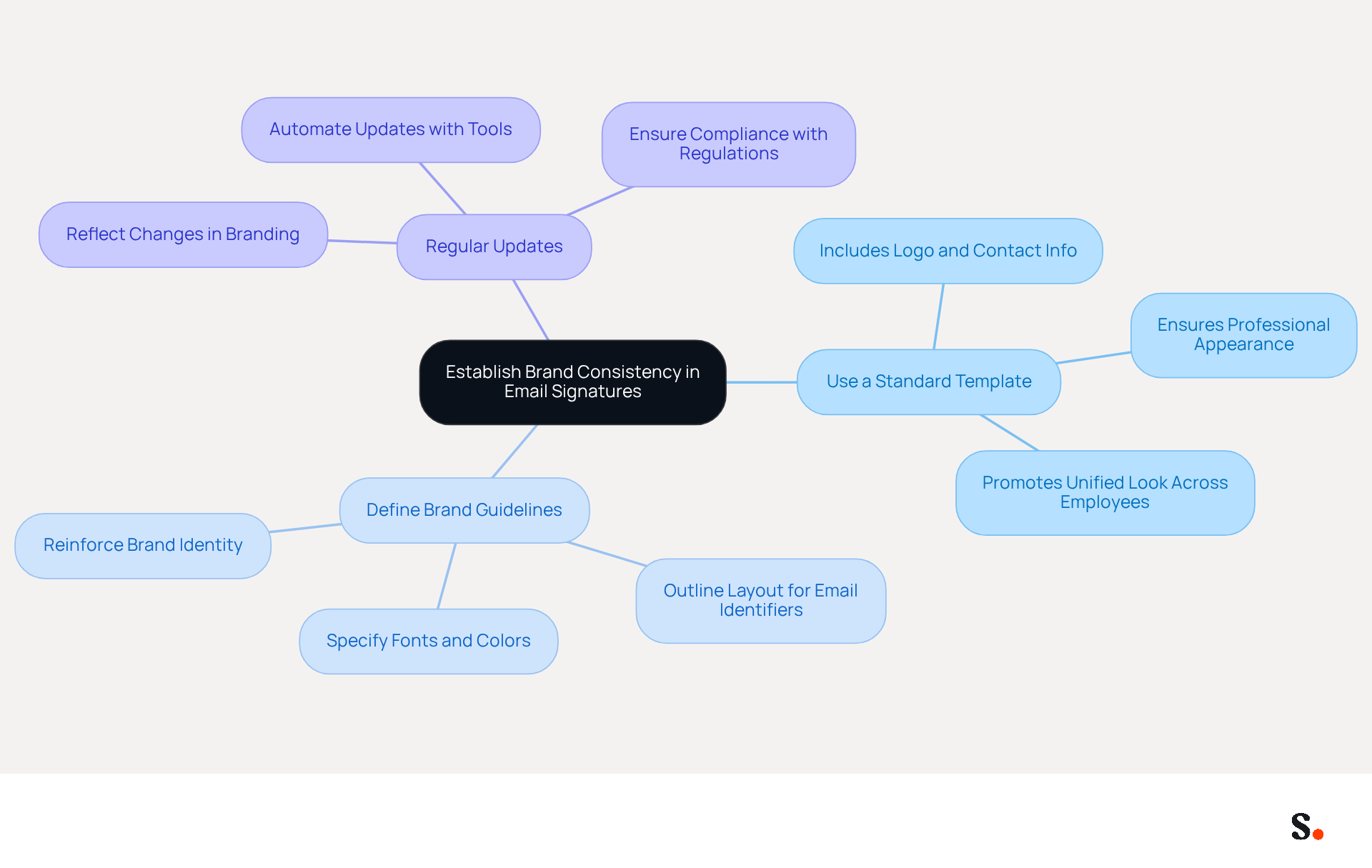
To enhance brand recognition and trust, establishing consistency in digital footers is crucial. It is essential to incorporate key elements such as your logo, colors, and fonts. A consistent format for all employees promotes a unified appearance, improving recognition of the company. Here are some best practices:
- Use a Standard Template: Develop a template that includes your logo, company name, and contact information. This guarantees that every message sent from your organization retains a professional look, contributing to a consistent corporate image.
- Define Brand Guidelines: Create clear guidelines specifying the fonts, colors, and layout for email identifiers. This helps maintain a consistent look and feel, reinforcing identity across all communications.
- Regular Updates: Periodically review and refresh identifiers to reflect any changes in branding or contact information. Automating this process with tools like Scribe enables rapid updates throughout the organization, ensuring that all approvals remain up-to-date and consistent with corporate standards.
Implementing gmail personal email signature templates can enhance brand recognition and trust. Studies indicate that teams utilizing centralized management for their communication identifiers experience an 85% increase in brand consistency, which can lead to improved customer trust and loyalty. Moreover, effective digital identifiers can enhance engagement, with strategic CTAs converting 40% more effectively than generic links. This shows that electronic footers should be seen as more than just contact details; they are powerful marketing tools that reinforce brand identity with every message.
Incorporate Engaging Design Elements
Many email signatures fail to capture attention, leading to missed opportunities for engagement. To make email signatures more engaging, consider the following design elements:
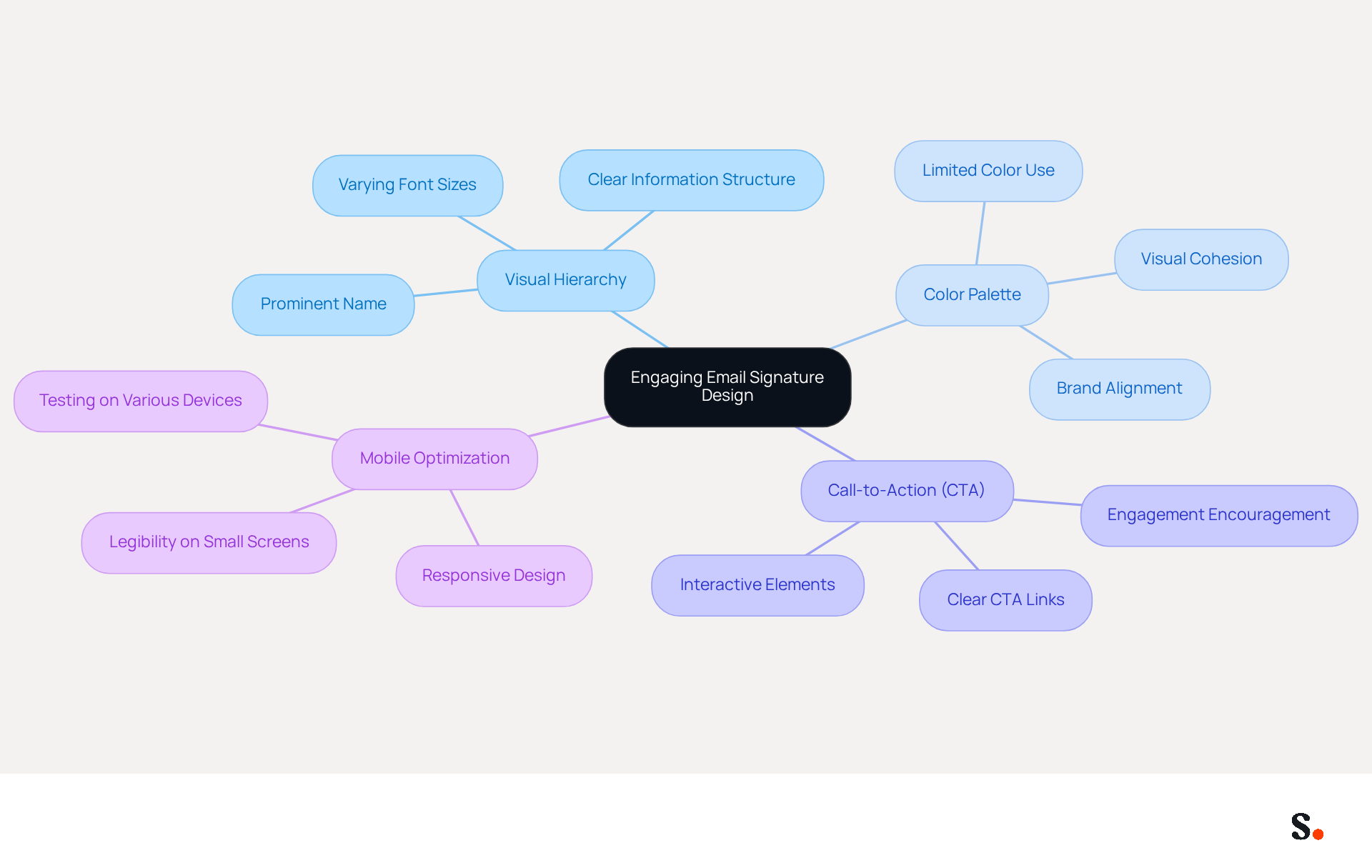
- Visual Hierarchy: Use varying font sizes and weights to create a clear hierarchy of information. Your name should be the most prominent, followed by your title and contact details.
- Color Palette: Stick to a limited color palette that aligns with your identity. This not only improves aesthetics but also ensures that the mark is visually cohesive.
- Call-to-Action (CTA): Include a clear CTA, such as a link to your latest blog post or a promotional offer. This encourages recipients to engage further with your brand.
- Mobile Optimization: Ensure that your email footer appears well on mobile devices. Test the design on various screen sizes to confirm that it remains legible and visually appealing.
Incorporating these design elements helps you craft digital identifiers that not only share key information but also truly engage your recipients. Without these design elements, your email signature may not achieve its full potential in engaging recipients.
Integrate with Existing Tools for Seamless Management
Effective management of email signatures is crucial for maintaining brand consistency and professional communication.
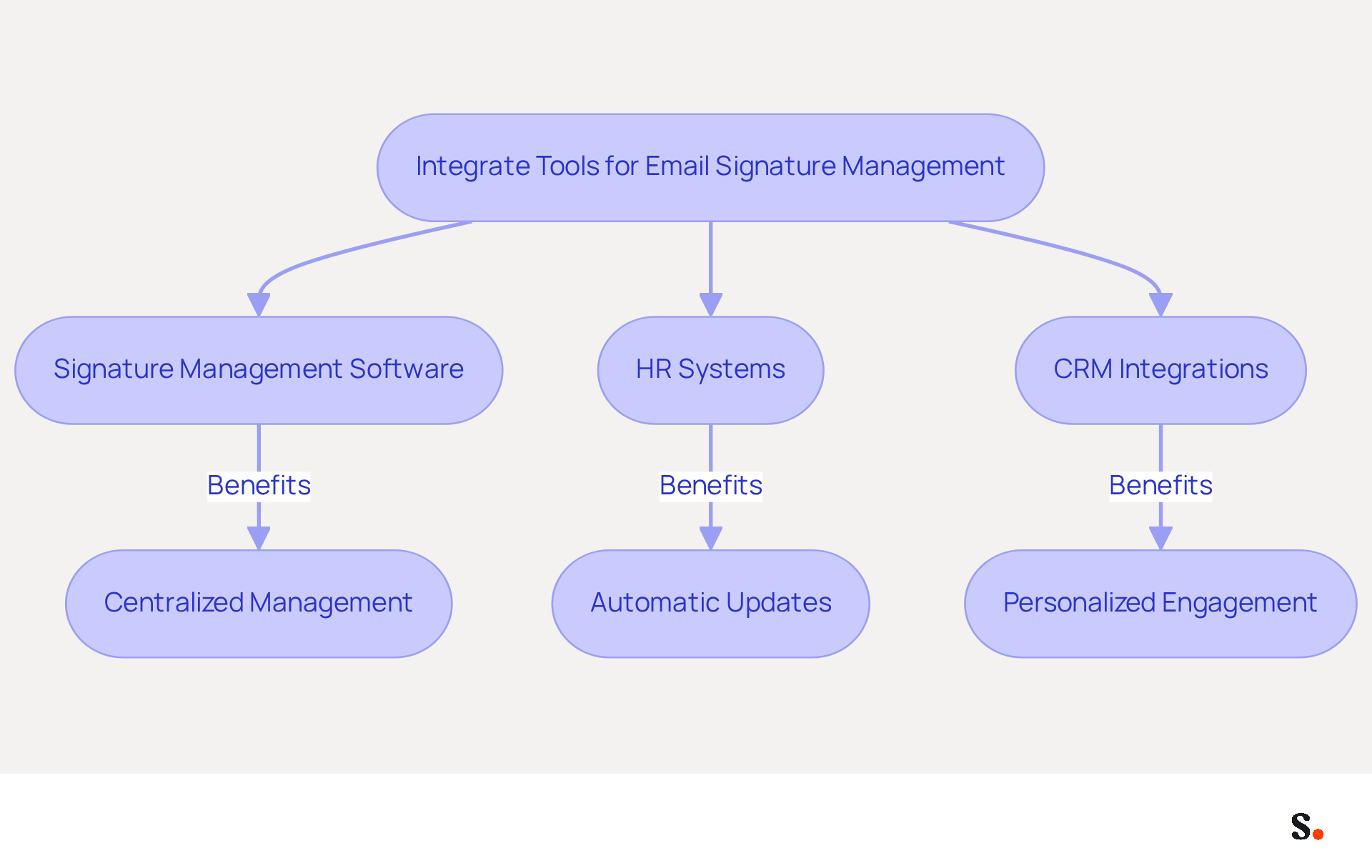
- Utilize Signature Management Software: Platforms like Scribe facilitate centralized management of email signatures across your organization. This allows updates to occur in one place, ensuring all employee identifiers reflect changes and enhancing brand consistency. Any modifications made in your Google Workspace, such as relocating teammates or updating their details, are automatically synchronized, conserving time and ensuring precision. Furthermore, Scribe's SOC 2 Type II compliance and adherence to GDPR and CCPA guarantee that your management of electronic signatures meets security and legal standards.
- Connect with HR Systems: Integrating your management of signatures with HR systems ensures that they are automatically updated when employee information changes, such as job titles or contact details. This integration helps ensure that information stays current and meets legal standards, including necessary disclaimers based on geography and industry.
- Utilize CRM Integrations: If your organization uses a CRM, ensure that your tool for managing identities can directly extract data from it. This capability enables personalized markings that can incorporate relevant information about leads or clients, significantly enhancing engagement. For example, organizations utilizing AI-driven communication solutions report a 20% increase in click-through rates, showcasing the effectiveness of personalized content. Moreover, Scribe's custom banners have an average click-through rate of 12%, highlighting the importance of personalization in enhancing engagement.
By integrating these tools, including Scribe's automated synchronization with Google Workspace and Aircall, you streamline the management of digital identifiers, ensuring they remain up-to-date and consistent, which is crucial for maintaining professional communication and maximizing marketing opportunities. Ultimately, these integrations can transform your organization's communication strategy and enhance marketing effectiveness.
Measure Effectiveness and ROI of Email Signatures
To accurately assess the impact and ROI of your email signatures, implementing targeted strategies is essential:
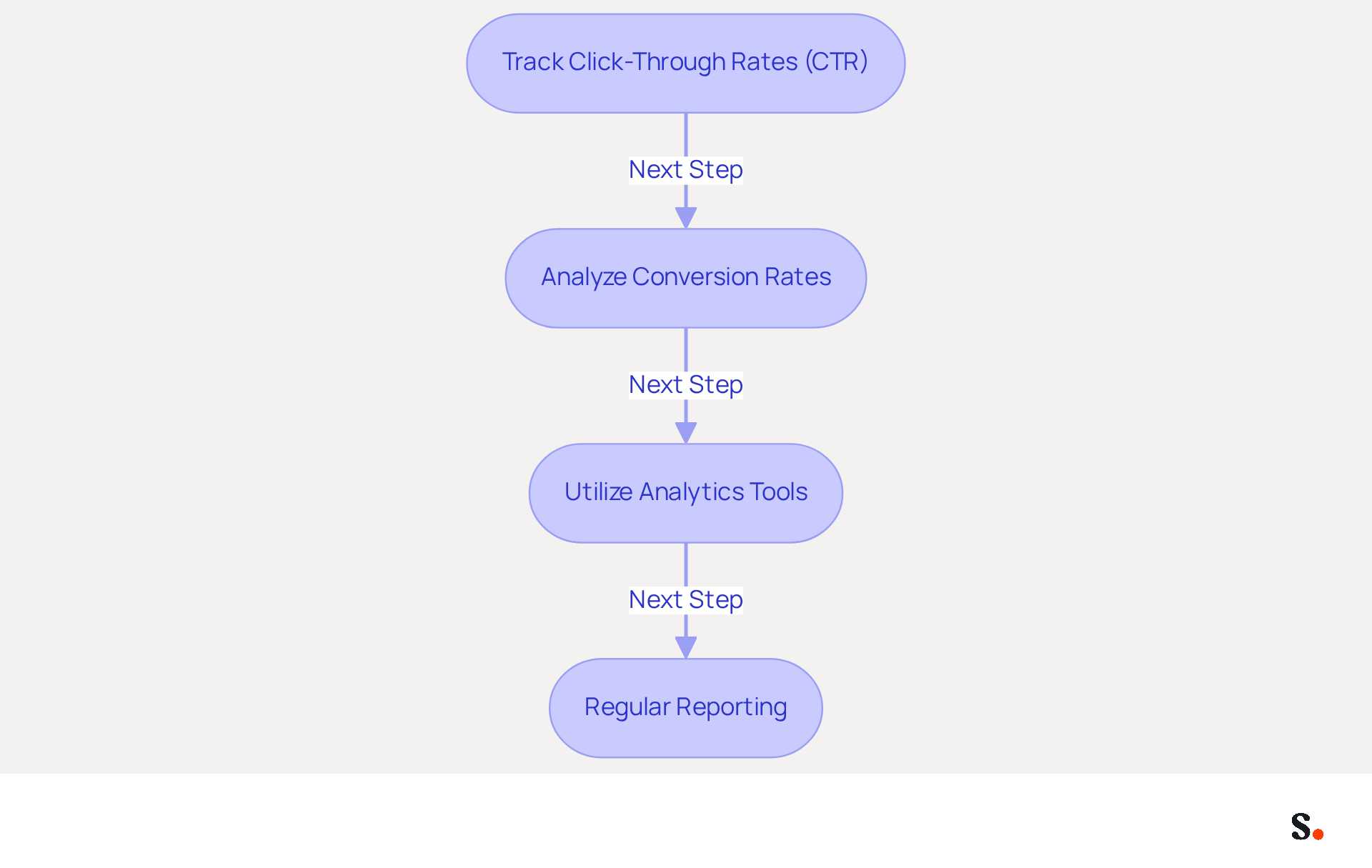
- Track Click-Through Rates (CTR): Utilize UTM parameters to monitor clicks on links within your email signatures. This method helps gauge recipient engagement with your calls to action (CTAs), offering valuable insights into user interaction. Notably, Scribe reports an average click-through rate of 12% on banners, underscoring the impact of effective branding.
- Analyze Conversion Rates: Keep track of how many clicks result in desired actions, such as newsletter sign-ups or purchases. Evaluating the effectiveness of your message footer can be challenging, but tracking conversion rates simplifies this process. Scribe's conversion tracking features can connect engagement directly to revenue, offering a clearer view of your marketing ROI.
- Utilize Analytics Tools: For instance, this platform provides integrated analytics that help you monitor key engagement metrics, enabling informed decision-making based on real data. Additionally, Scribe's ROI calculator tools can help estimate lead generation and time savings, further enhancing your strategy.
- Regular Reporting: Establish a routine for generating reports that analyze trends over time. Focusing on these metrics not only enhances digital branding but also significantly boosts marketing effectiveness and ROI. Prioritizing email signatures can transform your communication strategy and significantly enhance customer engagement.
Conclusion
Effective Gmail personal email signature templates are crucial for establishing a strong brand presence in digital communications. Organizations can enhance their email signatures by ensuring brand consistency, incorporating engaging design elements, and integrating seamlessly with existing tools. This approach transforms email signatures into powerful marketing assets that reflect their identity and values.
It's essential to adopt key practices, such as:
- Using a standard template
- Defining brand guidelines
- Regularly updating signatures to maintain relevance
Incorporating engaging design elements like visual hierarchy, a cohesive color palette, and clear calls to action can significantly improve recipient engagement. Furthermore, leveraging tools like Scribe for centralized management ensures that email signatures remain consistent and compliant with security standards, such as SOC 2 Type II, GDPR, and CCPA.
Ultimately, well-designed email signatures do more than provide contact information; they play a critical role in marketing strategies. By measuring effectiveness through click-through rates and conversion tracking, organizations can gain valuable insights into their communication efforts. Organizations that prioritize these strategies will not only enhance their brand visibility but also foster deeper connections with their audience.
Frequently Asked Questions
Why is brand consistency in email signatures important?
Brand consistency in email signatures enhances brand recognition and trust, promoting a unified appearance that improves recognition of the company.
What key elements should be included in email signatures for brand consistency?
Key elements include your logo, company name, colors, and fonts.
What is a recommended practice for creating email signatures?
It is recommended to use a standard template that includes your logo, company name, and contact information to ensure a professional look.
How can brand guidelines help in maintaining email signature consistency?
Brand guidelines specify the fonts, colors, and layout for email identifiers, helping to maintain a consistent look and feel across all communications.
How often should email signatures be updated?
Email signatures should be periodically reviewed and refreshed to reflect any changes in branding or contact information.
What tools can assist in managing email signature updates?
Tools like Scribe can automate the process of updating email signatures, ensuring that all approvals remain up-to-date and consistent with corporate standards.
What impact does centralized management of email signatures have on brand consistency?
Centralized management can lead to an 85% increase in brand consistency, which can improve customer trust and loyalty.
How can effective digital identifiers enhance engagement?
Effective digital identifiers can enhance engagement, with strategic calls-to-action (CTAs) converting 40% more effectively than generic links.
What role do email signatures play in marketing?
Email signatures should be viewed as powerful marketing tools that reinforce brand identity with every message, not just as contact details.
List of Sources
- Establish Brand Consistency in Email Signatures
- Why Email Signatures Must Be In Your 2026 Marketing Plan | Rocketseed (https://rocketseed.com/blog/what-are-the-biggest-email-trends-for-2026)
- Email Signature Best Practices for 2026 (+ 15 Pro Examples) (https://wavecnct.com/blogs/email-signature-best-practices-2026)
- Top 10+ best practices for email signatures design in 2026 (https://mysignature.io/blog/email-signature-best-practices)
- How to manage brand consistency in email marketing - Emma (https://myemma.com/blog/how-to-manage-brand-consistency-in-email-marketing)
- The Power of Brand Cohesion in Email Marketing Strategy | Mailjet (https://mailjet.com/blog/marketing/brand-cohesion)
- Incorporate Engaging Design Elements
- Email Design Trends and Best Practices in 2026 | Mailjet (https://mailjet.com/blog/email-best-practices/email-design-trends)
- Email Signature Trends 2026: What Designers Are Actually Using (https://markaplugin.com/blog/email-signature-trends-2026)
- Top email signature trends for companies in 2026 (https://bybrand.io/blog/trends-email-signatures)
- Email signature statistics: Why every business should optimize their email signatures — Stripo.email (https://stripo.email/blog/email-signature-statistics-why-every-business-should-optimize-their-email-signatures)
- "Email Signature Trends for 2026: What's In, What's Out" | Crossware posted on the topic | LinkedIn (https://linkedin.com/posts/crossware-ltd_new-year-new-trends-even-for-your-email-activity-7394554686046908416-vD_O)
- Integrate with Existing Tools for Seamless Management
- Email signature statistics and trends in 2024 (https://wisestamp.com/blog/email-signature-statistics)
- Top Software Integrations to Supercharge Your Email Signature Management (https://mysignature.io/blog/software-for-email-signature-management)
- Email signature statistics: Why every business should optimize their email signatures — Stripo.email (https://stripo.email/blog/email-signature-statistics-why-every-business-should-optimize-their-email-signatures)
- 40+ Email Signature Statistics for 2026 (Data + Insights) (https://wavecnct.com/blogs/email-signature-statistics)
- Exclaimer launches Workday integration to reduce risk and manual effort in high-volume digital communications (https://globenewswire.com/news-release/2026/04/16/3275116/0/en/exclaimer-launches-workday-integration-to-reduce-risk-and-manual-effort-in-high-volume-digital-communications.html)
- Measure Effectiveness and ROI of Email Signatures
- Research Recap: Branded Email Signatures Increase Company Recognition, Trust - Demand Gen Report (https://demandgenreport.com/industry-news/research-recap-branded-email-signatures-increase-company-recognition-trust/47252)
- Best Practices for a Standard Email Signature That Boosts Marketing ROI (https://scribe-mail.com/en-US/blog/best-practices-for-a-standard-email-signature-that-boosts-marketing-roi)
- What are good open rates, CTRs, & CTORs for email campaigns? (https://campaignmonitor.com/resources/knowledge-base/what-are-good-email-metrics)
- Boost Your Marketing ROI with Personalized Email Signatures (https://exclaimer.com/blog/maximizing-marketing-roi-personalized-email-signatures)
- The 5 key metrics to measure the ROI of your email signatures (https://signitic.com/en/resources/the-5-key-metrics-to-measure-the-roi-of-your-email-signatures)
Get started with Scribe
Build a professional email signature
Free 14-day trial — no credit card.