Best Practices for Using E Signature Platforms in Marketing
As businesses increasingly adopt digital communication, the reliance on electronic signatures raises critical questions about compliance and security. By
Sophie Grant
Email Signature Specialist, Scribe
On this page
Introduction
As businesses increasingly adopt digital communication, the reliance on electronic signatures raises critical questions about compliance and security. By leveraging e-signature platforms, organizations can streamline their workflows, enhance brand consistency, and drive lead generation. However, navigating the complexities of compliance and security can be daunting for many marketing teams. Failure to address these challenges can lead to significant reputational damage and legal repercussions.
How can marketing teams harness the full potential of e-signatures while ensuring they meet legal standards and maintain customer trust?
Understand the Fundamentals of Electronic Signatures
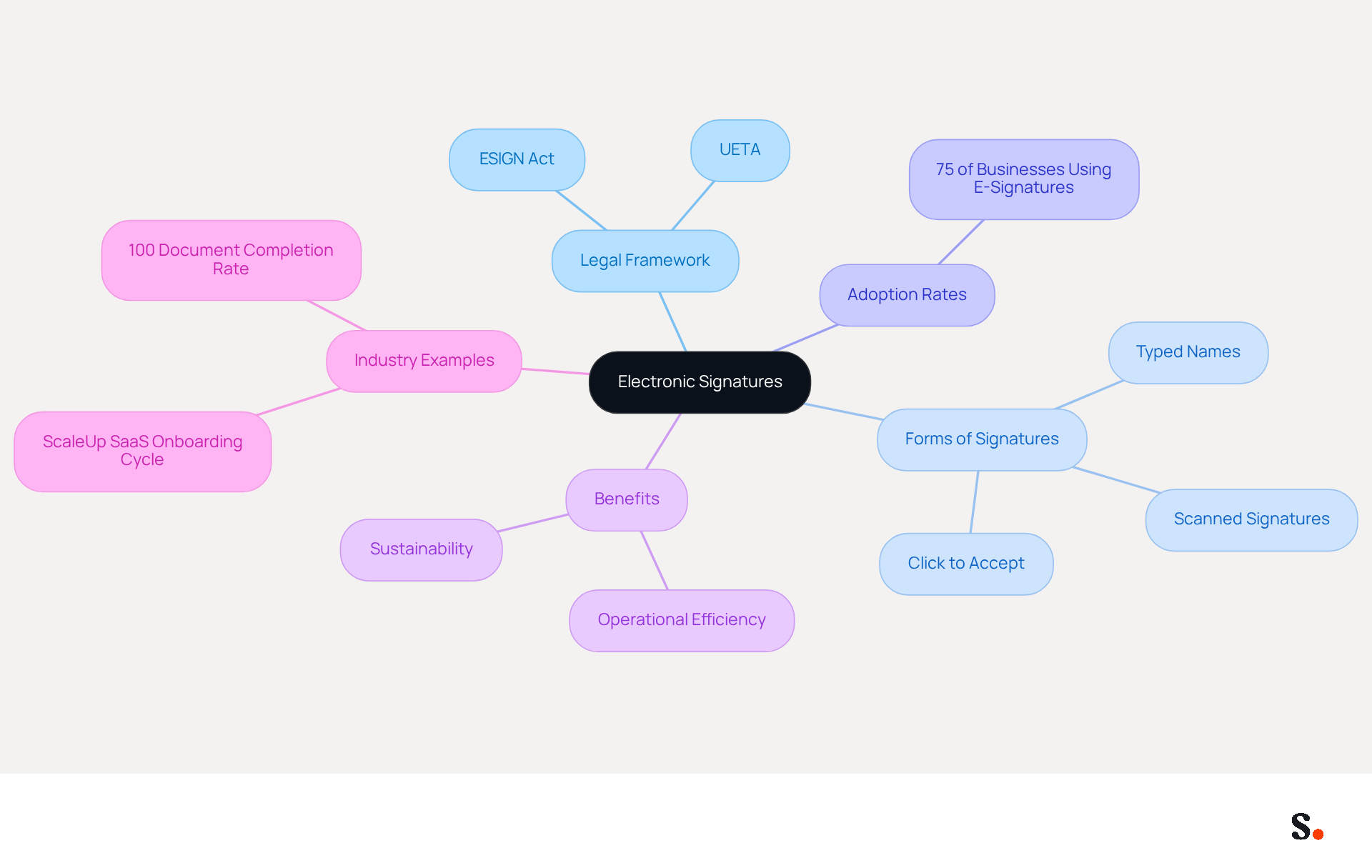
Digital affirmations serve as crucial confirmations of an individual's intent to accept document terms, impacting legal enforceability. They can take various forms, such as typed names, scanned signatures, or even a simple click to accept terms. It is essential to understand the legal framework for digital signatures, as they are legally binding in many jurisdictions when they meet criteria set by laws like the ESIGN Act and UETA. Without compliance, businesses risk facing legal disputes that could jeopardize their agreements.
The adoption of digital signatures has surged, with approximately 75% of businesses utilizing them to streamline workflows and significantly reduce paper usage. This shift leads to improved operational efficiency and supports sustainability initiatives. Legal experts emphasize that e-signatures, when executed correctly, hold the same weight as traditional marks, reinforcing their validity in legal contexts. For example, the audit trail produced by e-signature platforms often offers a more definitive record than handwritten signatures, further reinforcing their dependability.
Many industries have successfully implemented digital signature processes, showcasing their effectiveness. Organizations like ScaleUp SaaS have reported a 75% faster onboarding cycle and a 100% document completion rate after integrating e-signature platforms. These examples illustrate the transformative impact of e-signatures on business operations, making them an invaluable tool in today's digital landscape. By syncing Google Workspace with Scribe, marketing teams can save time and ensure that their email details are always current. This integration enables automatic updates of teammates' information, such as job positions, and removes the need for manual entry, thereby improving the overall efficiency of email management. Additionally, Scribe's adherence to security standards such as SOC 2 Type II, GDPR, and CCPA further establishes trust in the e-signature process. Ultimately, the integration of digital signatures not only streamlines processes but also fortifies legal standing in an increasingly digital world.
Leverage E-Signatures for Brand Consistency and Lead Generation
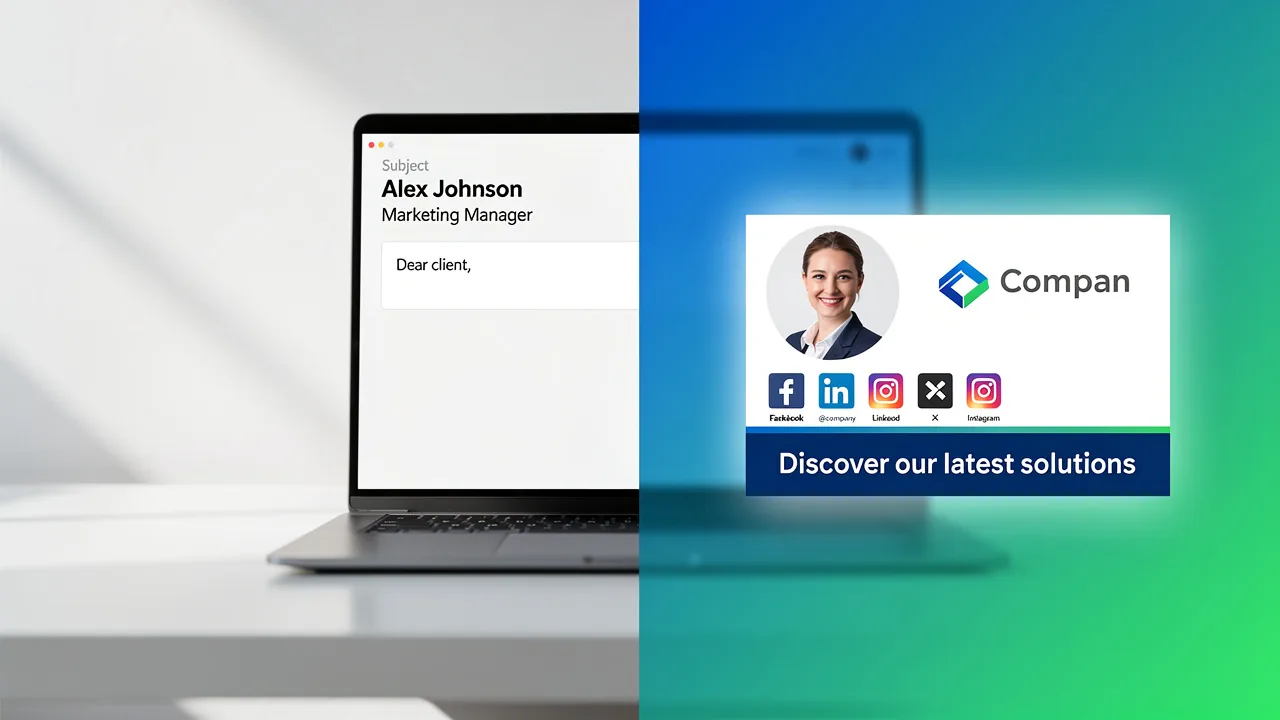
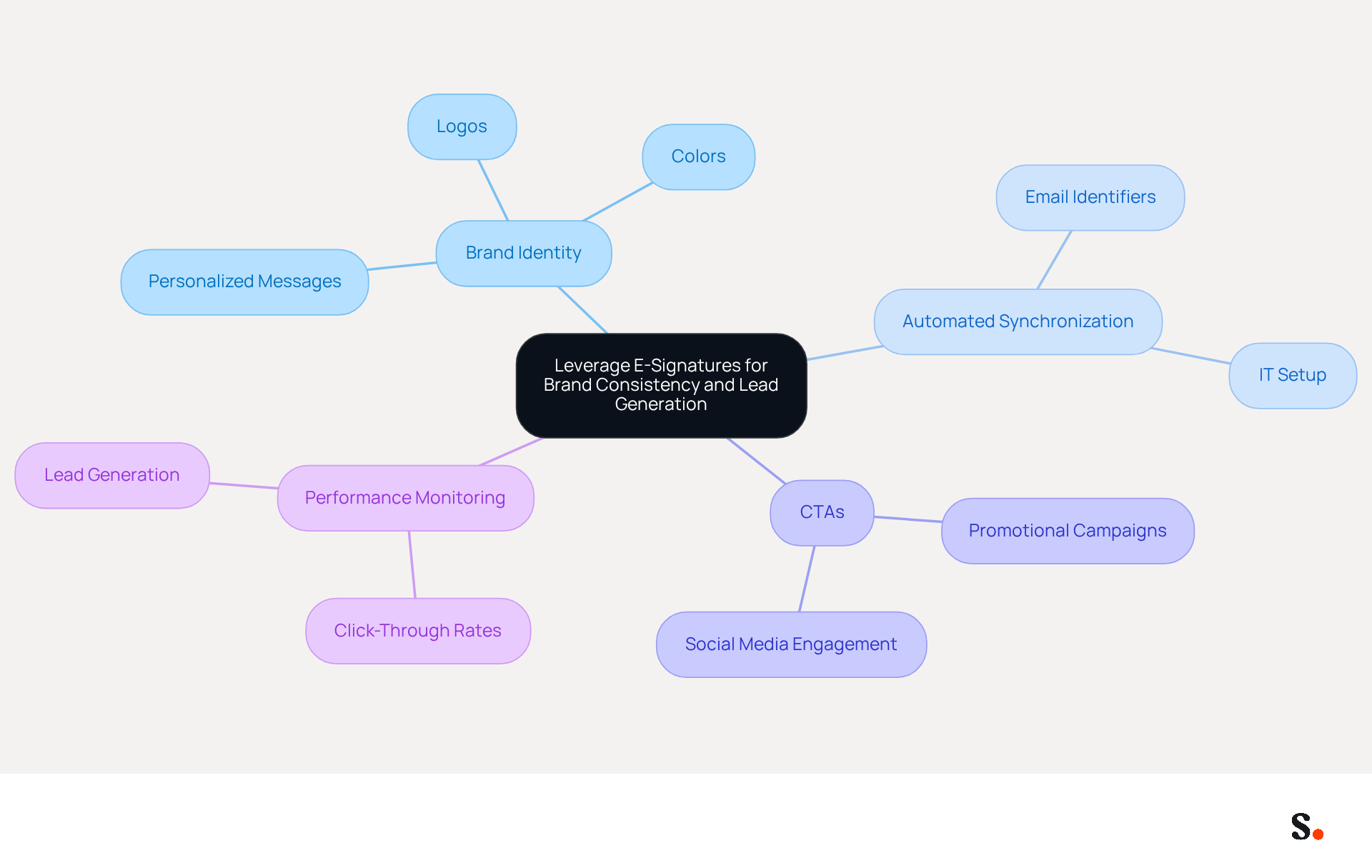
Maintaining a consistent brand identity across all communications can be a challenge for businesses, but e-signatures offer a solution. E-signature platforms serve as a dynamic extension of your brand identity, allowing businesses to incorporate branded elements such as logos, colors, and personalized messages into their templates. This ensures consistency in communications while reinforcing brand recognition and building trust with recipients.
With Scribe's automated synchronization of email identifiers, any modifications made in your Aircall setup will be promptly reflected, ensuring that your brand stays consistent across all platforms. Furthermore, Scribe's unique positioning enables marketing teams to manage email signatures independently after the initial IT setup, providing greater control and flexibility.
By strategically embedding calls-to-action (CTAs) within e-signature platforms, companies can effectively drive traffic to landing pages, promote special offers, or encourage engagement on social media. For example, a simple link in an e-signature can lead to a promotional campaign, transforming every signed document into a valuable marketing opportunity.
Research shows that marketing identifiers with resource downloads can generate five times more Marketing Qualified Leads (MQLs) compared to generic CTAs, emphasizing the potential of well-placed CTAs. Additionally, Scribe's signature banners boast an average click-through rate of 12%, further underscoring their effectiveness. Monitoring the performance of these links allows businesses to assess the effectiveness of their digital signing marketing efforts, facilitating data-driven modifications to strategies and enhancing lead generation potential.
Ultimately, leveraging Scribe's capabilities can transform every email interaction into a strategic marketing opportunity, enhancing both brand visibility and lead generation.
Select and Implement the Right E-Signature Platform
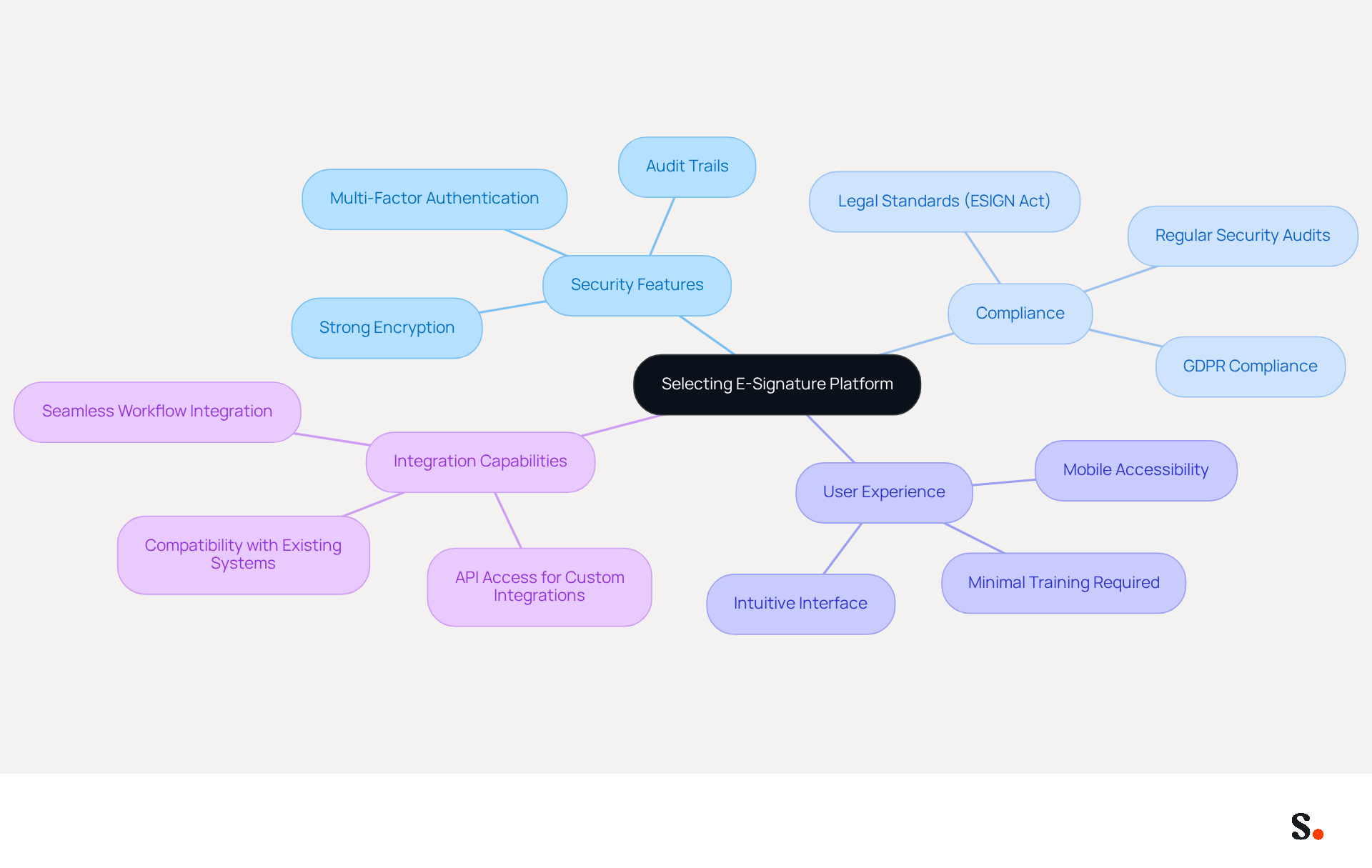
When selecting e signature platforms, businesses encounter critical decisions that can affect their operational efficiency and compliance. They must prioritize several essential factors:
- Security features
- Compliance with legal standards
- User experience
- Integration capabilities with existing systems
Strong encryption and multi-factor authentication are essential for protecting sensitive information, and a clear audit trail helps maintain document integrity. Compliance with regulations such as the ESIGN Act is crucial, as it guarantees that e-signatures are legally binding in most jurisdictions.
User experience plays a significant role in adoption; platforms that are intuitive and easy to navigate encourage greater usage among employees. Additionally, seamless integration with existing tools, such as Google Workspace, Salesforce, or document management software, can streamline workflows and enhance productivity. Scribe excels by providing automated email management that syncs with your HRIS, keeping teammates' information current without any extra effort.
Organizations that embrace e signature platforms will enhance their operational efficiency and remain competitive, potentially saving around 300 labor hours each month. As of 2026, failing to adopt e signature platforms may result in significant operational inefficiencies, making the evaluation of these features more critical than ever. Lastly, consider the importance of mobile accessibility, as around 70% of e-signatures are completed on mobile devices, making it essential for platforms to support mobile-friendly features. Scribe's SOC 2 Type II compliance also ensures that your data is handled securely, providing peace of mind for organizations concerned about data safety. Without embracing these advancements, organizations may find themselves at a competitive disadvantage in the near future.
Ensure Compliance and Security in E-Signature Implementation
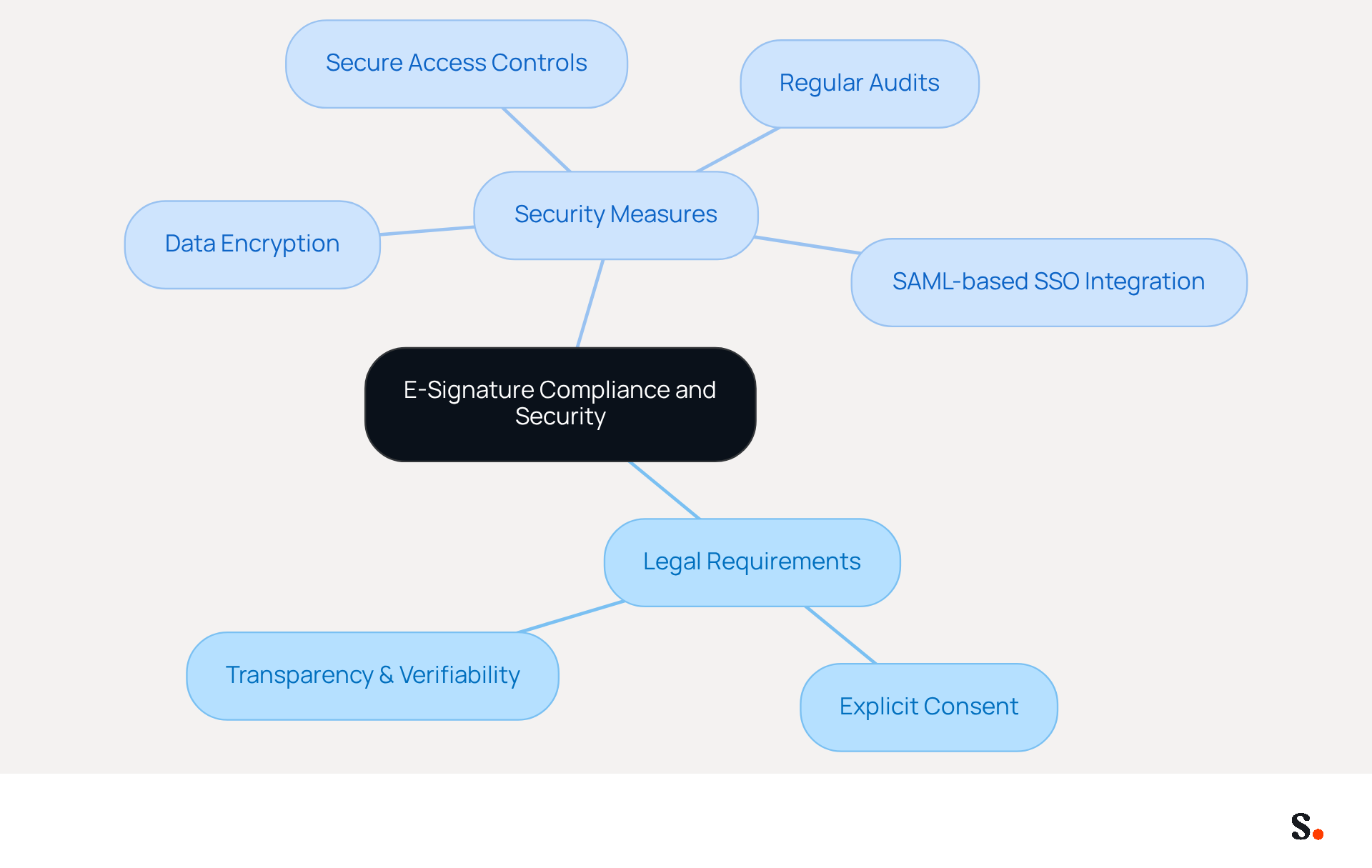
Understanding the legal landscape of e-signature platforms is essential for businesses to ensure compliance and security in their implementation of digital signatures. Businesses must first grasp the legal requirements governing e-signature platforms in their jurisdiction, which includes:
- Obtaining explicit consent from all parties involved
- Ensuring that the process on these e-signature platforms is transparent and verifiable
To protect sensitive information, businesses must implement robust security measures, including:
- Data encryption
- Secure access controls
- Regular audits
The platform enhances these security measures by offering SAML-based Single Sign-On (SSO) integration, allowing employees to access it through their identity provider, which streamlines secure access management. Scribe's commitment to compliance is evident through its GDPR adherence and SOC 2 Type II certification, which demonstrate its dedication to stringent data handling practices.
Businesses should maintain comprehensive records of all signed documents and the associated consent to demonstrate compliance with legal standards. Regular training for employees on the importance of e-signature security and compliance can further mitigate risks and enhance overall organizational awareness. By prioritizing e-signature platforms for security and compliance, businesses can protect sensitive information and build trust with their stakeholders.
Conclusion
In a landscape where brand consistency is paramount, embracing e-signature platforms is no longer optional for modern marketing strategies. Integrating digital signatures into marketing efforts helps organizations streamline processes and build a cohesive brand identity that resonates with customers. The ability to manage email signatures independently through platforms like Scribe empowers marketing teams to maintain control over their communications, ensuring that every interaction reflects the brand's values and messaging.
Understanding the critical factors in choosing the right e-signature platform is essential for maximizing its impact on marketing efforts. Organizations must prioritize features such as:
- Robust encryption
- Legal compliance
- Seamless integration with existing tools
to enhance the effectiveness of their e-signature solutions. Scribe's adherence to SOC 2 Type II standards and GDPR compliance further reinforces its reliability, making it a trusted choice for businesses looking to improve operational efficiency while safeguarding sensitive information.
When implemented strategically, e-signatures can turn everyday communications into significant marketing opportunities. By leveraging the capabilities of platforms like Scribe, organizations can not only improve their workflow efficiency but also significantly boost their marketing ROI. As businesses adapt to the digital age, those who leverage e-signature solutions will not only enhance their operational efficiency but also position themselves for sustained growth and success.
Frequently Asked Questions
What are electronic signatures and why are they important?
Electronic signatures are digital affirmations that confirm an individual's intent to accept document terms. They are crucial for legal enforceability and can take various forms, such as typed names, scanned signatures, or clicks to accept terms.
Are electronic signatures legally binding?
Yes, electronic signatures are legally binding in many jurisdictions when they comply with laws like the ESIGN Act and UETA. Non-compliance can lead to legal disputes that jeopardize agreements.
How has the adoption of electronic signatures impacted businesses?
Approximately 75% of businesses have adopted electronic signatures to streamline workflows and reduce paper usage, leading to improved operational efficiency and support for sustainability initiatives.
Do electronic signatures hold the same legal weight as traditional signatures?
Yes, when executed correctly, electronic signatures hold the same legal weight as traditional handwritten signatures, and the audit trail from e-signature platforms often provides a more definitive record.
Can you provide examples of industries benefiting from electronic signatures?
Many industries have successfully implemented electronic signature processes. For instance, ScaleUp SaaS reported a 75% faster onboarding cycle and a 100% document completion rate after integrating e-signature platforms.
How does Scribe enhance the use of electronic signatures?
By syncing Google Workspace with Scribe, marketing teams can save time and ensure that email details are current, with automatic updates of teammates' information, improving email management efficiency.
What security standards does Scribe adhere to?
Scribe adheres to security standards such as SOC 2 Type II, GDPR, and CCPA, which helps establish trust in the electronic signature process.
What are the overall benefits of integrating electronic signatures into business operations?
Integrating electronic signatures streamlines processes, improves operational efficiency, and fortifies legal standing in an increasingly digital world.
List of Sources
- Understand the Fundamentals of Electronic Signatures
- The Complete Digital Signature Compliance Guide for 2026 - eSignHub Blog (https://esignhub.io/blog/digital-signature-compliance-guide-2026)
- New U.S. Senate Bill Proposes Digital Signatures to Protect Sensitive Court Orders (https://digicert.com/blog/new-senate-bill-proposes-digital-signatures-for-sensitive-court-documents)
- eSignature: Sign Documents Online Free | eSignly (https://esignly.com/electronic-signature/here-s-how-electronic-signature-legally-binding.html)
- Electronic Signatures in 2026: Regulations and Best Practices | MinuteBox (https://minutebox.com/blog/electronic-signatures-regulations-and-best-practices)
- New USCIS Signature Rule Takes Effect July 10, 2026: How to Sign Immigration Forms Correctly and Avoid a Costly Denial - Reddy Neumann Brown PC (https://rnlawgroup.com/new-uscis-signature-rule-takes-effect-july-10-2026-how-to-sign-immigration-forms-correctly-and-avoid-a-costly-denial)
- Leverage E-Signatures for Brand Consistency and Lead Generation
- Using Email Signatures for Marketing | CloudM (https://cloudm.io/resources/blog/using-email-signatures-for-marketing-how-every-email-can-boost-your-brand)
- Why Email Signatures Must Be In Your 2026 Marketing Plan | Rocketseed (https://rocketseed.com/blog/2026-marketing-plan-email-signatures)
- Email Signature Best Practices for 2026 (+ 15 Pro Examples) (https://wavecnct.com/blogs/email-signature-best-practices-2026)
- Why Team Email Signatures Matter More Than You Think: The Hidden Impact on Brand Trust and Customer Experience (https://getmailbird.com/why-team-email-signatures-matter-brand-trust)
- What is email signature marketing? Complete B2B efinition (2026) (https://signitic.com/en/resources/what-is-email-signature-marketing-a-complete-definition-for-b2b-teams)
- Select and Implement the Right E-Signature Platform
- Electronic signature: key to the digital future in 2026 (https://legallymail.com/en/blog/electronic-signature-key-to-the-digital-future-in-2026)
- E-Signature Trends in 2026: What U.S. Businesses Need to Know | WeSignature (https://wesignature.com/guides/e-signature-trends-2026)
- 8 best electronic signature software in 2026 (Tested & Compared) (https://getaccept.com/blog/best-electronic-signature-software)
- Best E-signature Software for Your Business in 2026 (https://yousign.com/blog/best-e-signature-software-business-2025)
- E-Signature SaaS: How to Choose the Right Platform in 2026 (https://zignt.com/blog/e-signature-saas-guide-2026)
- Ensure Compliance and Security in E-Signature Implementation
- Electronic Signatures in 2026: Regulations and Best Practices | MinuteBox (https://minutebox.com/blog/electronic-signatures-regulations-and-best-practices)
- 10 Ways to Leverage Digital Signatures for Industry-Specific Compliance Challenges in 2026 (https://zignature.io/blog/10-ways-to-leverage-digital-signatures-for-industry-specific-compliance-challeng)
- Best practices for eSignatures: Legally binding and secure (https://acronis.com/en/blog/posts/best-practices-for-e-signature)
- Can E-Signatures Be Used Under HIPAA Rules? 2026 Update (https://hipaajournal.com/can-e-signatures-be-used-under-hipaa-rules-2345)
- AI Act & E-Signatures: EU Compliance Requirements 2026 (https://yousign.com/blog/ai-act-e-signatures-compliance-requirements-eu)
Get started with Scribe
See why teams switch to Scribe
Free 14-day trial — no credit card.