Casual vs. Formal Email Sign-Offs for Students: Key Differences Explained
For students, the challenge of navigating email communication often begins with the critical choice of sign-off. This article will clarify the key differences
Sophie Grant
Email Signature Specialist, Scribe

Introduction
For students, the challenge of navigating email communication often begins with the critical choice of sign-off. This article will clarify the key differences between casual and formal email sign-offs, emphasizing their significance in various contexts and the potential consequences of missteps.
How can students ensure their sign-offs reflect the appropriate tone and professionalism, ultimately enhancing their communication effectiveness?
Define Casual and Formal Email Sign-Offs
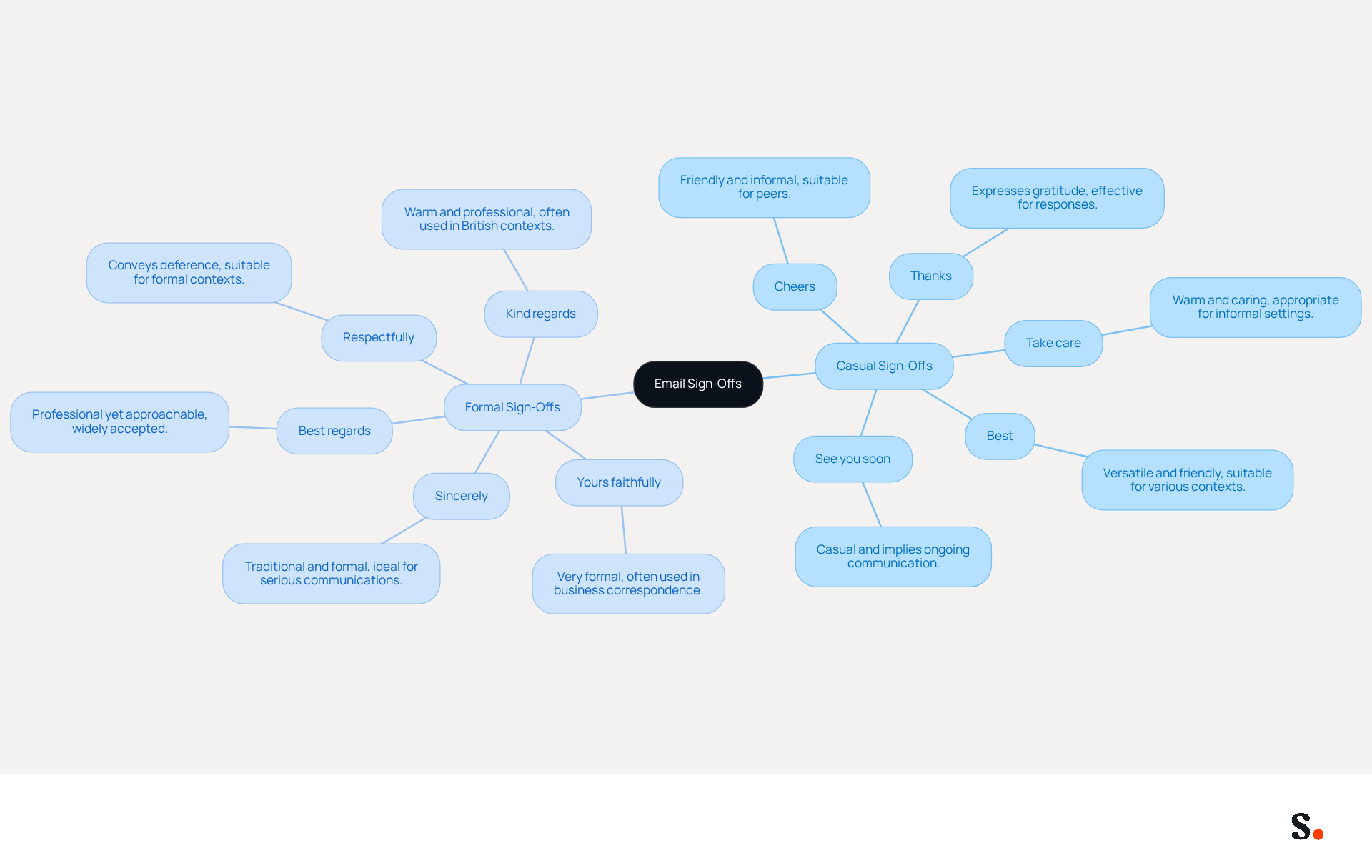
Understanding the nuances of email sign-offs for students is vital for effective communication in both casual and professional contexts. Casual phrases are informal expressions used to conclude messages in a friendly manner. Examples include 'Cheers,' 'Thanks,' and 'Take care.' These approvals are typically used among peers, friends, or in relaxed environments where a friendly tone is appropriate. A case study, 'Networking and Follow-Up Closures,' highlighted that casual closures, such as 'Cheers,' can foster ongoing communication and strengthen relationships.
In contrast, structured email sign-offs for students convey professionalism and respect, often utilized in business or academic environments. Common official closings include 'Sincerely,' 'Best regards,' and 'Respectfully.' These phrases can serve as effective email sign-offs for students when interacting with superiors, professors, or in situations where maintaining a professional demeanor is essential. Research indicates that official closings tend to generate higher response rates, with gratitude-based closings like 'Thanks' or 'Thank you' outperforming neutral alternatives, reinforcing their significance in effective communication.
Understanding the distinctions between casual and professional email sign-offs for students is essential. Casual farewells are best reserved for familiar relationships, while formal closings should be employed in more serious or professional interactions. Recent studies reveal an increasing trend toward the acceptance of informal closings in specific professional contexts, particularly among younger professionals. However, the choice of sign-off should always align with the message's tone and the relationship with the recipient to ensure clarity and effectiveness. Avoiding excessively informal closings in professional correspondence is essential for upholding professionalism. Ultimately, the choice of sign-off can significantly impact the recipient's perception and response.
Evaluate Contexts for Casual vs. Formal Sign-Offs
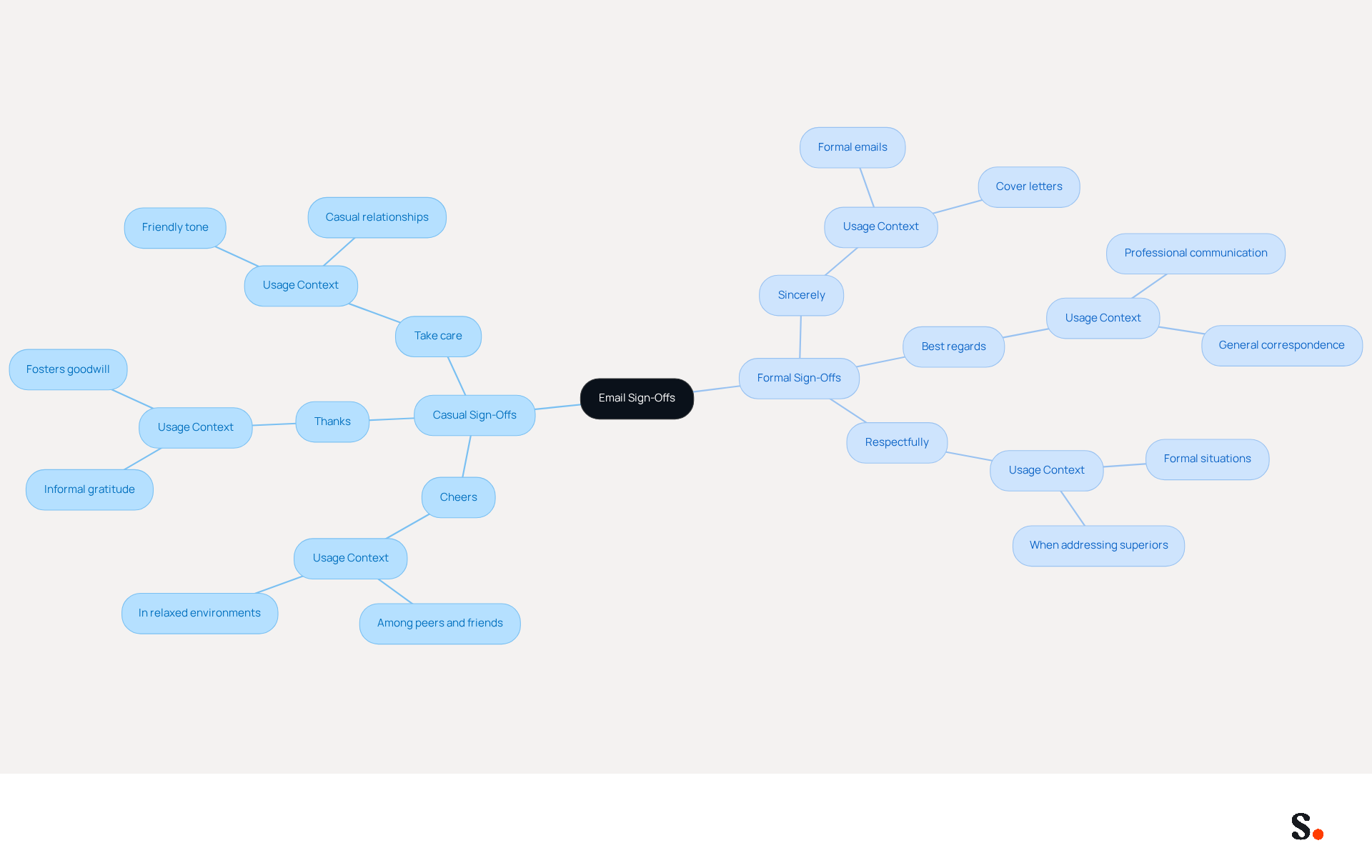
Choosing the appropriate email sign-offs for students is crucial for effective communication, as it sets the tone for your message and reflects your relationship with the recipient. Informal closings are most appropriate for casual interactions, such as messages to friends, classmates, or coworkers with whom one shares a friendly connection. For example, if you're emailing a peer about a group project, saying 'Cheers' or 'Talk soon' feels just right.
In contrast, email sign-offs for students are essential in professional or academic contexts, where respect and professionalism are paramount. When emailing a professor, prospective employer, or during official business interactions, phrases like 'Sincerely' or 'Best regards' convey respect and professionalism, ensuring that the sender is taken seriously.
Compare Examples of Casual and Formal Sign-Offs
Choosing the right email sign-offs for students can significantly influence the tone and effectiveness of their communication.
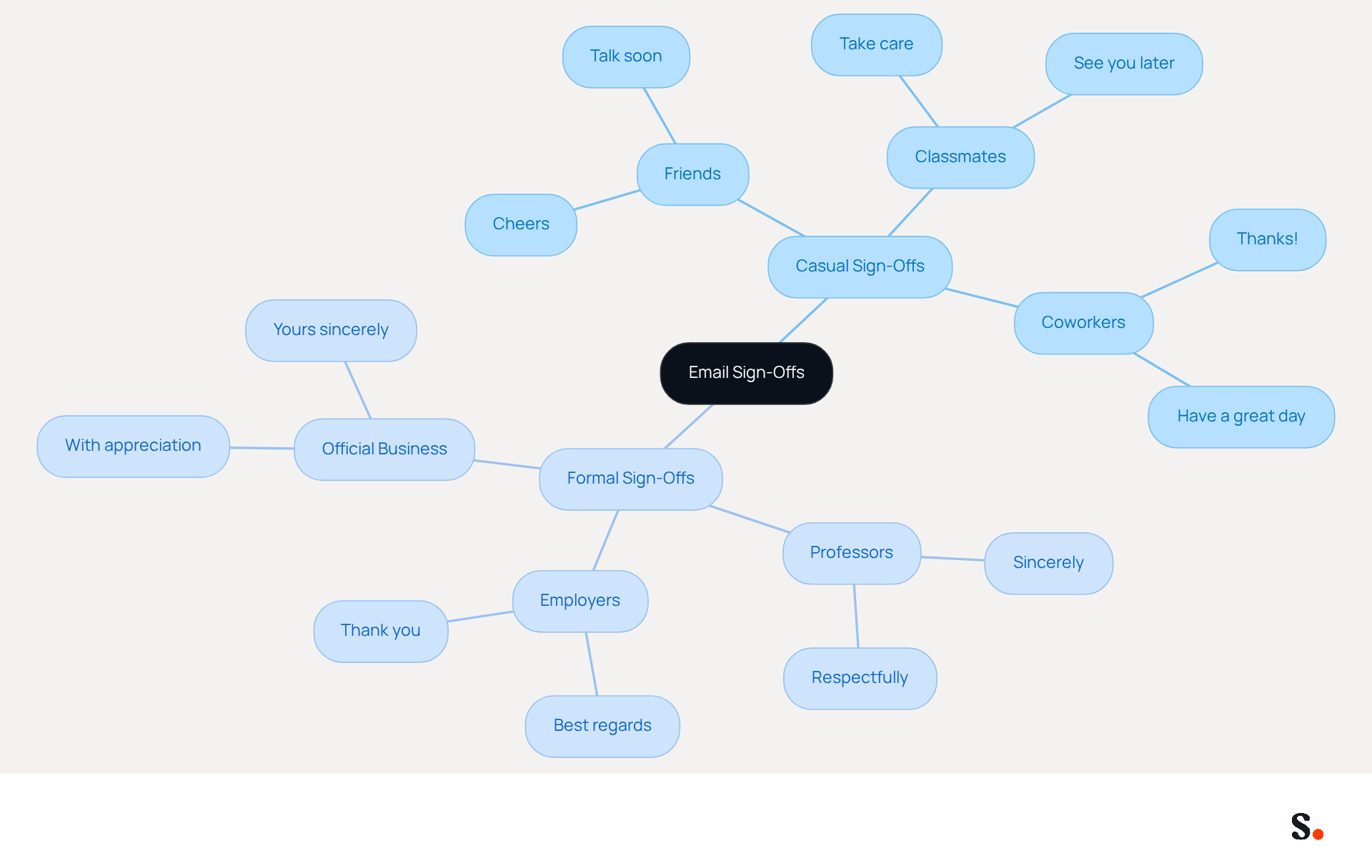
Examples of casual email sign-offs include:
- 'Cheers'
- 'Thanks'
- 'Take care'
- 'Best'
- 'See you soon'
These sign-offs are friendly and approachable, making them suitable for informal interactions, particularly among peers or in relaxed environments. Informal closings such as 'Cheers' and 'Thanks' foster camaraderie and enhance interaction effectiveness. Messages that conclude with expressions of gratitude, such as 'thank you,' tend to receive higher response rates compared to other sign-offs, reinforcing the effectiveness of gratitude-focused endings.
In contrast, formal email sign-offs include:
- 'Sincerely'
- 'Best regards'
- 'Respectfully'
- 'Yours faithfully'
- 'Kind regards'
These sign-offs maintain a level of professionalism and are appropriate for formal communications, ensuring that the sender is perceived as respectful and serious. Research indicates that messages concluding with professional closings such as 'Sincerely' or 'Best regards' are more likely to be regarded seriously, especially in workplace environments where first impressions are important. Consider how your closing shapes the final impression your recipients will have. For example, job application messages should utilize these formal closings to convey respect and professionalism, reinforcing the sender's credibility. Furthermore, messages lacking sign-offs can seem abrupt and may appear impolite, emphasizing the importance of including sign-offs in professional interactions. Incorporating the appropriate email sign-offs for students not only enhances your message but also reinforces your professional image.
Analyze Consequences of Incorrect Sign-Off Choices
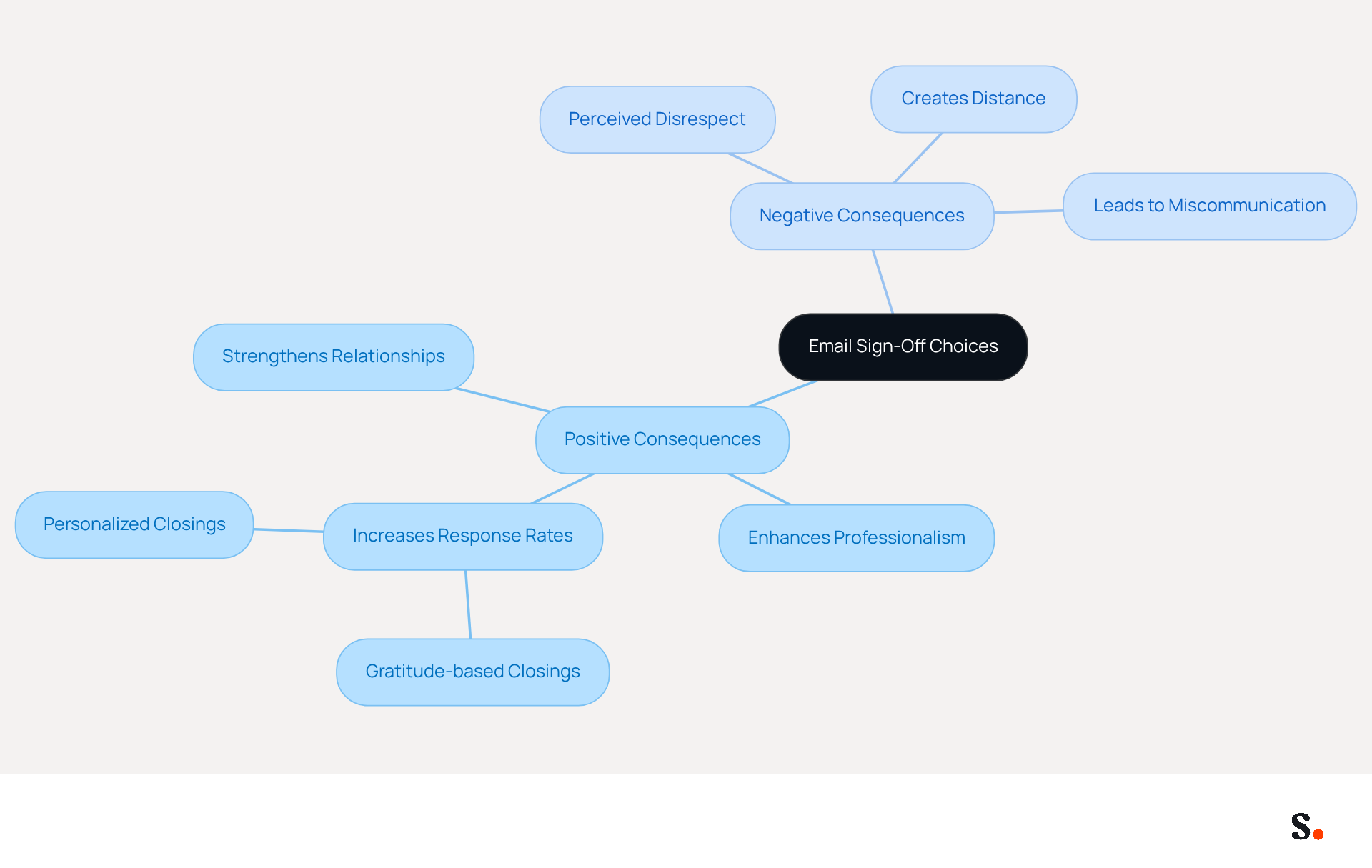
The choice of email sign-offs for students in communication significantly impacts perceptions and relationships. For instance, signing off a message to a professor with 'Cheers' can be perceived as disrespectful or too casual, potentially damaging the student-teacher relationship. Conversely, using a formal sign-off like 'Sincerely' in a casual email to a friend may create unnecessary distance and formality, making the interaction feel stiff. Understanding these consequences is vital for students, as they affect the effectiveness of email sign-offs for students and overall communication.
Conclusion
Navigating communication effectively requires an understanding of the differences between casual and formal email sign-offs. The sign-off reflects the relationship with the recipient and sets the tone for the message. Selecting the right closing can enhance professionalism and ensure positive reception of communications.
Key insights from the discussion highlight that casual sign-offs, such as 'Cheers' or 'Thanks,' are best suited for informal interactions among peers, fostering a friendly atmosphere. In contrast, formal sign-offs like 'Sincerely' or 'Best regards' are crucial in professional or academic settings, where respect and professionalism are paramount. Misusing sign-offs can lead to misunderstandings and strained relationships. Therefore, students must be mindful of their choices to maintain effective communication.
Ultimately, email sign-offs do more than just show etiquette; they shape how others perceive us and influence our relationships. By recognizing the importance of context and the nuances of sign-off choices, students can communicate more effectively and project a professional image. Embracing this knowledge empowers students to navigate their academic and professional journeys with confidence, ensuring their messages resonate with clarity and respect.
Frequently Asked Questions
What are casual email sign-offs?
Casual email sign-offs are informal expressions used to conclude messages in a friendly manner, such as 'Cheers,' 'Thanks,' and 'Take care.' They are typically used among peers, friends, or in relaxed environments.
When should casual email sign-offs be used?
Casual email sign-offs should be used in friendly contexts or among familiar relationships where a relaxed tone is appropriate.
What are formal email sign-offs?
Formal email sign-offs are structured phrases that convey professionalism and respect, commonly used in business or academic environments. Examples include 'Sincerely,' 'Best regards,' and 'Respectfully.'
When should formal email sign-offs be used?
Formal email sign-offs should be used when interacting with superiors, professors, or in situations where maintaining a professional demeanor is essential.
How do casual and formal sign-offs impact communication?
Casual sign-offs can foster ongoing communication and strengthen relationships, while formal sign-offs tend to generate higher response rates and convey professionalism.
Are there trends regarding the use of informal sign-offs in professional contexts?
Yes, recent studies indicate an increasing trend toward the acceptance of informal sign-offs in specific professional contexts, particularly among younger professionals.
What should be considered when choosing an email sign-off?
The choice of sign-off should align with the message's tone and the relationship with the recipient to ensure clarity and effectiveness, avoiding excessively informal closings in professional correspondence.
List of Sources
- Define Casual and Formal Email Sign-Offs
- Master Business Sign-Off Emails: Best Practices for Impactful Communication (https://scribe-mail.com/en-US/blog/master-business-sign-off-emails-best-practices-for-impactful-communication)
- Best Email Sign-Offs for Any Correspondence (https://wisestamp.com/examples/email-sign-offs)
- Email Sign Offs Professional: Best Practices for Business Emails (https://mailwarm.com/blog/professional-email-sign-offs-best-practices)
- 50 Best Email Sign-Offs to End an Email Properly in [year] (https://elementor.com/blog/best-email-sign-offs)
- Evaluate Contexts for Casual vs. Formal Sign-Offs
- How to Sign Off on an Email Correctly | Rocketseed (https://rocketseed.com/blog/correct-way-to-sign-off-emails)
- Email Sign Offs for Every Industry and Situation | Mailchimp (https://mailchimp.com/resources/email-sign-offs)
- Master Business Sign-Off Emails: Best Practices for Impactful Communication (https://scribe-mail.com/en-US/blog/master-business-sign-off-emails-best-practices-for-impactful-communication)
- The 37 best ways to close emails (https://signitic.com/en/resources/email-sign-offs)
- Compare Examples of Casual and Formal Sign-Offs
- How to end an email: 70+ professional sign-offs & examples (https://blog.superhuman.com/how-to-end-an-email)
- Mastering Professional Email Sign-Offs in 2026 (https://linkedin.com/pulse/mastering-professional-email-sign-offs-2026-bulksignature-qsr4e)
- Email Sign Offs for Every Industry and Situation | Mailchimp (https://mailchimp.com/resources/email-sign-offs)
- 100 Email Sign-Off Ideas (+10 Golden Rules for Marketing Pros) - MailerLite (https://mailerlite.com/blog/email-sign-offs)
- Best Email Sign-Offs for Any Correspondence (https://wisestamp.com/examples/email-sign-offs)
- Analyze Consequences of Incorrect Sign-Off Choices
- 40+ Email Signature Statistics for 2026 (Data + Insights) (https://wavecnct.com/blogs/email-signature-statistics)
- Your Emails Are 36 Percent More Likely to Get a Reply If You End Them This Way (https://inc.com/jessica-stillman/your-emails-are-36-percent-more-likely-to-get-a-reply-if-you-close-them-this-way.html)
- Master Business Sign-Off Emails: Best Practices for Impactful Communication (https://scribe-mail.com/en-US/blog/master-business-sign-off-emails-best-practices-for-impactful-communication)
- How to End Email Informal: 4 Steps for Effective Sign-Offs (https://scribe-mail.com/en-US/blog/how-to-end-email-informal-4-steps-for-effective-sign-offs)
- Master Proper Email Sign-Offs to Boost Your Brand Image (https://scribe-mail.com/en-US/blog/master-proper-email-sign-offs-to-boost-your-brand-image)
Get started with Scribe
See why teams switch to Scribe
Free 14-day trial — no credit card.