Comparing Email Signature Examples for Businesses: Traditional vs. Modern
As businesses navigate the complexities of digital communication, the evolution of email signatures presents both challenges and opportunities. Traditional
Sophie Grant
Email Signature Specialist, Scribe

On this page
- Introduction
- Define Traditional and Modern Email Signature Approaches
- Identify Key Components of Email Signatures
- Evaluate Pros and Cons of Each Approach
- Traditional Email Signatures
- Modern Email Signatures
- Examine the Role of Automation in Email Signature Management
- Conclusion
- Frequently Asked Questions
- List of Sources
Introduction
As businesses navigate the complexities of digital communication, the evolution of email signatures presents both challenges and opportunities. Traditional signatures, often simplistic and functional, are increasingly being overshadowed by modern designs that incorporate visual elements and interactive features, enhancing engagement and brand visibility.
As organizations strive for effective communication, the question arises: how do these two approaches compare in terms of effectiveness, branding potential, and overall impact on marketing strategies?
We will explore the key differences between traditional and modern email signatures, examining their respective advantages and disadvantages while highlighting the importance of adapting to contemporary trends for optimal business communication.
Define Traditional and Modern Email Signature Approaches
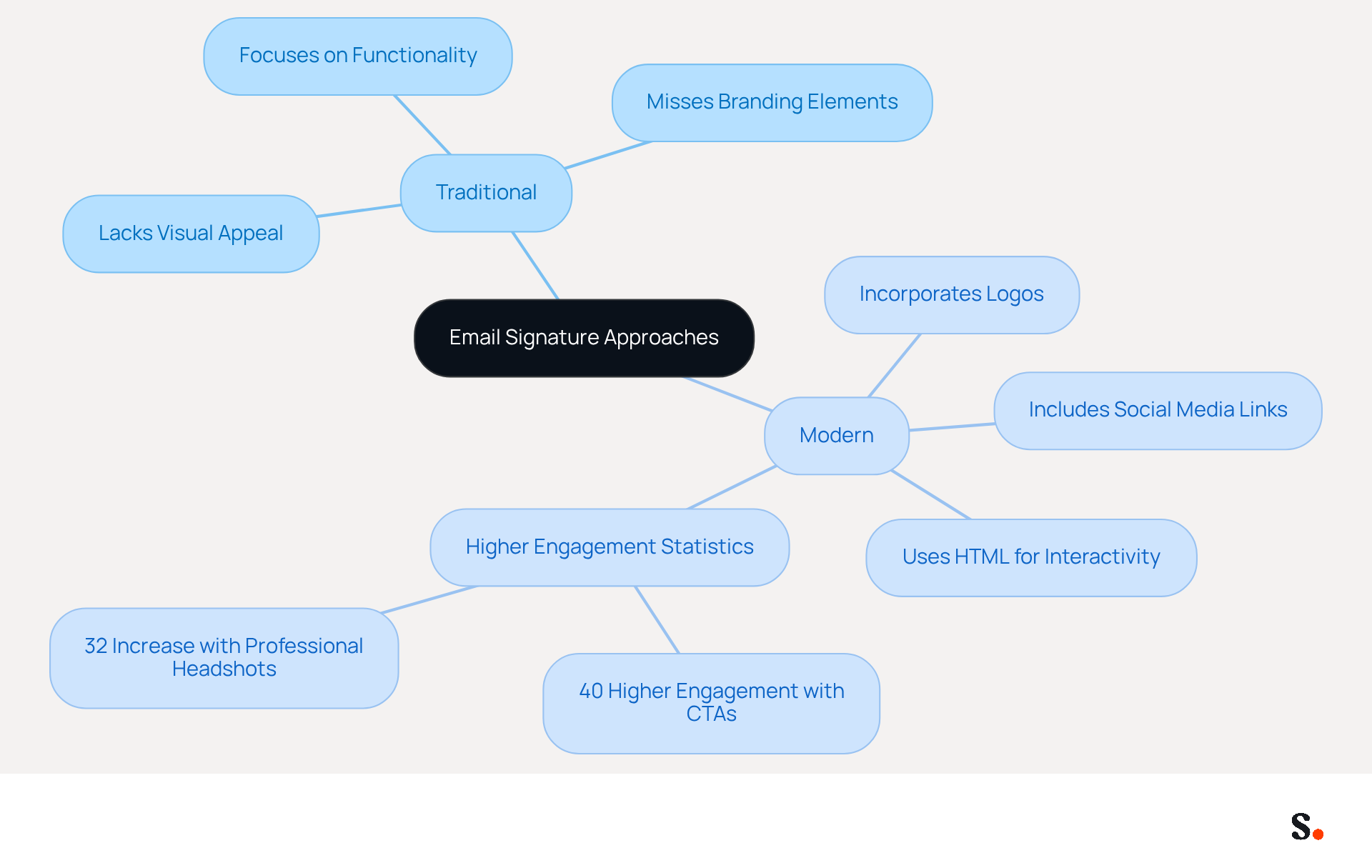
Traditional electronic correspondence identifiers often fall short in engaging recipients, lacking the visual appeal and branding necessary for effective communication. These identifiers typically miss visual elements and branding, focusing primarily on their functional role. In contrast, contemporary electronic correspondence has progressed to incorporate sophisticated design elements such as logos, social media connections, and promotional banners. They leverage HTML capabilities, allowing for richer content and interactivity, which significantly enhances user engagement and brand visibility.
Statistics indicate that well-optimized digital identifiers with strategic calls to action can drive up to 40% higher engagement compared to generic sign-offs. Furthermore, including a professional headshot can enhance response rates by roughly 32%. This move to modern identifiers highlights the importance of treating every communication as a chance to market effectively, with organizations that adopt these practices reporting improved brand consistency and effectiveness.
Case studies illustrate the impact of this evolution. For example, organizations that have moved from conventional to contemporary digital identifiers have observed notable improvements in engagement metrics. By incorporating segmented templates tailored to specific roles or campaigns, businesses can enhance the relevance of their communications, aligning content with recipient expectations. As digital correspondence evolves, those who adapt their identifiers will likely outperform competitors who cling to outdated practices.
Identify Key Components of Email Signatures
Effective email signatures, such as email signature examples for businesses, are essential for establishing credibility and enhancing communication in professional correspondence. Key components of effective email signatures include:
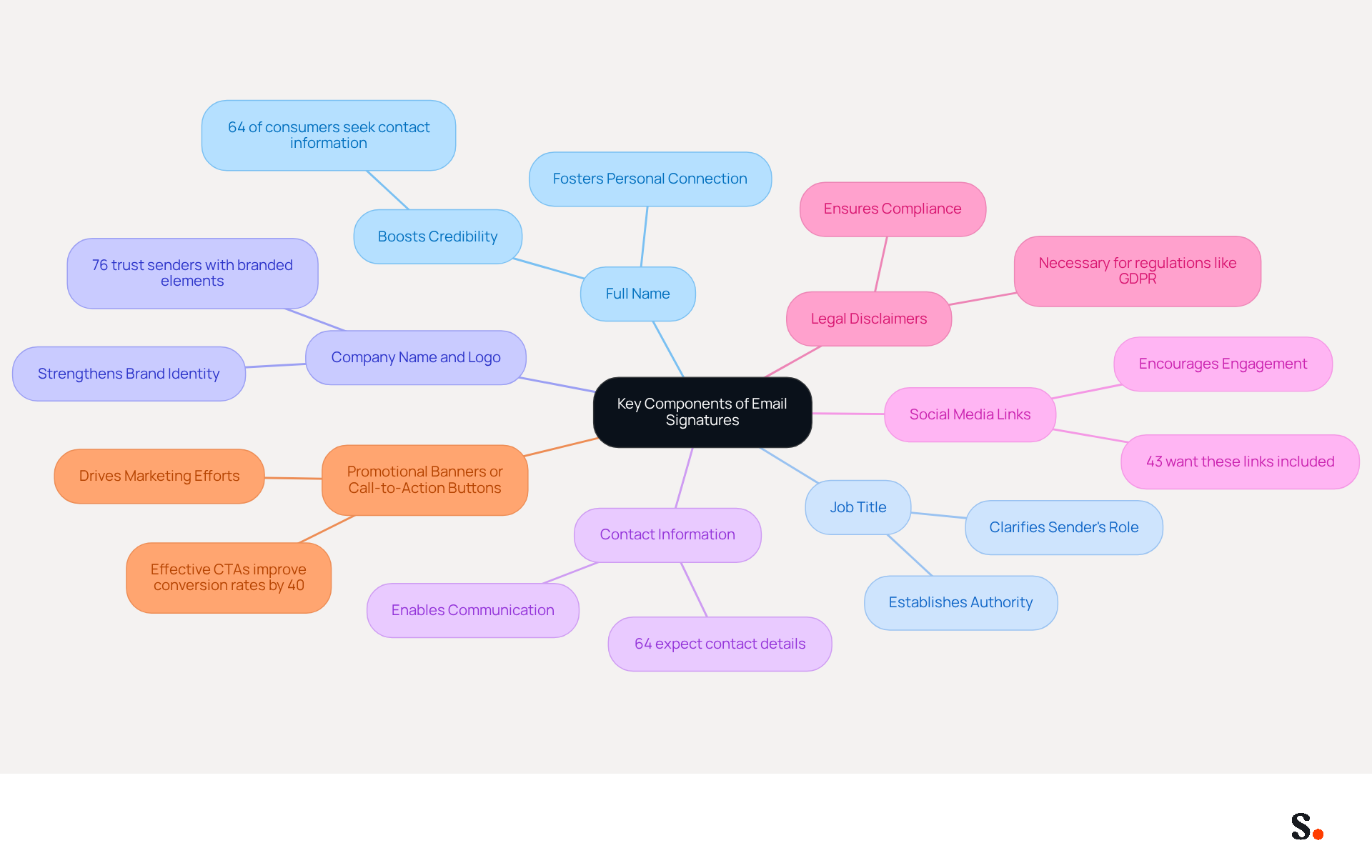
- Full Name: Fosters a personal connection and boosts credibility, as 64% of consumers seek contact information in correspondence.
- Job Title: Clarifies the sender's role within the organization, establishing authority and context for recipients.
- Company Name and Logo: Strengthens brand identity and recognition, with 76% of respondents trusting senders more when messages include branded elements.
- Contact Information: Crucial for enabling communication, including phone numbers and electronic addresses, which 64% of consumers anticipate finding in signatures.
- Social Media Links: Encourages engagement and connection on various platforms, with 43% of consumers wanting these links included.
- Legal Disclaimers: Important for compliance and professionalism, ensuring that necessary disclosures are present in accordance with regulations like GDPR and CAN-SPAM.
- Promotional Banners or Call-to-Action Buttons: Drive marketing efforts and enhance engagement, with effective CTAs improving conversion rates by 40% compared to generic ones.
To enable one-click synchronization, granting permission for the application to connect with your provider is necessary. This process ensures that any changes in your provider directory sync automatically with the platform, which enhances brand consistency. Scribe's automated synchronization facilitates adaptable workspace management, allowing centralized control over digital identifiers across various clients and brands. Furthermore, Scribe's SOC 2 Type II compliance ensures the security of your data, making it a trustworthy option for organizations aiming to streamline their signature management. Without these key components, organizations risk undermining their professional image and missing valuable engagement opportunities, as demonstrated by email signature examples for businesses.
Evaluate Pros and Cons of Each Approach
Traditional Email Signatures
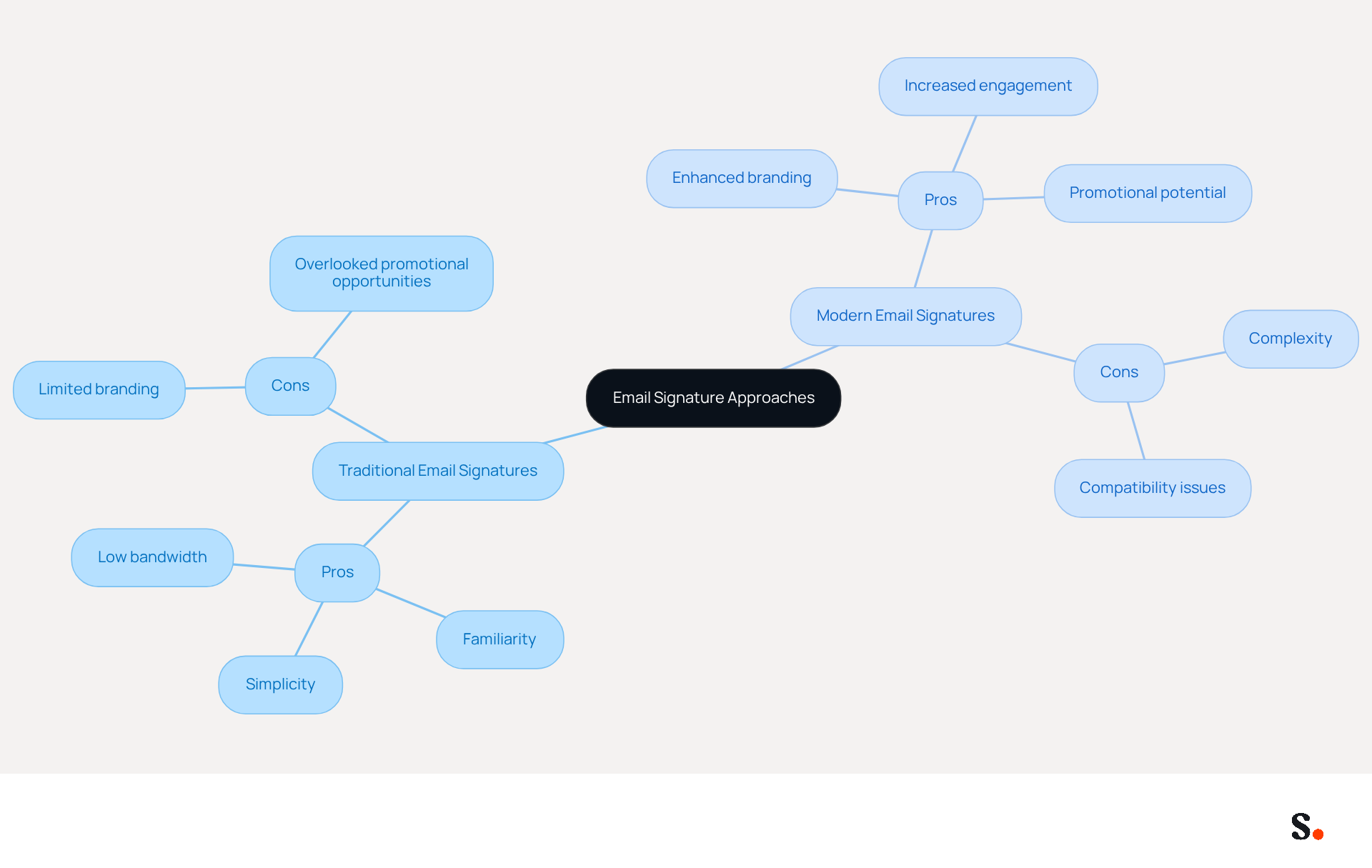
Traditional email signatures are valued for their simplicity and ease of implementation.
Pros:
- Simplicity: Easy to create and implement.
- Familiarity: Recipients are accustomed to basic formats.
- Low bandwidth: Minimal data usage, ensuring compatibility across devices.
Cons: - Limited branding: Lacks visual appeal and differentiation.
- Overlooked promotional opportunities: Does not utilize electronic mail as a promotional tool.
Modern Email Signatures
Modern email signatures significantly enhance branding by incorporating logos and colors that reinforce brand identity.
Pros:
- Enhanced branding: Incorporates logos and colors, reinforcing brand identity.
- Increased engagement: Interactive elements can drive traffic to websites and social media.
- Promotional potential: Can include advertising banners and calls to action, transforming every message into a promotional opportunity. By utilizing Scribe, organizations can ensure brand consistency across all communications, streamlining updates and enhancing overall effectiveness.
Cons: - Complexity: Requires design skills and may involve more time to set up.
- Compatibility issues: HTML formats may not display correctly in all messaging clients, leading to inconsistent user experiences.
Examine the Role of Automation in Email Signature Management
Automation in email signature management can provide email signature examples for businesses that streamline processes and enhance marketing effectiveness.
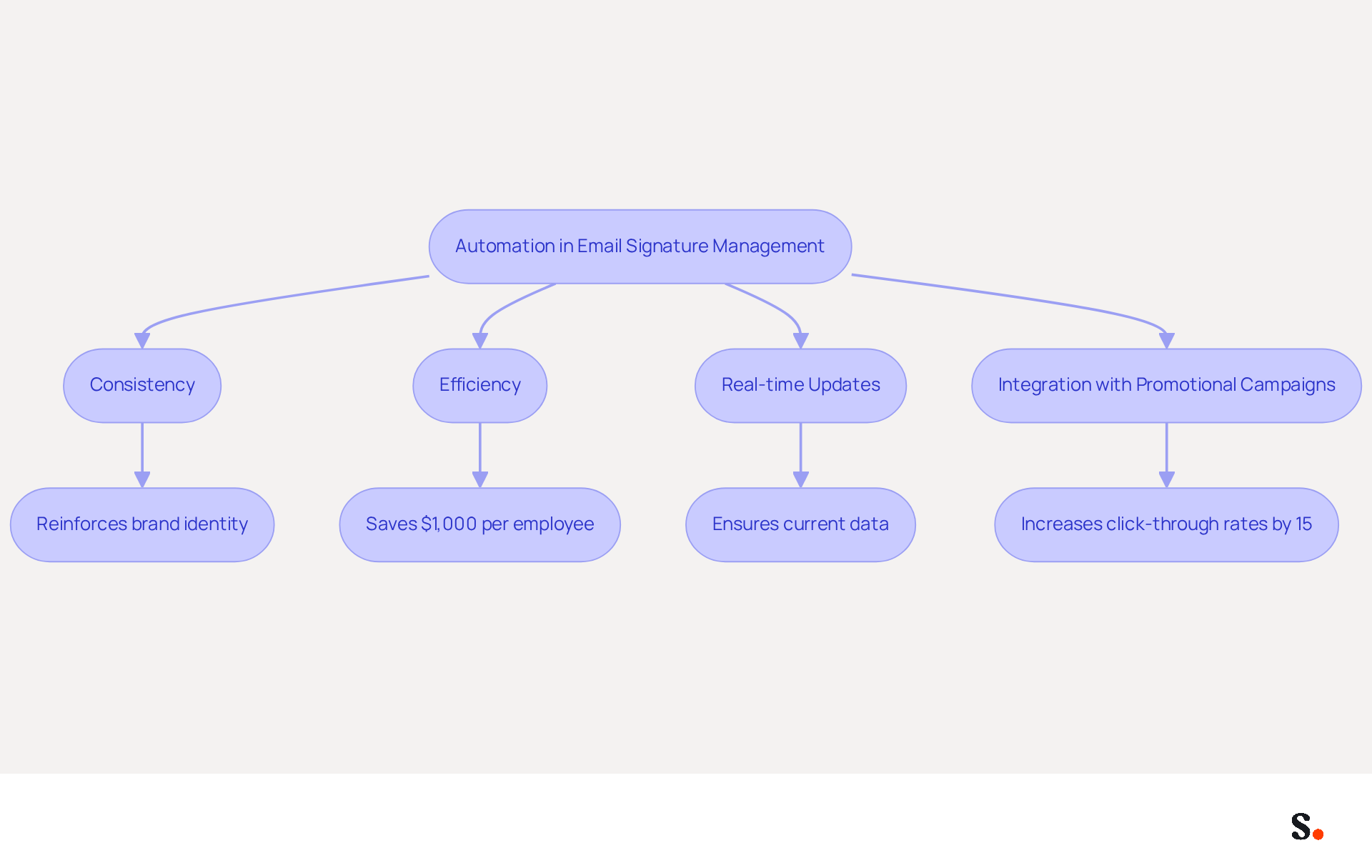
- Consistency: Automated systems ensure that all employees utilize the same format for their endorsements, reinforcing brand identity across all communications. This uniformity is crucial, as 80% of businesses recognize the importance of maintaining consistent branding through digital identifiers, such as email signature examples for businesses.
- Efficiency: By reducing the time spent on manual updates, marketing teams can redirect their focus toward strategic initiatives. This efficiency is particularly beneficial in hybrid work environments, where companies can save an average of $1,000 per employee by streamlining processes. Scribe streamlines the process by auto-filling teammates' identification information from your business phone system, ensuring automatic updates without individual action.
- Real-time Updates: Changes to branding or contact information can be implemented instantly across all email footers, minimizing the risk of outdated information being sent to clients. This infrequent updating can lead to significant inconsistencies in communication. Scribe's integration with business systems ensures that data is always current and compliant with security standards, including SOC 2 Type II.
- Integration with Promotional Campaigns: Automated identifiers can be connected to promotional initiatives, enabling dynamic content that corresponds with current offers or events. For example, businesses utilizing email signature examples for businesses have reported a 15% rise in website click-through rates, showcasing the effectiveness of incorporating promotional elements directly into communications. Furthermore, by participating in Scribe's Affiliate Program, you can earn a 50% commission and provide a $30 credit to new subscribers, further improving your promotional efforts.
This strategic approach not only safeguards brand integrity but also maximizes the impact of marketing initiatives.
Conclusion
The shift from traditional to modern email signatures marks a pivotal change in business communication strategies. Embracing modern email signatures not only enhances brand visibility but also transforms every email into a marketing opportunity, allowing organizations to leverage their communications effectively.
Key insights from the comparison reveal that while traditional signatures offer simplicity and familiarity, they limit branding opportunities and fail to engage audiences effectively. In contrast, modern signatures incorporate visual elements, interactive features, and promotional content, driving higher engagement rates and reinforcing brand identity. Automation plays a crucial role in this transition, enabling consistent and efficient management of email signatures across organizations, ensuring that every communication reflects the latest branding and messaging.
To stay competitive, businesses must adopt modern email signature practices. By utilizing tools like Scribe, organizations can achieve 100% brand consistency and measurable marketing ROI from their email communications. Embracing modern email signatures is not just an option; it is a strategic imperative for businesses aiming to thrive in a competitive landscape.
Frequently Asked Questions
What are traditional email signature approaches?
Traditional email signature approaches often lack visual appeal and branding, focusing primarily on their functional role without incorporating engaging design elements.
How do modern email signature approaches differ from traditional ones?
Modern email signature approaches incorporate sophisticated design elements such as logos, social media connections, and promotional banners, leveraging HTML capabilities for richer content and interactivity, which enhances user engagement and brand visibility.
What impact do well-optimized digital identifiers have on engagement?
Well-optimized digital identifiers with strategic calls to action can drive up to 40% higher engagement compared to generic sign-offs.
How does including a professional headshot affect response rates?
Including a professional headshot can enhance response rates by roughly 32%.
Why is it important to treat every communication as a marketing opportunity?
Treating every communication as a marketing opportunity can improve brand consistency and effectiveness, as organizations that adopt modern email signature practices report better engagement metrics.
What benefits have organizations observed by transitioning to modern digital identifiers?
Organizations that have transitioned to modern digital identifiers have observed notable improvements in engagement metrics and have enhanced the relevance of their communications by using segmented templates tailored to specific roles or campaigns.
How can businesses align their email signatures with recipient expectations?
Businesses can align their email signatures with recipient expectations by incorporating segmented templates that are tailored to specific roles or campaigns, enhancing the relevance of their communications.
What is the potential risk for businesses that stick to outdated email signature practices?
Businesses that cling to outdated email signature practices may risk underperforming compared to competitors who adapt their identifiers to modern standards.
List of Sources
- Define Traditional and Modern Email Signature Approaches
- Email Signature Design Trends in 2026: What Works and What to Drop (https://bulksignature.com/blog/email-signature-design-trends)
- The Evolution of Email Signatures: From Plain Text to Marketing Tool (https://chillisign.io/blog/evolution-signatures)
- Email Signature Trends 2026: What Designers Are Actually Using (https://markaplugin.com/blog/email-signature-trends-2026)
- "Email Signature Trends for 2026: What's In, What's Out" | Crossware posted on the topic | LinkedIn (https://linkedin.com/posts/crossware-ltd_new-year-new-trends-even-for-your-email-activity-7394554686046908416-vD_O)
- The Evolution of Email Signatures | Rocketseed (https://rocketseed.com/blog/email-signature-evolution)
- Identify Key Components of Email Signatures
- Why Are Email Signatures Key to Brand Awareness? | QuickMail (https://quickmail.com/role-of-email-signatures-in-brand-awareness)
- The Complete Email Signature Guide 2026: Best Practices and Policy (https://opensense.com/complete-email-signature-guide)
- 4 Best Practices for Crafting Effective Email Signature Templates (https://scribe-mail.com/en-US/blog/4-best-practices-for-crafting-effective-email-signature-templates)
- Research Recap: Branded Email Signatures Increase Company Recognition, Trust - Demand Gen Report (https://demandgenreport.com/industry-news/research-recap-branded-email-signatures-increase-company-recognition-trust/47252)
- The benefits of a branded email signature (https://bybrand.io/blog/branded-email-signature)
- Evaluate Pros and Cons of Each Approach
- Exclaimer Research: 67% of Marketers Expect Email Signatures to Support With Lead Gen In 2023 (https://businesswire.com/news/home/20230612141095/en/Exclaimer-Research-67-of-Marketers-Expect-Email-Signatures-to-Support-With-Lead-Gen-In-2023)
- 40+ Email Signature Statistics for 2026 (Data + Insights) (https://wavecnct.com/blogs/email-signature-statistics)
- The impact of email signatures on your branding (https://signitic.com/en/resources/the-impact-of-email-signatures-on-your-branding)
- The Good and Bad of Email Signature Marketing | Associations Now (https://associationsnow.com/2022/06/put-signature-good-bad-email-signature-marketing)
- Examine the Role of Automation in Email Signature Management
- 40+ Email Signature Statistics for 2026 (Data + Insights) (https://wavecnct.com/blogs/email-signature-statistics)
- Why Automated Email Signatures Are a Smart Move for Your Business (https://aabyss.uk/blog/why-automated-email-signatures-are-a-smart-move-for-your-business)
- Why Email Signature Management Software is Essential for Marketing Success (https://scribe-mail.com/en-US/blog/why-email-signature-management-software-is-essential-for-marketing-success)
- Email signature statistics: Why every business should optimize their email signatures — Stripo.email (https://stripo.email/blog/email-signature-statistics-why-every-business-should-optimize-their-email-signatures)
Get started with Scribe
See why teams switch to Scribe
Free 14-day trial — no credit card.