Craft a Formal Invitation Letter in 4 Easy Steps
Mastering the art of crafting formal invitation letters is crucial for ensuring the success of any event. This skill can greatly influence the outcome of
Sophie Grant
Email Signature Specialist, Scribe
Introduction
Mastering the art of crafting formal invitation letters is crucial for ensuring the success of any event. This skill can greatly influence the outcome of gatherings, whether corporate or personal. By understanding the key components and structure of these letters, individuals can ensure their messages are clear, professional, and engaging. Neglecting these elements can result in missed opportunities for connection and engagement.
This guide outlines four essential steps for creating an effective formal invitation letter, highlighting the importance of clarity, structure, and personalization to enhance the recipient's experience and increase attendance.
A poorly crafted invitation can lead to lower attendance and a lackluster event.
Understand the Key Components of a Formal Invitation Letter
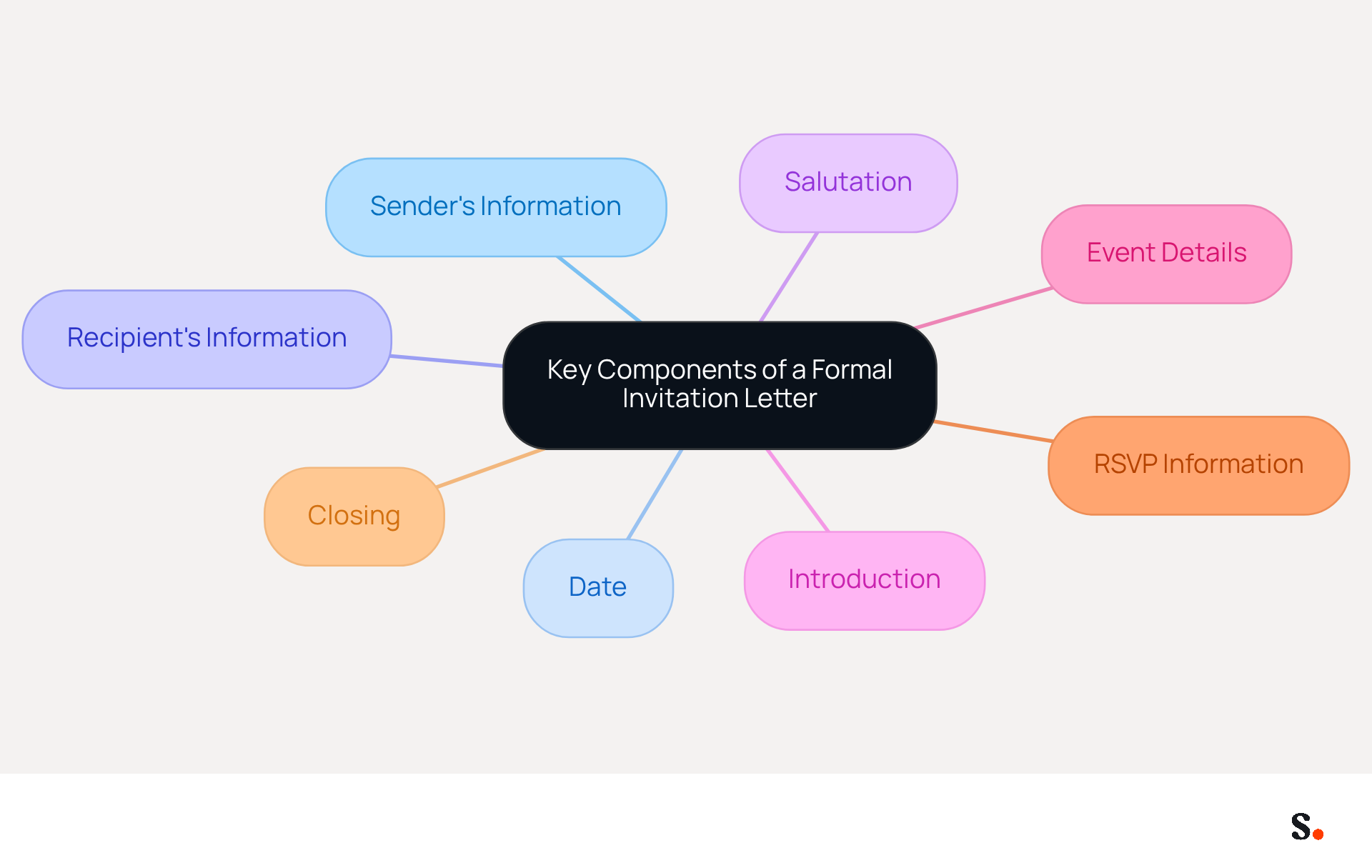
Crafting a formal invitation letter can be challenging, as the absence of key components may lead to misunderstandings. To ensure clarity and professionalism, several key elements must be included:
- Sender's Information: Begin with your full name, title, and organization (if applicable). This establishes your authority and provides context for the invitation.
- Date: Clearly state the date of the event, which is crucial for the recipient's planning.
- Recipient's Information: Include the name and address of the person you are inviting. This personal touch shows respect and consideration.
- Salutation: Use a formal greeting, such as 'Dear [Recipient's Name],'. This establishes the tone for the correspondence and is crucial for preserving formality.
- Introduction: Start with a clear opening stating the purpose of the request. This ensures that the intent of the letter is immediately understood.
- Event Details: Clearly outline the purpose of the notice, including the event name, date, time, and location. Be specific to avoid any confusion and ensure all essential details are included.
- RSVP Information: Include details on how and when the individual should respond to the request. This helps manage attendance effectively and creates a sense of urgency for prompt responses.
- Closing: End with a polite closing statement, such as 'Sincerely' or 'Best regards,' followed by your name and signature.
Including these elements helps you craft a clear and professional formal invitation letter. For example, a sample correspondence requesting a professor to act as an external reviewer at Bowling Green State University effectively incorporates these elements, ensuring clarity and respect for the recipient's time and expertise. A clear structure not only makes your request more professional but also boosts the chances of a favorable reply.
Follow the Correct Structure and Format for Your Invitation
Creating a polished formal invitation letter requires attention to detail and adherence to specific formatting guidelines:
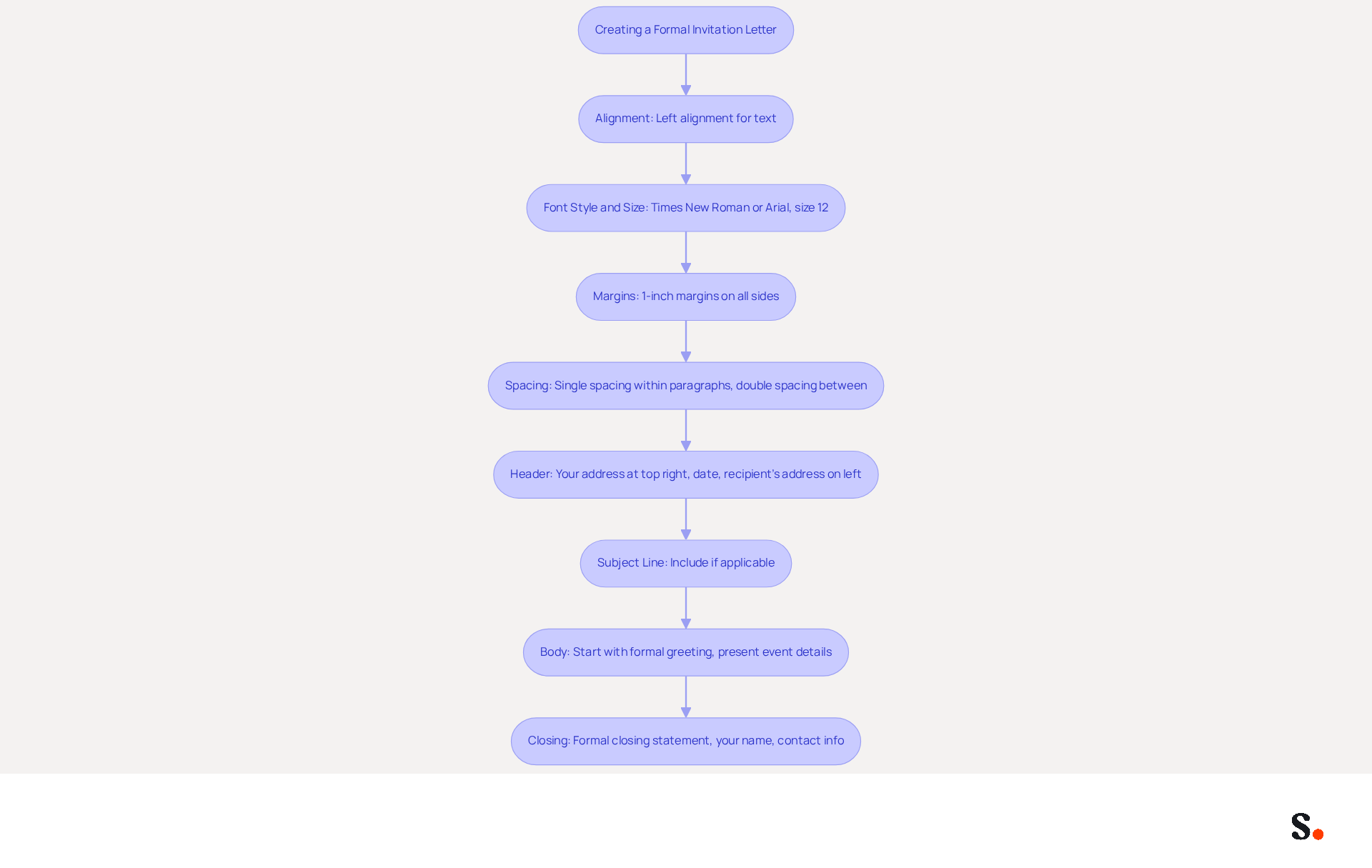
- Alignment: Use left alignment for the text, which is standard for formal letters.
- Font Style and Size: Opt for a professional font such as Times New Roman or Arial, in size 12, to ensure readability.
- Margins: Set 1-inch margins on all sides for a clean appearance.
- Spacing: Implement single spacing within paragraphs and double spacing between them to enhance readability.
- Header: Position your address at the top right corner, followed by the date. The recipient's address should be on the left, below your address.
- Subject Line: If applicable, include a subject line summarizing the purpose of the request.
- Body: Start with a formal greeting, then present the main content of the message, clearly stating the event details.
- Closing: Conclude with a formal closing statement, your name, and any additional contact information.
These formatting elements are crucial for clarity and professionalism in a formal invitation letter. For example, a well-organized request for a corporate gala can strengthen connections and foster a collaborative spirit within your organization. Likewise, customized requests for charity gatherings can create a sense of exclusivity, promoting increased attendance rates. When invitations are clear and engaging, they tend to resonate better with recipients, which can boost participation. By following these guidelines, you can ensure your invitations not only convey essential information but also foster a sense of community and engagement.
Personalize Your Invitation for Maximum Impact
To maximize the impact of your invitation, effective personalization strategies are essential:
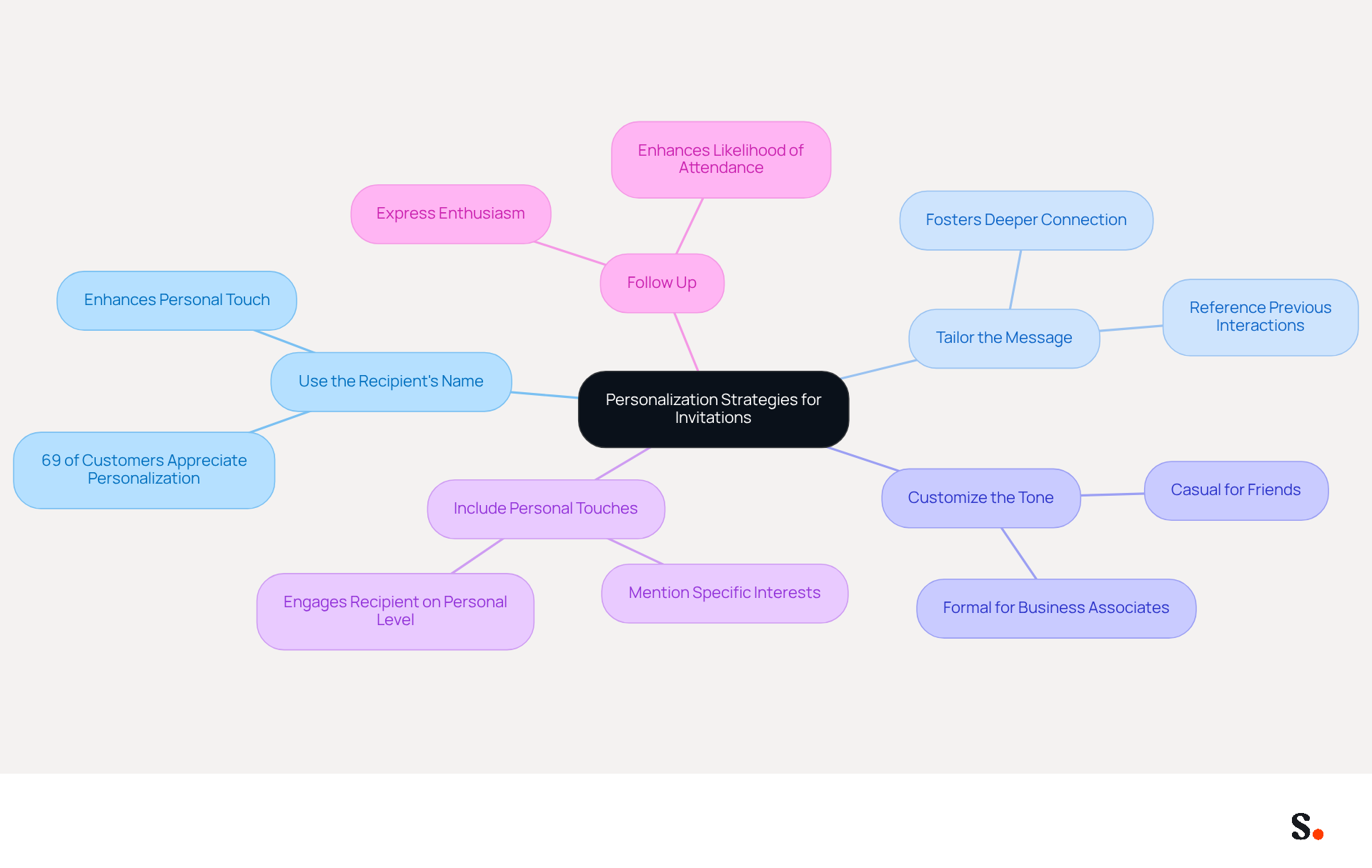
- Use the Recipient's Name: Address the recipient by their full name in the salutation. This simple act enhances the personal touch of the message, as 69% of customers appreciate personalization based on data they have explicitly shared.
- Tailor the Message: Reference any previous interactions or shared experiences related to the event. For instance, you might say, 'We enjoyed your company at last year's gala and would love to see you again.' This approach fosters a deeper connection and aligns with the growing preference for personalized experiences among couples.
- Customize the Tone: Modify the tone of your message based on your relationship with the individual. A casual tone may be suitable for friends, while a more formal tone is appropriate for business associates, ensuring the message aligns with the nature of your relationship.
- Include Personal Touches: Mention specific details that resonate with the individual, such as their interests or contributions to the event. This not only makes the request feel more considerate but also engages the recipient on a personal level. According to wedding expert Margot Laporte, incorporating custom illustrations and personal elements can greatly enhance the distinctiveness of announcements.
- Follow Up: After sending the request, consider following up with a personal message or call to express your enthusiasm about their potential attendance. This additional step reinforces your interest in their presence and can enhance their likelihood of attending.
By employing these personalization techniques, you can create a more inviting and engaging message that resonates with your audience, ultimately enhancing the overall experience and connection. However, be mindful of the challenges associated with personalization, such as privacy regulations that may complicate the process. Navigating the complexities of personalization can ultimately lead to a more meaningful connection with your audience.
Review and Finalize Your Invitation Letter
Before sending your formal invitation letter, it is crucial to ensure that every detail is meticulously reviewed to avoid potential pitfalls:
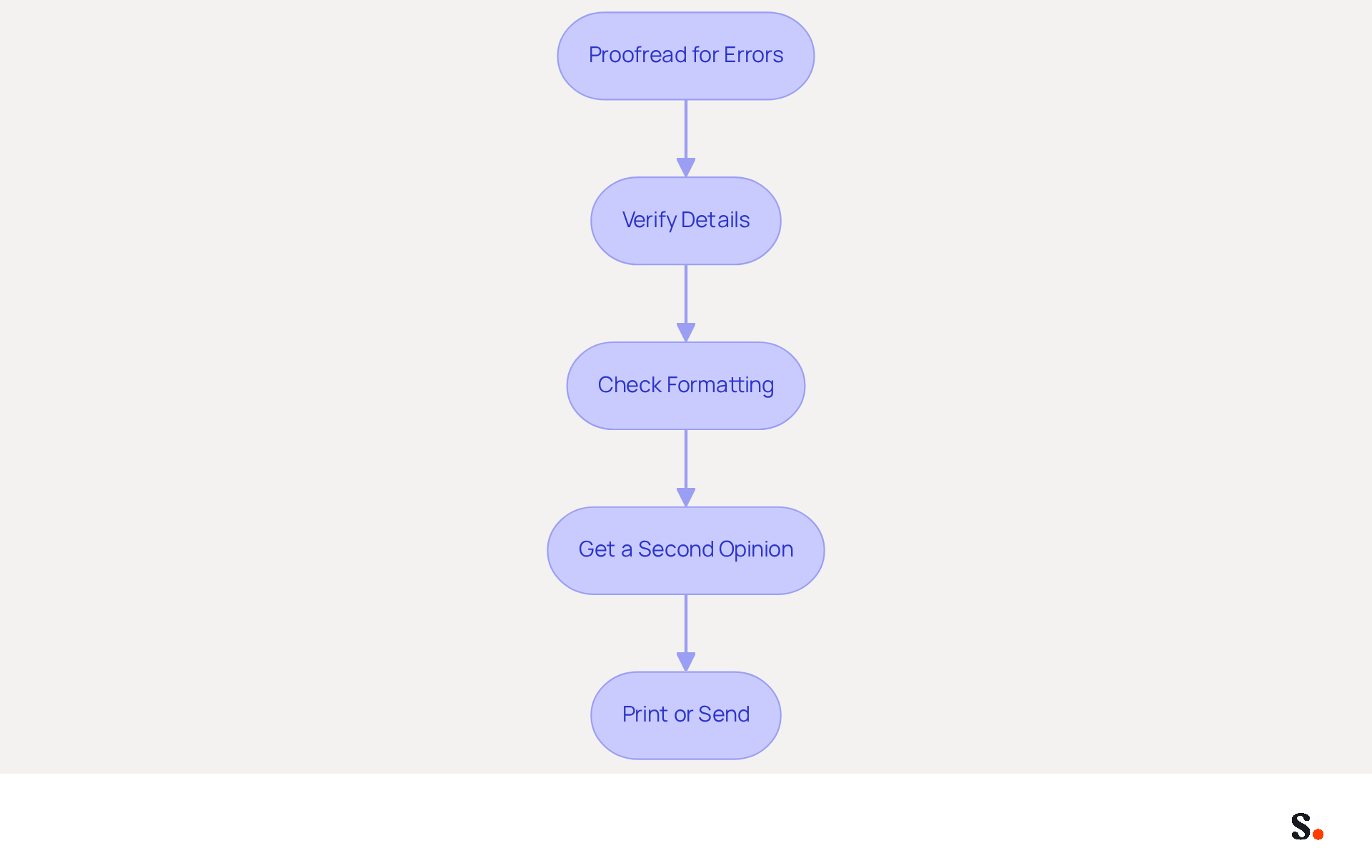
- Proofread for Errors: Carefully check for spelling, grammar, and punctuation errors. A well-written letter reflects professionalism.
- Verify Details: Ensure that all event details (date, time, location) are accurate and clearly stated. Double-check the recipient's name and address.
- Check Formatting: Review the overall layout and formatting to ensure consistency and professionalism. Make sure the font, spacing, and margins are correct.
- Get a Second Opinion: If possible, have someone else review the document to catch any mistakes you might have overlooked and to provide feedback on clarity and tone.
- Print or Send: Once you are satisfied with the document, print it on quality paper if sending a hard copy, or prepare it for email if sending electronically. Ensure that any attachments or additional materials are included.
Taking the time to review your formal invitation letter can really make a difference, ensuring it leaves a positive impression on your recipients. Ultimately, a thorough review not only enhances the letter's effectiveness but also reinforces your professionalism in the eyes of your recipients.
Conclusion
Crafting a formal invitation letter can be daunting, especially when aiming for clarity and professionalism. By understanding the key components, adhering to the correct structure and format, personalizing the message, and thoroughly reviewing the final draft, the chances of receiving a positive response increase dramatically. Every component is essential for crafting an invitation that is clear, professional, and respectful of the recipient's time.
The article outlined the importance of including essential elements such as:
- Sender and recipient information
- Event details
- RSVP instructions
It emphasized the need for proper formatting and personalization to create a connection with the recipient. Additionally, the review process was highlighted as a vital step to ensure professionalism and accuracy, ultimately enhancing the effectiveness of the invitation.
Ultimately, a well-crafted invitation can transform a simple event into a memorable experience, fostering connections that last beyond the occasion. By implementing these strategies, individuals can enhance their communication skills and create invitations that effectively engage recipients, paving the way for successful events and meaningful connections.
Frequently Asked Questions
What are the key components of a formal invitation letter?
The key components include the sender's information, date, recipient's information, salutation, introduction, event details, RSVP information, and closing.
Why is the sender's information important in a formal invitation letter?
The sender's information establishes authority and provides context for the invitation, making it clear who is extending the invitation.
What should be included in the event details of a formal invitation letter?
The event details should include the event name, date, time, and location to avoid confusion and ensure all essential information is provided.
How should the salutation be formatted in a formal invitation letter?
The salutation should use a formal greeting, such as "Dear [Recipient's Name]," to establish the appropriate tone for the correspondence.
What is the purpose of including RSVP information in a formal invitation letter?
Including RSVP information helps manage attendance effectively and creates a sense of urgency for prompt responses from the invitees.
How should a formal invitation letter be closed?
A formal invitation letter should end with a polite closing statement, such as "Sincerely" or "Best regards," followed by the sender's name and signature.
Can you provide an example of a formal invitation letter?
An example would be a correspondence requesting a professor to act as an external reviewer at Bowling Green State University, which effectively incorporates all the key elements for clarity and respect.
List of Sources
- Understand the Key Components of a Formal Invitation Letter
- Understanding Invitation Letters | PDF | Cognition | Cognitive Science (https://scribd.com/document/536609135/INVITATION-LETTER-definition-and-explanation)
- Formal Invitation Letter Guide | PDF (https://scribd.com/presentation/693344039/How-to-Write-a-Formal-Invitation-Letter)
- Invitation Letter for Event: Samples, Templates and Examples (https://glueup.com/blog/invitation-letter-events)
- Sample Invitation Letters to External Reviewers (https://bgsu.edu/institutional-effectiveness/institutional-effectiveness/program-review/sample-invitation-letters-to-external-reviewers.html)
- Follow the Correct Structure and Format for Your Invitation
- Invitation Letter for Event: Samples, Templates and Examples (https://glueup.com/blog/invitation-letter-events)
- Stats and Graphs: All About Cover Letters (https://hiringlibrarians.com/2022/12/22/stats-and-graphs-all-about-cover-letters)
- Cover Letter Statistics 2026: 90+ Fresh Stats (https://novoresume.com/career-blog/cover-letter-statistics)
- Cover Letter Resources | University Career Center (https://careercenter.umich.edu/content/cover-letter-resources)
- Personalize Your Invitation for Maximum Impact
- 7 Modern Wedding Invitation Trends That Are Redefining Tradition (https://latimes.com/weddings/planning-ideas/inspiration/story/modern-wedding-invitation-trends)
- 40 personalization statistics: The state of personalization in 2025 and beyond (https://contentful.com/blog/personalization-statistics)
- Creative ideas for making wedding invitations more personal? (https://forums.theknot.com/discussion/1089234/creative-ideas-for-making-wedding-invitations-more-personal)
- Modern Invitation Designs: Trends Shaping 2025 Events (https://mymindseye.com/blogs/news/modern-invitation-designs?srsltid=AfmBOoqO2vlC5YbnzI9ctfExmpBqHCRZNmqZBKbLs9A1czWtbSjFFTdy)
- 2026 Marketing Personalization Statistics & Trends for Growth | involve.me (https://involve.me/blog/marketing-personalization-statistics)
- Review and Finalize Your Invitation Letter
- Error Analysis in Writing Business Letters Among Financial Management Students | Journal Corner of Education, Linguistics, and Literature (https://journal.jcopublishing.com/index.php/jcell/article/view/448)
- 5 Common Business Writing Errors To Avoid | The Write Direction (https://thewrite-direction.com/blog/common-business-writing-errors)
- The Importance of Proofreading: Why It Matters for Your Writing (https://gotranscript.com/en/blog/the-importance-of-proofreading-why-it-matters-for-your-writing)
- Editing and Proofreading – The Writing Center (https://writingcenter.unc.edu/tips-and-tools/editing-and-proofreading)
Get started with Scribe
Build a professional email signature
Free 14-day trial — no credit card.