Crafting a Sample Graduate Student Email Signature for Impact
In academia, where first impressions matter, a poorly designed email signature can undermine a graduate student's professional image. This article outlines key
Sophie Grant
Email Signature Specialist, Scribe

Introduction
In academia, where first impressions matter, a poorly designed email signature can undermine a graduate student's professional image. This article outlines key components and best practices for crafting an impactful email signature that reflects both personal and institutional branding while adhering to effective design principles.
With numerous elements to consider, how can students create signatures that stand out while ensuring professionalism and clarity?
Identify Key Components of a Graduate Student Email Signature
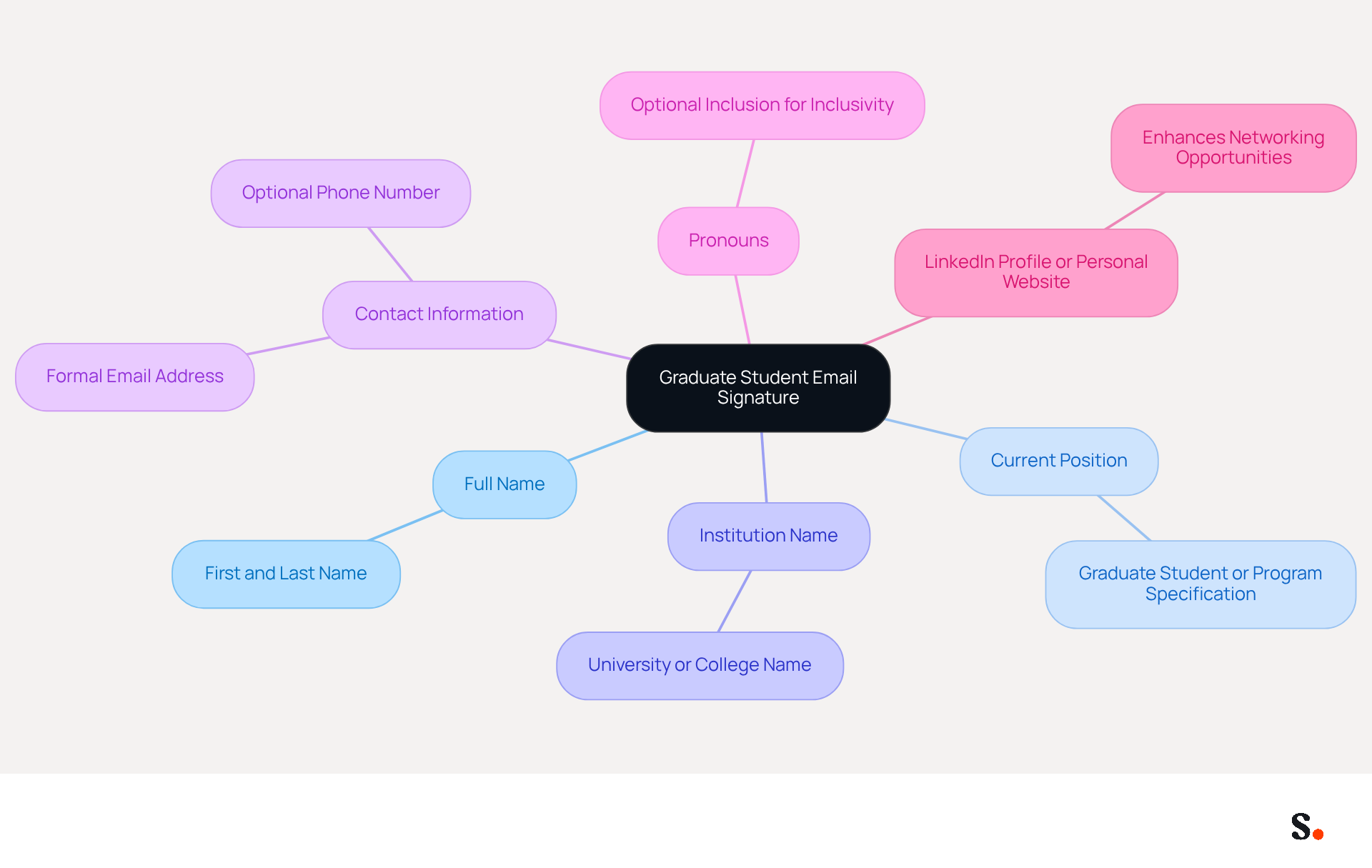
In the competitive landscape of academia, a polished email signature can significantly impact a graduate student's professional image. A graduate student email signature should include the following key components:
- Full Name: Clearly state your first and last name to ensure recipients can easily identify you.
- Current Position: Indicate your role, such as 'Graduate Student' or specify your program.
- Institution Name: Include the name of your university or college to establish your academic affiliation.
- Contact Information: Provide a formal email address and optionally a phone number for direct communication.
- Pronouns: If comfortable, include your pronouns to promote inclusivity.
- LinkedIn Profile or Personal Website: Adding a link to your online presence can enhance networking opportunities.
When you include these elements, your email signature becomes both informative and polished, facilitating easier connections with recipients. Research shows that a well-designed message footer can greatly improve a student's image in the workplace and boost the chances of receiving replies to inquiries. By neglecting this detail, students risk missing out on valuable networking opportunities. A well-crafted digital identifier can provide you with a competitive advantage when seeking jobs, grants, or postdoctoral opportunities. By adhering to these guidelines and avoiding common pitfalls, such as personal quotes or excessive graphics, graduate students can effectively communicate their identity and establish a strong professional presence in their academic and future career endeavors. Ultimately, a thoughtful email signature can be the difference between being remembered or overlooked in professional interactions.
Incorporate Personal and Institutional Branding
Incorporating personal and institutional branding into your sample graduate student email signature can significantly enhance your professional image.
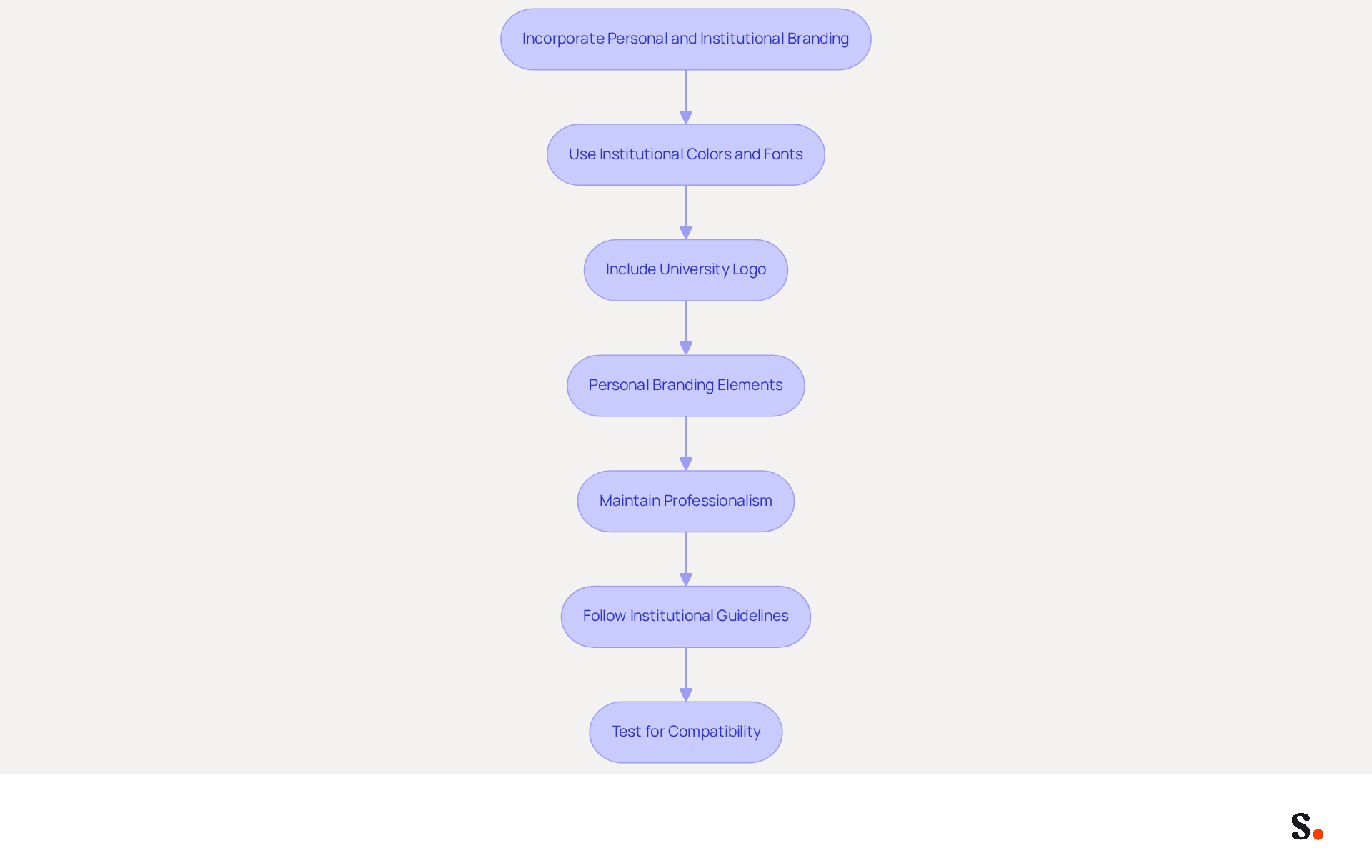
- Use Institutional Colors and Fonts: Align your signature's color scheme and font style with your university's branding guidelines to maintain consistency. This adherence not only strengthens your affiliation but also improves recognition among those receiving it.
- Include University Logo: If allowed, adding your institution's logo can significantly enhance your image. Studies indicate that 76% of recipients feel more trust when they see branded identifiers in emails, underscoring the credibility aspect of business communication.
- Personal Branding Elements: Incorporate elements that reflect your personal brand, such as a polished headshot or a unique tagline summarizing your academic focus. Including a professional headshot can boost response rates by 32%, underscoring its importance in your email signature.
- Maintain Professionalism: Ensure that all branding elements are professional and appropriate for academic correspondence. However, many struggle to balance personal flair with institutional expectations. Avoid excessively casual or flashy designs, as a well-crafted communication footer is essential for establishing credibility in academia.
- Follow Institutional Guidelines: Always check your university's branding standards for correspondence to ensure compliance and avoid potential issues. By adhering to these standards, you reinforce your credibility and strengthen your professional image.
- Test for Compatibility: Before finalizing your email layout, send test emails to ensure it appears correctly across different devices and email clients. This step is essential to avoid missteps that could detract from your image.
By blending your personal brand with your institution's identity, you can develop a sample graduate student email signature that truly represents you and strengthens your communication presence.
Apply Effective Formatting and Design Principles
To create an effective email signature, it is crucial to adhere to specific formatting and design principles that enhance professionalism:
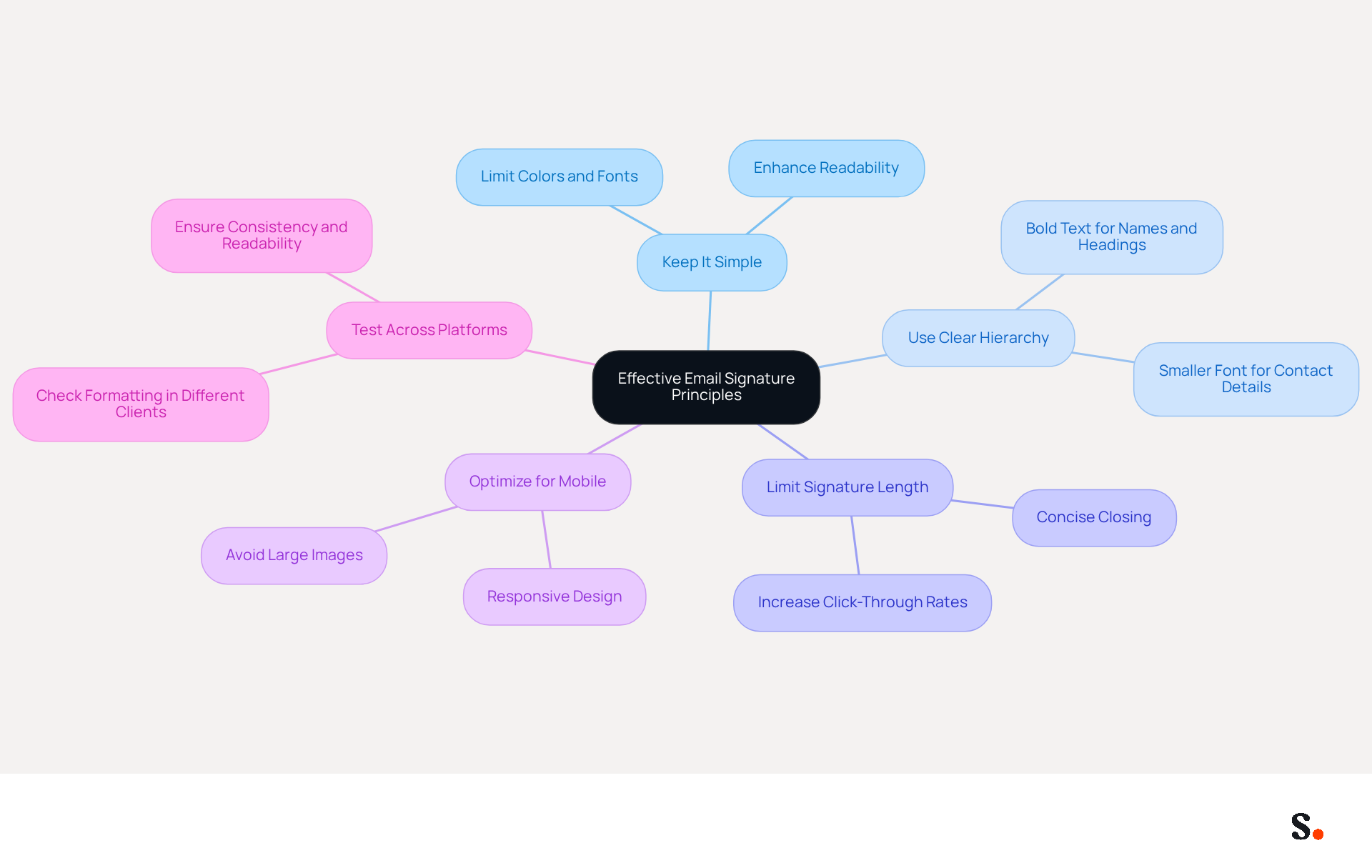
- Keep It Simple: Limit the number of colors and fonts to maintain a clean and professional appearance. Stick to one or two font types and a maximum of three colors. This simplicity enhances readability and prevents the signature from overwhelming the recipient.
- Use Clear Hierarchy: Organize information in a way that guides the reader's eye. Use bold text for your name and headings, while keeping contact details in a smaller font. This method aids in highlighting essential information, making it simpler for users to locate what they require swiftly.
- Limit Signature Length: Aim for a closing that is concise, ideally no more than four lines of text. Studies indicate that concise sign-offs can significantly increase click-through rates, as they prevent information overload and maintain the recipient's attention.
- Optimize for Mobile: Ensure that your email footer is mobile-friendly by keeping it responsive and avoiding large images that may not display well on smaller screens. With over 60% of business correspondence opened on mobile devices, a mobile-optimized design is essential for effective communication.
- Test Across Platforms: Check how your identifier appears in different messaging clients (e.g., Gmail, Outlook) to ensure consistency and readability. Testing is essential, as discrepancies in formatting can lead to miscommunication and a lack of professionalism.
Implementing these principles not only elevates your email signature but also reinforces your brand's professionalism in every interaction.
Leverage Email Signatures for Networking and Professional Growth
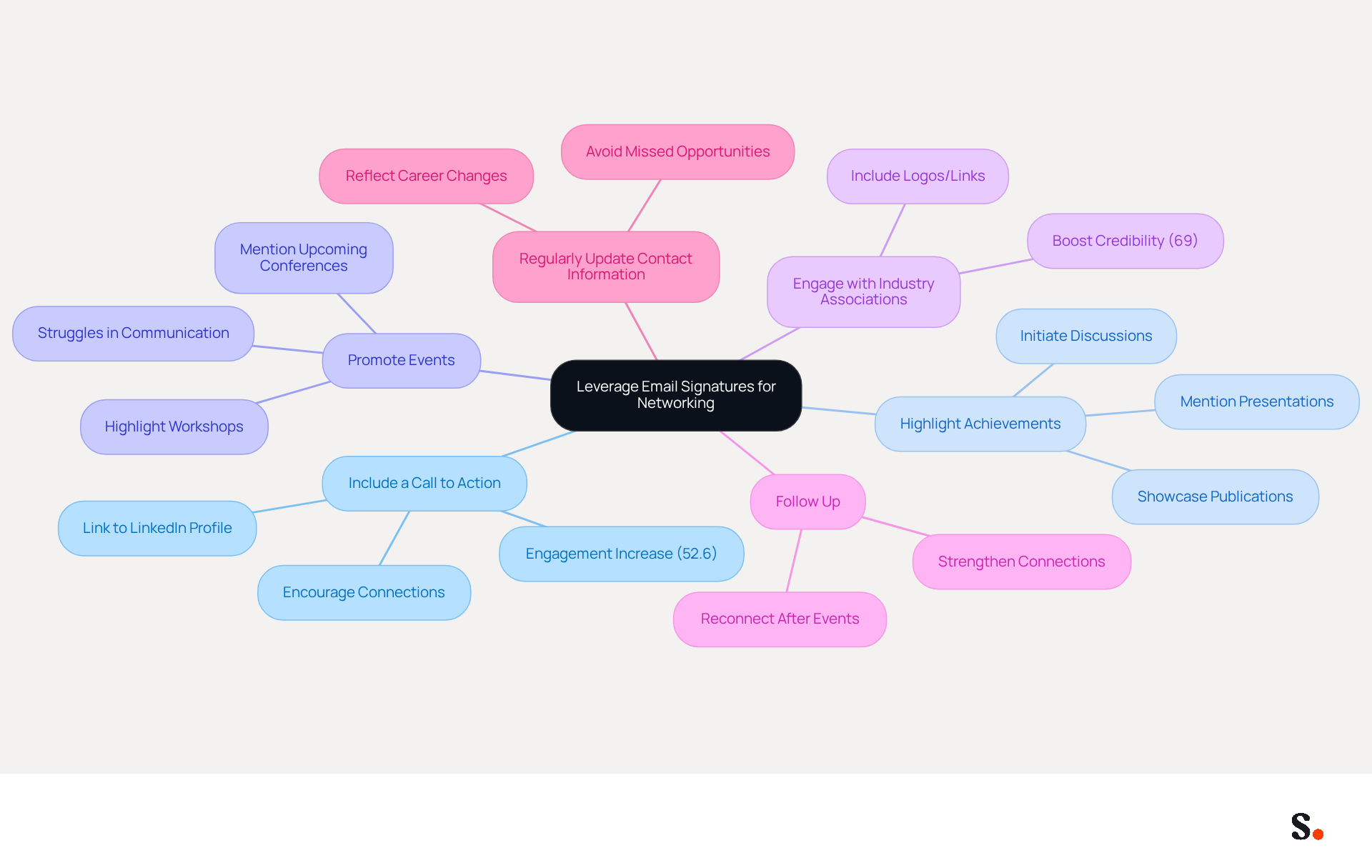
To maximize the potential of your email signature for networking, it's essential to adopt strategic approaches that resonate with your audience:
- Include a Call to Action: Incorporate a call to action in your email footer, such as a link to your LinkedIn profile or personal website, encouraging recipients to connect with you. In fact, 52.6% of users who include a CTA in their emails see a notable increase in engagement.
- Highlight Achievements: Use your personal mark to showcase recent accomplishments, such as publications or presentations. Highlighting your achievements can initiate valuable discussions and demonstrate your active role in the industry, which is crucial for networking.
- Promote Events: If you are involved in upcoming conferences or workshops, mention them briefly in your email footer. However, many professionals struggle to effectively communicate their involvement in events, which can hinder engagement.
- Engage with Industry Associations: Include logos or links of any organizations you are a member of in your email footer. This illustrates your involvement in your field and can boost your credibility, as 69% of consumers think a consistent, polished email format is important.
- Follow Up: Use your personal mark as a reminder to reconnect with contacts after networking events. This strengthens your connection and maintains the conversation, which is crucial for establishing enduring business relationships.
- Regularly Update Your Contact Information: Ensure that your correspondence details are current and reflect any changes in your career status or accomplishments. Neglecting to update your information can lead to missed opportunities and weakened connections.
By implementing these strategies, you will help turn your email signature into a valuable networking tool, boosting your visibility and opening doors in your professional journey.
Conclusion
A well-crafted email signature is essential for graduate students aiming to establish a strong professional identity. It serves as a powerful tool to enhance their networking opportunities. By incorporating essential components such as full name, current position, and contact information, along with personal and institutional branding elements, students can create a signature that reflects their academic affiliation and personal brand. This attention to detail can significantly impact how they are perceived in professional interactions.
Throughout the article, key strategies for designing an effective email signature have been discussed. These include:
- Maintaining simplicity in design
- Optimizing for mobile devices
- Leveraging the signature for networking by including calls to action and highlighting achievements
By adhering to best practices in formatting and design, graduate students can ensure their email signatures are not only visually appealing but also functional and professional.
In the end, a polished email signature does more than look good; it can shape how others perceive you in your professional journey. By taking the time to craft an impactful email signature, graduate students can enhance their visibility, foster connections, and open doors to future opportunities. Embracing this practice can lead to meaningful interactions and a lasting impression in the competitive landscape of academia and beyond.
Frequently Asked Questions
What are the key components of a graduate student email signature?
A graduate student email signature should include the following components: Full Name, Current Position, Institution Name, Contact Information, Pronouns, and a LinkedIn Profile or Personal Website.
Why is a polished email signature important for graduate students?
A polished email signature significantly impacts a graduate student's professional image, facilitating easier connections with recipients and enhancing networking opportunities.
How can a well-designed email signature improve a student's chances in academia?
Research shows that a well-designed email signature can improve a student's image in the workplace and increase the likelihood of receiving replies to inquiries, which is crucial for networking.
What should graduate students avoid including in their email signatures?
Graduate students should avoid including personal quotes or excessive graphics in their email signatures, as these can detract from a professional appearance.
How can a thoughtful email signature benefit a graduate student's career?
A thoughtful email signature can provide a competitive advantage when seeking jobs, grants, or postdoctoral opportunities, helping students to be remembered in professional interactions.
List of Sources
- Identify Key Components of a Graduate Student Email Signature
- Email Signatures For University, College And School Students - NEWOLDSTAMP (https://newoldstamp.com/blog/email-signatures-for-university-college-and-school-students)
- How to Create a Professional College, Master’s, or Graduate Student Email Signature | Scribendi (https://scribendi.com/academy/articles/college_student_email_signature.en.html)
- Best Practices for a Proper Email Signature for Graduate Students (https://scribe-mail.com/en-US/blog/best-practices-for-a-proper-email-signature-for-graduate-students)
- Student Email Signature: Examples, Best Practices & Setup Guide (https://getmailbird.com/student-email-signature-examples-setup-guide)
- Email Signature for Students: Professional Templates for Internships & Networking (https://syncsignature.com/blog/email-signature-for-students)
- Incorporate Personal and Institutional Branding
- a musing on email signatures (https://patthomson.net/2024/05/13/a-musing-on-email-signatures)
- Email Signature Tips | Perfecting Your Personal Brand | CSU Global (https://csuglobal.edu/blog/keep-it-professional-nailing-down-perfect-email-signature)
- 4 Best Practices for a Professional Uni Student Email Signature (https://scribe-mail.com/en-US/blog/4-best-practices-for-a-professional-uni-student-email-signature)
- Email Signature (https://uc.edu/about/marketing-communications/brand-guide/content/email-signature.html)
- Email Signatures & Avatars (https://brand.louisville.edu/web/email-signatures-avatars)
- Apply Effective Formatting and Design Principles
- Email Signature Best Practices for 2026 (+ 15 Pro Examples) (https://wavecnct.com/blogs/email-signature-best-practices-2026)
- Email Signature Trends 2026: What Designers Are Actually Using (https://markaplugin.com/blog/email-signature-trends-2026)
- Why Email Signatures Must Be In Your 2026 Marketing Plan | Rocketseed (https://rocketseed.com/blog/what-are-the-biggest-email-trends-for-2026)
- 4 Best Practices for a Modern Email Signature That Engages (https://scribe-mail.com/en-US/blog/4-best-practices-for-a-modern-email-signature-that-engages)
- "Email Signature Trends for 2026: What's In, What's Out" | Crossware posted on the topic | LinkedIn (https://linkedin.com/posts/crossware-ltd_new-year-new-trends-even-for-your-email-activity-7394554686046908416-vD_O)
- Leverage Email Signatures for Networking and Professional Growth
- 40+ Email Signature Statistics for 2026 (Data + Insights) (https://wavecnct.com/blogs/email-signature-statistics)
- The impact of email signatures on your branding (https://signitic.com/en/resources/the-impact-of-email-signatures-on-your-branding)
- Email signature statistics: Why every business should optimize their email signatures — Stripo.email (https://stripo.email/blog/email-signature-statistics-why-every-business-should-optimize-their-email-signatures)
Get started with Scribe
See why teams switch to Scribe
Free 14-day trial — no credit card.