Define Best Regards: Master Email Sign-Offs for Success
Navigating the subtleties of email sign-offs is crucial for effective professional communication. Among these, "Best Regards" stands out as a versatile choice
Sophie Grant
Email Signature Specialist, Scribe
Introduction
Navigating the subtleties of email sign-offs is crucial for effective professional communication. Among these, "Best Regards" stands out as a versatile choice that balances professionalism with warmth, making it suitable for various contexts. Yet, knowing when and how to use this sign-off is crucial, as mistakes can create confusion and harm your professional image. This guide will provide insights into the meaning and appropriate contexts for "Best Regards," along with alternatives that can improve your email etiquette and strengthen professional relationships.
Understand the Meaning of Best Regards
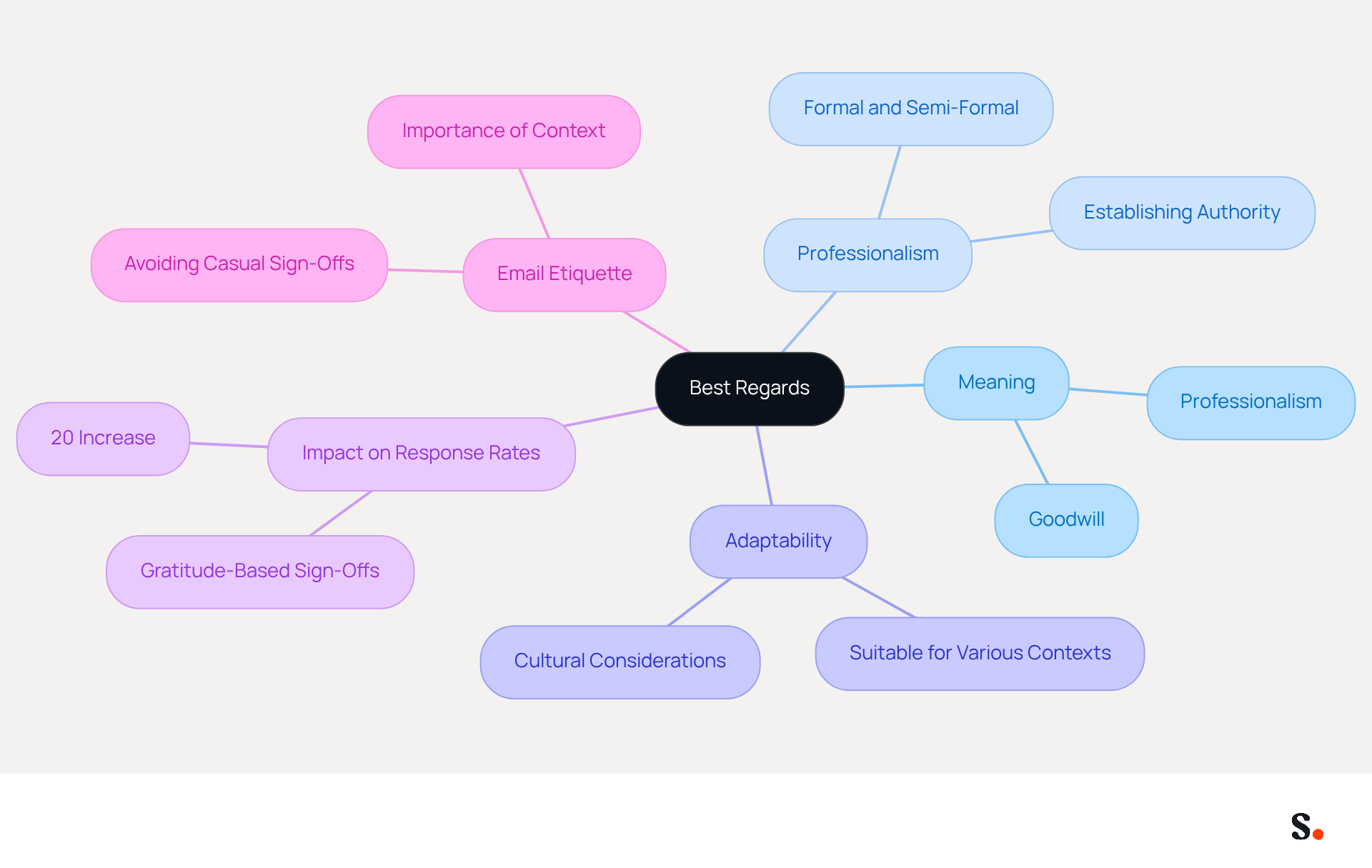
The phrase 'Kind Wishes' serves as a widely accepted email closing that conveys both goodwill and professionalism. It combines 'best,' which signifies the highest level of esteem, with 'regards,' to define best regards as thoughts or feelings towards someone. When you sign off with 'define best regards', it conveys your best wishes for the recipient's well-being while upholding professionalism. This sign-off is especially adaptable, making it appropriate for both formal and semi-formal interactions.
Considerate conclusions can increase response rates by up to 20%, highlighting their significance in effective email communication. Additionally, casual sign-offs risk diminishing your professional image, underscoring the need for careful selection of sign-offs. Neglecting a sign-off can lead to misunderstandings and a lack of respect in professional correspondence.
Grasping the significance and suitable application of 'Kind Wishes' is crucial for mastering email etiquette and improving professional relationships.
Identify When to Use Best Regards in Emails
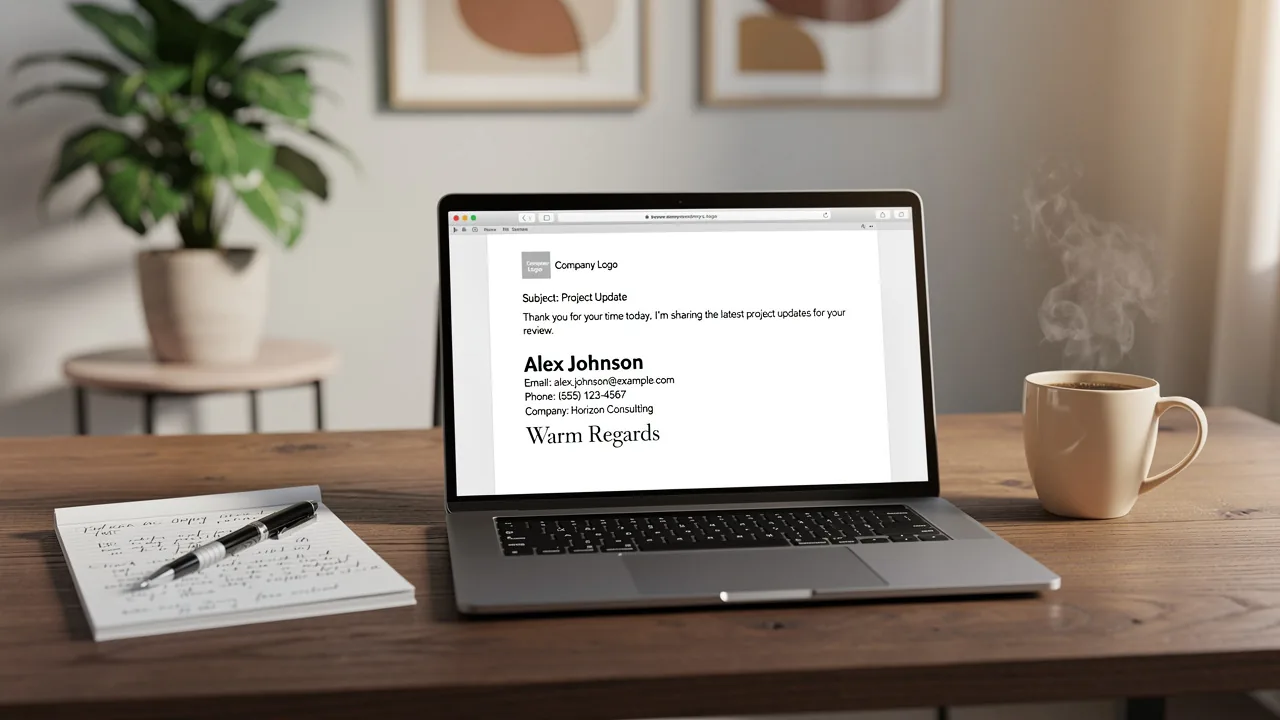
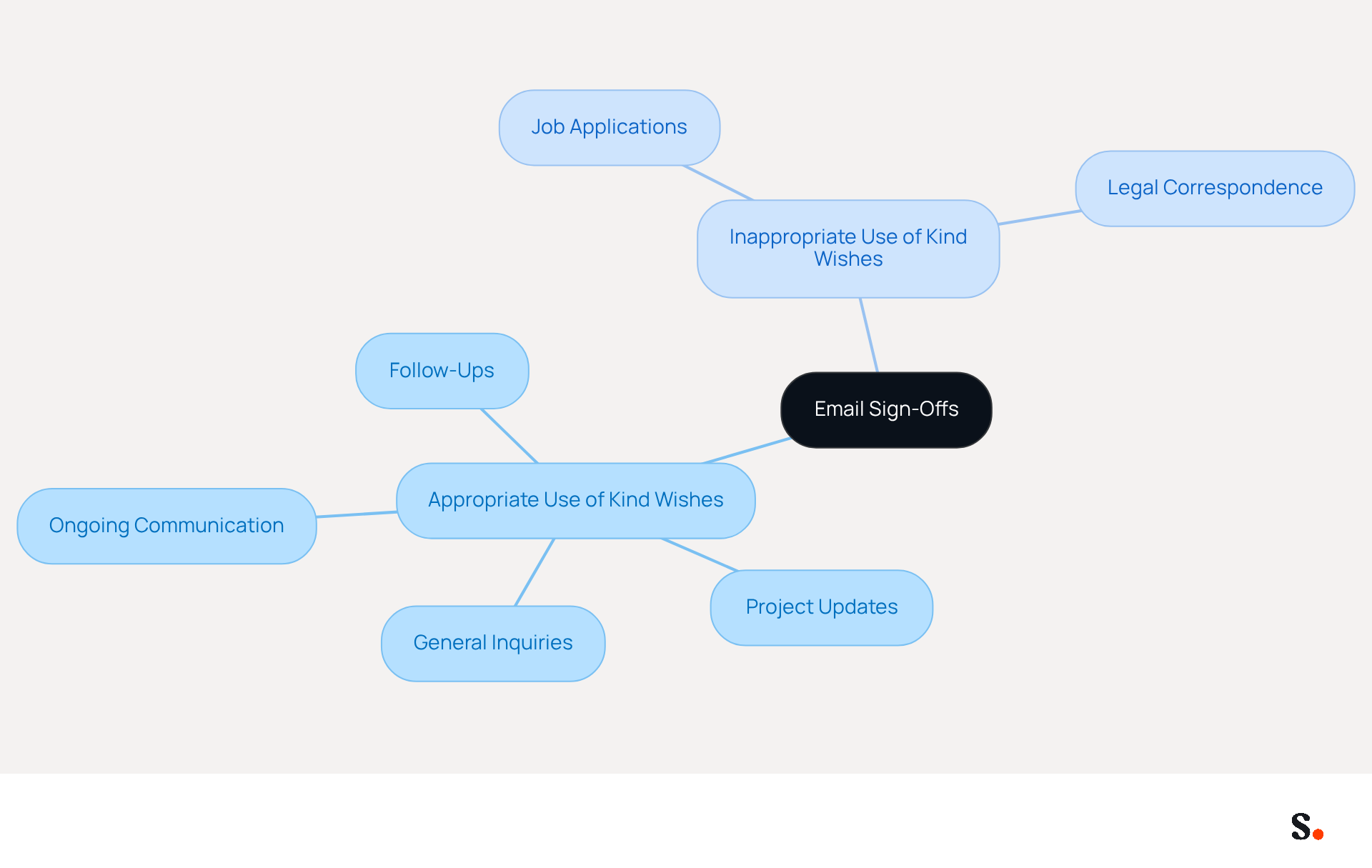
Selecting the appropriate email sign-off is crucial for effective professional communication. Utilizing 'Kind Wishes' is suitable in numerous professional situations, especially in ongoing communication with colleagues, clients, or business partners. This sign-off strikes a balance between professionalism and friendliness, making it ideal for emails such as follow-ups after meetings, project updates, or general inquiries. Studies show that thoughtful sign-offs can boost engagement and response rates by as much as 20%, highlighting the significance of selecting an appropriate closing.
However, 'Kind Wishes' is less suitable for formal interactions, such as job applications or legal correspondence, where a traditional sign-off like 'Sincerely' is more appropriate. In these situations, maintaining a formal tone is essential, as it reflects the seriousness of the message.
Case studies emphasize that using 'Kind Wishes' in emails promotes a positive perception and encourages ongoing dialogue, particularly in client communications where relationships are being built. Recognizing these contexts ensures that your email sign-off aligns with the message's tone and purpose, thereby enhancing your professional interactions.
Explore Alternatives to Best Regards
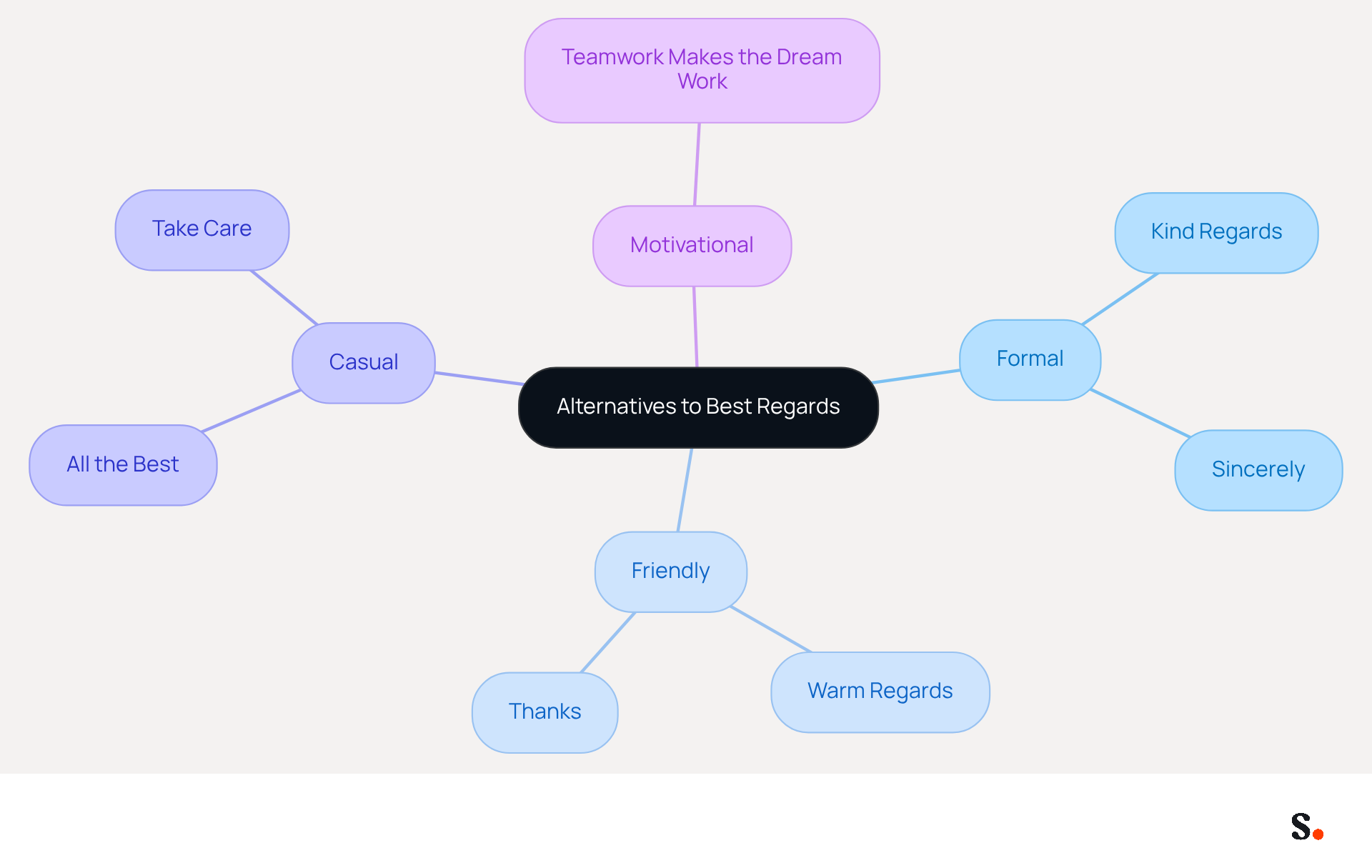
While 'Best Wishes' is often used, the choice of closing phrase can greatly influence the tone of your message. For instance, 'Kind Regards' is slightly more formal and suitable for first-time interactions, while 'Warm Regards' adds a friendly touch for familiar contacts. Other options include 'Sincerely,' which is more traditional, and 'Thanks,' which conveys appreciation. Additionally, phrases like 'All the best' or 'Take care' can be used in more casual settings. Utilizing a range of closing phrases allows you to tailor your communication style to the recipient and context, thereby strengthening your professional image.
Studies indicate that a tailored sign-off can greatly enhance interaction effectiveness, with 'Thanks' noted as the second most impactful closing. Case studies emphasize that approvals customized to the recipient's tone can enhance relationships and boost overall effectiveness in interaction. For instance, the case study on 'The Importance of Email Closures' illustrates how suitable endings can foster better relationships. Moreover, utilizing motivational phrases such as 'Teamwork makes the dream work' in internal messages has been demonstrated to enhance team spirit and cooperation. This adaptability not only improves your communication but also positions you as a thoughtful and engaged professional.
Avoid Common Mistakes with Best Regards
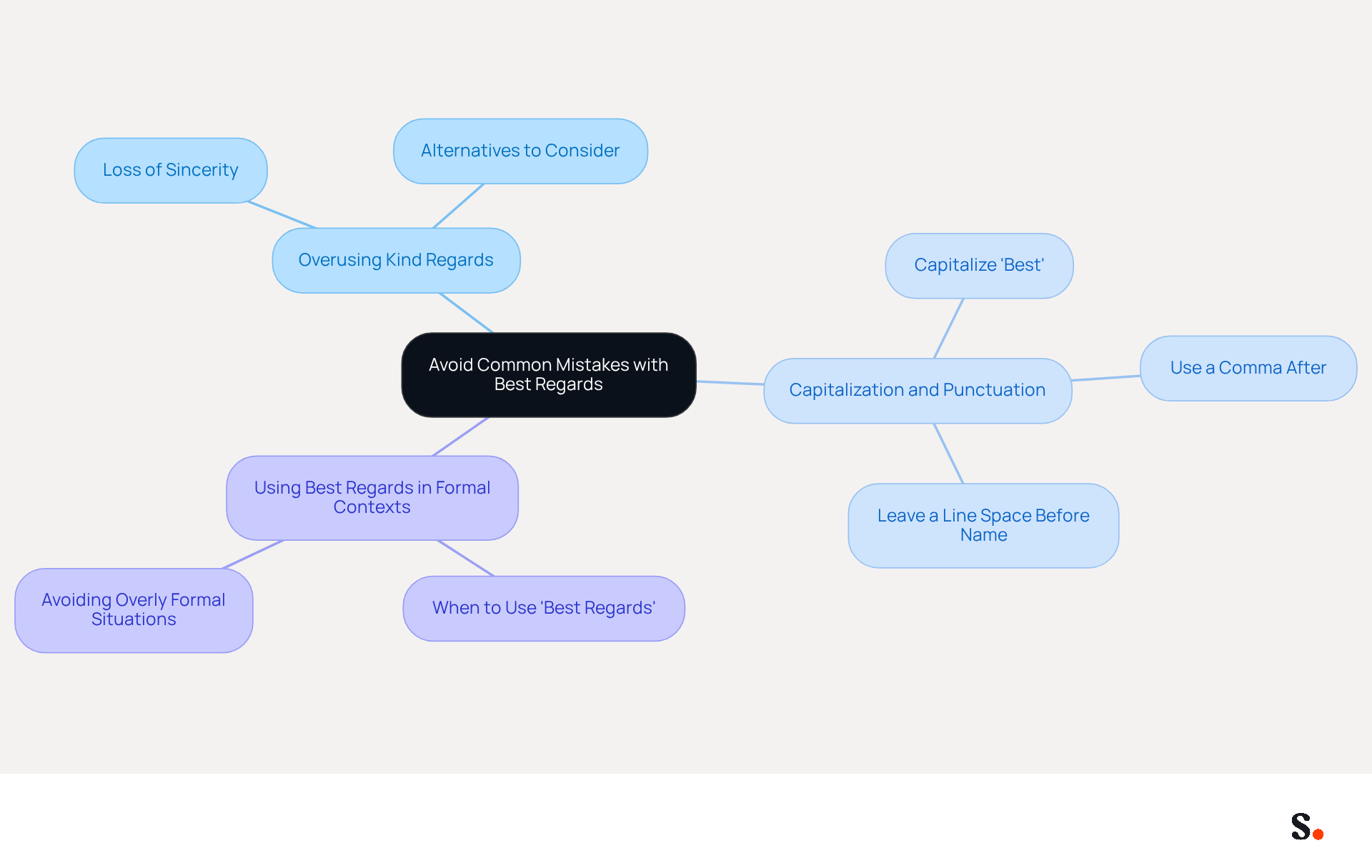
To effectively use 'Kind Regards,' it is crucial to recognize and avoid common pitfalls.
- Overusing 'Kind Regards' can lead to a loss of sincerity in your communication.
- Remember to capitalize 'Finest' and place a comma after the phrase, leaving a line space before your name.
- Another mistake is using 'Best Regards' in overly formal contexts where a more traditional sign-off is expected.
By avoiding these mistakes, you can ensure your sign-offs resonate with your recipients.
Conclusion
Mastering email sign-offs, particularly the phrase 'Best Regards,' is crucial for effective professional communication. This sign-off conveys goodwill and maintains professionalism, which is essential in many interactions. Understanding its meaning and the right contexts can help professionals improve their email etiquette and build stronger relationships with colleagues and clients.
Throughout this guide, the importance of selecting the right sign-off has been emphasized, showcasing how 'Best Regards' can be effectively used in ongoing communications while also highlighting the need for alternatives in more formal situations. Choosing the right sign-off can be challenging, especially when considering the nuances of professional communication. Common mistakes, such as overuse or inappropriate context, have been addressed to ensure that sign-offs resonate positively with recipients.
Ultimately, the right sign-off can transform your email interactions, fostering respect and professionalism in every correspondence. By applying these insights, professionals can improve their email correspondence, making sure each message makes a strong impression. Embracing thoughtful sign-offs not only enhances personal branding but also contributes to a culture of respect and professionalism in the workplace.
Frequently Asked Questions
What does the phrase 'Kind Wishes' mean in email communication?
'Kind Wishes' is an email closing that conveys goodwill and professionalism, combining 'best' to signify high esteem and 'regards' to express thoughts or feelings towards someone.
Why is it important to use a sign-off like 'Kind Wishes' in emails?
Using considerate conclusions like 'Kind Wishes' can increase response rates by up to 20% and helps maintain professionalism, while neglecting a sign-off can lead to misunderstandings and a lack of respect.
In what contexts is 'Kind Wishes' appropriate to use?
'Kind Wishes' is adaptable and suitable for both formal and semi-formal interactions.
How does the choice of sign-off affect professional image?
Casual sign-offs can diminish your professional image, making it essential to select sign-offs carefully to uphold professionalism.
What is the significance of mastering email etiquette with phrases like 'Kind Wishes'?
Grasping the significance and suitable application of 'Kind Wishes' is crucial for improving professional relationships and mastering email etiquette.
List of Sources
- Understand the Meaning of Best Regards
- 100 Compelling Email Statistics for 2026 | PGM Solutions (https://porchgroupmedia.com/blog/100-compelling-email-statistics-to-inform-your-strategy-in-2023)
- Are people misinterpreting your email sign-off? (https://bbc.com/worklife/article/20180413-best-wishes-kind-regards-or-an-icy-yrs)
- Best Regards or Kind Regards: Choosing the Right Email Closing (https://scribe-mail.com/en-US/blog/best-regards-or-kind-regards-choosing-the-right-email-closing)
- 2024 Email marketing statistics compilation including open rates and clickthrough rates (https://smartinsights.com/email-marketing/email-communications-strategy/statistics-sources-for-email-marketing)
- Identify When to Use Best Regards in Emails
- Best Regards or Kind Regards: Choosing the Right Email Closing (https://scribe-mail.com/en-US/blog/best-regards-or-kind-regards-choosing-the-right-email-closing)
- Email Sign Offs for Every Industry and Situation | Mailchimp (https://mailchimp.com/resources/email-sign-offs)
- Why Best Regards Is the Ultimate Email Sign-Off (With One Exception) (https://gmass.co/blog/best-regards)
- How to end an email: 70+ professional sign-offs & examples (https://blog.superhuman.com/how-to-end-an-email)
- Explore Alternatives to Best Regards
- 105 Alternatives to “Best Regards” for Your Email Sign-Off (https://wisestamp.com/blog/best-regard-alternatives)
- The Best (and Worst) Ways To Sign an Email | Robert H. Smith School of Business (https://rhsmith.umd.edu/research/best-and-worst-ways-sign-email)
- 50 Best Email Sign-Offs to End an Email Properly in [year] (https://elementor.com/blog/best-email-sign-offs)
- Forget “Best” or “Sincerely,” This Email Closing Gets the Most Replies – The Boomerang Blog (https://blog.boomerangapp.com/2017/01/how-to-end-an-email-email-sign-offs)
- How to End an Email: 43 Ways to Sign Off on an Email (2026) (https://respona.com/blog/how-to-end-an-email)
- Avoid Common Mistakes with Best Regards
- Why Best Regards Is the Ultimate Email Sign-Off (With One Exception) (https://gmass.co/blog/best-regards)
- Master Email Ending Regards: Best Practices for Professional Sign-Offs (https://scribe-mail.com/en-US/blog/master-email-ending-regards-best-practices-for-professional-sign-offs)
- Forget “Best” or “Sincerely,” This Email Closing Gets the Most Replies – The Boomerang Blog (https://blog.boomerangapp.com/2017/01/how-to-end-an-email-email-sign-offs)
- Best Regards Alternative & Kind Regards: Email Sign-Offs - NEWOLDSTAMP (https://newoldstamp.com/blog/best-regards-alternatives)
Get started with Scribe
Build a professional email signature
Free 14-day trial — no credit card.