Email Compliance Software vs. Traditional Tools: Key Differences for Marketers
Marketers are increasingly challenged by the need to balance compliance with effective outreach in email marketing. The decision to use specialized email
Sophie Grant
Email Signature Specialist, Scribe

On this page
- Introduction
- Define Email Compliance Software and Its Core Functions
- Explore Traditional Email Marketing Tools and Their Features
- Compare Advantages and Disadvantages of Each Approach
- Email Compliance Software
- Traditional Email Marketing Tools
- Assess Suitability for Various Business Needs and Industries
- Email Compliance Software
- Traditional Email Marketing Tools
- Conclusion
- Frequently Asked Questions
- List of Sources
Introduction
Marketers are increasingly challenged by the need to balance compliance with effective outreach in email marketing. The decision to use specialized email compliance software over traditional marketing tools is essential for effective communication. As organizations recognize the importance of compliance in their communication strategies, navigating the complexities of legal regulations becomes critical.
This article delves into the key differences between these two approaches, exploring how email compliance software not only enhances regulatory adherence but also streamlines marketing efforts. Marketers often struggle to ensure compliance while still engaging their audience effectively. Utilizing specialized email compliance software can significantly ease this burden, allowing for more effective marketing strategies. The right tools can transform compliance from a burden into a strategic advantage.
Define Email Compliance Software and Its Core Functions
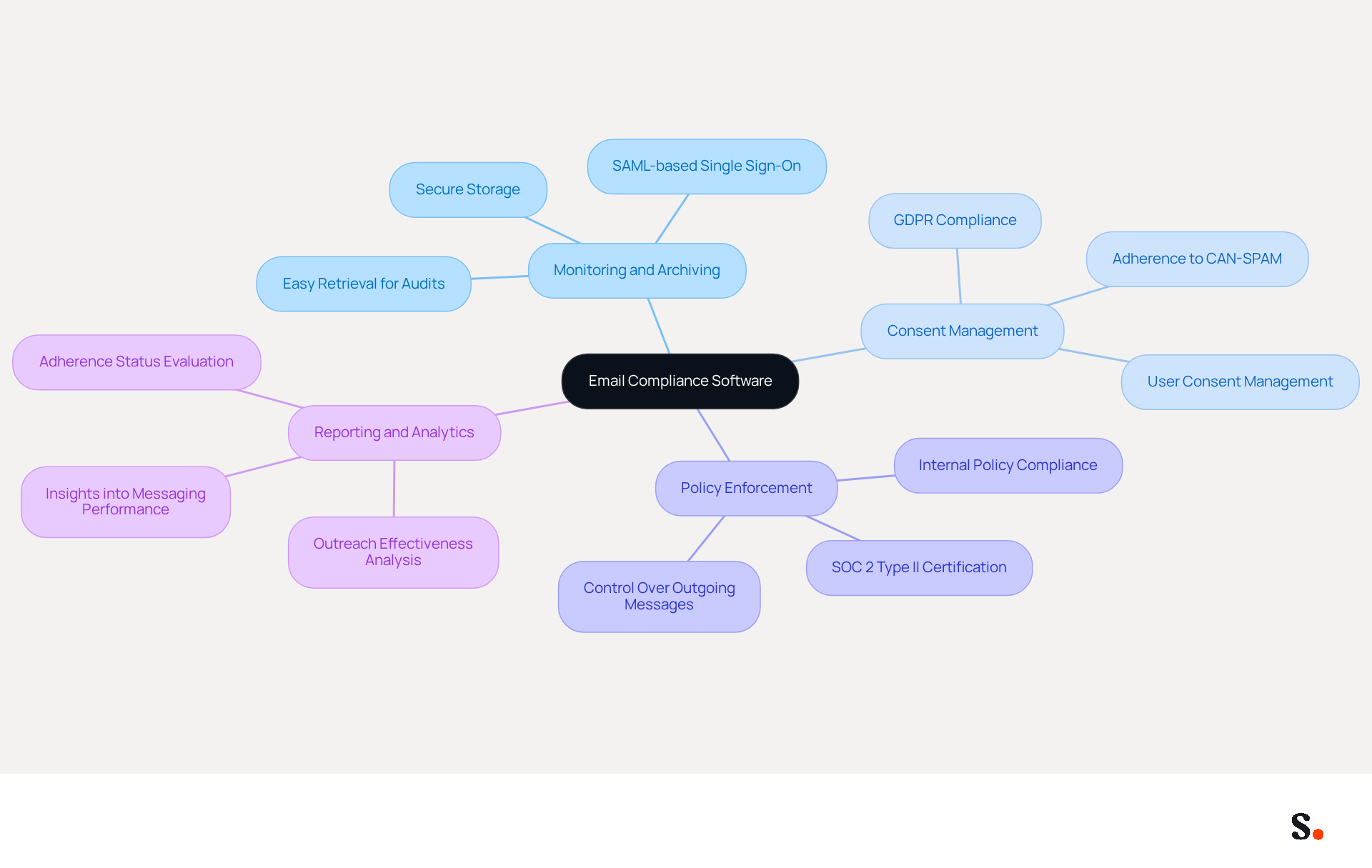
Software for managing communications is crucial for organizations seeking to align their messaging with legal and regulatory requirements. Organizations often struggle to maintain compliance and effective communication without using email compliance software. Its core functions include:
- Monitoring and Archiving: This software meticulously tracks all email communications, ensuring secure storage and easy retrieval for audits or compliance checks. With Scribe's SAML-based single sign-on, employees can securely access the platform through their identity provider, making sure only authorized personnel manage signatures.
- Consent Management: It facilitates the management of user consent for receiving marketing communications, ensuring adherence to regulations such as GDPR and CAN-SPAM. Scribe is fully GDPR compliant, providing transparency in data handling practices and ensuring that user consent is respected.
- Policy Enforcement: The email compliance software enforces internal policies regarding communication, ensuring that all outgoing messages comply with company standards and legal requirements. With Scribe's SOC 2 Type II certification, organizations can trust that their data is handled securely, meeting rigorous standards for data protection.
- Reporting and Analytics: It provides insights into messaging performance and adherence status, enabling marketers to evaluate outreach effectiveness while upholding legal standards. Real-world examples show how core functions like consent management and policy enforcement are vital for compliance and fostering subscriber trust. Scribe's automated signature management guarantees that signature details are consistently current, minimizing the risk of non-compliance and improving the overall effectiveness of outreach efforts.
By automating these processes, email compliance software helps reduce the risk of non-compliance and boosts the efficiency of email marketing. The global regulatory software market is anticipated to expand at a CAGR of 10.5% from 2026 to 2033, reaching an estimated USD 78.9 billion by 2033, reflecting the growing demand for robust regulatory solutions. As regulations evolve, leveraging advanced compliance features will be crucial for marketers aiming to maintain trust and effectiveness in their outreach.
Explore Traditional Email Marketing Tools and Their Features
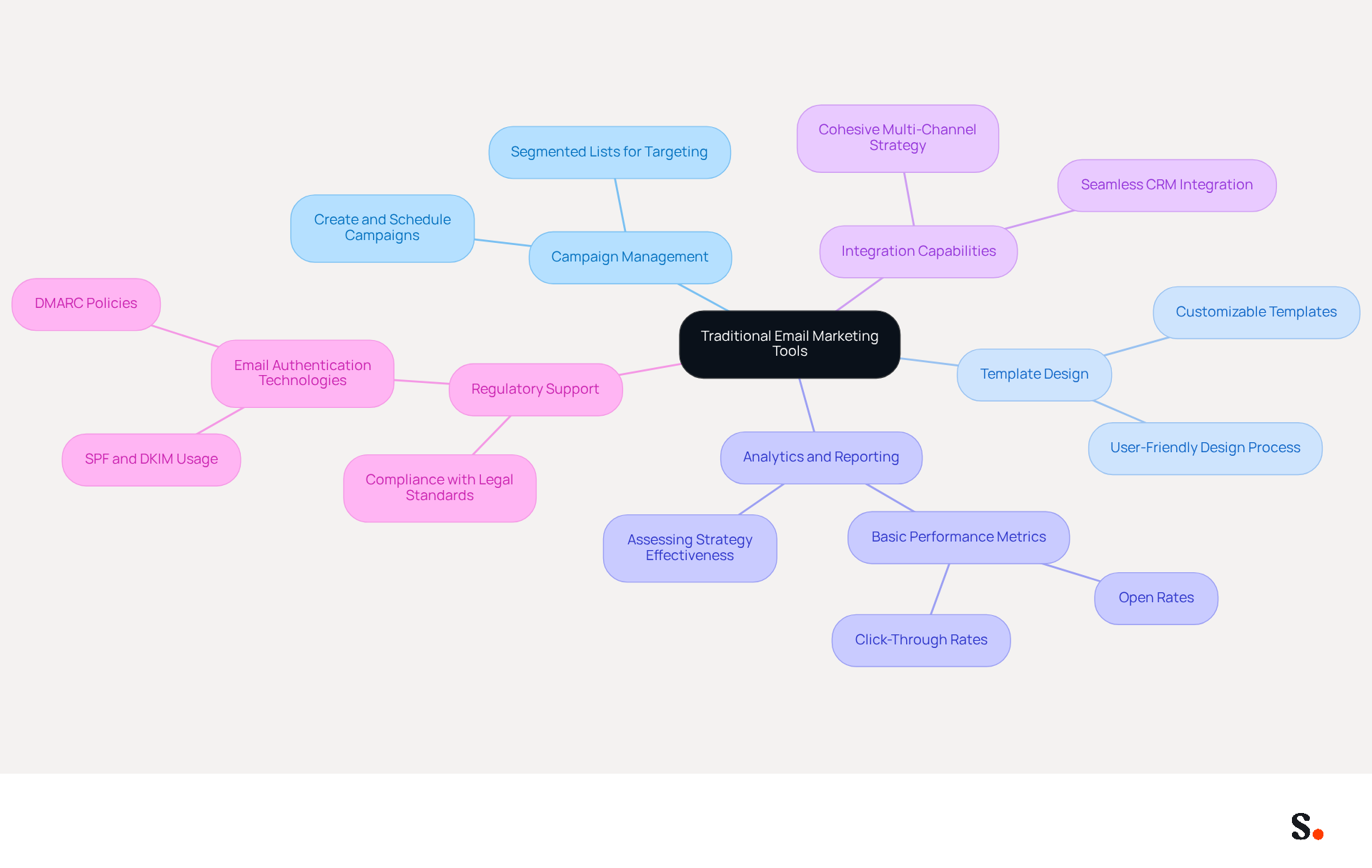
While traditional communication tools like Mailchimp and Constant Contact offer valuable features, they often lack essential regulatory support. Key functionalities include:
- Campaign Management: Users can create, schedule, and send email campaigns to segmented lists, enabling targeted marketing efforts that resonate with specific audience segments.
- Template Design: These platforms provide customizable templates, enabling marketers to create visually appealing communications without needing extensive design skills, thereby simplifying the creative process.
- Analytics and Reporting: Basic analytics features, such as open rates and click-through rates, are available to measure campaign performance, helping marketers assess the effectiveness of their strategies.
- Integration Capabilities: Numerous conventional solutions integrate effortlessly with CRM systems and other promotional platforms, facilitating a more cohesive strategy across various channels.
However, many businesses find that email compliance software does not adequately support compliance with legal standards. For instance, a case study on electronic mail authentication highlights that while 66.2% of senders utilize both SPF and DKIM for verification, over 25% remain uncertain about their authentication status. This gap in regulatory support can jeopardize a company's ability to maintain compliance and trust with its audience, highlighting the need for more thorough email compliance software solutions. As the landscape of digital marketing continues to evolve, the demand for robust regulatory features will only increase, making it imperative for businesses to adapt.
Compare Advantages and Disadvantages of Each Approach
When evaluating email compliance software against traditional email marketing tools, distinct advantages and disadvantages become apparent:
Email Compliance Software
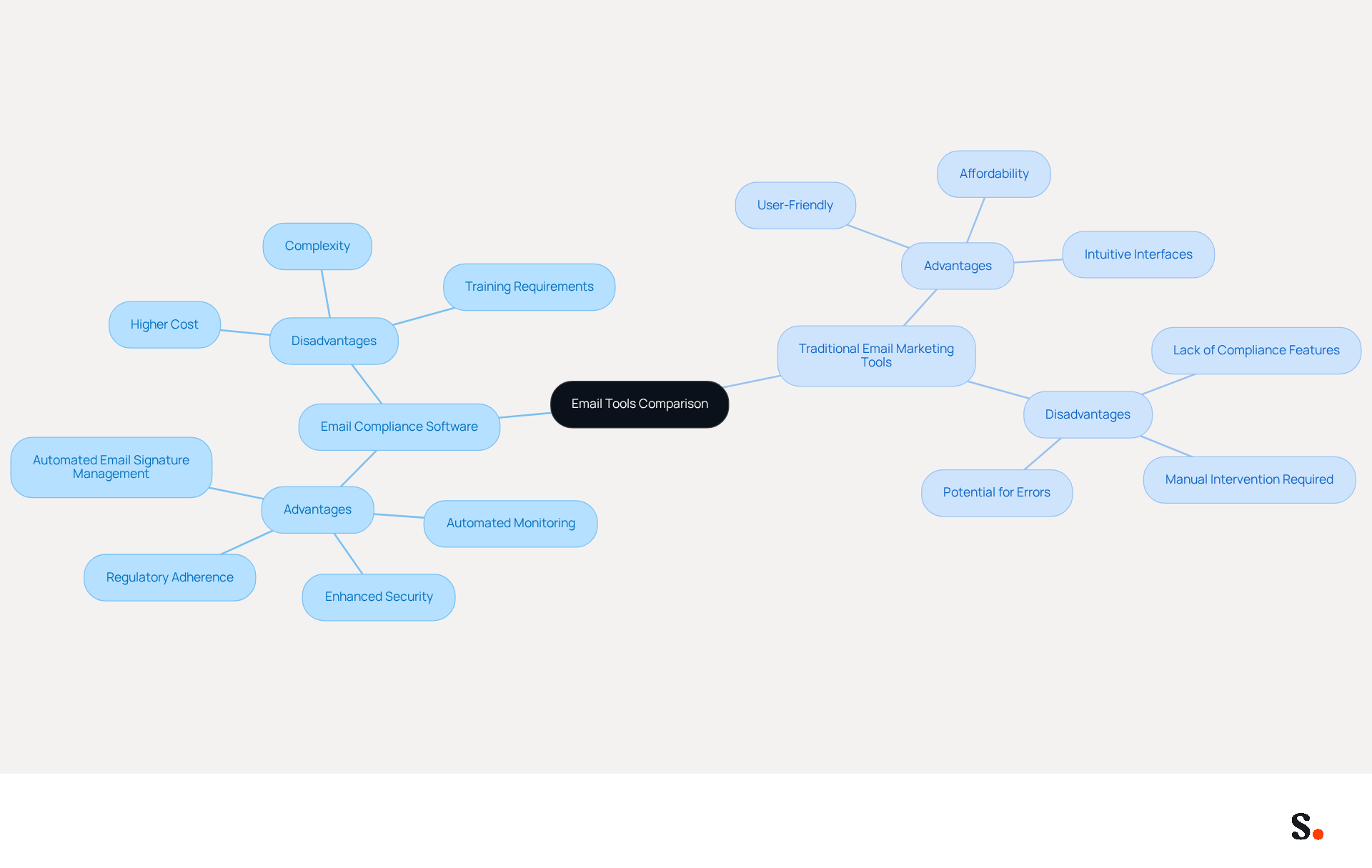
Advantages:
- One key advantage is regulatory adherence, which ensures compliance with laws like GDPR and CAN-SPAM, significantly reducing legal risks. In 2023, GDPR penalties reached €2.1 billion in the EU, highlighting the significance of adherence.
- Scribe's integration with SAML-based single sign-on enhances security and simplifies access management, ensuring that only authorized users can manage signatures.
- Additionally, automated monitoring continuously tracks communication messages for adherence, minimizing manual oversight and the potential for human error.
- Scribe's automated email signature management allows for effortless updates, ensuring that all signatures remain compliant and up-to-date.
- Enhanced security is another critical benefit, offering robust features to protect sensitive data and maintain confidentiality. Given that the average cost of a data breach globally is USD 3.92 million, this is crucial.
- Furthermore, Scribe's SOC 2 Type II certification further assures users of its commitment to secure data handling.
Disadvantages:
- However, there are drawbacks. The cost is typically higher than traditional tools, which may deter smaller businesses.
- Mid-tier pricing for regulations ranges from $5 to $8 per user per month, which can accumulate for larger teams.
- Additionally, the complexity of these tools may require training for staff to effectively utilize all features, potentially leading to a steeper learning curve.
Traditional Email Marketing Tools
Advantages:
- A notable advantage of traditional email marketing tools is their user-friendliness, as they generally feature intuitive interfaces that require minimal training, making them accessible for teams with limited technical expertise.
- They are also often more affordable, making them accessible for small businesses and startups.
- For instance, platforms like Mailchimp offer free plans for up to 500 contacts, which can be appealing for new businesses.
Disadvantages:
- On the downside, traditional tools often lack the necessary compliance features to ensure adherence to legal standards, exposing businesses to risks.
- Many do not offer automated opt-out management, which is crucial for compliance.
- Moreover, these tools require more manual intervention to manage regulations, increasing the potential for errors.
- This can result in regulatory failures, often attributed to loose processes rather than missing features.
Ultimately, the choice between these tools hinges on balancing compliance needs with budgetary constraints and user capabilities.
Assess Suitability for Various Business Needs and Industries
The choice between email compliance software and traditional marketing tools hinges on the specific regulatory landscape and operational demands of each industry:
Email Compliance Software
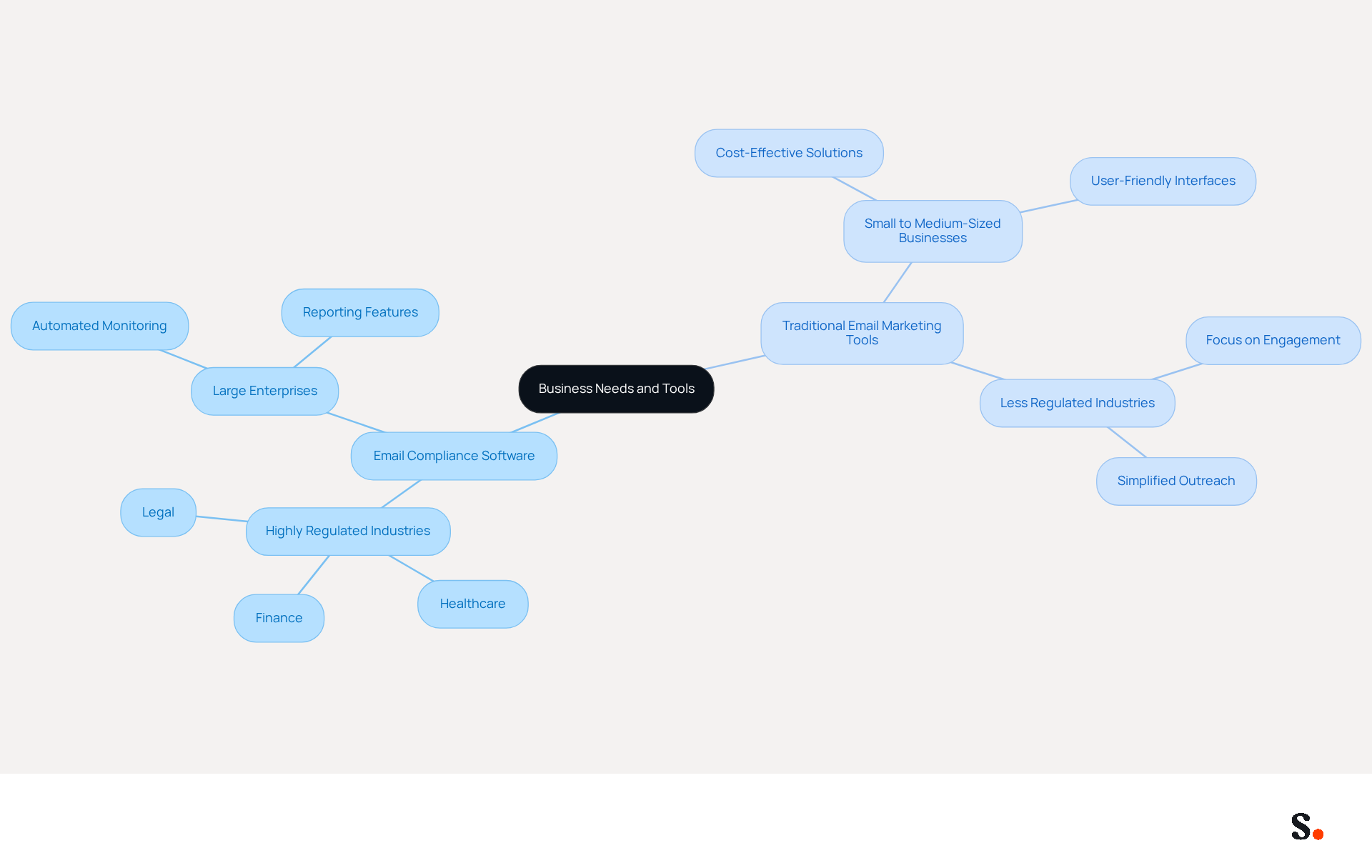
- Highly Regulated Industries: Sectors such as finance, healthcare, and legal face stringent compliance measures. Therefore, it is crucial for organizations to use email compliance software to meet regulations and safeguard sensitive information.
- Large Enterprises: For large enterprises, automated monitoring and reporting features are invaluable. These tools streamline the process of maintaining adherence across multiple stakeholders and departments, enhancing operational efficiency.
Traditional Email Marketing Tools
- Small to Medium-Sized Businesses: Traditional email marketing tools are typically more accessible for small to medium-sized businesses. They are often more cost-effective and user-friendly, making them ideal for organizations with limited budgets that may not require extensive compliance features.
- Less Regulated Industries: Companies operating in sectors with fewer regulatory requirements may find traditional resources sufficient for their marketing needs. This allows them to focus on engagement and outreach without the complexities of compliance management.
Ultimately, the decision between regulatory software and traditional tools should be influenced by the specific legal framework and operational needs of the business. Understanding these nuances can lead to more informed decisions that align with both compliance requirements and business objectives.
Conclusion
In the evolving landscape of digital communication, the distinction between email compliance software and traditional marketing tools is critical for marketers. Each serves distinct purposes, with its own set of advantages and challenges. Understanding these differences is essential for marketers aiming to navigate the complexities of compliance while maximizing outreach effectiveness.
Email compliance software, such as Scribe, stands out for its robust regulatory adherence, automated monitoring, and enhanced security features, making it indispensable for organizations in highly regulated industries. Key functionalities of email compliance software include:
- Monitoring
- Consent management
- Policy enforcement
These are crucial for maintaining compliance with laws like GDPR and CAN-SPAM. In contrast, traditional email marketing tools offer user-friendly interfaces and cost-effective solutions, but often lack the necessary compliance features. This gap exposes businesses to legal risks, highlighting the necessity of selecting the appropriate tool for industry-specific compliance.
As the landscape of digital marketing continues to evolve, the demand for effective email compliance solutions will only grow. Organizations must prioritize compliance to build trust with their audience and safeguard their operations. Using tools like Scribe helps businesses maintain brand consistency and improve marketing ROI while confidently managing email compliance. Choosing the right compliance solution is not just a matter of preference; it is essential for sustaining trust and operational integrity in a regulated market.
Frequently Asked Questions
What is email compliance software?
Email compliance software is a tool used by organizations to manage communications in alignment with legal and regulatory requirements, ensuring compliance and effective communication.
What are the core functions of email compliance software?
The core functions include monitoring and archiving email communications, managing user consent for marketing communications, enforcing internal communication policies, and providing reporting and analytics on messaging performance.
How does email compliance software assist with monitoring and archiving?
It meticulously tracks all email communications, ensuring secure storage and easy retrieval for audits or compliance checks.
What role does consent management play in email compliance software?
Consent management facilitates the management of user consent for receiving marketing communications, ensuring adherence to regulations such as GDPR and CAN-SPAM.
How does Scribe ensure GDPR compliance?
Scribe is fully GDPR compliant, providing transparency in data handling practices and ensuring that user consent is respected.
What is the importance of policy enforcement in email compliance software?
Policy enforcement ensures that all outgoing messages comply with company standards and legal requirements, helping organizations maintain internal communication policies.
What certification does Scribe hold that relates to data protection?
Scribe holds a SOC 2 Type II certification, which assures organizations that their data is handled securely and meets rigorous standards for data protection.
How does email compliance software contribute to reporting and analytics?
It provides insights into messaging performance and adherence status, enabling marketers to evaluate outreach effectiveness while upholding legal standards.
What is the projected growth of the global regulatory software market?
The global regulatory software market is anticipated to expand at a CAGR of 10.5% from 2026 to 2033, reaching an estimated USD 78.9 billion by 2033.
Why is leveraging advanced compliance features important for marketers?
As regulations evolve, leveraging advanced compliance features is crucial for marketers to maintain trust and effectiveness in their outreach efforts.
List of Sources
- Define Email Compliance Software and Its Core Functions
- Email Marketing Compliance in 2026: GDPR, CAN-SPAM & Privacy Laws Explained (https://hustlermarketing.com/email-marketing-compliance-in-2026-gdpr-can-spam-privacy-laws-explained)
- 2026 Email Marketing Compliance: What You Need to Know (https://oginbox.com/blog/email-marketing-compliance-2026-a-simple-guide-5r4so)
- Compliance Software Market Size, Share Report, 2026-2033 (https://grandviewresearch.com/industry-analysis/compliance-software-market-report)
- Email Compliance Software: The Definitive 2026 Guide (https://merge.email/blog/email-compliance-software)
- Enterprise Email Compliance: Checklist for 2026 (https://mailforge.ai/blog/enterprise-email-compliance-checklist)
- Explore Traditional Email Marketing Tools and Their Features
- Email Marketing Trends 2026: Here's What to Keep an Eye on (https://mailjet.com/blog/email-best-practices/email-marketing-trends-2026)
- 10 Best Email Marketing Platforms for 2026 (https://constantcontact.com/blog/email-marketing-tools)
- The Top Email Marketing Trends for 2026 (https://litmus.com/blog/trends-in-email-marketing)
- Email Marketing in 2026: What’s Changing and What’s Not? (https://linkedin.com/pulse/email-marketing-2026-whats-changing-qtonix-bn1gc)
- The Best Email Marketing Software We've Tested for 2026 (https://pcmag.com/picks/the-best-email-marketing-software)
- Compare Advantages and Disadvantages of Each Approach
- Email Compliance Software: The Definitive 2026 Guide (https://merge.email/blog/email-compliance-software)
- Email Compliance Automation Costs | Detailed Guide (https://trustifi.com/blog/guide-to-email-compliance-automation-costs)
- Best Email Marketing Platforms for 2026: An Attentive Guide — Blog | Attentive (https://attentive.com/blog/best-email-marketing-platforms)
- Best Email Marketing Service & Software Reviews of 2026 (https://business.com/categories/best-email-marketing-services)
- 2026 Email Marketing Software Comparison Guide (https://activecampaign.com/blog/email-marketing-software-comparison-guide)
- Assess Suitability for Various Business Needs and Industries
- Best Email Marketing Platforms for Small Businesses (2026) (https://constantcontact.com/blog/best-email-marketing-platforms-for-small-businesses)
- Why email compliance software is now business-critical (https://fintech.global/2026/01/05/why-email-compliance-software-is-now-business-critical)
- Best Email Compliance Software for Regulated Industries | iPost (https://ipost.com/blog/best-email-compliance-software-for-regulated-industries)
- Find Out the Best Email Marketing Software for Startups (https://mailtrap.io/blog/email-marketing-platforms-for-startups)
- Best Email Marketing Platform for Small Business (2026): Mailchimp Ranked #1 for Ease and Results by Expert Consumers (https://finance.yahoo.com/news/best-email-marketing-platform-small-113000671.html)
Get started with Scribe
See why teams switch to Scribe
Free 14-day trial — no credit card.