Formal vs. Casual: Best Words to End an Email for Marketing Managers
For marketing managers, choosing the right email sign-off is essential to effective communication. This article explores the contrasting worlds of formal and
Sophie Grant
Email Signature Specialist, Scribe
Introduction
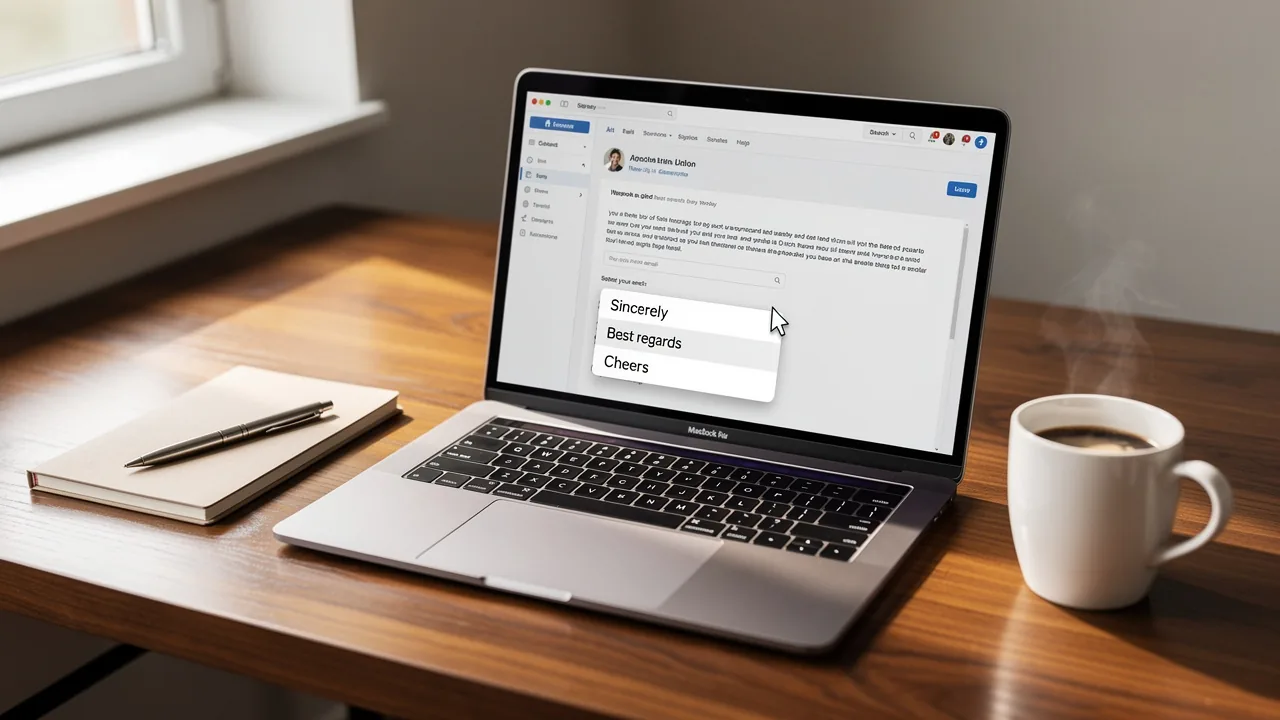
For marketing managers, choosing the right email sign-off is essential to effective communication. This article explores the contrasting worlds of formal and casual email closings, examining how each can shape professional relationships and engagement. As generational shifts influence communication styles, the challenge lies in selecting the right sign-off that resonates with the audience while maintaining professionalism. Understanding best practices for selecting an email sign-off that balances formality and approachability is key to effective communication.
Define Formal and Casual Email Sign-Offs
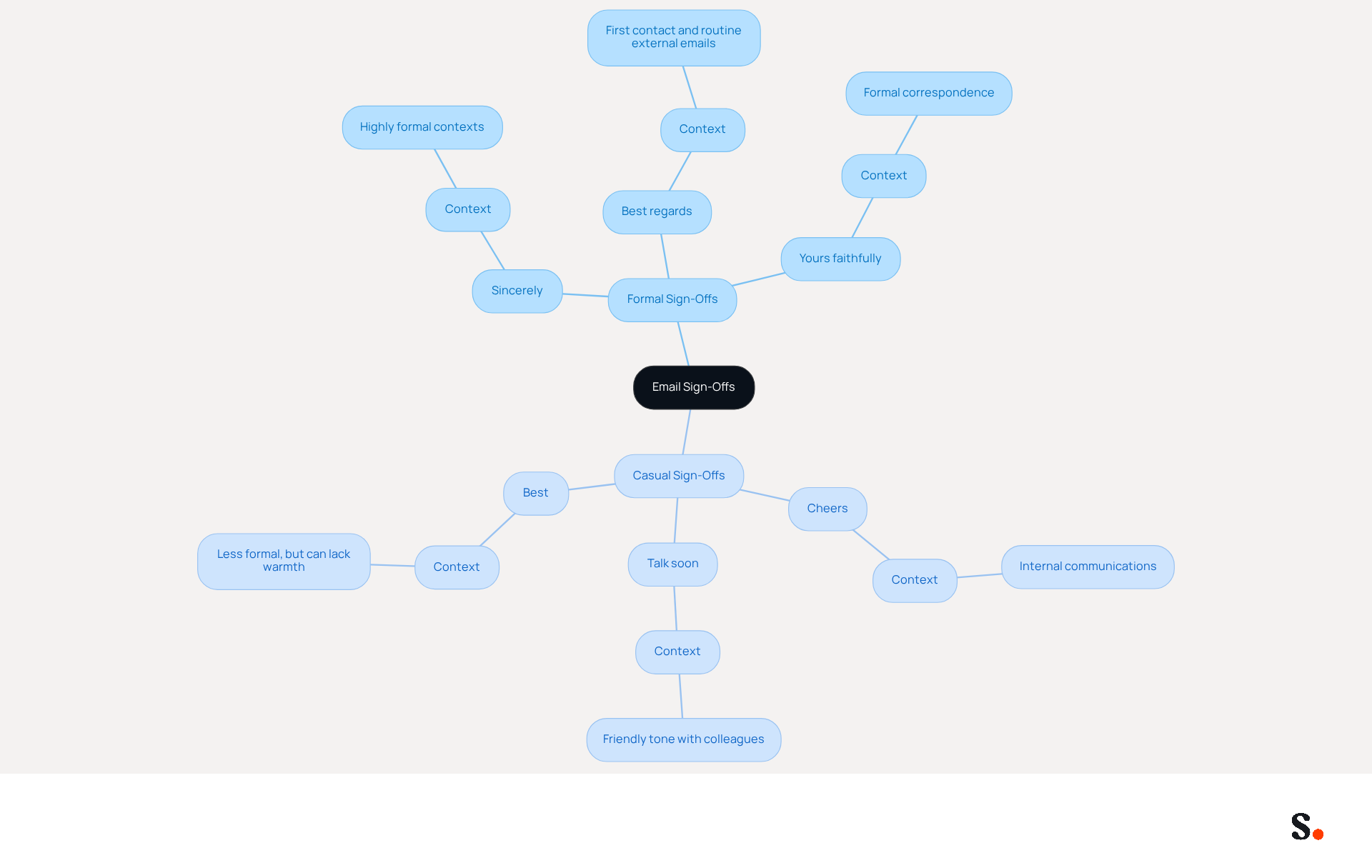
Choosing the right words to end an email is essential for effective communication in formal correspondence. Formal correspondence closings typically consist of words to end an email, such as 'Sincerely,' 'Best regards,' and 'Yours faithfully.' These approvals convey professionalism and respect, making them suitable for initial communications, business proposals, or interactions with clients and superiors. In contrast, casual closings like 'Cheers,' 'Talk soon,' or 'Best' are more relaxed and friendly, often used in emails to colleagues or familiar contacts. Choosing the right words to end an email can be challenging without understanding the recipient's context.
Research shows that 63% of professionals prefer using formal words to end an email in their communications, particularly in initial outreach and formal settings. Additionally, using words to end an email that are gratitude-based, such as 'Thank you,' significantly boosts response rates, enhancing engagement and fostering professional relationships.
Case studies show how important it is to align your sign-off with the message's tone. For example, a clear approach to selecting closings helps ensure the tone matches the message, preventing mismatched tones and enhancing effectiveness in interactions. As we progress through 2026, generational differences are increasingly shaping communication etiquette. While Baby Boomers typically favor formal closings, younger professionals, particularly Gen Z, are reshaping norms with more casual phrases like 'Catch you later' and 'Stay awesome.' This shift necessitates that marketing managers adapt their strategies to remain effective while maintaining professionalism and fostering authentic connections.
Evaluate the Pros and Cons of Formal Sign-Offs
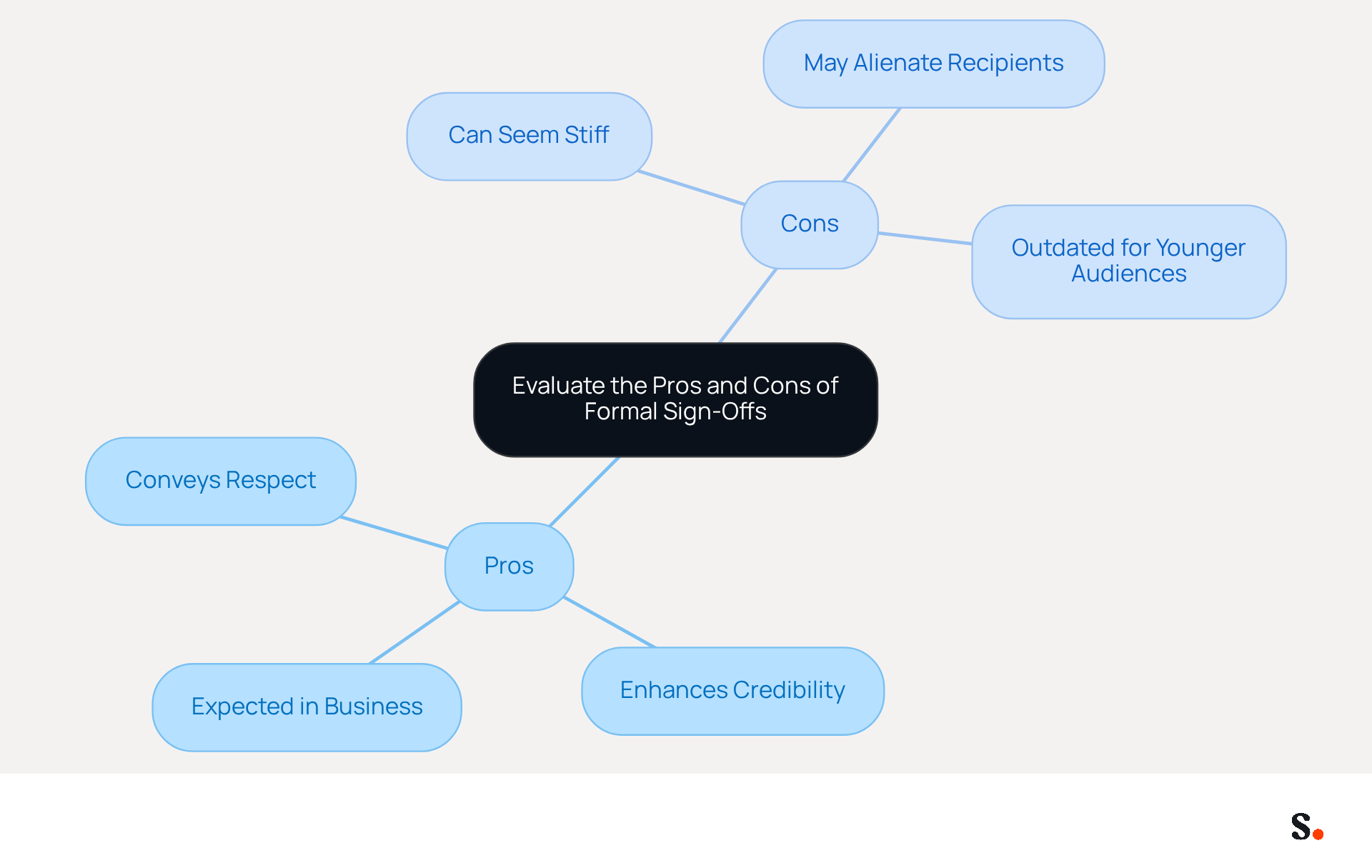
While words to end an email are often seen as a hallmark of professionalism, their effectiveness can vary significantly based on context. The use of words to end an email offers several advantages, primarily their ability to convey respect and professionalism, which can significantly enhance the sender's credibility. Studies show that formal words to end an email, such as 'Sincerely' and 'Respectfully,' are typically expected in business communications, especially during initial contacts or in formal settings. These approvals can help establish a tone of seriousness and reliability, which is crucial in professional interactions. For instance, a study found that the sign-off 'Thank you' achieved a response rate of 57.9%, highlighting the effectiveness of words to end an email in eliciting positive responses.
However, formal closings can also present challenges. They can sometimes seem stiff or impersonal, potentially alienating recipients who prefer a more approachable tone. In today's fast-paced digital landscape, using casual words to end an email may resonate better with younger audiences, as excessively formal closings may appear outdated. Research, such as 'The Impact of Sign-Offs on Communication,' has demonstrated that messages with more relaxed closures can encourage better engagement and response rates, particularly in creative sectors.
While formal approvals enhance professionalism, it's crucial to consider their effectiveness in relation to the communication context, recipient preferences, and the suitable words to end an email. Sean Butcher, Founder of Reflect Consultancy, emphasizes, "Consider your audience first. Are you addressing a large corporation or a small startup?" Balancing formality with a touch of warmth can lead to more effective and engaging email interactions, particularly when choosing the right words to end an email.
Assess the Pros and Cons of Casual Sign-Offs
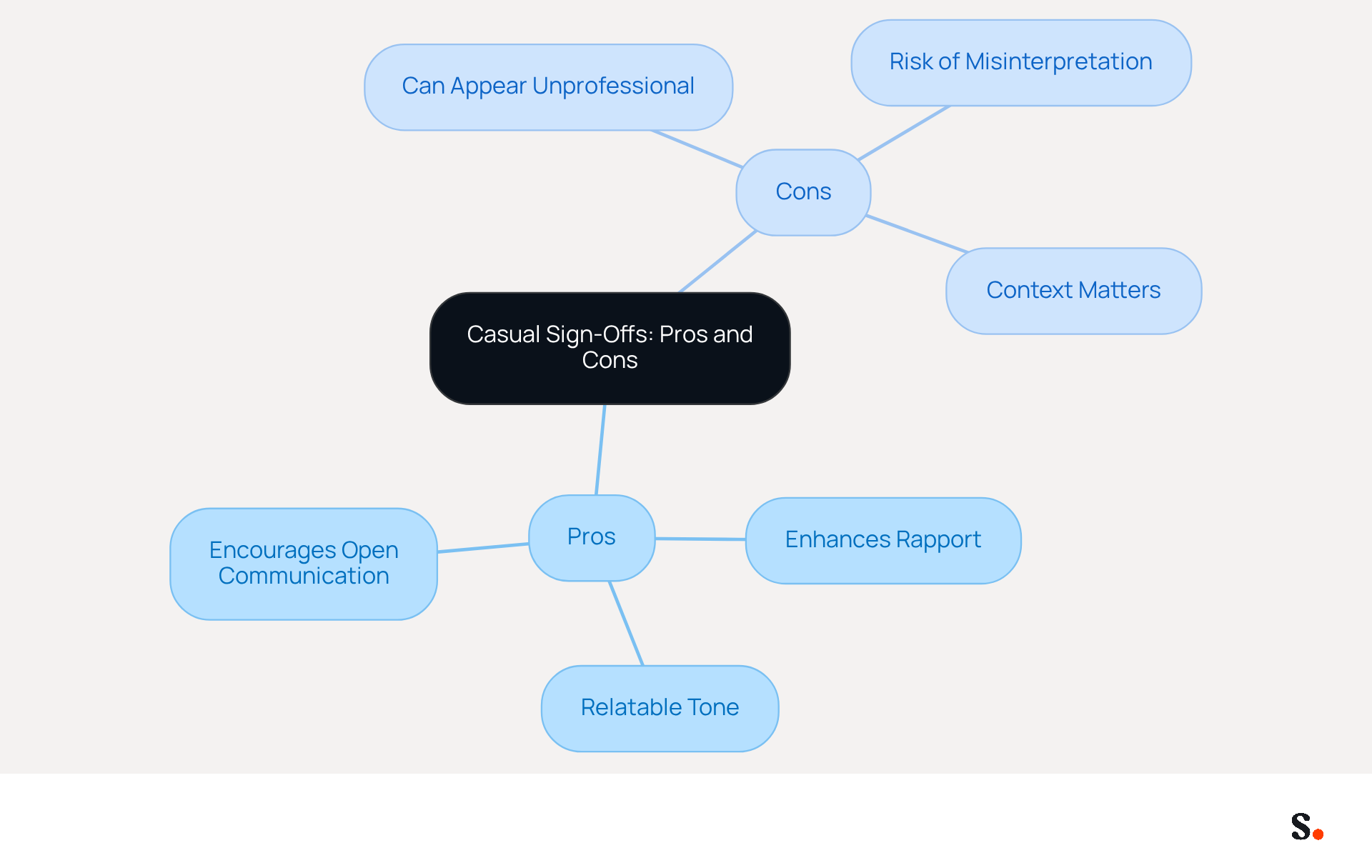
While casual farewells can enhance rapport, they also carry risks in professional communication. Casual farewells can create a friendly and approachable tone, fostering stronger relationships with colleagues and clients. They are often perceived as more relatable and can encourage open communication. Yet, they can also come across as unprofessional in specific situations, particularly when addressing new clients or in formal business settings. Additionally, they risk misinterpretation, which can lead to misunderstandings about the sender's intent or seriousness. Understanding the balance between approachability and professionalism is crucial for effective communication.
Provide Examples of Effective Sign-Offs
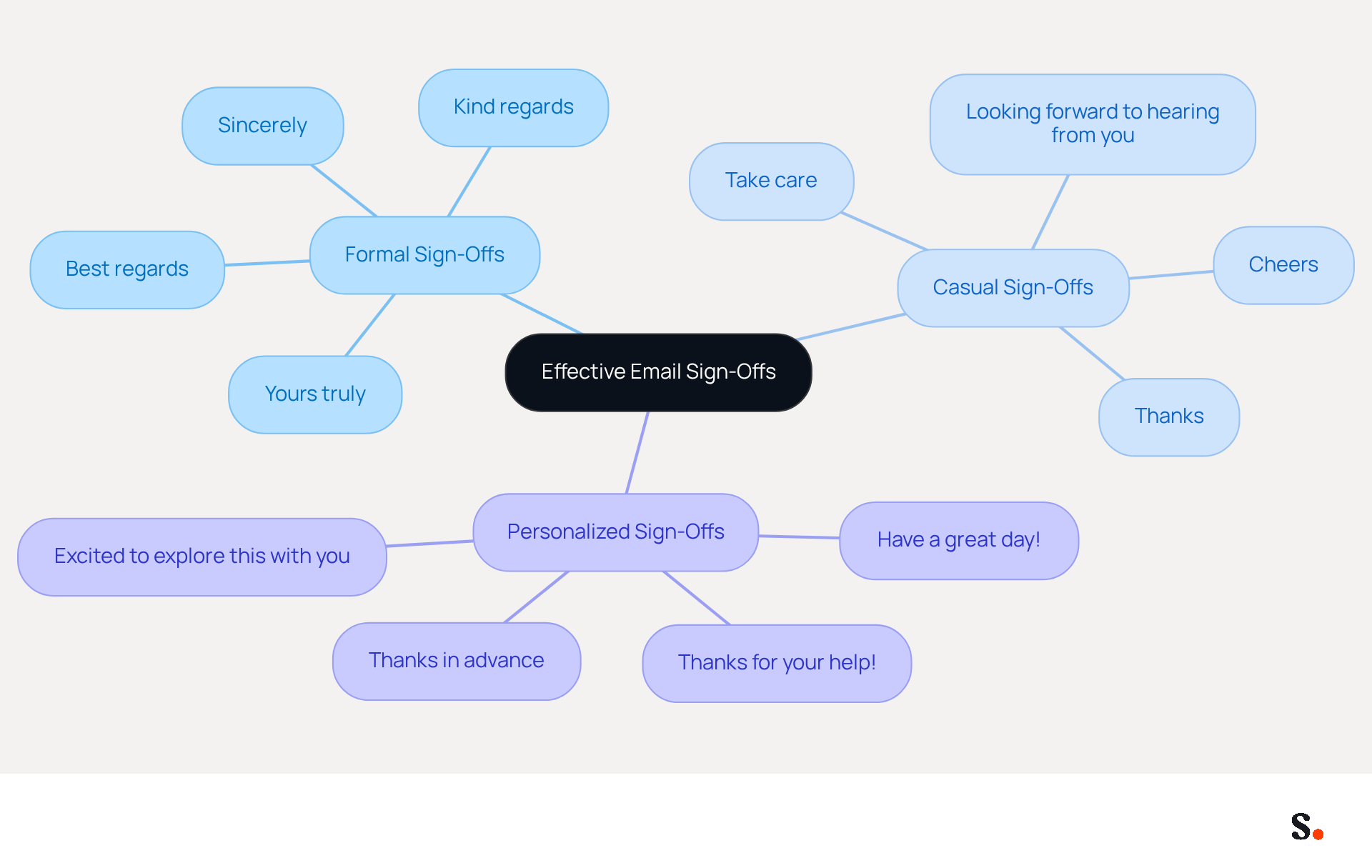
Choosing the right words to end an email can significantly impact engagement and professionalism. Effective formal words to end an email include options like 'Sincerely,' 'Best regards,' and 'Yours truly.' These options are particularly suitable for initial outreach or formal communications, as they convey professionalism and respect, which are important when choosing words to end an email. In contrast, casual contexts benefit from using words to end an email like 'Cheers,' 'Take care,' and 'Looking forward to hearing from you,' which foster a warm and inviting tone.
Personalized words to end an email can significantly enhance engagement. For instance, phrases like 'Thanks for your help!' are considered words to end an email. You can use phrases like 'Have a great day!' as words to end an email. To leave a positive impression and encourage a friendly rapport with recipients, consider using effective words to end an email. For instance, 'Thanks in advance' boasts a 65.7% response rate, while 'Best' follows closely at 51.2%, showcasing how effective words to end an email can be.
Case studies illustrate the effectiveness of these sign-offs in marketing communications. For example, using 'Best regards' in initial emails to new clients maintains professionalism while ensuring clarity. Similarly, 'Looking forward to hearing from you' is one of the effective words to end an email that serves as a low-pressure sign-off, encouraging responses and making it ideal for nurturing long-term relationships.
In 2026, the trend leans towards personalized and context-aware conclusions, which can lead to a 14% increase in conversion rates when applied effectively. This shift underscores the importance of tailoring sign-offs to the relationship and context, ensuring they resonate with the recipient and enhance the overall communication experience. Ultimately, using the right words to end an email can transform a standard email into a powerful tool for building relationships.
Guide on Choosing the Right Sign-Off for Your Audience
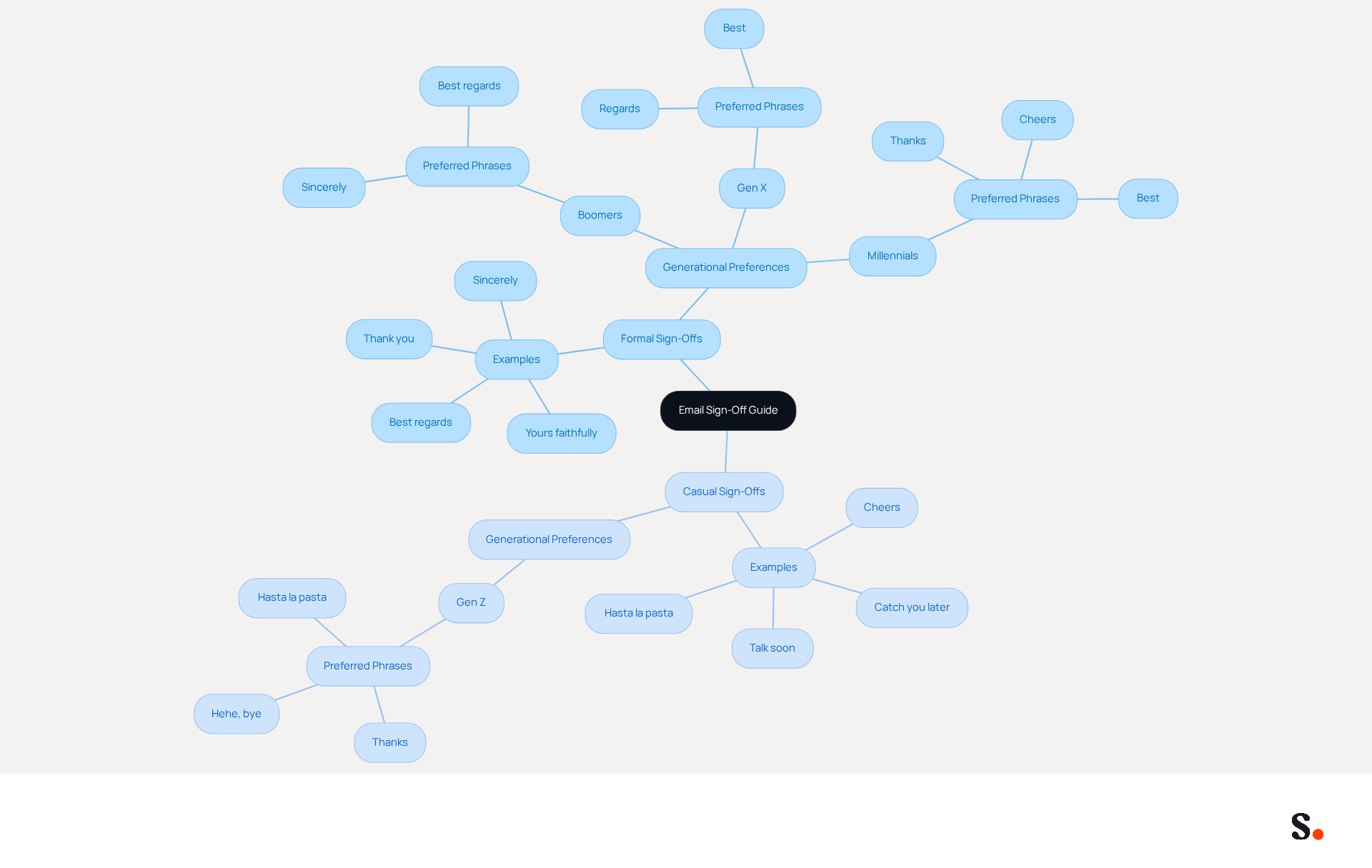
Choosing the right words to end an email is essential for effective communication, as it reflects your relationship with the recipient and the context of your message. For formal interactions, choose appropriate words to end an email that convey respect and professionalism, such as 'Sincerely' or 'Best regards.' These choices are particularly effective in business settings where maintaining a professional image is crucial. In contrast, for emails directed at colleagues or familiar contacts, using more casual words to end an email, such as 'Cheers' or 'Talk soon,' may foster a friendly atmosphere and encourage open communication.
Recognizing the recipient's preferences and industry norms is vital for selecting the right words to end an email. For example, Millennials often prefer closings like 'Thanks' or 'Best,' while Gen Z may lean towards more casual phrases such as 'Catch you later' or 'Hasta la pasta.' This shift highlights the importance of tailoring your closing to match your audience's expectations and communication style.
Experts emphasize that the right words to end an email, along with politeness and respect, are essential in all email sign-offs, no matter the context. A well-organized conclusion not only reinforces the main message but also enhances the overall credibility of your communication. As Othman Katim, an Email Marketing Expert, states, 'A strong closing reduces uncertainty about your identity and the appropriate way to respond.' By aligning your sign-off with the tone of the email and the relationship with the recipient, you can create a lasting positive impression and improve the likelihood of a response. Ultimately, choosing the right words to end an email not only reinforces your message but also enhances your professional image and encourages a favorable response.
Conclusion
Ending an email effectively is crucial for marketing managers, as it can determine the tone and reception of their communication. The difference between formal and casual sign-offs is crucial in shaping how your emails are perceived, influencing how messages are received and interpreted. Navigating the balance between formality and approachability can be challenging for marketing managers.
We explored the pros and cons of using formal versus casual sign-offs. Formal closings, such as 'Sincerely' and 'Best regards,' convey respect and professionalism, making them suitable for initial outreach and formal communications. On the other hand, casual sign-offs like 'Cheers' and 'Talk soon' can enhance rapport and approachability, particularly among colleagues and familiar contacts. The importance of tailoring sign-offs to the audience and context was emphasized, highlighting how generational preferences are reshaping communication norms.
Ultimately, how you choose to sign off your emails can really affect how engaged your audience feels. Marketing managers are encouraged to consider their audience's preferences and the context of their messages when selecting the right words to end an email. When you match your sign-offs to the tone of your message, you boost your credibility and build better relationships, ensuring that your messages resonate effectively. Embracing this strategic approach to email sign-offs not only reinforces the core message but also elevates the overall communication experience, paving the way for successful interactions in the marketing landscape.
Frequently Asked Questions
What are formal email sign-offs?
Formal email sign-offs are professional closings used in correspondence, such as 'Sincerely,' 'Best regards,' and 'Yours faithfully.' They convey professionalism and respect, making them suitable for initial communications, business proposals, or interactions with clients and superiors.
When should I use casual email sign-offs?
Casual email sign-offs, like 'Cheers,' 'Talk soon,' or 'Best,' are more relaxed and friendly. They are typically used in emails to colleagues or familiar contacts.
Why is it important to choose the right email sign-off?
Choosing the right words to end an email is essential for effective communication. The sign-off should align with the recipient's context and the tone of the message to prevent mismatched tones and enhance effectiveness in interactions.
What percentage of professionals prefer formal email sign-offs?
Research shows that 63% of professionals prefer using formal words to end an email, particularly in initial outreach and formal settings.
How do gratitude-based sign-offs impact response rates?
Using gratitude-based sign-offs, such as 'Thank you,' significantly boosts response rates, enhancing engagement and fostering professional relationships.
What are the pros of using formal sign-offs?
Formal sign-offs convey respect and professionalism, enhancing the sender's credibility. They are typically expected in business communications, especially during initial contacts or in formal settings.
What are the cons of using formal sign-offs?
Formal sign-offs can sometimes seem stiff or impersonal, potentially alienating recipients who prefer a more approachable tone. They may also appear outdated to younger audiences.
How are generational differences affecting email sign-offs?
Generational differences are reshaping communication etiquette, with Baby Boomers typically favoring formal closings, while younger professionals, particularly Gen Z, are adopting more casual phrases like 'Catch you later' and 'Stay awesome.'
What should I consider when choosing an email sign-off?
It's crucial to consider the communication context, recipient preferences, and the appropriate tone. Balancing formality with warmth can lead to more effective and engaging email interactions.
List of Sources
- Define Formal and Casual Email Sign-Offs
- Email Sign Offs for Every Industry and Situation | Mailchimp (https://mailchimp.com/resources/email-sign-offs)
- Best Email Sign-Offs in 2026: Data-Backed Picks (https://prospeo.io/s/best-email-sign-offs)
- 50 Best Email Sign-Offs to End an Email Properly in [year] (https://elementor.com/blog/best-email-sign-offs)
- 8 Best Business Letter Sign Offs for 2026 (https://rewritebar.com/articles/business-letter-sign-offs)
- Mastering Professional Email Sign-Offs in 2026 (https://linkedin.com/pulse/mastering-professional-email-sign-offs-2026-bulksignature-qsr4e)
- Evaluate the Pros and Cons of Formal Sign-Offs
- Email Sign Offs Professional: Best Practices for Business Emails (https://mailwarm.com/blog/professional-email-sign-offs-best-practices)
- Email Sign Offs for Every Industry and Situation | Mailchimp (https://mailchimp.com/resources/email-sign-offs)
- Different Sign-offs & When You Should Use Them | Heinz Marketing (https://heinzmarketing.com/blog/different-sign-offs-when-you-should-use-them)
- How to Sign Off on an Email Correctly | Rocketseed (https://rocketseed.com/blog/correct-way-to-sign-off-emails)
- The Best (and Worst) Ways To Sign an Email | Robert H. Smith School of Business (https://rhsmith.umd.edu/research/best-and-worst-ways-sign-email)
- Assess the Pros and Cons of Casual Sign-Offs
- 4 Fun Ways to Sign-Off an Email That Will Delight Your Colleagues (https://scribe-mail.com/en-US/blog/4-fun-ways-to-sign-off-an-email-that-will-delight-your-colleagues)
- email sign-offs (https://wisestamp.com/signature-examples/email-sign-offs)
- Email Sign Offs for Every Industry and Situation | Mailchimp (https://mailchimp.com/resources/email-sign-offs)
- 75 Best Email Sign-Offs for Any Situation - All-in-One Marketing Automation Toolset | FosterFlow (https://fosterflow.ai/75-best-email-sign-offs-for-any-situation)
- Email Sign Offs Professional: Best Practices for Business Emails (https://mailwarm.com/blog/professional-email-sign-offs-best-practices)
- Provide Examples of Effective Sign-Offs
- Mastering Professional Email Sign-Offs in 2026 (https://linkedin.com/pulse/mastering-professional-email-sign-offs-2026-bulksignature-qsr4e)
- 100 Email Sign-Off Ideas (+10 Golden Rules for Marketing Pros) - MailerLite (https://mailerlite.com/blog/email-sign-offs)
- 10 Best Email Sign Offs for Cold Outreach (2026) (https://reachinbox.ai/blog/best-email-sign-off)
- 8 Best Business Letter Sign Offs for 2026 (https://rewritebar.com/articles/business-letter-sign-offs)
- Guide on Choosing the Right Sign-Off for Your Audience
- email sign-offs (https://wisestamp.com/signature-examples/email-sign-offs)
- Email Sign Offs Professional: Best Practices for Business Emails (https://mailwarm.com/blog/professional-email-sign-offs-best-practices)
- 100 Email Sign-Off Ideas (+10 Golden Rules for Marketing Pros) - MailerLite (https://mailerlite.com/blog/email-sign-offs)
- Gen Z Email Sign-Offs: Funny Email Sign Offs - NEWOLDSTAMP (https://newoldstamp.com/blog/gen-z-sign-offs)
- How to Sign Off on an Email Correctly | Rocketseed (https://rocketseed.com/blog/correct-way-to-sign-off-emails)
Get started with Scribe
See why teams switch to Scribe
Free 14-day trial — no credit card.