How to Put Pronouns in Email Signature: A Step-by-Step Guide
Incorporating pronouns in email signatures is a crucial step toward fostering inclusivity in professional communication. By sharing preferred pronouns
Sophie Grant
Email Signature Specialist, Scribe

On this page
- Introduction
- Understand the Importance of Gender Pronouns in Email Signatures
- Implement Pronouns in Email Signatures: Step-by-Step Process
- Follow Best Practices for Pronoun Placement in Signatures
- Address Challenges and Solutions for Using Pronouns in Signatures
- Conclusion
- Frequently Asked Questions
- List of Sources
Introduction
Incorporating pronouns in email signatures is a crucial step toward fostering inclusivity in professional communication. By sharing preferred pronouns, individuals not only reduce the risk of misgendering but also contribute to a workplace culture that values diversity and open dialogue about gender identity.
Organizations may face pushback when introducing pronouns in email signatures. This guide provides actionable steps to help you integrate pronouns into email signatures, ensuring that every voice is heard and respected in the workplace.
Understand the Importance of Gender Pronouns in Email Signatures
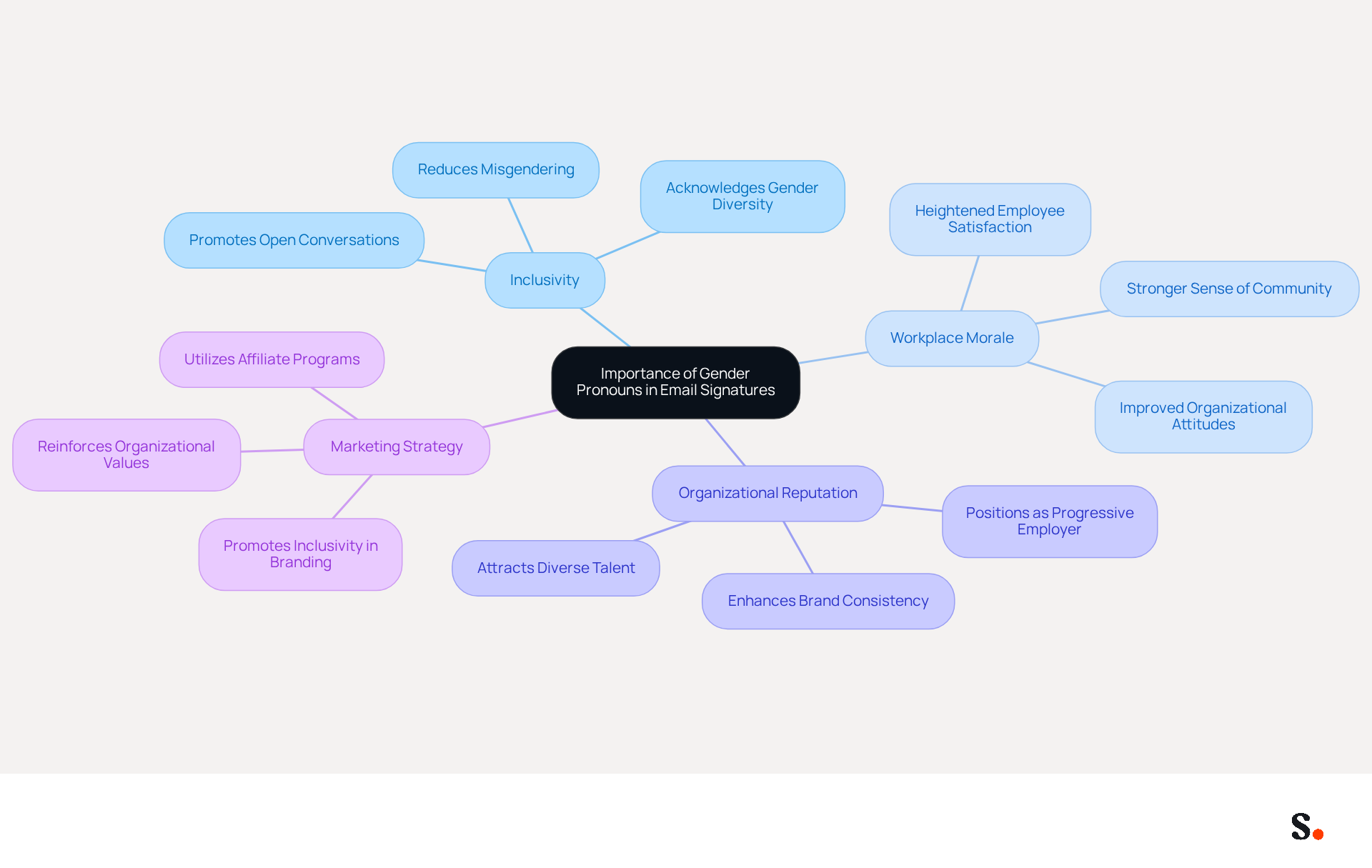
Understanding how to put pronouns in email signature addresses a critical need for inclusivity and respect in professional environments. By openly sharing how to put pronouns in email signature, individuals communicate their preferred forms of address, which helps reduce misgendering and fosters a more respectful workplace atmosphere. This approach helps those who identify as LGBTQIA+ and encourages open conversations about gender identity among all employees. It demonstrates a dedication to diversity and inclusion, encouraging colleagues to feel more comfortable in sharing their own identities.
Organizations that embrace this approach often experience heightened morale and a stronger sense of community among their workforce. Misgendering often creates misunderstandings and discomfort in workplace interactions. Studies show that sharing personal identifiers often leads to improved attitudes within organizations, especially for LGBTQ+ individuals, fostering an environment where everyone feels valued and respected. Moreover, understanding how to put pronouns in email signature aligns with changing professional standards, establishing it as a recommended approach for 2026 and beyond. As companies increasingly recognize the importance of gender pronouns, they not only enhance their internal culture but also position themselves as progressive employers committed to equity and inclusivity.
For marketing managers, promoting this approach can also be a component of a wider strategy to ensure brand consistency across digital identifiers. By joining Scribe's Affiliate Program, you can earn a 50% commission while offering a $30 credit to those looking to implement this inclusive practice. This not only reinforces your organization's dedication to inclusivity but also creates a new marketing avenue, enabling you to foster a more respectful workplace while gaining from Scribe's innovative solutions for managing digital identities. By adopting this practice, organizations not only affirm their commitment to inclusivity but also enhance their reputation as forward-thinking employers.
Implement Pronouns in Email Signatures: Step-by-Step Process
Learning how to put pronouns in email signature is a straightforward yet impactful way to promote inclusivity in professional communication.
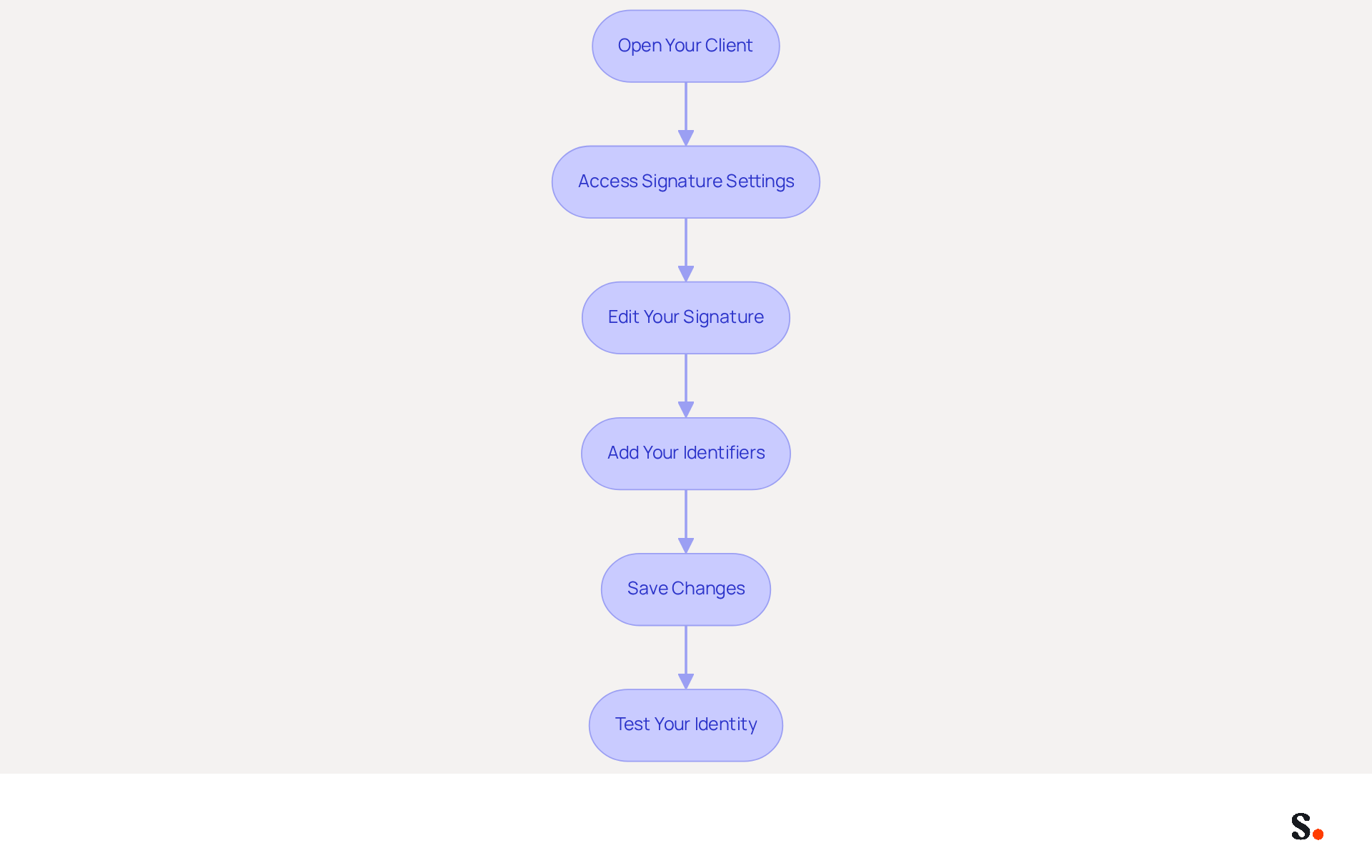
- Open Your Client: Launch the application you use, such as Outlook, Gmail, or Apple Mail.
- Access Signature Settings: Navigate to the settings or preferences section of your email client. Look for the 'Signatures' or 'Email Signature' option.
- Edit Your Signature: Select the signature you wish to modify or create a new one.
- Add Your Identifiers: Position your identifiers directly after your name for optimal visibility. For example, format it as 'John Doe (he/him)' or 'Jane Smith (she/her)'. This practice promotes inclusivity and helps prevent misgendering, which is essential for effective communication.
- Save Changes: After adding your identifiers, save the modifications to your settings.
- Test Your Identity: Send a trial message to yourself or a colleague to ensure that the identification appears correctly with your preferred terms included.
By syncing your Google Workspace with Scribe, you save time and ensure that any updates to your teammates' information automatically show up in their email signatures. Without clear identifiers, miscommunication can occur, leading to misunderstandings in professional interactions. This statistic underscores the importance of including personal identifiers in signatures, as it reflects the diverse identities present in today’s workplace. Organizations like TIAA have successfully implemented gender identity policies, aligning with societal values and improving recruitment efforts. By following these steps, you can easily understand how to put pronouns in email signature, contributing to a more inclusive workplace. Embracing this practice not only reflects a commitment to inclusivity but also enhances the overall effectiveness of workplace communication.
Follow Best Practices for Pronoun Placement in Signatures
To enhance inclusivity in professional communications, effectively communicating your pronouns in your email signature is crucial:
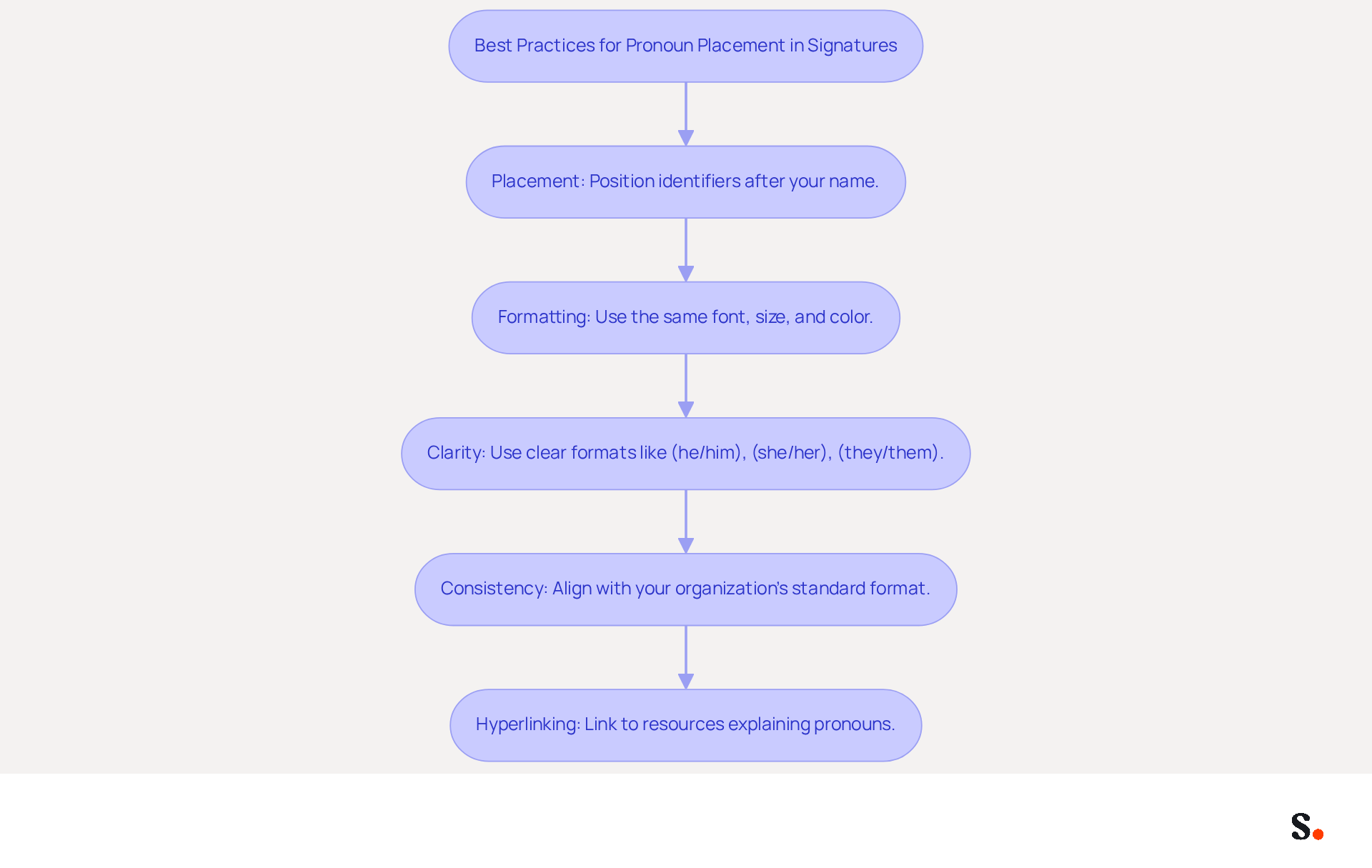
- Placement: Position your identifiers directly after your name. This ensures they are among the first elements recipients notice, minimizing the risk of misgendering. Research indicates that adding personal references can enhance perceptions of inclusivity, making them a valuable part of professional communication.
- Formatting: Maintain a professional appearance by using the same font, size, and color as the rest of your email. Avoid bolding or using different colors for the personal references, as this can distract from the overall design. Consistent branded digital identifiers lead to over a 22% increase in response rates, highlighting the importance of a unified appearance.
- Clarity: Use clear and widely recognized formats for your identifiers, such as (he/him), (she/her), or (they/them). This clarity aids recipients in addressing you correctly. Dr. India Johnson's research indicates that including gender identifiers in employee bios and correspondence can assist in attracting LGBTQ+ candidates by fostering a favorable image of organizations.
- Consistency: Align your references with your organization’s standard communication format to ensure brand uniformity across interactions. Aligning your references with your brand helps create a respectful and inclusive culture.
- Hyperlinking: Consider hyperlinking your references to a resource that explains their significance, offering additional context for recipients who may be unfamiliar with the concept. Beck Bailey from the Human Rights Campaign highlights that including gender identifiers in correspondence is one method to promote an inclusive workplace.
By following these best practices, you can improve the impact of your message footer and understand how to put pronouns in email signature to foster a culture of respect and inclusivity. However, navigating gender identity disclosure can be challenging, especially for those who are transitioning or uncertain. Ultimately, fostering an inclusive environment requires thoughtful communication practices that respect individual identities.
Address Challenges and Solutions for Using Pronouns in Signatures
While understanding how to put pronouns in email signature promotes inclusivity, it can also present several challenges that need to be addressed. Here are common issues and their solutions:
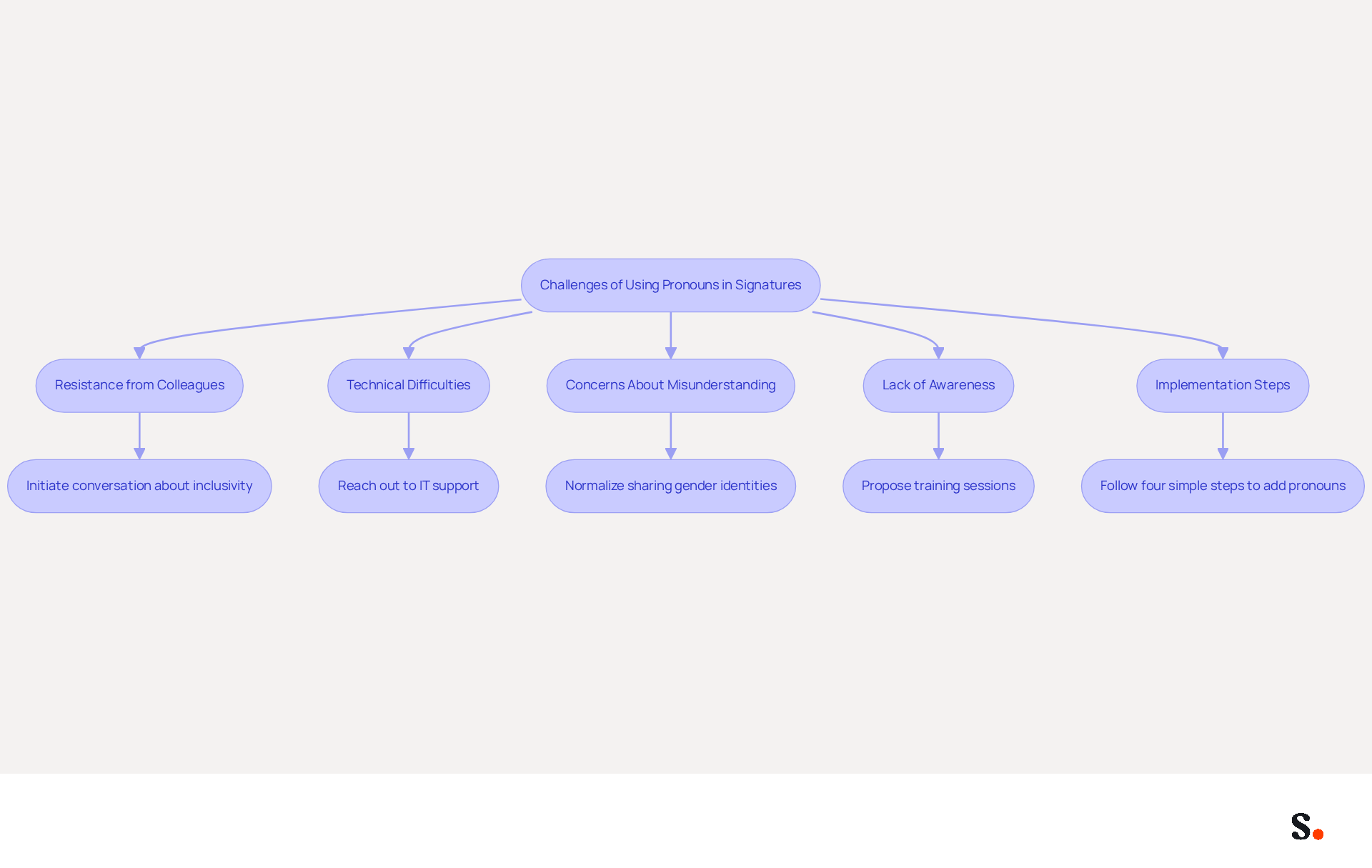
- Resistance from Colleagues: Resistance from colleagues can hinder the adoption of gender identifiers. Initiating a conversation about the importance of inclusivity can help. Emphasize how sharing gender identifiers promotes a respectful workplace and aligns with broader diversity objectives. Organizations that embrace pronoun inclusion can improve employee morale, engagement, and overall workplace satisfaction.
- Technical Difficulties: Should you face issues updating your email identification, reach out to your email client's help resources or IT support. Many platforms offer user-friendly guides for signature management, ensuring a smooth process. Common issues can often be resolved by checking your internet connection, refreshing the page, and verifying sign-off settings.
- Concerns About Misunderstanding: Individuals may worry that sharing their identifiers could lead to misunderstandings. Reassure them that this approach normalizes conversations around gender identity and promotes respect, ultimately benefiting everyone in the organization.
- Lack of Awareness: Consider proposing a training session or workshop if your organization hasn't yet embraced the use of gender identifiers. Educating employees on the significance of this practice can foster a more inclusive culture. Ensure that participation in sharing identifiers is voluntary, allowing employees to choose what they feel comfortable sharing.
- Implementation Steps: To incorporate pronouns in your Scribe profiles, follow these four simple steps: log in to your Scribe management tool, navigate to the Management section, edit your name to include your pronouns, and save your updates. After adding identifiers, make sure to test your mark to ensure correct display.
By addressing these challenges head-on, you foster a more inclusive environment and encourage others to adopt similar practices. Case studies, such as Virgin's initiative on how to put pronouns in email signature, demonstrate that organizations that prioritize such practices cultivate a culture of respect and acceptance, leading to improved employee relationships and overall workplace satisfaction. Statistics indicate that inclusive workplaces report 41% less absenteeism, highlighting the positive correlation between inclusivity and employee engagement.
Conclusion
Incorporating pronouns into email signatures is a crucial step toward fostering an inclusive workplace. Sharing preferred pronouns helps prevent misgendering and fosters a culture that values diversity and encourages open discussions about gender identity. This practice reflects the growing recognition of gender diversity in professional settings and positions organizations as progressive employers committed to equity and inclusivity.
The article outlines a clear step-by-step process for implementing pronouns in email signatures, emphasizing best practices such as:
- Proper placement
- Formatting
- Clarity
It also addresses common challenges, noting that some employees might hesitate to adopt this practice, fearing backlash or misunderstanding. By following these guidelines, organizations can enhance communication effectiveness and create a more welcoming environment for all employees.
Ultimately, embracing the use of pronouns in email signatures is more than just a trend; it is a vital step toward building a culture of respect and inclusivity. Not implementing pronouns can perpetuate miscommunication and hinder inclusivity. Organizations that embrace this practice will not only enhance their workplace culture but also set a standard for inclusivity in their industry.
Frequently Asked Questions
Why is it important to include gender pronouns in email signatures?
Including gender pronouns in email signatures fosters inclusivity and respect in professional environments, helps reduce misgendering, and encourages open conversations about gender identity.
How does sharing pronouns in email signatures benefit LGBTQIA+ individuals?
Sharing pronouns helps LGBTQIA+ individuals feel more comfortable and respected in the workplace, reducing misunderstandings and discomfort in interactions.
What impact does the practice of including pronouns have on workplace culture?
Organizations that embrace this practice often experience heightened morale, a stronger sense of community, and improved attitudes among employees, particularly for LGBTQ+ individuals.
How does including pronouns in email signatures align with professional standards?
Understanding how to put pronouns in email signatures aligns with changing professional standards and is recommended for 2026 and beyond, positioning organizations as progressive employers.
What marketing opportunities arise from promoting the inclusion of pronouns in email signatures?
Promoting this approach can enhance brand consistency across digital identifiers and, by joining Scribe's Affiliate Program, marketing managers can earn commissions while supporting inclusivity initiatives.
How does adopting this practice affect an organization's reputation?
By adopting the practice of including pronouns, organizations affirm their commitment to inclusivity and enhance their reputation as forward-thinking employers.
List of Sources
- Understand the Importance of Gender Pronouns in Email Signatures
- Gender pronouns in email signatures - how to use them and why (https://codetwo.com/blog/using-gender-pronouns-in-email-signatures)
- Sharing Gender Pronouns in Employee Bios, Email Signatures Helps Attract LGBTQ+ Applicants, Study Finds – Stories (https://stories.butler.edu/sharing-gender-pronouns-in-employee-bios-email-signatures-helps-attract-lgbtq-applicants-study-finds)
- How to Include Pronouns in Email Signature (2026) (https://hubspot.com/email-signature-generator/add-pronouns)
- Organizations embrace equity by sharing gender pronouns in email signatures (https://internationalwomensday.com/Missions/19523/Organizations-embrace-equity-by-sharing-gender-pronouns-in-email-signatures)
- Impact of Adding Pronouns to E-Signature (https://lgbtqbar.org/bar-news/impact-of-adding-pronouns-to-esignature)
- Implement Pronouns in Email Signatures: Step-by-Step Process
- Should your email say if you're he, she or they? (https://bbc.com/news/business-51331571)
- Gender pronouns in email signatures - how to use them and why (https://codetwo.com/blog/using-gender-pronouns-in-email-signatures)
- Pronouns in some reporters' email signatures get a stony response from Trump administration (https://nbcnews.com/nbc-out/out-politics-and-policy/pronouns-reporters-email-signatures-get-stony-response-trump-administr-rcna200838)
- How to Make Pronouns “Business as Usual” (https://careerservices.upenn.edu/blog/2019/08/07/how-to-make-pronouns-business-as-usual)
- Follow Best Practices for Pronoun Placement in Signatures
- 40+ Email Signature Statistics for 2026 (Data + Insights) (https://wavecnct.com/blogs/email-signature-statistics)
- Should your email say if you're he, she or they? (https://bbc.com/news/business-51331571)
- Sharing Gender Pronouns in Employee Bios, Email Signatures Helps Attract LGBTQ+ Applicants, Study Finds – Stories (https://stories.butler.edu/sharing-gender-pronouns-in-employee-bios-email-signatures-helps-attract-lgbtq-applicants-study-finds)
- Email signature statistics: Why every business should optimize their email signatures — Stripo.email (https://stripo.email/blog/email-signature-statistics-why-every-business-should-optimize-their-email-signatures)
- Organizations embrace equity by sharing gender pronouns in email signatures (https://internationalwomensday.com/Missions/19523/Organizations-embrace-equity-by-sharing-gender-pronouns-in-email-signatures)
- Address Challenges and Solutions for Using Pronouns in Signatures
- Diversity in the workplace statistics to know this year | InStride (https://instride.com/insights/workplace-diversity-and-inclusion-statistics)
- Put the Pronouns Back in the Email: A Step-by-Step Guide (https://scribe-mail.com/en-US/blog/put-the-pronouns-back-in-the-email-a-step-by-step-guide)
- 17 Statistics Highlighting the Importance of Workplace Diversity and Inclusion (https://edume.com/blog/workplace-diversity-statistics)
- Pronouns in email signatures: workplace inclusion guide (https://inclusiveemployers.co.uk/blog/why-we-use-pronouns-in-signatures)
- Organizations embrace equity by sharing gender pronouns in email signatures (https://internationalwomensday.com/Missions/19523/Organizations-embrace-equity-by-sharing-gender-pronouns-in-email-signatures)
Get started with Scribe
Manage signatures across your whole team
Free 14-day trial — no credit card.