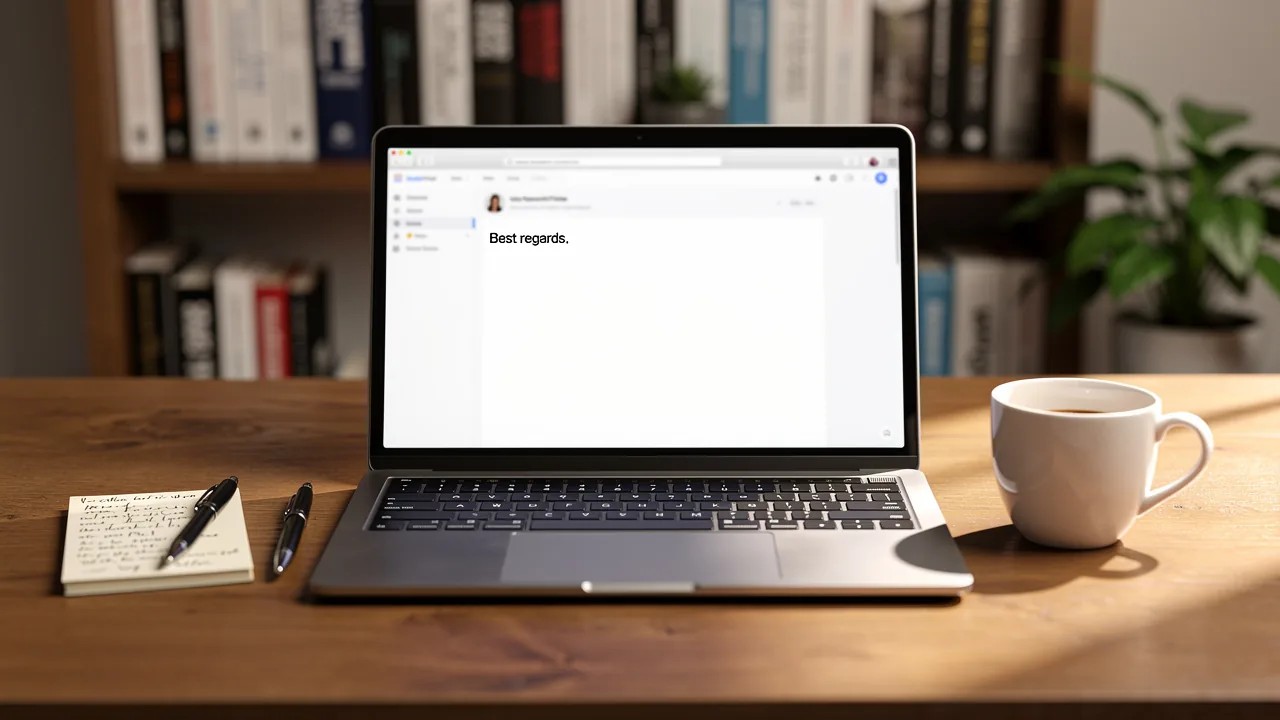
How to Use 'Best Regards': Capitalization and Email Tips
The nuances of email sign-offs play a crucial role in shaping professional communication. Among these, "Best regards" stands out as a versatile choice that
Sophie Grant
Email Signature Specialist, Scribe
On this page
Introduction
The nuances of email sign-offs play a crucial role in shaping professional communication. Among these, "Best regards" stands out as a versatile choice that conveys respect and goodwill. However, using "Best regards" incorrectly can lead to misunderstandings in professional communication. This guide delves into the essential rules for capitalizing "Best regards," explores its appropriate application in various scenarios, and highlights the importance of maintaining brand consistency through effective email signature management. Mastering this phrase can lead to stronger professional relationships and clearer communication.
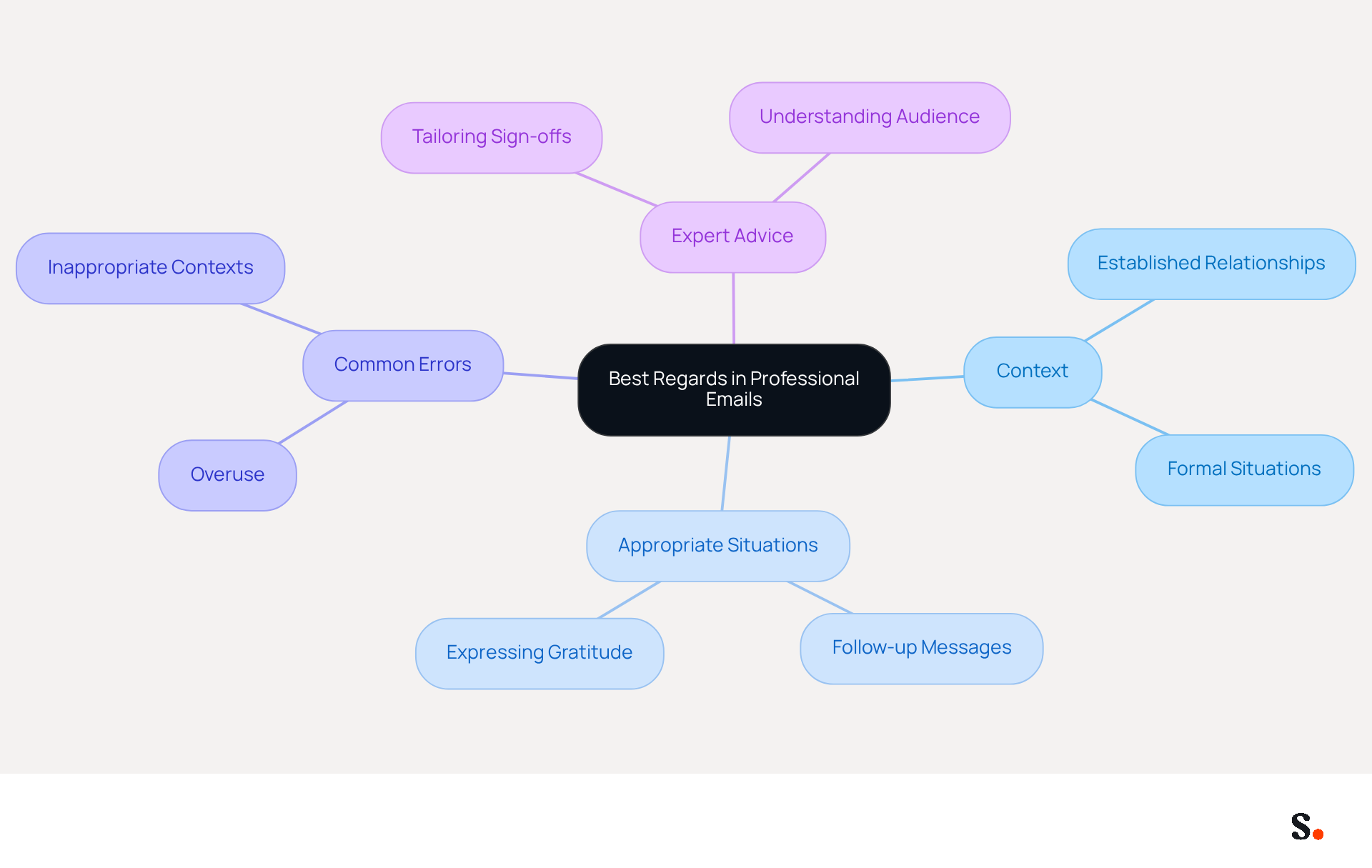
Understand the Context of 'Best Regards' in Professional Emails
The sign-off 'Finest Wishes' is a powerful tool in professional correspondence, but its effectiveness hinges on context. It conveys respect and goodwill, making it particularly suitable for established relationships, such as with colleagues or clients with whom you have previously interacted.
Understanding when to use 'Kind Wishes' can significantly enhance the effectiveness of your messages. For instance, it works well in follow-up messages, replies to inquiries, or when expressing gratitude. However, using it in overly formal situations can lead to misunderstandings, such as during initial outreach to a potential client, where alternatives like 'Sincerely' may be more appropriate.
Overusing 'Kind Wishes' can diminish its authenticity, so aligning the sign-off with the context of the message is crucial. Studies indicate that using 'Kind Wishes' appropriately can increase response rates by up to 20%. Typical errors include using 'Kind Wishes' in unsuitable situations, which can lessen its effectiveness.
Tailoring your sign-off to industry norms and the recipient relationship is essential for effective communication. As Sean Butcher, Founder of Reflect Consultancy, notes, grasping your audience and context is key to selecting the right sign-off. Ultimately, the right sign-off can significantly enhance your professional relationships and communication outcomes.
Identify Rules for Capitalization of 'Best Regards'
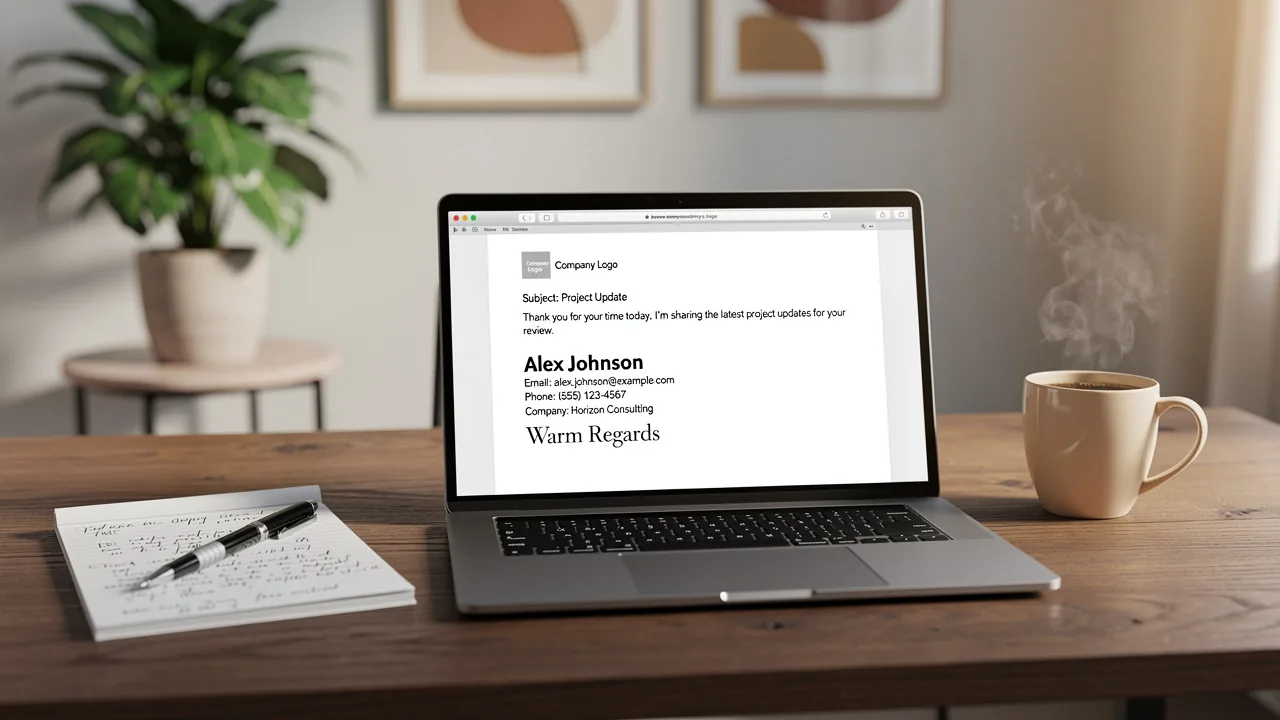
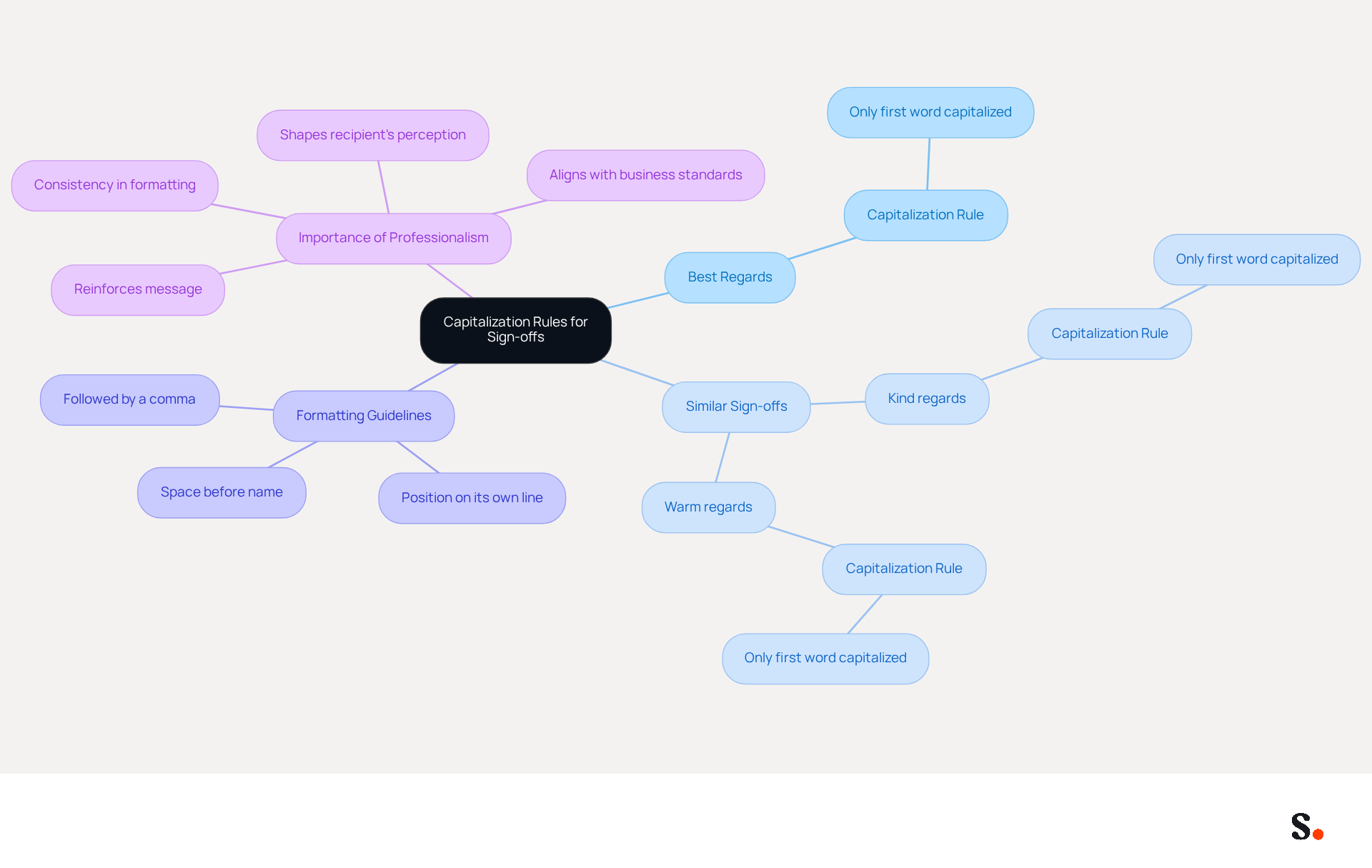
Proper capitalization of sign-offs is crucial for maintaining professionalism in email communication. When using 'Best regards' as a sign-off, it is essential to determine if 'is best regards capitalized' correctly applies, meaning only the first word should be capitalized, resulting in the format: 'Best regards' with a capital 'B' and a lowercase 'r'. This capitalization rule applies to similar sign-offs, such as 'Kind regards' or 'Warm regards'. Always position the sign-off on its own line, followed by a comma, and ensure there is a space before your name. For example:
Best regards,
John Doe
Following these capitalization rules enhances your email professionalism and aligns with business standards. The right sign-off reinforces your message and shapes the recipient's perception of your correspondence. It's important to choose a sign-off that matches your message's tone and your relationship with the recipient. Additionally, being aware of cultural norms can help you select the most appropriate sign-off for different contexts. Consistency in formatting reinforces your brand image and ensures clarity in your correspondence.
Apply 'Best Regards' Correctly in Different Email Scenarios
Choosing the right email sign-off can be challenging, yet it plays a crucial role in professional communication. To effectively use 'Best Regards', it is best regards capitalized to consider the context of your email. Here are some scenarios:
-
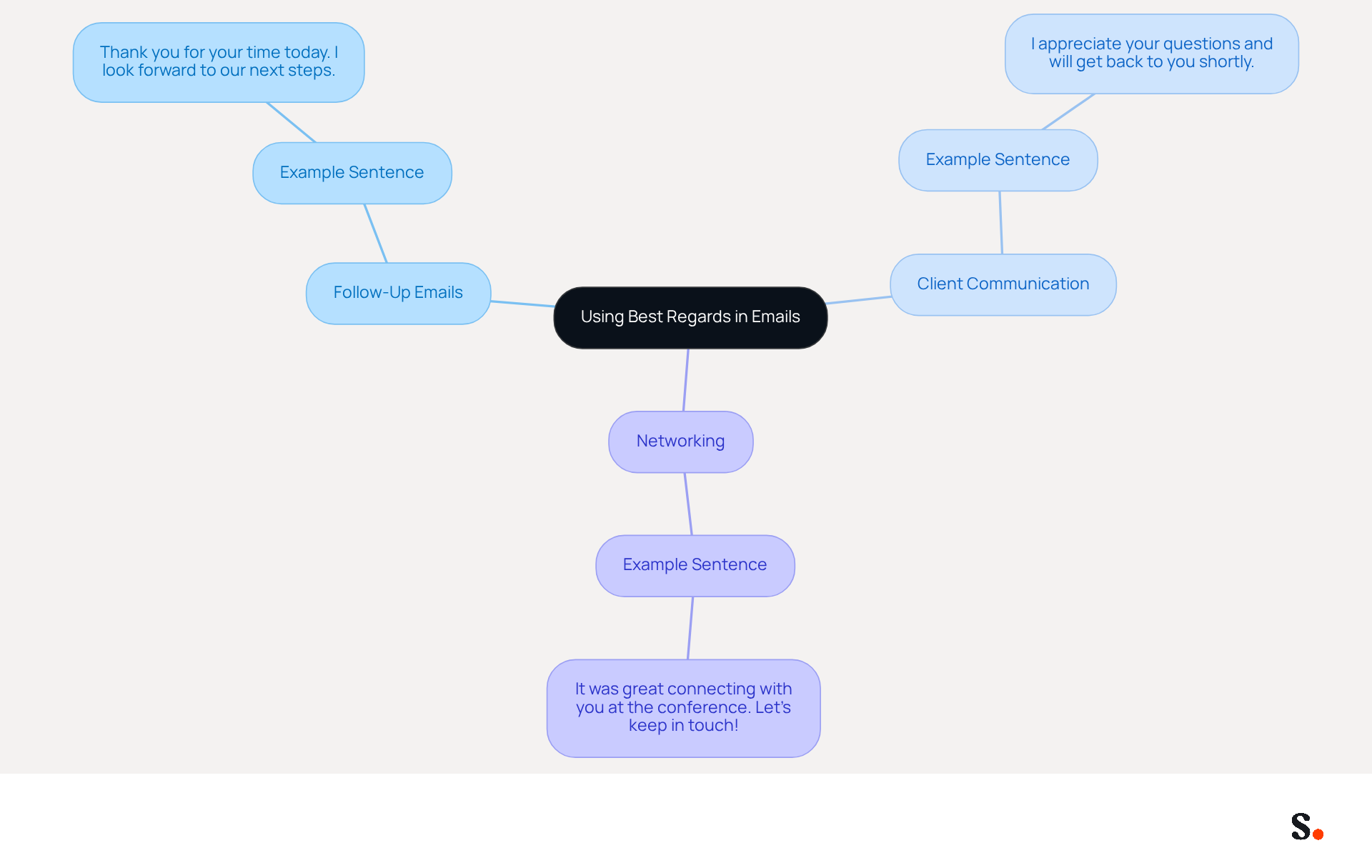
Follow-Up Emails: After a meeting or discussion, using 'Best Regards' helps maintain a friendly yet professional tone. For instance:
Thank you for your time today. I look forward to our next steps. Best regards, Jane Smith -
Client Communication: When responding to a client inquiry, 'Best Regards' conveys professionalism and respect:
I appreciate your questions and will get back to you shortly. Best regards, John Doe -
Networking: In emails to colleagues or industry contacts, 'Best Regards' is a suitable sign-off that maintains a professional relationship:
It was great connecting with you at the conference. Let’s keep in touch!
Best regards,
Sarah Lee
By tailoring 'Best Regards' to specific scenarios, you enhance communication and foster positive relationships. Research indicates that thoughtful sign-offs can significantly influence engagement, with messages featuring warm tones receiving 22% more responses. Furthermore, it is best regards capitalized in follow-up messages that reinforces professionalism and encourages further interaction, making it a strategic choice for maintaining connections. Timing is also essential; consider sending follow-up messages at optimal times, such as Mondays or Fridays, to maximize engagement.
Utilize Tools for Effective Email Signature Management
To maintain a professional image, organizations must ensure their email identifiers are consistently updated and accurately reflect their brand. Here are some best practices to follow:
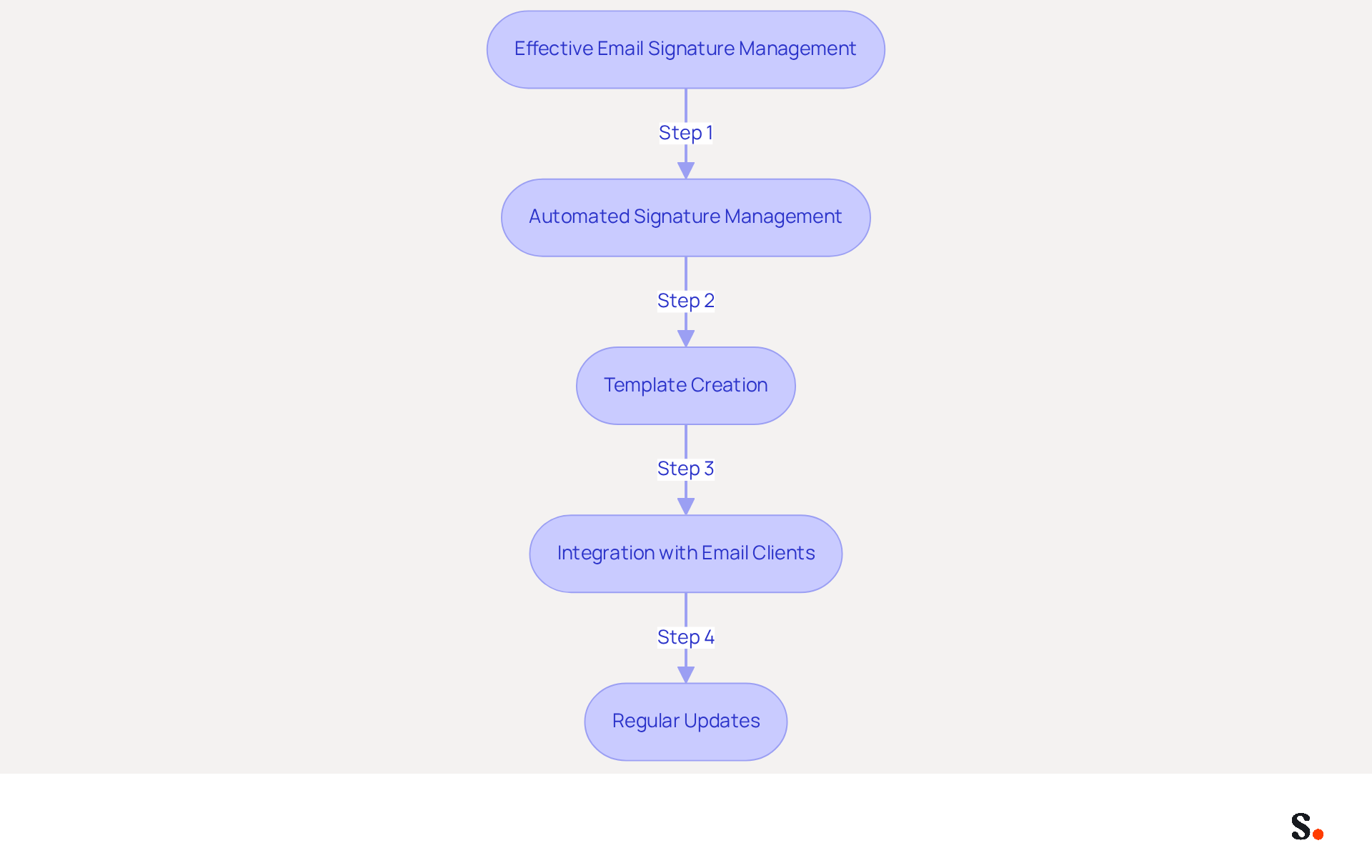
- Automated Signature Management: Scribe allows you to effortlessly create and manage email identifiers across your organization. With a single click, you can update identifiers for all team members, ensuring brand consistency and reducing the risk of outdated information. This process is particularly beneficial for marketing teams that want to maintain a consistent brand image while managing their identifiers independently after the initial IT setup.
- Template Creation: Use branding templates that reflect your brand's identity. Incorporate your logo, colors, and fonts to maintain a cohesive look in all communications. This consistency can enhance brand recognition and trust among recipients.
- Integration with Email Clients: Ensure that your management tool for sign-offs integrates seamlessly with popular messaging platforms like Google Workspace and Microsoft 365. This integration streamlines the deployment and updating of identifiers, making it easier for your team to uphold professionalism.
- Regular Updates: Schedule regular reviews of your digital identifiers to keep them current with any changes in branding or personnel. Automated tools like Scribe can streamline this process, ensuring that all approvals reflect the latest information without manual intervention. Without regular updates, organizations risk presenting outdated information, which can undermine professionalism. Additionally, Scribe's SAML single sign-on integration enhances security, allowing employees to access the platform securely through their identity provider, while its GDPR compliance ensures that data handling practices meet stringent regulations. Scribe's SOC 2 Type II certification further underscores its commitment to security and compliance.
By implementing Scribe, organizations can not only maintain up-to-date identifiers but also enhance their overall brand image. This statistic underscores the potential impact of well-managed signatures as a marketing tool, demonstrating their effectiveness in engaging recipients.
Conclusion
Choosing the right sign-off in professional emails can significantly impact communication effectiveness. Using thoughtful sign-offs like 'Best Regards' is crucial for fostering professional relationships. The effectiveness of this sign-off lies in its context, capitalization, and application across various scenarios. Many professionals struggle with choosing the right sign-off, which can lead to misunderstandings in communication. By understanding when and how to use 'Best Regards,' professionals can convey respect and goodwill, ultimately improving their correspondence outcomes.
Key insights from this guide highlight:
- The importance of context in choosing the right sign-off
- The capitalization rules that maintain professionalism
- The various scenarios where 'Best Regards' is most effective
Additionally, utilizing tools like Scribe for email signature management ensures brand consistency and professionalism across all communications. This not only enhances professionalism but also strengthens brand identity in every email.
Incorporating thoughtful sign-offs like 'Best Regards' into email communication is essential for building and maintaining professional relationships. Following these guidelines can significantly improve your email etiquette and boost engagement. Embrace the power of effective sign-offs and consider how your sign-offs reflect your professionalism and the relationships you wish to cultivate.
Frequently Asked Questions
What is the significance of the sign-off 'Kind Wishes' in professional emails?
The sign-off 'Kind Wishes' conveys respect and goodwill, making it effective in professional correspondence, especially with established relationships.
When is it appropriate to use 'Kind Wishes'?
'Kind Wishes' is suitable for follow-up messages, replies to inquiries, or when expressing gratitude, particularly with colleagues or clients you have previously interacted with.
Are there situations where 'Kind Wishes' should be avoided?
Yes, it should be avoided in overly formal situations, such as initial outreach to a potential client, where alternatives like 'Sincerely' may be more appropriate.
How can overusing 'Kind Wishes' affect its effectiveness?
Overusing 'Kind Wishes' can diminish its authenticity, making it less impactful in communication.
What impact does using 'Kind Wishes' appropriately have on response rates?
Using 'Kind Wishes' appropriately can increase response rates by up to 20%.
What are common errors when using 'Kind Wishes'?
Common errors include using 'Kind Wishes' in unsuitable situations, which can lessen its effectiveness.
Why is it important to tailor your sign-off to the context of the message?
Tailoring your sign-off to the context and the recipient relationship is essential for effective communication and can enhance professional relationships and outcomes.
What advice does Sean Butcher provide regarding sign-offs in emails?
Sean Butcher emphasizes the importance of grasping your audience and context to select the right sign-off for effective communication.
List of Sources
- Understand the Context of 'Best Regards' in Professional Emails
- Define Best Regards: Master Email Sign-Offs for Success (https://scribe-mail.com/en-US/blog/define-best-regards-master-email-sign-offs-for-success)
- Email Sign Offs for Every Industry and Situation | Mailchimp (https://mailchimp.com/resources/email-sign-offs)
- How to Sign Off on an Email Correctly | Rocketseed (https://rocketseed.com/blog/correct-way-to-sign-off-emails)
- Identify Rules for Capitalization of 'Best Regards'
- Email Sign Offs for Every Industry and Situation | Mailchimp (https://mailchimp.com/resources/email-sign-offs)
- How to Sign Off on an Email Correctly | Rocketseed (https://rocketseed.com/blog/correct-way-to-sign-off-emails)
- Apply 'Best Regards' Correctly in Different Email Scenarios
- Best regards, Kind regards, Best wishes, Yours sincerely - which to use and when | Email Signature Rescue Blog (https://emailsignaturerescue.com/blog/best-regards-kind-regards-best-wishes-yours-sincerely-which-to-use-and-when)
- Best Regards or Kind Regards: Choosing the Right Email Closing (https://scribe-mail.com/en-US/blog/best-regards-or-kind-regards-choosing-the-right-email-closing)
- These Numbers Will Show You Why Sending Follow-up Emails Is Crucial (https://woodpecker.co/blog/follow-up-statistics)
- How to end an email: a guide to professional sign-offs and closings (https://sparkmailapp.com/how-to-end-an-email-template)
- Utilize Tools for Effective Email Signature Management
- Market-leading Email Signature Software | Exclaimer (https://exclaimer.com)
- Email Signature Manager for Any Scale | WiseStamp (https://wisestamp.com)
- Company-Wide Email Signature Management | CloudM (https://cloudm.io/resources/blog/optimize-your-process-with-company-wide-email-signature-management)
- Email signature do’s & don’ts: from chaos to consistency and performance in every send (https://marketingtechnews.net/news/email-signature-dos-donts-from-chaos-to-consistency-and-performance-in-every-send)
- Email signature statistics: Why every business should optimize their email signatures — Stripo.email (https://stripo.email/blog/email-signature-statistics-why-every-business-should-optimize-their-email-signatures)
Get started with Scribe
Build a professional email signature
Free 14-day trial — no credit card.