Is 'Best' a Good Way to End an Email? Compare Sign-Offs Here
While often overlooked, email sign-offs can significantly influence how messages are perceived and responded to. A well-chosen closing can enhance the
Sophie Grant
Email Signature Specialist, Scribe
Introduction
While often overlooked, email sign-offs can significantly influence how messages are perceived and responded to. A well-chosen closing can enhance the sentiment of a message, clarify intentions, and even drive engagement. This shift in perspective invites a reevaluation of how we approach email communication. This article delves into the nuances of email sign-offs, comparing their effectiveness and exploring how the right choice can transform communication outcomes.
Understand the Importance of Email Sign-Offs
Email sign-offs are crucial elements of communication that shape how recipients interpret messages. A carefully chosen closing can strengthen the message's sentiment, clarify the sender's intentions, and encourage the recipient to take action. For instance, a sign-off like 'Thank you' implies a request for a reply, while 'Best' conveys a more neutral or casual tone.
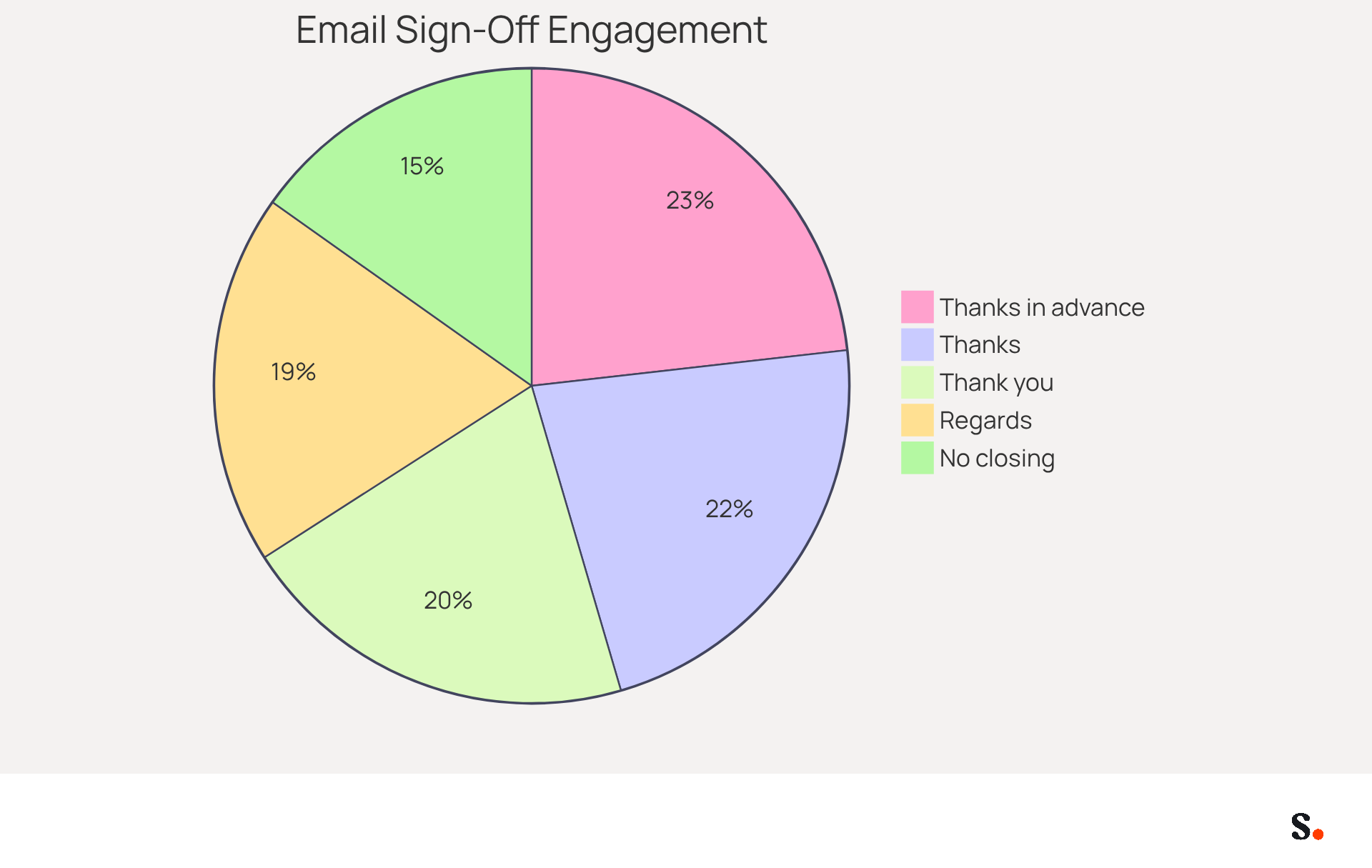
Research shows that emails that conclude with expressions of gratitude, like 'Thanks' (63%) or 'Thank you' (57.9%), tend to achieve higher engagement rates, with 'Thanks in advance' reaching an impressive 65.7% engagement rate. In contrast, vague closings like 'Regards' yield lower engagement, averaging only 53.5%. Moreover, messages lacking a closing average a 43% engagement rate, underscoring the necessity of including a closing to enhance interaction.
Case studies further illustrate the impact of email closings on communication effectiveness. For example, messages with warm, professional tones receive up to 22% more responses, emphasizing the need to tailor closings based on context and recipient relationship. This understanding is crucial when assessing the effectiveness of various approvals, as it highlights their role in shaping communication outcomes and fostering meaningful connections.
Analyze the Effectiveness of 'Best' as a Sign-Off
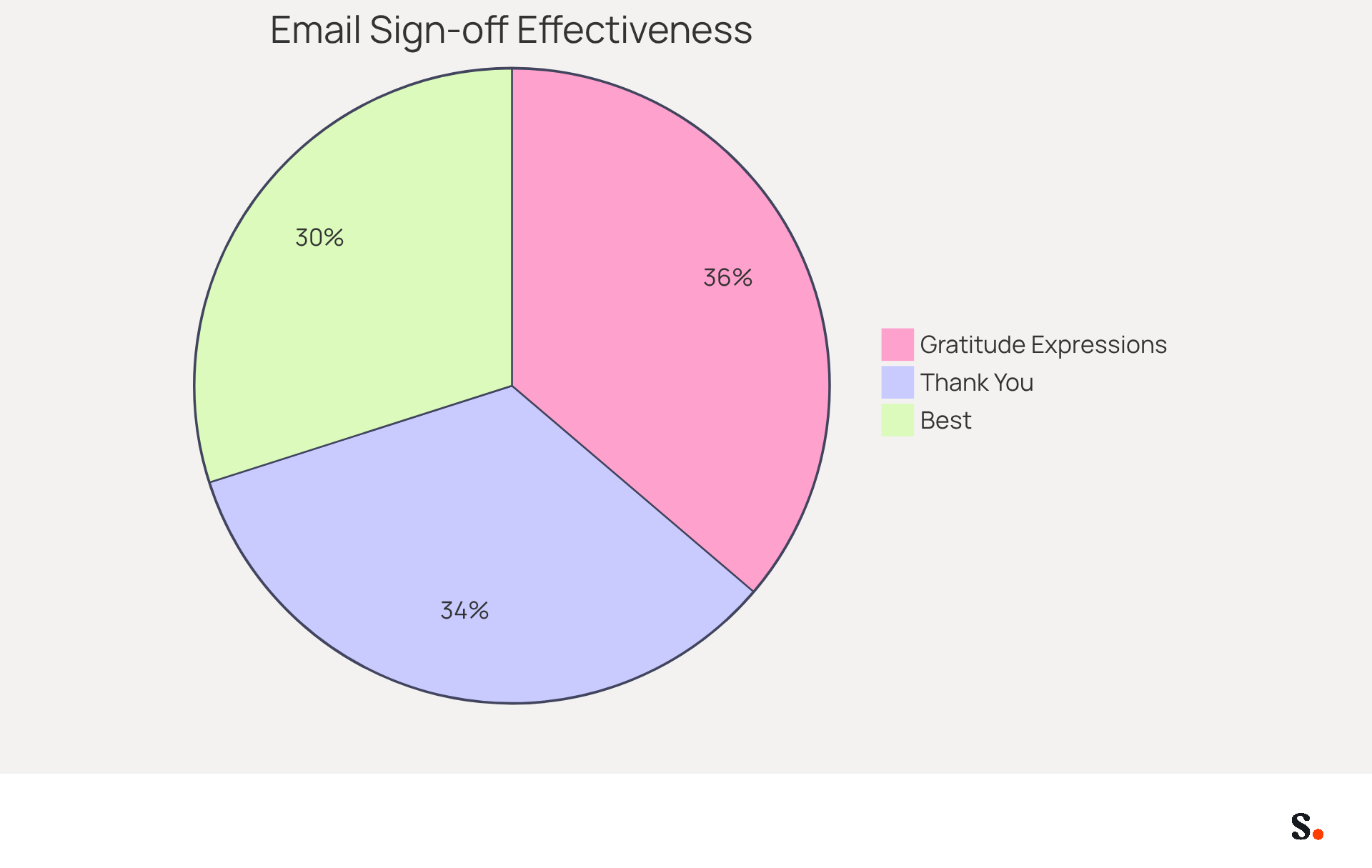
While 'Best' is a widely accepted sign-off, its effectiveness varies significantly depending on the context of the communication. Research indicates that messages ending with 'Best' achieve a reply rate of only 51.2 percent, which is notably lower than those that express appreciation, such as 'Thank you,' which garners a reply rate of 57.9 percent. Furthermore, messages that include a thankful closing have a response rate of 62 percent, compared to just 46 percent for those that lack any expression of gratitude.
Some critics suggest that in certain professional settings, 'Best' might seem insincere or too casual, potentially reducing the warmth of the communication. On the other hand, some people appreciate its simplicity and directness, especially in straightforward exchanges.
A study by Wharton professor Adam Grant found that messages with expressions of gratitude received replies twice as often as those lacking them, reinforcing the argument against using 'Best' as a closing. Ultimately, the effectiveness of 'Best' as a closing is influenced by the relationship between the sender and recipient, as well as the overall tone of the message.
A study by Boomerang discovered that messages with expressions of gratitude, such as 'Thanks' or 'Thank you,' significantly outperform neutral closings like 'Best,' highlighting the importance of tailoring sign-offs to enhance engagement.
Explore Alternative Email Sign-Offs and Their Contexts
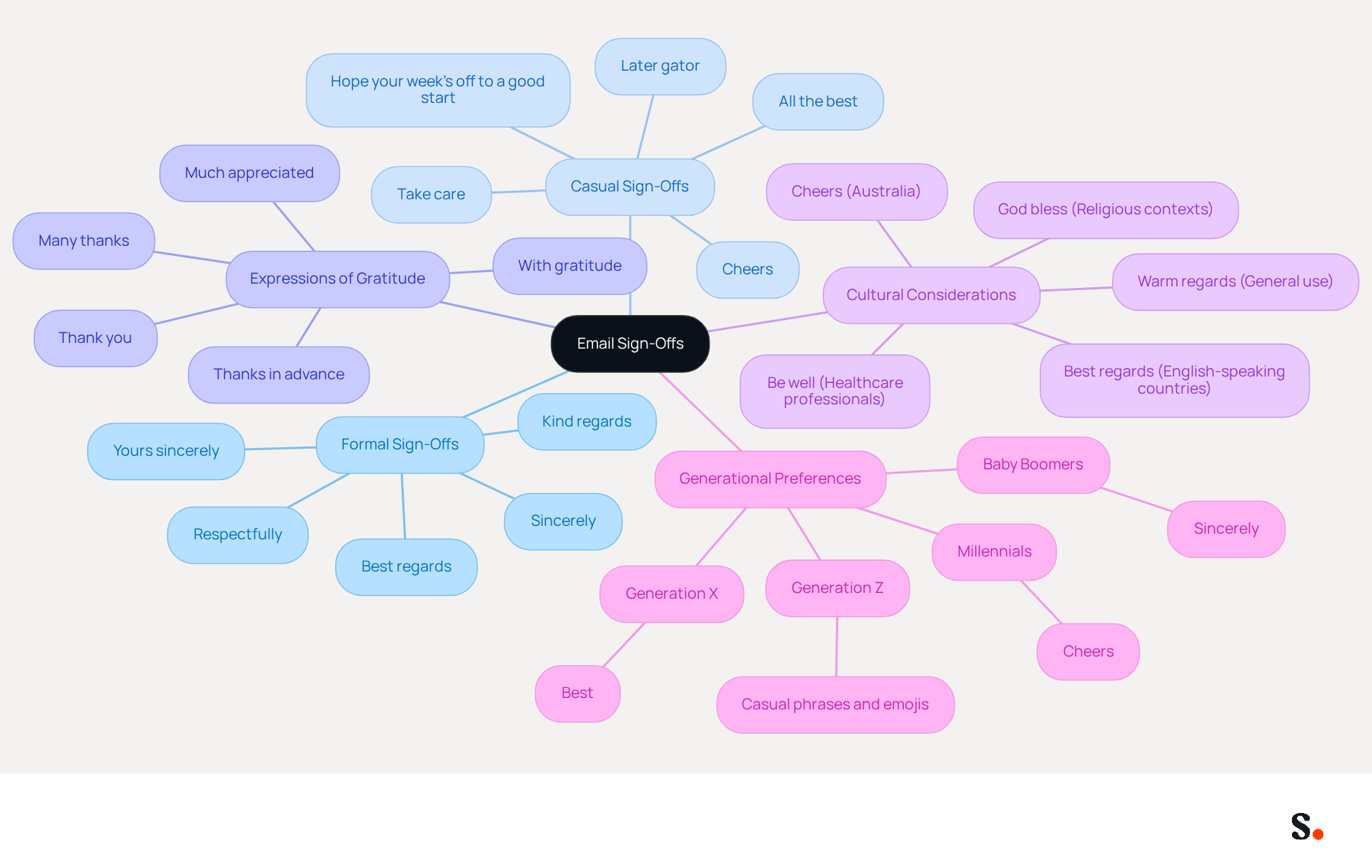
Choosing the right closing in written communication is crucial, as it can significantly influence the recipient's perception and response. While 'Best' is a widely accepted closing, various alternatives can convey distinct tones and sentiments. For instance, 'Sincerely' is a staple in formal communications, establishing professionalism and respect. In contrast, 'Cheers' is often favored in casual interactions, adding a friendly touch. Sign-offs like 'Thank you' or 'Thanks in advance' not only convey appreciation but also promote replies; messages that conclude with expressions of gratitude tend to have higher response rates, reinforcing the effectiveness of these sign-offs. Phrases such as 'Warm regards' or 'Kind regards' effectively balance professionalism with a personable approach, making them suitable for a range of contexts.
However, many senders struggle to select the most effective closing, often leading to miscommunication. The selection of closing should reflect the message's content, the nature of the relationship with the recipient, and the intended outcome. This understanding can significantly enhance the effectiveness of professional correspondence. For example, case studies show that tailored conclusions can significantly enhance written communication effectiveness. Furthermore, generational variations in message closing preferences indicate that Millennials and Generation Z frequently prefer more informal closings, which can change how messages are viewed in a professional context. It's also important to consider cultural differences, as what works in one region might not be appropriate in another, further emphasizing the need for thoughtful communication. Ultimately, the right closing can transform a simple message into a powerful tool for building professional relationships.
Summarize Key Insights on Choosing the Right Sign-Off
Choosing the right email closing is best a good way to end an email, as it is vital for effective communication and relationship building. Sign-offs play a crucial role in establishing the tone of the message. 'Best' is widely recognized for its versatility, often used in both formal and informal contexts, making it a reliable choice for many professionals. However, considering alternative sign-offs can better suit particular situations or relationships.
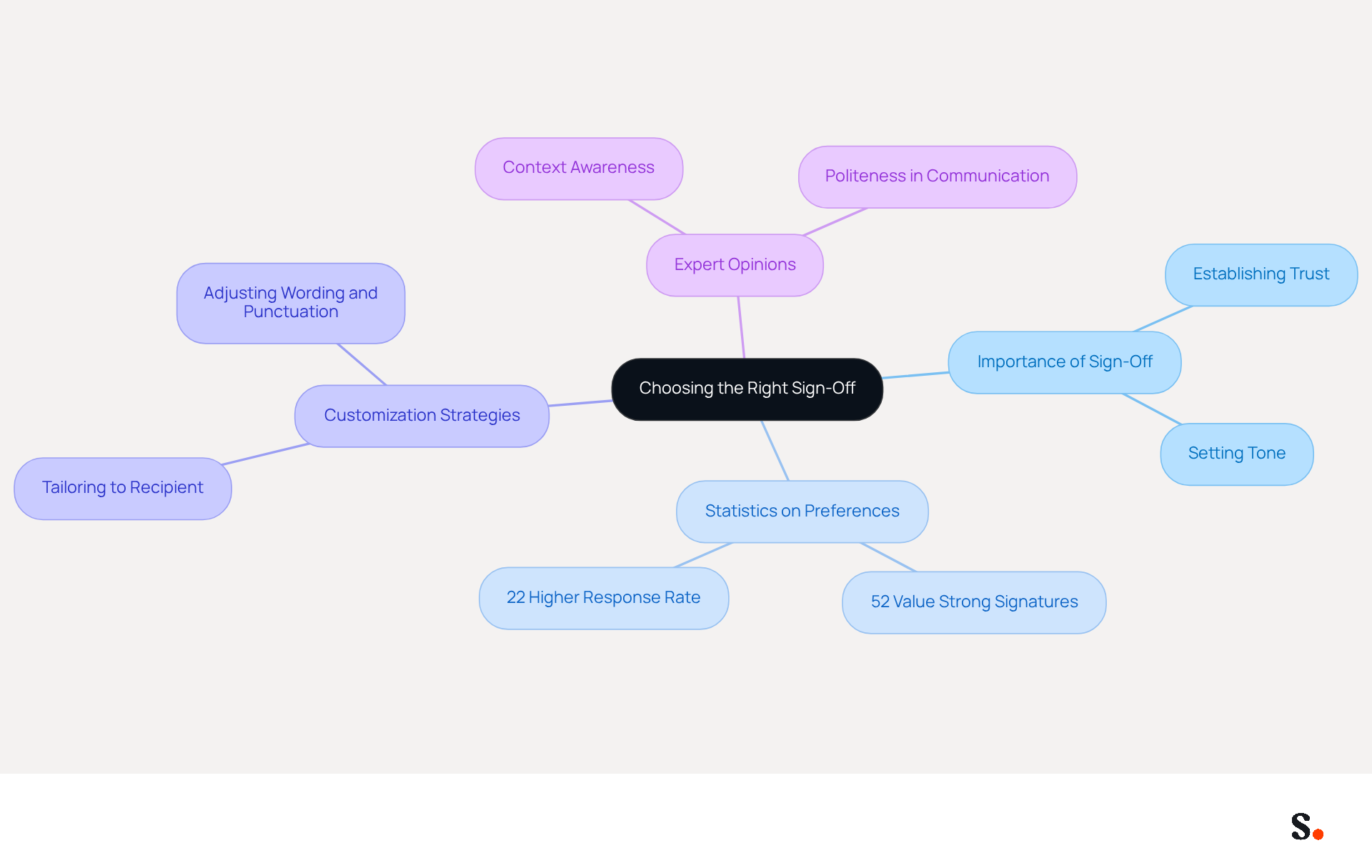
Statistics show that 52% of professionals believe a strong signature is essential for establishing trust, which also applies to the sign-off used. Without a strong signature, establishing trust can be challenging. Furthermore, messages with branded signatures achieve a 22% higher response rate, demonstrating how intentional communication strategies can enhance engagement. Scribe's automated signature management simplifies this process, allowing organizations to easily maintain brand consistency and turn every message into a marketing opportunity.
Case studies emphasize optimal methods in message closings, demonstrating that customizing the closing to the recipient's preferences and the message's intent can nurture positive relationships and boost engagement. Expert opinions indicate that being aware of the recipient's context can greatly affect how the closing is perceived, with slight modifications in wording or punctuation possibly changing the message's tone.
Ultimately, the most effective sign-off, which is best a good way to end an email, aligns with the email's purpose, the nature of the relationship with the recipient, and the desired outcome. By joining Scribe's affiliate program, you can promote brand consistency while earning a 50% commission and offering a $30 credit to new users, further enhancing your marketing efforts. By aligning your sign-off with your communication goals, you can significantly enhance your professional interactions.
Conclusion
The choice of an email sign-off can significantly influence the effectiveness of communication and the strength of professional relationships. While 'Best' is a common choice, its effectiveness can vary significantly based on context and the relationship between the sender and recipient. Recognizing the subtleties of various sign-offs can really boost engagement and ensure that messages resonate with their intended audience.
The article highlights that sign-offs like 'Thank you' and 'Thanks in advance' yield higher response rates compared to neutral closings such as 'Best.' Tailoring the closing to reflect the message's tone and the recipient's preferences can foster positive interactions. Additionally, incorporating branded signatures through tools like Scribe can further enhance engagement, turning every email into a marketing opportunity.
By strategically selecting sign-offs that resonate with recipients, professionals can transform their email interactions into opportunities for deeper engagement. Embracing these insights can lead to more meaningful connections and greater success in professional correspondence.
Frequently Asked Questions
Why are email sign-offs important?
Email sign-offs are crucial as they shape how recipients interpret messages, strengthen the sentiment of the message, clarify the sender's intentions, and encourage the recipient to take action.
How do different sign-offs affect engagement rates?
Research shows that sign-offs expressing gratitude, such as 'Thanks' (63%) or 'Thank you' (57.9%), achieve higher engagement rates, with 'Thanks in advance' reaching 65.7%. In contrast, vague closings like 'Regards' yield lower engagement, averaging 53.5%, and messages without a closing average only 43%.
What impact do warm, professional tones in email closings have?
Messages with warm, professional tones can receive up to 22% more responses, highlighting the importance of tailoring closings based on context and the relationship with the recipient.
How can understanding email sign-offs improve communication effectiveness?
Understanding the impact of various email closings helps assess their effectiveness in shaping communication outcomes and fostering meaningful connections, which is essential for achieving desired responses.
List of Sources
- Understand the Importance of Email Sign-Offs
- Ending Your Emails With this One Word Vastly Improves the Response Rate | Team Referral Network (https://teamreferralnetwork.com/news/2017/03/ending-your-emails-with-this-one-word-vastly-improves-the-response-rate)
- Master Warmly Email Sign-Offs: Best Practices for Impactful Communication (https://scribe-mail.com/en-US/blog/master-warmly-email-sign-offs-best-practices-for-impactful-communication)
- 12 Email Sign-Offs That Get Responses [2026 Data] (https://lagrowthmachine.com/email-sign-offs-get-responses)
- Email Sign Offs for Every Industry and Situation | Mailchimp (https://mailchimp.com/resources/email-sign-offs)
- Mastering Professional Email Sign-Offs in 2026 (https://linkedin.com/pulse/mastering-professional-email-sign-offs-2026-bulksignature-qsr4e)
- Analyze the Effectiveness of 'Best' as a Sign-Off
- Bloomberg L.P. | About, Careers, Products, Contacts (https://bloomberg.com/news/articles/2015-06-02/the-best-e-mail-signature-is-actually-the-worst)
- Your Emails Are 36 Percent More Likely to Get a Reply If You End Them This Way (https://inc.com/jessica-stillman/your-emails-are-36-percent-more-likely-to-get-a-reply-if-you-close-them-this-way.html)
- 12 Email Sign-Offs That Get Responses [2026 Data] (https://lagrowthmachine.com/email-sign-offs-get-responses)
- Forget “Best” or “Sincerely,” This Email Closing Gets the Most Replies – The Boomerang Blog (https://blog.boomerangapp.com/2017/01/how-to-end-an-email-email-sign-offs)
- Use These Words At The End Of Your Emails To Increase Your Chance Of Getting A Reply (https://fastcompany.com/3069126/use-these-words-at-the-end-of-your-emails-to-increase-your-chance-of-getting-a-re)
- Explore Alternative Email Sign-Offs and Their Contexts
- 75+ Best Email Sign-offs to Make an Impression (2026) (https://criminallyprolific.com/email-signoffs)
- Best Email Sign-Offs for Any Correspondence (https://wisestamp.com/examples/email-sign-offs)
- Email Sign Offs for Every Industry and Situation | Mailchimp (https://mailchimp.com/resources/email-sign-offs)
- The 37 best ways to close emails (https://signitic.com/en/resources/email-sign-offs)
- Summarize Key Insights on Choosing the Right Sign-Off
- Email Signature Essentials: Key Statistics to Know for 2023 (https://blog.hubspot.com/marketing/email-signature-statistics)
- How to avoid writing irritating emails (https://bbc.com/worklife/article/20170904-how-to-avoid-writing-irritating-emails)
- Please Don’t Let Me Be Misunderstood: The Importance Of Tone In Emails (https://productive.io/blog/misunderstandings-importance-of-tone-in-emails)
- Email signature statistics: Why every business should optimize their email signatures — Stripo.email (https://stripo.email/blog/email-signature-statistics-why-every-business-should-optimize-their-email-signatures)
Get started with Scribe
Build a professional email signature
Free 14-day trial — no credit card.