4 Best Practices for a Professional Formal Email Sign Off
Crafting a professional email sign-off is essential, as it serves as the final touchpoint in a conversation that leaves a lasting impression. By understanding
Sophie Grant
Email Signature Specialist, Scribe

Introduction
Crafting a professional email sign-off is essential, as it serves as the final touchpoint in a conversation that leaves a lasting impression. By understanding the key components of a formal sign-off, professionals can enhance their communication effectiveness and reinforce their brand identity.
What steps can professionals take to ensure their sign-offs are impactful and aligned with their brand? This article delves into best practices for formal email sign-offs, providing clear strategies that enhance communication and strengthen professional relationships.
Understand Key Components of a Formal Email Sign-Off
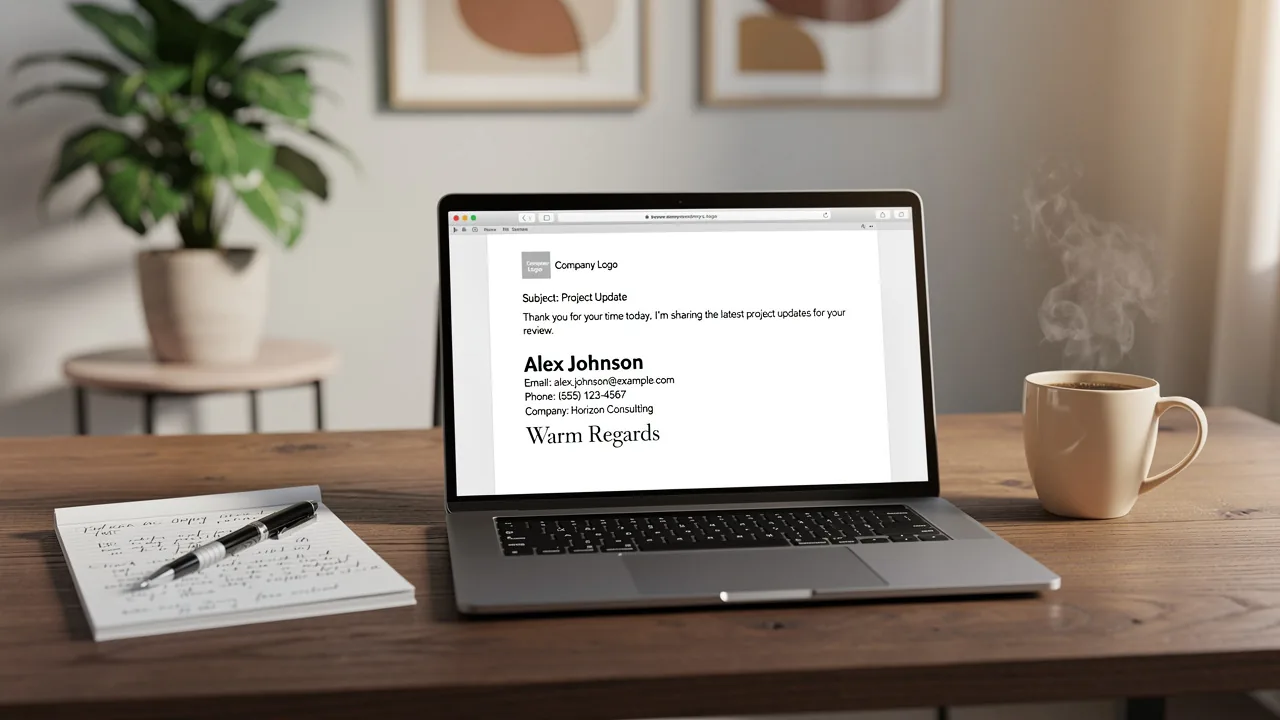
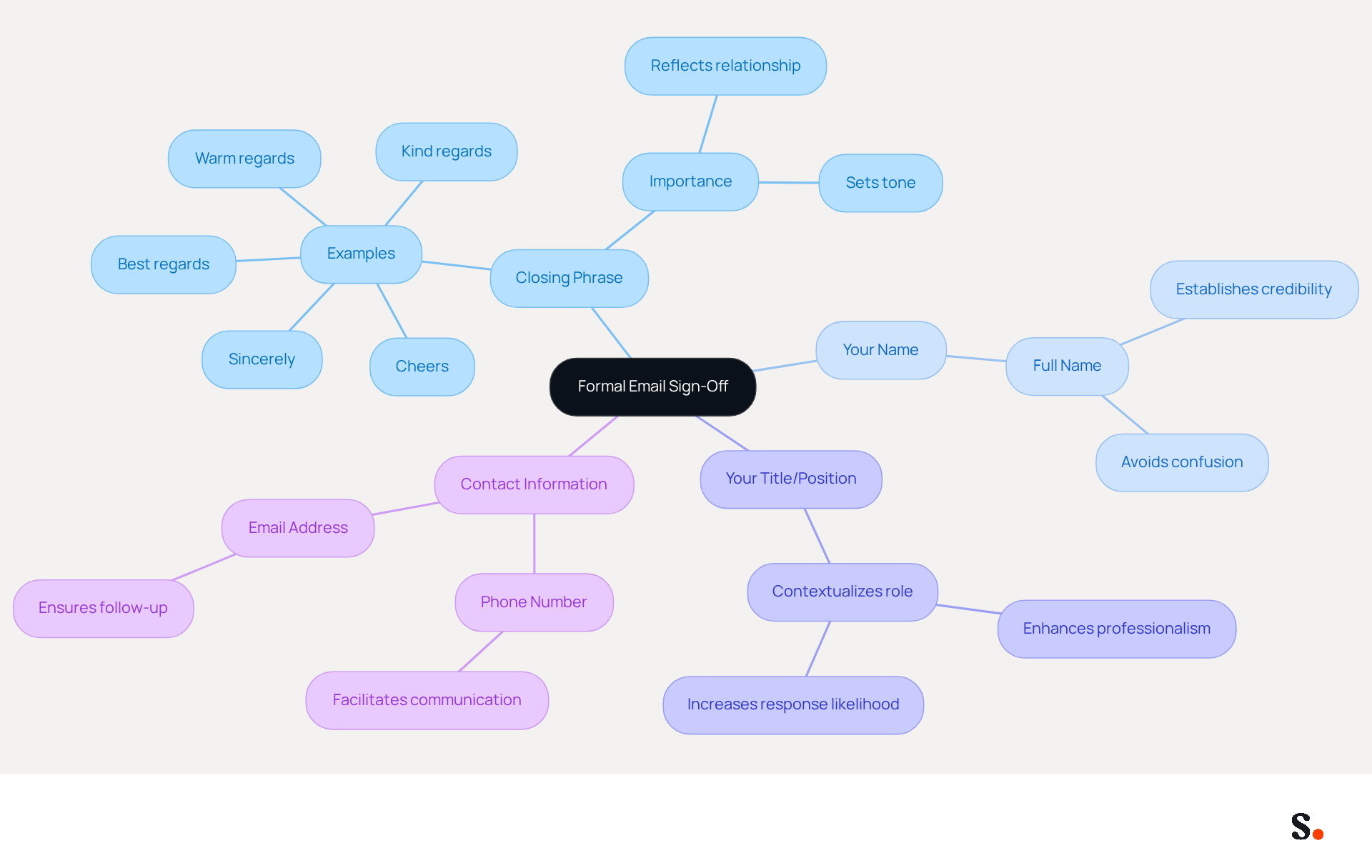
A formal email sign off is crucial for establishing professionalism and clarity in communication. It consists of four essential components: a closing phrase, your name, your title or position, and your contact information. The closing phrase should align with the tone of the message and the nature of your relationship with the recipient. Common phrases include 'Sincerely,' 'Best regards,' and 'Kind regards.' Following this, include your full name to clearly identify yourself to the recipient. Adding your title or position can provide context about your role, enhancing your credibility and professionalism. Moreover, including your contact details, like your phone number, makes it easier for others to reach out and strengthens your professional image. For instance:
Best regards,
John Doe
Marketing Manager
john.doe@example.com
(123) 456-7890
This structure shows respect and helps recipients remember who you are and your role. Studies show that including formal identifiers in your messages can boost response rates significantly, emphasizing the importance of a formal email sign off. Furthermore, case studies indicate that organizations prioritizing effective electronic communication formats enhance their messaging and brand identity, which can lead to improved engagement and a stronger brand presence. With Scribe, you can automate the management of your correspondence, ensuring that it is always current and compliant with SOC 2 Type II standards. This means that your teammates' signature information is synced in real-time with your business phone system, requiring no action from them. As Payman Taei observes, 'A strong professional message conclusion helps the content feel purposeful from start to finish,' emphasizing the significance of a well-structured closing in promoting effective interaction. Ultimately, a thoughtful formal email sign off can significantly impact the effectiveness of your professional interactions.
Tailor Sign-Offs to Audience and Context
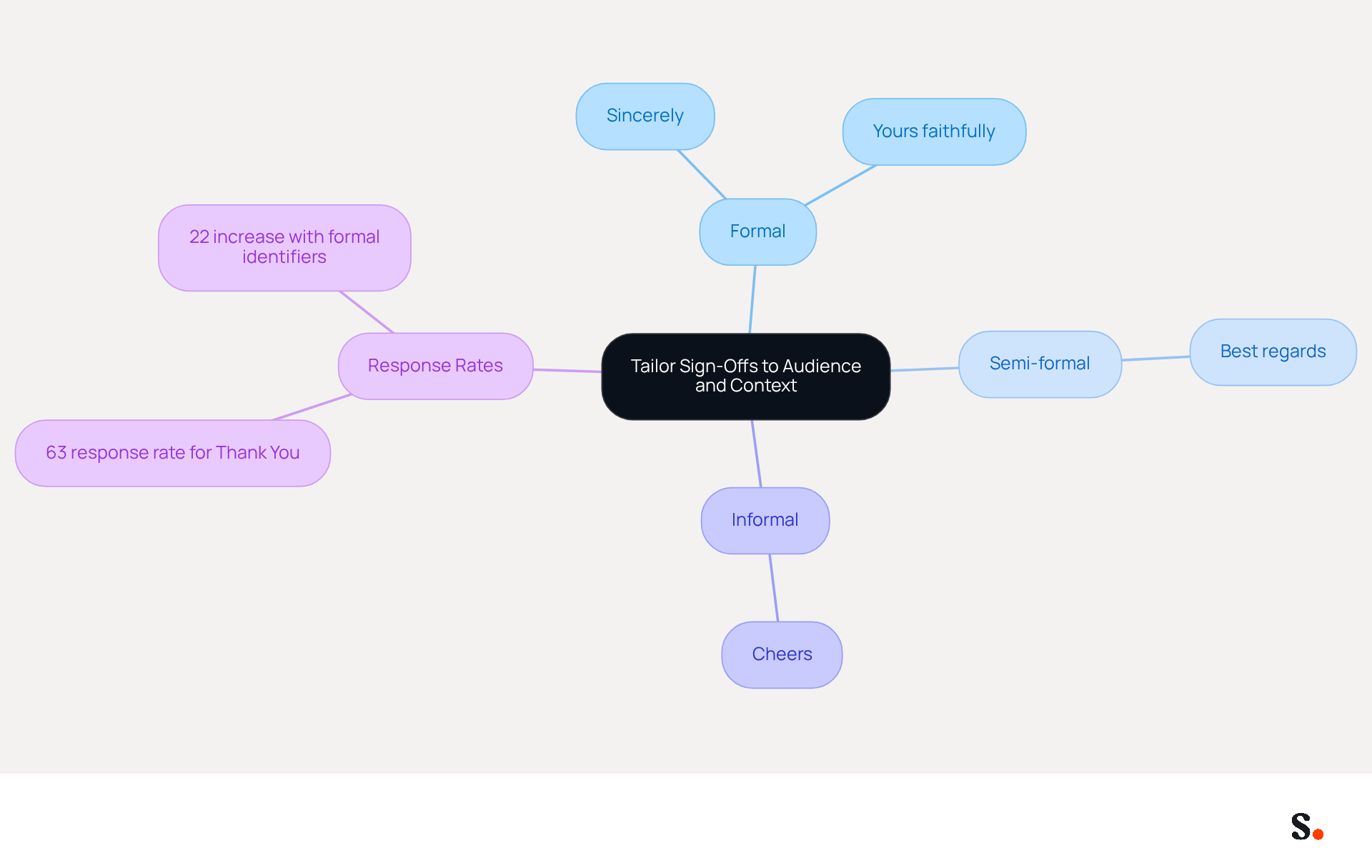
Crafting an effective message closure is essential for fostering strong communication. When you have an ongoing relationship with the recipient, personalizing your sign-off strengthens your connection. For formal correspondence, particularly those directed at clients or superiors, using a formal email sign off such as 'Sincerely' or 'Yours faithfully' is most suitable. In contrast, for colleagues or less formal interactions, options like 'Best' or 'Cheers' may be more appropriate. For example:
- Formal: 'Sincerely,'
- Semi-formal: 'Best regards,'
- Informal: 'Cheers,'
Additionally, studies indicate that messages that conclude with a 'thank you' can lead to significantly higher response rates, with 'Thanks' alone having a 63% response rate. Furthermore, using formal identifiers in message sign-offs can lead to a 22% increase in response rates. Customizing your message closings to suit the audience and context is essential for effective communication, as it can greatly affect how your message is perceived. Neglecting to personalize your sign-off can lead to disengagement from the recipient. Consequently, this may result in fewer replies and weakened relationships. Ultimately, a thoughtful formal email sign off can significantly improve the chances of receiving a positive response.
Maintain Brand Consistency in Email Sign-Offs
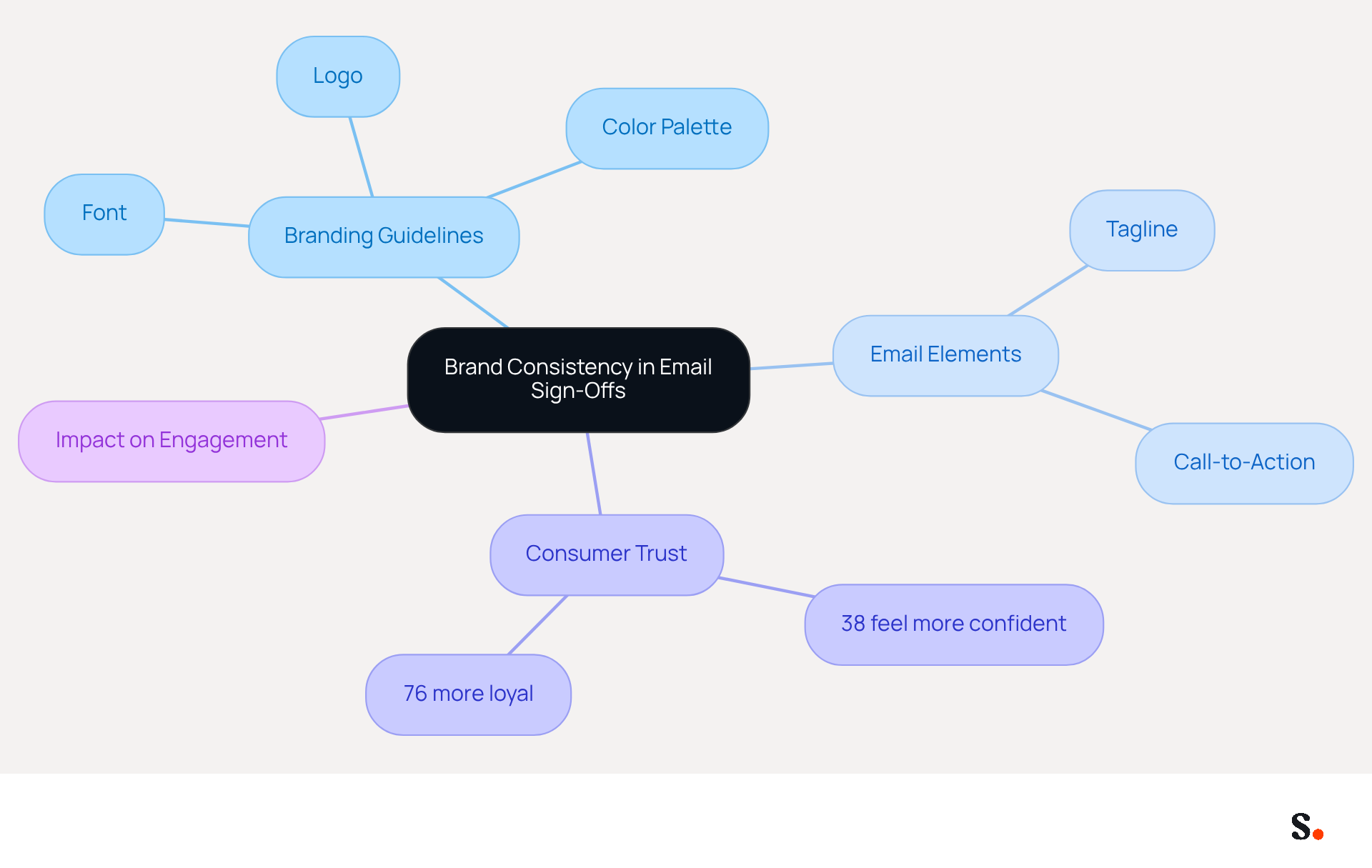
Incorporating your company's branding guidelines into formal email sign off is crucial for maintaining brand consistency. This involves utilizing a consistent font, color palette, and logo in your correspondence. For instance, if your company has a specific color associated with its brand, make sure your emails use that color. Additionally, consider including a tagline or a call-to-action that aligns with your marketing goals. For example:
Best regards,
John Doe
Marketing Manager
Scribe - Automating Your Email Signatures
Keeping your brand image consistent in emails helps your audience recognize and trust your company. A study found that 38% of consumers feel more confident in a business when its emails feature a professional branded footer. Furthermore, 76% of consumers are more loyal to brands they feel emotionally connected to, highlighting the importance of consistent branding in fostering trust and loyalty. A research analysis of a leading tech firm showed that standardizing electronic correspondence identifiers across all employee communications significantly enhanced brand perception and engagement, leading to increased social media interactions and website traffic. By adhering to these practices, you can effectively transform your email signatures into powerful marketing tools that resonate with your audience.
Implement Effective Sign-Off Strategies with Practical Examples
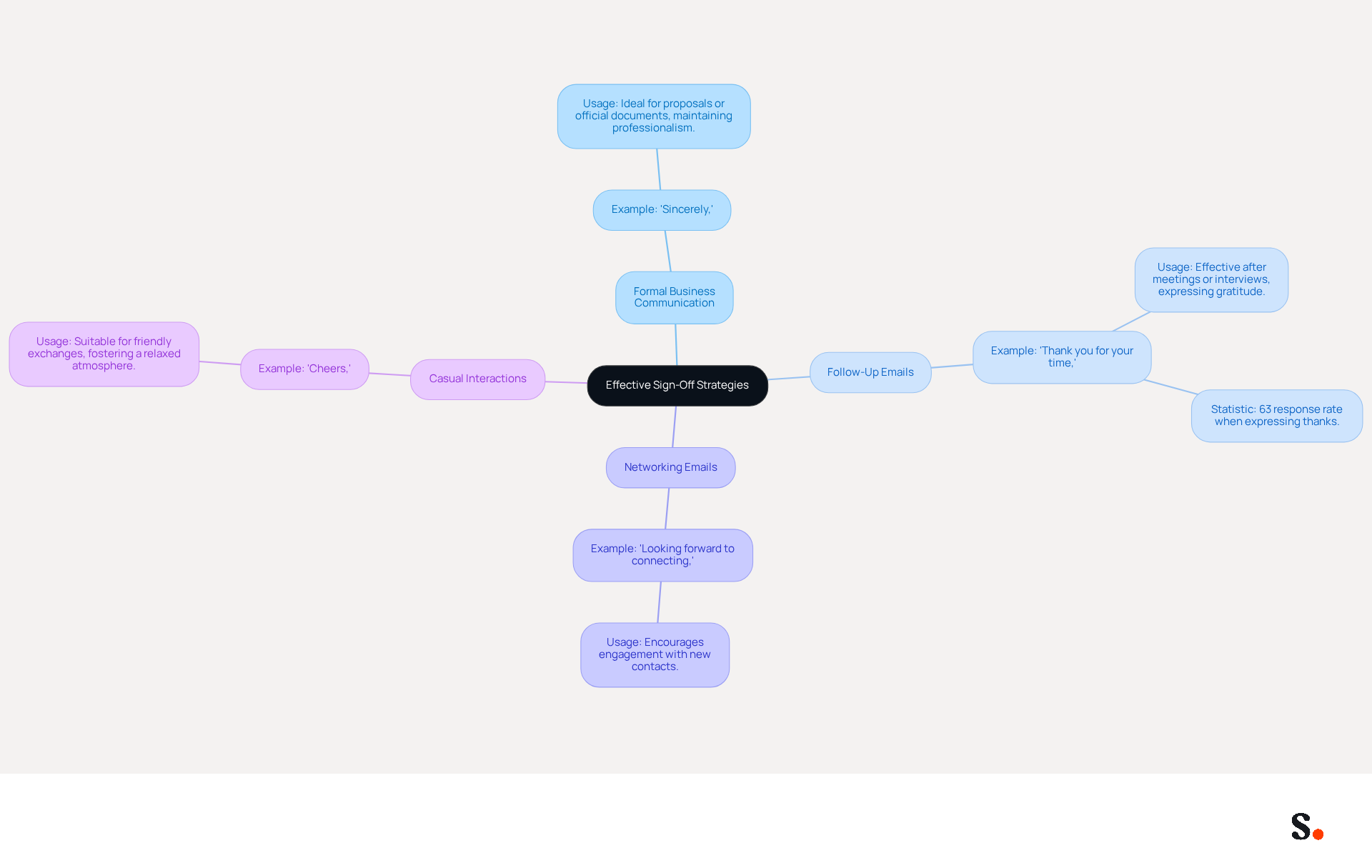
Effective sign-off strategies are crucial for enhancing communication in professional settings. Consider the following practical examples:
-
Formal Business Communication:
- Example: 'Sincerely,'
- Usage: Ideal for sending proposals or official documents, this sign-off maintains professionalism and respect.
-
Follow-Up Emails:
- Example: 'Thank you for your time,'
- Usage: This sign-off is effective after meetings or interviews, expressing gratitude and reinforcing positive rapport. Studies show that saying thank you in your sign-offs can really boost how often people respond, with expressions of thanks yielding a 63% response rate.
-
Networking Emails:
- Example: 'Looking forward to connecting,'
- Usage: Use this sign-off when reaching out to new contacts or potential collaborators, as it encourages engagement and shows enthusiasm for future interactions.
-
Casual Interactions:
- Example: 'Cheers,'
- Usage: Suitable for friendly exchanges with colleagues or peers, this sign-off can foster a relaxed atmosphere while still maintaining professionalism.
Implementing customized formal email sign-offs can greatly enhance your message delivery, making it more effective and appropriate for each situation. Consistency in formal email sign-off across communications fosters trust and positively impacts profitability, making it essential to align your formal email sign-off with the overall tone of your email and the relationship you have with the recipient. Aligning your sign-off with the context of your communication can transform your interactions and foster stronger professional relationships.
Conclusion
Effective email sign-offs are essential for impactful communication in the professional realm. By understanding the key elements of a formal sign-off, tailoring it to the audience, maintaining brand consistency, and implementing effective strategies, professionals can significantly enhance their email interactions. Each of these practices contributes to a polished and professional image, fostering stronger relationships and improving response rates.
The article highlights the importance of including essential components such as:
- A closing phrase
- Your name
- Title
- Contact information
It emphasizes the need to customize sign-offs based on the recipient and context, showcasing how a simple 'thank you' can lead to higher engagement. Additionally, maintaining brand consistency in email signatures not only reinforces brand identity but also builds trust with recipients. Practical examples illustrate how different sign-offs can be effectively employed in various professional scenarios, ensuring that communication remains appropriate and impactful.
This shift in approach can lead to increased engagement and stronger professional relationships. By refining your email sign-offs, you can significantly influence how your messages are received and perceived. Embracing these strategies will not only elevate individual communications but also contribute to a cohesive brand presence in the digital landscape.
Frequently Asked Questions
What is the purpose of a formal email sign-off?
A formal email sign-off is crucial for establishing professionalism and clarity in communication.
What are the key components of a formal email sign-off?
The key components include a closing phrase, your name, your title or position, and your contact information.
What are some common closing phrases for formal emails?
Common closing phrases include 'Sincerely,' 'Best regards,' and 'Kind regards.'
Why is it important to include your title or position in an email sign-off?
Including your title or position provides context about your role, enhancing your credibility and professionalism.
How does including contact information in an email sign-off benefit the recipient?
Including contact information, like your phone number, makes it easier for others to reach out and strengthens your professional image.
What impact does a formal email sign-off have on response rates?
Studies show that including formal identifiers in messages can significantly boost response rates.
How can organizations benefit from prioritizing effective electronic communication formats?
Organizations that prioritize effective electronic communication can enhance their messaging and brand identity, leading to improved engagement and a stronger brand presence.
What role does Scribe play in managing email correspondence?
Scribe automates the management of correspondence, ensuring it is always current and compliant with SOC 2 Type II standards, syncing signature information in real-time with the business phone system.
What does Payman Taei say about the importance of a strong professional message conclusion?
Payman Taei observes that 'A strong professional message conclusion helps the content feel purposeful from start to finish,' highlighting the significance of a well-structured closing in promoting effective interaction.
List of Sources
- Understand Key Components of a Formal Email Sign-Off
- How to End an Email: 43 Ways to Sign Off on an Email (2026) (https://respona.com/blog/how-to-end-an-email)
- Email Sign Offs for Every Industry and Situation | Mailchimp (https://mailchimp.com/resources/email-sign-offs)
- 4 Best Practices for Effective Professional Email Closings (https://scribe-mail.com/en-US/blog/4-best-practices-for-effective-professional-email-closings)
- How to end an email: 70+ professional sign-offs & examples (https://blog.superhuman.com/how-to-end-an-email)
- Best email endings - best practices for closing an email (https://mail-signatures.com/articles/best-email-sign-offs)
- Tailor Sign-Offs to Audience and Context
- Master Email Closing Words for Maximum Engagement and Impact (https://scribe-mail.com/en-US/blog/master-email-closing-words-for-maximum-engagement-and-impact)
- 100 Email Sign-Off Ideas (+10 Golden Rules for Marketing Pros) - MailerLite (https://mailerlite.com/blog/email-sign-offs)
- How to Sign Off on an Email Correctly | Rocketseed (https://rocketseed.com/blog/correct-way-to-sign-off-emails)
- Best Email Sign-Offs for Any Correspondence (https://wisestamp.com/examples/email-sign-offs)
- Email Sign Offs for Every Industry and Situation | Mailchimp (https://mailchimp.com/resources/email-sign-offs)
- Maintain Brand Consistency in Email Sign-Offs
- Branding statistics you need to know in 2026 (https://dash.app/blog/branding-statistics)
- Exclaimer Research: 67% of Marketers Expect Email Signatures to Support With Lead Gen In 2023 (https://businesswire.com/news/home/20230612141095/en/Exclaimer-Research-67-of-Marketers-Expect-Email-Signatures-to-Support-With-Lead-Gen-In-2023)
- Email Signature Branding: Consistency and Impact | Crossware365 (https://crossware365.com/blog/mastering-email-signature-branding-market-presence)
- Easy Steps to Maintain Brand Consistency in Email Marketing — Stripo.email (https://stripo.email/blog/easy-steps-to-maintain-brand-consistency-in-email-marketing)
- Best Practices for Your Company Signature in Email Marketing (https://scribe-mail.com/en-US/blog/best-practices-for-your-company-signature-in-email-marketing)
- Implement Effective Sign-Off Strategies with Practical Examples
- 10 Creative Ways to Sign-Off on an Email That Impress (https://scribe-mail.com/en-US/blog/10-creative-ways-to-sign-off-on-an-email-that-impress)
- How to end an email: 70+ professional sign-offs & examples (https://blog.superhuman.com/how-to-end-an-email)
- Best Email Sign-Offs: 15 Examples for Every Situation (https://beanstalkconsulting.co/blogs/best-email-sign-offs)
- Email Sign Offs Professional: Best Practices for Business Emails (https://mailwarm.com/blog/professional-email-sign-offs-best-practices)
Get started with Scribe
Build a professional email signature
Free 14-day trial — no credit card.