Master the V/R Email Sign Off: Enhance Your Professional Communication
In professional communication, the choice of email sign-offs can significantly influence perceptions and relationships. The V/R sign-off, which stands for
Sophie Grant
Email Signature Specialist, Scribe
On this page
Introduction
In professional communication, the choice of email sign-offs can significantly influence perceptions and relationships. The V/R sign-off, which stands for "Very Respectfully," serves as a formal closing that conveys deference and respect, particularly in hierarchical interactions. Yet, as communication styles evolve, professionals face the challenge of determining the appropriate contexts for using this sign-off effectively. Exploring best practices for incorporating V/R into emails can enhance professionalism and help avoid common pitfalls in communication.
Define V/R: Understanding Its Meaning in Email Communication
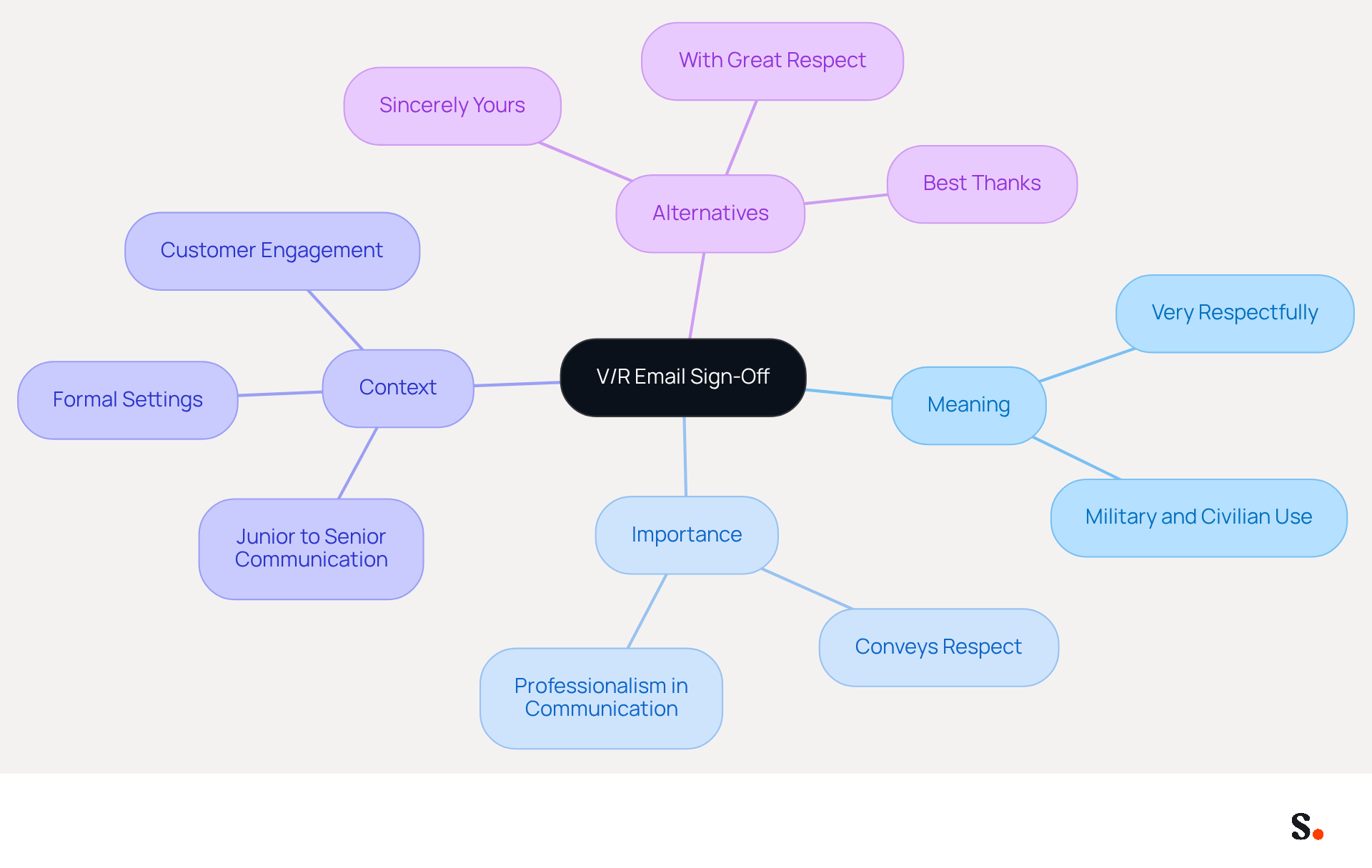
Understanding the nuances of formal sign-offs like V/R is essential for effective professional communication. The term 'v/r email sign off' signifies 'Very Respectfully,' a formal sign-off frequently utilized in military correspondence and increasingly in civilian professional communications. This abbreviation conveys a sense of deference and respect towards the recipient, making it particularly suitable for hierarchical interactions.
Recognizing the importance of V/R is vital for maintaining professionalism in correspondence. The use of a v/r email sign off can indicate to the recipient that the sender recognizes their position or authority, which is particularly significant in formal or sensitive interactions. For example, when a junior employee communicates with a senior manager, using V/R can help establish a respectful tone that fosters positive interactions.
As communication evolves, maintaining formality can become increasingly challenging. For general marketing messages, more neutral or warm closings are usually more effective than V/R. Properly formatted, V/R should include a comma for a polished tone, followed by the sender's signature. Additionally, when writing to civilians, alternatives like 'Sincerely yours' or 'With great respect' are recommended to maintain professionalism.
Messages featuring respectful sign-offs like V/R achieve a response rate of 57.9%, highlighting the effectiveness of this formal closing in enhancing communication. Adapting to these changes in communication style can significantly enhance the effectiveness of your professional interactions.
Apply V/R: Guidelines for Effective Usage in Emails
To enhance your email communications, it is essential to understand the appropriate use of V/R.
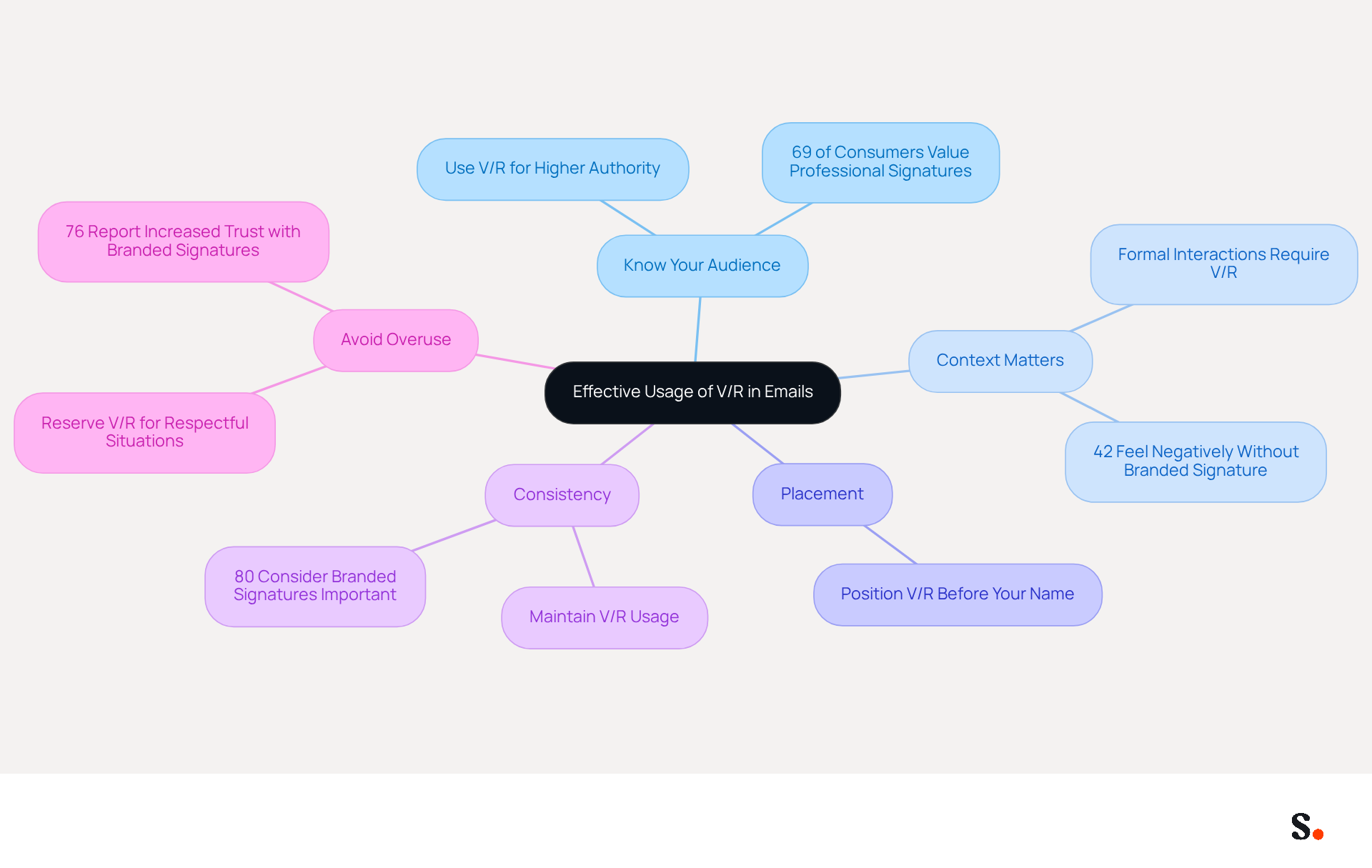
- Know Your Audience: When addressing someone of higher rank or authority, such as a supervisor or client, use a v/r email sign off, which stands for 'Very Respectfully.' This demonstrates respect and acknowledges their position, which is crucial in professional settings where 69% of consumers believe a consistent, professional email signature is important for companies.
- Context Matters: In formal interactions, especially those related to military or government affairs, using a v/r email sign off is appropriate. In less formal settings, consider alternatives like 'Best regards' or 'Sincerely.' Misunderstanding the context can lead to ineffective communication; 42% of consumers feel negatively toward businesses that lack a branded signature.
- Placement: Always position the v/r email sign off before your name at the end of the message. For example:
"Thank you for your assistance.
V/R,
John Doe" - Consistency: If you start using the v/r email sign off in your communications, maintain this practice to establish a consistent tone in your professional interactions. Consistency is crucial, as 80% of respondents consider branded signatures as important for a company's brand identity.
- Avoid Overuse: While V/R is respectful, using it excessively can dilute its impact. Reserve it for situations where respect is paramount, as 76% of recipients report increased trust in the sender due to branded signatures. This ensures that your interactions remain impactful and professional.
Optimize V/R: Best Practices and Common Pitfalls
To effectively communicate in emails, understanding the appropriate use of v/r email sign off is crucial. Adhering to best practices can enhance clarity and professionalism in your correspondence.
-
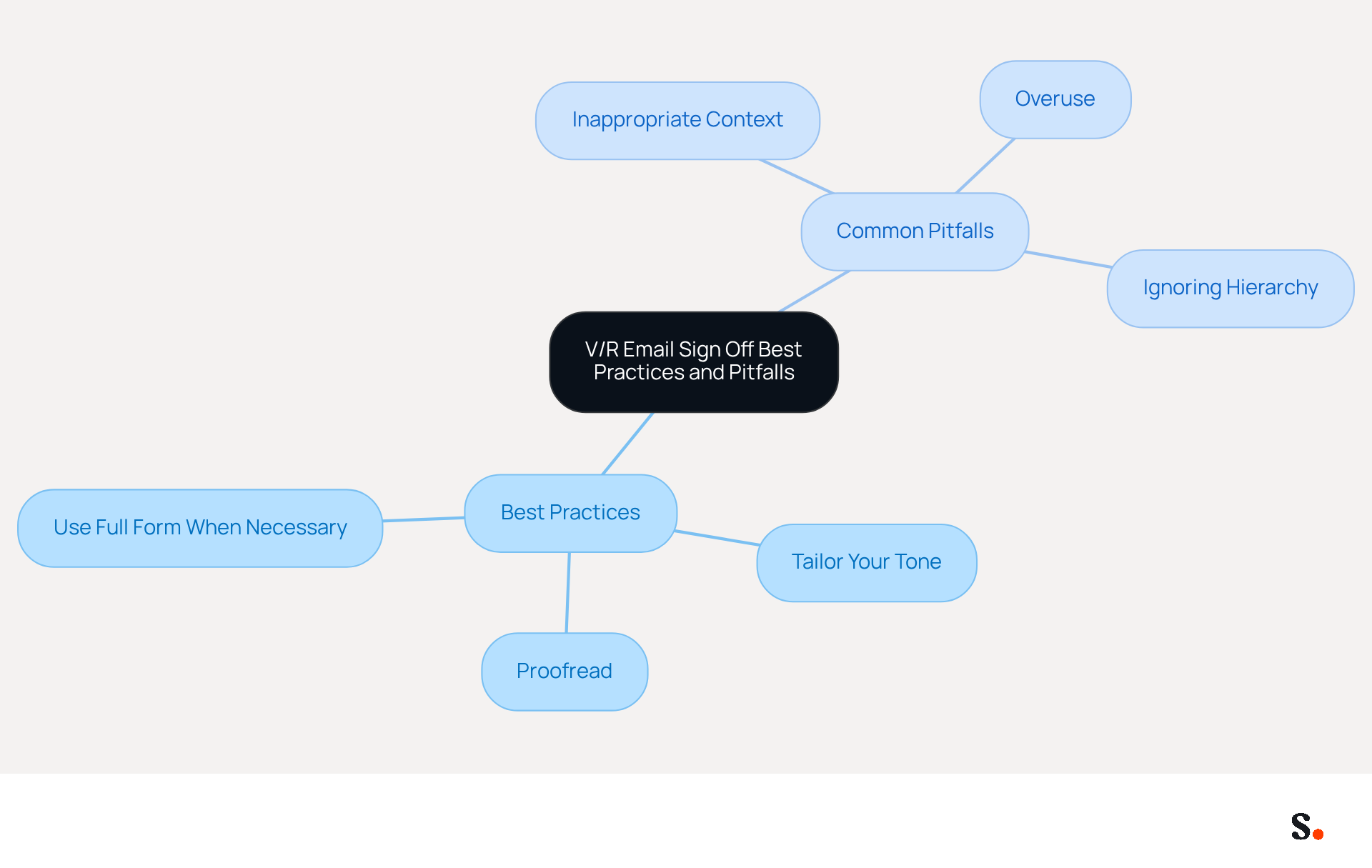
Best Practices:
- Use Full Form When Necessary: In initial communications, opt for "Very Respectfully" instead of just V/R to ensure clarity and professionalism. This term originates from military communication protocols, where it conveys respect from junior to senior ranks.
- Tailor Your Tone: Align the formality of your message with the recipient's expectations. If they typically use a v/r email sign off, it’s appropriate for you to do the same. Variations like V/r or v/r can also be used depending on the context and relationship.
- Proofread: Always check for typos or formatting errors before sending your message. A well-crafted message shows you care about professionalism and detail.
-
Common Pitfalls:
- Inappropriate Context: Avoid using V/R in casual or informal emails, as it can seem too formal or insincere, potentially alienating the recipient. For recipients unfamiliar with military terminology, consider using alternatives like "Sincerely" or "Best regards."
- Overuse: Using V/R in every email can diminish its significance. Reserve it for interactions that genuinely warrant a respectful tone, ensuring it retains its impact. Formal sign-offs can boost engagement and build trust in workplace communications.
- Ignoring Hierarchy: Be aware of the recipient's position relative to yours. Misusing V/R can lead to misunderstandings and distance between you and the recipient, damaging professional relationships and hindering effective communication. The use of a v/r email sign off appropriately reinforces respect in client interactions and enhances professionalism.
Contextualize Sign-Offs: The Importance of Tone and Professionalism
The tone of your message sign-off significantly influences how your communication is perceived, impacting both professionalism and engagement. Here are key points to consider:
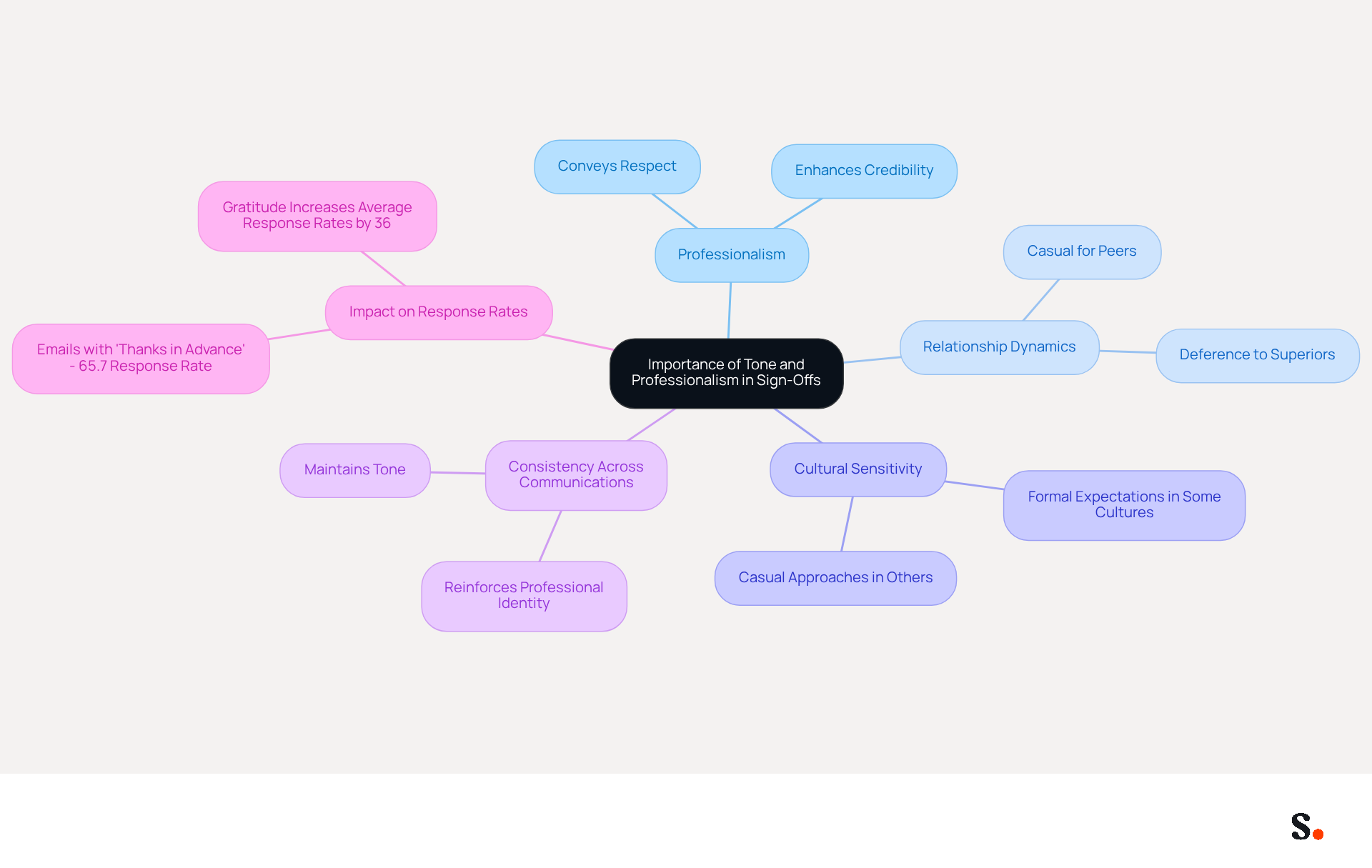
- Professionalism: A well-chosen sign-off, such as a v/r email sign off, conveys professionalism and respect, enhancing your credibility in the eyes of the recipient.
- Relationship Dynamics: The relationship between you and the recipient should guide your choice of sign-off. For instance, using V/R with a superior shows deference, while a more casual sign-off may be appropriate for peers.
- Cultural Sensitivity: Being aware of cultural differences in interaction styles can really help you connect better with different audiences. In some cultures, formal sign-offs are expected, while in others, a more casual approach may be preferred.
- Consistency Across Communications: Maintaining a consistent tone across your messages helps establish your professional identity. If you utilize v/r email sign off in one message, consider applying the v/r email sign off in later interactions to reinforce your respectful approach.
- Impact on Response Rates: Emails that utilize a v/r email sign off, like V/R, experience a 65.7% response rate, demonstrating how effective gratitude can be in sign-offs. Additionally, case studies show that gratitude-based closings lead to a 36% increase in average response rates, underscoring the importance of courtesy in professional communication.
Conclusion
The V/R email sign-off is a pivotal element in professional communication, influencing how messages are perceived. This formal closing, meaning "Very Respectfully," conveys deference and establishes a respectful tone in professional interactions. Mastering the V/R sign-off enables professionals to build positive relationships and ensures their communications are perceived as professional.
Throughout the article, key insights were shared regarding the effective application of the V/R sign-off. It is essential to know your audience, consider the context, and maintain consistency in usage. Best practices, such as using the full form when necessary and proofreading messages, can significantly enhance clarity and professionalism. Additionally, avoiding common pitfalls like overuse and inappropriate context ensures that the V/R sign-off retains its impact and effectiveness.
The way we craft sign-offs can significantly shape how professionalism and engagement are perceived in our communications. Adopting the V/R sign-off can transform communication dynamics, fostering a culture of respect that resonates throughout the workplace.
Frequently Asked Questions
What does V/R stand for in email communication?
V/R stands for "Very Respectfully," which is a formal sign-off commonly used in military correspondence and increasingly in civilian professional communications.
Why is the V/R sign-off important in professional communication?
The V/R sign-off conveys a sense of deference and respect towards the recipient, making it particularly suitable for hierarchical interactions and helping to maintain professionalism.
When should I use the V/R sign-off?
The V/R sign-off is particularly significant in formal or sensitive interactions, such as when a junior employee communicates with a senior manager, as it helps establish a respectful tone.
Are there alternatives to V/R for civilian communications?
Yes, alternatives like "Sincerely yours" or "With great respect" are recommended for maintaining professionalism when writing to civilians.
How should V/R be formatted in an email?
V/R should be followed by a comma for a polished tone, and then the sender's signature should be included.
What is the effectiveness of using respectful sign-offs like V/R?
Messages featuring respectful sign-offs like V/R achieve a response rate of 57.9%, indicating their effectiveness in enhancing communication.
How has communication style evolved regarding formal sign-offs?
As communication evolves, maintaining formality can become challenging, and for general marketing messages, more neutral or warm closings are usually more effective than V/R.
List of Sources
- Define V/R: Understanding Its Meaning in Email Communication
- Learn What V/r Means in an Email and How to Use It Properly (https://tabular.email/blog/what-does-vr-mean-in-email)
- What is V/R in email? — Stripo.email (https://stripo.email/glossary/what-is-v-r-in-email)
- What V/R Email Sign Off Means and When to Use It (https://designmodo.com/v-r-email-sign-off)
- What Does V/R Stand For in Email Communication? (https://scribe-mail.com/en-US/blog/what-does-v-r-stand-for-in-email-communication)
- What is V/R Meaning in Email Communication? (https://scribe-mail.com/en-US/blog/what-is-v-r-meaning-in-email-communication)
- Apply V/R: Guidelines for Effective Usage in Emails
- 40+ Email Signature Statistics for 2026 (Data + Insights) (https://wavecnct.com/blogs/email-signature-statistics)
- What V/R Email Sign Off Means and When to Use It (https://designmodo.com/v-r-email-sign-off)
- Learn What V/r Means in an Email and How to Use It Properly (https://tabular.email/blog/what-does-vr-mean-in-email)
- Optimize V/R: Best Practices and Common Pitfalls
- Learn What V/r Means in an Email and How to Use It Properly (https://tabular.email/blog/what-does-vr-mean-in-email)
- What Does V/R Mean in an Email Signature? (https://bulksignature.com/blog/what-does-v-r-mean-in-an-email-signature)
- What is V/R in email? — Stripo.email (https://stripo.email/glossary/what-is-v-r-in-email)
- What V/R Email Sign Off Means and When to Use It (https://designmodo.com/v-r-email-sign-off)
- What is V/R Meaning in Email Communication? (https://scribe-mail.com/en-US/blog/what-is-v-r-meaning-in-email-communication)
- Contextualize Sign-Offs: The Importance of Tone and Professionalism
- Forget “Best” or “Sincerely,” This Email Closing Gets the Most Replies – The Boomerang Blog (https://blog.boomerangapp.com/2017/01/how-to-end-an-email-email-sign-offs)
- Ending Your Emails With this One Word Vastly Improves the Response Rate | Team Referral Network (https://teamreferralnetwork.com/news/2017/03/ending-your-emails-with-this-one-word-vastly-improves-the-response-rate)
- Your Emails Are 36 Percent More Likely to Get a Reply If You End Them This Way (https://entrylevelrebel.medium.com/your-emails-are-36-percent-more-likely-to-get-a-reply-if-you-end-them-this-way-ef5e2b8c923d?source=topics_v2---------2-87--------------------71e204d7_51b1_4312_9b99_37bcabd35a93-------17)
- The beautiful ways different cultures sign emails (https://bbc.com/worklife/article/20190508-why-the-way-you-close-your-emails-is-causing-confusion)
Get started with Scribe
Build a professional email signature
Free 14-day trial — no credit card.