Master Best Regards Meaning: Usage, Contexts, and Alternatives
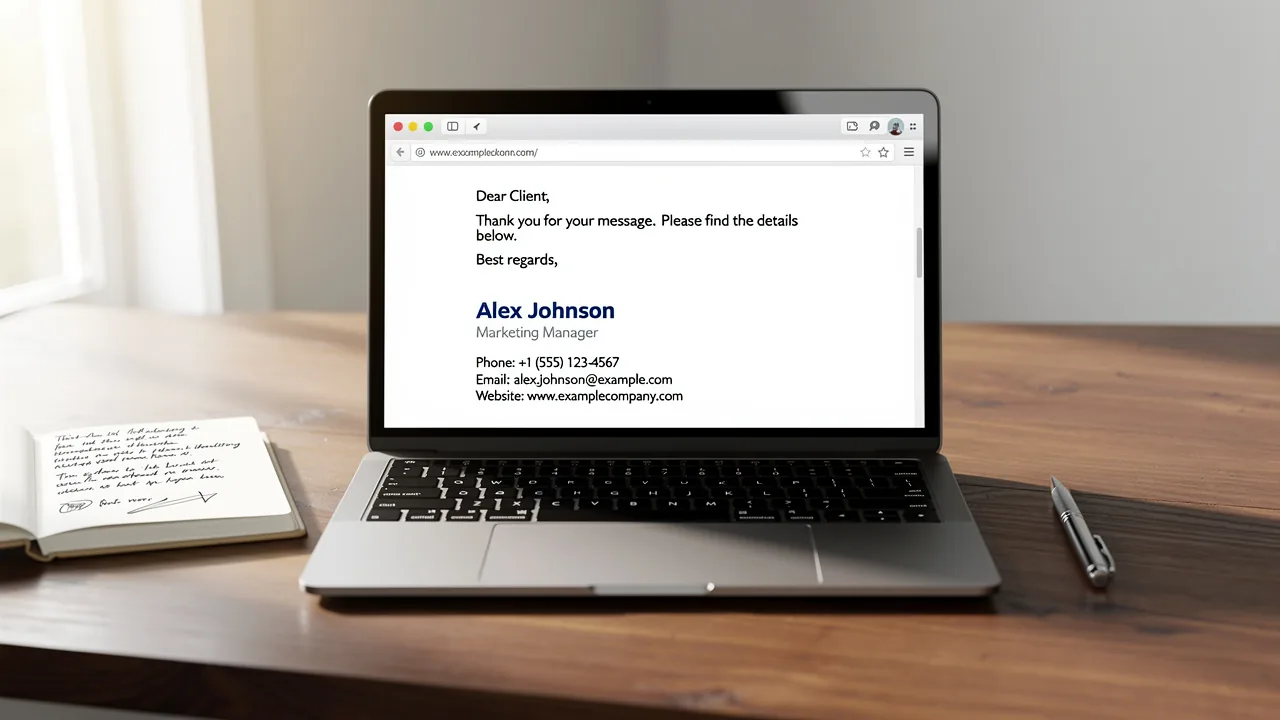
Mastering email sign-offs is crucial for effective professional communication. The phrase "Best regards" is more than just a polite closure; it embodies
Sophie Grant
Email Signature Specialist, Scribe
Introduction
Mastering email sign-offs is crucial for effective professional communication. The phrase "Best regards" is more than just a polite closure; it embodies goodwill and respect, essential for fostering positive relationships in the workplace. Yet, many professionals struggle with knowing the right moments to use 'Best regards' and how to choose suitable alternatives that can enhance the tone of correspondence. By understanding these nuances, professionals can enhance their email communication and foster stronger workplace relationships.
Understand the Meaning of Best Regards
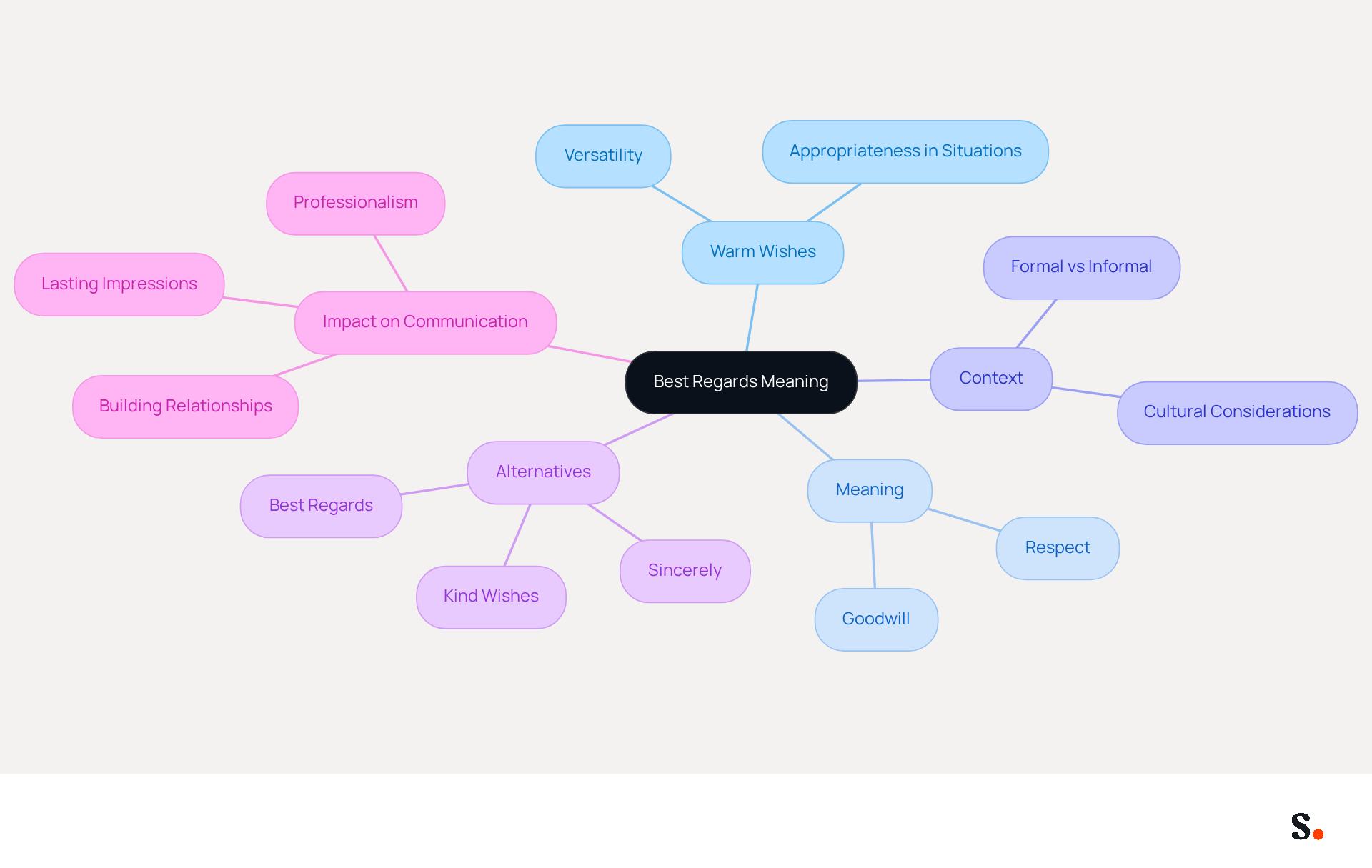
The phrase 'Warm wishes' serves as a versatile email closing that conveys goodwill and respect, essential for effective communication. This phrase illustrates the best regards meaning by blending 'best,' indicating the highest level of goodwill, with 'regards,' which reflects one's thoughts towards another. As an adaptable sign-off, 'Warm wishes' is suitable for both formal and informal situations, making it a staple in professional communication. Misunderstanding the phrase can lead to ineffective communication.
Thoughtful sign-offs like 'Warm wishes' show professionalism and help build positive business relationships. It is essential to vary sign-offs based on context and recipient relationships; for example, using 'Kind wishes' or 'Warm wishes' can add a personal touch in less formal situations. Additionally, avoiding overly casual sign-offs in formal communications is crucial to maintain professionalism.
By incorporating these nuances, senders can enhance their communication effectiveness and leave a lasting impression.
Identify Appropriate Contexts for Best Regards Usage
Choosing the right email sign-off is crucial for maintaining professionalism and fostering positive relationships. 'Warm wishes' is ideally suited for professional emails that require a balance of formality and friendliness. Its effective usage spans several contexts:
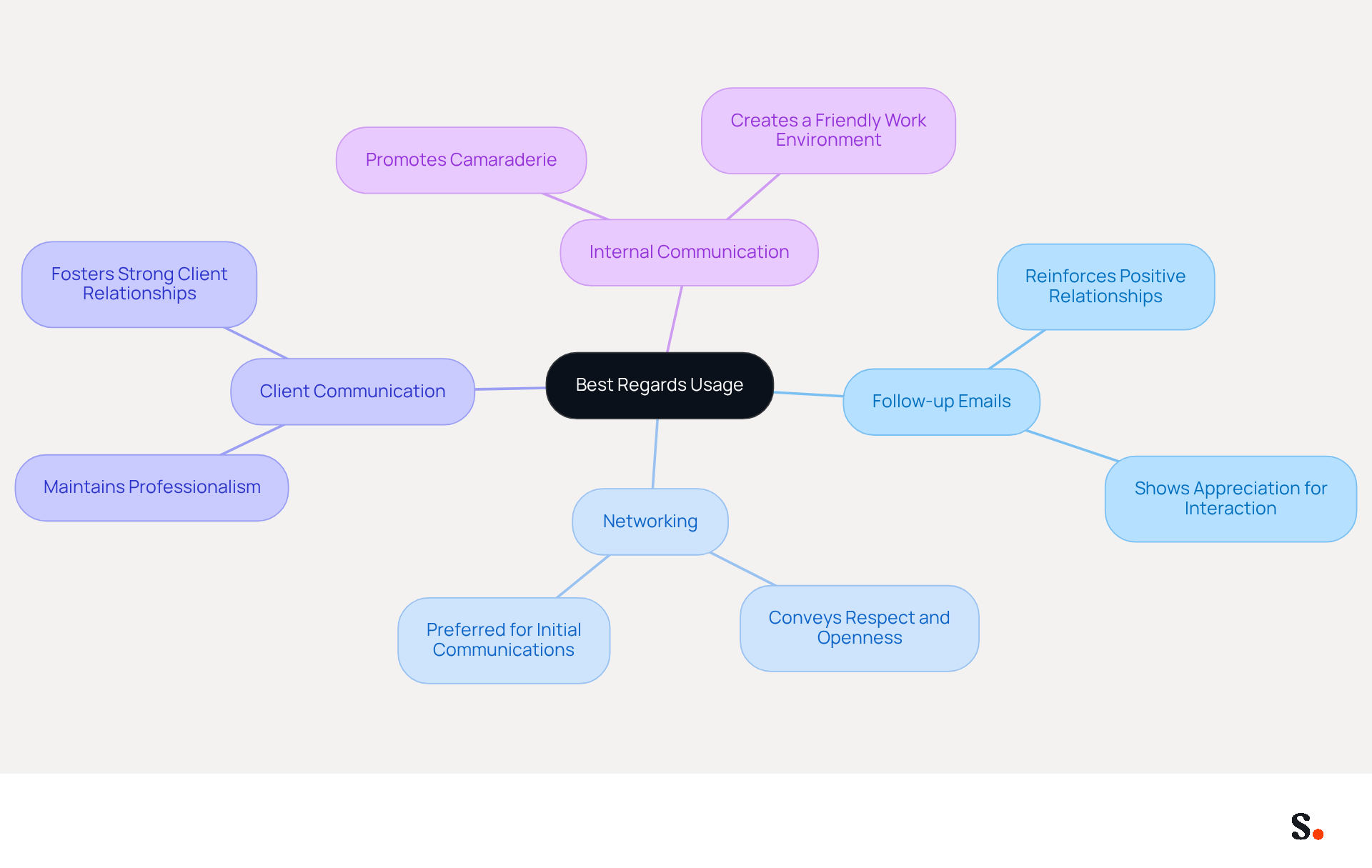
- Follow-up Emails: After meetings or discussions, using 'Best regards' reinforces a positive relationship and shows appreciation for the interaction.
- Networking: When reaching out to new contacts, the best regards meaning conveys respect and openness, making it a preferred choice for initial communications.
- Client Communication: It maintains professionalism while remaining approachable, which is crucial in fostering strong client relationships and understanding the best regards meaning.
- Internal Communication: Among colleagues, 'Warm wishes' helps create a friendly work environment, promoting camaraderie and collaboration.
It is best to avoid 'Best regards' in casual settings or with individuals you have a strained relationship, as it may appear insincere. Messages lacking sign-offs can appear abrupt, leading to negative perceptions among recipients. In fact, 42% of consumers feel less favorable toward businesses that lack a branded signature. Therefore, choosing the right sign-off is essential for effective communication. This can ultimately affect client trust and engagement.
Explore Alternatives to Best Regards
Selecting the appropriate email closing can be challenging, as it significantly impacts the tone and effectiveness of your communication. While 'Best regards' is a widely accepted closing, several alternatives can enhance your email's tone based on the context:
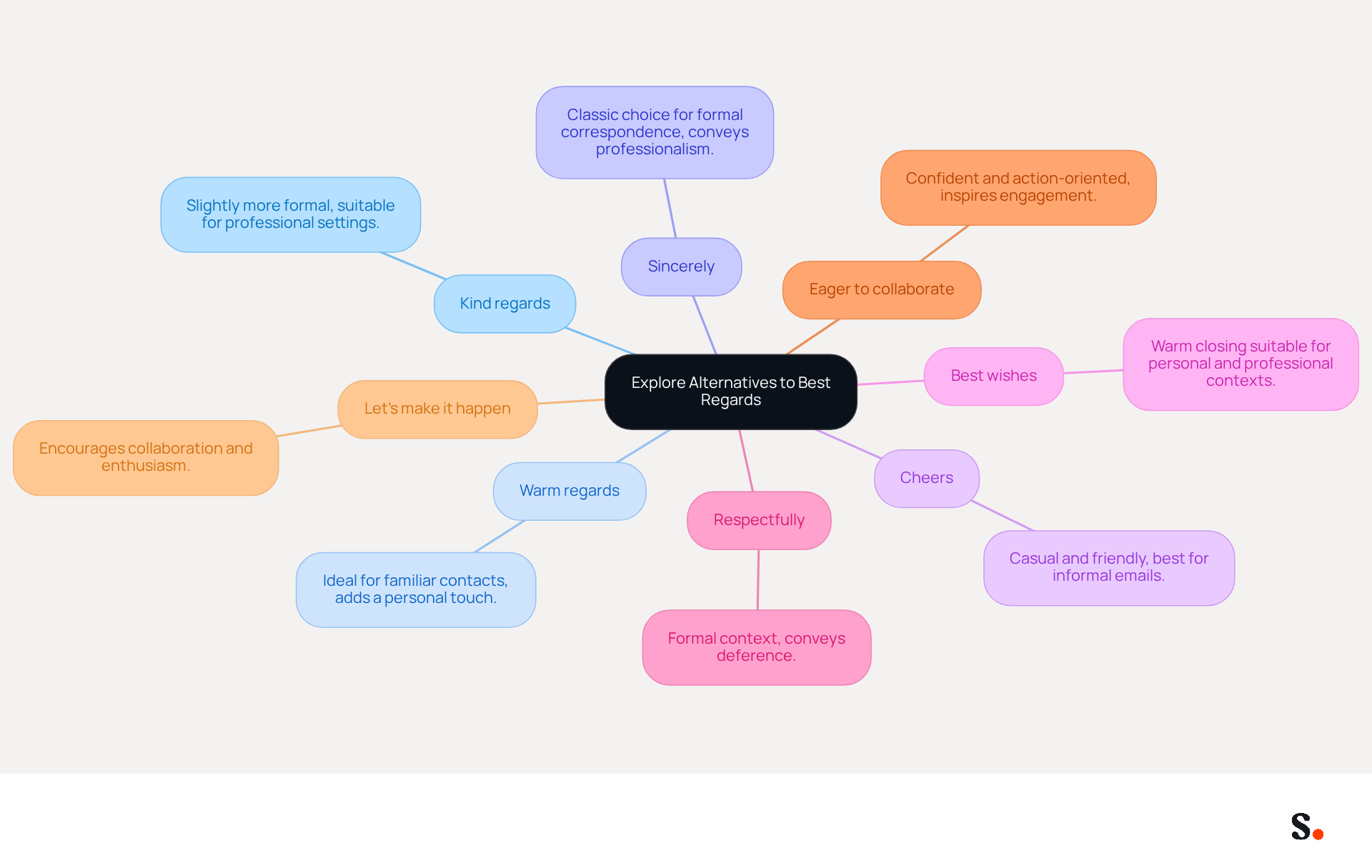
- Kind regards: This option is slightly more formal and is suitable for professional settings, conveying respect while maintaining warmth.
- Warm regards: Ideal for familiar contacts, this closing adds a personal touch, making it appropriate for ongoing relationships. Using a warm closing can foster a sense of goodwill, enhancing your connection with the recipient.
- Sincerely: A classic choice for formal correspondence, 'Sincerely' conveys professionalism and respect, making it a safe option for serious communications.
- Cheers: This casual and friendly closing is best reserved for informal emails, fostering a relaxed tone.
- Best wishes: A warm closing that conveys goodwill, 'Best wishes' is suitable for both personal and professional contexts.
- Respectfully: Suitable for formal contexts, particularly when addressing authority figures, this closing conveys deference.
- Eager to collaborate: This confident and action-oriented conclusion can inspire engagement and prompt a positive response, particularly relevant for marketing managers focused on driving results.
- Let’s make it happen: Another action-oriented closing that encourages collaboration and enthusiasm.
Ultimately, knowing the best regards meaning can strengthen your professional relationships and enhance your communication effectiveness.
Avoid Common Mistakes with Best Regards and Alternatives
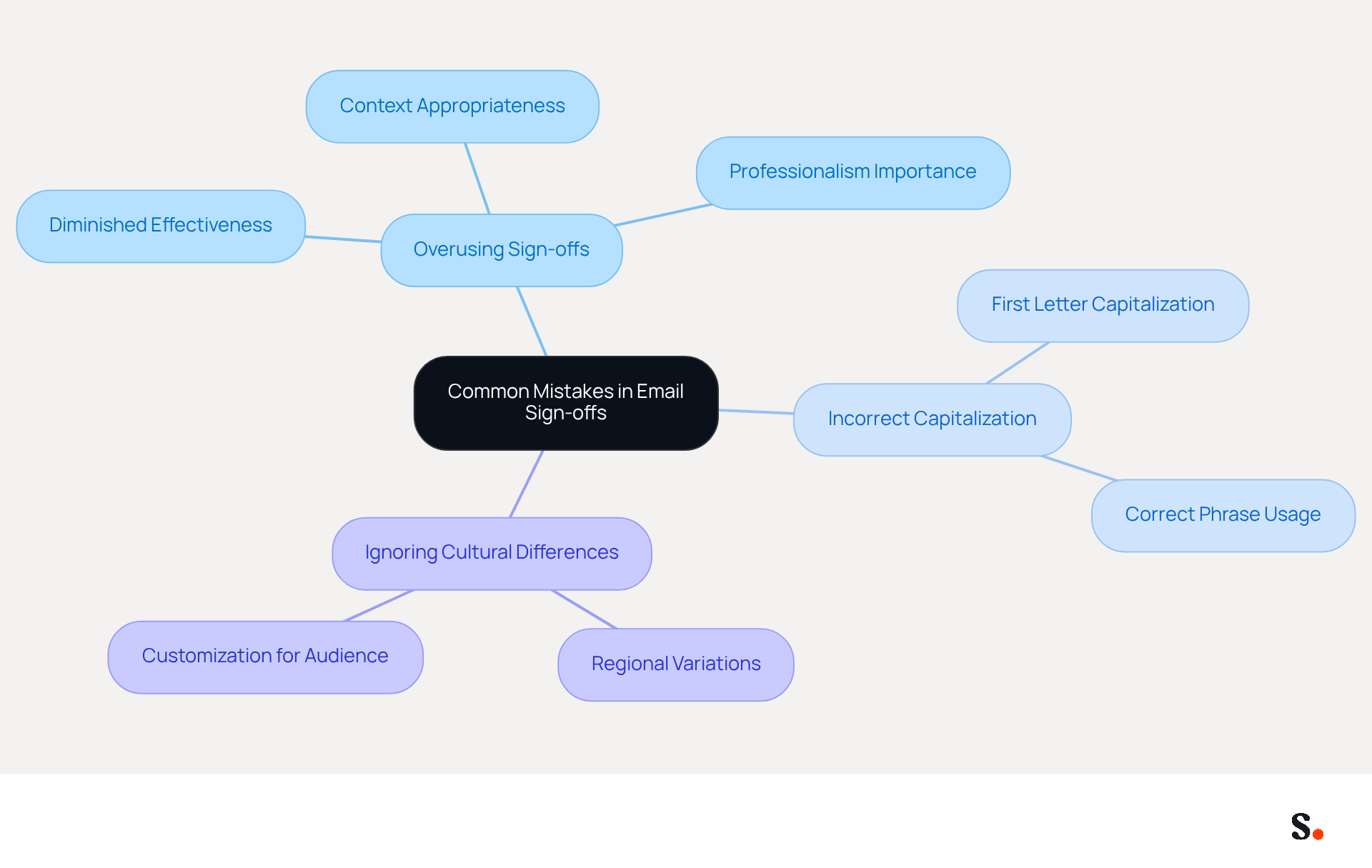
Effective communication hinges on the appropriate use of email sign-offs, including 'Best regards meaning' and its alternatives. Be mindful of these common mistakes:
- Overusing Sign-offs: Overusing 'Best regards' in emails can diminish its effectiveness. Reserve it for appropriate contexts to maintain its significance. Studies indicate that the typical office worker receives around 121 messages daily, highlighting the need for distinctive and context-appropriate sign-offs. Ensure the closing aligns with the tone of the correspondence; for instance, a formal email should not conclude with a casual 'Cheers.' Sean Butcher emphasizes the importance of maintaining professionalism in email closings.
- Incorrect Capitalization: Always capitalize the first letter of the sign-off (e.g., 'Kind regards,' not 'kind regards'). This small detail can impact the professionalism of your communication. The correct form is 'Best wishes,' not 'Best wish.' This common mistake can undermine the professionalism of your email.
- Ignoring Cultural Differences: Be aware that sign-offs may be interpreted differently across cultures. For example, while 'Kind regards' is common in the UK, it may not resonate the same way in other regions. Customize your closing remarks for your audience to prevent misunderstandings.
By avoiding these pitfalls, you can enhance your email communication and maintain professionalism, ultimately reflecting positively on your professional image. Ultimately, knowing the best regards meaning can significantly enhance professional relationships and communication.
Conclusion
Mastering the nuances of email sign-offs, particularly the phrase 'Best regards,' is crucial for effective professional communication. This phrase encapsulates goodwill and respect, making it a versatile choice for various contexts. Mastering its usage helps individuals improve their professional image and build positive relationships through thoughtful communication.
This article has highlighted key insights on when to use 'Best regards' effectively, such as in follow-up emails, networking, and client communication. Alternatives like 'Kind regards' and 'Warm wishes' were also explored, providing options that can better suit different relationships and situations. Additionally, common mistakes to avoid, such as overusing sign-offs or miscapitalizing them, were highlighted to ensure professionalism in every correspondence.
Ultimately, choosing the right email sign-off really matters. It not only reflects the sender's professionalism but also influences the recipient's perception and engagement. Failing to choose the right email sign-off can lead to misunderstandings and missed opportunities in your professional interactions. By being mindful of the context, individuals can strengthen their communication skills and build lasting professional relationships. Embracing these practices will lead to more effective interactions and a positive impact on one's professional journey.
Frequently Asked Questions
What does the phrase 'Warm wishes' mean in email communication?
'Warm wishes' is an email closing that conveys goodwill and respect, blending 'best' to indicate high goodwill and 'regards' to reflect one's thoughts towards another.
In what contexts is 'Warm wishes' appropriate to use?
'Warm wishes' is suitable for both formal and informal situations, making it a versatile sign-off in professional communication.
Why is it important to use thoughtful sign-offs like 'Warm wishes'?
Thoughtful sign-offs demonstrate professionalism and help build positive business relationships, enhancing communication effectiveness.
How should sign-offs be varied based on context?
Sign-offs should be varied based on the context and the relationship with the recipient; for example, 'Kind wishes' or 'Warm wishes' can be used in less formal situations, while overly casual sign-offs should be avoided in formal communications.
What can happen if the phrase 'Warm wishes' is misunderstood?
Misunderstanding the phrase can lead to ineffective communication, potentially impacting the message being conveyed.
List of Sources
- Understand the Meaning of Best Regards
- How to Use Thanks and Regards in Emails: Top 20 Sign-Offs [2024] - foundit (https://monster.co.th/career-advice/best-sign-offs-in-email)
- Best Regards Alternative & Kind Regards: Email Sign-Offs - NEWOLDSTAMP (https://newoldstamp.com/blog/best-regards-alternatives)
- The Best (and Worst) Ways To Sign an Email | Robert H. Smith School of Business (https://rhsmith.umd.edu/research/best-and-worst-ways-sign-email)
- 105 Alternatives to “Best Regards” for Your Email Sign-Off (https://wisestamp.com/blog/best-regard-alternatives)
- Identify Appropriate Contexts for Best Regards Usage
- Email Etiquette: Best Practices for Professional Communication (https://memberportal.gfwc.org/news/communications-public-relations/111/111-Email-Etiquette-Best-Practices-for-Professional-Communication)
- Warm Regards vs Best Regards vs Kind Regards: Choosing the Right Email Sign-Off (https://salesforge.ai/blog/warm-regards-vs-best-regards-vs-kind-regards)
- How to end an email: 70+ professional sign-offs & examples (https://blog.superhuman.com/how-to-end-an-email)
- 40+ Email Signature Statistics for 2026 (Data + Insights) (https://wavecnct.com/blogs/email-signature-statistics)
- Explore Alternatives to Best Regards
- 89 Ways To Sign Off On An Email (https://forbes.com/sites/susanadams/2014/10/08/89-ways-to-sign-off-on-an-email)
- 50 Best Email Sign-Offs to End an Email Properly in [year] (https://elementor.com/blog/best-email-sign-offs)
- Best Regards Alternative & Kind Regards: Email Sign-Offs - NEWOLDSTAMP (https://newoldstamp.com/blog/best-regards-alternatives)
- Avoid Common Mistakes with Best Regards and Alternatives
- The Best (and Worst) Ways To Sign an Email | Robert H. Smith School of Business (https://rhsmith.umd.edu/research/best-and-worst-ways-sign-email)
- The Worst Business Email Sign Offs (https://bizibl.com/marketing/article/worst-business-email-sign-offs)
- How to Sign Off on an Email Correctly | Rocketseed (https://rocketseed.com/blog/correct-way-to-sign-off-emails)
- Different Sign-offs & When You Should Use Them | Heinz Marketing (https://heinzmarketing.com/blog/different-sign-offs-when-you-should-use-them)
- 11 Common Email Mistakes Everyone Makes (https://linkedin.com/pulse/11-common-email-mistakes-everyone-makes-betty-liu)
Get started with Scribe
See why teams switch to Scribe
Free 14-day trial — no credit card.