Master Digital Signature Maker Strategies for Effective Marketing
As businesses increasingly rely on digital transactions, the integration of digital signatures into marketing strategies has become a critical challenge
Sophie Grant
Email Signature Specialist, Scribe

Introduction
As businesses increasingly rely on digital transactions, the integration of digital signatures into marketing strategies has become a critical challenge. Understanding the nuances of digital signatures is essential for enhancing marketing strategies while ensuring compliance and security. Companies can leverage various types of electronic identifiers - ranging from Simple Electronic Signatures to Qualified Electronic Signatures - to streamline processes and build customer trust.
Integrating digital signatures into marketing strategies presents significant challenges that require careful consideration. What strategies can organizations employ to leverage digital signatures for compliance and enhanced marketing effectiveness?
Understand the Types of Digital Signatures
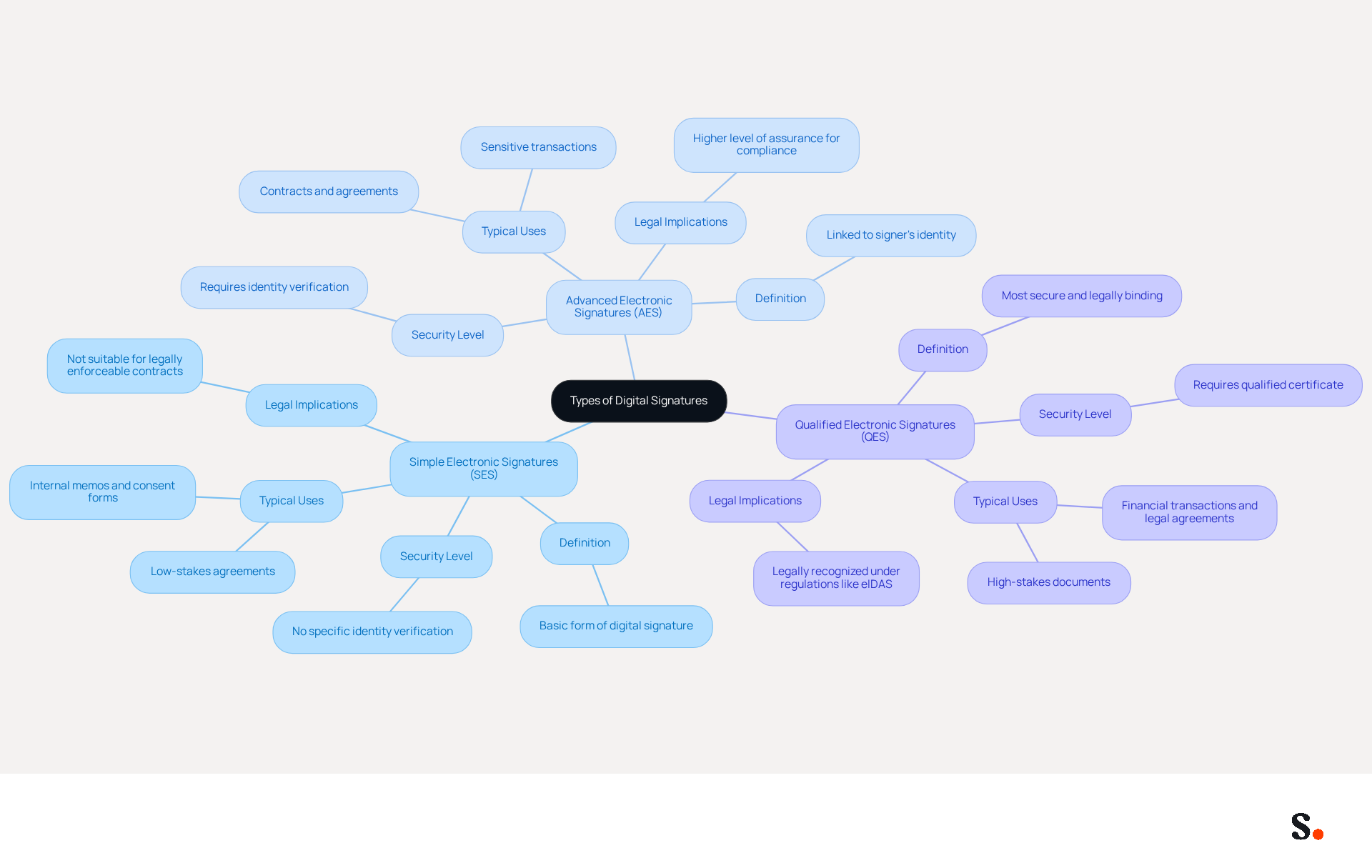
Understanding the different types of digital identifiers is crucial for businesses aiming to ensure compliance and security in their transactions. Digital identifiers can be classified into three primary categories: Simple Electronic Identifiers (SEI), Advanced Electronic Identifiers (AEI), and Qualified Electronic Identifiers (QEI). Each type has its own level of security and legal standing.
- Simple Electronic Signatures (SES): These are the most basic form of digital identifiers, often just a typed name or a scanned image of a handwritten mark. They are easy to implement and widely adopted for low-stakes agreements, such as internal memos or consent forms. However, while SES work for informal agreements, they fall short for contracts that need legal enforceability and compliance with regulations. As noted by the Sectigo Team, "SES may suffice for informal agreements, but it may not be suitable for contracts or documents requiring legal enforceability and compliance with specific regulations."
- Advanced Electronic Signatures (AES): These identifiers are linked to the signer's identity and are created using secure creation devices. AES requires identity verification and is often used for sensitive transactions, such as contracts and agreements that necessitate a higher level of assurance. This requirement for identity verification elevates the security of transactions, making AES a preferred choice in sensitive business dealings. You’ll often find AES used for signing contracts and agreements, especially in industries like healthcare and finance where compliance is key.
- Qualified Electronic Signatures (QES): This type of electronic mark is the most secure and legally binding, requiring a qualified certificate issued by a trusted authority. QES is essential for high-stakes documents, including legal agreements and financial transactions, ensuring compliance with stringent regulations like eIDAS in the EU. As emphasized by the Sectigo Team, "QES provides legal recognition and presumption of authenticity under regulations like eIDAS in the EU," establishing it as the highest level of trust and acknowledged as equivalent to a handwritten mark under various legal frameworks.
Furthermore, it is essential to recognize that consent is required for the validity of electronic endorsements. Without explicit consent, electronic marks cannot be deemed valid unless prior consent was established. Understanding these distinctions assists businesses in choosing the suitable type of endorsement for their marketing needs, ensuring compliance with regulations and enhancing customer trust. By selecting the appropriate type of electronic endorsement, businesses can not only comply with regulations but also foster greater trust with their customers.
Create Your Digital Signature Effectively
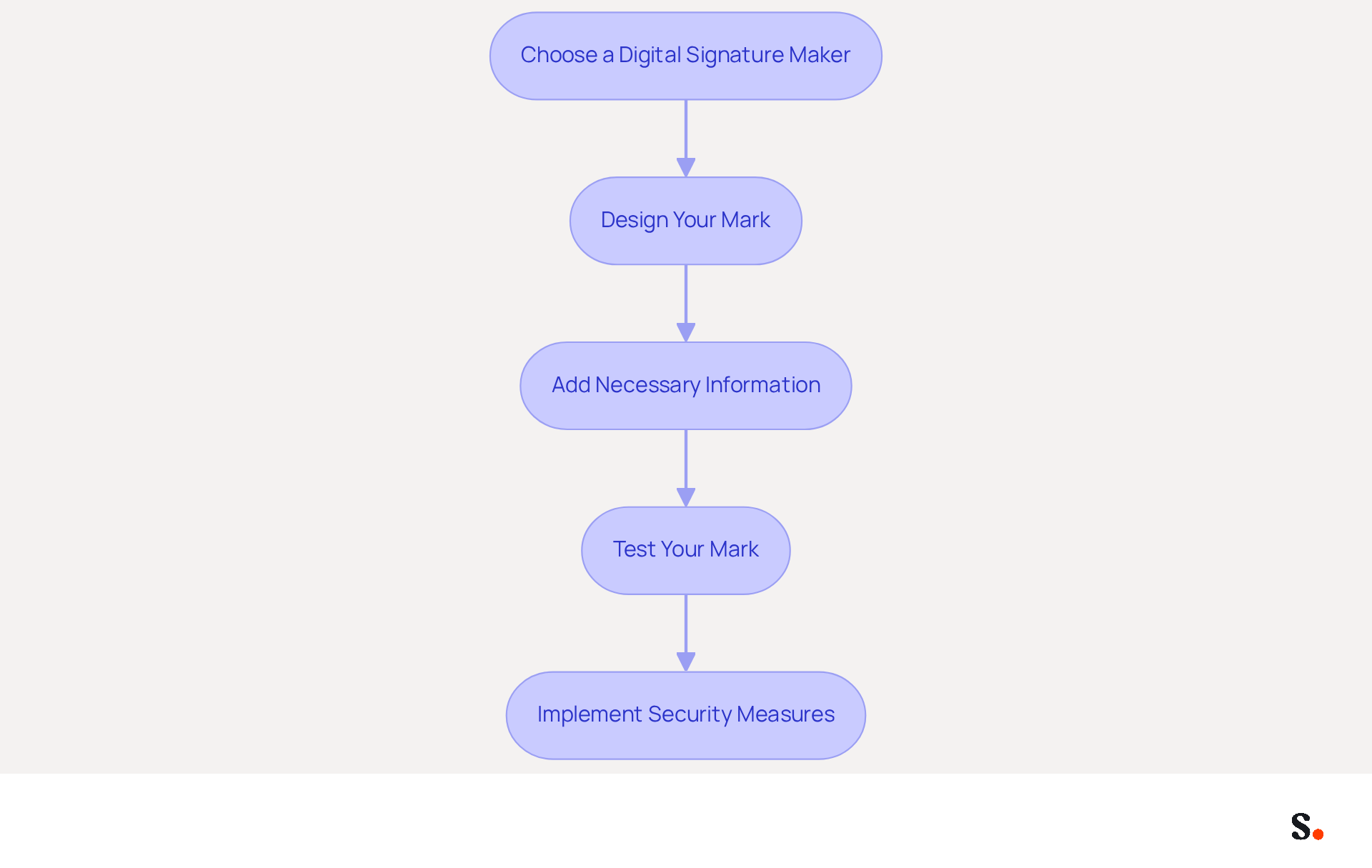
Creating an effective digital signature requires careful consideration of several key factors:
- Choose a reliable digital signature maker that fits your business requirements. Popular options include Adobe Sign, DocuSign, and Scribe, all of which comply with legal standards relevant to various industries.
- Design Your Mark: Your digital mark should embody your brand identity. Utilize consistent colors, fonts, and logos that reflect your overall branding strategy. Tools like Canva can assist in creating a visually appealing design that resonates with your audience.
- Add Necessary Information: Ensure your mark includes vital details such as your name, title, company name, and contact information. Incorporating a call-to-action or a link to your website can further drive engagement and enhance marketing efforts.
- Test Your Mark: Testing is essential to uphold professionalism and guarantee a smooth experience for users. Before deploying your electronic mark in official communications, conduct tests to verify that it displays correctly across various devices and email clients.
- Implement Security Measures: Select a tool for electronic authentication that provides strong encryption and secure storage options to protect sensitive information. This is particularly important for maintaining customer trust and ensuring compliance with data protection regulations.
By following these steps, businesses can utilize a digital signature maker to create effective electronic identifiers that not only improve their promotional strategies but also ensure secure and professional communications. Studies indicate that businesses using well-designed electronic identifiers see improved engagement, with some reporting a 14% increase in lead generation. Understanding these practices can significantly enhance your organization's communication effectiveness and customer engagement.
Integrate Digital Signatures into Marketing Campaigns
To maximize the impact of digital signatures in marketing campaigns, businesses must adopt strategic approaches:
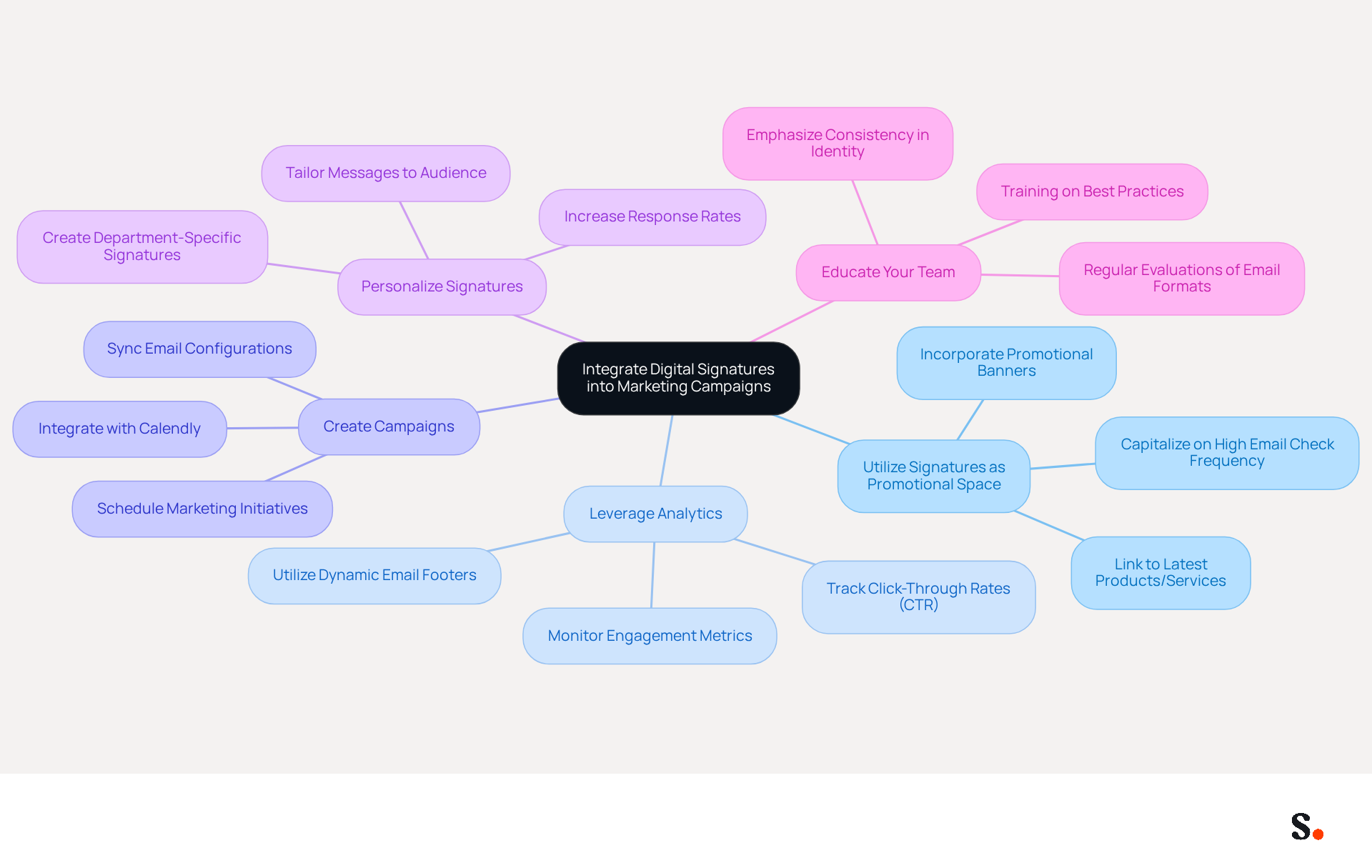
- Utilize Signatures as Promotional Space: This approach turns each email into a marketing opportunity. With 77.8% of users checking their inbox more than five times daily, the potential is significant. Incorporate promotional banners or links to your latest products, services, or events.
- Leverage Analytics: Utilize analytics tools to track the performance of your digital signing campaigns. Monitoring click-through rates (CTR) on links included in your email footer is essential for assessing engagement. Dynamic email footers can achieve a CTR of 4%, considerably higher than standard promotional emails, which average around 2.5%.
- Create Campaigns: Schedule specific marketing initiatives that utilize your digital identifiers. For example, during a product launch, update all employee email footers to include a promotional banner related to the new product. Many businesses struggle to effectively leverage email formats for lead generation. With Scribe, any modifications made in your email configuration will automatically sync, ensuring consistency across all communications. Furthermore, the smooth integration with Calendly enables automatic updates to email footers, further enhancing brand consistency.
- Personalize Signatures: When you personalize signatures, you can really boost engagement. Consider creating different identifiers for various departments or campaigns, tailoring the message to the audience's interests. This strategy can result in higher response rates, as emails with branded elements receive a 22% greater response rate than those without.
- Educate Your Team: Ensure that all employees comprehend how to use digital marks effectively in their communications. Offer training on best practices and the significance of maintaining consistency in identity. Regular evaluations of email formats can help ensure that marketing remains consistent and precise, reinforcing the identity across all employee communications.
Ultimately, the strategic use of a digital signature maker can redefine how businesses engage with their audience.
Ensure Brand Consistency with Digital Signatures
To maintain a strong brand identity, it is crucial to implement best practices for digital signatures:
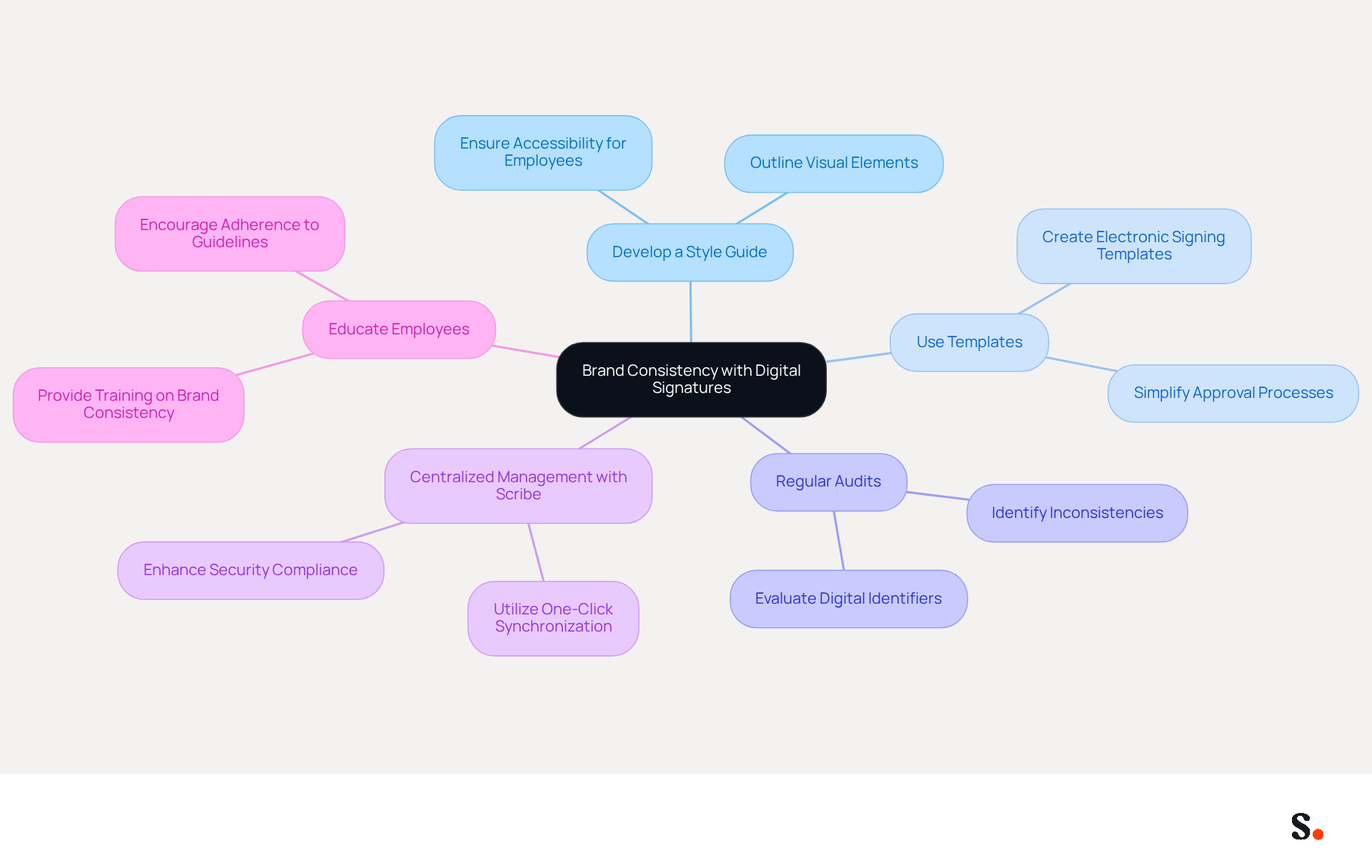
- Develop a Style Guide: Consider developing a comprehensive style guide that clearly outlines the visual elements of your online identity, such as colors, fonts, and logos. This guide should be accessible to all employees to ensure uniformity across communications.
- Use Templates: Employ electronic signing templates that conform to your guidelines. This method simplifies the process for employees and ensures uniform approvals across the organization, boosting brand recognition.
- Regular Audits: Conduct regular evaluations of digital identifiers used within your organization. Without regular evaluations, inconsistencies in digital identifiers can lead to confusion and diminish brand integrity. This is crucial since many organizations prioritize standardizing their identifiers.
- Centralized Management with Scribe: Think about using a centralized management system for digital signatures, like Scribe, which makes updates easy and ensures everyone is using the latest version of the digital identifier. Scribe's one-click synchronization feature enables seamless updates, ensuring consistency across all communications while also enhancing security compliance with SOC 2 Type II standards. This distinctive positioning enables teams to manage email identifiers independently after the initial IT setup.
- Educate Employees: Provide training on the significance of brand consistency and how to utilize electronic identifiers effectively. Encourage employees to adhere to the established guidelines to maintain a professional image. This education can significantly enhance customer trust, as effective email strategies are known to improve engagement and retention. A study found that 75.9% of professionals indicate that email footers contribute to progressing toward or finalizing a sale, highlighting the significance of well-managed electronic footers.
Ultimately, neglecting brand consistency can lead to missed opportunities and diminished customer loyalty.
Conclusion
For businesses, the effective use of digital signatures is not merely a compliance issue; it is a pivotal element in enhancing marketing strategies and building customer trust. Understanding and effectively utilizing digital signatures is essential for businesses aiming to enhance their marketing strategies and ensure compliance. By recognizing the different types of digital signatures - Simple Electronic Signatures, Advanced Electronic Signatures, and Qualified Electronic Signatures - organizations can select the most appropriate option for their needs. This choice not only fosters customer trust but also aligns with legal requirements, ultimately reinforcing brand integrity.
Several best practices can help businesses effectively create and integrate digital signatures into their marketing campaigns. Key strategies include:
- Designing a signature that reflects brand identity
- Utilizing signatures as promotional spaces
- Personalizing them for different audiences
Moreover, using tools like Scribe can simplify management and ensure timely updates, which is crucial for maintaining brand consistency. The emphasis on training employees and conducting regular audits further supports the goal of maintaining a professional image and maximizing engagement.
Incorporating digital signatures into marketing efforts goes beyond compliance. It represents a strategic move that can enhance customer engagement and boost brand recognition. By leveraging advanced digital signature solutions, such as Scribe, businesses can achieve 100% brand consistency and measurable marketing ROI. Ultimately, the strategic implementation of digital signatures can be the differentiator that propels businesses ahead in a competitive market.
Frequently Asked Questions
What are the main types of digital signatures?
The main types of digital signatures are Simple Electronic Identifiers (SEI), Advanced Electronic Identifiers (AEI), and Qualified Electronic Identifiers (QEI).
What is a Simple Electronic Signature (SES)?
A Simple Electronic Signature (SES) is the most basic form of digital identifier, often a typed name or a scanned image of a handwritten mark. It is easy to implement and commonly used for low-stakes agreements, but it lacks legal enforceability for more formal contracts.
When should Simple Electronic Signatures (SES) be used?
SES should be used for informal agreements, such as internal memos or consent forms, where legal enforceability and compliance with regulations are not critical.
What is an Advanced Electronic Signature (AES)?
An Advanced Electronic Signature (AES) is linked to the signer's identity and created using secure devices. It requires identity verification and is used for sensitive transactions, such as contracts and agreements that need a higher level of assurance.
In what situations are Advanced Electronic Signatures (AES) typically used?
AES are typically used in sensitive business dealings, especially in industries like healthcare and finance, where compliance with regulations is essential.
What is a Qualified Electronic Signature (QES)?
A Qualified Electronic Signature (QES) is the most secure and legally binding type of electronic mark, requiring a qualified certificate issued by a trusted authority. It is used for high-stakes documents and ensures compliance with stringent regulations.
Why is Qualified Electronic Signature (QES) important?
QES is important because it provides legal recognition and presumption of authenticity under regulations like eIDAS in the EU, making it equivalent to a handwritten signature in various legal frameworks.
What is required for the validity of electronic endorsements?
Consent is required for the validity of electronic endorsements. Without explicit consent, electronic marks cannot be deemed valid unless prior consent was established.
How can understanding digital signatures benefit businesses?
Understanding the distinctions between different types of digital signatures helps businesses choose the suitable type of endorsement for their needs, ensuring compliance with regulations and enhancing customer trust.
List of Sources
- Understand the Types of Digital Signatures
- Types of Digital Signature: AES, QES, SES, explained (https://docusign.com/en-gb/blog/types-digital-signature-aes-qes-ses-explained)
- Types of Digital Signatures: AES, QES, SES - SigniFlow ® - News and Blog Media (https://signiflow.com/media/types-of-digital-signatures-aes-qes-ses)
- 3 types of electronic signatures explained - SES, AES, QES (https://sectigo.com/blog/different-types-of-e-signatures)
- SES, AES, QES, and Sealing: What’s the Difference? (https://idura.eu/blog/ses-aes-qes-sealing-differences)
- What are advanced and qualified electronic signatures? (https://conga.com/resources/blog/what-are-advanced-and-qualified-electronic-signatures)
- Create Your Digital Signature Effectively
- How to Create a Secure and Legally Valid Digital Signature (https://tecalis.com/blog/how-to-create-a-secure-digital-signature)
- Digital Signatures for Small Business: 2026 FAQ (https://quicksigner.com/blog/digital-signatures-for-small-business-your-2026-questions-answered)
- Digital Signature Providers 2026: Top 8 Solutions (https://signeasy.com/blog/business/digital-signature-providers)
- Electronic Signatures in 2026: Regulations and Best Practices | MinuteBox (https://minutebox.com/blog/electronic-signatures-regulations-and-best-practices)
- 4 Smart Ways to Create a Digital Signature in 2026 | Fill (https://fillhq.com/blog/ways-to-create-digital-signature)
- Integrate Digital Signatures into Marketing Campaigns
- Email Signature Statistics: A Closer Look at Email Signatures in 2026 (https://mysignature.io/blog/email-signature-statistics)
- Why Email Signatures Must Be In Your 2026 Marketing Plan | Rocketseed (https://rocketseed.com/blog/2026-marketing-plan-email-signatures)
- Email signature statistics: Why every business should optimize their email signatures — Stripo.email (https://stripo.email/blog/email-signature-statistics-why-every-business-should-optimize-their-email-signatures)
- Email Signature Trends 2026: Centralized Control & Automation | SIGNandGO posted on the topic | LinkedIn (https://linkedin.com/posts/signngo_email-signature-trends-to-watch-in-2026-activity-7401523471786217473-zAVL)
- 12 email signature marketing examples that drive clicks (2026) (https://signitic.com/en/resources/12-email-signature-marketing-examples-that-actually-drive-clicks)
- Ensure Brand Consistency with Digital Signatures
- Your 2026 Brand Refresh Playbook: Why It’s Time to Update Your Brand (And How to Do It Right) (https://bizstream.com/blog/your-2026-brand-refresh-playbook)
- 2026 Email Signature Trends for Companies | Bybrand posted on the topic | LinkedIn (https://linkedin.com/posts/bybrand_top-email-signature-trends-for-companies-activity-7458274214513483776-q9NB)
- Why Email Signatures Must Be In Your 2026 Marketing Plan | Rocketseed (https://rocketseed.com/blog/what-are-the-biggest-email-trends-for-2026)
- Top 10+ best practices for email signatures design in 2026 (https://mysignature.io/blog/email-signature-best-practices)
Get started with Scribe
Create your signature in minutes
Free 14-day trial — no credit card.