Master Email Disclaimers: Essential Practices for Marketing Success
In an era where digital communication is paramount, the importance of email disclaimers cannot be underestimated. Email disclaimers are often overlooked, yet
Sophie Grant
Email Signature Specialist, Scribe

Introduction
In an era where digital communication is paramount, the importance of email disclaimers cannot be underestimated. Email disclaimers are often overlooked, yet they play a pivotal role in safeguarding sensitive information and enhancing brand credibility. As organizations navigate the complexities of legal compliance and communication clarity, understanding the essential elements of effective disclaimers is crucial for marketing success.
How can businesses create disclaimers that are legally compliant while also engaging their audience and building trust? We will explore best practices for crafting impactful email disclaimers that not only meet industry standards but also enhance marketing efforts.
Understand the Purpose of Email Disclaimers
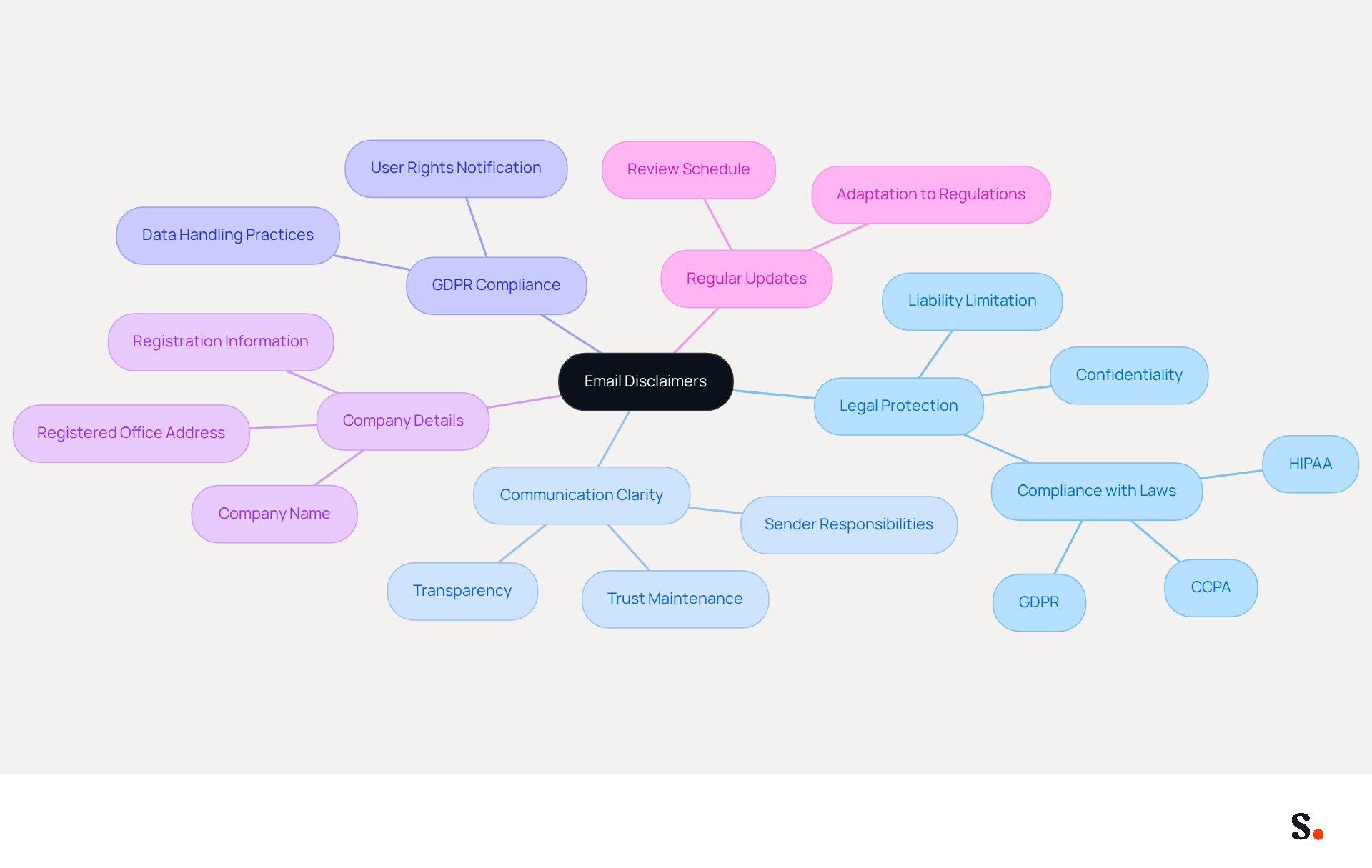
An email disclaimer is essential as email notices play a vital role in ensuring legal protection and enhancing communication clarity. They inform recipients about the confidentiality of message content, outline the sender's responsibilities, and include an email disclaimer that provides necessary legal notices. Disclaimers help reduce risks related to data breaches and unauthorized disclosures, ensuring that sensitive information is managed properly. Research shows that a significant percentage of consumers would cease purchasing from brands that fail to protect their sensitive data, making it crucial to maintain trust through effective communication practices.
Furthermore, communication notices improve brand professionalism by demonstrating that Scribe takes its messaging seriously. By including disclaimers, businesses can comply with laws such as the General Data Protection Regulation (GDPR), which mandates transparency in data handling practices. Scribe is committed to GDPR compliance and offers SAML-based single sign-on (SSO) integration, allowing businesses to manage their email signatures securely.
An email disclaimer should include specific company details, such as the company name, registered office address, and registration information, to ensure adherence. Regular updates and evaluations of these statements are essential, as they assist organizations in adapting to evolving regulations and strengthening their commitment to safeguarding sensitive information. Research indicates that organizations employing customized messaging can effectively minimize legal risks and improve their regulatory frameworks, thereby building trust with recipients and stakeholders alike.
Identify Essential Elements of Effective Disclaimers
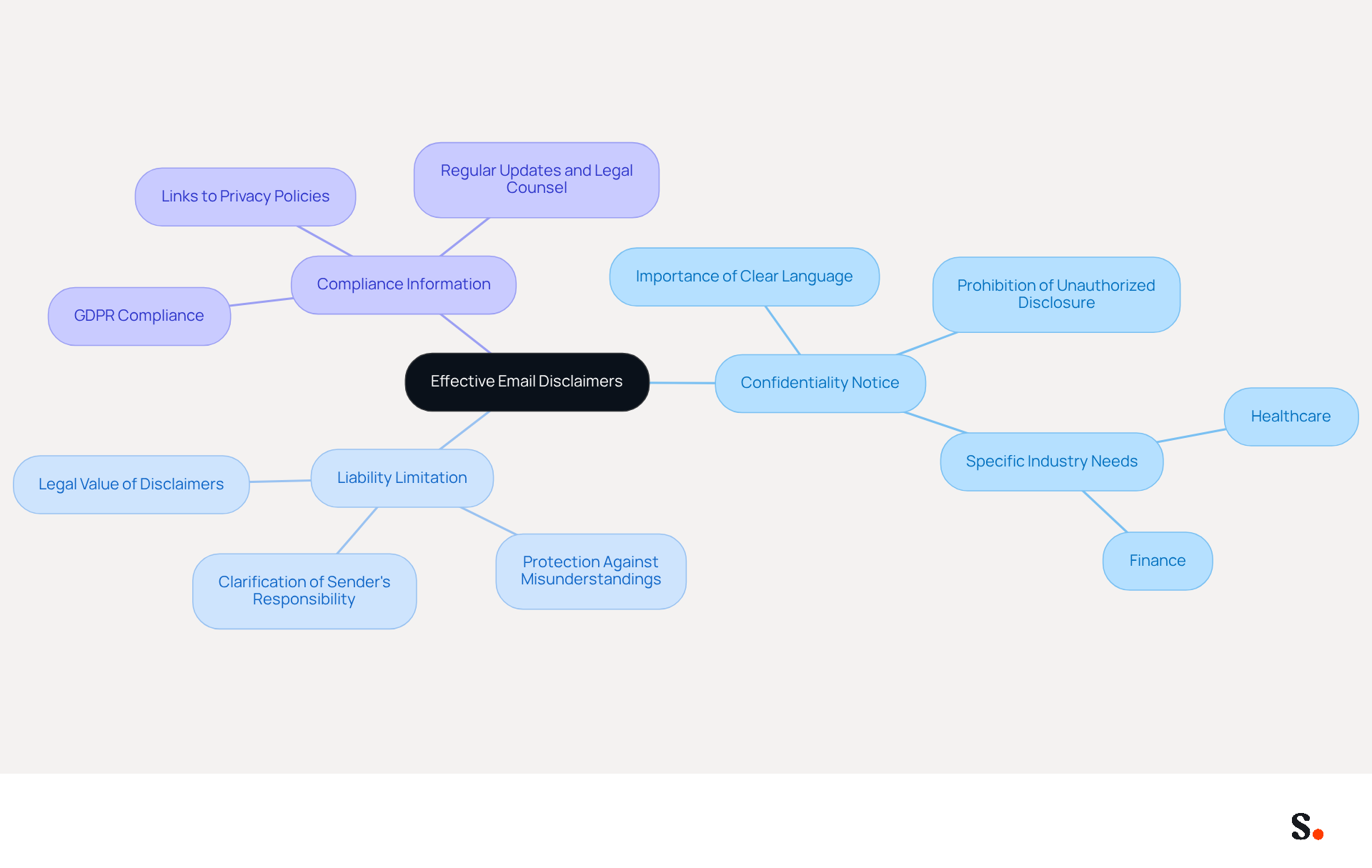
An effective email disclaimer is crucial for safeguarding sensitive information and ensuring compliance with legal standards. It should encompass several essential elements:
- A confidentiality notice
- A statement of liability limitation
- Compliance information
The confidentiality notice informs recipients that the message may contain sensitive information and should not be shared without permission. A liability limitation statement clarifies that the sender is not responsible for any unintended consequences arising from the email's content. Additionally, including compliance information, such as links to privacy policies or terms of service, along with an email disclaimer, ensures that the organization adheres to legal requirements, particularly in light of GDPR compliance, which is crucial for organizations like Scribe that prioritize data protection.
Using clear and simple language in notices helps avoid confusion and ensures recipients understand the message. For instance, a straightforward statement like, 'This email is confidential and intended solely for the recipient,' effectively communicates the necessary information without unnecessary complexity.
This clarity can lead to a 30% increase in compliance with privacy regulations, demonstrating its importance. Furthermore, case studies emphasize the significance of customized notices; for instance, businesses that adopt confidentiality notices in healthcare communications have experienced a notable decrease in unauthorized disclosures, illustrating their effectiveness in protecting sensitive information. Regular updates and legal advice are essential to ensure that the email disclaimer remains up-to-date with changing regulations and industry standards, thereby enhancing its legal protection and effectiveness. Additionally, notices should be prominently placed in signature lines to ensure they are seen by recipients. It is also crucial to avoid generic templates, as they may lack the necessary protections tailored to the entity’s needs. Finally, integrating encryption and secure transmission protocols is crucial for protecting data during electronic communications, enhancing the legal safeguards provided by notices. Scribe's commitment to secure data management is evident through its adherence to SOC 2 Type II standards and integration of SAML Single Sign-On.
Navigate Legal and Compliance Considerations
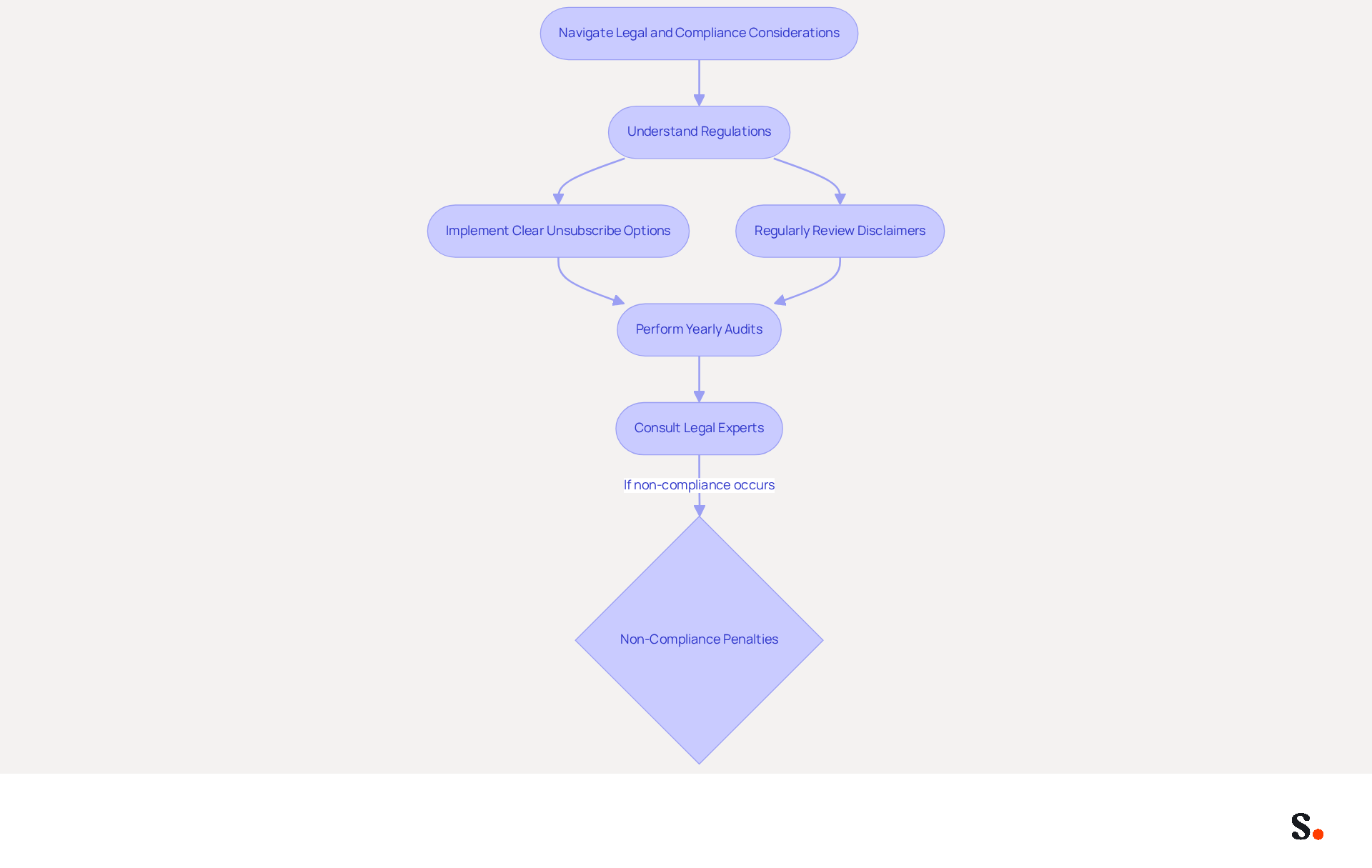
Businesses face significant challenges in navigating the complex landscape of legal and compliance considerations when creating message notices. Non-compliance can result in hefty fines; CAN-SPAM penalties can reach $51,744 per violation, while GDPR fines may soar to €20 million or 4% of global turnover. Regulations such as GDPR and CAN-SPAM impose specific requirements for marketing emails, including the necessity for clear unsubscribe options and transparent data handling practices. Additionally, an email disclaimer should address confidentiality and liability issues, particularly in sensitive sectors like finance and healthcare, where personal information is frequently exchanged.
To improve adherence and security, organizations can leverage Scribe's SAML single sign-on integration. This integration makes it easier for users to access Scribe while also ensuring compliance with GDPR regulations. Regular reviews of disclaimers are essential to ensure alignment with evolving laws and best practices. Organizations are encouraged to perform yearly audits of their messaging practices. Research shows that investing in secure messaging infrastructure can reduce the risk of privacy-related penalties by at least 40%. Maintaining precise suppression lists is also essential to ensure that unsubscribed users do not receive future communications. Consulting with legal experts can further ensure that protective statements sufficiently safeguard the entity and its stakeholders, thereby fostering trust and adherence in written communications. Ultimately, proactive compliance measures not only protect organizations from penalties but also enhance trust in their communications.
Customize Disclaimers for Industry-Specific Needs
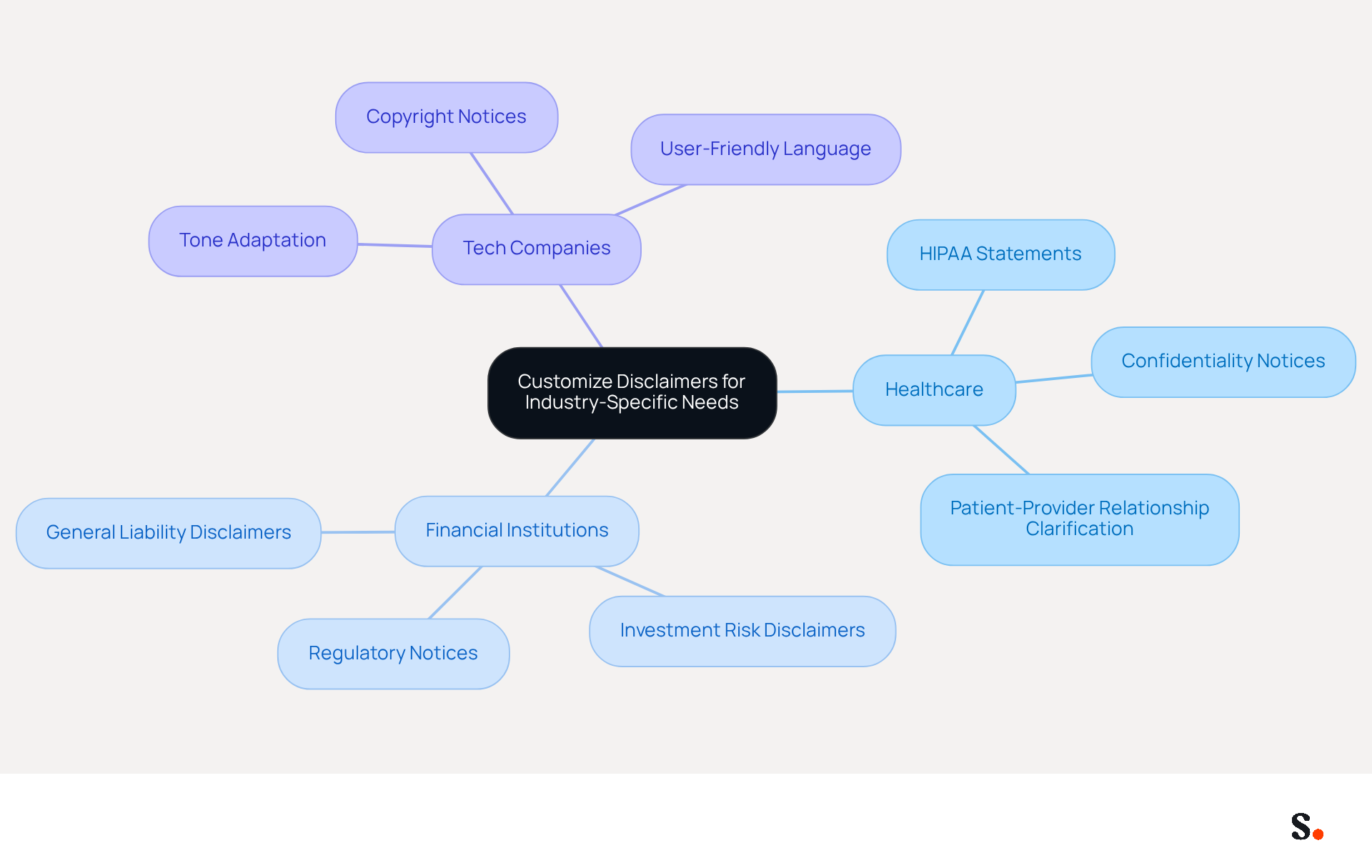
Organizations face significant risks if they neglect the unique requirements of their industry, such as including an email disclaimer in their email communications. Various sectors encounter unique requirements and challenges that must be reflected in their email disclaimer. For example, healthcare entities are frequently required to include HIPAA adherence statements to protect patient information, while financial institutions may need notices that address regulatory responsibilities related to investment advice. Tailoring statements ensures compliance with regulations and enhances the entity's credibility. Research shows that organizations implementing customized notices can see a 30% reduction in unauthorized disclosures, underscoring the effectiveness of this strategy.
Businesses should carefully consider the specific legal requirements and best practices within their industry when drafting notices. For instance, a healthcare provider might include a confidentiality notice to remind recipients of the sensitive nature of the information shared, while a financial firm could emphasize the risks associated with investment decisions. Using Scribe's brand voice can help make notices feel more approachable and less daunting for recipients. A tech company might adopt a more casual tone, whereas a law firm would likely maintain a formal approach to reflect its professional standards.
Case studies illustrate that effective statements can clarify the relationship between providers and patients, as well as outline the provider's duty to respond to communications. By tailoring email disclaimers to meet industry-specific needs, organizations can not only comply with legal standards but also foster trust and transparency with their audience. Ultimately, the right approach to tailored notices can transform compliance into a competitive advantage.
Conclusion
In an era where data breaches are increasingly common, email disclaimers have become essential for safeguarding business communications. Email disclaimers serve as a critical component in business communication, ensuring legal protection while enhancing clarity and professionalism. By clearly stating message confidentiality and sender responsibilities, organizations can reduce risks of data breaches and unauthorized disclosures. This commitment to transparency builds trust with recipients and meets compliance requirements like GDPR, crucial for a reputable brand image.
The article highlights several key practices for crafting effective email disclaimers. Essential elements include:
- Confidentiality notices
- Liability limitations
- Compliance information
All of which contribute to a robust legal framework. Organizations often struggle with maintaining credibility and minimizing legal risks in a complex regulatory environment. Regular updates and industry-specific customization are vital to ensure that disclaimers remain relevant and effective. By tailoring disclaimers to meet the unique needs of different sectors, organizations can further enhance their credibility and minimize legal risks, as supported by studies indicating a decrease in unauthorized disclosures.
Ultimately, email disclaimers do more than just ensure compliance; they offer organizations a chance to build trust and show they care about protecting sensitive information. By adopting best practices in email disclaimer management, businesses can not only protect themselves from potential penalties but also leverage this aspect of communication as a competitive advantage. Embracing these strategies will lead to improved marketing success and a stronger relationship with stakeholders, reinforcing the significance of effective email disclaimers in today’s business landscape. By prioritizing email disclaimers, organizations can turn compliance into a strategic advantage that strengthens their market presence.
Frequently Asked Questions
What is the purpose of an email disclaimer?
An email disclaimer serves to provide legal protection and enhance communication clarity by informing recipients about the confidentiality of the message content, outlining the sender's responsibilities, and including necessary legal notices.
Why are email disclaimers important for businesses?
Email disclaimers are important because they help reduce risks related to data breaches and unauthorized disclosures, ensuring sensitive information is managed properly. They also improve brand professionalism and maintain consumer trust, as many consumers would stop purchasing from brands that fail to protect their sensitive data.
How do email disclaimers relate to legal compliance?
Email disclaimers help businesses comply with laws such as the General Data Protection Regulation (GDPR), which requires transparency in data handling practices. Including disclaimers demonstrates a commitment to legal obligations and responsible communication.
What specific information should be included in an email disclaimer?
An email disclaimer should include specific company details such as the company name, registered office address, and registration information to ensure adherence to legal requirements.
How often should email disclaimers be updated?
Email disclaimers should be regularly updated and evaluated to assist organizations in adapting to evolving regulations and to strengthen their commitment to safeguarding sensitive information.
What benefits do customized email disclaimers provide?
Customized email disclaimers can effectively minimize legal risks and improve regulatory frameworks, thereby building trust with recipients and stakeholders.
List of Sources
- Understand the Purpose of Email Disclaimers
- 35 Email Privacy Regulation Statistics E-commerce Brands Must Know in 2026 - Mailmend: The Best Email Deliverability Software (https://mailmend.io/blogs/email-privacy-regulation-statistics)
- Email Disclaimers: Tips for Business Communication | Mailchimp (https://mailchimp.com/resources/email-disclaimer)
- The Importance of Email Disclaimers for Businesses - Tyler Law LLP (https://tylerlawllp.com/blog-posts/the-importance-of-email-disclaimers-for-businesses)
- What Is an Email Disclaimer? How to Stay Compliant with Every Email You Send (https://exclaimer.com/email-signature-handbook/email-disclaimer)
- Proposed email disclaimer law would create new problems rather than solve old ones, says expert (https://pinsentmasons.com/out-law/analysis/proposed-email-disclaimer-law-would-create-new-problems-rather-than-solve-old-ones-says-expert)
- Identify Essential Elements of Effective Disclaimers
- The Importance of Email Disclaimers for Businesses - Tyler Law LLP (https://tylerlawllp.com/blog-posts/the-importance-of-email-disclaimers-for-businesses)
- Email Disclaimers: Tips for Business Communication | Mailchimp (https://mailchimp.com/resources/email-disclaimer)
- Email Disclaimer Guide: Examples, Templates & Best Practices - MySignature (https://mysignature.io/blog/email-disclaimer)
- 10 Essential Email Disclaimers for HIPAA Compliance (https://scribe-mail.com/en-US/blog/10-essential-email-disclaimers-for-hipaa-compliance)
- Email Disclaimer Guide: Examples, Templates & Best Pract (https://linkedin.com/pulse/email-disclaimer-guide-examples-templates-best-pract-mysignature-io-ek36f)
- Navigate Legal and Compliance Considerations
- FTC Enforces CAN-SPAM: A Reminder to Ensure Compliance with Email Marketing Laws (https://commlawgroup.com/2024/ftc-enforces-can-spam-a-reminder-to-ensure-compliance-with-email-marketing-laws)
- Checklist for Email Privacy Compliance 2026 (https://mailforge.ai/blog/checklist-for-email-privacy-compliance)
- Email Marketing Laws 2023: Read This Before Sending Emails (https://mailtrap.io/blog/email-marketing-laws/amp)
- Cold Email Laws 2026: CAN-SPAM, GDPR, and | Email Ferret (https://emailferret.io/blog/cold-email-laws-2026)
- Email Marketing Compliance in 2026: GDPR, CAN-SPAM & Privacy Laws Explained (https://hustlermarketing.com/email-marketing-compliance-in-2026-gdpr-can-spam-privacy-laws-explained)
- Customize Disclaimers for Industry-Specific Needs
- Email and Social Media Disclaimers for Health Professionals (https://jacksonllp.com/disclaimers-for-email-and-social-media-in-healthcare)
- 6 HIPAA Compliant Email Disclaimers That Reduce Risk (https://etactics.com/blog/hipaa-email-disclaimer)
- 10 Essential Email Disclaimers for HIPAA Compliance (https://scribe-mail.com/en-US/blog/10-essential-email-disclaimers-for-hipaa-compliance)
- HIPAA Compliance for Email - Updated for 2026 (https://hipaajournal.com/hipaa-compliance-for-email)
- Email Disclaimer Examples: 25+ Templates by Industry, Region, and Use Case (https://syncsignature.com/blog/email-disclaimer-examples)
Get started with Scribe
Signatures for every role on your team
Free 14-day trial — no credit card.