Optimize Your Outlook Signature Central Management for Marketing Success
Establishing a strong brand presence in digital communications is essential as organizations face the challenges of a competitive marketing landscape
Sophie Grant
Email Signature Specialist, Scribe

Introduction
Establishing a strong brand presence in digital communications is essential as organizations face the challenges of a competitive marketing landscape. Centralized management of email signatures offers a unique opportunity to ensure brand consistency while transforming everyday communications into powerful marketing tools. To achieve maximum engagement and ROI, businesses must adopt effective strategies for implementing email signature management. This article explores best practices for optimizing Outlook signature management, providing actionable insights that can enhance marketing effectiveness through strategic email signature use.
Establish Centralized Management for Brand Consistency
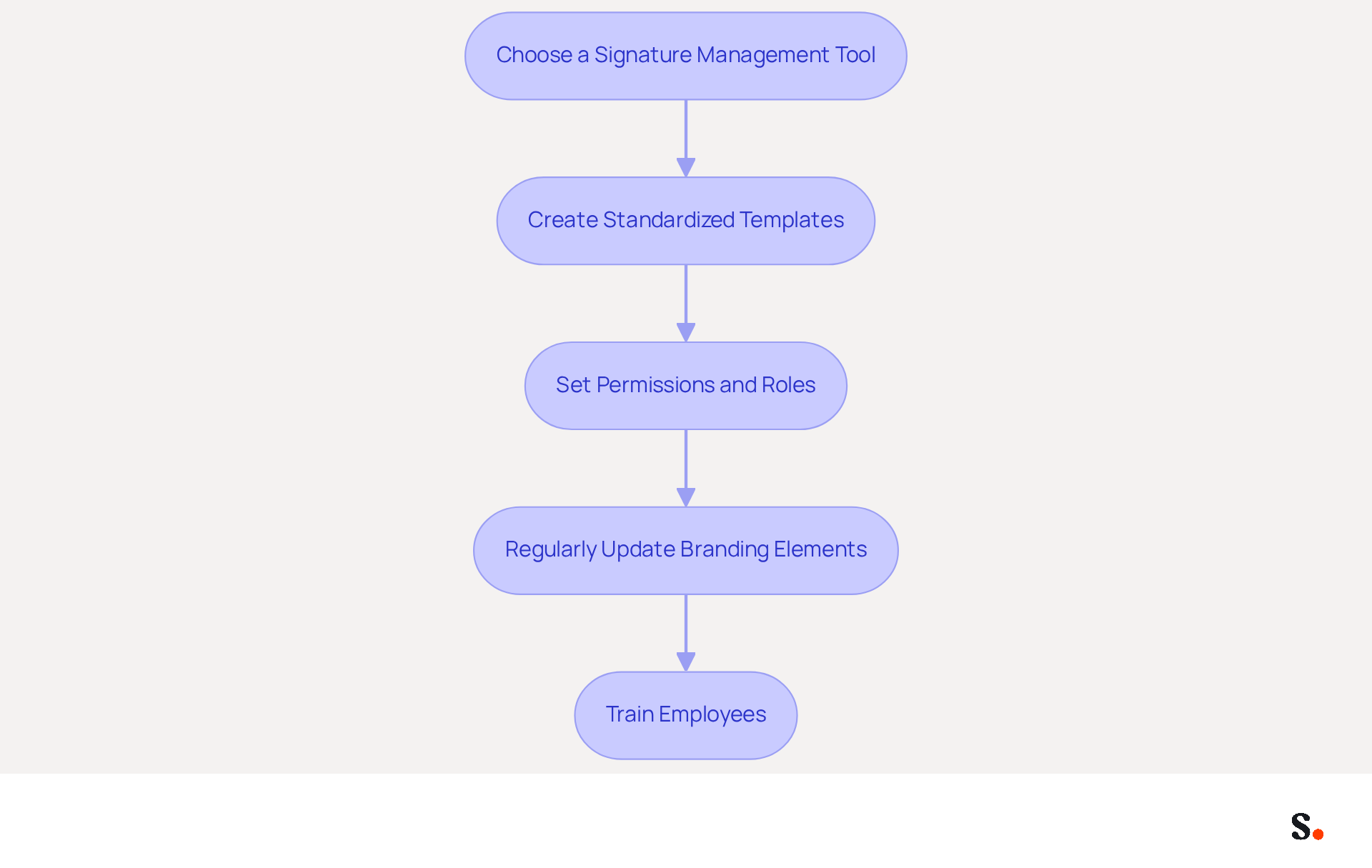
To achieve consistent brand messaging, organizations must implement a centralized management system for digital identifiers. A platform like Scribe enables organizations to create and implement standardized electronic communication identifiers. Here are key steps to establish centralized management:
- Choose a Signature Management Tool: Select a tool that integrates seamlessly with your messaging platform (e.g., Outlook, Google Workspace) and facilitates easy updates and management.
- Create Standardized Templates: Design templates that reflect your brand's visual identity, incorporating logos, colors, and fonts. Ensure these templates are mobile-friendly and visually appealing, as studies show that branded elements can increase email response rates significantly.
- Set Permissions and Roles: Define who can create, edit, and approve marks within your organization to maintain control over branding. Role-based access controls (RBAC) are crucial for ensuring consistency after launch.
- Regularly Update Branding Elements: Schedule periodic reviews to ensure that all branding elements reflect the latest marketing messages. Automated systems can facilitate instant updates across the organization without requiring employee action.
- Train Employees: It's essential to educate staff on the significance of standardized marks and their correct implementation. Training should encompass guidance on maintaining corporate branding consistency and the importance of compliance in regulated sectors.
By utilizing Outlook signature central management for messaging branding, entities can ensure that every communication sent reinforces their brand identity, leading to enhanced recognition and trust among recipients. This approach not only strengthens brand identity but also transforms digital identifiers into effective marketing tools, as shown by successful case studies where organizations have utilized standardized formats to capture leads and enhance engagement.
Integrate Automated Synchronization with Key Tools
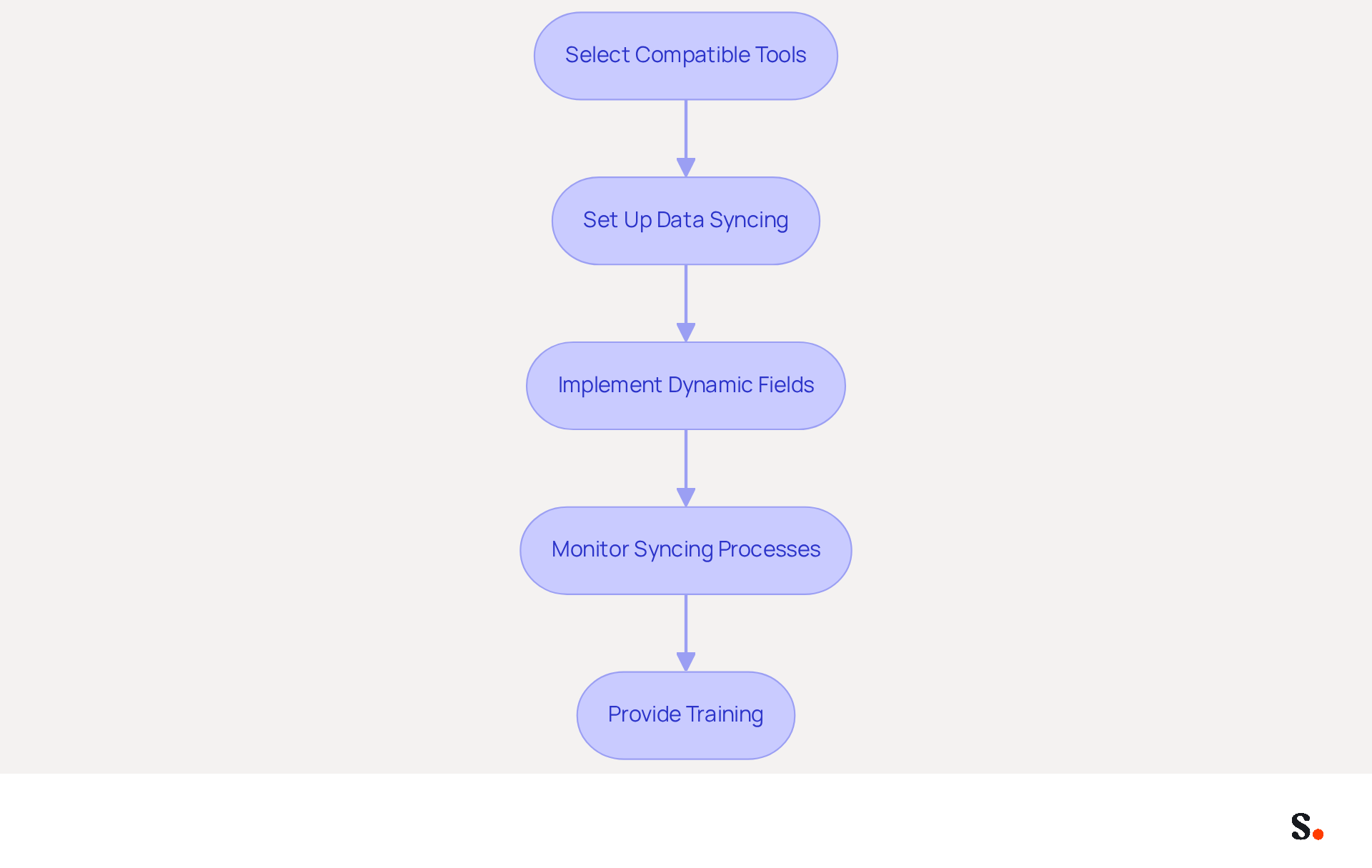
Managing digital identifiers can be a complex task, especially when relying on manual updates. To enhance management, organizations should utilize automated synchronization with vital tools such as HR systems and CRM platforms. Here’s a streamlined approach to implementation:
- Select Compatible Tools: Choose a management solution for email identities that seamlessly integrates with existing systems, such as HR databases and CRM platforms like Salesforce.
- Set Up Data Syncing: Configure the system to automatically retrieve employee data - names, titles, and contact information - from your HR system, ensuring that records remain current and accurate.
- Implement Dynamic Fields: Utilize dynamic fields in digital identifiers that automatically update with the latest information from integrated systems, including promotional banners or upcoming events.
- Monitor Syncing Processes: Regularly verify the synchronization process to ensure it operates correctly and that all data updates are executed as expected.
- Provide Training: Educate employees on the automated system's functionality and the importance of maintaining up-to-date information in the HR system.
This integration not only streamlines processes but also enhances brand integrity across communications. Ultimately, embracing automation in this area can significantly enhance an organization's communication strategy.
Leverage Email Signatures for Targeted Marketing Campaigns
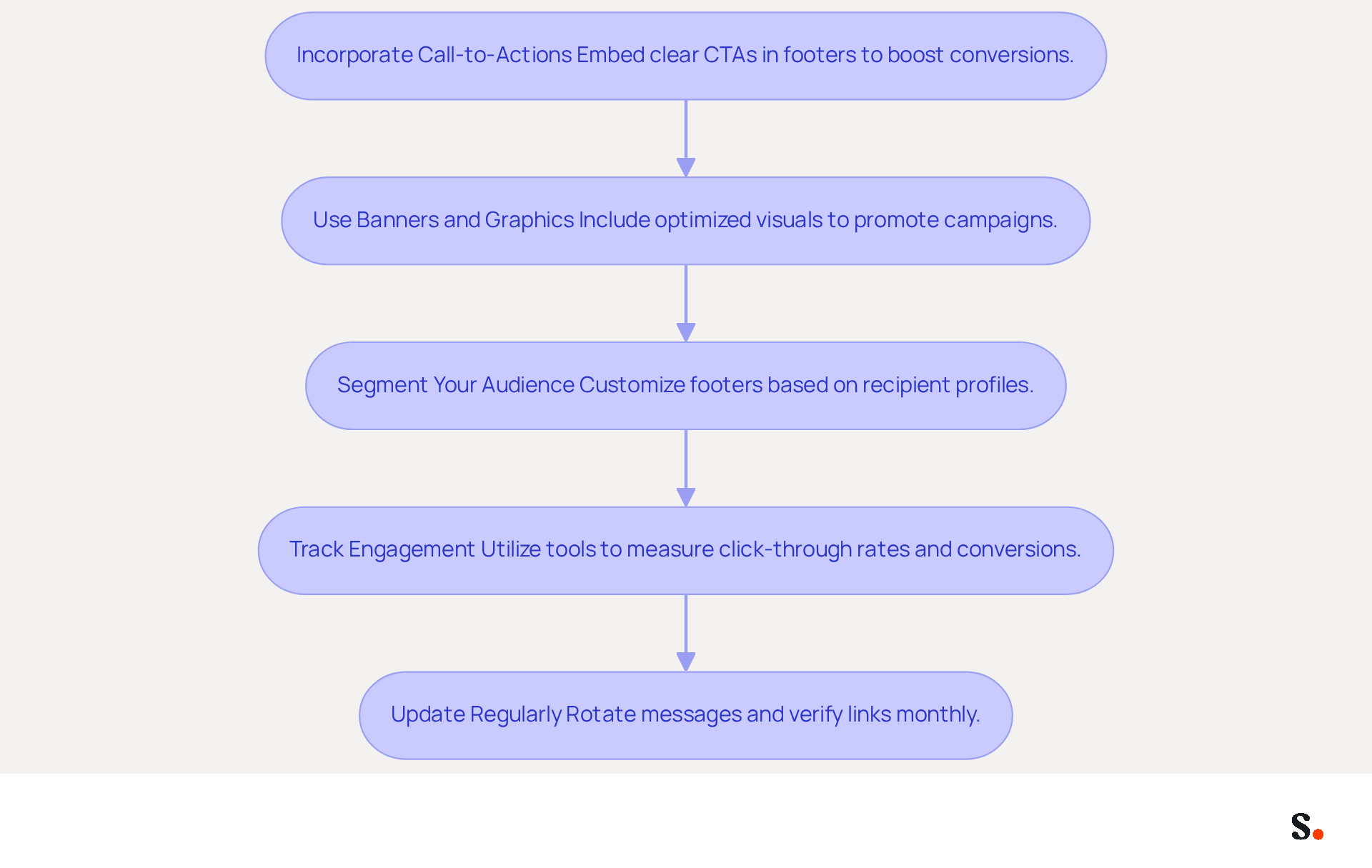
Transforming email footers into effective marketing tools requires strategic integration of targeted campaigns. Here are effective strategies to leverage email signatures for marketing:
- Incorporate Call-to-Actions (CTAs): Embed clear and compelling CTAs in your communication footers, directing recipients to product pages, event registrations, or promotional offers. Strategic CTAs in signatures can boost conversions by 40% compared to generic 'contact me' links, leading to 40% more meeting bookings.
- Use Banners and Graphics: Include visually appealing banners that promote current campaigns or highlight new products. To ensure mobile-friendliness, these graphics should be optimized with a maximum width of 600px, considering that 60% of business communications are now opened on mobile devices.
- Segment Your Audience: Customize footers based on the recipient's profile or the sender's department to enhance the relevance of the promotional message. This targeted approach can significantly improve engagement rates.
- Track Engagement: Utilize tracking tools to measure the effectiveness of your campaigns, analyzing metrics such as click-through rates and conversions. Without personalization, businesses struggle to achieve meaningful engagement in their email campaigns, as personalized emails yield a 4% click-through rate, surpassing bulk email efforts and impacting 8 to 22% of total pipeline after disciplined execution.
- Update Regularly: Keep the content fresh by rotating promotional messages and banners to reflect current marketing initiatives. Regularly updated signatures not only enhance professionalism but also keep communication relevant and engaging. Furthermore, verify links in message footers monthly to ensure they are operational.
By strategically utilizing email signatures, businesses can turn everyday communications into impactful marketing channels.
Measure ROI and Effectiveness of Signature Strategies
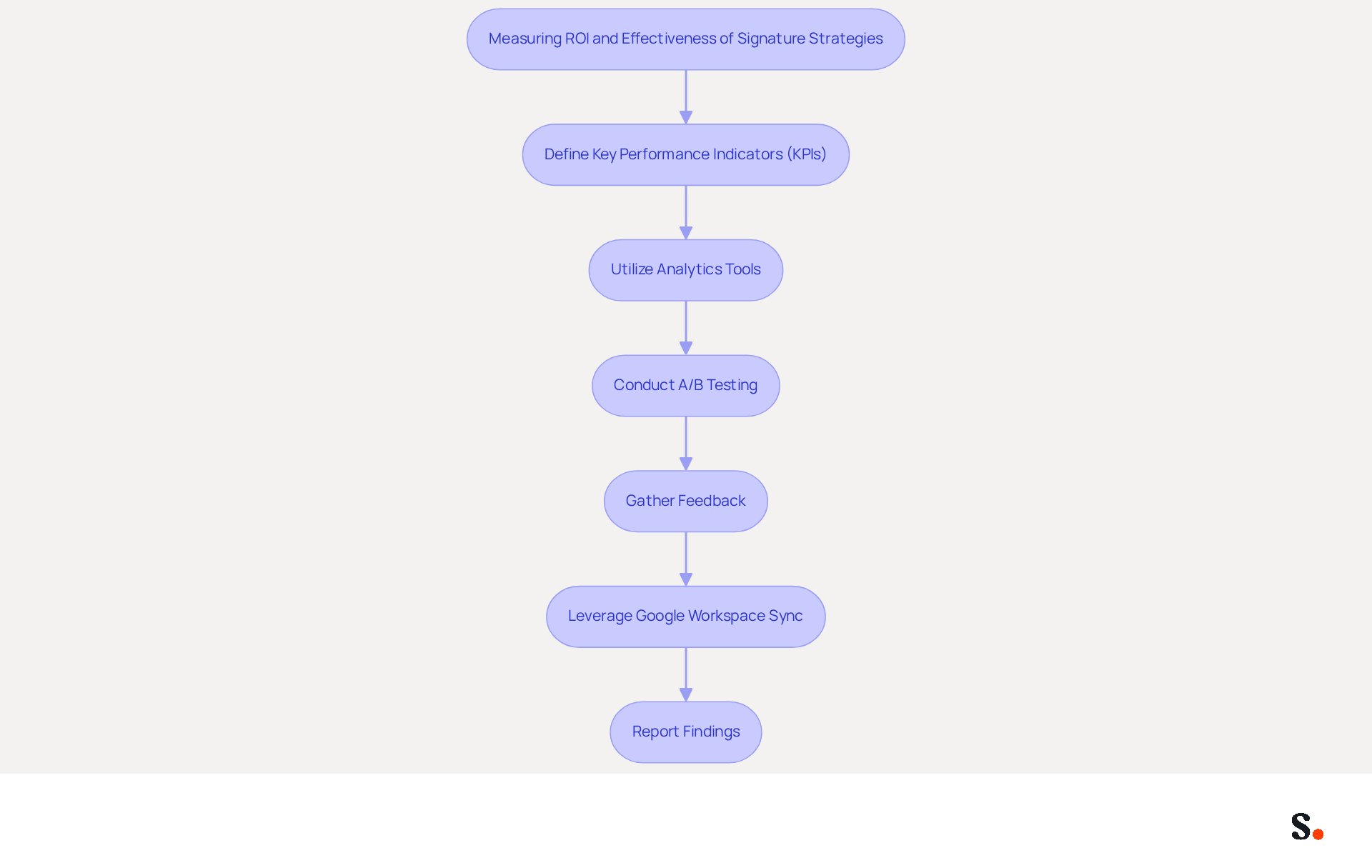
To truly harness the power of communication strategies, organizations must confront the challenge of measuring their ROI and overall impact. Here’s a structured approach to achieving this:
- Define Key Performance Indicators (KPIs): Establish essential KPIs such as click-through rates (CTR), conversion rates, and overall engagement levels. These metrics are crucial for assessing the effectiveness of your campaigns related to electronic correspondence. For instance, a CTR of over 2% is considered outstanding, while a conversion rate of 4% indicates that 4 out of 100 clicks lead to desired actions.
- Utilize Analytics Tools: Consider using robust analytics tools to keep an eye on how users interact with your links and banners. This data reveals how users behave and shows which elements connect best with them. Centralizing data allows for easier performance tracking by campaign, team, or period.
- Conduct A/B Testing: Regularly experiment with different design styles and content variations to determine which combinations yield the best results. A simple change in the size and color of call-to-action buttons, for example, can lead to a 20% increase in clicks and conversions. Analyzing the data from these tests informs future strategies and optimizes engagement.
- Gather Feedback: Actively solicit opinions from recipients to gauge their perceptions of the branding elements and the effectiveness of the marketing messages. Understanding recipient sentiment can guide adjustments and enhance overall impact.
- Leverage Google Workspace Sync: By syncing your Google Workspace with Scribe, you save time as your teammates' data is automatically updated. This means any changes, such as moving teammates between groups or updating their job positions, are reflected in Scribe without manual input. This automation not only simplifies the management process but also guarantees brand consistency across all identifiers.
- Report Findings: Regularly compile and review performance reports on campaigns related to electronic signatures. This practice can uncover trends and highlight areas where strategies can be fine-tuned for better results. For instance, entities that track their bounce rates and keep them under 2% can greatly enhance their message deliverability and standing.
By systematically assessing the ROI and effectiveness of digital communication strategies, many organizations struggle to quantify the impact of their digital communication efforts. Without proper assessment, organizations may miss opportunities for improvement. This data-driven approach not only maximizes the potential of email signatures as a marketing tool but also aligns with broader business objectives.
Conclusion
Many organizations face challenges in maintaining brand consistency across their digital communications. Establishing a centralized management system for email signatures is essential for enhancing this consistency and leveraging digital communication as a powerful marketing tool. By utilizing a platform like Scribe, businesses can ensure that every email sent reflects their brand identity, ultimately fostering trust and recognition among recipients. This approach helps organizations manage their digital identifiers more efficiently while turning them into powerful marketing tools.
Key strategies discussed include:
- The importance of standardized templates
- Automated synchronization with existing tools
- The integration of targeted marketing campaigns within email signatures
By implementing these best practices, organizations can significantly improve engagement rates and measure the effectiveness of their communication strategies. Utilizing analytics tools and A/B testing further enhances the ability to track performance and optimize campaigns for better results.
In a competitive landscape, the ability to manage email signatures effectively can set organizations apart. Embracing these practices not only maximizes the potential of email signatures as a marketing tool but also aligns with broader business objectives. By adopting centralized management solutions like Scribe, organizations can redefine their communication strategies and achieve measurable marketing success.
Frequently Asked Questions
What is the purpose of establishing centralized management for brand consistency?
The purpose is to achieve consistent brand messaging by implementing a centralized management system for digital identifiers, ensuring that all communications reinforce the brand identity.
What tool is recommended for managing digital identifiers?
A platform like Scribe is recommended for creating and implementing standardized electronic communication identifiers.
What are the key steps to establish centralized management?
The key steps include choosing a signature management tool, creating standardized templates, setting permissions and roles, regularly updating branding elements, and training employees.
How should organizations choose a signature management tool?
Organizations should select a tool that integrates seamlessly with their messaging platform (e.g., Outlook, Google Workspace) and facilitates easy updates and management.
What should standardized templates include?
Standardized templates should reflect the brand's visual identity, incorporating logos, colors, and fonts, and should be mobile-friendly and visually appealing.
Why is it important to set permissions and roles in branding management?
Setting permissions and roles is crucial for maintaining control over branding and ensuring consistency after launch through role-based access controls (RBAC).
How often should branding elements be updated?
Branding elements should be regularly updated through scheduled periodic reviews to reflect the latest marketing messages.
What is the significance of training employees on standardized marks?
Training is essential for educating staff on the importance of standardized marks, their correct implementation, and maintaining corporate branding consistency, especially in regulated sectors.
How does centralized management of branding elements benefit organizations?
It ensures that every communication sent reinforces brand identity, leading to enhanced recognition and trust among recipients, and transforms digital identifiers into effective marketing tools.
List of Sources
- Establish Centralized Management for Brand Consistency
- Why Team Email Signatures Matter More Than You Think: The Hidden Impact on Brand Trust and Customer Experience (https://getmailbird.com/why-team-email-signatures-matter-brand-trust)
- Email Signature Management: What It Is and Why Companies Need It in 2026 (https://signandgo.io/blog/email-signature-management-what-it-is-and-why-companies-need-it-in-2026)
- Email Signature Best Practices for 2026 (+ 15 Pro Examples) (https://wavecnct.com/blogs/email-signature-best-practices-2026)
- How to Centralize and Standardize Email Signatures at Scale (2026) (https://wisestamp.com/guides/how-to-standardize-email-signatures-for-large-company)
- Why Email Signatures Must Be In Your 2026 Marketing Plan | Rocketseed (https://rocketseed.com/blog/what-are-the-biggest-email-trends-for-2026)
- Integrate Automated Synchronization with Key Tools
- Exclaimer adds UKG Ready integration as HR systems displace IT-managed directories as the source of employee data (https://globenewswire.com/news-release/2026/05/14/3294682/0/en/exclaimer-adds-ukg-ready-integration-as-hr-systems-displace-it-managed-directories-as-the-source-of-employee-data.html)
- Email signature statistics and trends in 2024 (https://wisestamp.com/blog/email-signature-statistics)
- Press Release | Exclaimer Adds UKG Ready Integration (https://exclaimer.com/company/press-releases/exclaimer-adds-ukg-ready-integration)
- Email Marketing Statistics You Need to Know in 2024 | Report by Newoldstamp - NEWOLDSTAMP (https://newoldstamp.com/email-marketing-statistics)
- 40+ Email Signature Statistics for 2026 (Data + Insights) (https://wavecnct.com/blogs/email-signature-statistics)
- Leverage Email Signatures for Targeted Marketing Campaigns
- 5 Best Practices for Your Email Signature Marketing Platform (https://scribe-mail.com/en-US/blog/5-best-practices-for-your-email-signature-marketing-platform)
- 40+ Email Signature Statistics for 2026 (Data + Insights) (https://wavecnct.com/blogs/email-signature-statistics)
- 2026 Marketing Trends: Email Signatures as a Marketing Tool (https://bluechiptt.com/blog/5-marketing-trends-for-2026-and-how-your-email-signature-fits-in)
- Email Signature Best Practices for 2026 (+ 15 Pro Examples) (https://wavecnct.com/blogs/email-signature-best-practices-2026)
- What is email signature marketing? Complete B2B definition (2026) (https://signitic.com/en/resources/what-is-email-signature-marketing-a-complete-definition-for-b2b-teams)
- Measure ROI and Effectiveness of Signature Strategies
- The 5 key metrics to analyze your email signatures (https://signitic.com/en/resources/the-5-key-metrics-to-analyze-your-email-signatures)
- How to Measure Email Marketing Agency ROI: A Complete 2026 Framework (https://hustlermarketing.com/how-to-measure-email-marketing-agency-roi-a-complete-2026-framework)
- Measure what matters: 7 key metrics for effective email campaigns | Granicus (https://granicus.com/blog/measure-what-matters-key-metrics-for-effective-email-campaigns)
- Cost effective email signature marketing | Rocketseed (https://rocketseed.com/blog/email-signature-marketing-cost-effectiveness)
- 13 email marketing KPIs to watch closely in 2026 (https://twilio.com/en-us/blog/insights/13-email-marketing-kpis-to-watch-closely-in-2024)
Get started with Scribe
Signatures for every role on your team
Free 14-day trial — no credit card.