Master V/R Email Signature: Best Practices for Effective Communication
The proper use of email sign-offs, particularly V/R, is crucial for maintaining professionalism in communication. The abbreviation V/R, or "Very Respectfully,"
Sophie Grant
Email Signature Specialist, Scribe

On this page
- Introduction
- Define V/R: Understanding Its Meaning in Email Communication
- Apply V/R: Guidelines for Effective Usage in Emails
- Contextualize Sign-Offs: The Importance of Tone and Professionalism
- Optimize V/R: Best Practices and Common Pitfalls
- Best Practices:
- Common Pitfalls:
- Conclusion
- Frequently Asked Questions
- List of Sources
Introduction
The proper use of email sign-offs, particularly V/R, is crucial for maintaining professionalism in communication. The abbreviation V/R, or "Very Respectfully," serves as a formal closing that conveys deference and professionalism, especially in hierarchical contexts. This discussion outlines best practices for incorporating V/R into email signatures, highlighting its role in fostering respectful communication and improving response rates.
However, many professionals struggle with the appropriate use of V/R, risking miscommunication. Misusing V/R can lead to misunderstandings and diminish the intended respect in professional correspondence.
Define V/R: Understanding Its Meaning in Email Communication
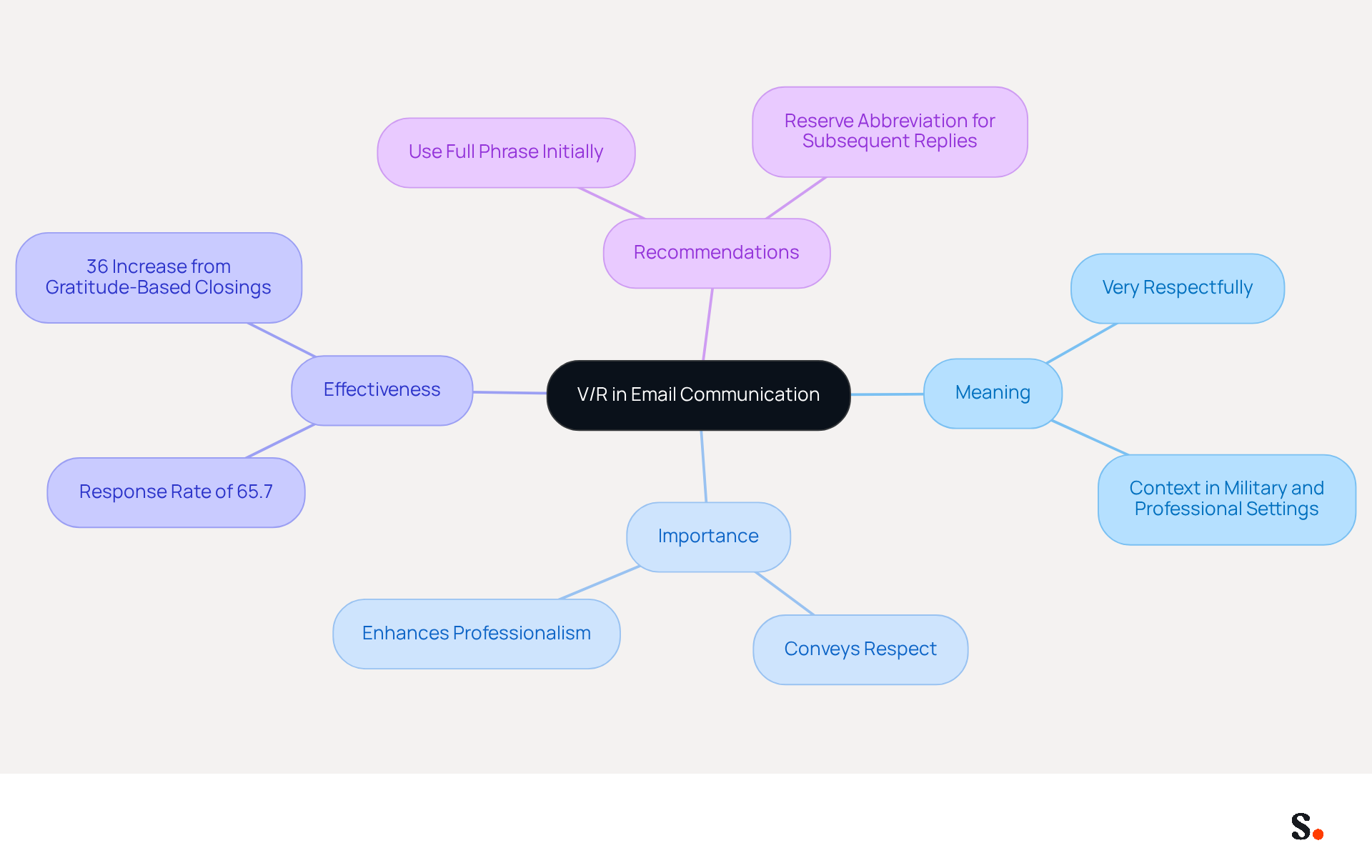
V/R stands for "Very Respectfully" and serves as a formal sign-off in military and professional correspondence. This abbreviation conveys deference and respect towards the recipient, making it particularly suitable for interactions where hierarchy or formality is paramount, such as in military or government contexts. Understanding the significance of V/R is essential for maintaining professionalism in correspondence. It helps professionals uphold a respectful tone.
Using V/R can really boost how professional your interactions come across, with studies showing that emails featuring respectful sign-offs like V/R experience a response rate of 65.7%. Additionally, incorporating gratitude-based closings can lead to a 36% increase in response rates, further emphasizing the effectiveness of respectful sign-offs.
For maximum formality, the SECNAV Manual recommends using the full phrase 'Very respectfully' in initial interactions, reserving the abbreviation for subsequent replies. By adopting V/R, professionals can significantly enhance their communication effectiveness while being mindful of the potential pitfalls of overusing it, which could dilute its impact.
Apply V/R: Guidelines for Effective Usage in Emails
To effectively incorporate V/R in your email communications, it is essential to adhere to specific guidelines that ensure clarity and professionalism:
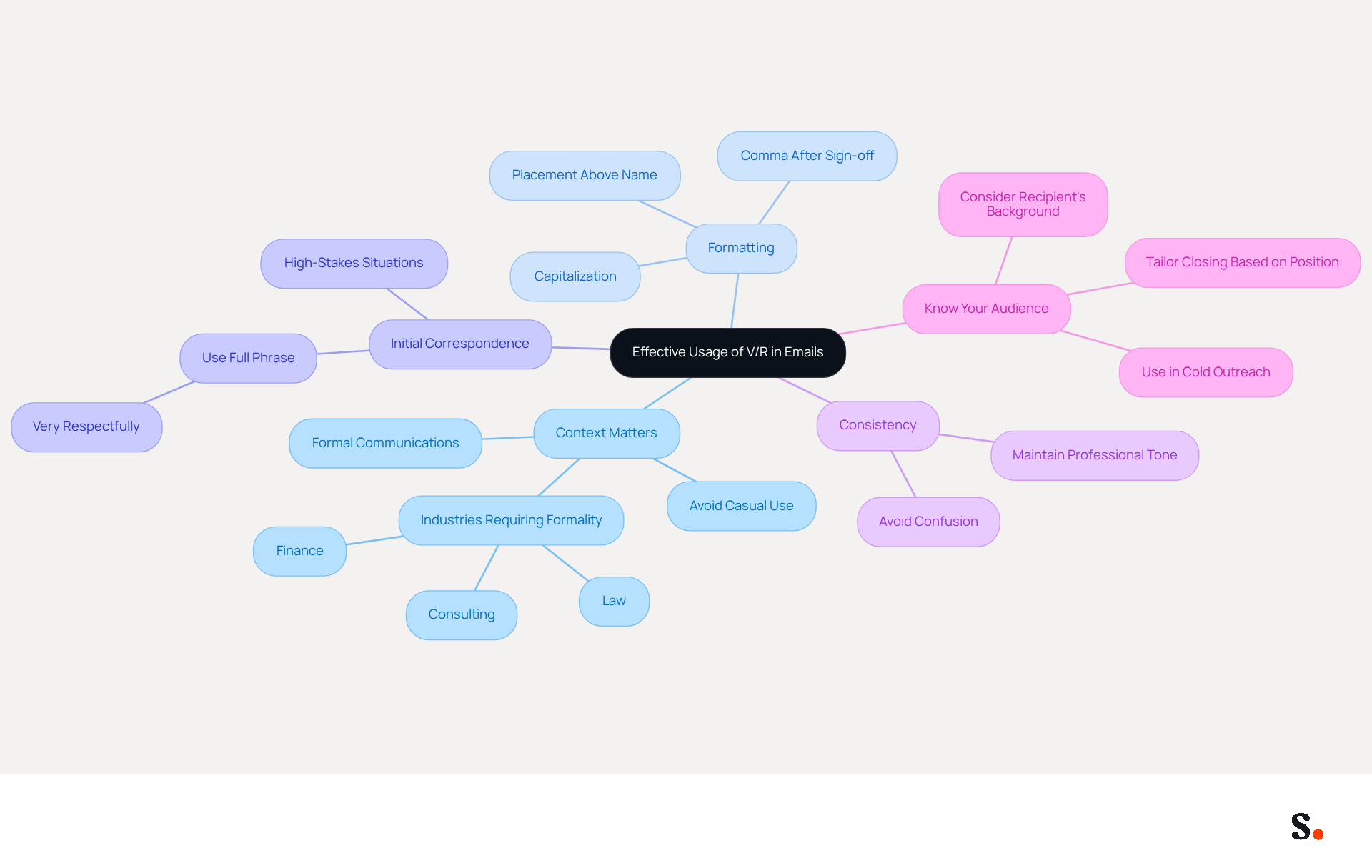
- Context Matters: Use V/R primarily in formal communications, such as messages to superiors, clients, or in military contexts. It is particularly relevant in industries where formality is expected, such as law, finance, or consulting. Avoid using it in casual or informal emails, as it may come off as overly formal.
- Formatting: Always capitalize the 'V' and 'R' and include a comma after the sign-off. For example, write it as "V/R," followed by your name.
- Initial Correspondence: In first-time interactions, consider using the full phrase 'Very Respectfully' to ensure clarity, especially if the recipient may not be familiar with the abbreviation. This approach is particularly effective in high-stakes situations, where establishing a respectful tone is crucial.
- Consistency: If you choose to use V/R, maintain consistency in your email communications to establish a professional tone across all interactions. Inconsistent sign-offs can create confusion and diminish the perceived professionalism of your correspondence.
- Know Your Audience: Tailor your closing based on the recipient's position and your relationship with them. For peers, a simpler sign-off may be more appropriate, while V/R is ideal for addressing senior executives or high-profile clients, reinforcing respect and professionalism. Furthermore, incorporating a V/R email signature in cold outreach and networking can enhance messages to be more courteous and well-received.
Following these guidelines will help you use V/R effectively, enhancing your professional image and promoting respectful communication. Research indicates that using V/R in client communications often results in stronger relationships and a more positive brand perception, particularly in formal industries. Misusing V/R in non-military contexts can lead to confusion and misinterpretation. This can ultimately strengthen professional connections and improve communication outcomes.
Contextualize Sign-Offs: The Importance of Tone and Professionalism
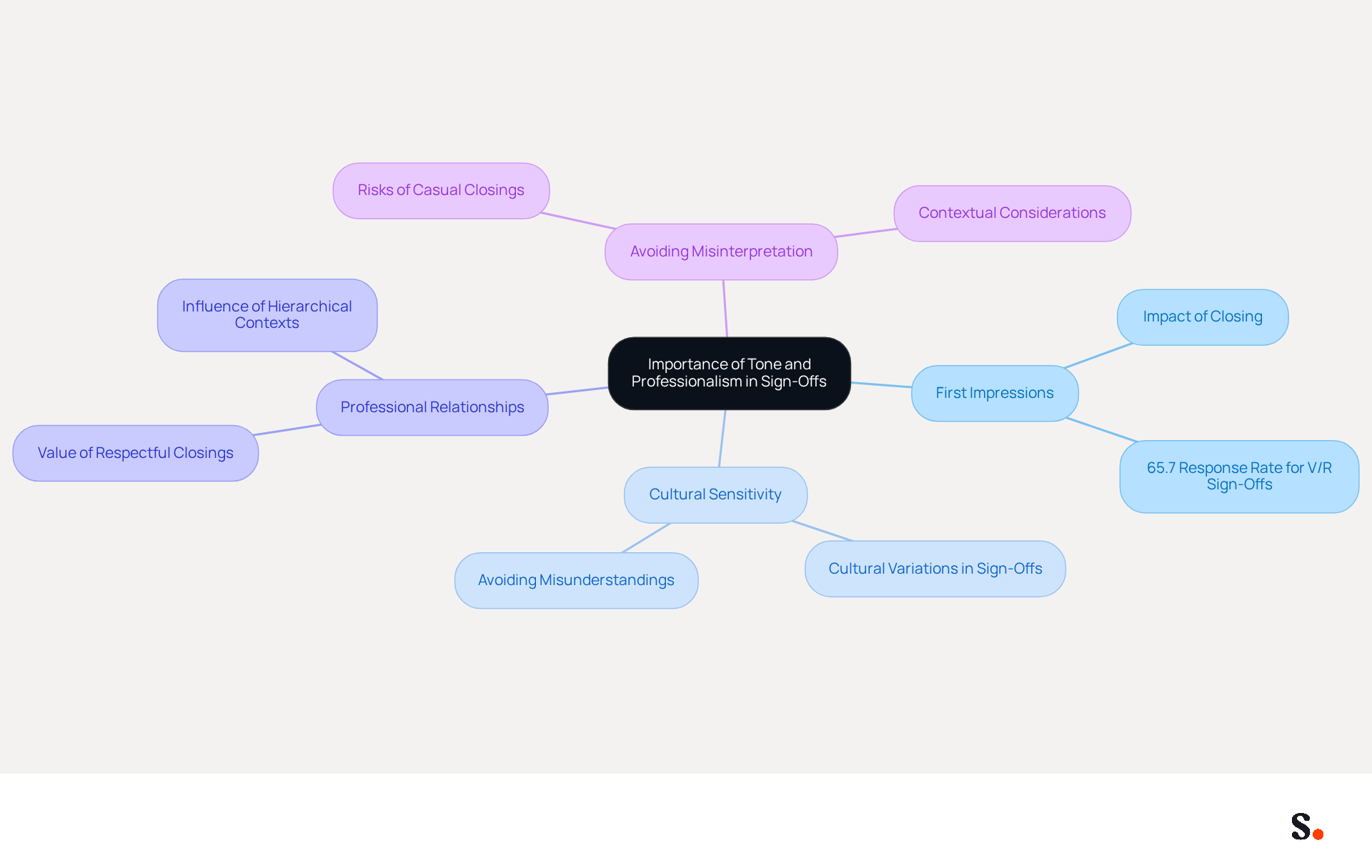
The tone of your email closing plays a crucial role in shaping the recipient's perception of your message. A respectful closing, such as V/R, demonstrates professionalism and consideration, enhancing your credibility and fostering positive relationships. Here are some key points to consider:
- First Impressions: The closing is the last thing a recipient reads, making it a vital part of your message. A thoughtfully selected closing can create a memorable impact; messages that utilize a V/R email signature achieve a 65.7% response rate, demonstrating how courteous communication can lead to better responses.
- Cultural Sensitivity: Different cultures may interpret sign-offs differently. For instance, in Nigeria, email sign-offs often include religious phrases, reflecting cultural values and practices. Knowing your audience's cultural background helps you choose the right closing, avoiding misunderstandings and building rapport.
- Professional Relationships: Using a respectful closing like a V/R email signature can strengthen your professional relationships, especially in hierarchical environments. It shows that you value the recipient's position and contributions. Communication experts note that being aware of the recipient's position relative to yours is crucial for effective communication.
- Avoiding Misinterpretation: A casual or inappropriate closing can lead to misunderstandings or convey a lack of respect. Common pitfalls include using V/R in casual contexts, which can seem too formal or insincere. Always consider the context and relationship when choosing your sign-off to ensure clarity and professionalism.
By being mindful of your tone and professionalism in sign-offs, you can enhance your effectiveness and build stronger professional connections. In the end, the right sign-off can determine whether you receive a positive response or miss an opportunity.
Optimize V/R: Best Practices and Common Pitfalls
Effective use of V/R in email communications hinges on understanding best practices and avoiding common pitfalls:
Best Practices:
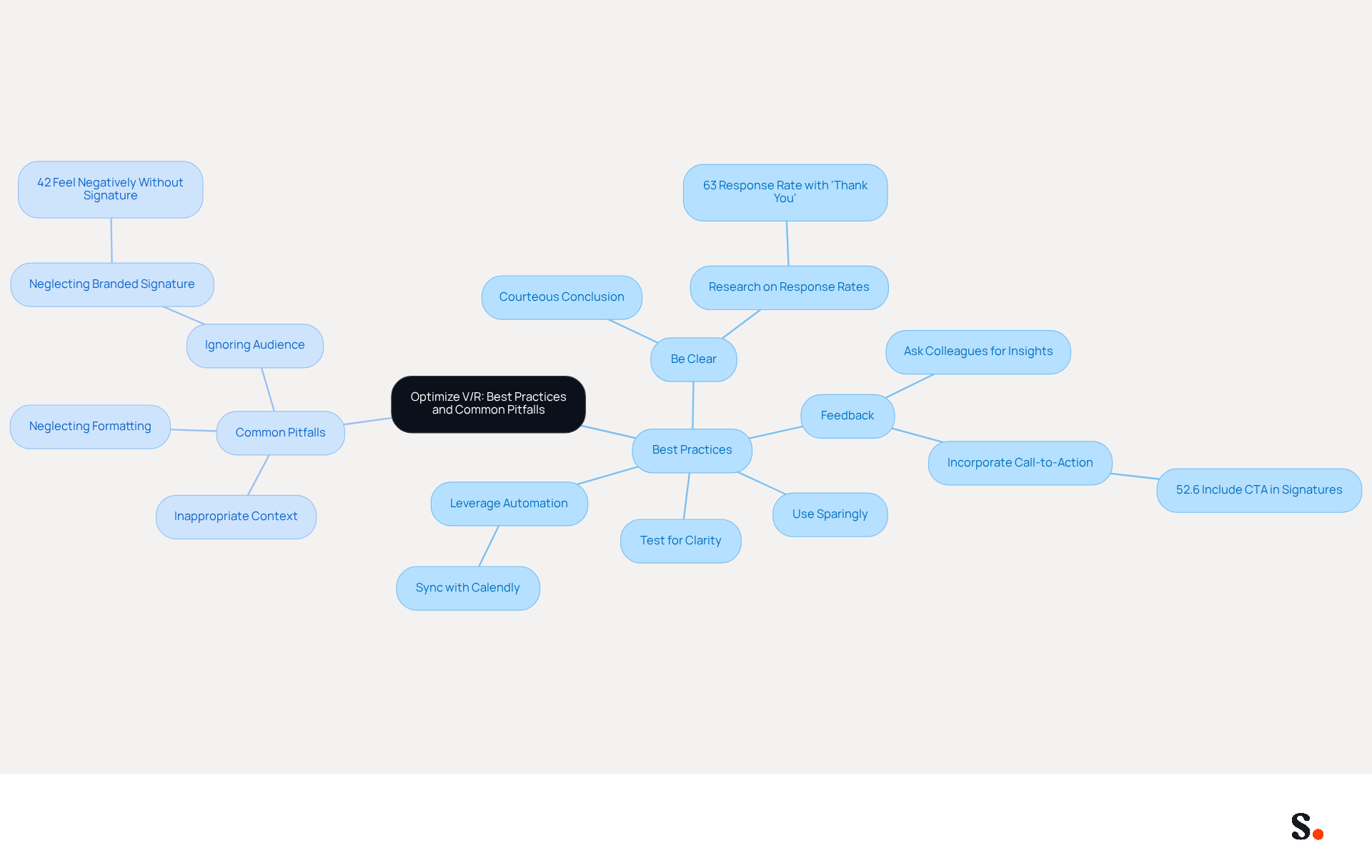
- Use Sparingly: Reserve V/R for formal interactions to maintain its impact. Overusing it can dilute its significance.
- Be Clear: Ensure that your emails are clear and concise. A courteous conclusion enhances clarity and boosts engagement in your messages. Research shows that messages concluding with a 'thank you' can lead to a 63% response rate, reinforcing the importance of respectful sign-offs.
- Test for Clarity: If unsure about your audience's familiarity with V/R, consider testing the waters with a more common sign-off before transitioning to V/R. This approach can help gauge the recipient's comfort level and improve response rates.
- Feedback: Consider asking colleagues or mentors for feedback on your message style; their insights can help you refine your approach. Additionally, incorporating a call-to-action (CTA) in your signature aligns with marketing goals, as 52.6% of users incorporate a CTA in their signatures to drive engagement.
- Leverage Automation: Utilize Scribe's integration with Calendly to ensure that any changes made to your scheduling links automatically sync with your signatures. This not only saves time but also ensures brand consistency across all communications.
Common Pitfalls:
- Inappropriate Context: Avoid using a v r email signature in casual emails or with peers, as it may come off as insincere or overly formal. Customizing your closing to the situation is essential for preserving rapport.
- Neglecting Formatting: Failing to format V/R correctly (e.g., not capitalizing or omitting the comma) can undermine your professionalism. Proper formatting reflects attention to detail and enhances credibility.
- Ignoring Audience: Not considering the recipient's position or relationship can lead to misunderstandings. Adjust your sign-off accordingly to cultivate a positive connection and ensure clarity in interaction. Neglecting to use a branded signature can lead to a loss of trust and professionalism in communications, as 42% of consumers feel negatively toward a business when receiving a message without a branded signature.
Mastering these practices not only enhances your communication but also solidifies your professional image in the eyes of your audience.
Conclusion
Incorporating the sign-off "V/R" into email communications can significantly elevate the professionalism of your correspondence. This formal closing is particularly effective in hierarchical or formal contexts, enhancing the overall tone of correspondence and fostering positive relationships. Understanding and applying V/R principles can greatly enhance communication effectiveness.
Key insights from the article highlight the importance of context, proper formatting, and audience awareness when using V/R. Adhering to best practices, such as using the sign-off sparingly and ensuring clarity in emails, can foster more meaningful interactions and enhance professional relationships. Additionally, misusing V/R in casual settings can undermine professionalism and lead to misunderstandings, which is crucial for maintaining credibility.
Mastering V/R in email signatures doesn’t just improve your communication; it also helps create a more respectful and professional atmosphere. By adopting these best practices, professionals can optimize their email interactions, ensuring that their messages are well-received and impactful. Embracing respectful sign-offs like V/R can redefine communication dynamics, paving the way for more productive professional relationships.
Frequently Asked Questions
What does V/R stand for in email communication?
V/R stands for "Very Respectfully" and serves as a formal sign-off in military and professional correspondence.
Why is V/R used in email communication?
V/R conveys deference and respect towards the recipient, making it suitable for interactions where hierarchy or formality is important, such as in military or government contexts.
How does using V/R affect professionalism in correspondence?
Using V/R helps professionals maintain a respectful tone in their communications, which can enhance the overall professionalism of their interactions.
What is the response rate for emails that use respectful sign-offs like V/R?
Emails featuring respectful sign-offs like V/R experience a response rate of 65.7%.
How can gratitude-based closings impact response rates?
Incorporating gratitude-based closings can lead to a 36% increase in response rates, highlighting the effectiveness of respectful sign-offs.
What does the SECNAV Manual recommend regarding the use of V/R?
The SECNAV Manual recommends using the full phrase "Very respectfully" in initial interactions and reserving the abbreviation V/R for subsequent replies.
What should professionals be mindful of when using V/R?
Professionals should be cautious of overusing V/R, as it could dilute its impact in communication.
List of Sources
- Define V/R: Understanding Its Meaning in Email Communication
- Master the V/R Email Sign Off: Enhance Your Professional Communication (https://scribe-mail.com/en-US/blog/master-the-v-r-email-sign-off-enhance-your-professional-communication)
- What Does V/R Stand For in Email Communication? (https://scribe-mail.com/en-US/blog/what-does-v-r-stand-for-in-email-communication)
- Learn What V/r Means in an Email and How to Use It Properly (https://tabular.email/blog/what-does-vr-mean-in-email)
- What is V/R in email? — Stripo.email (https://stripo.email/glossary/what-is-v-r-in-email)
- What V/R Email Sign Off Means and When to Use It (https://designmodo.com/v-r-email-sign-off)
- Apply V/R: Guidelines for Effective Usage in Emails
- Firma | Professional Email Signatures (https://tryfirma.com/blog/what-does-vr-mean-in-an-email-signature)
- Learn What V/r Means in an Email and How to Use It Properly (https://tabular.email/blog/what-does-vr-mean-in-email)
- What V/R Email Sign Off Means and When to Use It (https://designmodo.com/v-r-email-sign-off)
- What is V/R in email? — Stripo.email (https://stripo.email/glossary/what-is-v-r-in-email)
- What Does V/R Mean in an Email Signature? (https://bulksignature.com/blog/what-does-v-r-mean-in-an-email-signature)
- Contextualize Sign-Offs: The Importance of Tone and Professionalism
- Why Tone Matters More Than Ever in Business Communication (https://marketingprofs.com/charts/2023/48913/why-tone-matters-business-communication)
- The Best Email Sign-Offs for Professional Messages (https://bulksignature.com/blog/the-best-email-sign-offs-for-professional-messages)
- Email Sign Offs for Every Industry and Situation | Mailchimp (https://mailchimp.com/resources/email-sign-offs)
- Master the V/R Email Sign Off: Enhance Your Professional Communication (https://scribe-mail.com/en-US/blog/master-the-v-r-email-sign-off-enhance-your-professional-communication)
- The beautiful ways different cultures sign emails (https://bbc.com/worklife/article/20190508-why-the-way-you-close-your-emails-is-causing-confusion)
- Optimize V/R: Best Practices and Common Pitfalls
- 40+ Email Signature Statistics for 2026 (Data + Insights) (https://wavecnct.com/blogs/email-signature-statistics)
- 4 Best Practices for a Professional Formal Email Sign Off (https://scribe-mail.com/en-US/blog/4-best-practices-for-a-professional-formal-email-sign-off)
- 100 Email Sign-Off Ideas (+10 Golden Rules for Marketing Pros) - MailerLite (https://mailerlite.com/blog/email-sign-offs)
Get started with Scribe
Build a professional email signature
Free 14-day trial — no credit card.