Master Warmly Email Sign-Offs: Best Practices for Impactful Communication
Warm email sign-offs are not merely polite conclusions; they are essential for shaping recipients' perceptions and fostering meaningful connections. By
Sophie Grant
Email Signature Specialist, Scribe

Introduction
Warm email sign-offs are not merely polite conclusions; they are essential for shaping recipients' perceptions and fostering meaningful connections. By employing thoughtful and personalized closings, professionals can significantly enhance engagement and communication effectiveness. Yet, navigating the subtleties of tone and context can be daunting for many professionals.
How can one craft a sign-off that resonates authentically while avoiding common pitfalls? This piece will explore effective strategies for crafting warm email sign-offs, offering insights and examples that can transform routine correspondence into impactful communication.
Understand the Importance of Warm Email Sign-Offs
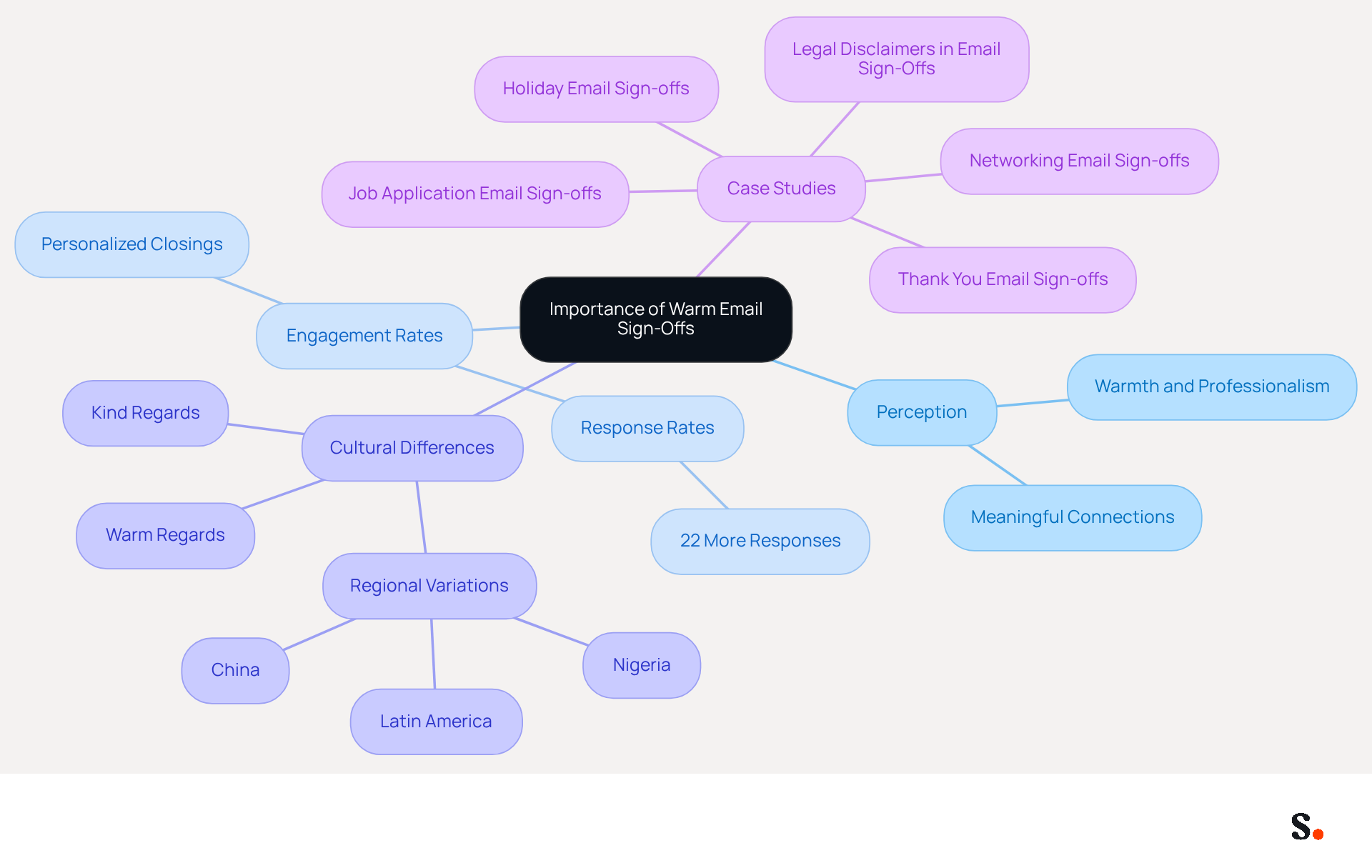
Warmly email sign-offs are not merely polite; they play a pivotal role in shaping how recipients perceive the sender. A thoughtful closing, like a warmly email sign-off, conveys warmth and professionalism, helping to build a positive relationship. Studies indicate that personalized closings can lead to significantly higher engagement rates, as they resonate more with recipients. For instance, using a sign-off like 'Thank you for your time' not only expresses gratitude but also encourages a response. In contrast, generic closures often fail to create a meaningful connection, potentially leading to misunderstandings.
Cultural differences also play a significant role in the effectiveness of electronic communication closings. For example, while 'Warm Regards' is widely accepted in many Western cultures, alternatives like 'Kind Regards' or even more casual options may be preferred in different contexts. Recognizing these nuances is key for anyone aiming to improve their email communication.
Case studies further illustrate the effectiveness of warm conclusions. For example, a study revealed that messages with warm, professional tones receive up to 22 percent more responses, emphasizing the importance of a warmly email sign-off that is customized to the context and recipient. Furthermore, expert insights indicate that utilizing considerate closings, including a warmly email sign-off, can greatly affect engagement, rendering them an essential element of effective communication strategies. By adopting warm closings, professionals can significantly enhance their communication outcomes.
Craft Personalized and Contextual Sign-Offs
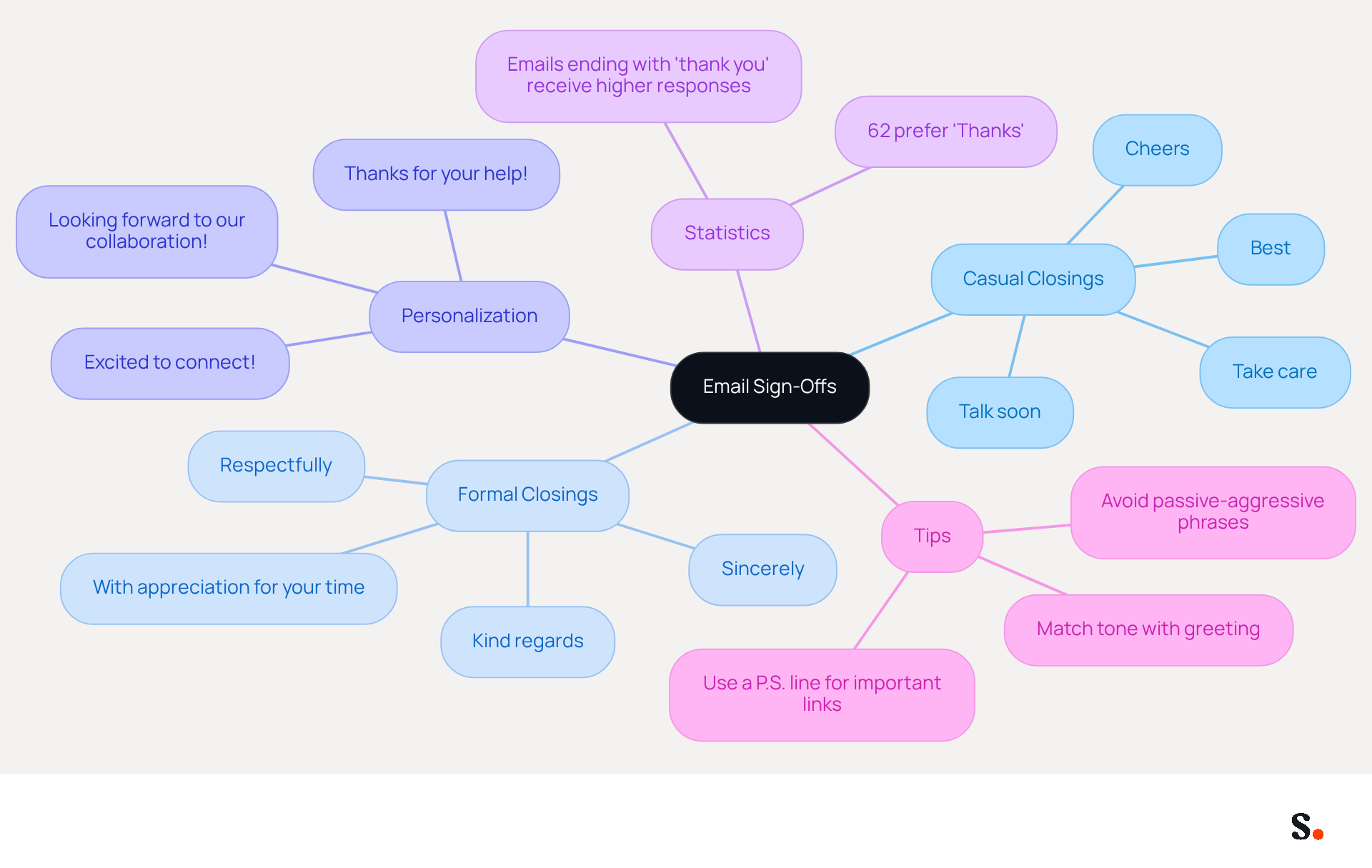
To create impactful email closings, understanding the recipient's relationship and the message context is crucial. For instance, when communicating with a familiar colleague, casual closings like 'Cheers' or 'Best' can foster a friendly tone. In contrast, formal communications benefit from sign-offs like 'Sincerely' or 'Kind regards,' which are widely recognized for their professionalism.
Furthermore, contemplating the discussion can bring warmth to your farewell. If you discussed a specific project, you might conclude with 'Looking forward to our collaboration!' This approach personalizes your farewell, reinforcing the connection established during your communication.
Significantly, 62% of survey participants indicated 'Thanks' as their preferred closing, emphasizing the power of showing appreciation. Kasturi Patra, a Content Writer at MailerLite, emphasizes that your email sign-off should resonate with your audience and linger in their minds after reading.
By customizing your closing remarks in this manner, you can cultivate more meaningful interactions and strengthen your professional network. Additionally, be mindful to avoid passive-aggressive phrases or abbreviations, as they can signal low effort and detract from your professionalism.
Avoid Common Mistakes with Warm Sign-Offs
Mistakes in email closings can undermine effective communication, especially in professional settings. While a warmly email sign-off can enhance communication, certain errors can lead to misunderstandings and missed opportunities.
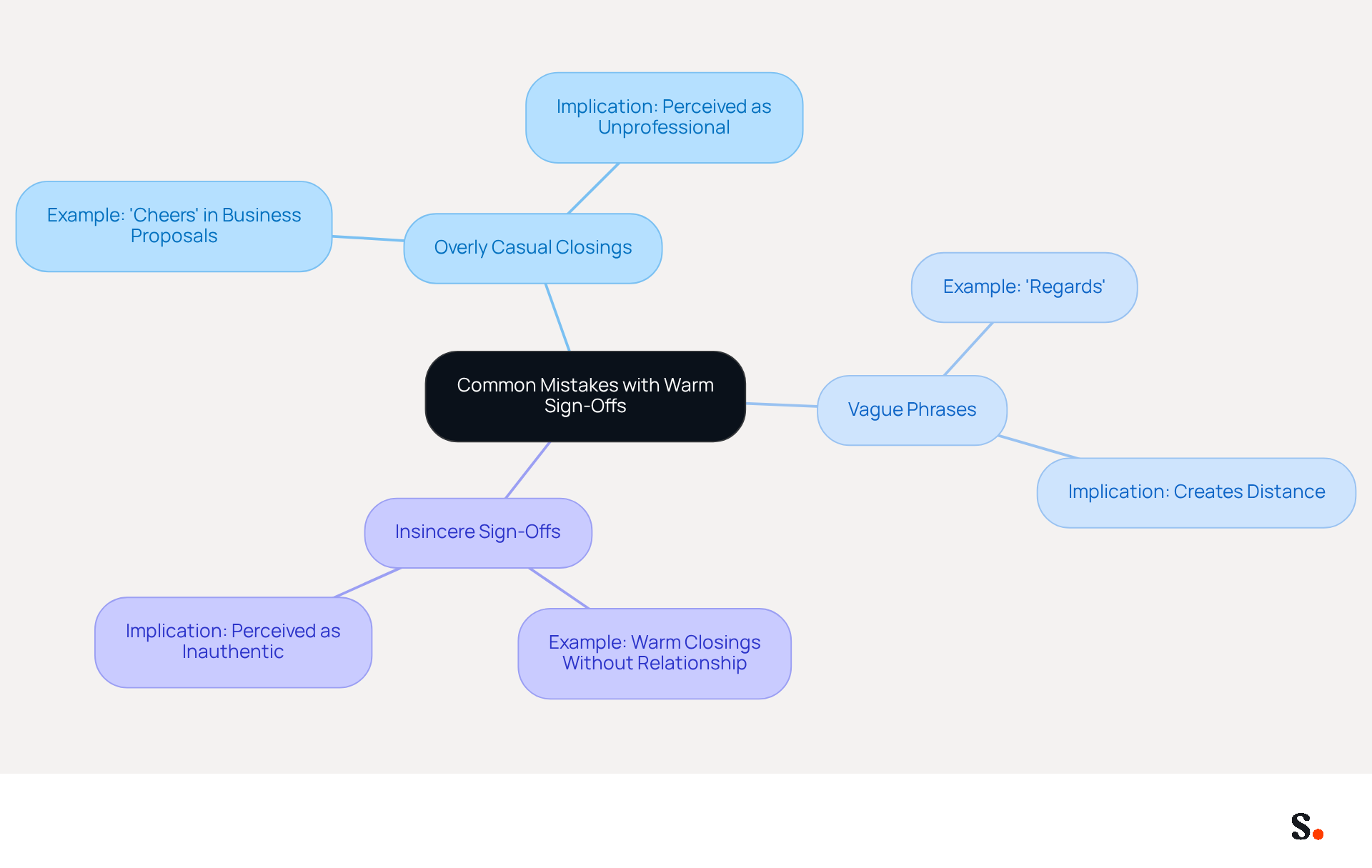
One common mistake is using overly casual closings in formal contexts, such as 'Cheers' in a business proposal email; this can come off as unprofessional.
Another mistake is being too vague; phrases like 'Regards' may create distance and hinder connection.
Additionally, avoid using a warmly email sign-off that may be perceived as insincere if the relationship does not warrant it.
Instead, choose closings that convey authentic emotion and align with the tone of your message. Selecting appropriate closings not only enhances your message but also reinforces your professional reputation.
Explore Effective Examples of Warm Sign-Offs
Effective email sign-offs, such as a warmly email sign-off, can significantly enhance your communication, fostering stronger connections with recipients. Here are some effective examples of warm email sign-offs that can enhance your communication:
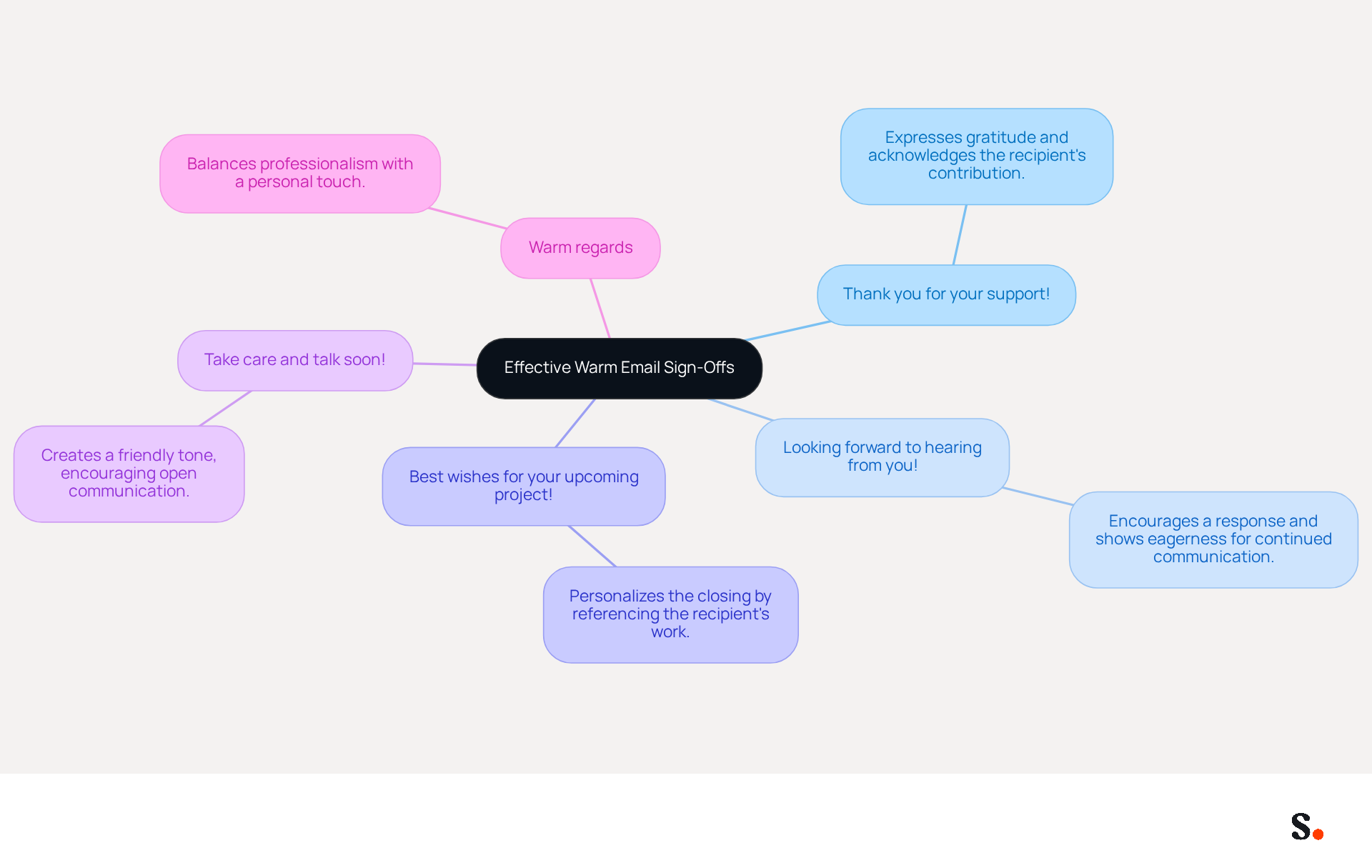
- Thank you for your support! - Expressing gratitude acknowledges the recipient's contribution and fosters goodwill.
- Looking forward to hearing from you! - This encourages a response and shows eagerness for continued communication.
- Best wishes for your upcoming project! - Personalizes the closing by referencing the recipient's work, making it more meaningful.
- Take care and talk soon! - This sign-off creates a friendly tone, encouraging open communication.
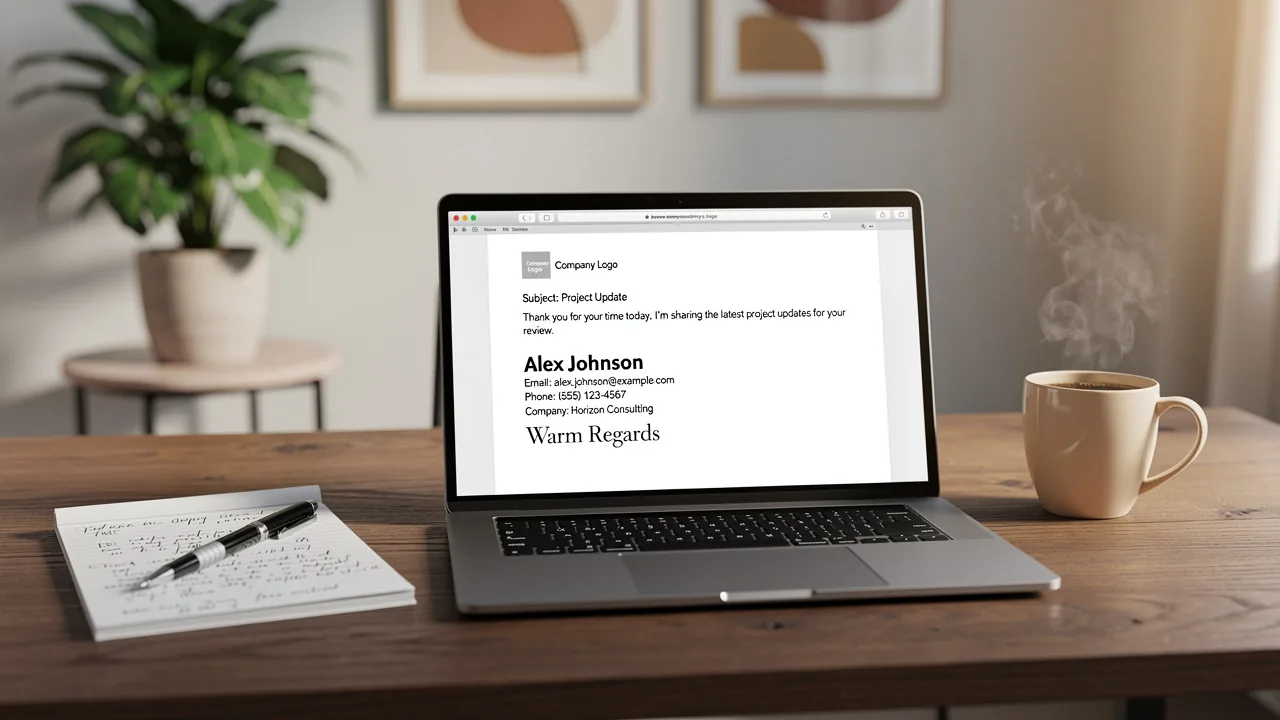
- Warm regards, - A classic choice that balances professionalism with a personal touch.
By adopting a warmly email sign-off, you not only improve your email etiquette but also strengthen your professional relationships.
Conclusion
Warm email sign-offs are not just courteous; they are pivotal in shaping impactful communication. By choosing thoughtful and personalized closings, professionals can foster stronger relationships and enhance engagement. A warm sign-off is more than polite; it shows professionalism and consideration, influencing how recipients perceive messages.
This article emphasizes how tailoring your email sign-offs to fit the context and your relationship with the recipient is crucial. Effective strategies include:
- Using casual closings for familiar colleagues
- Opting for more formal phrases in professional settings
Additionally, avoiding common pitfalls - such as overly casual or vague sign-offs - ensures that communication remains clear and respectful. Examples of effective warm sign-offs demonstrate how simple phrases can convey gratitude, eagerness, and a personal touch, reinforcing the connection established during the conversation.
The impact of warm email sign-offs is significant in today's digital communication landscape. By adopting these best practices, individuals can significantly improve their email etiquette and strengthen their professional networks. Ultimately, the choice of sign-off can transform a simple email into a powerful tool for connection.
Frequently Asked Questions
What is the significance of warm email sign-offs?
Warm email sign-offs are important as they shape how recipients perceive the sender, conveying warmth and professionalism, which helps build positive relationships.
How do personalized email closings affect engagement rates?
Studies indicate that personalized closings can lead to significantly higher engagement rates, as they resonate more with recipients and encourage responses.
Can you provide an example of an effective warm email sign-off?
An example of an effective warm email sign-off is 'Thank you for your time,' which expresses gratitude and encourages a response.
How do cultural differences impact email sign-offs?
Cultural differences play a significant role in the effectiveness of email closings; for instance, 'Warm Regards' is widely accepted in many Western cultures, while alternatives like 'Kind Regards' or more casual options may be preferred in different contexts.
What do case studies reveal about the effectiveness of warm email sign-offs?
Case studies show that messages with warm, professional tones receive up to 22 percent more responses, highlighting the importance of customized warm email sign-offs.
What do experts say about the role of considerate closings in communication?
Experts indicate that utilizing considerate closings, including warm email sign-offs, can greatly affect engagement and are essential for effective communication strategies.
List of Sources
- Understand the Importance of Warm Email Sign-Offs
- The beautiful ways different cultures sign emails (https://bbc.com/worklife/article/20190508-why-the-way-you-close-your-emails-is-causing-confusion)
- What Does 'Warm Regards' Mean? Master Email Sign-Offs Today (https://scribe-mail.com/en-US/blog/what-does-warm-regards-mean-master-email-sign-offs-today)
- Mastering Professional Email Sign-Offs in 2026 (https://linkedin.com/pulse/mastering-professional-email-sign-offs-2026-bulksignature-qsr4e)
- Email Sign Offs Professional: Best Practices for Business Emails (https://mailwarm.com/blog/professional-email-sign-offs-best-practices)
- Email Sign Offs for Every Industry and Situation | Mailchimp (https://mailchimp.com/resources/email-sign-offs)
- Craft Personalized and Contextual Sign-Offs
- 70 Best Email Sign-Offs Guaranteed to Make You Stand Out (https://scienceofpeople.com/email-signoffs)
- Email Sign Offs: Funny, Unique and Professional | Artlogo (https://artlogo.co/blogs/emails/email-sign-offs?srsltid=AfmBOorCxwyOCBSUp2Enz-RI24C4O2QCeZ3e2K8WjncgRb2cWdj0XnPT)
- 100 Email Sign-Off Ideas (+10 Golden Rules for Marketing Pros) - MailerLite (https://mailerlite.com/blog/email-sign-offs)
- Gen Z Email Sign-Offs: Funny Email Sign Offs - NEWOLDSTAMP (https://newoldstamp.com/blog/gen-z-sign-offs)
- Avoid Common Mistakes with Warm Sign-Offs
- 40+ Email Signature Statistics for 2026 (Data + Insights) (https://wavecnct.com/blogs/email-signature-statistics)
- The Best (and Worst) Ways To Sign an Email | Robert H. Smith School of Business (https://rhsmith.umd.edu/research/best-and-worst-ways-sign-email)
- The 12 Most Common Email Mistakes Professionals Make (https://businessinsider.com/common-email-mistakes-professionals-make-2014-7)
- 11 Common Email Mistakes Everyone Makes (https://linkedin.com/pulse/11-common-email-mistakes-everyone-makes-betty-liu)
- Email signature statistics: Why every business should optimize their email signatures — Stripo.email (https://stripo.email/blog/email-signature-statistics-why-every-business-should-optimize-their-email-signatures)
- Explore Effective Examples of Warm Sign-Offs
- Email Sign Offs for Every Industry and Situation | Mailchimp (https://mailchimp.com/resources/email-sign-offs)
- How to End an Email: 100+ Best Sign-Offs & Real Examples (https://omnisend.com/blog/email-sign-offs)
- What Does 'Warm Regards' Mean? Master Email Sign-Offs Today (https://scribe-mail.com/en-US/blog/what-does-warm-regards-mean-master-email-sign-offs-today)
- Email Sign Offs Professional: Best Practices for Business Emails (https://mailwarm.com/blog/professional-email-sign-offs-best-practices)
Get started with Scribe
Build a professional email signature
Free 14-day trial — no credit card.