Maximize Your Google Workspace Email Signature for Brand Success
While often overlooked, email signatures hold significant potential for maximizing brand success in digital communication. With the right strategies
Sophie Grant
Email Signature Specialist, Scribe

On this page
- Introduction
- Establish Brand Consistency Through Unified Email Signatures
- Implement Automated Management for Efficient Signature Updates
- Leverage Email Signatures for Marketing and Lead Generation
- Ensure Compliance and Security in Email Signature Management
- Conclusion
- Frequently Asked Questions
- List of Sources
Introduction
While often overlooked, email signatures hold significant potential for maximizing brand success in digital communication. With the right strategies, organizations can transform their email footers into powerful marketing tools that not only enhance brand consistency but also drive engagement and lead generation.
Despite the potential benefits, many organizations face challenges in ensuring their email signatures are consistent and compliant. This raises a critical issue: how can companies effectively leverage their email signatures to reflect their brand identity while ensuring security and compliance?
This article delves into best practices for optimizing Google Workspace email signatures, offering insights that can elevate brand presence and communication effectiveness.
Establish Brand Consistency Through Unified Email Signatures
To achieve brand consistency through email signatures, companies must implement effective strategies:
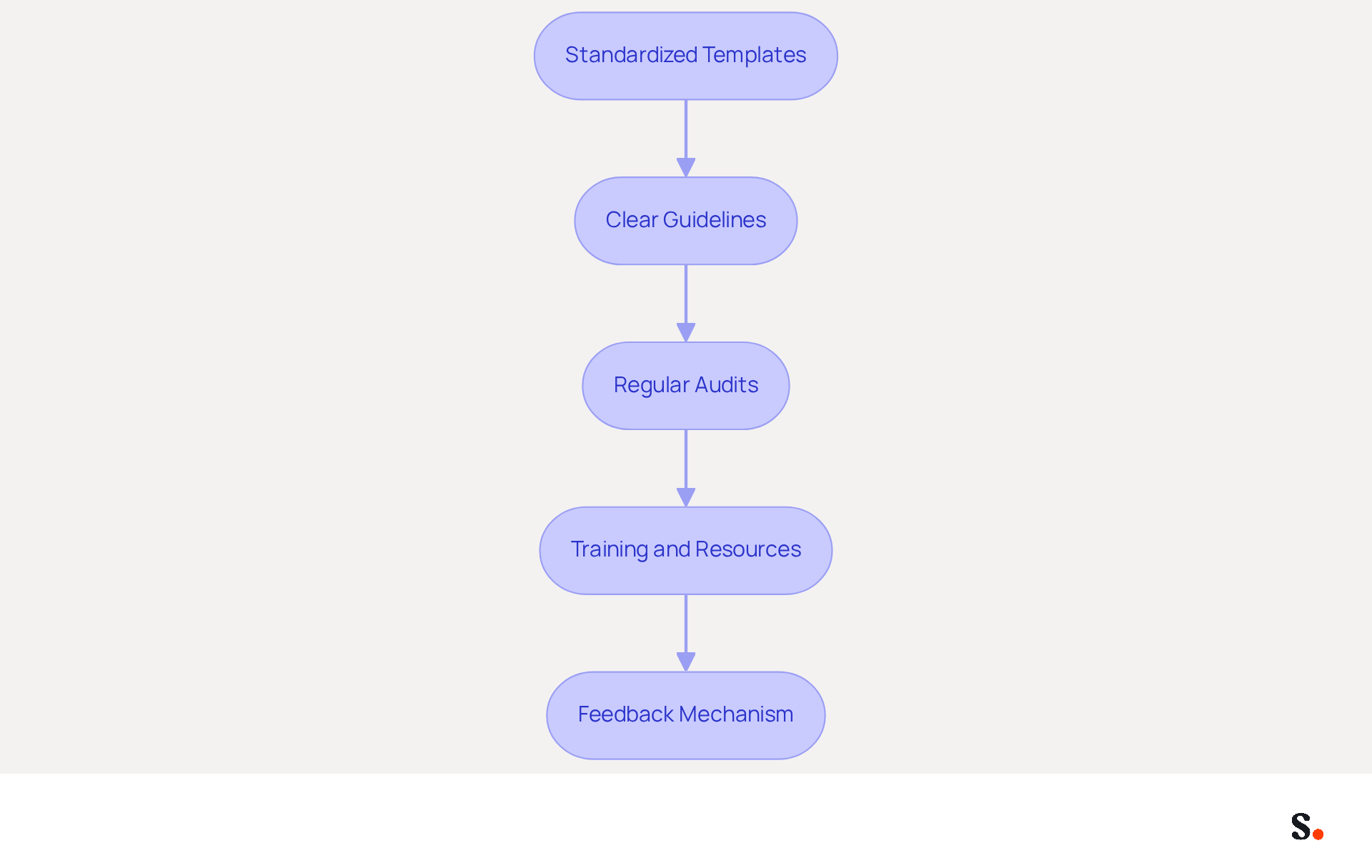
- Standardized Templates: Develop a set of standardized email footer templates that incorporate the company logo, colors, and fonts. This method guarantees that every employee's mark corresponds with the visual identity of Scribe, boosting recognition and trust.
- Clear Guidelines: Create comprehensive instructions for design, specifying font sizes, colors, and layout. This uniformity across departments and employees is essential for maintaining a cohesive image.
- Regular Audits: Conduct routine evaluations of electronic correspondence identifiers to ensure adherence to branding standards. Without regular evaluations, inconsistencies in branding may arise, leading to confusion among recipients. These audits assist in identifying discrepancies, enabling swift corrections and reinforcing integrity.
- Training and Resources: Provide training sessions for employees on the importance of consistency in branding and how to effectively apply it in their communication footers. Providing resources like a logo creator simplifies the process and helps employees adhere to identity guidelines.
- Feedback Mechanism: Establish a feedback system where employees can report issues or suggest improvements regarding signatures. This encourages engagement and ownership of the image, resulting in a more cohesive representation.
When businesses follow these practices, they can make sure their communications truly reflect their brand identity. This is evidenced by a 22% increase in clicks and a 32% rise in responses when digital identifiers are optimized for branding. Ultimately, a well-managed email signature can significantly enhance a company's professional image and communication effectiveness.
Implement Automated Management for Efficient Signature Updates
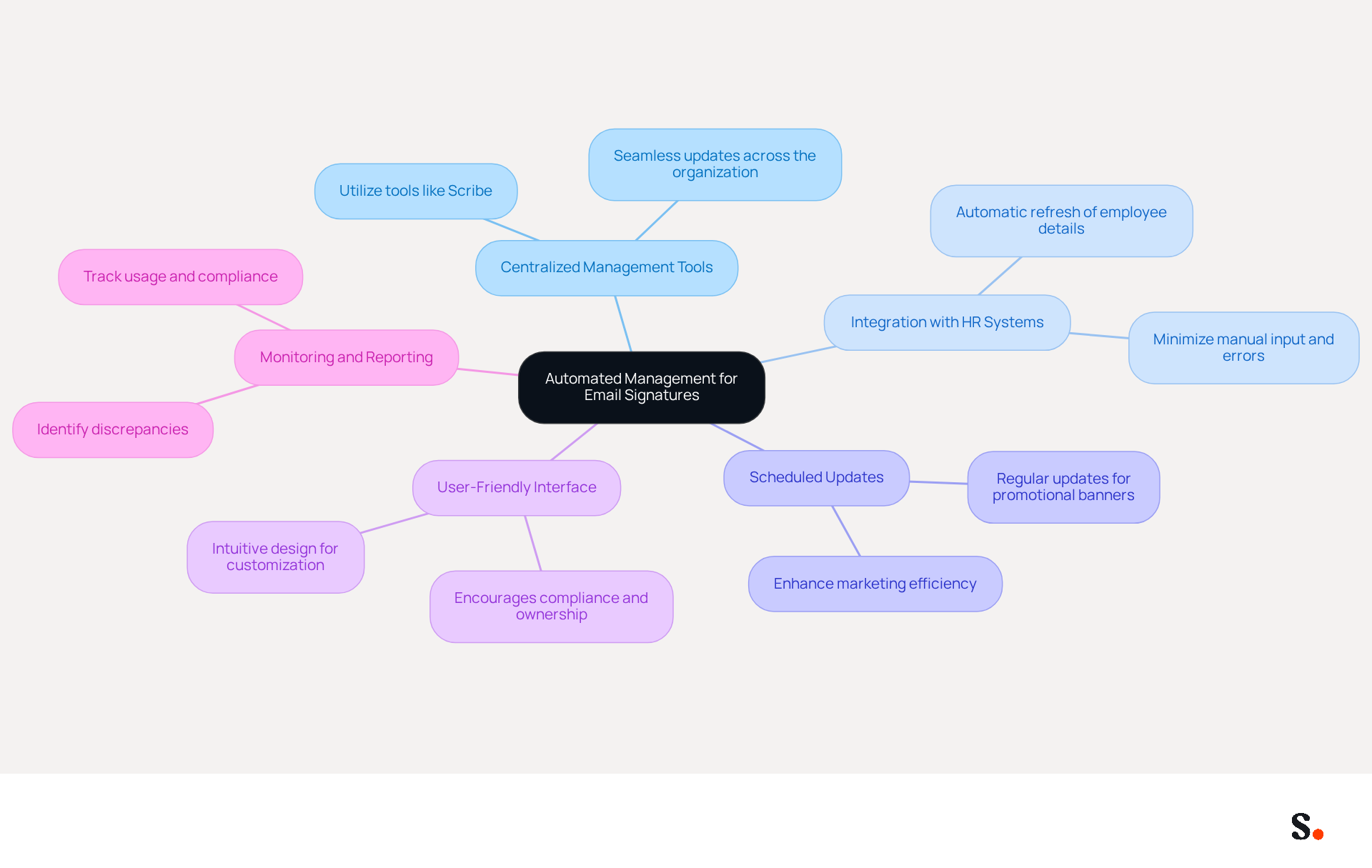
To effectively implement automated management for email signatures, organizations must adopt best practices that ensure accuracy and consistency:
- Centralized Management Tools: Utilize centralized email branding management tools like Scribe that enable seamless updates throughout the organization. With Scribe, any modifications made to the template are automatically applied to all employee marks, ensuring brand consistency.
- Integration with HR Systems: Integrate Scribe with HR systems to automatically refresh details with employee information, such as name, title, and contact information. This minimizes manual input and errors, ensuring accurate communications as Scribe syncs data from your business phone system and Google Workspace.
- Scheduled Updates: Plan regular updates for promotional banners or messages within email footers. This allows marketing teams to launch campaigns more effectively, without requiring individual updates from employees, enhancing overall marketing efficiency. Scribe's capabilities facilitate easy management of these updates.
- User-Friendly Interface: Select a management tool with an intuitive interface, like Scribe, that allows employees to easily customize their identifiers while adhering to brand guidelines. This encourages compliance and fosters a sense of ownership among team members.
- Monitoring and Reporting: Implement monitoring and reporting features available in Scribe to track usage and compliance. This capability aids in identifying any discrepancies and ensures that all endorsements remain current and aligned with branding efforts.
By automating the management of electronic identifiers with Scribe, organizations can maintain brand consistency, save time, and reduce the chances of outdated information slipping through in communications. Ultimately, leveraging Scribe's capabilities can transform how organizations manage their email signatures, leading to improved communication and brand integrity.
Leverage Email Signatures for Marketing and Lead Generation
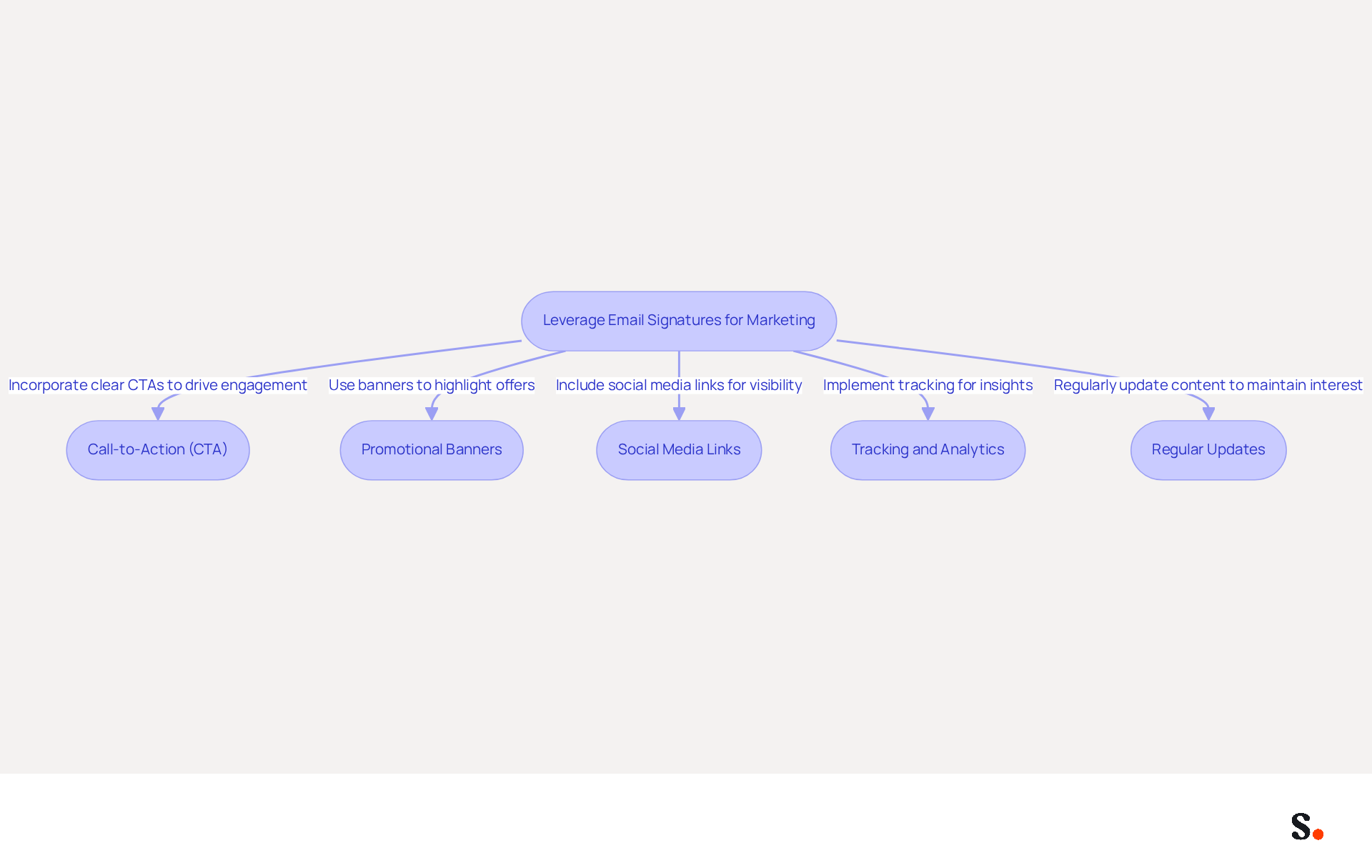
To maximize the potential of email signatures as marketing tools, businesses must implement targeted strategies that drive engagement:
- Call-to-Action (CTA): Incorporate a clear and compelling CTA in the message footer, such as a link to a current promotion, webinar, or downloadable resource. This encourages recipients to take immediate action, significantly enhancing engagement rates. Studies show that targeted CTAs, such as 'Watch the 3-minute demo,' can be two to three times more effective than generic options.
- Promotional Banners: Utilize visually appealing promotional banners in correspondence to highlight special offers or events. When designed to align with the company's identity, these banners can boost click-through rates by 22%. This approach can lead to a notable increase in engagement.
- Social Media Links: Include links to Scribe's social media profiles within the message footer. This not only motivates recipients to interact with the brand across various platforms but also boosts overall visibility. Research indicates that 64-70% of respondents believe a professional branded element enhances trust and credibility, positioning it as a brand asset according to George El-Hage.
- Tracking and Analytics: Implement tracking links in correspondence to measure the effectiveness of marketing campaigns. This data provides valuable insights into engagement rates, allowing businesses to refine their strategies. For example, a company with 100 employees produces roughly 60,000-80,000 branded impressions each month based on 30-40 outbound messages per worker per day over 20 working days, providing ample data for analysis.
- Regular Updates: Consistently refresh the marketing content in communication footers to keep it current and pertinent. Without regular updates, brands risk losing consumer interest and trust, as 42% of consumers feel negatively toward brands that lack a branded mark in their messages.
Implementing these strategies can significantly enhance engagement and foster brand loyalty. By neglecting to optimize their google workspace email signature, businesses may miss out on valuable opportunities for connection and growth.
Ensure Compliance and Security in Email Signature Management
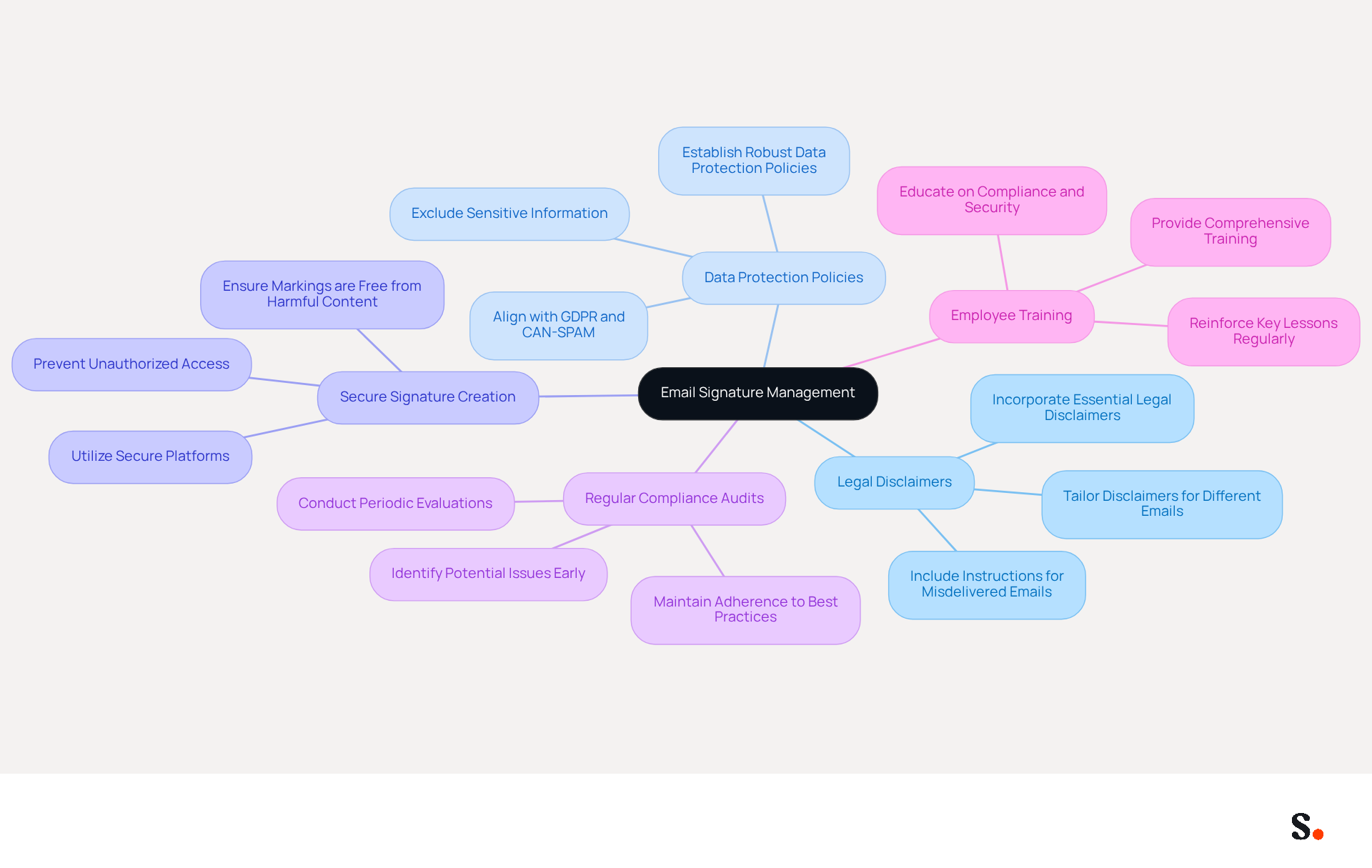
In an era where digital communication is paramount, ensuring compliance and security in email signature management is not just advisable; it's essential for business integrity. To achieve this, businesses should adopt the following best practices:
- Legal Disclaimers: Incorporate essential legal disclaimers in digital correspondence to adhere to industry regulations. This includes confidentiality notices and disclaimers concerning the content, which can assist in reducing legal risks and clarifying the nature of communications.
- Data Protection Policies: Establish robust data protection policies governing the information included in electronic communications. Sensitive information should be excluded to safeguard against potential data breaches, aligning with GDPR and CAN-SPAM requirements.
- Secure Signature Creation: Utilize secure platforms for creating and managing digital identifiers. This prevents unauthorized access and ensures that markings are free from harmful content, thereby enhancing overall security.
- Regular Compliance Audits: Conduct periodic evaluations of electronic correspondence identifiers to verify adherence to legal and regulatory standards. These audits help identify potential issues early, allowing for prompt rectification and maintaining adherence to best practices.
- Employee Training: Provide comprehensive training for employees on the importance of compliance and security in digital communications. Ensuring that all team members comprehend their duties concerning digital communication management is vital for upholding organizational integrity.
Without proper management, businesses risk losing client trust and facing legal repercussions. Ultimately, neglecting these practices can jeopardize not only compliance but also the very trust that clients place in your organization. Regular monitoring and updates are crucial, as non-compliance can result in substantial fines, with penalties reaching up to $51,744 per message. Furthermore, implementing effective management of a google workspace email signature can enhance brand consistency and improve lead generation, making it a vital component of a successful marketing strategy.
Conclusion
In an era where digital communication shapes brand perception, optimizing email signatures is more critical than ever. By using standardized templates, clear guidelines, and automated management tools like Scribe, organizations can ensure that every email reflects their brand consistently. This approach not only enhances brand recognition but also builds trust with recipients, as consistent messaging is key to effective communication.
Key strategies discussed include:
- The importance of regular audits
- Employee training
- The integration of promotional elements within email signatures
Utilizing Scribe's capabilities allows for seamless updates and compliance with security standards, ensuring that all communications remain current and aligned with branding efforts. Moreover, leveraging email signatures for marketing purposes can significantly enhance lead generation and customer interaction, making them a powerful tool in any marketing strategy.
However, many organizations struggle to maintain brand consistency in their digital communications. Neglecting this aspect can result in lost engagement and diminished brand presence. In a landscape where digital communication is paramount, prioritizing brand consistency and compliance in email signatures is essential. Organizations should take proactive steps to optimize their email signatures, not only to maintain a professional image but also to capitalize on the marketing potential they offer. Ultimately, the way organizations manage their email signatures can either enhance their brand's visibility or leave them overlooked in a crowded digital space.
Frequently Asked Questions
What is the purpose of establishing brand consistency through email signatures?
The purpose is to ensure that all communications reflect the company's brand identity, boosting recognition and trust among recipients.
What are standardized templates in the context of email signatures?
Standardized templates are pre-designed email footer formats that include the company logo, colors, and fonts, ensuring uniformity across all employees' signatures.
Why are clear guidelines important for email signatures?
Clear guidelines provide specific instructions on design elements like font sizes, colors, and layout, which helps maintain a cohesive image across different departments and employees.
How can regular audits help in maintaining brand consistency?
Regular audits evaluate email signatures to ensure they adhere to branding standards, helping to identify and correct inconsistencies that could confuse recipients.
What role does training play in achieving brand consistency in email signatures?
Training sessions educate employees on the importance of branding consistency and how to apply it in their email signatures, ensuring adherence to identity guidelines.
What resources can assist employees in creating consistent email signatures?
Providing resources like a logo creator can simplify the process for employees, helping them to follow branding guidelines effectively.
How can a feedback mechanism contribute to brand consistency?
A feedback mechanism allows employees to report issues or suggest improvements regarding email signatures, fostering engagement and ownership of the brand image.
What are the potential benefits of optimizing email signatures for branding?
Optimizing email signatures can lead to a 22% increase in clicks and a 32% rise in responses, significantly enhancing a company's professional image and communication effectiveness.
List of Sources
- Establish Brand Consistency Through Unified Email Signatures
- Email Signature Best Practices for 2026 (+ 15 Pro Examples) (https://wavecnct.com/blogs/email-signature-best-practices-2026)
- 4 Best Practices for a Typical Email Signature That Boosts Marketing (https://scribe-mail.com/en-US/blog/4-best-practices-for-a-typical-email-signature-that-boosts-marketing)
- Email Signature Standardization & Centralization Guide - Signitic (https://signitic.com/en/resources/email-signature-checklist)
- Why Email Signatures Must Be In Your 2026 Marketing Plan | Rocketseed (https://rocketseed.com/blog/what-are-the-biggest-email-trends-for-2026)
- Top 10+ best practices for email signatures design in 2026 (https://mysignature.io/blog/email-signature-best-practices)
- Implement Automated Management for Efficient Signature Updates
- 40+ Email Signature Statistics for 2026 (Data + Insights) (https://wavecnct.com/blogs/email-signature-statistics)
- How HR Can Use Email Signatures to Create Company Culture. (https://patronum.io/how-hr-can-use-email-signatures-to-create-company-culture)
- Email signature statistics: Why every business should optimize their email signatures — Stripo.email (https://stripo.email/blog/email-signature-statistics-why-every-business-should-optimize-their-email-signatures)
- Email signature platforms as support for marketing and HR department - Technology Org (https://technology.org/2025/04/30/email-signature-platforms-as-support-for-marketing-and-hr-department)
- 4 Best Practices for Your Email Signature Management Solution (https://scribe-mail.com/en-US/blog/4-best-practices-for-your-email-signature-management-solution)
- Leverage Email Signatures for Marketing and Lead Generation
- Why and how to add an effective CTA to your email signature? (https://signitic.com/en/resources/why-and-how-to-add-an-effective-cta-to-your-email-signature)
- 40+ Email Signature Statistics for 2026 (Data + Insights) (https://wavecnct.com/blogs/email-signature-statistics)
- Signature marketing: Triple your conversions with your signatures (https://mailbutler.io/blog/email/signature-marketing)
- 12 email signature marketing examples that drive clicks (2026) (https://signitic.com/en/resources/12-email-signature-marketing-examples-that-actually-drive-clicks)
- 4 Best Practices for Your Work Email Signature Strategy (https://scribe-mail.com/en-US/blog/4-best-practices-for-your-work-email-signature-strategy)
- Ensure Compliance and Security in Email Signature Management
- The Importance of Email Signature Disclaimers & How to Implement Them Automatically - HiHello (https://hihello.com/blog/the-importance-of-email-signature-disclaimers)
- Enterprise Email Compliance: Checklist for 2026 (https://mailforge.ai/blog/enterprise-email-compliance-checklist)
- Email Disclaimers: Tips for Business Communication | Mailchimp (https://mailchimp.com/resources/email-disclaimer)
- Enterprise-Grade Email Signature Security Enforcement | WiseStamp (https://wisestamp.com/blog/email-signature-security)
- The Importance of Email Disclaimers for Businesses - Tyler Law LLP (https://tylerlawllp.com/blog-posts/the-importance-of-email-disclaimers-for-businesses)
Get started with Scribe
Manage signatures across your whole team
Free 14-day trial — no credit card.