Put the Pronouns Back in the Email: A Step-by-Step Guide
While many organizations aim for inclusivity, the integration of pronouns in email signatures often presents challenges that require careful consideration
Sophie Grant
Email Signature Specialist, Scribe

Introduction
While many organizations aim for inclusivity, the integration of pronouns in email signatures often presents challenges that require careful consideration. This guide will highlight how pronouns can foster respect and understanding among colleagues and provide a straightforward approach to integrating them into email signatures with Scribe's intuitive management tool. However, addressing these challenges is crucial for creating a respectful and understanding workplace environment.
Understand the Importance of Pronouns in Email Signatures
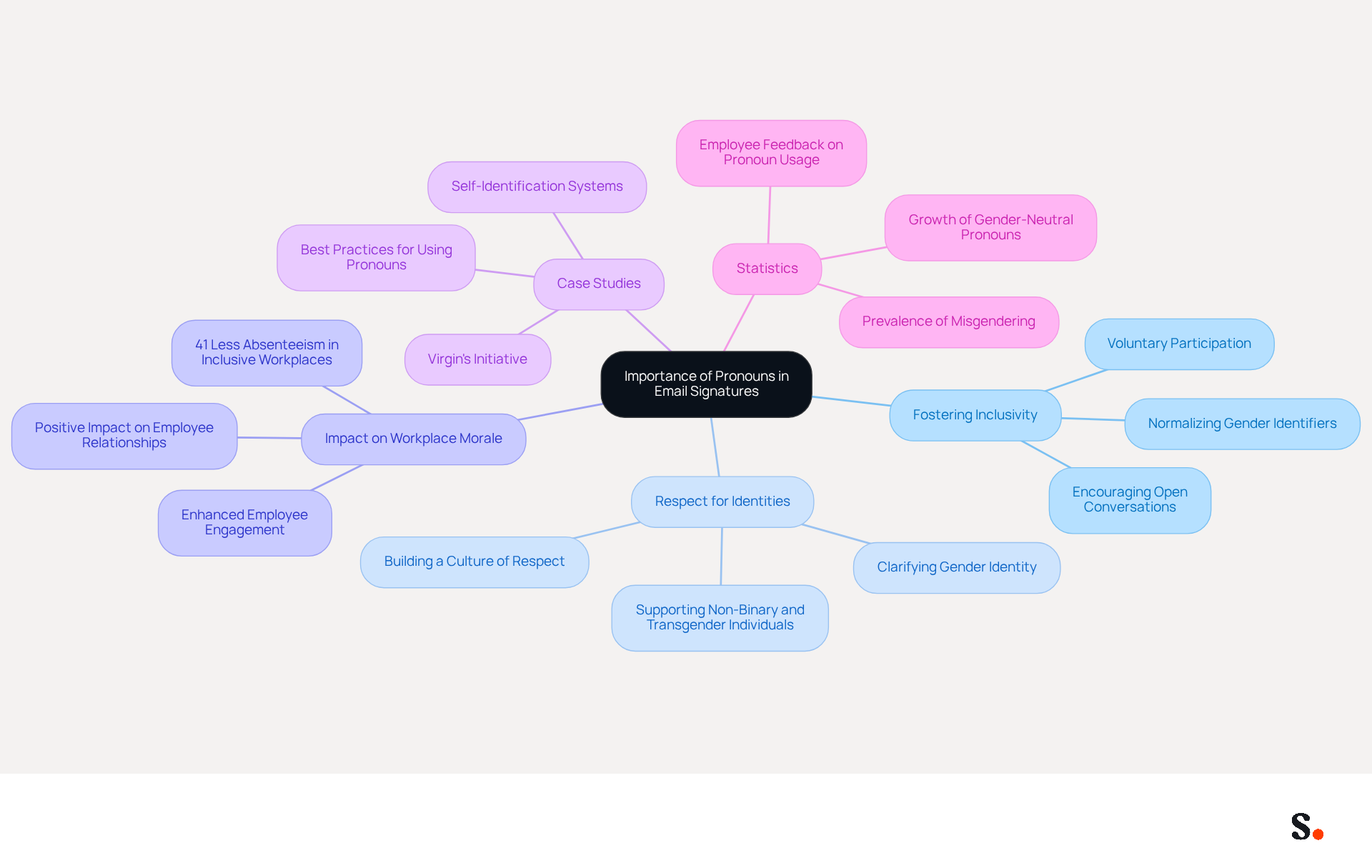
Incorporating gender identifiers in email signatures is a straightforward yet powerful strategy to foster workplace inclusivity. This practice not only shows respect for individuals' identities but also normalizes the sharing of gender identifiers, significantly reducing instances of both accidental and deliberate misgendering. When employees share their gender identities, they help create a culture of respect that particularly benefits non-binary and transgender individuals. For example, formatting your name as 'Jane Doe (she/her)' clarifies how you wish to be addressed and encourages others to share their identities, fostering mutual understanding and effective communication.
Recent findings show that many transgender and non-binary employees face misgendering, which negatively affects workplace morale. Organizations that embrace the inclusion of identity indicators in their correspondence affirm their commitment to diversity and enhance their appeal to a wider talent pool, especially among LGBTQ+ candidates. Case studies, such as Virgin's initiative to include gender identifiers in their email signatures, reveal that companies prioritizing such usage cultivate a culture of respect and acceptance, leading to improved employee relationships and overall workplace satisfaction.
Moreover, statistics show that inclusive workplaces report 41% less absenteeism, highlighting the positive correlation between inclusivity and employee engagement. As more organizations acknowledge the importance of gender identifiers, the practice is becoming a crucial element of broader LGBTQ+ inclusion initiatives. Clear guidelines and voluntary participation can help companies create an environment where all employees feel valued, enhancing workplace culture. It is crucial to recognize that the inclusion of personal identifiers should be optional, allowing employees to choose what they feel comfortable sharing. Furthermore, optimal methods recommend positioning personal identifiers right after the name in correspondence for enhanced visibility.
Add Pronouns Using Scribe's Email Signature Management Tool
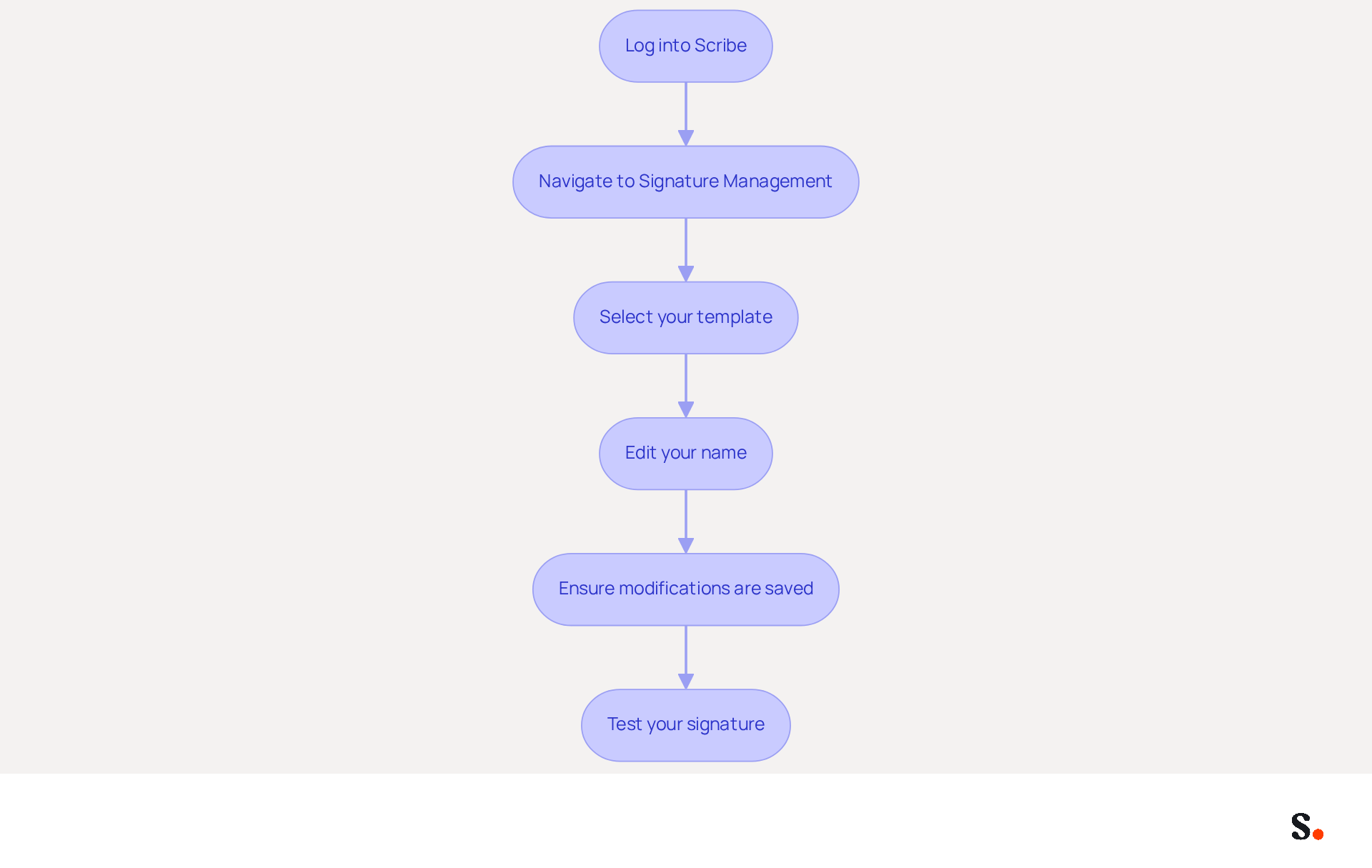
To enhance clarity and inclusivity in your communications, you should put the pronouns back in the email signature, which is a straightforward process with Scribe.
- Log into your Scribe account: Access the Scribe platform using your credentials.
- Navigate to the Signature Management section: Once logged in, find the 'Signature Management' tab on the dashboard.
- Select your template: Choose the email template you wish to edit. If you don’t have one, you can create a new template.
- Edit your name: In the name editor, locate the area where your name is displayed. Add your gender identifiers right after your name for optimal visibility. For example, format it as 'John Doe (he/him)'. To clarify your identity and foster an inclusive communication environment, it is important to put the pronouns back in the email.
- Ensure your modifications are saved: After adding your identifiers, make sure to save the updates to refresh your sign-off.
- Test your signature: Send a test email to yourself or a colleague to confirm that the pronouns appear correctly in the signature.
By syncing with Google Workspace, you ensure that your colleagues' information is always current, reducing the risk of outdated data. Managing digital identities can often be cumbersome and prone to errors, but Scribe streamlines this process. This integration not only fosters inclusivity but also strengthens your organization's communication effectiveness.
Troubleshoot Common Issues When Adding Pronouns
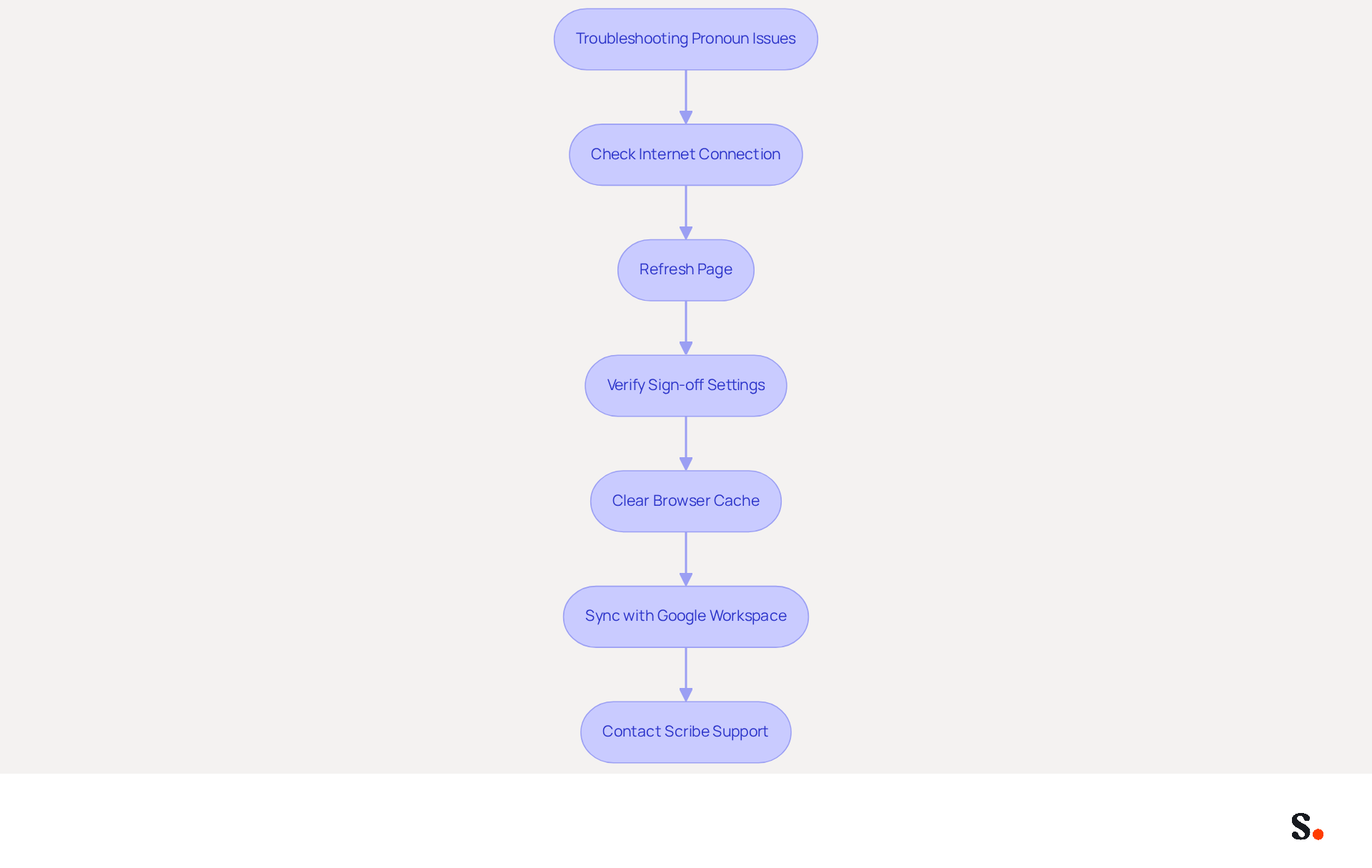
Encountering issues with pronouns in your email signature can be frustrating, but there are effective solutions available.
- Check your internet connection: Ensure you have a stable internet connection, as connectivity issues can affect the Scribe platform's functionality.
- Refresh the page: Sometimes, simply reloading the page can resolve minor glitches in the editor.
- Verify your sign-off settings: Go to the settings section and confirm that your sign-off is set to display in your email client. Ensure that the correct mark is selected as the default.
- Clear your browser cache: Experiencing delays in updates? Clearing your browser's cache may resolve this issue.
- Sync with Google Workspace: By syncing your Google Workspace with the application, you can save time and minimize mistakes. Any updates to your teammates' details, including gender identifiers, will automatically reflect in the system, reducing the need for manual modifications.
- Contact Scribe support: Should you still face challenges, don't hesitate to contact Scribe's customer support for tailored assistance. They can provide specific guidance based on your situation.
By following these troubleshooting steps, you can effectively resolve common issues and put the pronouns back in the email to ensure they are correctly displayed in your correspondence. Maintaining an updated and inclusive contact information block is essential for effective communication, as companies that implement such practices often see a significant increase in engagement and trust from their recipients. In fact, organizations that utilize branded email signatures report a 22% lift in response rates, highlighting the importance of effective email communication.
Promote Inclusive Communication Beyond Email Signatures
Implementing inclusive communication strategies is essential for fostering a respectful workplace environment. Consider the following approaches:
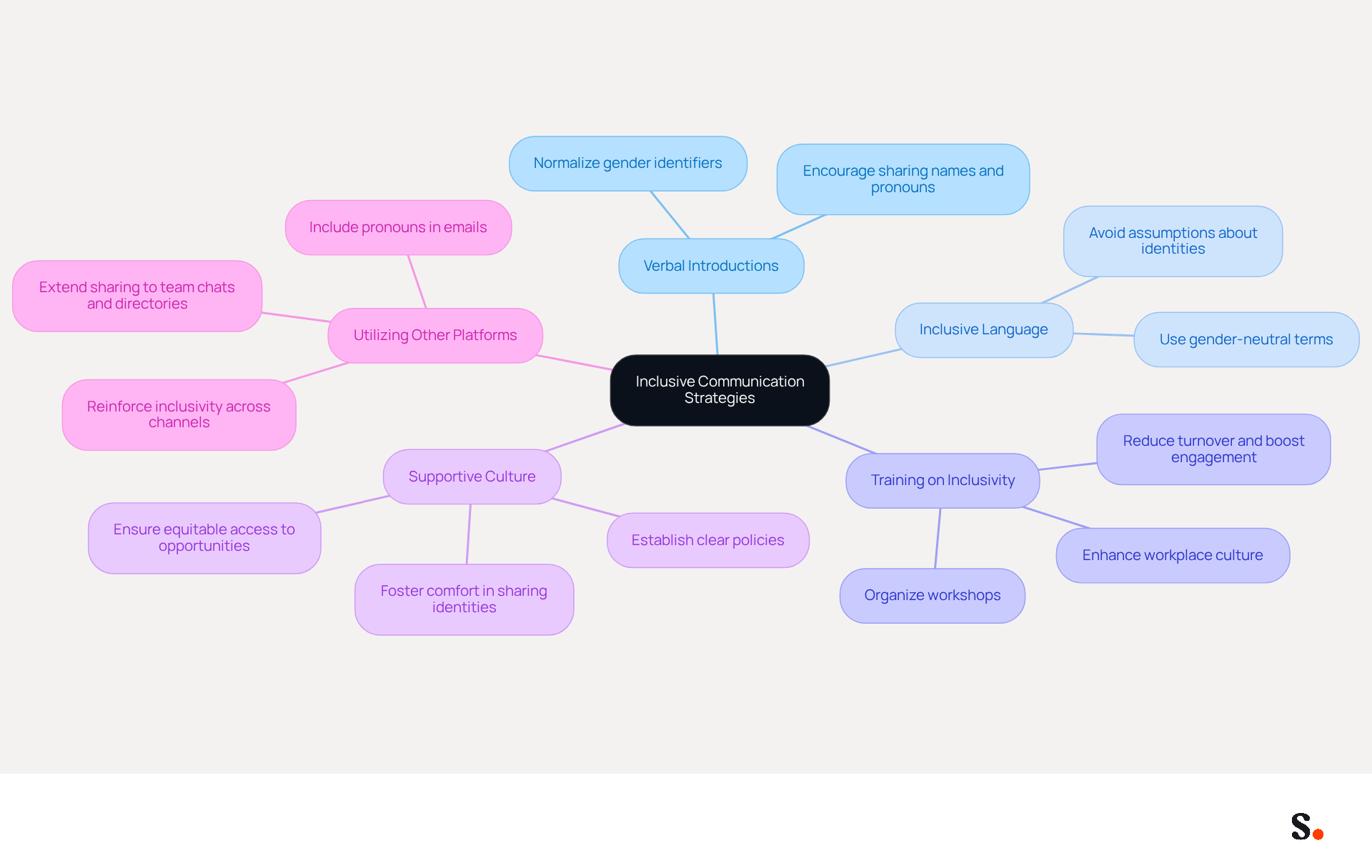
- Encourage verbal introductions: When meeting new colleagues or clients, motivate everyone to share their names and preferred terms. This practice normalizes the sharing of gender identifiers and fosters a respectful environment.
- Use inclusive language: Be mindful of the language you use in all communications. Opt for gender-neutral terms when possible and avoid making assumptions about individuals' identities.
- Provide training on inclusivity: Organize workshops or training sessions focused on diversity and inclusion. Studies show that inclusivity training enhances workplace culture, reduces turnover, and boosts engagement. Organizations that implement structured inclusion strategies are better positioned to manage change and maintain effective practices.
- Create a supportive culture: Foster an environment where employees feel comfortable sharing their identities. Without clear policies, fostering inclusivity can be challenging. Clear expectations and equitable access to opportunities are crucial for maintaining team cohesion, as supported by recent studies.
- Utilize other platforms: To enhance communication, we should put the pronouns back in the email and extend the practice of sharing them to other platforms, such as team chat applications, company directories, and social media profiles. This holistic approach reinforces the importance of inclusivity across all channels.
Ultimately, prioritizing inclusivity can transform workplace dynamics and drive organizational success.
Conclusion
Incorporating pronouns into email signatures is essential for fostering an inclusive workplace culture. By normalizing the sharing of gender identifiers, organizations not only respect individual identities but also create a culture that values diversity. This practice reduces misgendering and improves communication, especially for non-binary and transgender individuals.
The article outlines a clear process for adding pronouns using Scribe's email signature management tool, highlighting its user-friendly interface and integration capabilities with platforms like Google Workspace. It also addresses common troubleshooting issues, helping users implement this practice smoothly. Furthermore, the discussion extends beyond email signatures, emphasizing the importance of inclusive communication strategies across various platforms and interactions within the workplace.
Prioritizing pronoun inclusion reflects a commitment to respect and support for all employees. Organizations that embrace this practice not only enhance their internal culture but also position themselves as leaders in diversity and inclusion. By taking these steps, companies can significantly improve employee morale, engagement, and overall workplace satisfaction, paving the way for a more inclusive future.
Frequently Asked Questions
Why is it important to include pronouns in email signatures?
Including pronouns in email signatures fosters workplace inclusivity, shows respect for individuals' identities, and normalizes the sharing of gender identifiers, which helps reduce instances of misgendering.
How does sharing gender identities benefit the workplace?
Sharing gender identities creates a culture of respect, particularly benefiting non-binary and transgender individuals, and encourages mutual understanding and effective communication among employees.
What impact does misgendering have on employees?
Misgendering negatively affects workplace morale, particularly for transgender and non-binary employees, leading to decreased job satisfaction and engagement.
How can organizations demonstrate their commitment to diversity?
Organizations can demonstrate their commitment to diversity by embracing the inclusion of gender identifiers in correspondence, which enhances their appeal to a wider talent pool, especially among LGBTQ+ candidates.
What are some examples of companies that have successfully implemented this practice?
Virgin is an example of a company that has included gender identifiers in their email signatures, cultivating a culture of respect and acceptance, which leads to improved employee relationships and workplace satisfaction.
What are the benefits of inclusive workplaces?
Inclusive workplaces report 41% less absenteeism, indicating a positive correlation between inclusivity and employee engagement.
How should personal identifiers be included in email signatures?
Personal identifiers should be positioned right after the name in correspondence for enhanced visibility.
Is participation in sharing gender identifiers mandatory?
No, the inclusion of personal identifiers should be optional, allowing employees to choose what they feel comfortable sharing.
List of Sources
- Understand the Importance of Pronouns in Email Signatures
- Organizations embrace equity by sharing gender pronouns in email signatures (https://internationalwomensday.com/Missions/19523/Organizations-embrace-equity-by-sharing-gender-pronouns-in-email-signatures)
- Pronouns in email signatures: workplace inclusion guide (https://inclusiveemployers.co.uk/blog/why-we-use-pronouns-in-signatures)
- Implement Pronoun Email Signatures in 4 Simple Steps (https://scribe-mail.com/en-US/blog/implement-pronoun-email-signatures-in-4-simple-steps)
- Millennials want gender pronouns on work emails, but many in Gen Z don't (https://newsweek.com/millennials-gen-z-workplace-pronouns-emails-1797270)
- Sharing Gender Pronouns in Employee Bios, Email Signatures Helps Attract LGBTQ+ Applicants, Study Finds – Stories (https://stories.butler.edu/sharing-gender-pronouns-in-employee-bios-email-signatures-helps-attract-lgbtq-applicants-study-finds)
- Add Pronouns Using Scribe's Email Signature Management Tool
- HealthChannels (https://jobs.healthchannels.com/us/en/blogarticle/pronouns-in-email-signature)
- Implement Pronoun Email Signatures in 4 Simple Steps (https://scribe-mail.com/en-US/blog/implement-pronoun-email-signatures-in-4-simple-steps)
- Pronouns in email signatures: workplace inclusion guide (https://inclusiveemployers.co.uk/blog/why-we-use-pronouns-in-signatures)
- Gender pronouns in email signatures - how to use them and why (https://codetwo.com/blog/using-gender-pronouns-in-email-signatures)
- Troubleshoot Common Issues When Adding Pronouns
- Virgin Just Added Gender Pronouns to Email Signatures. Should Your Company Do the Same? (https://inc.com/jessica-stillman/virgin-just-added-gender-pronouns-to-email-signatures-should-your-company-do-same.html)
- 40+ Email Signature Statistics for 2026 (Data + Insights) (https://wavecnct.com/blogs/email-signature-statistics)
- Pronouns in email signatures: workplace inclusion guide (https://inclusiveemployers.co.uk/blog/why-we-use-pronouns-in-signatures)
- Should your email say if you're he, she or they? (https://bbc.com/news/business-51331571)
- Promote Inclusive Communication Beyond Email Signatures
- 6 DEI trends to watch in 2026 (https://fairerconsulting.com/blog/6-dei-trends-to-watch-in-2026?hs_amp=true)
- Inclusion Strategy in 2026 (https://diversityresources.com/inclusion-strategy-2026)
- Inclusion in 2026: why the next generation chooses employers on culture (https://mygwork.com/news/inclusion-in-2026-why-the-next-generation-chooses-employers-on-culture)
- Why Inclusive Communication Matters in the Workplace (https://aimnet.org/why-inclusive-communication-matters-in-the-workplace)
- How DEI Must Change in 2026 to Survive (https://time.com/partner-content/charter/7347036/how-dei-must-change-in-2026-to-survive)
Get started with Scribe
Manage signatures across your whole team
Free 14-day trial — no credit card.