What is the Best Font for Your Email Signature?
Many organizations overlook the critical role that font selection plays in professional communication, often leading to misunderstandings and a lack of brand
Sophie Grant
Email Signature Specialist, Scribe
Introduction
Many organizations overlook the critical role that font selection plays in professional communication, often leading to misunderstandings and a lack of brand consistency. The font selected not only influences readability but also reflects a brand's identity and professionalism, making it essential for effective engagement.
With the rise of digital correspondence, how can organizations ensure their email signatures convey the right message while maintaining clarity and brand consistency? By understanding the nuances of email signature fonts, businesses can significantly enhance their communication strategy and brand perception.
Define Email Signature Fonts
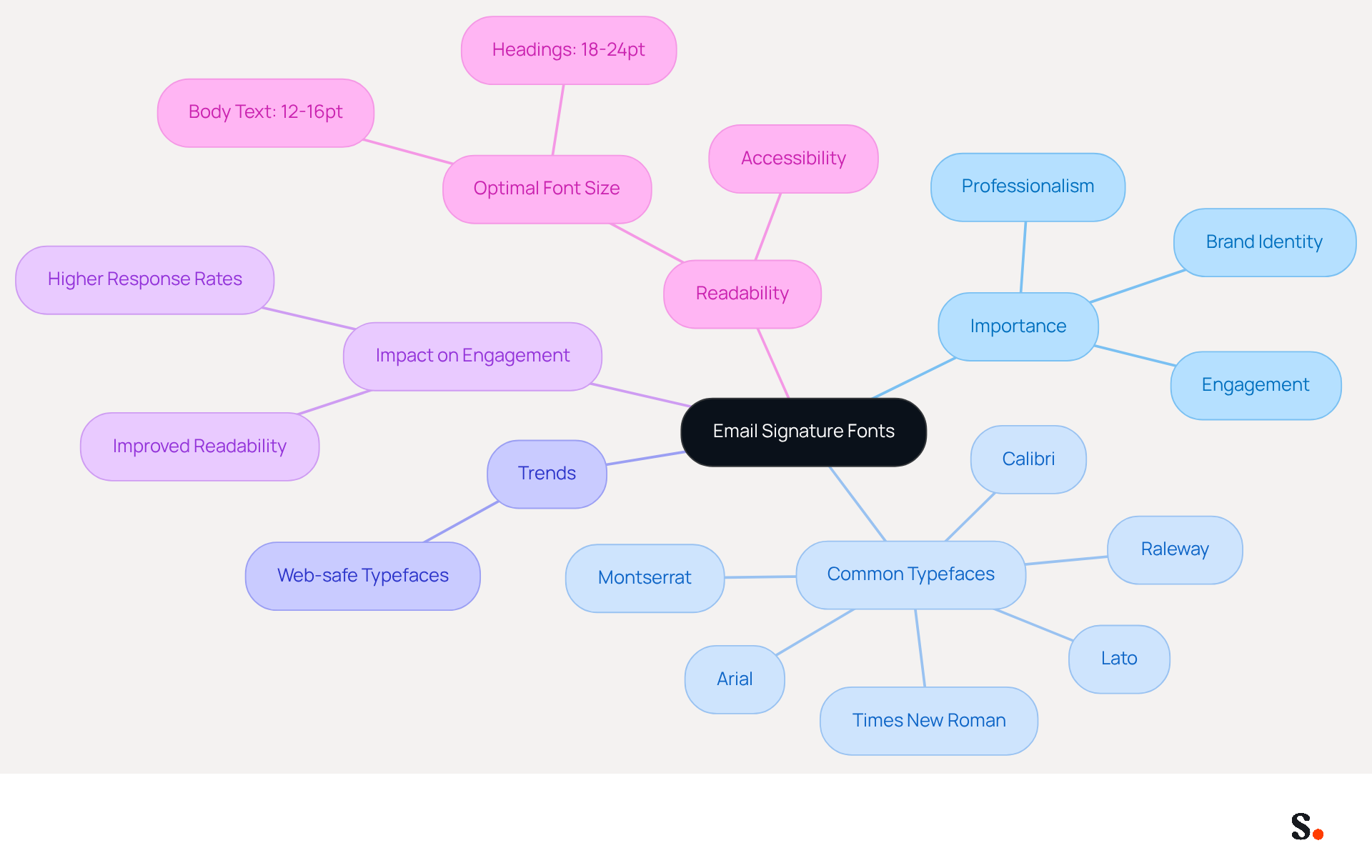
Choosing the best font for signature email is more than a stylistic decision; it can fundamentally shape how your message is received. Signature typefaces refer to the styles used in the signature block of a message, which typically includes the sender's name, title, organization name, and contact details. Choosing the best font for signature email is essential for ensuring your message resonates with your audience. These typefaces can really shape how professional your message looks. Commonly utilized typefaces include Arial, Calibri, and Times New Roman, recognized for their clarity and compatibility across various messaging clients. Choosing the best font for signature email can effectively express a brand's identity and tone, making it a crucial component of communication.
In 2026, trends indicate a growing preference for web-safe typefaces that ensure consistent display across devices. Web-safe typefaces are tailored for online use, making them a dependable option for correspondence. Contemporary companies are increasingly utilizing typefaces such as Lato, Montserrat, and Raleway to express their distinct identities.
Case studies show that selecting the best font for signature email can greatly improve engagement; for example, organizations that use professional typefaces in their correspondence report higher response rates. Expert insights highlight that typefaces not only convey information but also express emotion and tone, making them crucial for effective communication through messages. Optimal readability depends heavily on size and spacing; for body text, 12-16pt is ideal, while headings should be between 18-24pt. Thus, careful evaluation of type selection is essential for upholding professionalism and strengthening brand identity in digital communications, while also ensuring accessibility for all recipients.
Explain the Importance of Font Choice in Email Signatures
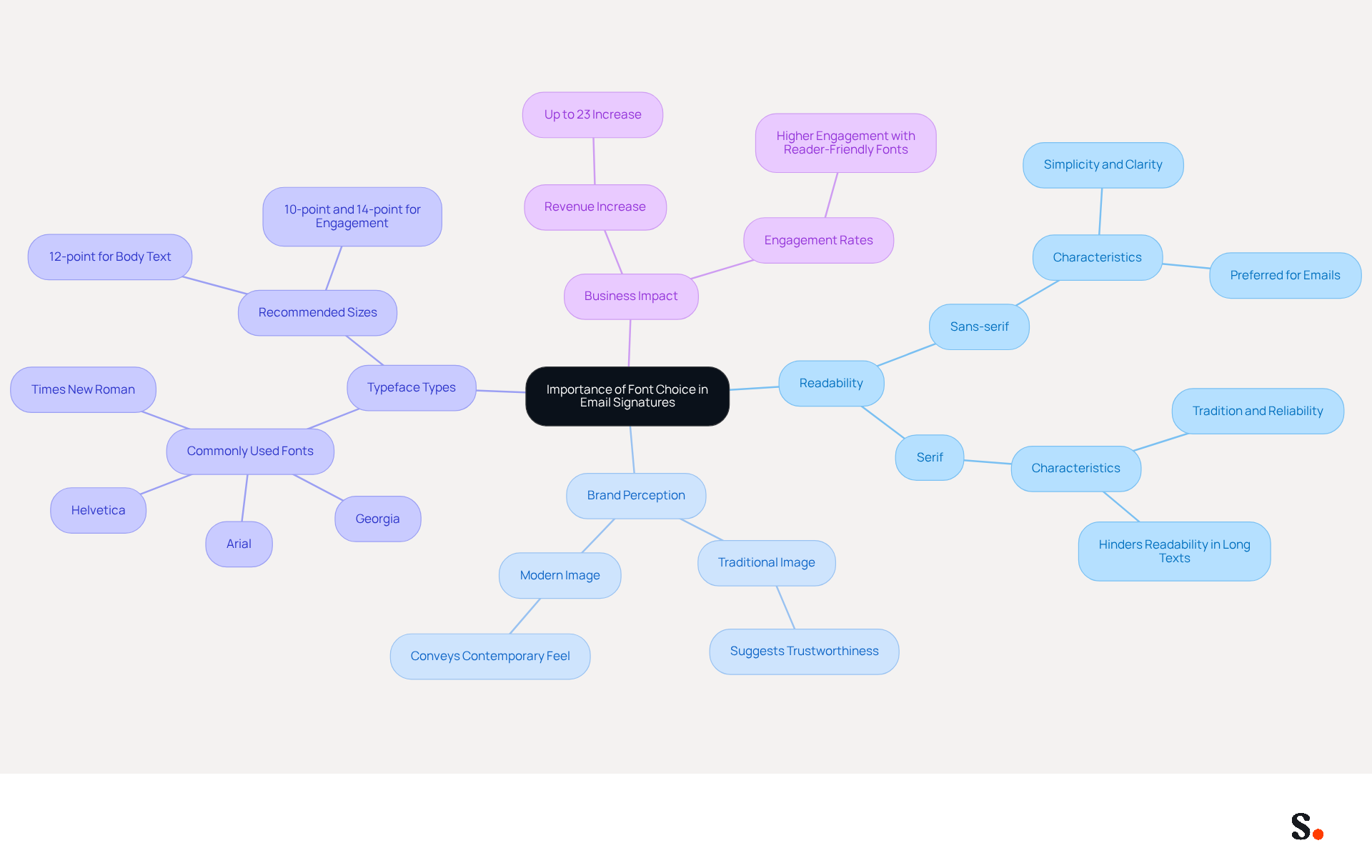
The choice of the best font for signature email significantly impacts both readability and brand perception. Using the best font for signature email ensures that recipients can easily digest the sender's information with a clear and legible typeface. Sans-serif typefaces such as Arial and Helvetica are preferred for their simplicity and clarity, making them ideal for email communications. In contrast, serif typefaces, such as Times New Roman, may evoke a sense of tradition and reliability but can hinder readability in longer texts.
The typeface you choose, such as the best font for signature email, also reflects your company's identity and values. A modern sans-serif typeface can convey a contemporary image, while a serif type may suggest a more established, trustworthy presence. Consistent typeface usage across an organization not only reinforces brand identity but also enhances professionalism. Research indicates that consistent branding can increase revenue by up to 23%, highlighting that effective typography not only enhances communication but also contributes to financial success.
Poor typeface choices can confuse recipients, leading to misunderstandings and a loss of trust. For example, decorative typefaces can slow down reading speed by 86% compared to simpler styles, potentially frustrating recipients and detracting from the intended message. Companies that use reader-friendly typefaces see higher engagement rates because clear typography enhances user experience.
Ultimately, choosing the best font for signature email is not solely about aesthetics; it plays a vital role in influencing audience perception and ensuring effective communication. By prioritizing effective typography, businesses can not only improve communication but also drive engagement and revenue growth.
Integrating Scribe with Google Workspace simplifies management of messaging identifiers by automatically syncing your teammates' details. This means that any updates, such as changes in job positions or group assignments, are reflected in Scribe without manual input, saving valuable time and ensuring consistency across all email signatures. This efficiency enables marketing teams to concentrate on creating the ideal message while preserving brand integrity through carefully selected typefaces.
Explore Types of Fonts for Email Signatures
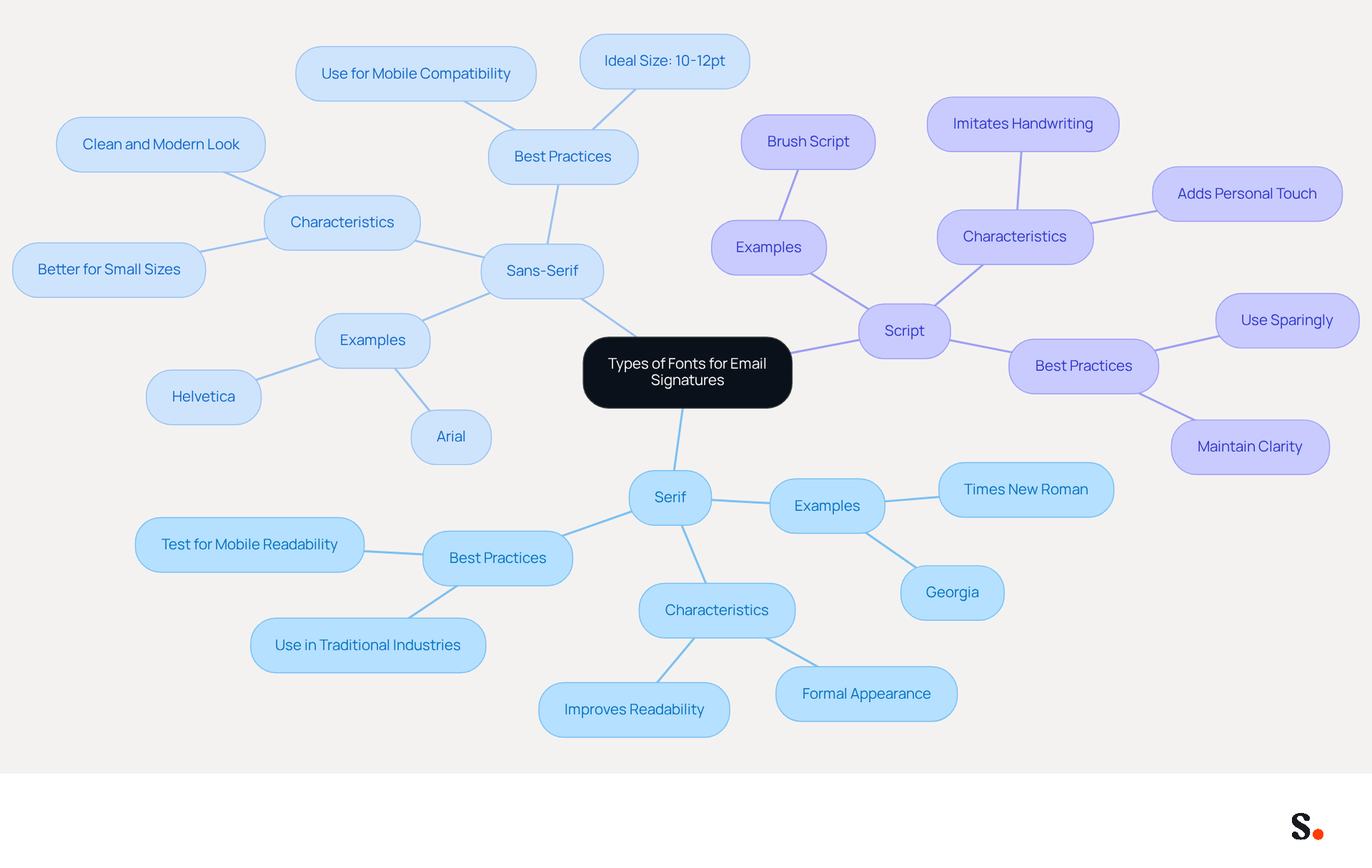
Choosing the best font for signature email is crucial for maintaining professionalism and readability. Fonts can be broadly categorized into three types: serif, sans-serif, and script.
- Serif typefaces, such as Times New Roman and Georgia, feature small lines at the ends of characters and are often regarded as more formal. Studies show that serif typefaces improve contrast and readability, particularly in traditional industries.
- Conversely, sans-serif typefaces, such as Arial and Helvetica, lack these embellishments, providing a clean and modern appearance that is easier to read on screens. Research indicates that sans-serif typefaces perform better at smaller sizes, which is essential for mobile compatibility, with an ideal size for signatures suggested to be between 10 and 12 points for optimal readability.
- Script styles, such as Brush Script, imitate handwriting and can add a personal touch but should be used sparingly to maintain professionalism and avoid compromising clarity.
Selecting web-safe typefaces is essential to ensure they display correctly across different email clients, as different platforms may display typefaces differently, making it challenging to ensure consistency. Overly decorative typefaces can detract from the professionalism of your email signature, potentially undermining your brand's credibility.
For optimal results, limit the use of decorative typefaces and focus on the best font for signature email that is professional and easily readable, aligning with your brand's voice. Including fallback styles in your HTML code is also advisable to ensure that your message displays correctly for all recipients, regardless of their device or mail client. Furthermore, testing message formats in dark mode is recommended to guarantee readability under different viewing conditions. Ultimately, the right font choice can significantly impact how your brand is perceived in digital communications.
Outline Practical Considerations for Choosing Email Signature Fonts
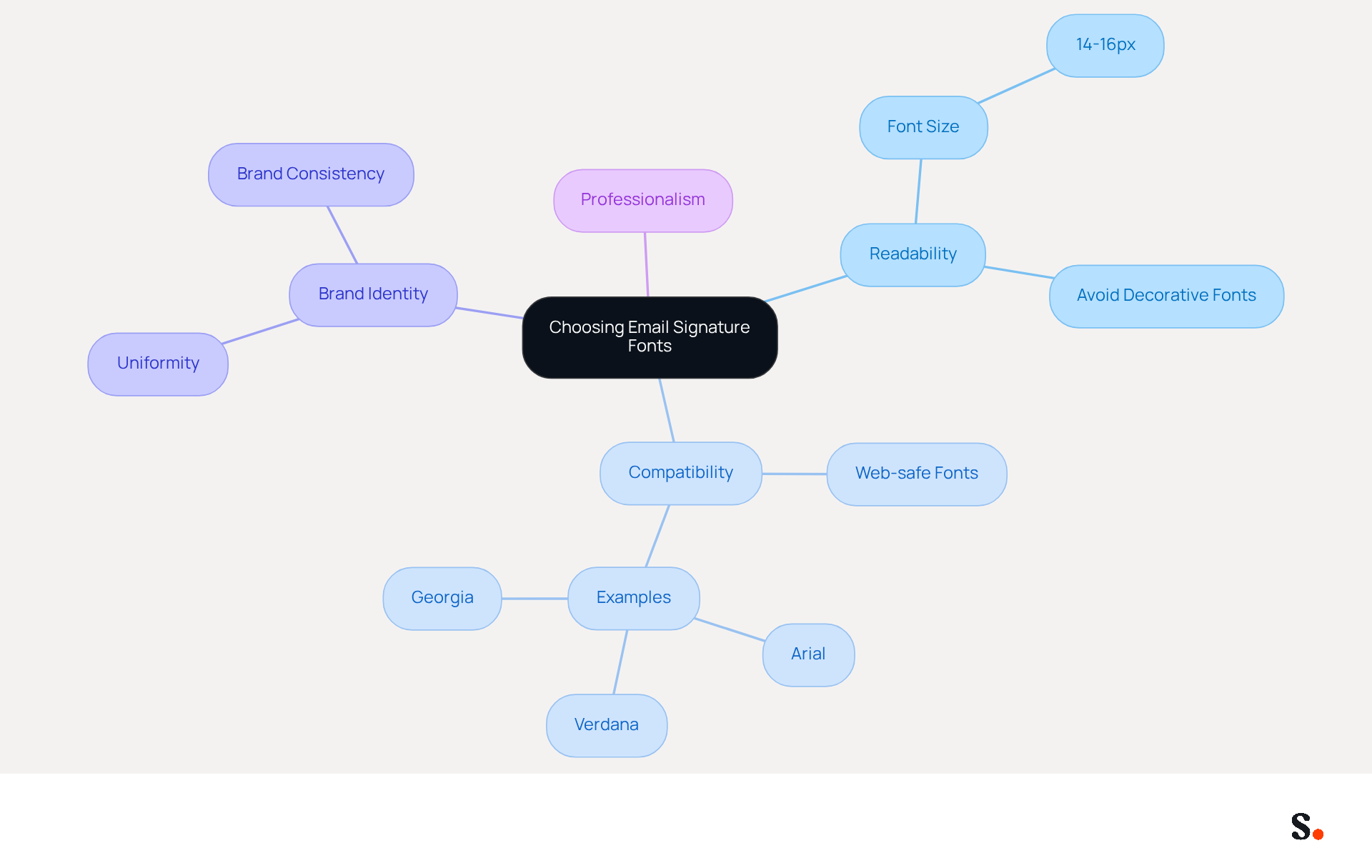
Choosing the best font for signature email is essential for ensuring clarity and professionalism in communications. Readability is paramount; choose typefaces that remain clear and legible at various sizes. Recommended text sizes for body content typically range from 14 to 16px, enhancing clarity across devices. Additionally, the chosen typeface must reflect the organization's identity, reinforcing recognition in all communications.
Compatibility is another essential factor; opting for web-safe typefaces guarantees that the display appears correctly across various email clients. Commonly used fonts such as Arial, Verdana, and Georgia are reliable choices and are considered the best font for signature email, ensuring readability across various devices. Uniformity in text size and style throughout all representations within the organization is vital for enhancing identity and professionalism. Studies indicate that teams utilizing standardized typefaces can see an 85% improvement in brand consistency, crucial for maintaining a professional image. As Libby Ventura mentions, 'web-safe typefaces - styles that are universally installed across major operating systems - are the only dependable option for electronic correspondence.'
Lastly, avoid overly decorative fonts that may distract from the message. By following these optimal methods, businesses can create digital identifiers that not only communicate vital information but also improve engagement and company presence. Moreover, restricting the message footer to two or three colors can assist in preserving focus and professionalism. Furthermore, marketing managers can investigate Scribe's Affiliate Program, which provides a $30 credit for referrals and a 50% commission on subscriptions, facilitating the promotion of brand consistency across signatures while opening a new marketing channel. Scribe also ensures compliance with SOC 2 Type II, GDPR, and CCPA, enhancing security and trust in email communications. By adhering to these guidelines, organizations can significantly enhance their professional image and communication effectiveness.
Conclusion
The choice of font in an email signature is more than a stylistic preference; it plays a crucial role in shaping communication effectiveness. The font selected reflects the sender's professionalism and embodies the brand's identity, making it essential for effective communication in today's digital landscape.
This article has highlighted the critical importance of font choice in email signatures. It emphasized the distinctions between serif and sans-serif typefaces, showcasing the readability and modern appeal of sans-serif options like Arial and Helvetica. Additionally, the significance of web-safe fonts was underscored, ensuring consistent display across various email clients. Practical considerations, such as maintaining uniformity in font size and style, were also addressed, reinforcing the need for clarity and professionalism in email communications.
Choosing the right font can enhance brand perception and foster stronger engagement with recipients. By prioritizing effective typography, organizations can improve their communication strategies, build trust, and drive engagement. Embracing tools like Scribe can streamline the management of email signatures, ensuring brand consistency while allowing marketing teams to focus on crafting impactful messages. In a competitive digital landscape, the right font choice can be the difference between a memorable impression and being overlooked.
Frequently Asked Questions
What are email signature fonts?
Email signature fonts refer to the styles used in the signature block of an email, which typically includes the sender's name, title, organization name, and contact details.
Why is choosing the best font for email signatures important?
Choosing the best font for email signatures is essential because it can shape how professional the message looks and how it resonates with the audience.
What are some commonly used typefaces for email signatures?
Commonly utilized typefaces for email signatures include Arial, Calibri, and Times New Roman, known for their clarity and compatibility across various messaging clients.
What font trends are expected in 2026?
In 2026, there is a growing preference for web-safe typefaces that ensure consistent display across devices, with contemporary companies increasingly using typefaces like Lato, Montserrat, and Raleway.
How does font selection impact engagement in emails?
Case studies show that selecting the best font for email signatures can greatly improve engagement, with organizations using professional typefaces reporting higher response rates.
What role do typefaces play in communication?
Typefaces not only convey information but also express emotion and tone, making them crucial for effective communication through messages.
What is the ideal font size for email signatures?
For body text, the ideal font size is between 12-16pt, while headings should be between 18-24pt to ensure optimal readability.
Why is careful evaluation of type selection important?
Careful evaluation of type selection is important for upholding professionalism, strengthening brand identity in digital communications, and ensuring accessibility for all recipients.
List of Sources
- Define Email Signature Fonts
- Email Signature Best Practices for 2026 (+ 15 Pro Examples) (https://wavecnct.com/blogs/email-signature-best-practices-2026)
- Professional Fonts for Email: Choosing a Font for Business Emails | iContact (https://icontact.com/blog/blog-professional-fonts-for-email)
- How to Choose Best Email Signature Fonts for Professionalism - NEWOLDSTAMP (https://newoldstamp.com/blog/how-to-choose-the-best-email-signature-fonts-to-make-your-email-look-professional)
- Explain the Importance of Font Choice in Email Signatures
- Email Marketing Typography Guide for 2026 | Dyspatch (https://dyspatch.io/blog/email-marketing-typography-guide-for-2026)
- How To Choose the Best Font for Email | Mailchimp (https://mailchimp.com/resources/best-fonts-for-email)
- Does Font Psychology Affect Email Conversions? (https://apsis.com/blog/does-font-psychology-affect-email-conversions)
- Professional Fonts for Email: Choosing a Font for Business Emails | iContact (https://icontact.com/blog/blog-professional-fonts-for-email)
- The Best Fonts and Sizes for Email - SMTP2GO (https://smtp2go.com/blog/best-fonts-for-email)
- Explore Types of Fonts for Email Signatures
- Email Signature Best Practices for 2026 (+ 15 Pro Examples) (https://wavecnct.com/blogs/email-signature-best-practices-2026)
- How to Choose Best Email Signature Fonts for Professionalism - NEWOLDSTAMP (https://newoldstamp.com/blog/how-to-choose-the-best-email-signature-fonts-to-make-your-email-look-professional)
- The Best Fonts for Email Signatures: A Professional Guide (https://linkedin.com/pulse/best-fonts-email-signatures-professional-guide-bulksignature-tmvuf)
- Professional Fonts for Email: Choosing a Font for Business Emails | iContact (https://icontact.com/blog/blog-professional-fonts-for-email)
- The Best Fonts for Email Signatures That Look Clean and Professional (https://bulksignature.com/blog/the-best-fonts-for-email-signatures)
- Outline Practical Considerations for Choosing Email Signature Fonts
- Email Signature Best Practices for 2026 (+ 15 Pro Examples) (https://wavecnct.com/blogs/email-signature-best-practices-2026)
- Email Signature Best Practices - NEWOLDSTAMP (https://newoldstamp.com/blog/email-signature-best-practices)
- The Best Fonts for Email Signatures: A Professional Guide (https://linkedin.com/pulse/best-fonts-email-signatures-professional-guide-bulksignature-tmvuf)
- Best practices for business email signatures in 2026 (https://bybrand.io/blog/best-practices)
- The Best Fonts for Email Signatures That Look Clean and Professional (https://bulksignature.com/blog/the-best-fonts-for-email-signatures)
Get started with Scribe
See why teams switch to Scribe
Free 14-day trial — no credit card.