What is the Best Picture Format for Email Signatures?
The choice of picture format for email signatures significantly influences brand perception and communication effectiveness. With options like PNG and JPEG
Sophie Grant
Email Signature Specialist, Scribe
On this page
- Introduction
- Defining the Best Picture Formats for Email Signatures
- Understanding the Importance of Image Formats in Email Signatures
- Exploring the Origins and Evolution of Image Formats
- Analyzing Key Characteristics of Image Formats for Email Signatures
- Practical Examples of Image Formats in Email Signatures
- Conclusion
- Frequently Asked Questions
- List of Sources
Introduction
The choice of picture format for email signatures significantly influences brand perception and communication effectiveness. With options like PNG and JPEG each offering unique advantages, understanding their characteristics can enhance brand representation and engagement. Many organizations struggle to understand the impact of their picture format choices on brand perception, including loading times, visual quality, and recipient trust.
We will explore the best picture formats for email signatures and their importance in optimizing digital communications.
Defining the Best Picture Formats for Email Signatures
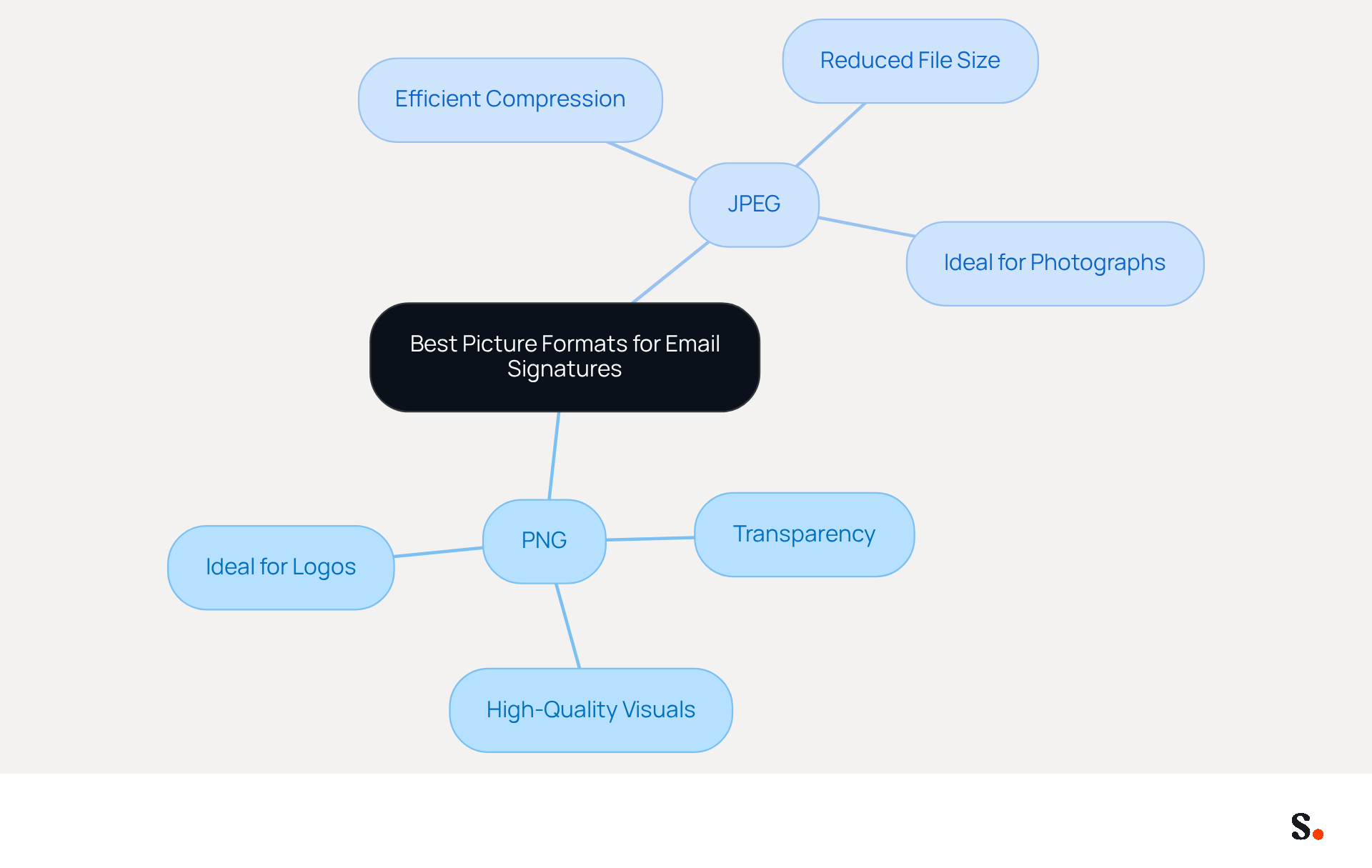
Choosing the best picture format for email signature is vital for effective communication and brand representation. The best picture format for email signature includes primarily PNG (Portable Network Graphics) and JPEG (Joint Photographic Experts Group). PNG is preferred for its ability to support transparency and maintain high-quality visuals, making it ideal for logos and graphics. JPEG, on the other hand, is favored for photographs due to its efficient compression capabilities, which help reduce file size while preserving image quality. Understanding the best picture format for email signature is essential for creating professional messages that effectively represent your brand.
Research indicates that logos in email signatures should typically measure between 300 and 400 pixels in width, with a maximum file size of 40KB to ensure quick loading times. Additionally, the suggested resolution for signatures is 100 dpi, which balances quality and performance.
Case studies emphasize the significance of using the appropriate formats:
- Companies that employed PNG for their logos reported enhanced brand recognition and engagement in their communications.
- Companies that used incorrect formats experienced significant challenges, including slow loading times and distorted images, which hindered effective communication.
- It is essential to consider whether to embed visuals or link them, as embedding can ensure visibility upon arrival, while linked visuals may not display if the recipient's client blocks them.
Ultimately, selecting the best picture format for email signature can significantly influence how your brand is perceived in professional communications.
Understanding the Importance of Image Formats in Email Signatures
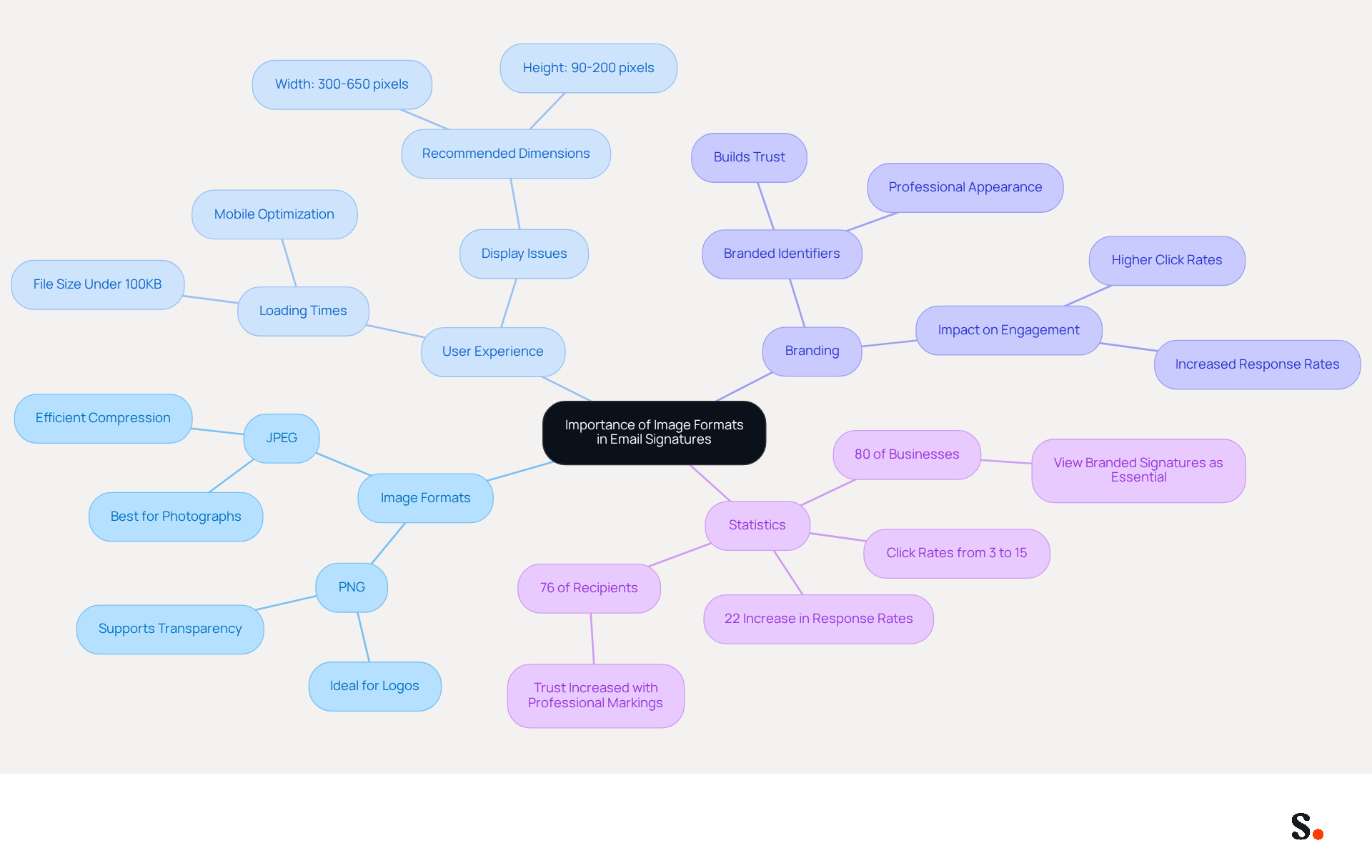
Selecting the best picture format for email signature is essential for ensuring consistent display across various email clients, which often render visuals differently. For example, PNG files are ideal for logos due to their ability to maintain quality and transparency, while JPEGs are preferred for photographs because of their efficient compression. Optimized formats enhance visual appeal and reduce loading times, which is crucial for user experience. Slow-loading images can lead to emails being flagged as spam, jeopardizing communication efforts - an important consideration for businesses relying on effective communication to enhance brand image and generate leads.
Research shows that 80% of businesses consider branded electronic identifiers essential for building trust, with 76% of recipients expressing greater confidence in the sender when professional markings are used. Additionally, a study found that consistent branding in signatures correlates with a 22% increase in response rates and a rise in website click rates from 3% to 15%. These findings underscore the importance of selecting the best picture format for email signature to enhance engagement and effectiveness in marketing campaigns.
Expert insights highlight that keeping the total file size below 100KB is crucial for fast loading times, particularly on mobile devices, where 81% of users check their messages. Furthermore, the recommended dimensions for signature visuals typically range from 300 to 650 pixels in width and 90 to 200 pixels in height, ensuring that graphics are both striking and free from display issues. Following these guidelines can significantly enhance email marketing effectiveness and brand reputation.
Exploring the Origins and Evolution of Image Formats
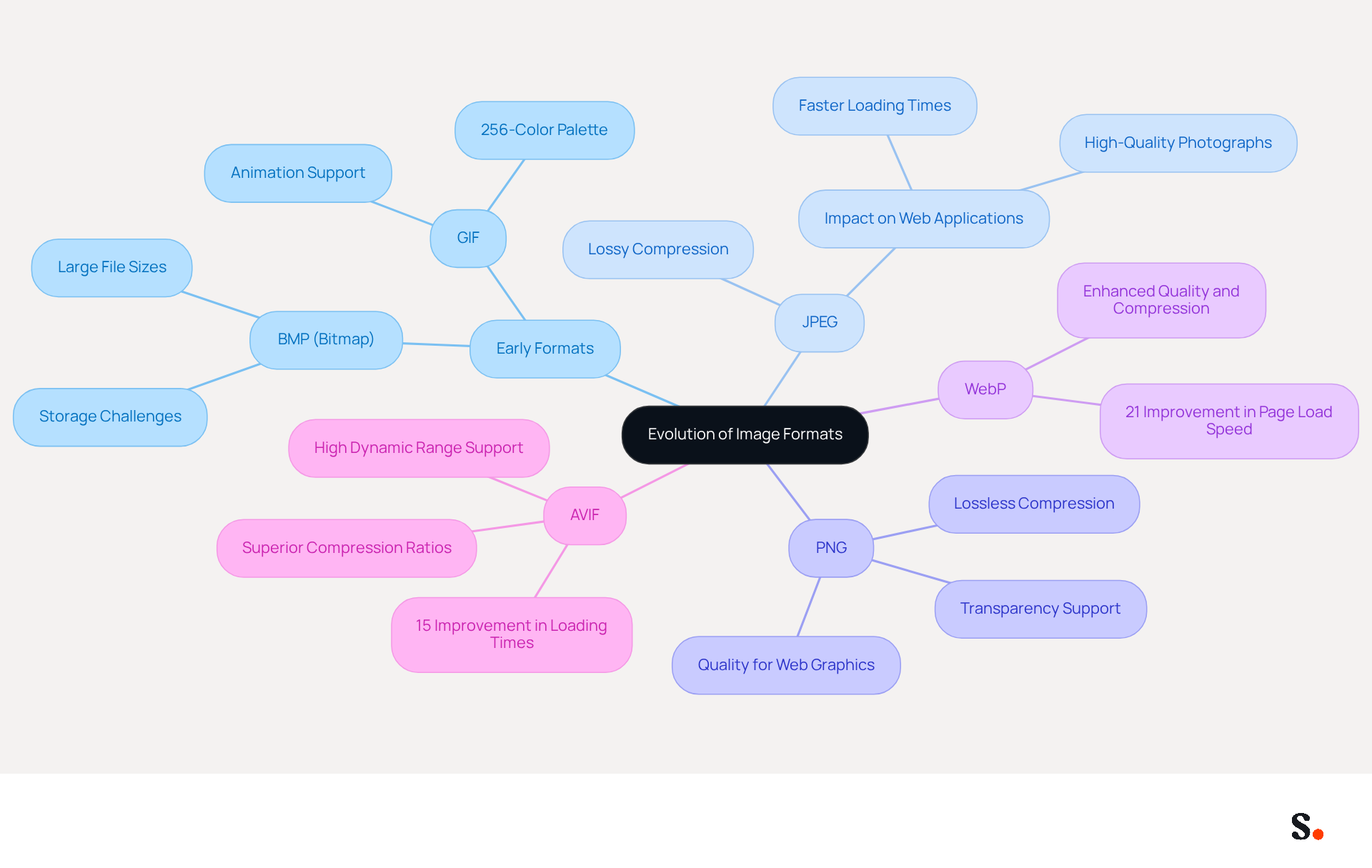
The evolution of image types has significantly shaped the landscape of digital imaging. Early types such as BMP (Bitmap) resulted in large file sizes, creating significant challenges for storage and transmission. The introduction of JPEG in the early 1990s marked a crucial turning point, as it enabled lossy compression, ensuring faster loading times while preserving acceptable quality for photographs. This innovation was crucial for web applications and messaging, ensuring faster loading times.
In the mid-1990s, PNG emerged as a response to the limitations of JPEG, offering lossless compression and transparency support. PNG became the go-to choice for web graphics and logos, prioritizing clarity and quality. The ongoing advancement of visual representations reflects the industry's need for efficient storage solutions and enhanced visual fidelity, especially in contexts like email signatures, where choosing the best picture format for email signature is critical for effective communication.
Recent advancements, such as the introduction of types like WebP and AVIF, further illustrate the trend towards improved compression and quality. WebP, introduced by Google in 2010, offers enhanced quality and compression compared to conventional types, achieving a 21% improvement in page load speed over compressed JPEG. AVIF, created in 2019, supports high dynamic range and offers even better compression ratios, with a 15% improvement in loading times. These developments highlight the continuous pursuit of efficiency and quality in digital imaging, catering to the evolving demands of users and applications alike.
Furthermore, it is crucial to maintain the total size of messages below 100KB, including visuals, to prevent problems with loading times and deliverability. As digital marketing strategies increasingly focus on sustainability, the environmental impact of image-heavy web pages also becomes a significant consideration. Embracing these modern formats not only improves performance but also aligns with sustainable digital marketing practices.
Analyzing Key Characteristics of Image Formats for Email Signatures
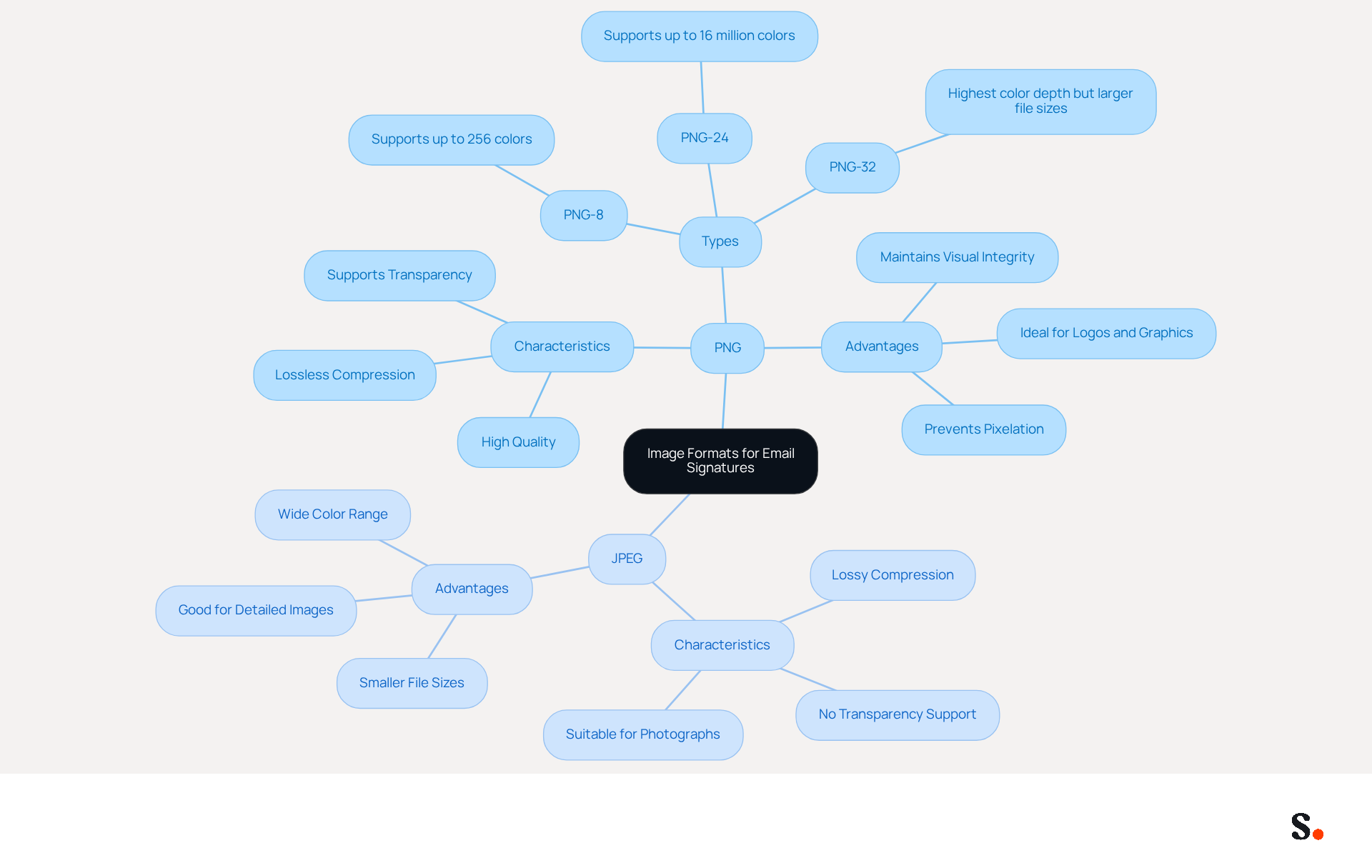
Understanding the differences between PNG and JPEG file formats is essential for determining the best picture format for email signature in effective digital correspondence. PNG files are celebrated for their high quality and ability to support transparent backgrounds, making them ideal for logos and graphics that require sharp edges. Their lossless compression guarantees that all original data is preserved, which is crucial for maintaining visual integrity. There are three types of PNG:
- PNG-8, which supports up to 256 colors
- PNG-24, which supports up to 16 million colors
- PNG-32, which offers even more color depth but results in larger file sizes
In contrast, JPEG files utilize lossy compression, allowing for smaller file sizes while displaying a wide range of colors, making them particularly suitable for photographs. However, JPEG does not support transparency, which can limit its use for certain graphic elements.
Statistics indicate that keeping digital footers under 50KB is vital for optimal performance. Large images can lead to automatic compression by mail clients, which may compromise quality and branding consistency. For instance, organizations that have adopted PNG for their logos report enhanced clarity and professionalism in their communications, while those choosing JPEG have effectively employed it for vibrant photographs, balancing quality and file size. By understanding these characteristics, businesses can choose the right style that fits their specific needs, ensuring that their electronic correspondences are both visually attractive and practical. Choosing the best picture format for email signature not only enhances visual appeal but also reinforces brand identity in every communication.
Practical Examples of Image Formats in Email Signatures
Different sectors face unique challenges in effectively representing their brands through the best picture format for email signature. Practical examples of image types in email identities differ greatly across sectors, demonstrating how various styles can improve brand representation and engagement. For example, a tech company uses PNG logos in its signatures for clarity and professionalism across devices. This format allows for transparency, making it ideal for logos that blend with various backgrounds. In contrast, a marketing agency might select a JPEG image for a team photo, adding a personal touch to their communications while benefiting from the image's efficient compression for larger files.
Brands like Scribe exemplify the effective use of these formats, creating visually engaging elements that not only reflect their brand identity but also foster recipient engagement. Research shows that:
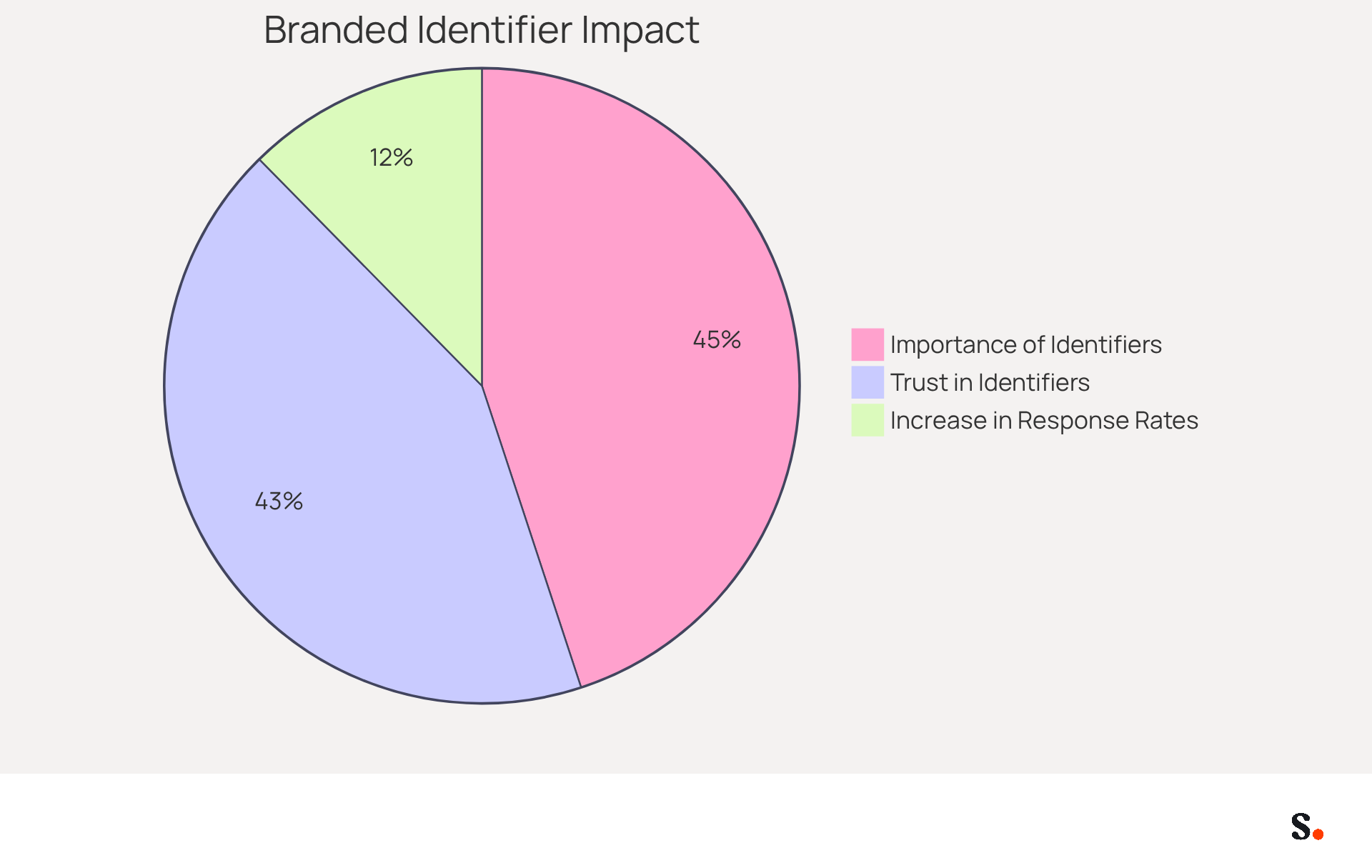
- 76% of recipients feel that branded identifiers boost their trust in the sender.
- 80% of businesses view a branded electronic identifier as crucial for branding.
- Businesses that uphold consistent electronic communication identifiers experience a 22% rise in response rates.
By examining these industry-specific instances, businesses can acquire insights into implementing the best picture format for email signature in their own correspondence, ensuring that it resonates with their audience while maintaining professionalism. Additionally, it is crucial to design signatures that are mobile-friendly, as more than half of emails are opened on mobile devices. Lastly, embedding images rather than linking them is essential to avoid display issues, ensuring that all recipients see the intended visuals immediately. Ultimately, the right image format can transform how a brand is perceived and enhance engagement with its audience.
Conclusion
Selecting the appropriate picture format for email signatures directly impacts brand perception and communication effectiveness. The article highlights that PNG and JPEG are the leading formats, each serving distinct purposes - PNG for logos due to its transparency and quality, and JPEG for photographs because of its efficient compression. Choosing the right formats enhances visual appeal and ensures proper display across email clients, which is crucial for brand perception.
Key insights from the article emphasize the importance of adhering to optimal image sizes and resolutions to prevent slow loading times, which can negatively impact user experience and email deliverability. Case studies reveal that companies utilizing the appropriate formats experience improved engagement and brand recognition, leading to stronger customer relationships and increased trust in the brand. Furthermore, maintaining a file size under 100KB is essential for ensuring that emails are opened and viewed as intended, particularly on mobile devices.
In today's digital landscape, selecting the best picture format for email signatures is not just a technical decision but a strategic one. Organizations should prioritize the use of formats that enhance their branding and foster trust among recipients. By implementing these best practices, businesses can significantly improve their email marketing effectiveness, ensuring that every communication reinforces their brand identity and engages their audience effectively.
Frequently Asked Questions
What are the best picture formats for email signatures?
The best picture formats for email signatures are PNG (Portable Network Graphics) and JPEG (Joint Photographic Experts Group). PNG is preferred for logos due to its support for transparency and high-quality visuals, while JPEG is favored for photographs because of its efficient compression capabilities.
What are the recommended dimensions for logos in email signatures?
Logos in email signatures should typically measure between 300 and 400 pixels in width, with a maximum file size of 40KB to ensure quick loading times.
What is the suggested resolution for email signature images?
The suggested resolution for email signature images is 100 dpi, which balances quality and performance.
Why is it important to choose the right picture format for email signatures?
Choosing the right picture format for email signatures is essential for effective communication and brand representation. It ensures consistent display across various email clients and enhances visual appeal while reducing loading times.
What challenges can arise from using incorrect image formats in email signatures?
Companies that use incorrect formats may experience slow loading times and distorted images, which can hinder effective communication and negatively impact brand perception.
Should visuals in email signatures be embedded or linked?
It is essential to consider whether to embed visuals or link them. Embedding ensures visibility upon arrival, while linked visuals may not display if the recipient's email client blocks them.
How do branded email signatures impact trust and engagement?
Research shows that 80% of businesses consider branded electronic identifiers essential for building trust, and 76% of recipients express greater confidence in the sender when professional markings are used. Consistent branding in signatures correlates with a 22% increase in response rates and a rise in website click rates from 3% to 15%.
What is the maximum file size recommended for email signature images?
The maximum file size recommended for email signature images is below 100KB, particularly for fast loading times on mobile devices.
What are the recommended dimensions for signature visuals?
The recommended dimensions for signature visuals typically range from 300 to 650 pixels in width and 90 to 200 pixels in height to ensure that graphics are visually striking and free from display issues.
List of Sources
- Defining the Best Picture Formats for Email Signatures
- Best image formats for email signatures: Compatibility guide (https://set-outlooksignatures.com/blog/2026/03/05/image-formats)
- Email Signature Image Handbook | Rocketseed (https://rocketseed.com/blog/email-signature-image-handbook)
- Image Requirements for Email Signatures | Email Signature Support & Knowledge Base I Crossware (https://support.crossware365.com/microsoft-365/features/managing-images-in-the-image-library/image-requirements-for-email-signatures)
- Images in email signatures: A how-to for success (https://bybrand.io/blog/images-in-email-signatures)
- Understanding the Importance of Image Formats in Email Signatures
- Best image format for email signatures (JPG, PNG, GIF) (https://support.xink.io/support/solutions/articles/1000045416-what-is-the-best-image-format-for-email-signatures-)
- Best image formats for email signatures: Compatibility guide (https://set-outlooksignatures.com/blog/2026/03/05/image-formats)
- The impact of email signatures on your branding (https://signitic.com/en/resources/the-impact-of-email-signatures-on-your-branding)
- What is the Best Size for Email Signature Images and Why It Matters (https://scribe-mail.com/en-US/blog/what-is-the-best-size-for-email-signature-images-and-why-it-matters)
- Exploring the Origins and Evolution of Image Formats
- (PDF) Web Image Formats: Assessment of Their Real-World-Usage and Performance Across Popular Web Browsers (https://researchgate.net/publication/376169205_Web_Image_Formats_Assessment_of_Their_Real-World-Usage_and_Performance_Across_Popular_Web_Browsers)
- PNG Or JPEG For Email Signature Images? Format And File Size Guide | Quinset (https://quinset.co.uk/email-signature-image-formats-file-size)
- Codefinity: Courses with certificates | Online Learning Platform (https://codefinity.com/blog/The-Evolution-of-Image-Formats)
- JPEG XL: A New Image Compression Standard to Replace JPEG and PNG? (https://printindustry.news/story/46831/jpeg-xl-a-new-image-compression-standard-to-replace-jpeg-and-png)
- New version of PNG to challenge AVIF and WebP for image dominance on the web (https://coywolf.com/news/web-development/new-version-of-png-to-challenge-avif-and-webp-for-image-dominance-on-the-web)
- Analyzing Key Characteristics of Image Formats for Email Signatures
- Email Signature Size and Layout Tips (https://bulksignature.com/blog/email-signature-size-and-layout-tips)
- Best Image Formats for Email Signatures - Gimmio (https://blog.gimm.io/best-image-formats-for-email-signatures)
- Master Email Signature Graphic Size for Brand Consistency and Impact (https://scribe-mail.com/en-US/blog/master-email-signature-graphic-size-for-brand-consistency-and-impact)
- PNG, GIF, or JPEG? Which is the Best Image Format for Email? (https://litmus.com/blog/png-gif-or-jpeg-which-ones-should-you-use-in-email)
- What Is the Best Image Format for the Email Signature? - NEWOLDSTAMP (https://newoldstamp.com/blog/best-image-format-for-email-signature)
- Practical Examples of Image Formats in Email Signatures
- 20 best email signature design examples for 2026 — Stripo.email (https://stripo.email/blog/10-best-email-signature-design-examples)
- Best image formats for email signatures: Compatibility guide (https://set-outlooksignatures.com/blog/2026/03/05/image-formats)
- The impact of email signatures on your branding (https://signitic.com/en/resources/the-impact-of-email-signatures-on-your-branding)
- Email Signature Format: Best Practices & Examples | Exclaimer (https://exclaimer.com/email-signature-handbook/email-signature-format)
- Best Image Formats for Email Signatures - Gimmio (https://blog.gimm.io/best-image-formats-for-email-signatures)
Get started with Scribe
See why teams switch to Scribe
Free 14-day trial — no credit card.