What Should a Business Email Signature Look Like for Success?
In the realm of professional communication, a business email signature is often underestimated, yet it holds the potential to significantly impact engagement
Sophie Grant
Email Signature Specialist, Scribe
Introduction
In the realm of professional communication, a business email signature is often underestimated, yet it holds the potential to significantly impact engagement and brand perception. A well-crafted signature can boost response rates by up to 22%, underscoring its importance for organizations seeking to enhance credibility and engagement. Despite their potential, many professionals fail to recognize the critical role of email signatures in effective communication. This oversight can lead to missed opportunities for engagement and brand reinforcement.
What are the key elements that make an email signature not only effective but also a strategic asset for business success?
Define Business Email Signature: Purpose and Importance
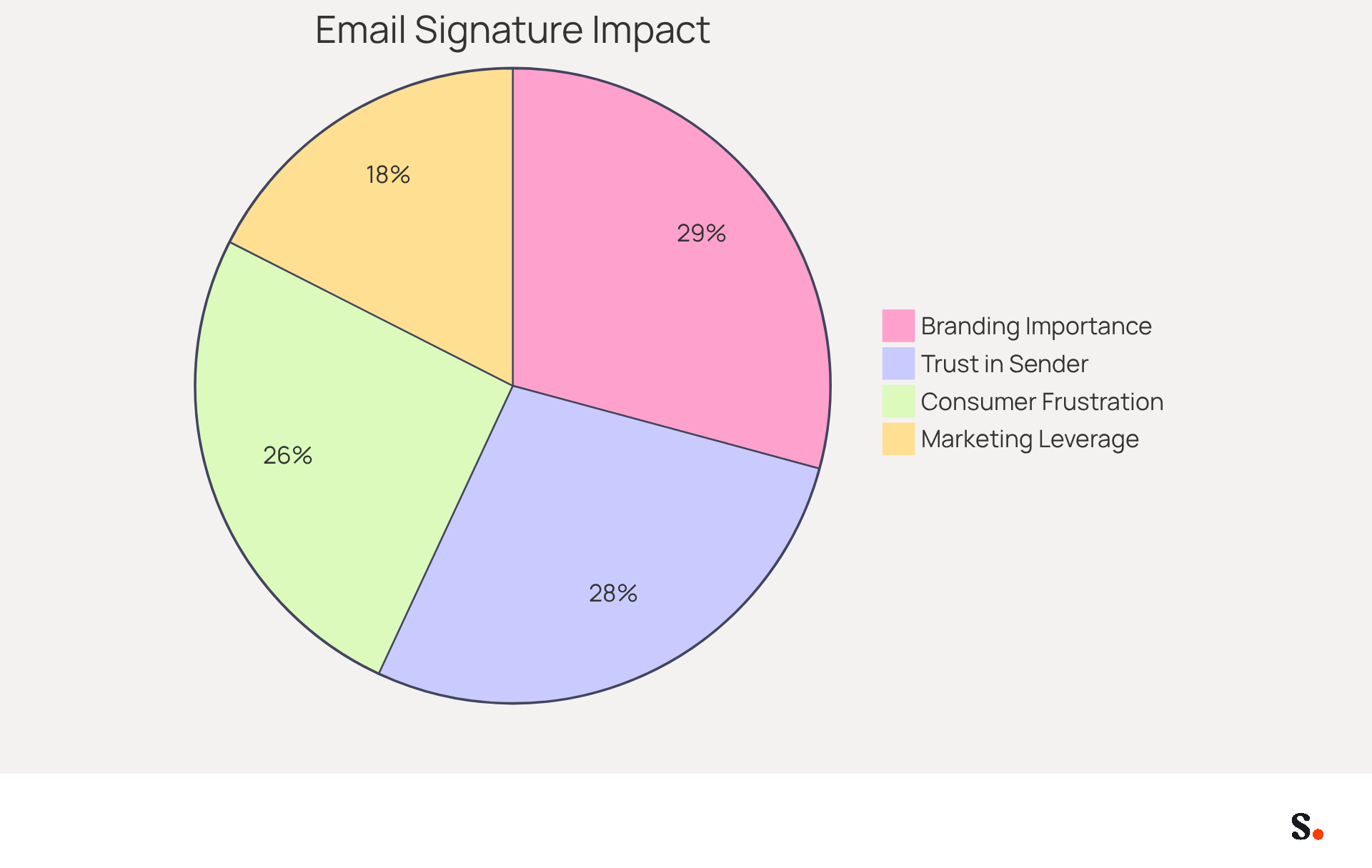
A business correspondence footer serves as a vital digital business card, encapsulating essential contact information and reinforcing professional identity. However, many professionals struggle to present themselves effectively in digital formats, making a well-designed message footer essential for improving credibility, aiding networking, and ensuring brand consistency. Research indicates that this consistency can enhance response rates by as much as 22%, highlighting the importance of a professional closing. Furthermore, 80% of organizations consider branded email footers crucial for branding, with 76% of participants indicating that such footers enhance their trust in the sender. This trust is vital, as 93% of business leaders agree that building trust positively impacts profitability.
You might be surprised to learn that email footers can also serve as powerful marketing tools. They can drive traffic to websites and social media platforms, with 48% of marketers leveraging this strategy to enhance visibility. A well-crafted sign-off can result in 200 extra engaged interactions each month for organizations sending 10,000 messages. Additionally, incorporating links to recent blog posts or promotional campaigns can further engage recipients, making each message an opportunity for marketing.
Research examples demonstrate the significance of digital identifiers in enhancing corporate identity. For instance, companies that incorporate awards and certifications in their communications can enhance credibility and generate interest, while those that maintain consistent identity across interactions see measurable improvements in engagement rates. Moreover, 70% of consumers show annoyance when companies do not provide contact details, indicating a strong preference for clear communication.
By prioritizing the design and consistency of digital footers, businesses can transform each communication into a powerful branding opportunity.
Identify Essential Components of an Effective Email Signature
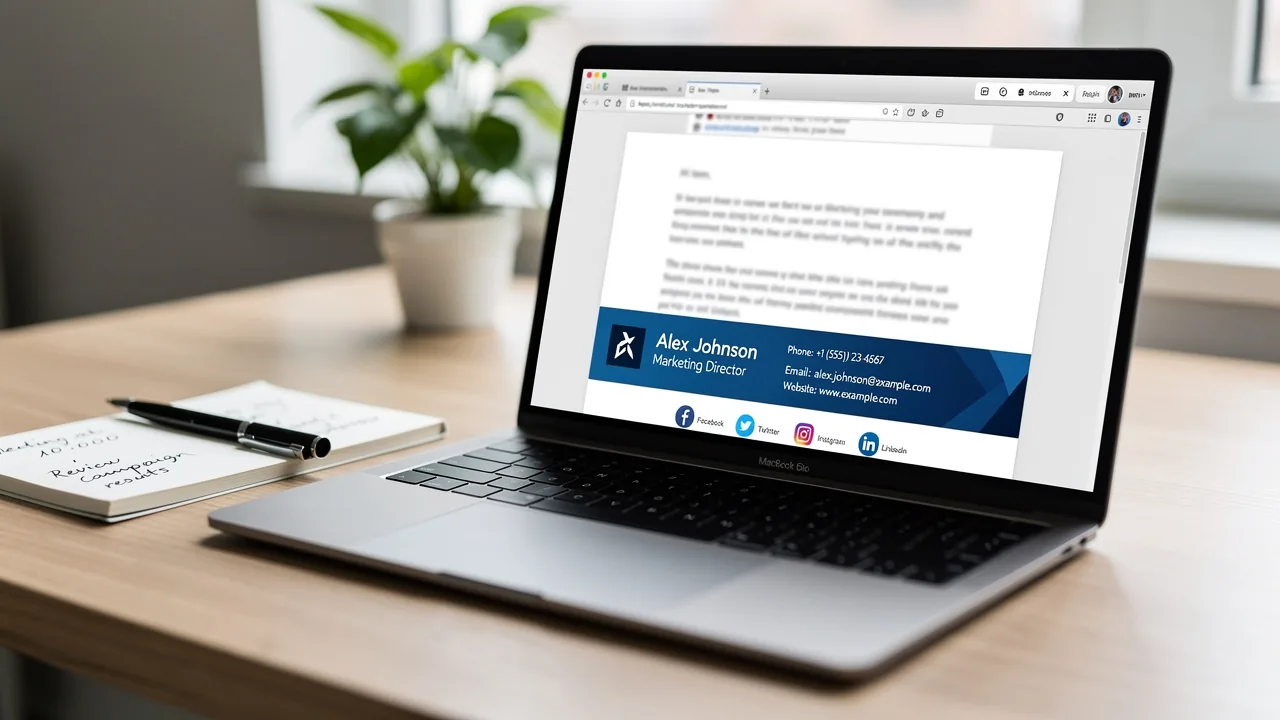
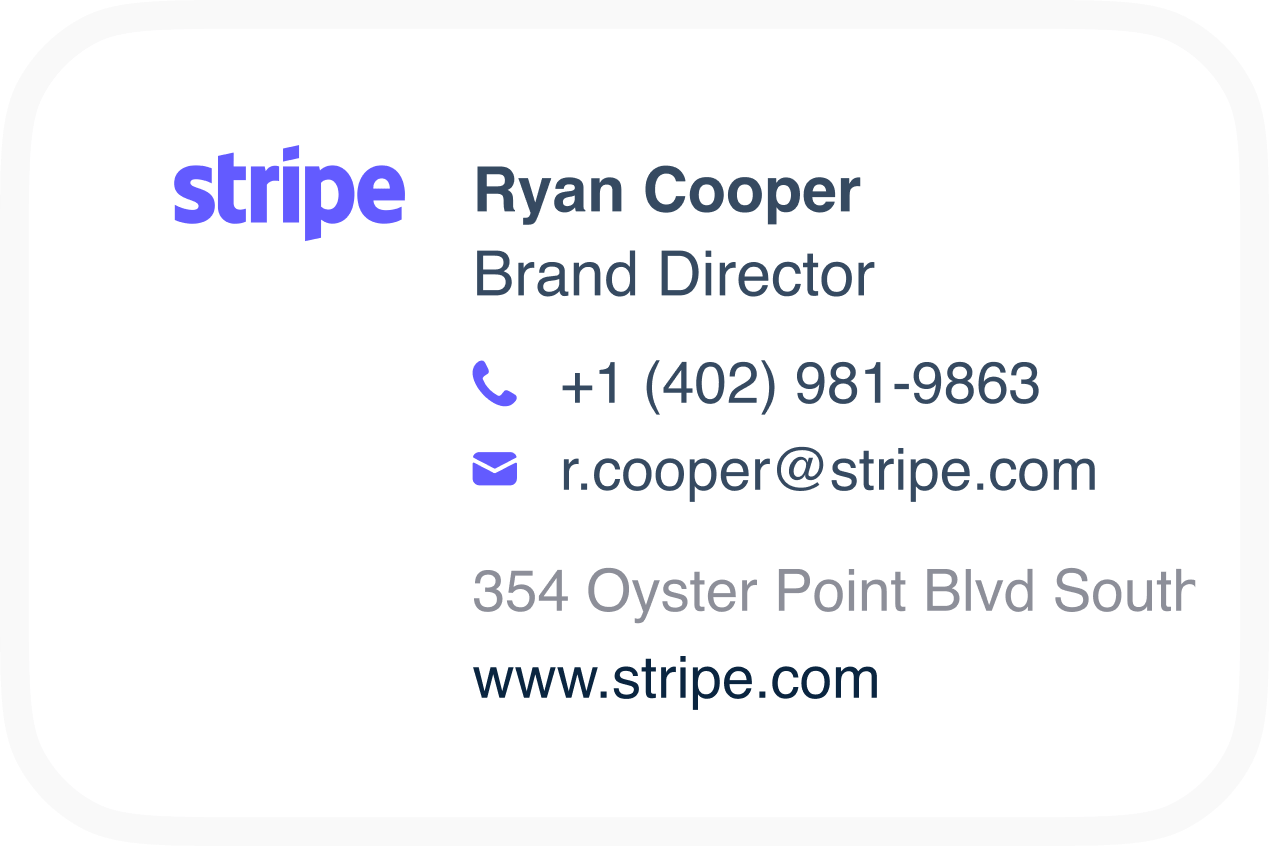
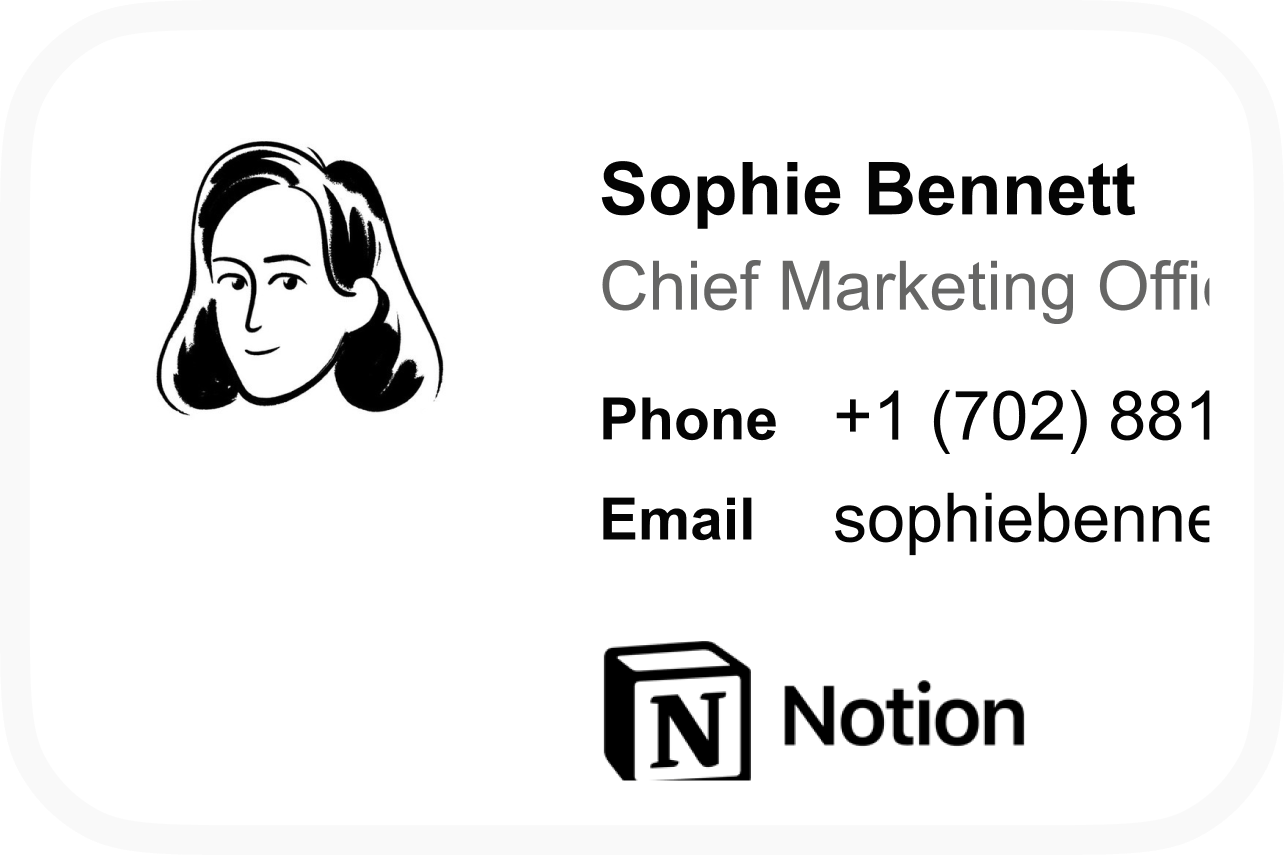
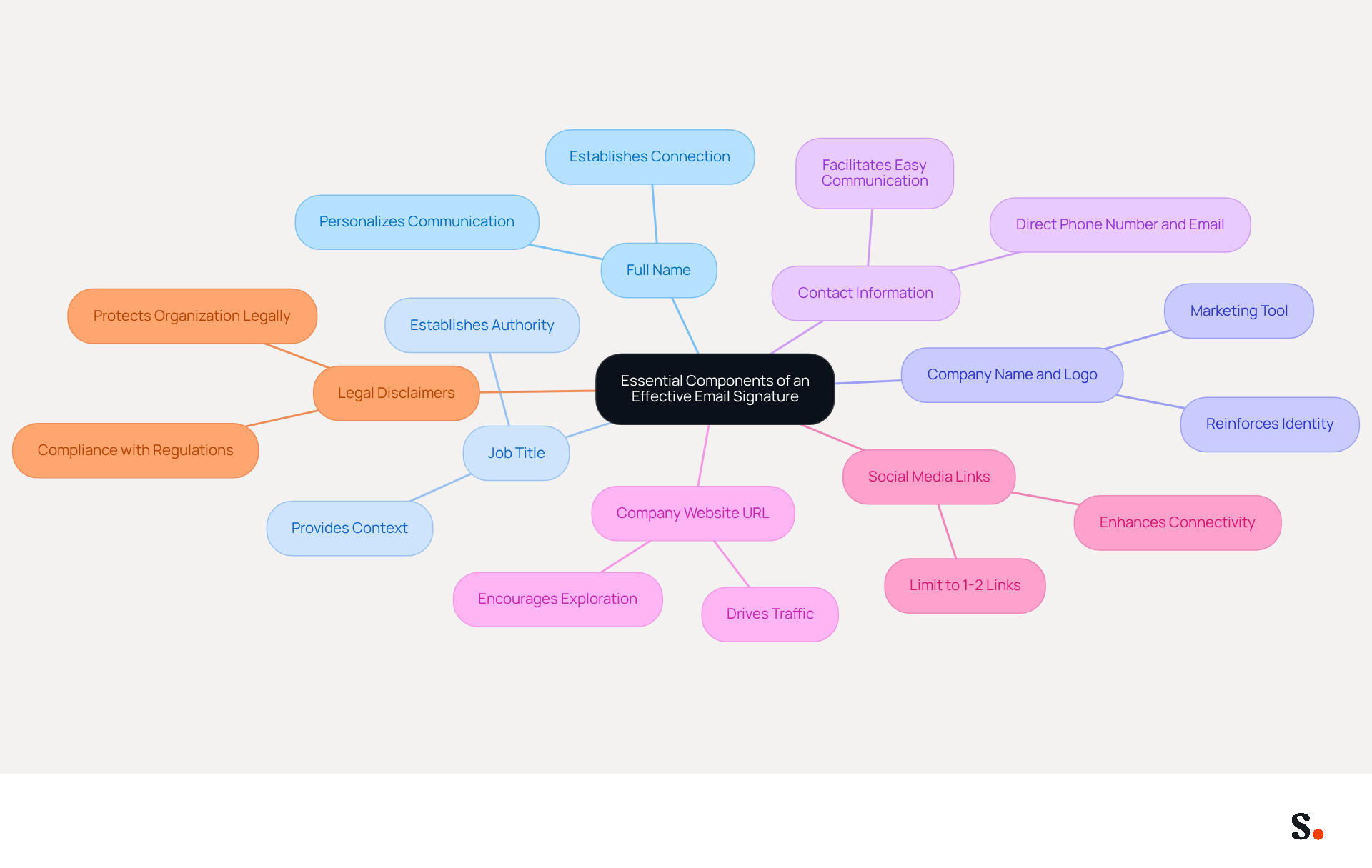
Effective email communication hinges on the proper management of message footers, which are often overlooked yet crucial for professional interactions. A functional message footer should include several essential elements to guarantee it fulfills its intended role efficiently. Here are the key components to consider:
- Full Name: Clearly stating the sender's name personalizes the communication and establishes a connection with the recipient.
- Job Title: Indicating the sender's position within the company helps establish authority and context for the communication.
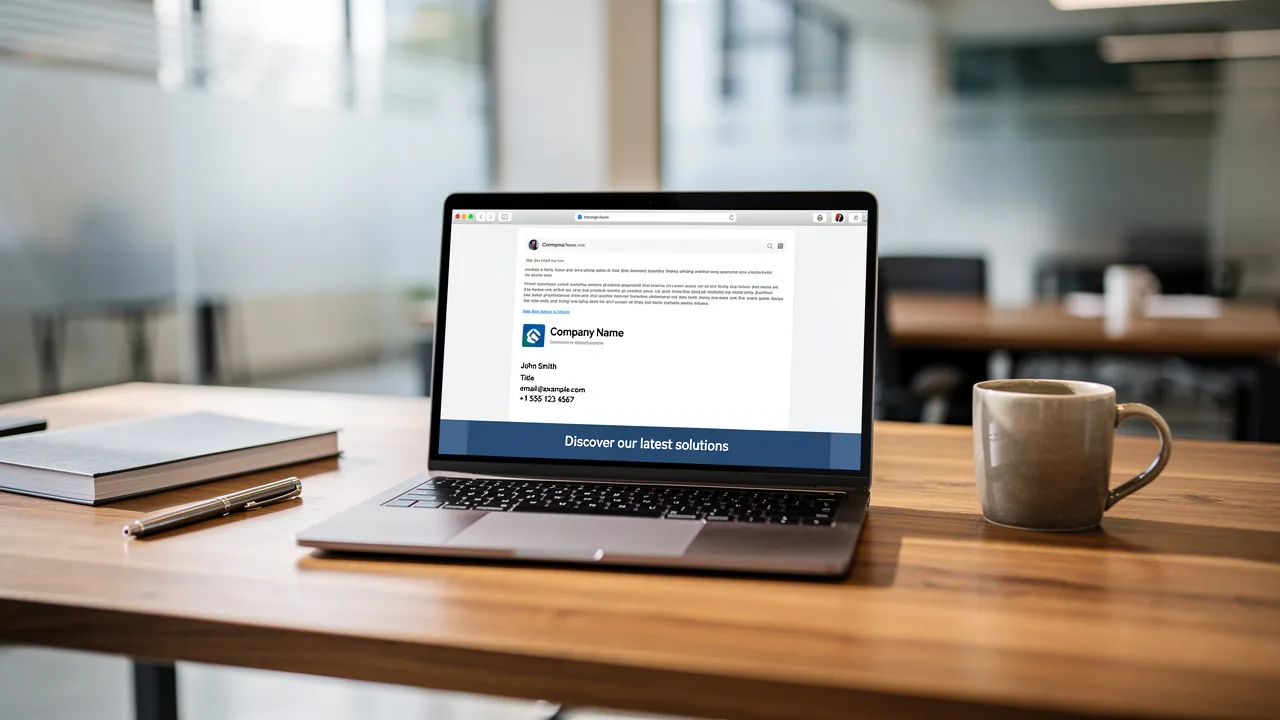
- Company Name and Logo: Including the company name and logo reinforces identity, making the signature a powerful marketing tool.
- Contact Information: Providing a direct phone number and email address facilitates easy communication, ensuring recipients can reach out without hassle.
- Company Website URL: Linking to the company website encourages further exploration of services or products, driving traffic and engagement.
- Social Media Links: Optionally, including links to professional social media profiles enhances connectivity and allows recipients to engage with the brand across platforms. However, it is advisable to limit these to 1-2 relevant links to avoid clutter, as excessive links can detract from the effectiveness of the closing.
- Legal Disclaimers: Depending on the industry, incorporating legal disclaimers may be necessary to comply with regulations and protect the organization legally.
Incorporating these elements creates a professional look and clearly conveys important information to recipients. Research shows that a well-designed digital footer can boost response rates by 22% and increase website click-through rates by 15%. Moreover, organizations that standardize their electronic correspondence identifiers experience 85% improved brand consistency, emphasizing the significance of these elements in sustaining a unified brand image.
With Scribe, the management of these signatures becomes effortless. By syncing your Google Workspace with Scribe, you save time as your teammates' data is automatically updated, ensuring that any changes-such as job positions or group assignments-are reflected in real-time without manual input. To enable one-click synchronization, you must grant Scribe permission to connect with your service provider, requiring Super Admin access. This automated synchronization not only enhances brand consistency but also ensures compliance with security standards, as Scribe is SOC 2 Type II compliant. Regular evaluations of digital identifiers are essential, as over 40% of assessed entries contain at least one significant error impacting engagement. By adhering to these optimal methods and utilizing Scribe's features, businesses can convert their digital identifiers into powerful marketing tools that are also mobile-compatible, ensuring they are effective on all devices. Ultimately, leveraging Scribe's capabilities transforms email signatures from mere formalities into strategic assets that enhance brand visibility and engagement.
Explore Best Practices for Email Signature Design
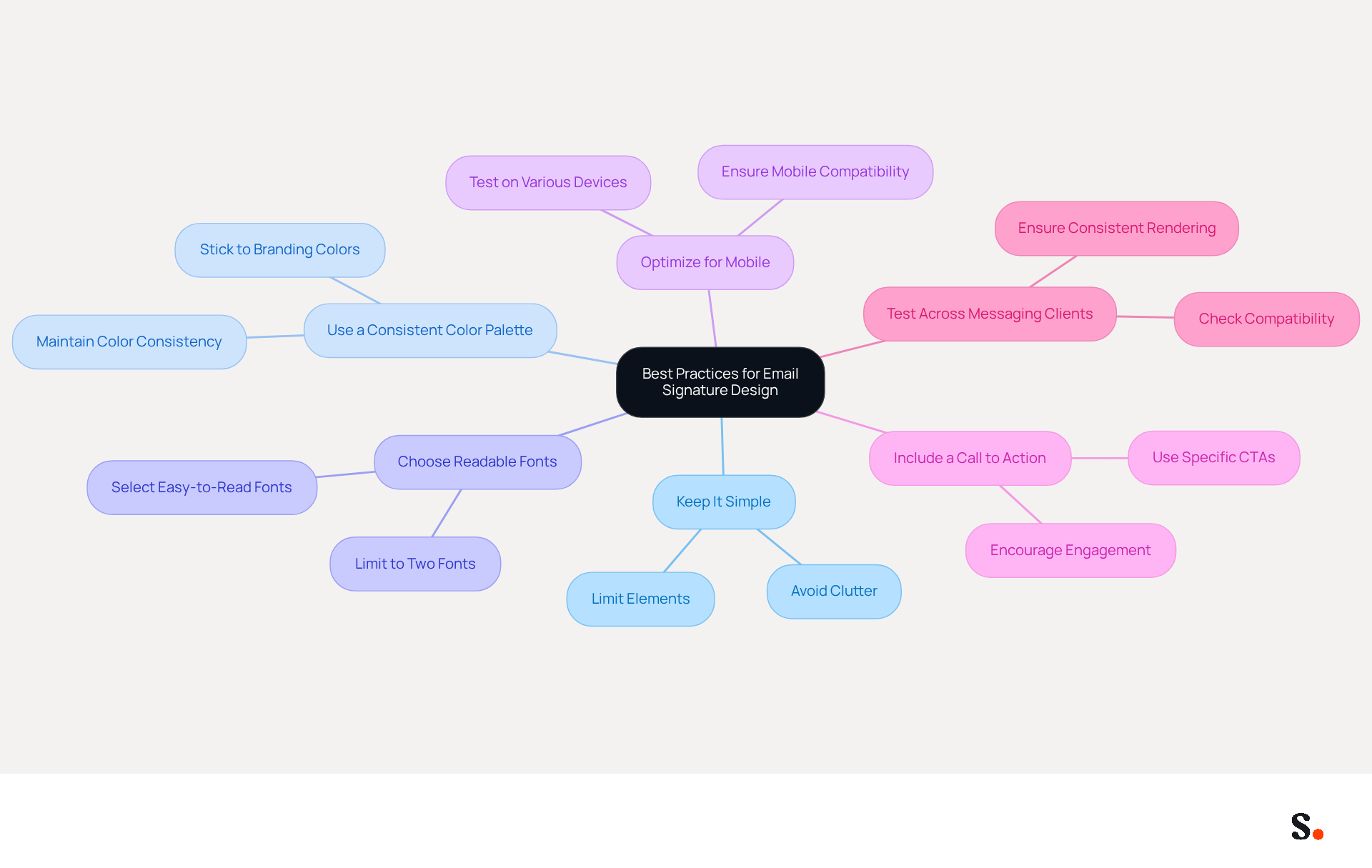
Many businesses struggle to balance aesthetics and functionality in their electronic communication footers, especially regarding what should a business email signature look like. Creating an effective electronic communication footer involves following several best practices, including knowing what should a business email signature look like, to improve both appearance and functionality. Key best practices include:
- Keep It Simple: Avoid clutter by limiting the number of elements in the sign-off. A clean design is more visually appealing and easier to read.
- Use a Consistent Color Palette: Stick to the company’s branding colors to maintain consistency across all communications.
- Choose Readable Fonts: Select fonts that are easy to read on various devices. Limit the number of different fonts to two for a cohesive look.
- Optimize for Mobile: Ensure that the identifier displays well on mobile devices, as many users access messages on their phones.
- Include a Call to Action: Consider adding a call to action, such as a link to a recent blog post or a promotional offer, to encourage engagement.
- Test Across Messaging Clients: Check how the identifier appears in different messaging clients (e.g., Gmail, Outlook) to ensure compatibility.
By implementing these strategies, businesses can significantly enhance what should a business email signature look like, thereby improving their communication effectiveness and brand image. With Scribe, you can streamline management of digital signatures by automatically syncing your teammates' information from Google Workspace and Aircall, ensuring that any updates are reflected in real-time without manual input. This not only saves time but also guarantees 100% brand consistency across all communications. Furthermore, Scribe's SOC 2 Type II compliance guarantees that your data is protected, enabling you to concentrate on crafting impactful representations that drive engagement.
Avoid Common Mistakes in Email Signature Creation
Creating an effective digital communication footer requires careful consideration of common pitfalls that can undermine its effectiveness. Here are some mistakes to avoid:
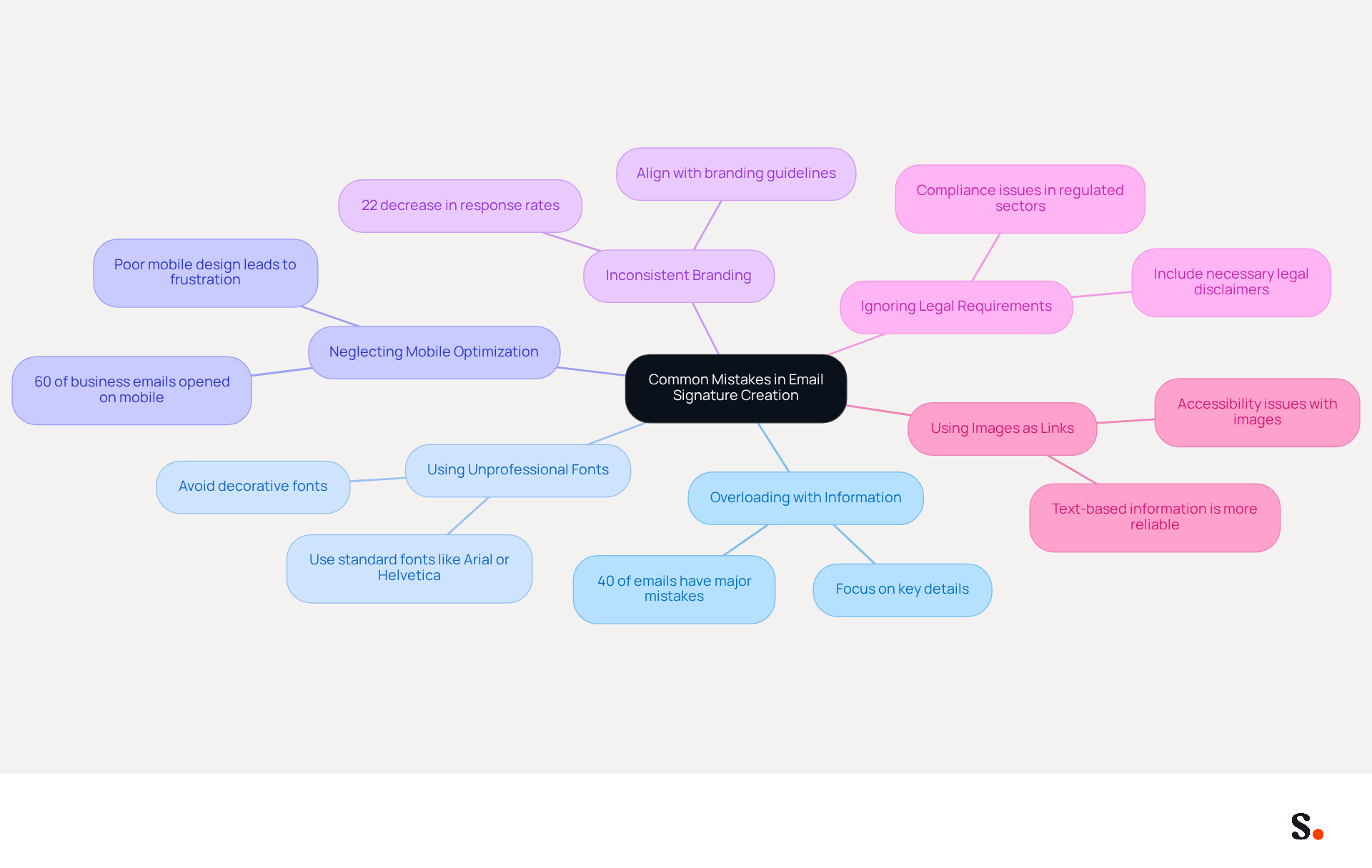
- Overloading with Information: Including too much information can overwhelm recipients. Research shows that more than 40% of emails have at least one major mistake that can hurt engagement. Focus on the key details to keep things clear.
- Using Unprofessional Fonts: Avoid decorative or overly casual fonts that may detract from the professional image. Using standard fonts like Arial or Helvetica improves readability and presents a polished appearance.
- Neglecting Mobile Optimization: Failing to ensure that the design appears well on mobile devices can lead to a poor user experience. If the mobile footer is poorly designed, it can frustrate users and lead to lower engagement. With over 60% of business emails opened on mobile, optimizing for mobile is crucial.
- Inconsistent Branding: Ensure that the signature aligns with the company’s branding guidelines to maintain a cohesive image. Inconsistent messaging can confuse recipients and dilute identity, leading to a 22% decrease in response rates. This consistency can lead to a notable increase in engagement and response rates, demonstrating how effective footers can enhance marketing efforts. By utilizing Scribe, organizations can automate the synchronization of digital identifiers with platforms like Google Workspace and Aircall, ensuring that any updates are reflected instantly, thus enhancing brand consistency.
- Ignoring Legal Requirements: Depending on the industry, failing to include necessary legal disclaimers can lead to compliance issues. This is particularly important for organizations in regulated sectors.
- Using Images as Links: Relying solely on images for contact information can lead to accessibility issues, as some messaging clients may not display images. Text-based information is more reliable and ensures that recipients can easily reach out.
By addressing these pitfalls, businesses can significantly enhance their email signatures, ensuring they effectively communicate their brand and engage recipients.
Conclusion
In the digital age, a well-crafted email signature is essential for establishing a professional identity and fostering effective communication. By effectively encapsulating essential contact information and reinforcing brand consistency, a well-designed email footer can significantly improve credibility and engagement. A well-crafted email signature does more than just look good; it serves as a strategic asset that aids in networking and acts as a powerful marketing tool, driving traffic and fostering trust among recipients.
Throughout the article, key components of an effective email signature were highlighted, including the necessity of including:
- Full names
- Job titles
- Company logos
- Contact information
Best practices for design, such as maintaining simplicity, optimizing for mobile, and ensuring consistent branding, were also discussed. Additionally, many professionals struggle with creating effective email signatures due to common pitfalls, such as:
- Overloading with information
- Neglecting legal requirements
These insights help professionals create impactful signatures that resonate with their audience.
In conclusion, the significance of a well-crafted email signature extends beyond mere aesthetics; it is a strategic asset that can enhance brand visibility and engagement. Organizations should leverage tools like Scribe to streamline the management of their email signatures, ensuring compliance with security standards while maintaining brand consistency. By investing in the design and management of email signatures, businesses can unlock new avenues for engagement and growth.
Frequently Asked Questions
What is the purpose of a business email signature?
A business email signature serves as a vital digital business card, encapsulating essential contact information and reinforcing professional identity.
Why is a well-designed email footer important?
A well-designed email footer is essential for improving credibility, aiding networking, and ensuring brand consistency, which can enhance response rates by as much as 22%.
How do branded email footers impact trust and branding?
80% of organizations consider branded email footers crucial for branding, and 76% of participants indicate that such footers enhance their trust in the sender, which is vital for building trust that positively impacts profitability.
Can email footers be used for marketing purposes?
Yes, email footers can serve as powerful marketing tools, driving traffic to websites and social media platforms. 48% of marketers leverage this strategy to enhance visibility.
What are the potential engagement benefits of a well-crafted email sign-off?
A well-crafted sign-off can result in 200 extra engaged interactions each month for organizations sending 10,000 messages.
How can incorporating awards and certifications in email footers enhance credibility?
Companies that incorporate awards and certifications in their communications can enhance credibility and generate interest, leading to measurable improvements in engagement rates.
What do consumers prefer regarding contact details in communications?
70% of consumers show annoyance when companies do not provide contact details, indicating a strong preference for clear communication.
How can businesses transform their communications through email footers?
By prioritizing the design and consistency of digital footers, businesses can transform each communication into a powerful branding opportunity.
List of Sources
- Define Business Email Signature: Purpose and Importance
- Research Recap: Branded Email Signatures Increase Company Recognition, Trust - Demand Gen Report (https://demandgenreport.com/industry-news/research-recap-branded-email-signatures-increase-company-recognition-trust/47252)
- All the Best Email Signature Practices for Marketing Success (https://scribe-mail.com/en-US/blog/all-the-best-email-signature-practices-for-marketing-success)
- Why Are Email Signatures Key to Brand Awareness? | QuickMail (https://quickmail.com/role-of-email-signatures-in-brand-awareness)
- Why Email Signatures Must Be In Your 2026 Marketing Plan | Rocketseed (https://rocketseed.com/blog/2026-marketing-plan-email-signatures)
- The impact of email signatures on your branding (https://signitic.com/en/resources/the-impact-of-email-signatures-on-your-branding)
- Identify Essential Components of an Effective Email Signature
- All the Best Email Signature Practices for Marketing Success (https://scribe-mail.com/en-US/blog/all-the-best-email-signature-practices-for-marketing-success)
- Email Signature Best Practices for 2026 (+ 15 Pro Examples) (https://wavecnct.com/blogs/email-signature-best-practices-2026)
- Best practices for business email signatures in 2026 (https://bybrand.io/blog/best-practices)
- 20 Examples of Professional Email Signatures | Letsignit (https://letsignit.com/blog/professional-email-signature)
- 40+ Email Signature Statistics for 2026 (Data + Insights) (https://wavecnct.com/blogs/email-signature-statistics)
- Explore Best Practices for Email Signature Design
- The Complete Email Signature Guide 2026: Best Practices and Policy (https://opensense.com/complete-email-signature-guide)
- Top 10+ best practices for email signatures design in 2026 (https://mysignature.io/blog/email-signature-best-practices)
- Email Signature Best Practices - NEWOLDSTAMP (https://newoldstamp.com/blog/email-signature-best-practices)
- Email Signature Best Practices for 2026 (+ 15 Pro Examples) (https://wavecnct.com/blogs/email-signature-best-practices-2026)
- Email Signature Design Trends in 2026: What Works and What to Drop (https://bulksignature.com/blog/email-signature-design-trends)
- Avoid Common Mistakes in Email Signature Creation
- Compare Email Signature Structure: Best Practices vs. Common Mistakes (https://scribe-mail.com/en-US/blog/compare-email-signature-structure-best-practices-vs-common-mistakes)
- CodaBears | Email Signature Mistakes That Hurt Your Brand (https://codabears.com/en/product/blog/10-email-signature-mistakes-how-to-fix-them--10_Email_Signature_Mistakes)
- Email Signature Best Practices for 2026 (+ 15 Pro Examples) (https://wavecnct.com/blogs/email-signature-best-practices-2026)
- 11 Common Email Signature Mistakes to Avoid - Gimmio (https://blog.gimm.io/email-signature-mistakes)
Get started with Scribe
See why teams switch to Scribe
Free 14-day trial — no credit card.