What to Include in Your Email Signature for Maximum Impact
An email signature is not merely a digital sign-off; it is a crucial element of professional communication that can either enhance or undermine a brand's
Sophie Grant
Email Signature Specialist, Scribe

On this page
- Introduction
- Define Email Signature: Understanding Its Purpose and Importance
- Identify Essential Elements: What to Include in Your Email Signature
- Emphasize Branding: The Role of Consistency in Email Signatures
- Apply Best Practices: Designing an Effective Email Signature
- Conclusion
- Frequently Asked Questions
- List of Sources
Introduction
An email signature is not merely a digital sign-off; it is a crucial element of professional communication that can either enhance or undermine a brand's presence. When organizations grasp what to include in an email signature, they can transform this often-overlooked element into a powerful marketing tool that fosters connections and drives traffic. Despite the potential benefits, many organizations find it challenging to maintain uniformity and impact in their email signatures. This inconsistency can lead to missed opportunities for brand reinforcement and customer engagement.
Define Email Signature: Understanding Its Purpose and Importance
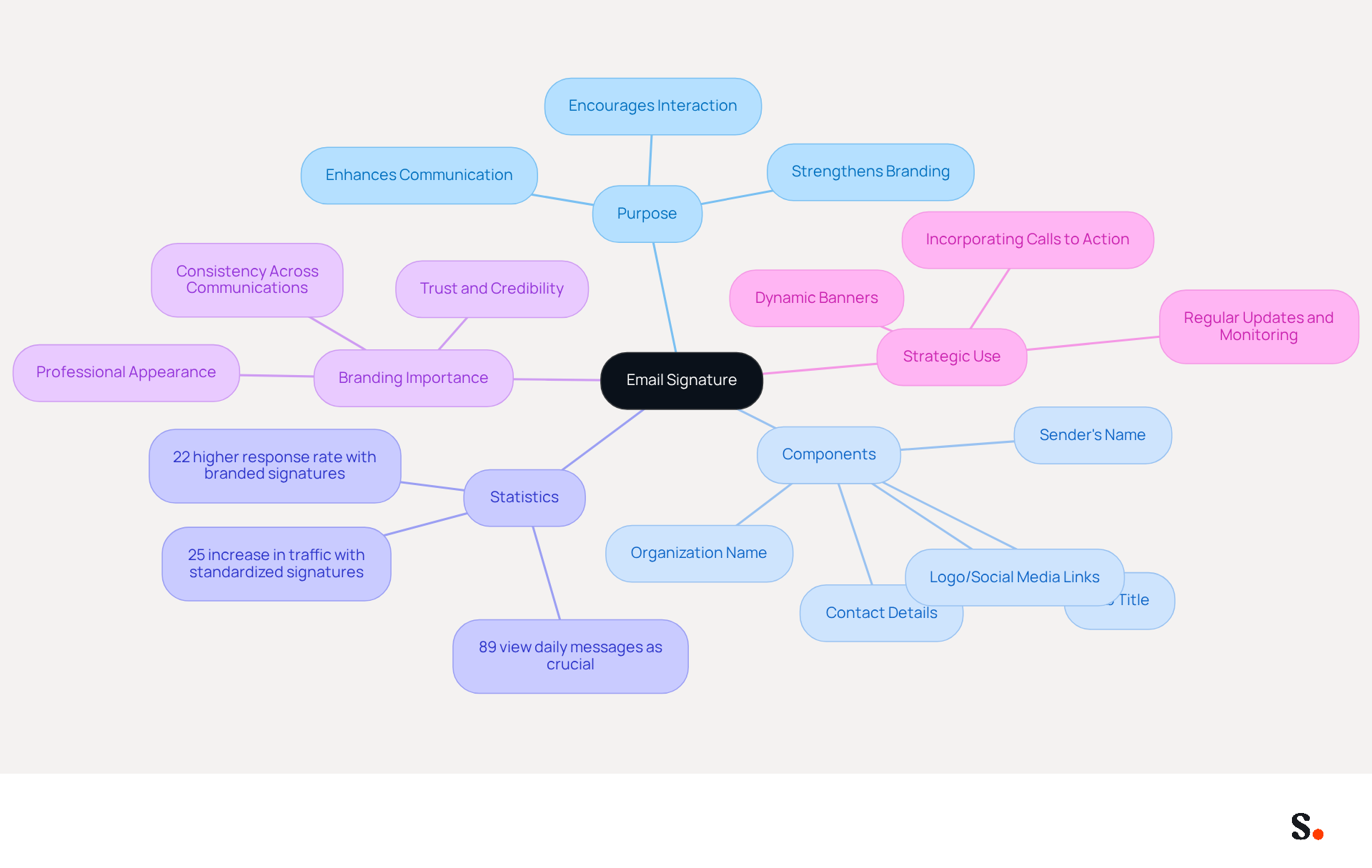
A message footer is not just an afterthought; it is a critical element that enhances communication and branding. When creating an email, it's important to know what to include in the email signature, such as the sender's name, job title, organization name, contact details, and often a logo or social media links. Its primary purpose is to provide recipients with essential information about the sender, which enhances professionalism and encourages interaction. In a digital environment where electronic messages are a prevalent method of corporate interaction, a well-designed electronic identifier serves not only its fundamental purpose but also acts as a digital card and a powerful branding tool that strengthens the company's identity with each message sent.
The significance of electronic identifiers in corporate interactions cannot be overstated. Statistics indicate that 89% of participants view daily one-to-one messages as their most crucial business interaction channel. Moreover, messages that feature branded elements achieve a 22% higher response rate than those lacking them, emphasizing the importance of branding in promoting effective communication. A multinational corporation that standardized its digital communication identifiers worldwide experienced a 25% increase in traffic to specific landing pages, demonstrating the tangible benefits of consistent branding.
However, many organizations struggle to effectively utilize these identifiers. As they prepare for 2026, understanding what to include in an email signature is now crucial for the effective use of electronic communication footers. These footers serve as a high-frequency touchpoint that can reinforce brand messaging and deliver measurable marketing impact. For example, 28.7% of businesses primarily utilize electronic communication tools to enhance branding and brand recognition, while 25.1% focus on ensuring consistent corporate communication. This alignment with marketing goals can lead to improved customer engagement and brand loyalty.
Experts now see electronic correspondence identifiers as more than just details; they are strategic investments that positively influence reputation, customer trust, and business performance. By incorporating calls to action and promotional elements into correspondence footers, organizations can turn each message into a chance for engagement, further boosting their marketing initiatives. Moreover, with Scribe's seamless integration with Calendly, organizations can ensure that their digital identifiers are automatically updated, further enhancing brand consistency. Ultimately, neglecting this aspect of communication could mean missing out on significant branding opportunities.
Identify Essential Elements: What to Include in Your Email Signature
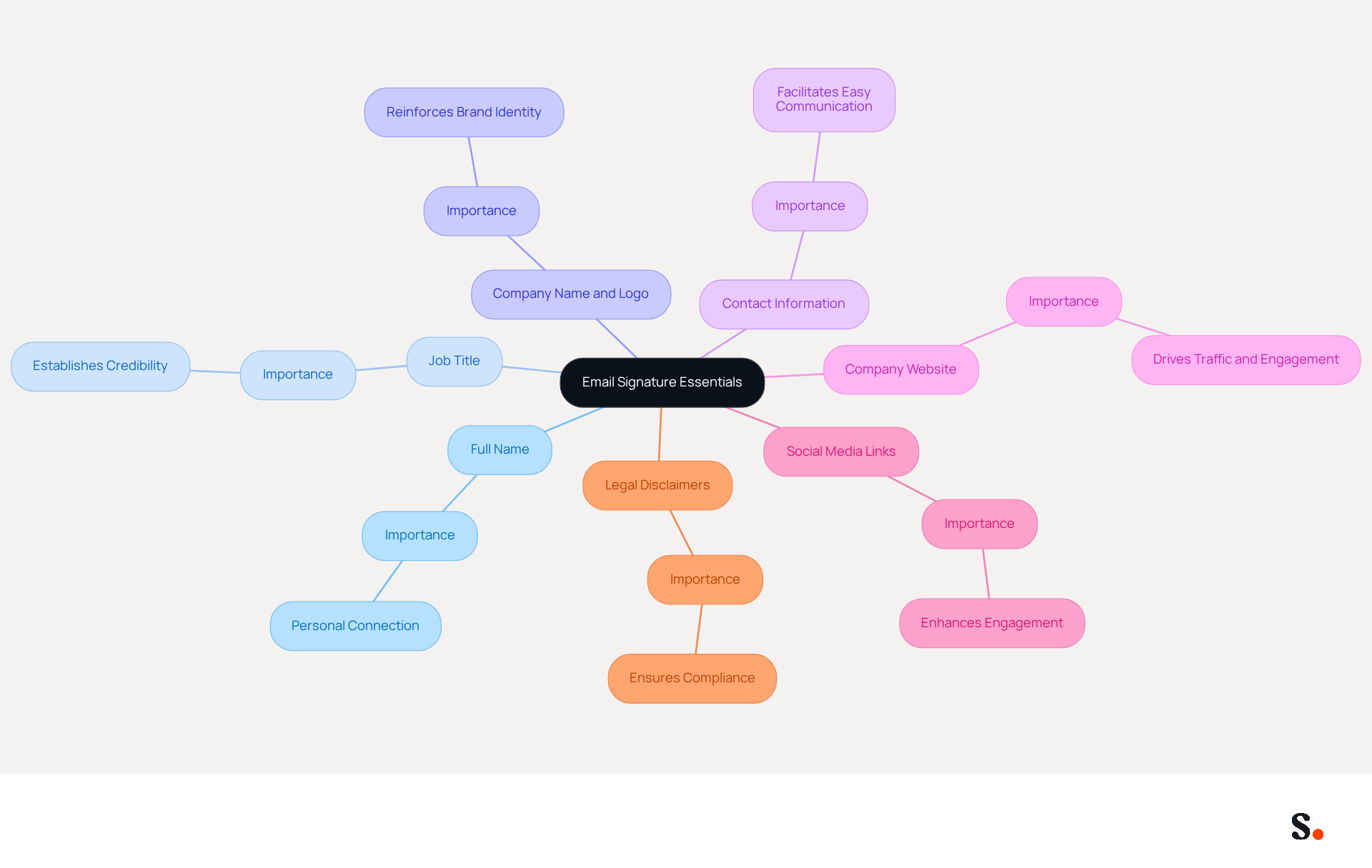
It is important to understand what to include in an email signature for effective communication and brand representation. It should incorporate several key elements to maximize its impact:
- Full Name: Clearly stating your name ensures recipients know who the message is from, fostering a personal connection.
- Job Title: Including your position establishes credibility and offers context for your message.
- Company Name and Logo: This reinforces brand identity, helping recipients recognize your organization and enhancing brand visibility.
- Contact Information: Providing a direct phone number and contact address facilitates easy communication, making it simple for recipients to reach out.
- Company Website: A link to your website allows recipients to learn more about your organization, driving traffic and potential engagement.
- Social Media Links: Including links to professional social media profiles can enhance engagement and provide additional avenues for connection, broadening your network.
- Legal Disclaimers: Depending on your industry, it may be necessary to include legal disclaimers to protect your organization and ensure compliance.
These elements not only enhance the informativeness of digital identifiers but also clarify what to include in an email signature, positioning them as powerful marketing tools. Studies indicate that businesses using well-optimized digital identifiers often experience a 22% boost in response rates, highlighting their strategic value. Furthermore, with Scribe's automated synchronization of messaging identifiers with platforms like Aircall and Calendly, any modifications made in your configuration will be promptly reflected in your identifiers. This feature improves brand consistency and ensures that your marketing efforts are cohesive across all interactions. Ultimately, a thoughtfully crafted email signature can significantly influence how your brand is perceived and engaged with by recipients.
Emphasize Branding: The Role of Consistency in Email Signatures
Inconsistent branding in email communication can undermine a company's professional image. Branding is an essential element of any business communication, and electronic correspondence identifiers are no exception. A consistent email format across all employees is crucial; without it, a company risks appearing unprofessional and disjointed. This consistency encompasses the use of uniform fonts, colors, logos, and design layouts, which are crucial for brand identity.
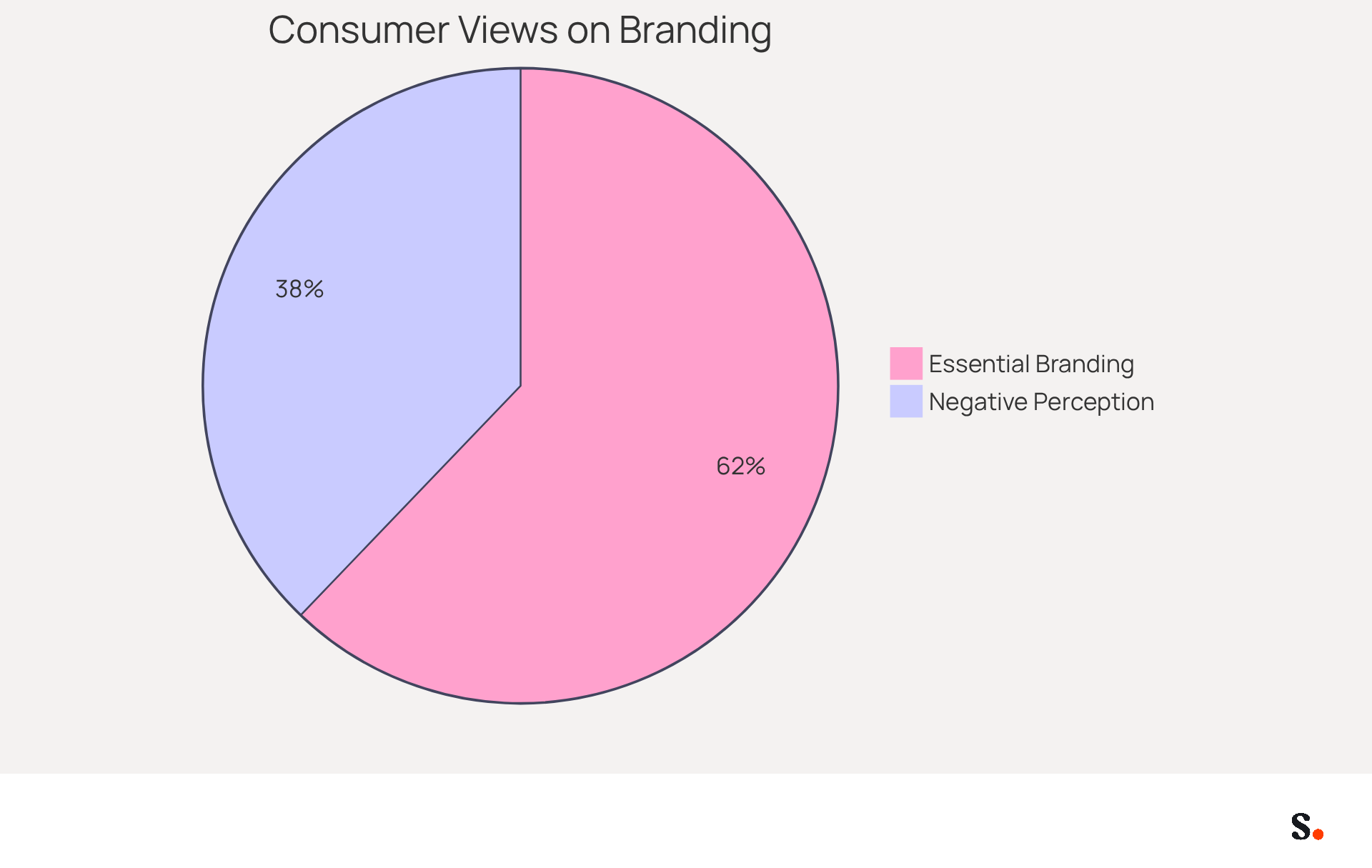
For example, Scribe's automated platform ensures that all team members maintain consistent branding, enhancing brand recognition and building trust with clients and partners. Research indicates that:
- 69% of UK consumers view a consistent professional brand as essential.
- 42% hold a negative perception of companies lacking one.
With Scribe, autographs are auto-filled using your business phone system as a data source, ensuring that teammates' autograph information is always synced and updated in real-time without any action needed from them. When recipients observe a consistent mark, it conveys a sense of reliability and attention to detail, which can positively influence their perception of the company.
Moreover, Scribe is SOC 2 Type II compliant, ensuring that your data is safe and secure. A well-branded message footer highlights what to include in an email signature, serving as a reminder of Scribe's values and mission, and turning every email into a marketing opportunity. Furthermore, Scribe's platform enables Marketing teams to manage their messaging identifiers independently after the initial IT setup, offering flexibility and control over branding efforts.
Apply Best Practices: Designing an Effective Email Signature
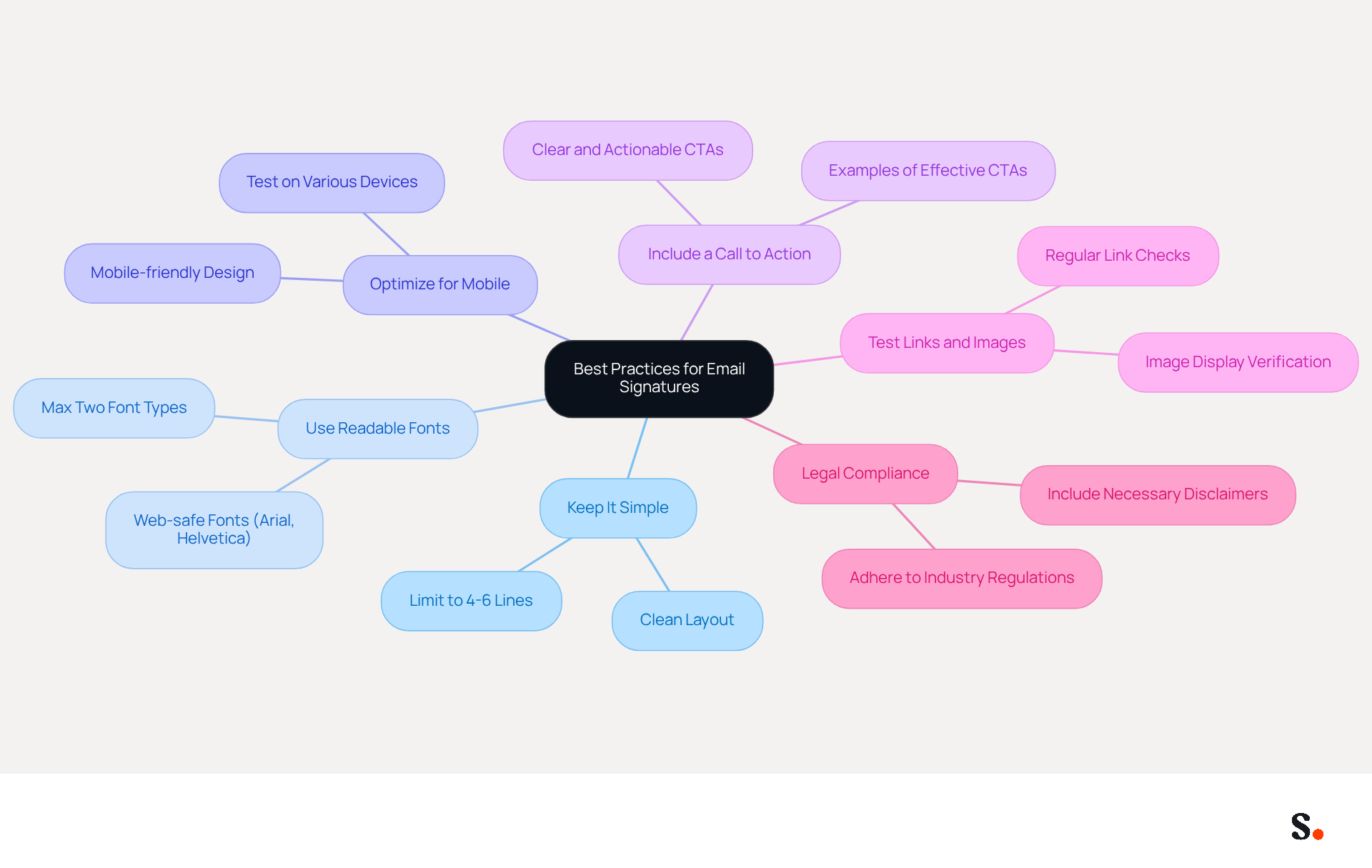
To design an effective email signature, consider the following best practices:
- Keep It Simple: Limit your sign-off to 4-6 lines to maintain clarity and readability. A clean layout enhances the overall appearance of your signature.
- Use Readable Fonts: Opt for web-safe fonts like Arial or Helvetica, which are easy to read across devices. Stick to a maximum of two font types to maintain consistency and professionalism.
- Optimize for Mobile: With over 60% of business correspondence accessed on mobile devices, ensure your identifier is mobile-friendly. Test its appearance on various devices to confirm it looks good and functions well.
- Include a Call to Action: Incorporate a clear call to action, such as a link to a recent blog post or a promotional offer, to encourage engagement. Research indicates that well-crafted CTAs can significantly boost engagement rates, and organizations that implement well-optimized digital identifiers with strategic CTAs have reported substantial increases in engagement.
- Test Links and Images: Regularly check that all links work and that images display correctly. Broken links or missing images can detract from professionalism and user experience. Regularly checking links and images helps ensure your email signature remains professional and effective.
- Legal Compliance: Ensure your mark adheres to industry-specific legal requirements, such as including necessary disclaimers or registration numbers. This not only protects your organization but also enhances credibility.
By following these best practices, businesses can create digital identifiers that effectively convey essential information and clarify what to include in an email signature, while enhancing their overall brand image. Furthermore, syncing your Google Workspace with Scribe can greatly enhance management of digital footers. This integration allows for automatic updates, ensuring that any changes in your team’s information are reflected in Scribe without manual input. This not only saves time but also maintains brand consistency across all communications. Scribe's adherence to security standards such as SOC 2 Type II, GDPR, and CCPA further boosts the credibility of your digital identifiers. For instance, a tech company increased webinar signups by 180% by updating email signatures with registration links, demonstrating the impact of thoughtful design and Scribe's capabilities. Neglecting to optimize your email signature could result in missed opportunities for engagement and brand representation.
Conclusion
Email signatures are not merely sign-offs; they are essential tools for enhancing professional communication and branding. By understanding what to include in an email signature, organizations can transform each message into a powerful marketing tool that conveys essential information while reinforcing brand identity. The strategic use of elements such as full names, job titles, company logos, and social media links creates a cohesive and professional image that resonates with recipients.
Key insights from the article highlight the importance of consistency in branding and the essential elements that should be included in every email signature. A well-crafted signature can lead to increased response rates and improved customer engagement. Without a well-crafted signature, organizations risk losing potential engagement and response rates. This shift in strategy can lead to a stronger brand presence and improved client relationships. Best practices such as simplicity, readability, and mobile optimization further enhance the effectiveness of email signatures, ensuring they serve their intended purpose while adhering to legal compliance and security standards.
The impact of a well-designed email signature is profound and far-reaching. It serves as a consistent touchpoint that reinforces brand messaging and fosters trust with clients and partners. Organizations are encouraged to leverage tools like Scribe, which streamline the management of email signatures while ensuring compliance with security standards such as SOC 2 Type II, GDPR, and CCPA. By prioritizing the design and implementation of effective email signatures, businesses can create lasting impressions that resonate with clients and partners alike.
Frequently Asked Questions
What is an email signature and why is it important?
An email signature is a message footer that includes essential information about the sender, such as their name, job title, organization name, contact details, and often a logo or social media links. It enhances professionalism, encourages interaction, and serves as a digital card and branding tool that strengthens the company's identity.
How does an email signature contribute to branding?
A well-designed email signature acts as a digital identifier that reinforces brand messaging with each message sent. Messages featuring branded elements achieve a 22% higher response rate, highlighting the importance of branding in effective communication.
What are the statistics regarding the use of email signatures in corporate interactions?
Statistics show that 89% of participants view daily one-to-one messages as their most crucial business interaction channel. Additionally, a multinational corporation that standardized its digital communication identifiers experienced a 25% increase in traffic to specific landing pages.
What challenges do organizations face with email signatures?
Many organizations struggle to effectively utilize email signatures as part of their branding strategy. Understanding what to include in an email signature is crucial for maximizing the impact of electronic communication footers.
How can email signatures enhance customer engagement and brand loyalty?
By aligning email signatures with marketing goals, organizations can improve customer engagement and brand loyalty. Incorporating calls to action and promotional elements into email signatures turns each message into an opportunity for engagement.
What role does Scribe play in managing email signatures?
Scribe offers seamless integration with Calendly, allowing organizations to ensure that their digital identifiers are automatically updated, which enhances brand consistency in their communications.
What could happen if organizations neglect their email signatures?
Neglecting email signatures could result in missed branding opportunities, which may negatively impact reputation, customer trust, and overall business performance.
List of Sources
- Define Email Signature: Understanding Its Purpose and Importance
- Why Email Signatures Must Be In Your 2026 Marketing Plan | Rocketseed (https://rocketseed.com/blog/2026-marketing-plan-email-signatures)
- The impact of email signatures on your branding (https://signitic.com/en/resources/the-impact-of-email-signatures-on-your-branding)
- Best Practices for Your Signature Business Email Strategy (https://scribe-mail.com/en-US/blog/best-practices-for-your-signature-business-email-strategy)
- The benefits of a branded email signature (https://bybrand.io/blog/branded-email-signature)
- Email signature statistics: Why every business should optimize their email signatures — Stripo.email (https://stripo.email/blog/email-signature-statistics-why-every-business-should-optimize-their-email-signatures)
- Identify Essential Elements: What to Include in Your Email Signature
- Email Signature Best Practices for 2026 (+ 15 Pro Examples) (https://wavecnct.com/blogs/email-signature-best-practices-2026)
- 20 best email signature design examples for 2026 — Stripo.email (https://stripo.email/blog/10-best-email-signature-design-examples)
- 4 Essential Email Signature Ideas to Boost Marketing Engagement (https://scribe-mail.com/en-US/blog/4-essential-email-signature-ideas-to-boost-marketing-engagement)
- The effectiveness of the email signature as a “point of contact” (https://signitic.com/en/resources/the-effectiveness-of-the-email-signature-as-a--point-of-contact)
- 20 Tips for Creating an Effective Email Signature — SitePoint (https://sitepoint.com/creating-an-effective-email-signature)
- Emphasize Branding: The Role of Consistency in Email Signatures
- Exclaimer Research: 67% of Marketers Expect Email Signatures to Support With Lead Gen In 2023 (https://businesswire.com/news/home/20230612141095/en/Exclaimer-Research-67-of-Marketers-Expect-Email-Signatures-to-Support-With-Lead-Gen-In-2023)
- 40+ Email Signature Statistics for 2026 (Data + Insights) (https://wavecnct.com/blogs/email-signature-statistics)
- The impact of email signatures on your branding (https://signitic.com/en/resources/the-impact-of-email-signatures-on-your-branding)
- Research Recap: Branded Email Signatures Increase Company Recognition, Trust - Demand Gen Report (https://demandgenreport.com/industry-news/research-recap-branded-email-signatures-increase-company-recognition-trust/47252)
- Why Email Signatures Must Be In Your 2026 Marketing Plan | Rocketseed (https://rocketseed.com/blog/2026-marketing-plan-email-signatures)
- Apply Best Practices: Designing an Effective Email Signature
- Email Signature Design Trends in 2026: What Works and What to Drop (https://bulksignature.com/blog/email-signature-design-trends)
- Email Signature Best Practices Guide With Examples - MailerLite (https://mailerlite.com/blog/email-signature-best-practices)
- Email Signature Best Practices for 2026 (+ 15 Pro Examples) (https://wavecnct.com/blogs/email-signature-best-practices-2026)
- Top 10+ best practices for email signatures design in 2026 (https://mysignature.io/blog/email-signature-best-practices)
Get started with Scribe
See why teams switch to Scribe
Free 14-day trial — no credit card.