10 Phrases to End an Email That Boost Engagement and Professionalism
Crafting effective email closings is essential for transforming simple exchanges into meaningful connections. Effective phrases can improve engagement, express
Sophie Grant
Email Signature Specialist, Scribe
On this page
- Introduction
- Use 'Thank You for Your Time' to Show Appreciation
- Incorporate 'Looking Forward to Your Response' for Engagement
- End with 'Please Let Me Know if You Have Questions' to Invite Clarification
- Utilize 'I Appreciate Your Prompt Attention to This Matter' for Urgency
- Include 'Your Feedback is Valuable to Me' to Build Rapport
- Say 'Thank You, and I Hope to Collaborate Soon' for Future Opportunities
- Conclude with 'Best Regards' for Professionalism
- Use 'Warm Regards' to Add a Personal Touch
- End with 'Feel Free to Reach Out Anytime' for Openness
- Incorporate 'Let's Stay in Touch' to Foster Relationships
- Conclusion
- Frequently Asked Questions
- List of Sources
Introduction
Crafting effective email closings is essential for transforming simple exchanges into meaningful connections. Effective phrases can improve engagement, express gratitude, and strengthen relationships. What are the most effective strategies for concluding an email that maintains professionalism while encouraging responses? This article explores ten impactful phrases that can elevate email communication, ensuring that every message leaves a lasting impression and opens the door for future interactions.
Get started with Scribe
Manage signatures across your whole team
Free 14-day trial — no credit card.
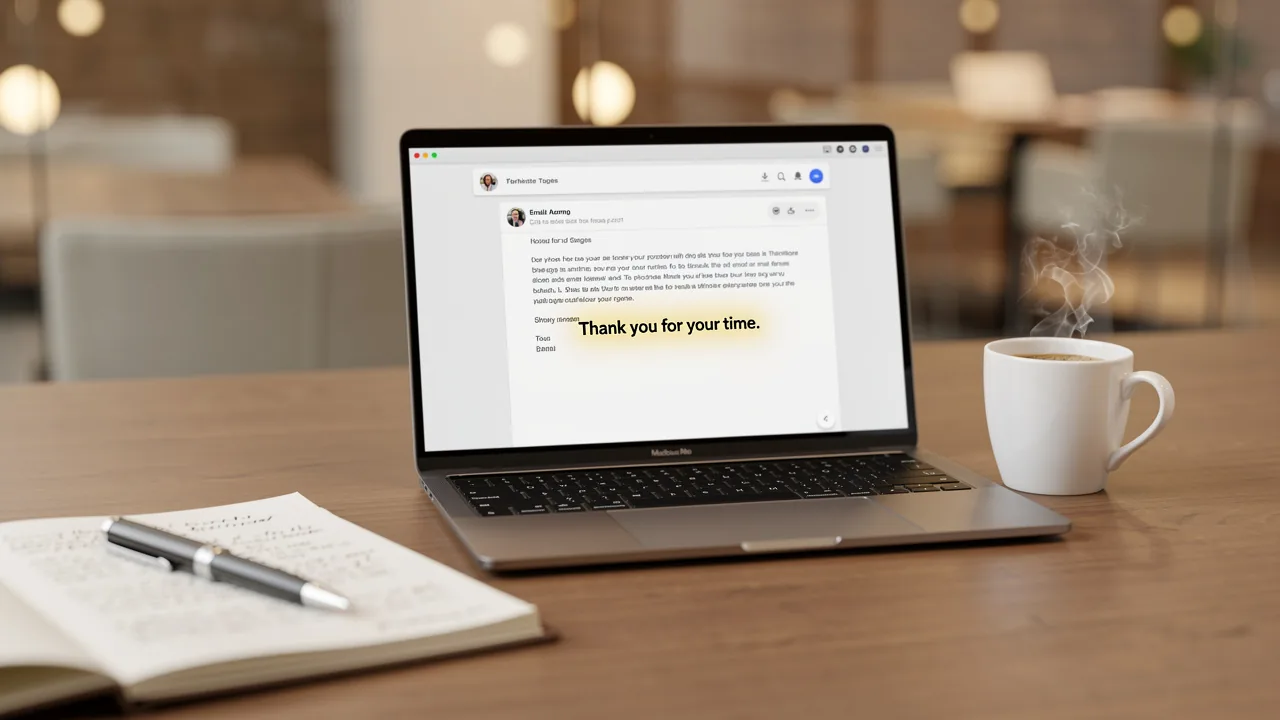
Use 'Thank You for Your Time' to Show Appreciation
Using phrases to end an email, like '[Thank you for your time](https://70% of employees would feel better about themselves if their boss were more grateful.),' can significantly enhance the effectiveness of your communication. Phrases to end an email are especially effective in follow-up emails and after meetings. It helps reinforce a positive rapport. For instance, you might say, '[Thank you for your time](https://70% of employees would feel better about themselves if their boss were more grateful.) and consideration regarding our proposal.' This not only expresses gratitude but also subtly reminds the individual of the context of your message.
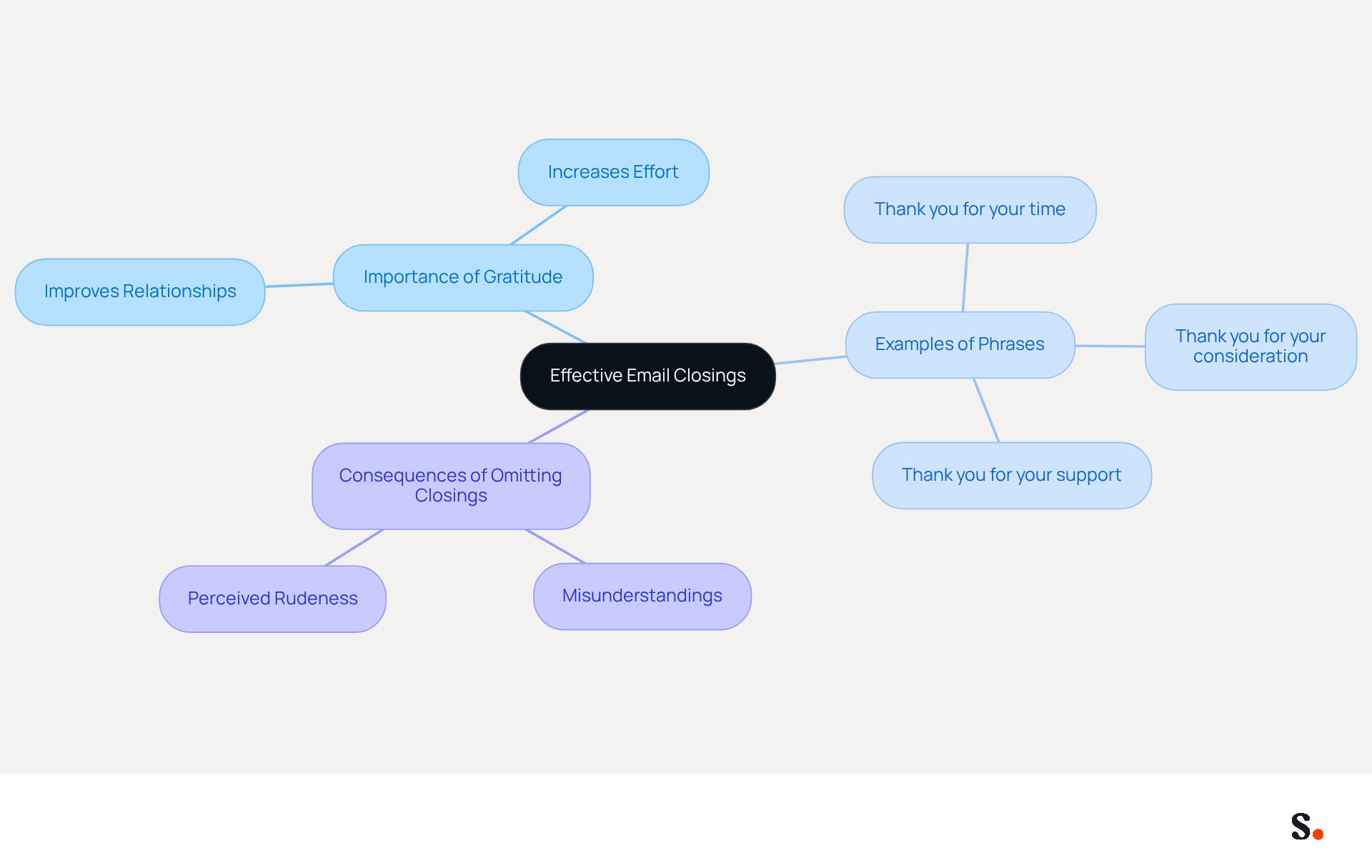
Studies show that [expressing gratitude](https://70% of employees would feel better about themselves if their boss were more grateful.) can greatly improve professional relationships, making it a crucial practice in communication. In fact, 81% of employees indicate that they would exert more effort if their boss showed greater appreciation, highlighting the significance of recognizing the recipient's time investment in fast-paced environments.
Case studies reveal that the use of polite sign-offs, such as 'Thank you,' plays a vital role in maintaining social dynamics and ensuring effective communication. Without a closing, misunderstandings can arise, and the message may come off as rude, especially in professional contexts. The case study titled 'The Risks of Omitting Closings' emphasizes that using phrases to end an email, like '[Thank you for your time](https://70% of employees would feel better about themselves if their boss were more grateful.),' is essential for fostering goodwill and professionalism in your correspondence.
Incorporate 'Looking Forward to Your Response' for Engagement
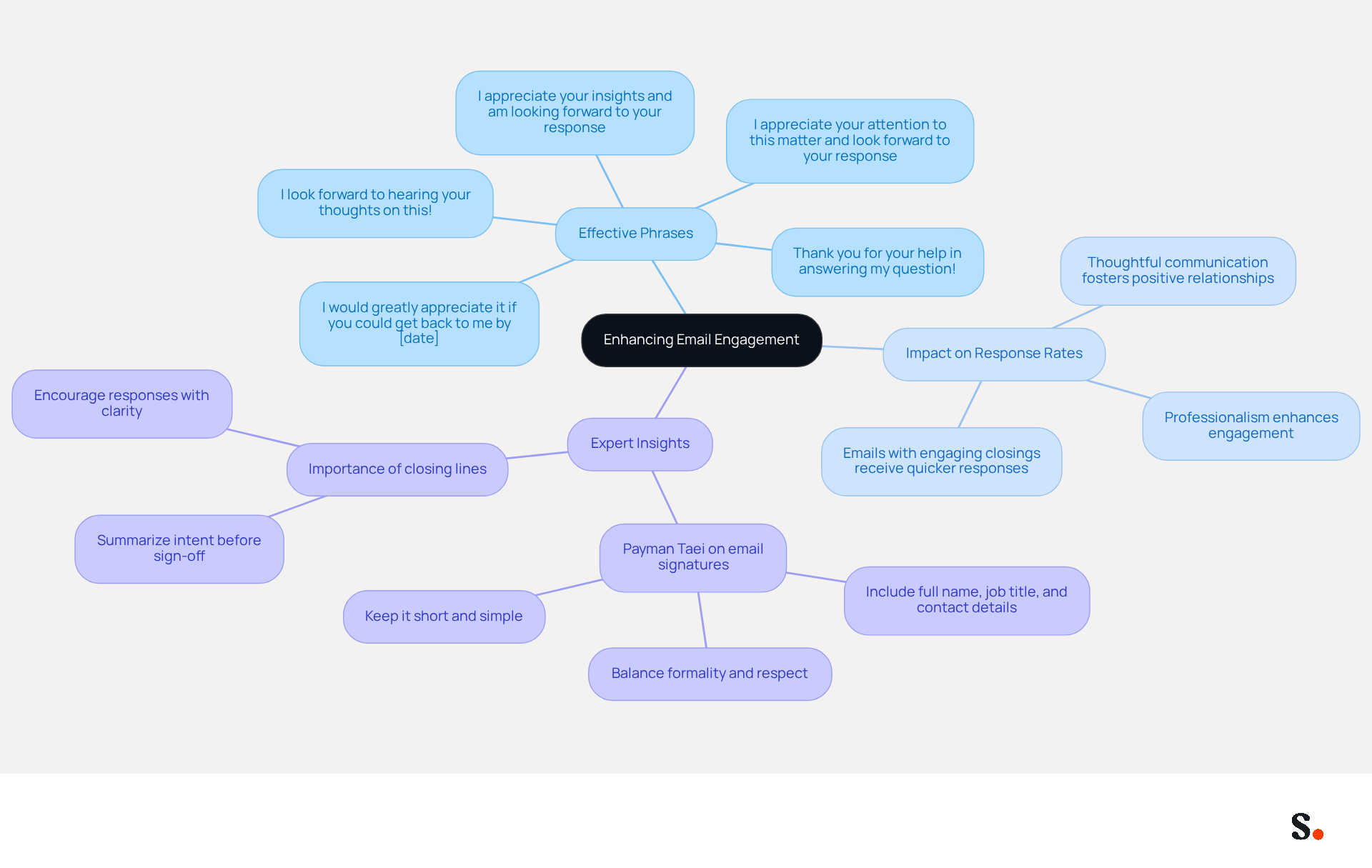
Incorporating effective phrases to end an email can significantly influence response rates. Including the phrase 'I appreciate your insights and am looking forward to your response' at the end of your message can encourage the individual to reply sooner. This expression not only conveys that you value their input but also motivates them to engage with your message. Studies indicate that emails with engaging closing statements often receive quicker responses, highlighting the importance of thoughtful communication.
For instance, using variations like:
- '[I look forward to hearing your thoughts on this!](https://70% of employees would feel better about themselves if their boss were more grateful.)'
- 'Thank you for your help in answering my question!'
can create a sense of urgency and appreciation, prompting recipients to respond promptly. Additionally, phrases such as 'I appreciate your attention to this matter and look forward to your response' serve as gentle reminders, effectively prompting action while maintaining professionalism.
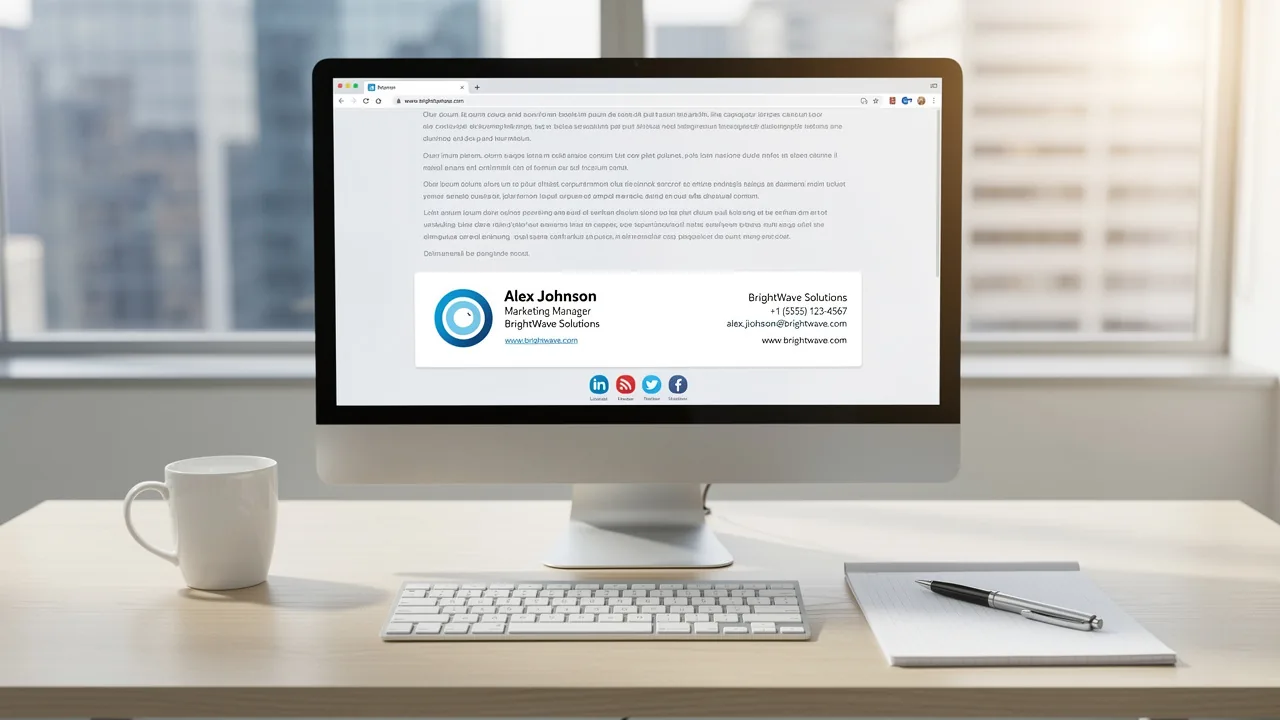
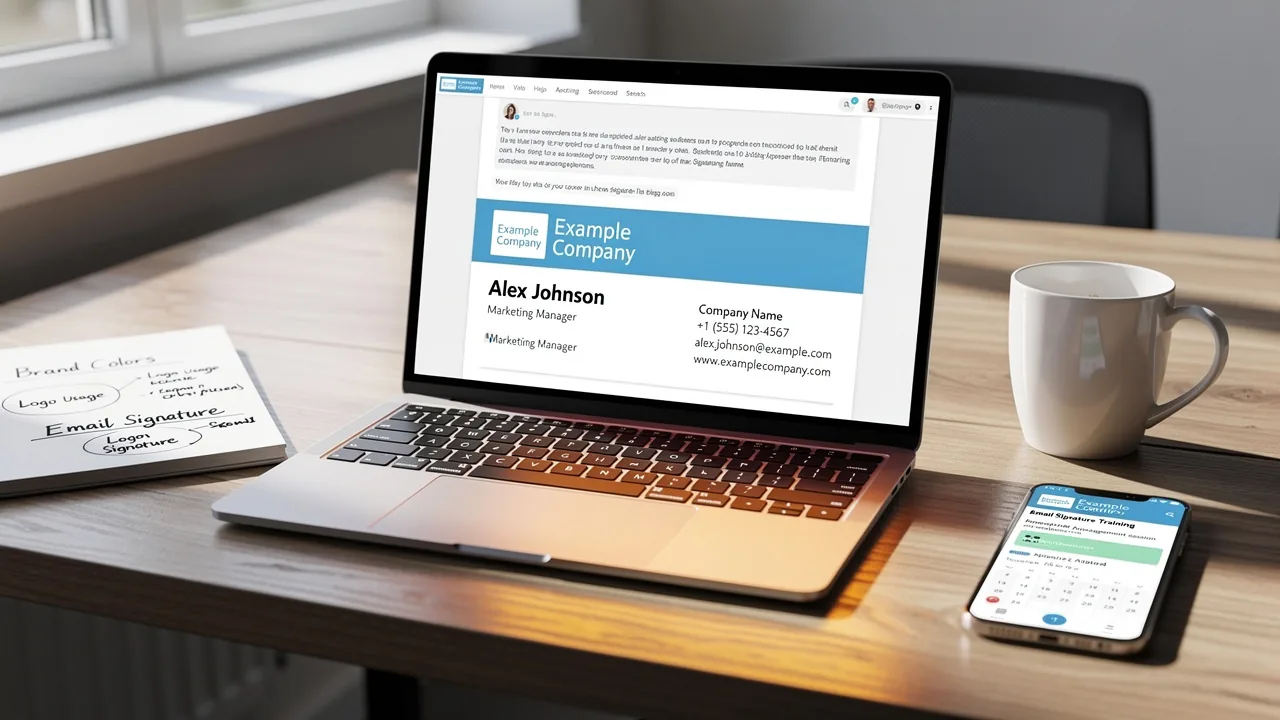
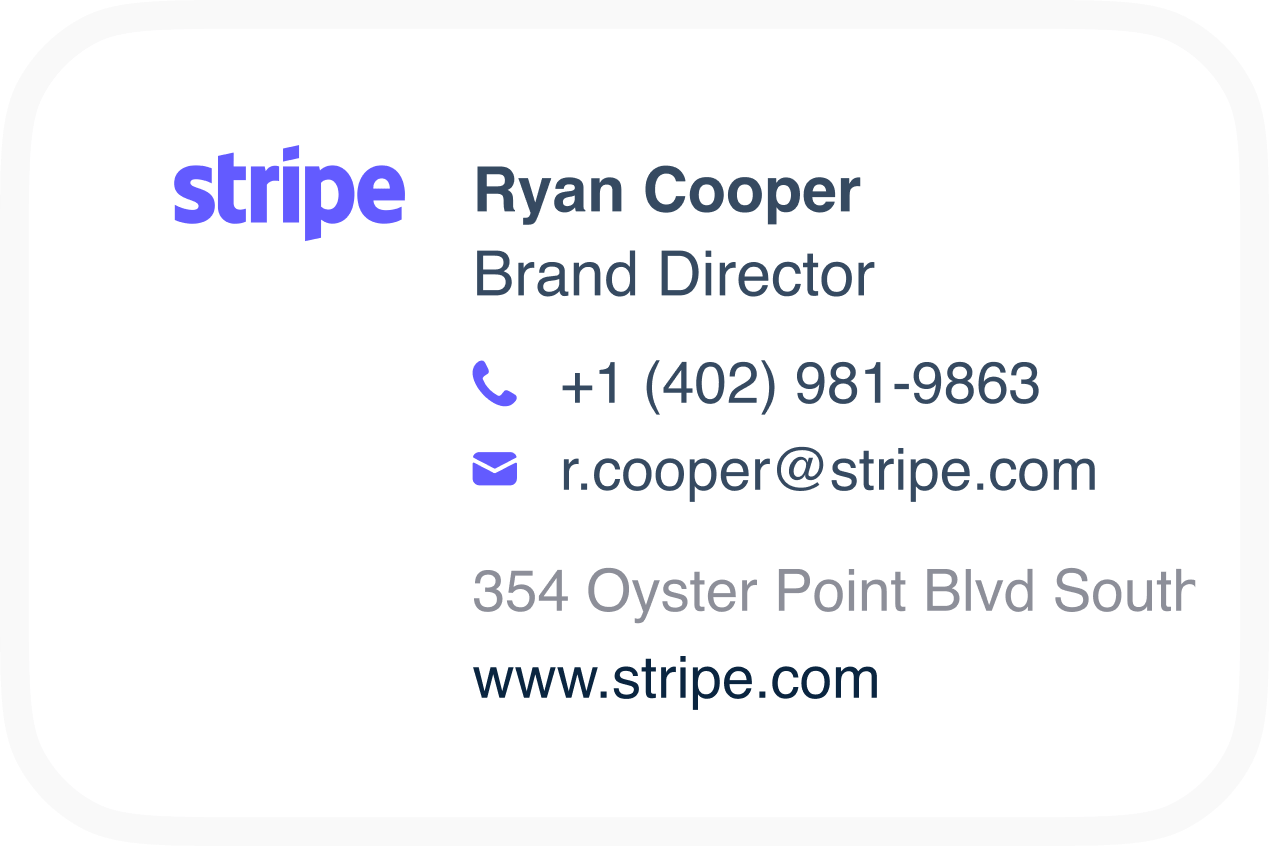
Experts agree that incorporating phrases to end an email can really boost engagement. Payman Taei highlights that a robust signature at the end of your message provides the reader with the context they require about your identity. By clearly expressing your eagerness for a response, you not only enhance the likelihood of a reply but also foster a positive relationship with the recipient. Thus, incorporating these captivating closing statements, along with a complete professional message structure that includes your contact details, is crucial for effective interaction.
End with 'Please Let Me Know if You Have Questions' to Invite Clarification
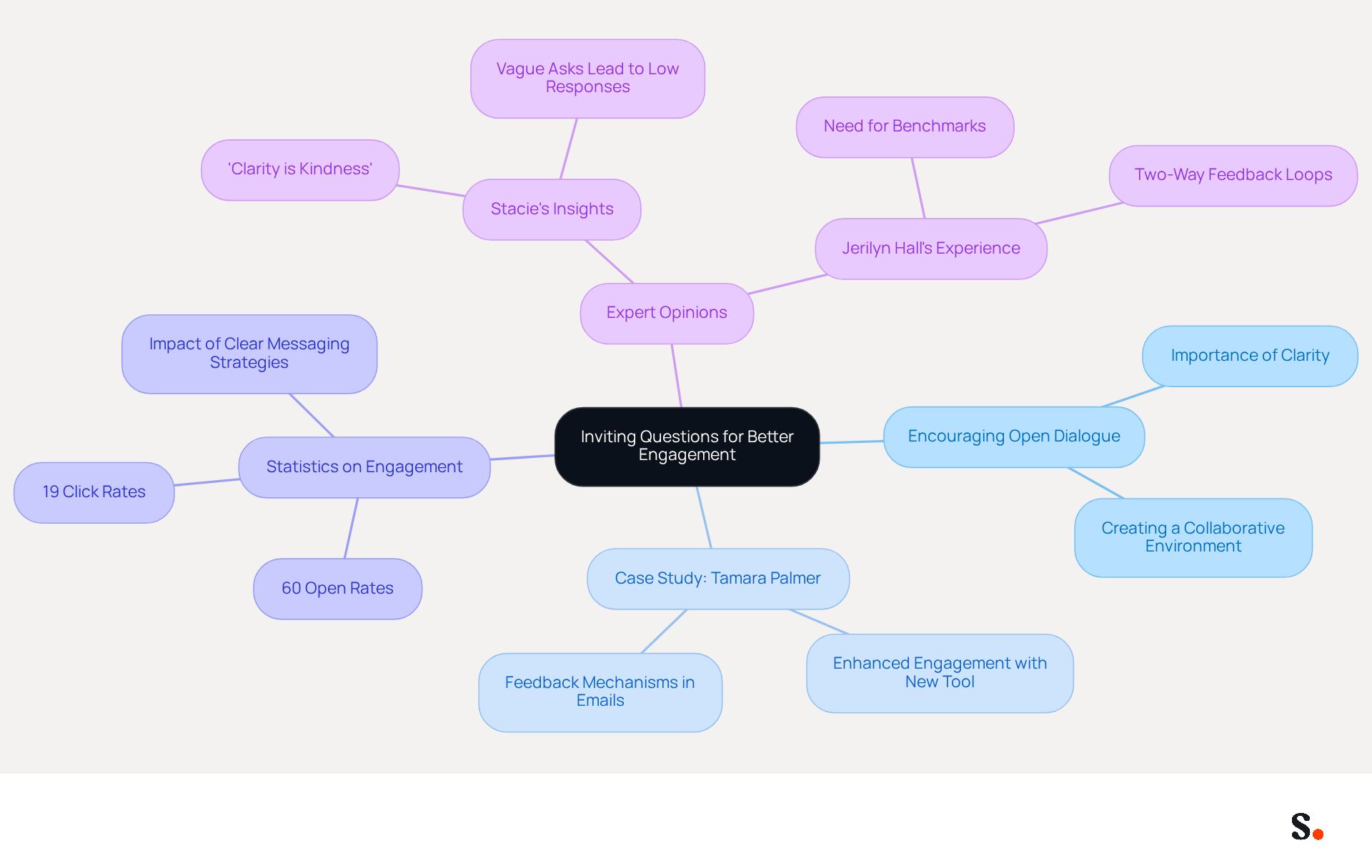
Encouraging open dialogue through invitations for questions can significantly enhance understanding in complex discussions. This approach not only encourages recipients to seek clarification but also demonstrates that their understanding is valued. For example, in a case study involving Tamara Palmer, Employee Engagement & Internal Communications Lead, the transition to a more advanced messaging tool significantly enhanced engagement by embedding feedback mechanisms directly into emails. This strategy invites questions by providing real-time insights, which helps clarify interactions.
Statistics show that organizations with clear messaging strategies see higher engagement rates when they invite questions. For instance, users of ContactMonkey have achieved approximately 60% open rates and 19% click rates, showcasing how well-structured emails that invite dialogue can lead to improved engagement.
Expert opinions also highlight the importance of this practice. Stacie, a specialist in interactions, emphasizes that 'clarity is kindness,' suggesting that a simple invitation for questions can open hearts and inboxes. By incorporating such expressions, professionals can create a more collaborative environment, ensuring that all parties feel comfortable discussing any uncertainties. This practice not only fosters collaboration but also transforms communication into a more engaging experience.
Utilize 'I Appreciate Your Prompt Attention to This Matter' for Urgency
Incorporating urgency into your email communication is essential for fostering prompt responses and demonstrating respect for your recipient's time. Using the phrase 'I appreciate your prompt attention to this matter' effectively conveys urgency while acknowledging the recipient's efforts. For instance, stating, 'I appreciate your prompt attention to this matter as we are on a tight deadline,' clearly communicates the urgency of the situation.
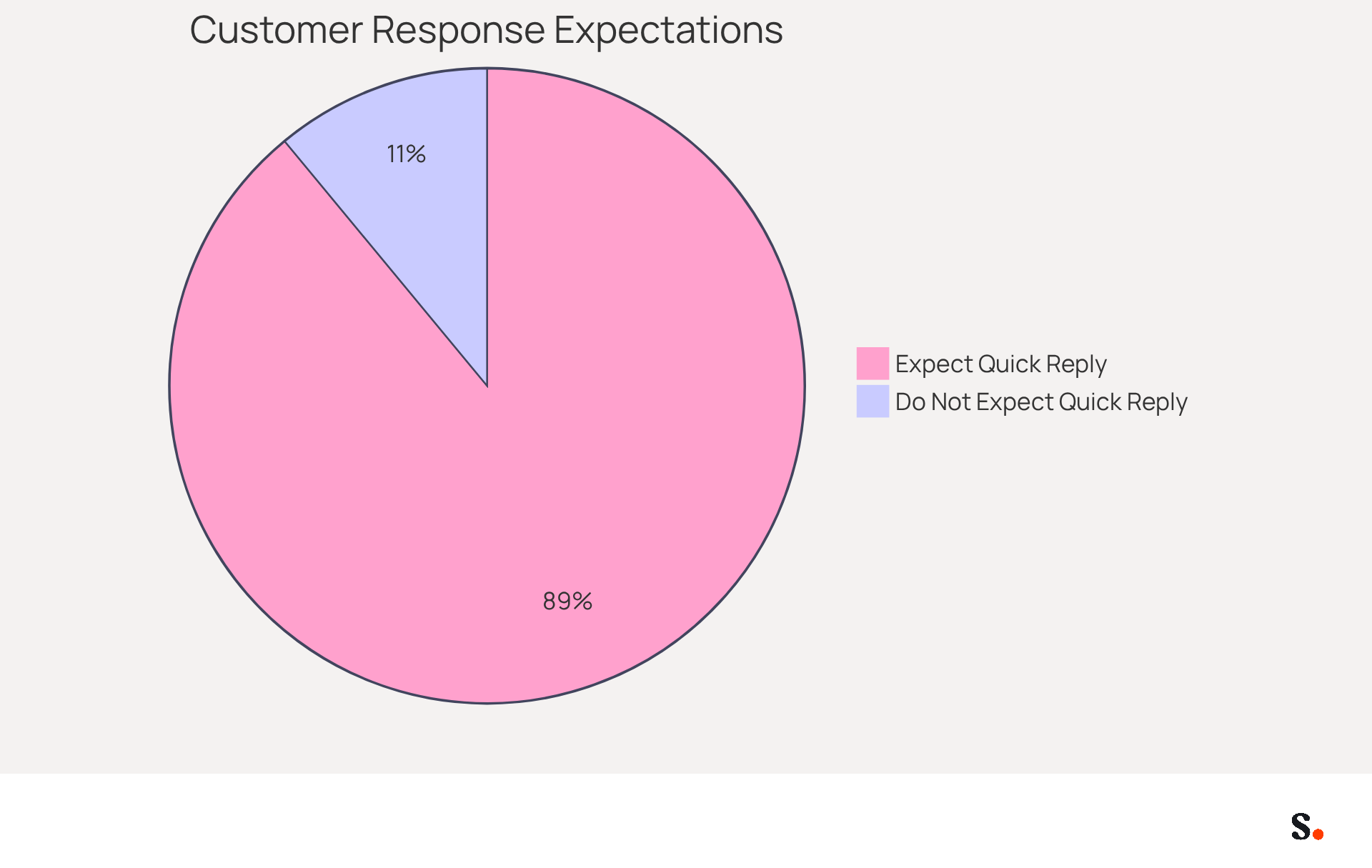
Research shows that 89% of customers expect a response within one hour, underscoring the importance of timely communication. Furthermore, a one-minute response time can lead to an impressive 391% increase in conversion rates, emphasizing the critical role of urgency in communication interactions.
Case studies reveal that organizations prioritizing quick responses significantly enhance customer trust and retention. Businesses that respond faster than their competitors are more likely to retain customers, as 48% of consumers have switched brands due to poor customer service, including slow response times.
Ultimately, prioritizing urgency in your communication can lead to improved customer loyalty and a stronger professional reputation.
Include 'Your Feedback is Valuable to Me' to Build Rapport
Concluding a message with a personal touch can significantly enhance engagement, especially when seeking input. For instance, you might say, 'Your feedback is valuable to me, and I look forward to hearing your thoughts on this proposal.' This approach invites a response and shows that you value the recipient's perspective.
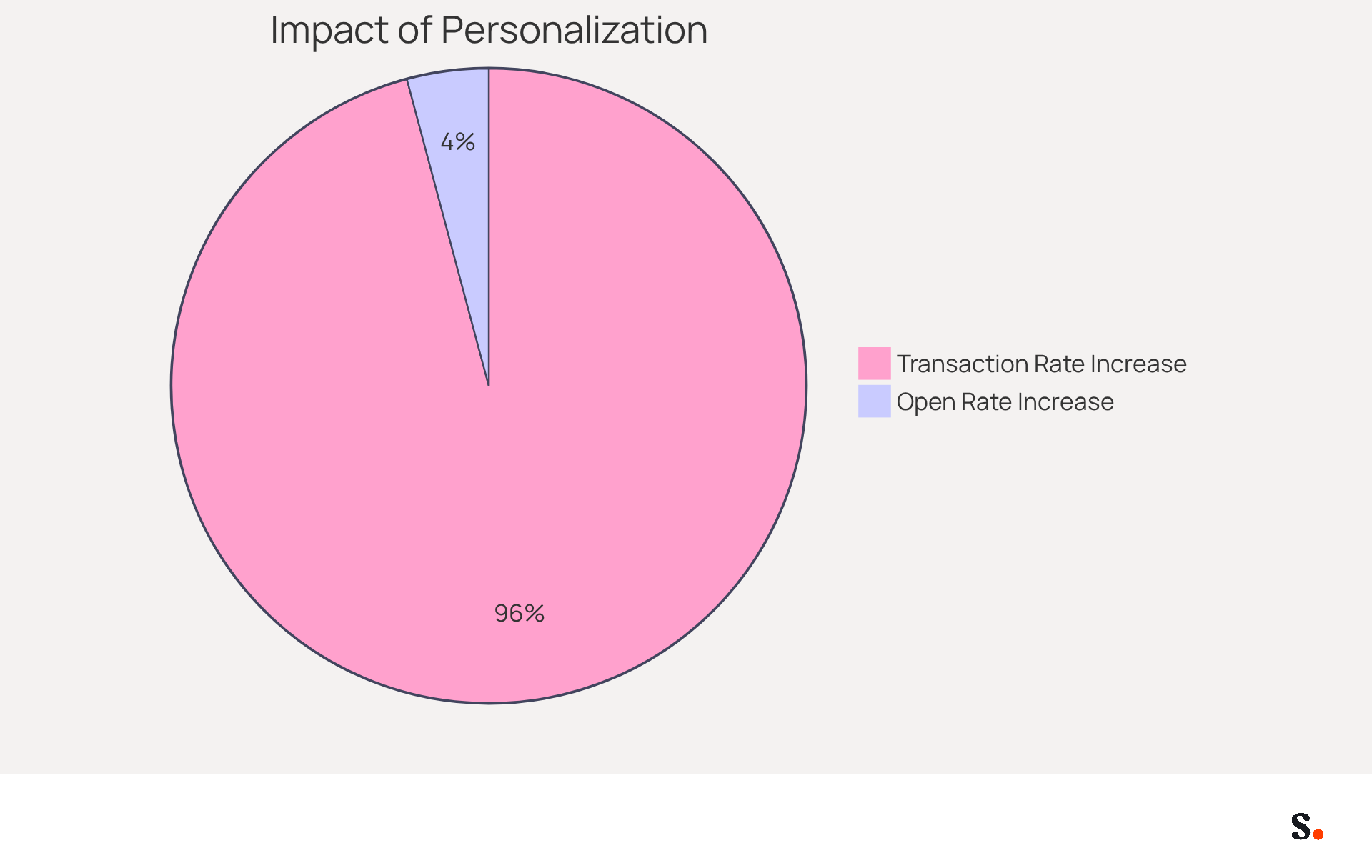
Statistics reveal that personalized messages can significantly enhance engagement; for instance, they can boost open rates by 26%, and messages with tailored content experience transaction rates six times greater than non-personalized ones. This emphasizes the effectiveness of customized interaction in building rapport.
Moreover, case studies indicate that professionals who include considerate requests and show gratitude in their messages are more likely to receive favorable replies. As Karen Bailey highlights, conveying the appropriate message in written communication is essential for establishing clarity and respect, which further strengthens the rapport developed through such expressions.
Ultimately, the way we communicate can either strengthen or weaken our professional relationships.
Say 'Thank You, and I Hope to Collaborate Soon' for Future Opportunities
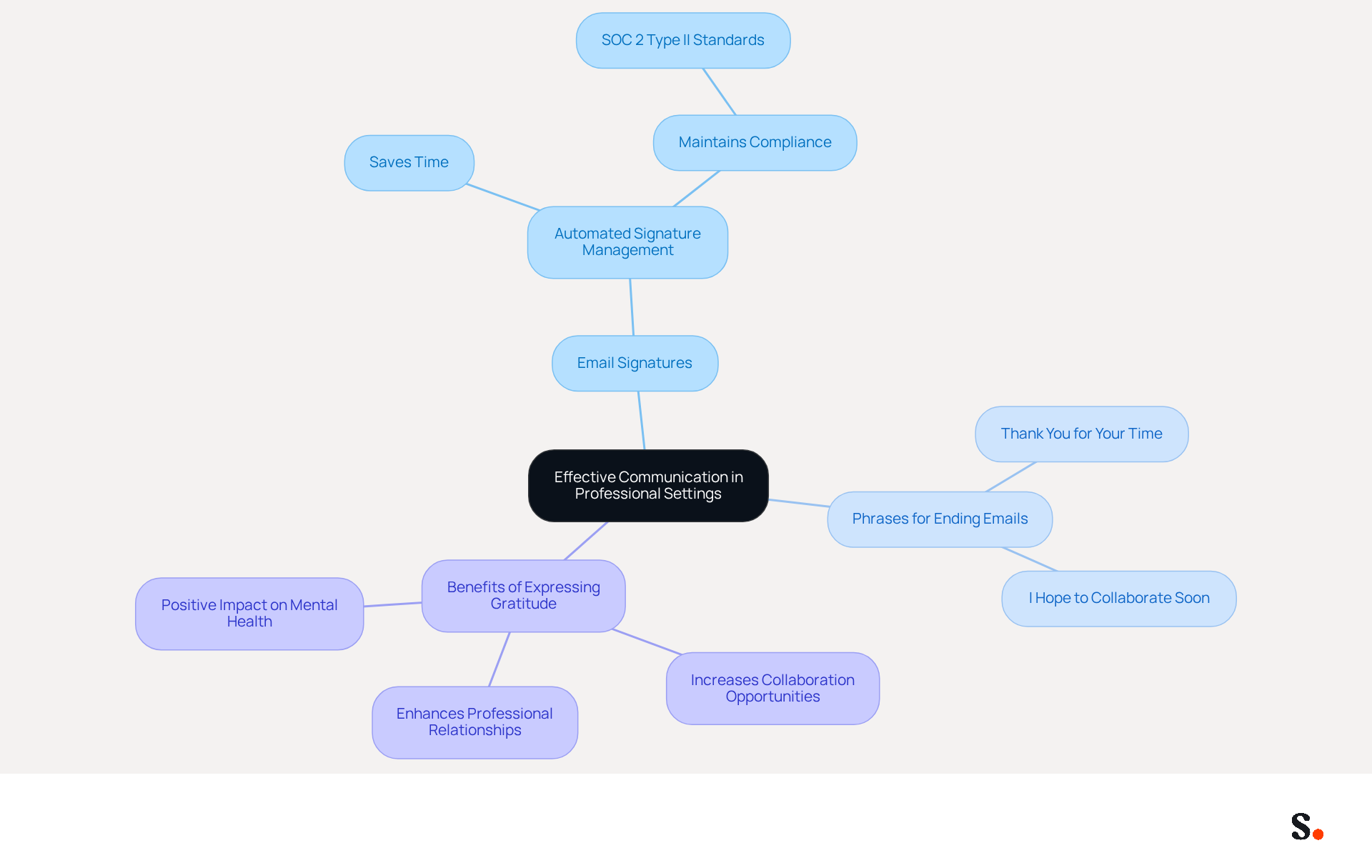
Effective communication in professional settings often hinges on the details, such as email signatures. Using phrases to end an email, like 'Thank you for your time, and I hope to collaborate soon on this exciting project,' is particularly effective after initial meetings or discussions. This not only shows appreciation but also highlights your enthusiasm for future collaboration.
By utilizing Scribe's automated signature management, you save time by auto-filling teammates' signatures from your HRIS data, keeping their information current and compliant with SOC 2 Type II standards. This shift enables professionals to prioritize meaningful interactions over administrative tasks while upholding professionalism in their communications.
Studies show that expressing gratitude can enhance professional relationships, leading to increased collaboration opportunities. For instance, a case study revealed that candidates who sent thank you messages after interviews were more likely to leave a positive impression, influencing hiring decisions favorably. Moreover, 76% of employees who use project management tools report enhanced internal interactions, suggesting that clear expressions of gratitude can foster better teamwork and collaboration.
By incorporating phrases to end an email into your sign-offs, you create a lasting impact that paves the way for future collaborations.
Conclude with 'Best Regards' for Professionalism
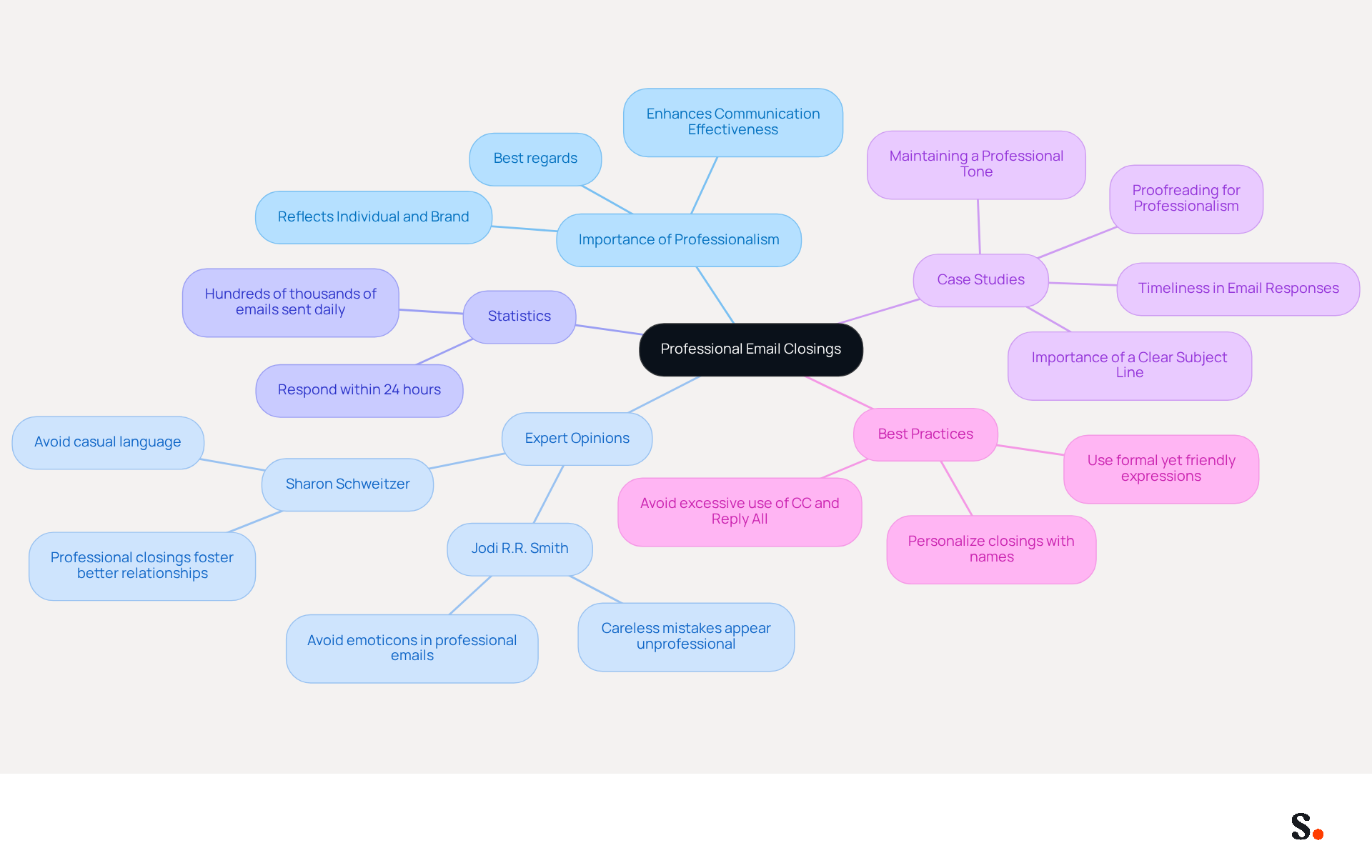
Concluding a message with 'Best regards' is essential for maintaining professionalism in business communication. This phrase strikes a balance between formality and friendliness, making it suitable for various contexts. According to Jodi R.R. Smith, maintaining professionalism in correspondence closings is crucial, as it reflects both the individual and their brand. Messages that conclude with phrases to end an email, such as 'Best regards,' enhance the sender's professionalism. As Smith observes, 'Careless mistakes in messages will only make you appear unprofessional to your audience.'
Statistics show that Americans send hundreds of thousands of messages daily, underscoring the importance of effective interaction. Using appropriate phrases to end an email wraps up the conversation thoughtfully and shows respect for the recipient's time. For instance, using 'Best regards, [Your Name]' conveys a courteous tone that is likely to be well-received.
Case studies emphasize the influence of professional closing statements on effectiveness in interactions. One study found that messages with clear and respectful endings foster better relationships and enhance the overall effectiveness of communication. By personalizing the closing with the individual's name, senders can further strengthen their connection. As Sharon Schweitzer advises, "By informing the recipient that a reply isn’t necessary, the communication cycle doesn’t continue on indefinitely."
Incorporating expert opinions, it is recommended to avoid casual language or emoticons in professional correspondence, as these can detract from the message's seriousness. Instead, adhering to formal yet friendly expressions like 'Best regards' ensures clarity and professionalism, which are essential in today's fast-paced business environment. Ultimately, using phrases to end an email like 'Best regards' not only enhances professionalism but also fosters stronger connections in business communications.
Use 'Warm Regards' to Add a Personal Touch
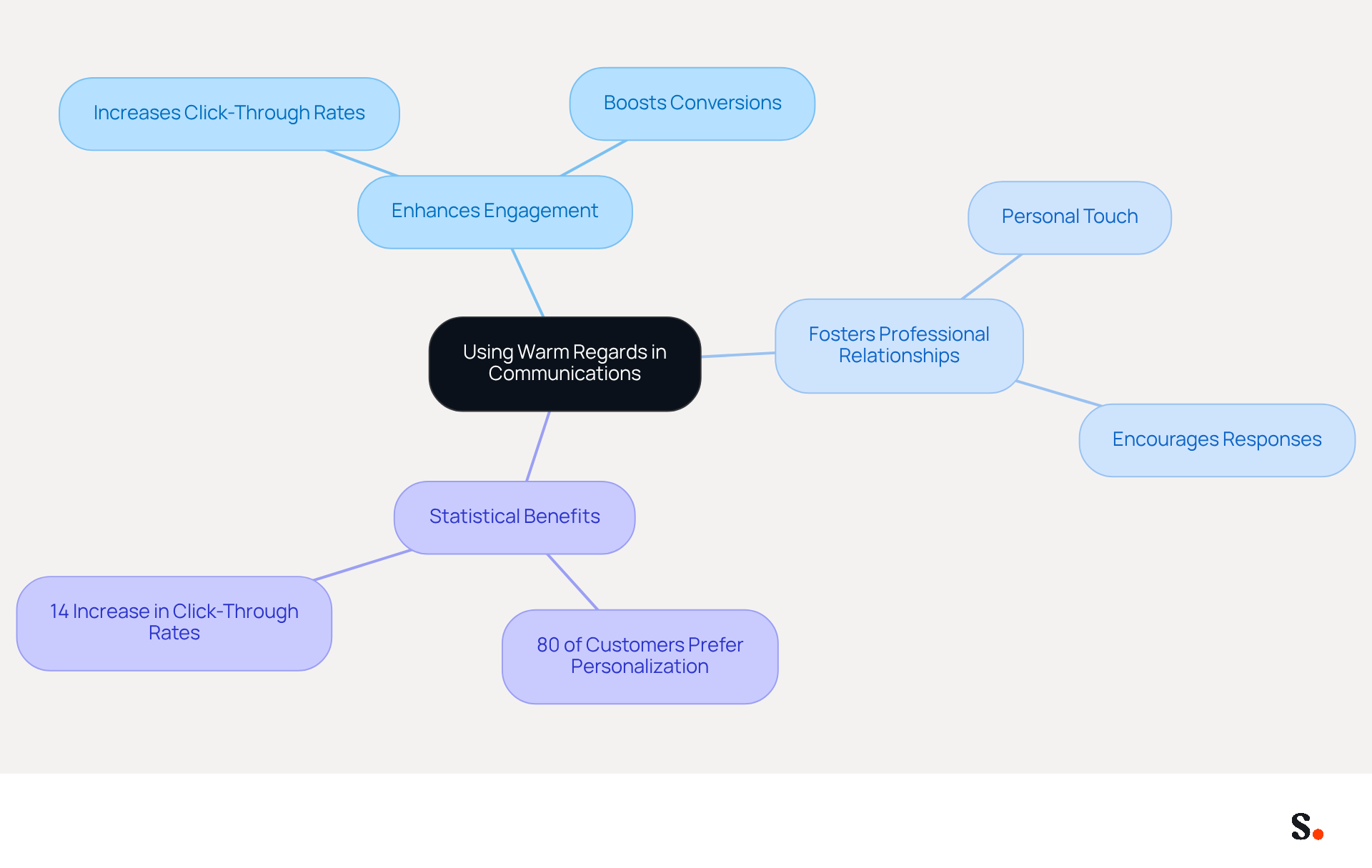
Incorporating 'Warm Regards' in your communications can significantly enhance engagement and foster professional relationships. Utilizing this closing expression strikes a balance between friendliness and professionalism, making it particularly effective in ongoing communications.
Studies indicate that when messages are personalized, engagement rates can soar, making them more effective. Tailored communications can experience a 14% increase in click-through rates and a 10% boost in conversions. Furthermore, 80% of customers prefer brands that offer personalized experiences, underscoring the value of adding a personal touch in professional correspondence.
Incorporating phrases to end an email, such as 'Warm Regards,' not only enhances the warmth of your message but also aligns with effective communication strategies that foster better relationships and encourage responses from those receiving it. Ultimately, adopting this simple phrase can lead to more meaningful interactions and improved business outcomes.
End with 'Feel Free to Reach Out Anytime' for Openness
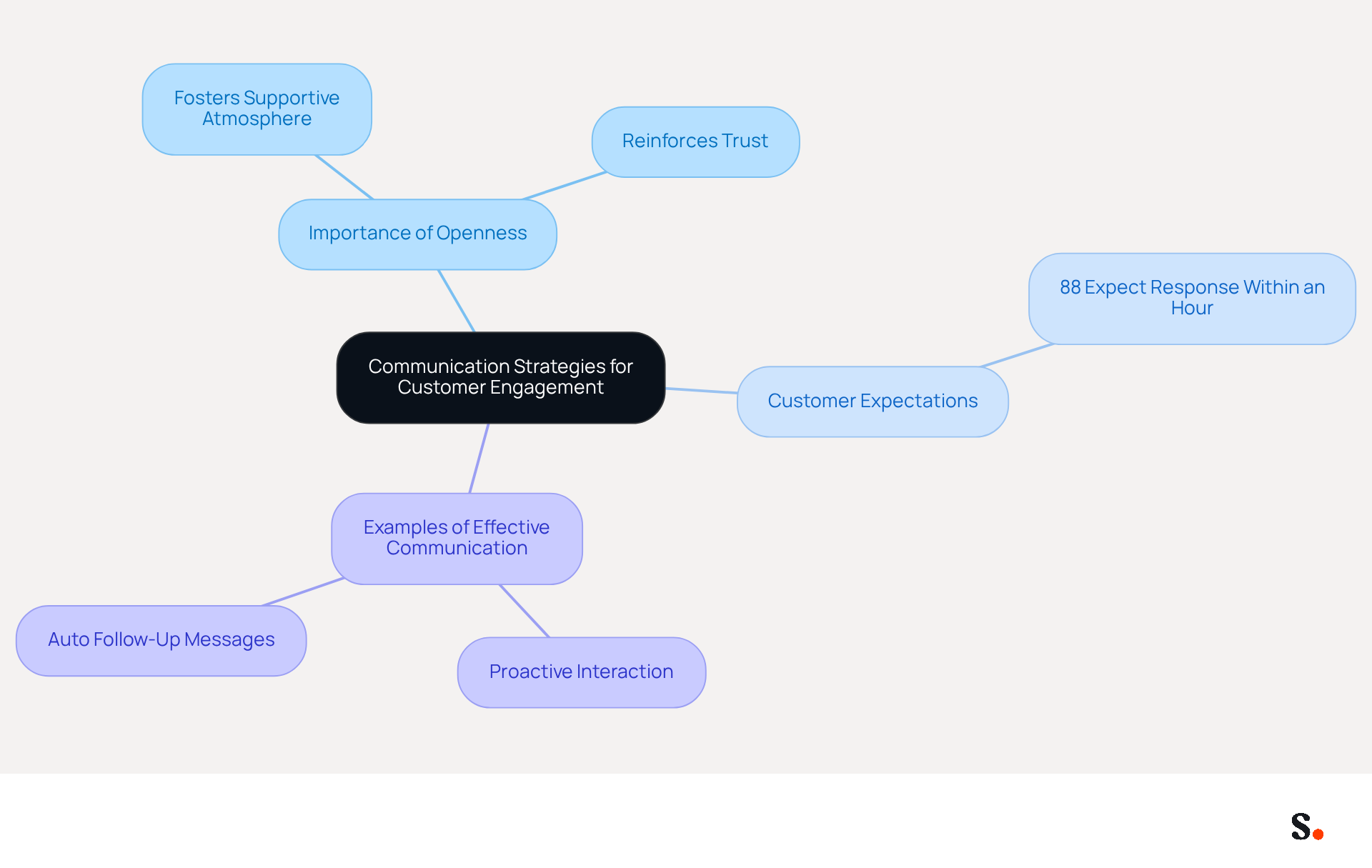
Concluding messages with an invitation for further communication fosters a supportive atmosphere. This approach encourages open communication and shows your commitment to helping them. Notably, 88% of customers expect a response within an hour, highlighting the need for prompt interaction. By inviting further inquiries, you reinforce trust and engagement, which are crucial for maintaining strong professional relationships.
For example, companies that adopt open dialogue strategies often experience enhanced customer satisfaction. A case study on proactive interaction during service outages showed that keeping customers informed mitigated frustration and strengthened relationships. Similarly, using auto follow-up messages can enhance customer satisfaction by providing timely updates without additional effort from support agents.
Incorporating phrases to end an email in your sign-offs can really enhance how you connect with your recipients, making it clear that you value their input and are available to assist them whenever needed. This approach not only enhances communication but also solidifies your role as a reliable partner in their journey.
Incorporate 'Let's Stay in Touch' to Foster Relationships
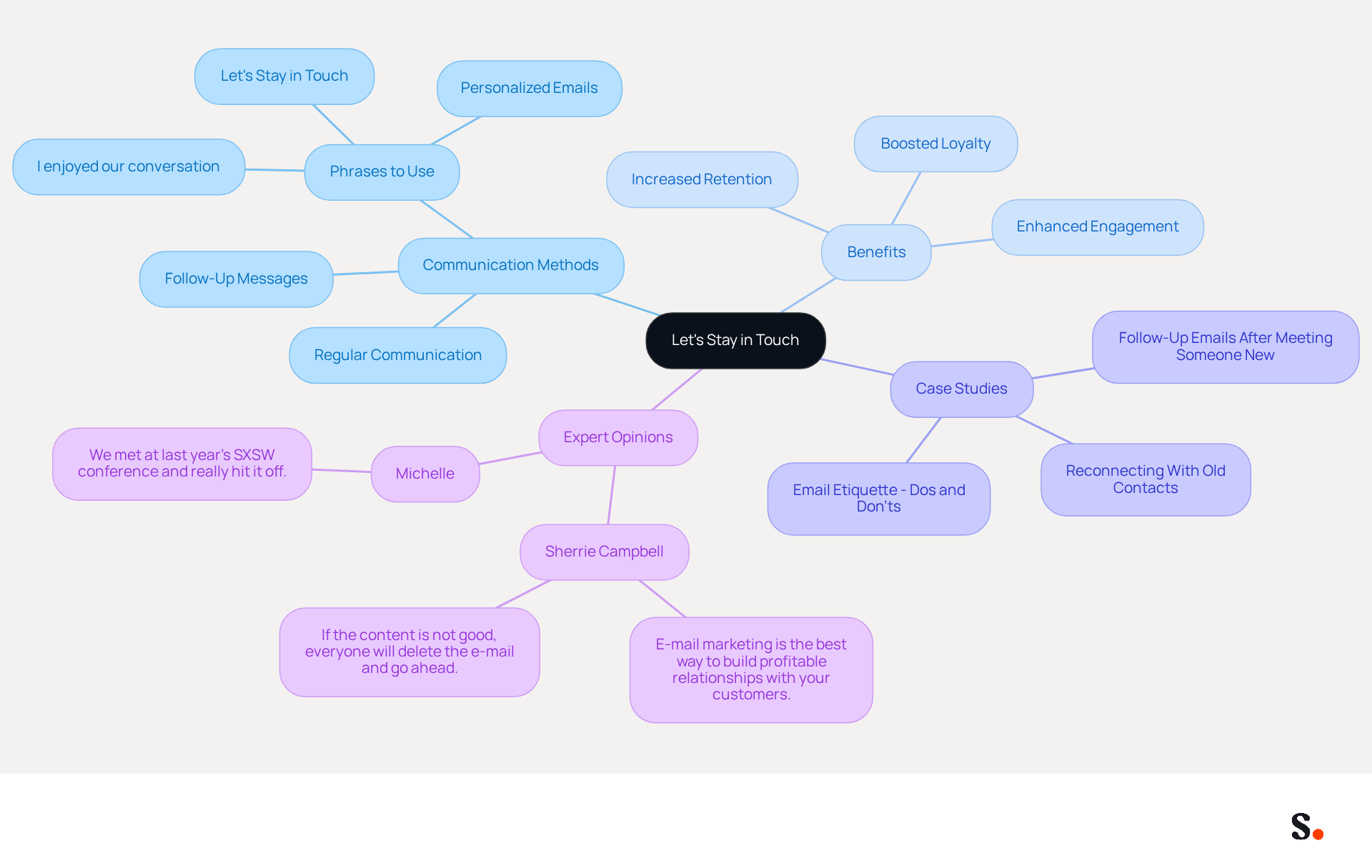
Using phrases to end an email, such as 'Let's Stay in Touch,' can significantly impact relationship-building efforts. For instance, saying, 'I enjoyed our conversation and would love to stay in touch,' not only shows genuine interest but also encourages future interactions. This method supports the idea that effective communication helps nurture relationships, which in turn boosts loyalty and engagement.
Research shows that regular communication can greatly improve customer relationships, with a 5% increase in retention potentially leading to profit increases of 25-95%. Additionally, case studies highlight the effectiveness of follow-up messages after meetings. For example, the case study titled 'Follow-Up Messages After Meeting Someone New' emphasizes the importance of expressing gratitude and referencing previous discussions to strengthen professional connections and create opportunities for collaboration.
Experts agree that when emails are personalized and have a conversational tone, they can truly become powerful tools for building relationships. Treating recipients as individuals rather than mere names on a list fosters stronger connections and improves engagement. Furthermore, balancing educational content with promotional offers is crucial for maintaining trust with subscribers. Ultimately, by adopting such simple yet effective phrases, businesses can ensure that their communication fosters lasting relationships.
Conclusion
Effective email closings are not just formalities; they are pivotal in shaping professional interactions. Using thoughtful sign-offs, like expressions of gratitude or invitations for further dialogue, significantly increases the chances of timely responses and positive relationships. These closing phrases show respect for the recipient's time and highlight how crucial clear communication is in professional settings.
Throughout the article, various phrases have been highlighted, each serving a unique purpose. From expressing appreciation with "Thank You for Your Time" to inviting further inquiries with "Feel Free to Reach Out Anytime," these phrases can change how an email feels and promote a more collaborative environment. Additionally, the significance of urgency, personalization, and professionalism in email closings has been underscored, demonstrating how these elements contribute to effective communication.
This shift in approach can lead to stronger professional relationships and increased responsiveness. By adopting these strategic phrases, individuals can enhance their communication effectiveness and pave the way for future collaborations and stronger connections. Embracing these practices can redefine your professional interactions, making them more impactful and engaging.
Frequently Asked Questions
Why is it important to use phrases like 'Thank you for your time' in emails?
Using phrases like 'Thank you for your time' enhances communication effectiveness, reinforces positive rapport, and expresses gratitude, which can improve professional relationships.
How does expressing gratitude impact professional relationships?
Studies show that expressing gratitude can significantly improve professional relationships, with 81% of employees indicating they would put in more effort if their boss showed greater appreciation.
What are the consequences of omitting polite sign-offs in emails?
Omitting polite sign-offs can lead to misunderstandings and may make the message seem rude, especially in professional contexts.
How can phrases like 'I appreciate your insights and am looking forward to your response' influence email responses?
Such phrases can encourage quicker replies by conveying that you value the recipient's input and motivate them to engage with your message.
What variations of closing statements can create a sense of urgency and appreciation?
Variations like 'I look forward to hearing your thoughts on this!' and 'Thank you for your help in answering my question!' can prompt recipients to respond promptly.
What role does a robust email signature play in communication?
A robust signature provides the reader with context about your identity and enhances the likelihood of a reply while fostering a positive relationship.
How can inviting questions in emails enhance understanding?
Inviting questions encourages open dialogue, demonstrates that the recipient's understanding is valued, and can significantly enhance engagement in complex discussions.
What statistics support the effectiveness of inviting questions in emails?
Organizations with clear messaging strategies see higher engagement rates, with examples like ContactMonkey users achieving approximately 60% open rates and 19% click rates.
What expert opinion emphasizes the importance of inviting questions in communication?
Stacie, a specialist in interactions, states that 'clarity is kindness,' suggesting that inviting questions can create a more collaborative and engaging communication environment.
List of Sources
- Use 'Thank You for Your Time' to Show Appreciation
- Why Are We Signing Our Emails With "Thank You?" (https://scientificamerican.com/blog/anthropology-in-practice/why-are-we-signing-our-emails-with-thank-you)
- News | Stop Replying ‘thank You’ for Every Email Received (https://costar.com/article/531777917/stop-replying-thank-you-for-every-email-received)
- 10 Amazing Statistics to Celebrate National Gratitude Month - Penn State PRO Wellness (https://prowellness.childrens.pennstatehealth.org/10-amazing-statistics-to-celebrate-national-gratitude-month)
- “Thank you” emails: love ‘em or hate ‘em? - Clear Concept Inc. (https://clearconceptinc.ca/thank-you-emails-love-em-or-hate-em)
- Bulk Email Sender. Mass Email Marketing. (https://mailbrother.com/blog/the-importance-of-thank-you-email-newsletters)
- Incorporate 'Looking Forward to Your Response' for Engagement
- How to End an Email Professionally (With Examples) (https://iconnect.isenberg.umass.edu/blog/2024/07/10/how-to-end-an-email-professionally-with-examples)
- 20 phrases for closing an email (https://linkedin.com/pulse/20-phrases-closing-email-adeel-bilal)
- Professional email sign-offs: Best closing lines | mail.com blog (https://mail.com/blog/posts/professional-email-sign-offs/209)
- How to End an Email: 43 Ways to Sign Off on an Email (2026) (https://respona.com/blog/how-to-end-an-email)
- End with 'Please Let Me Know if You Have Questions' to Invite Clarification
- Internal Communication Email Software - ContactMonkey (https://contactmonkey.com/blog)
- How to Write an Email That Gets Responses | Stacie Bloomfield (https://staciebloomfield.com/blog/how-to-write-an-email-that-gets-responses)
- How to Politely Ask for Clarification in an Email: Sample Templates and Phrases (https://dailyaiwriter.com/blog/how-to-politely-ask-for-clarification-in-email-sample)
- Clarification Emails: Structure and Phrases | Target Training GmbH (https://targettraining.eu/clarification-emails-structure-phrases)
- Utilize 'I Appreciate Your Prompt Attention to This Matter' for Urgency
- Email response time statistics & how they help conversions (https://blog.superhuman.com/email-response-time-statistics)
- How to Create a Sense of Urgency for Conversions in Email Right Now (https://campaignmonitor.com/blog/email-marketing/how-to-create-sense-urgency-in-emails)
- How to express urgency in an email for business purposes — Stripo.email (https://stripo.email/blog/express-urgency-in-email-for-business-purposes)
- 60+ Urgent Email Subject Lines (2026) - Get Immediate Action | Sequenzy (https://sequenzy.com/email-subject-lines/urgent)
- 9 sales email templates to inspire urgency in your prospects (https://blog.hubspot.com/sales/sales-email-templates-create-urgency)
- Include 'Your Feedback is Valuable to Me' to Build Rapport
- How to Build Rapport in Email Communication (https://linkedin.com/top-content/writing/email-writing-best-practices/how-to-build-rapport-in-email-communication)
- Workforce Management Software News, Blog, and Resources (https://workforce.com/news/building-e-mail-rapport)
- How to Write Email Templates That Build Rapport (https://icmi.com/resources/2022/email-templates)
- 8 Strategies to Build Trust and Rapport With Prospects Through Cold Emailing (https://growthrhino.com/8-strategies-to-build-trust-and-rapport-with-prospects-through-cold-emailing)
- 49 Top Email Marketing Statistics (https://forbes.com/advisor/business/software/email-marketing-statistics-jul-26)
- Say 'Thank You, and I Hope to Collaborate Soon' for Future Opportunities
- 10 examples of how to write sincere thank you emails with AI (https://shortwave.com/blog/how-to-write-thank-you-emails-with-examples)
- 32 Professional Thank You Email Templates for Any Occasion (https://respona.com/blog/thank-you-email)
- Workplace Collaboration: Statistics, Trends & Takeaways 2026 (https://archieapp.co/blog/workplace-collaboration-statistics)
- Workplace Collaboration Statistics to Up Your Team’s Productivity (https://cake.com/blog/workplace-collaboration-statistics)
- Top 20 "Thank You" Email Templates After Meeting (https://maestra.ai/blogs/20-thank-you-email-templates-after-meeting)
- Conclude with 'Best Regards' for Professionalism
- Email Etiquette: Dos and Don’ts of Professional Emails (https://businessnewsdaily.com/8262-email-etiquette-tips.html)
- Email Etiquette: Professionalism in Digital Communication (https://linkedin.com/pulse/email-etiquette-professionalism-digital-communication-john-leightley-cizze)
- The Dos and Don’ts of Business Email Etiquette (https://grammarly.com/blog/emailing/business-email-etiquette)
- Email Etiquette in the Workplace (https://adminvc.ucla.edu/news/email-etiquette-workplace)
- Email Etiquette: A Guide to Professional Communication (https://getfishtank.com/insights/email-etiquette-a-guide-to-professional-communication)
- Use 'Warm Regards' to Add a Personal Touch
- Top 10 Tips for Personal Touch Email To Boost Sales (https://clientvenue.com/blog/personal-touch-email)
- 7 Great Ways For Adding A Personal Touch To Your Sales Emails (https://milesweb.com/blog/email-hosting/7-great-ways-for-adding-a-personal-touch-to-your-sales-emails)
- Techniques for Creating a Personal Touch in Customer Emails (https://linkedin.com/top-content/customer-experience/engaging-customers-through-personalization/techniques-for-creating-a-personal-touch-in-customer-emails)
- 8 Email Marketing Statistics to Reinforce Your Strategy | Mailjet (https://mailjet.com/blog/email-best-practices/stats-email-marketing)
- Email Marketing Statistics | Ultimate List | CodeCrew (https://codecrew.us/blog/email-marketing-stats-you-need-to-know-the-ultimate-list)
- End with 'Feel Free to Reach Out Anytime' for Openness
- 34 customer service email templates + best practices (https://zendesk.com/blog/tools-and-templates/customer-service-email-templates)
- Email Etiquette in the Workplace (https://adminvc.ucla.edu/news/email-etiquette-workplace)
- 100 Compelling Email Statistics for 2026 | PGM Solutions (https://porchgroupmedia.com/blog/100-compelling-email-statistics-to-inform-your-strategy-in-2023)
- Best Practices for Effective Email Customer Support (https://comm100.com/blog/best-practices-for-effective-email-customer-support)
- Incorporate 'Let's Stay in Touch' to Foster Relationships
- Build Customer Relationships with Email Marketing | RED66 Marketing (https://red66marketing.com/blog/email-marketing-to-nurture-long-term-customer-relationships)
- How to Build Relationships Through Email Marketing | OutboundEngine (https://outboundengine.com/blog/how-to-build-relationships-through-email-marketing)
- 6 Ways to Build Customer Relationships Through Email Channels | Startup Grind (https://startupgrind.com/blog/6-ways-to-build-customer-relationships-through-email-channels)
- Writeseed | Best AI Writing Tool - Free 7-Day Trial (https://writeseed.com/blog/keep-in-touch-email-professional)
- The Ultimate Guide to Writing Effective Networking Emails in 2023 - Mystrika - Cold Email Software (https://blog.mystrika.com/networking-emails)
Get started with Scribe
Manage signatures across your whole team
Free 14-day trial — no credit card.