10 Pronouns in Email Signature Examples to Boost Inclusion
As workplaces strive for greater inclusivity, the traditional approach to email signatures must evolve to reflect this change. Email signatures, often
Sophie Grant
Email Signature Specialist, Scribe
On this page
- Introduction
- Scribe: Automate Pronoun Integration in Email Signatures
- Promote Inclusion: The Role of Gender Pronouns in Signatures
- Creative Examples: Incorporating Pronouns in Email Signatures
- Best Practices: Effective Placement of Pronouns in Signatures
- Impact Assessment: How Pronouns Influence Workplace Culture
- Challenges and Considerations: Navigating Pronoun Use in Signatures
- Industry Insights: Pronoun Usage in Different Sectors' Signatures
- Benefits of Pronouns: Fostering Respect and Belonging
- Advocacy Guide: Communicating the Importance of Pronouns
- Future Trends: Evolving Pronoun Usage in Email Signatures
- Conclusion
- Frequently Asked Questions
- List of Sources
Introduction
As workplaces strive for greater inclusivity, the traditional approach to email signatures must evolve to reflect this change. Email signatures, often overlooked, serve as a powerful tool for fostering inclusivity by incorporating gender pronouns.
We will examine ten innovative examples of integrating pronouns into email signatures, showcasing the benefits for workplace culture and communication.
How can organizations effectively implement pronoun usage to ensure all employees feel respected and valued?
Scribe: Automate Pronoun Integration in Email Signatures
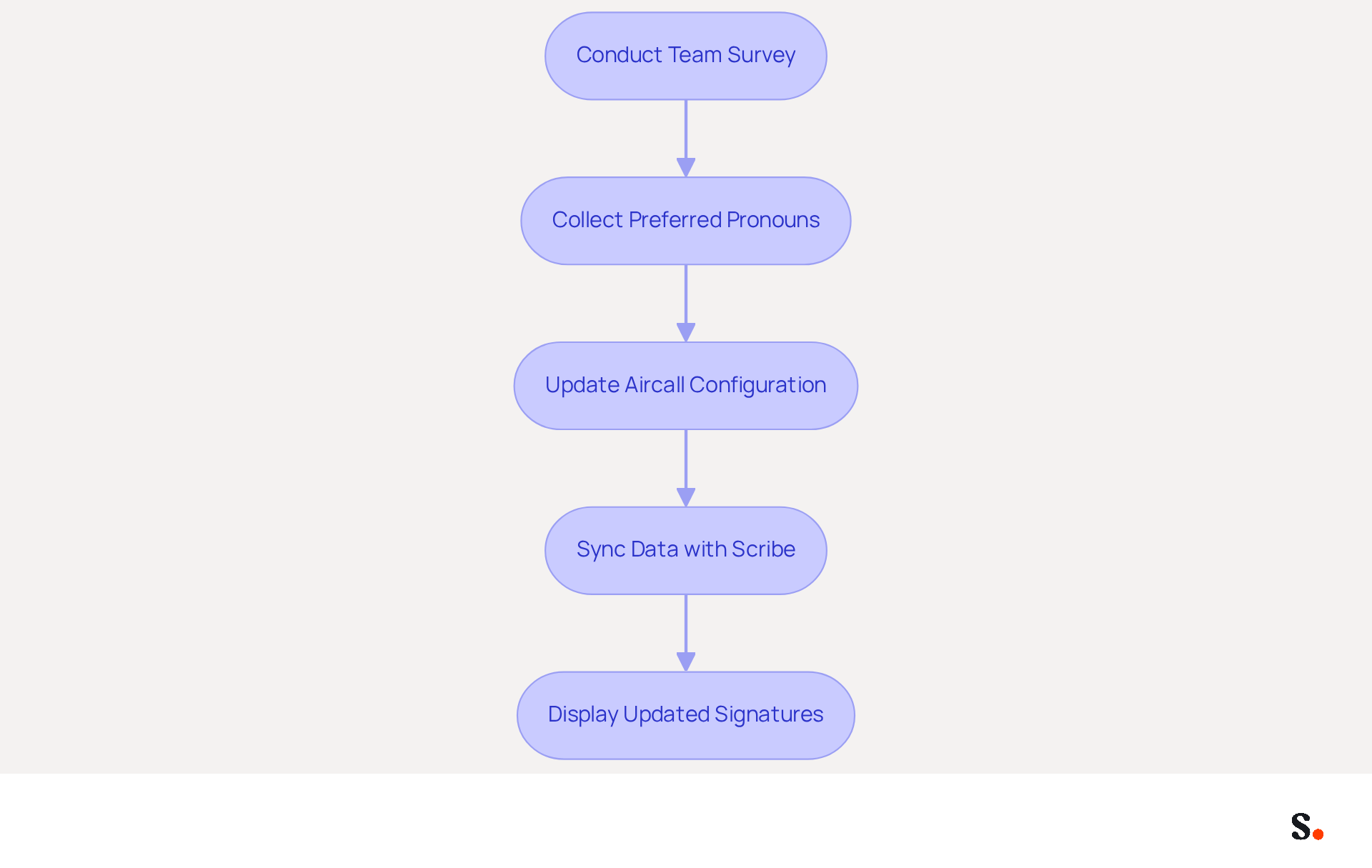
In today's diverse workplace, effectively managing pronouns in email signature examples is crucial for fostering inclusivity. Scribe offers a seamless way for businesses to automate the inclusion of gender identifiers in their email footers. By incorporating pronouns directly into the management system, Scribe ensures that every team member's preferred pronouns are consistently displayed. This enhances brand visibility. It also fosters an inclusive workplace culture. With Scribe, organizations can easily update and manage these identifiers across their teams, ensuring that inclusivity is maintained without additional manual effort. Each change made in your Aircall configuration will automatically be reflected in your Scribe signatures, as we are syncing the data from there, allowing for real-time updates.
To implement personal identifiers effectively, research indicates that including pronouns in email signature examples directly after the name or below it significantly improves visibility. As organizations increasingly acknowledge the significance of sharing pronouns - supported by statistics indicating that 25% of LGBTQ+ youth use terms beyond the traditional binary - Scribe's automation capabilities position it as a vital tool for fostering understanding and respect in professional communications. Furthermore, Scribe is SOC 2 Type II compliant, ensuring that your data is safe throughout this process.
As John Doe states, "Standardizing the use of personal references, such as identity terms, contributes to a culture where everyone feels valued and acknowledged." To effectively incorporate personal identifiers in your email footers, conducting a brief team survey to collect preferred terms is essential for ensuring inclusivity.
Promote Inclusion: The Role of Gender Pronouns in Signatures
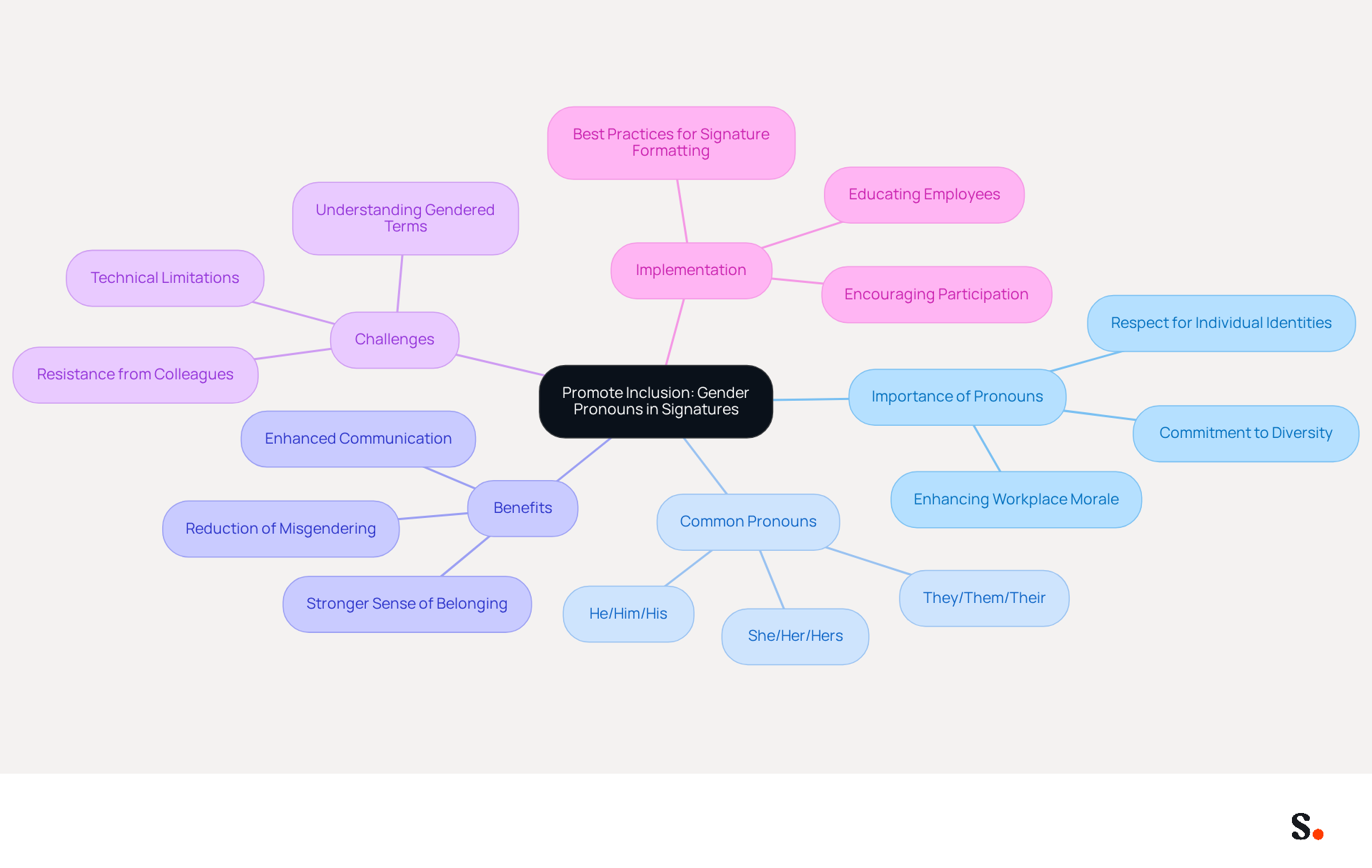
Incorporating personal identifiers in email signatures is a crucial step toward fostering inclusivity in the workplace. By incorporating personal identifiers, organizations demonstrate their commitment to diversity and respect for individual identities. This practice is supported by research showing that inclusive practices can significantly enhance workplace morale and communication dynamics. Notably, around 20% of Americans are familiar with someone who prefers a term other than 'he' or 'she,' underscoring the importance of acknowledging diverse identities in the workplace.
The three most frequently utilized personal references are:
- They/Them/Their for non-binary individuals
- He/Him/His for males
- She/Her/Hers for females
Positioning these identifiers right after one’s name in the email footer, formatted as 'John Doe (he/him),' is a clear pronouns in email signature example that ensures professionalism. This simple addition can transform organizational culture, fostering an atmosphere where everyone feels valued and acknowledged.
Case studies highlight the positive impact of adopting pronouns in email signature examples. For instance, organizations that embrace this practice, such as including pronouns in email signature examples, report enhanced communication and a stronger sense of belonging among staff. Encouraging discussions about identity types and actively listening to employee feedback are essential for voluntary participation in this initiative. As highlighted by Corie Pauling, Chief Inclusion and Diversity Officer at TIAA, recognizing an individual's preferred terms is a significant indication of respect that can greatly improve workplace culture.
However, some employees may feel uncomfortable or uncertain about using gendered terms in their signatures. Educating them on the importance of identity markers can help reduce this resistance and promote a more inclusive environment. Furthermore, organizations should motivate team members to embrace the practice of adding their identifiers in their email footers, offering a detailed guide to assist with execution.
Ultimately, this practice not only enhances workplace culture but also reflects an organization's genuine commitment to diversity and respect for all employees.
Creative Examples: Incorporating Pronouns in Email Signatures
Incorporating pronouns in email signature examples is a straightforward yet impactful way to promote inclusivity in professional communications.
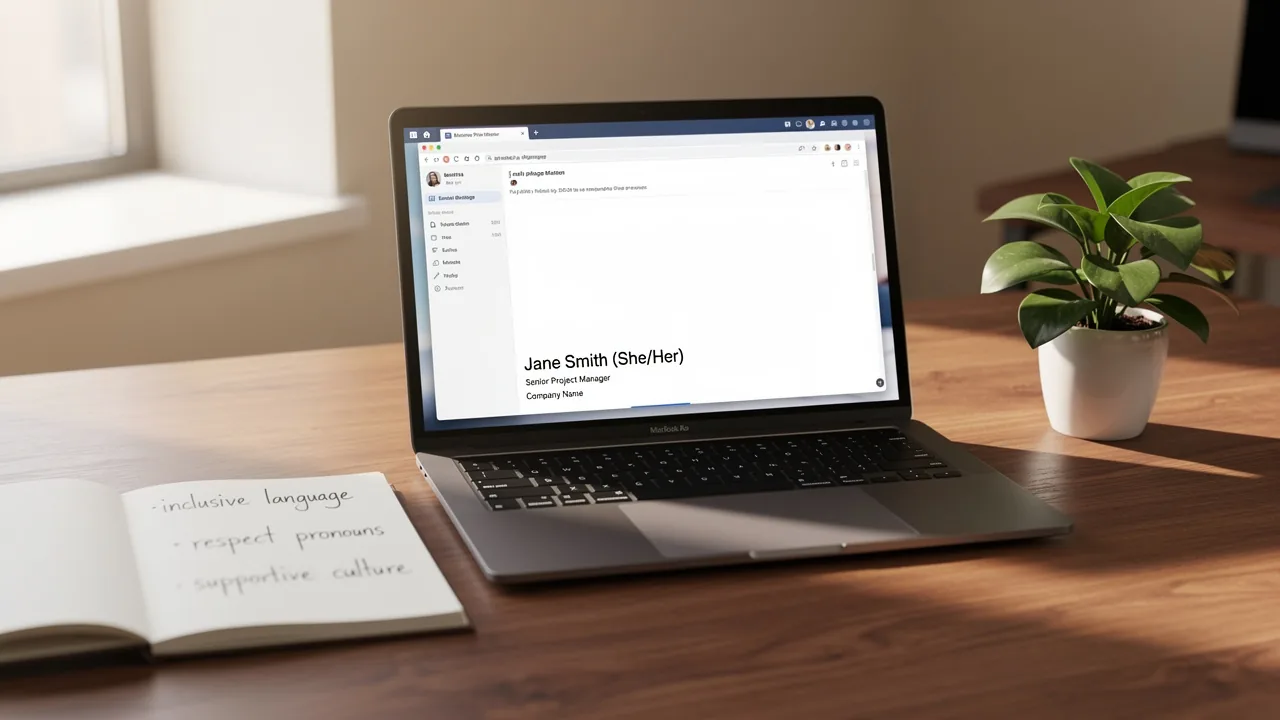
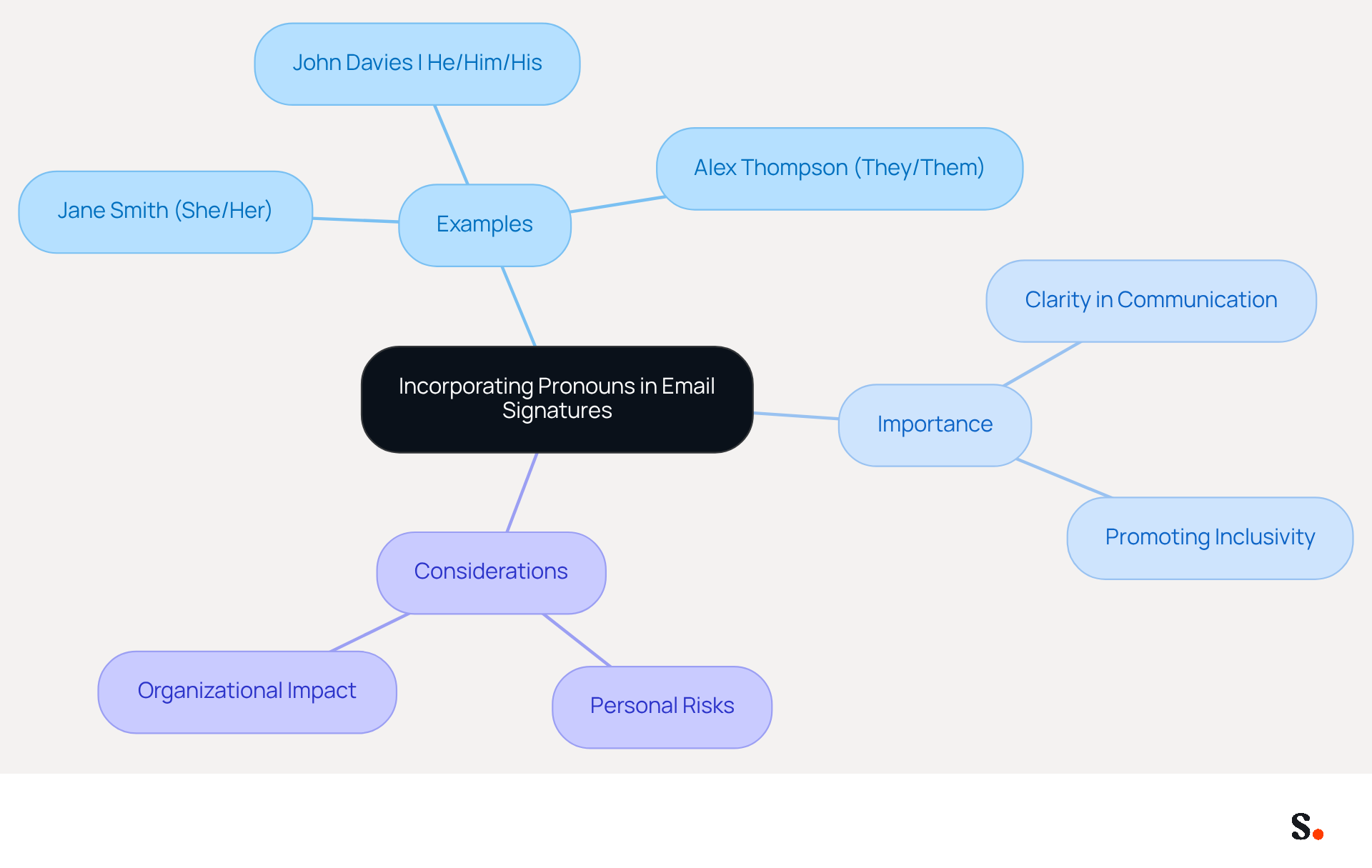
- Jane Smith (She/Her)
- John Davies | He/Him/His
- Alex Thompson (They/Them)
These formats provide clarity, ensuring recipients know how to address the sender appropriately. Including a tagline or quote about inclusivity enhances the signature's overall impact, such as 'Proud ally of the LGBTQ+ community.' This practice normalizes the sharing of gender identifiers, including a pronouns in email signature example, and actively contributes to a more inclusive professional environment. However, for some individuals, sharing their identifiers may pose personal risks, especially if they are not ready to disclose their identity. As a result, organizations that prioritize inclusion can enhance their workplace culture and employee satisfaction.
Best Practices: Effective Placement of Pronouns in Signatures
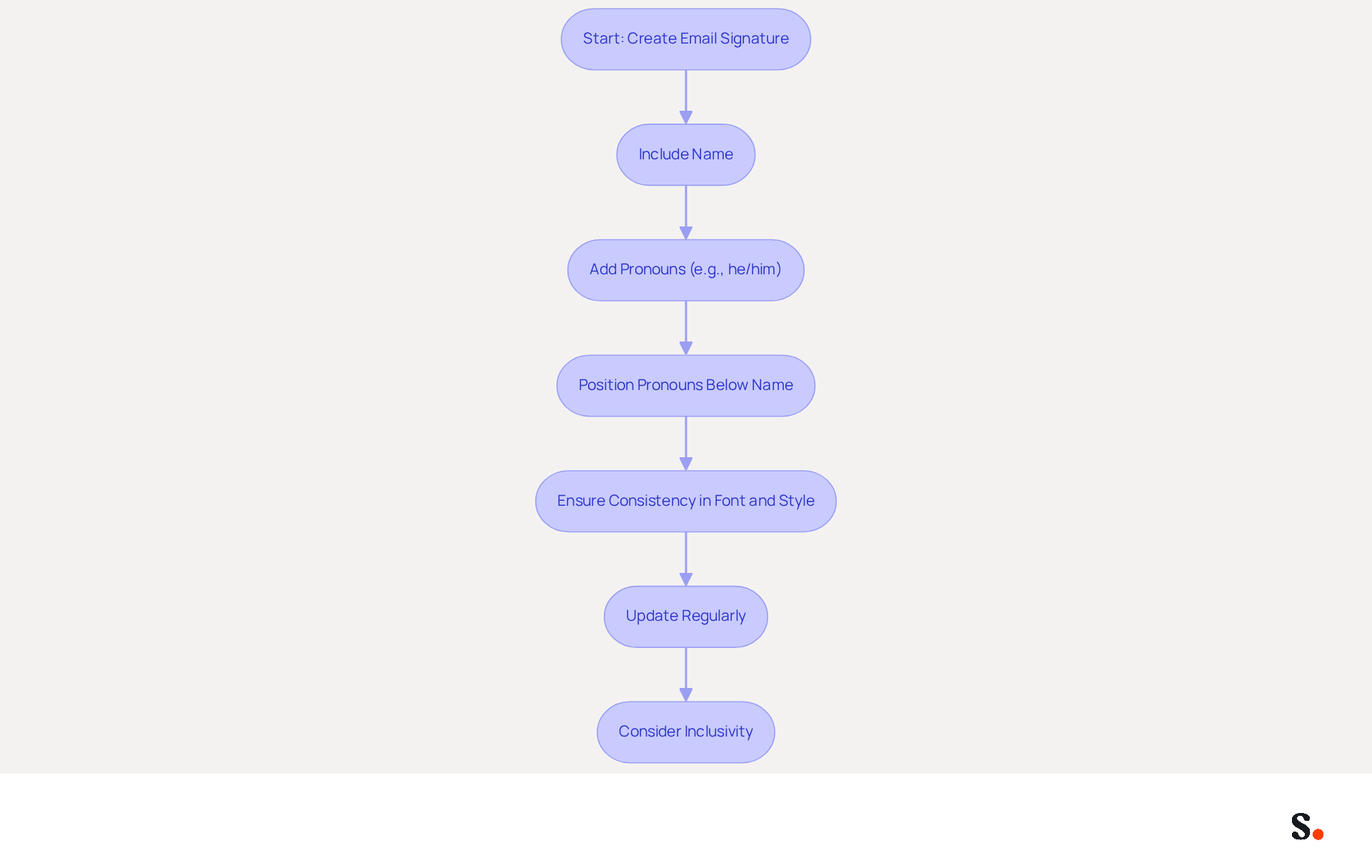
To ensure effective communication, it's vital to include personal identifiers in your email footer. For instance:
- John Doe (he/him)
This format is widely recognized and allows recipients to easily identify how to address you. If your signature includes several lines, consider placing the personal identifiers on the second line directly beneath your name. Maintaining consistency in font and style is crucial for a professional appearance. Many users struggle to keep their email signatures updated, leading to outdated information. Furthermore, incorporating personal references can improve organizational attitudes and foster inclusivity, making it a beneficial practice in today’s diverse workplace. As Dr. Johnson notes, encouraging the disclosure of personal identifiers is important, but it should remain a personal choice. Moreover, sharing pronouns in email signature example can positively influence perceptions of the organization, attracting LGBTQ+ applicants and promoting a more inclusive environment. By syncing your Google Workspace with Scribe, you can simplify the management of these identifiers, saving time and ensuring that any updates to your teammates' information are automatically reflected in Scribe, thus maintaining consistency and professionalism across your organization. With Scribe's adherence to SOC 2 Type II, GDPR, and CCPA, you can trust that your data is secure while you concentrate on creating inclusive email representations.
Impact Assessment: How Pronouns Influence Workplace Culture
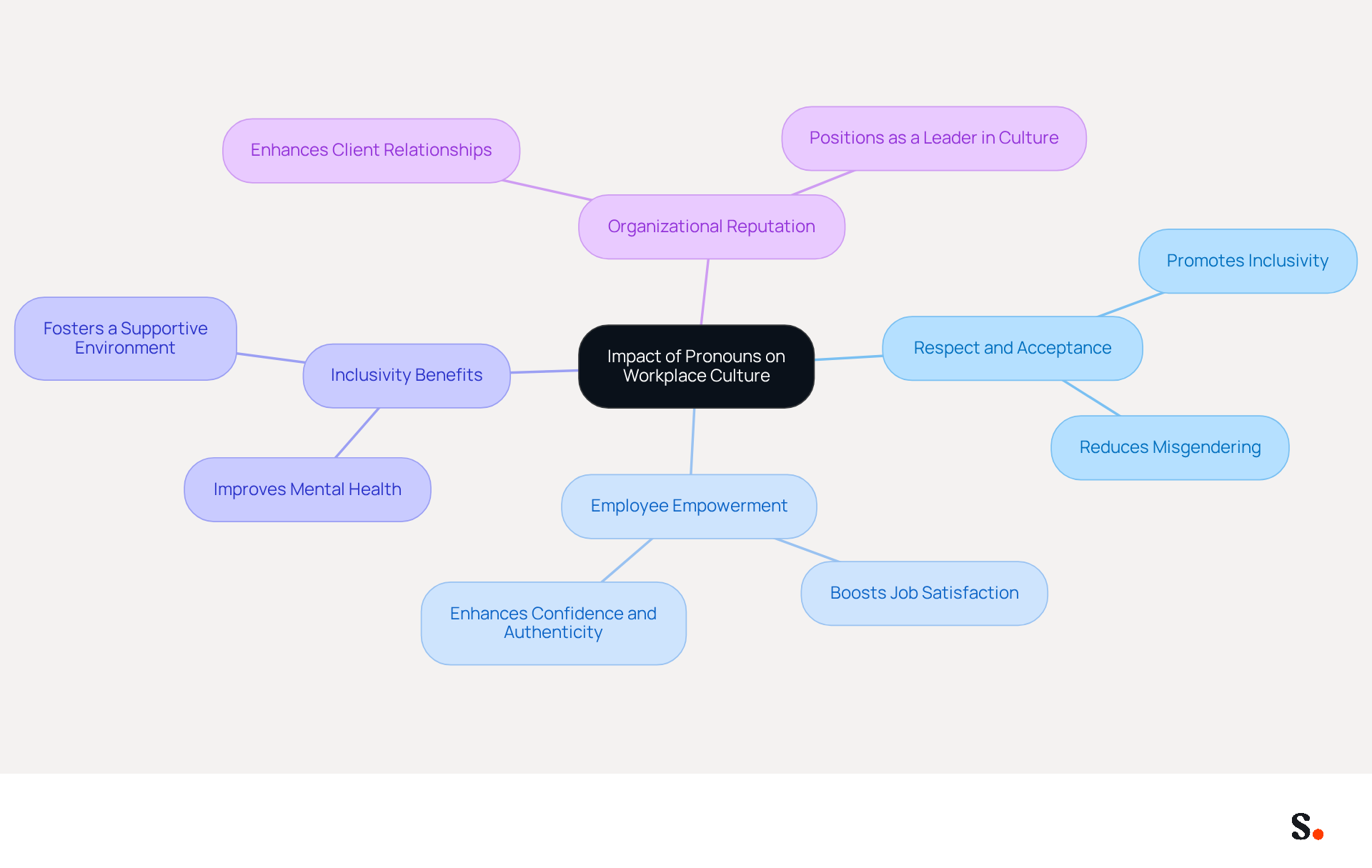
Incorporating pronouns in email signature examples is essential for fostering a culture of respect and acceptance in the workplace. This practice not only fosters respect but also empowers employees to express their identities, which can significantly boost job satisfaction and morale. Research shows that when organizations focus on inclusivity, they not only keep their employees happier but also build a strong reputation with clients and partners.
For instance, using pronouns in email signature examples indicates a commitment to diversity, greatly enhancing employee confidence and authenticity in the workplace. Moreover, affirming a transgender individual's chosen terms can improve their mental health and overall well-being, underscoring the importance of respectful communication.
Given that one in five Americans personally know someone who uses a term outside of 'he' or 'she', normalizing this practice is crucial for creating a supportive environment. By integrating gender inclusivity into their default practices, organizations can ensure that all staff feel valued and respected, ultimately leading to a more engaged and productive workforce.
Ultimately, organizations that prioritize gender inclusivity not only enhance employee morale but also position themselves as leaders in workplace culture.
Challenges and Considerations: Navigating Pronoun Use in Signatures
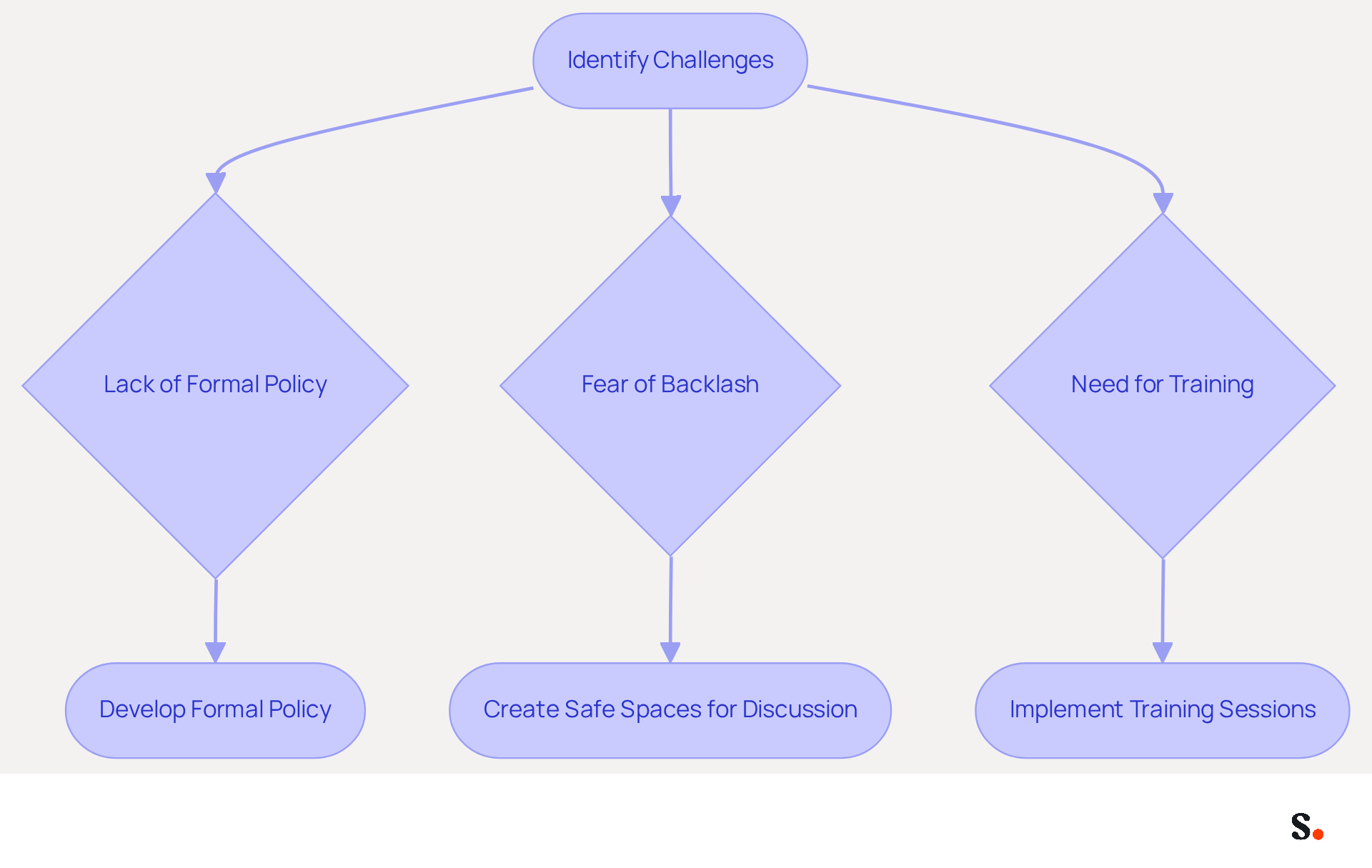
While including gender identifiers in email signatures promotes inclusivity, many organizations struggle with the challenges that arise. A significant issue is that many individuals fear backlash or misunderstanding when considering whether to disclose their identifiers. Research indicates that 54.3% of staff lack a formal policy or social norm for disclosing personal identifiers, leading to discomfort in sharing this information. This absence of organization can create uncertainty about whether sharing identifiers is acceptable, further complicating the choice for staff. To address these issues, it is important to recognize that organizations need to actively foster a supportive environment where individuals feel safe expressing their identities.
Furthermore, the variety of gender identifiers requires thorough training for staff on the significance of using appropriate terms to avoid misgendering. Training sessions and open discussions can really help address these challenges. For example, research has indicated that organizations promoting discussions about gender identities have experienced enhanced staff morale and a stronger sense of belonging. One such study highlighted how a firm that implemented optional disclosure policies (PDPs) experienced a notable increase in staff engagement and comfort levels, demonstrating the positive impact of organizational support.
However, it is important to recognize that PDPs may elicit negative reactions from some staff, highlighting the necessity for careful implementation. Balancing inclusion with respect for privacy and choice is vital, as some individuals may feel pressured to disclose personal information. Ultimately, the success of these initiatives hinges on the organization's commitment to fostering an environment where individuals feel empowered to share their identities, thereby normalizing this practice throughout the workplace.
Industry Insights: Pronoun Usage in Different Sectors' Signatures
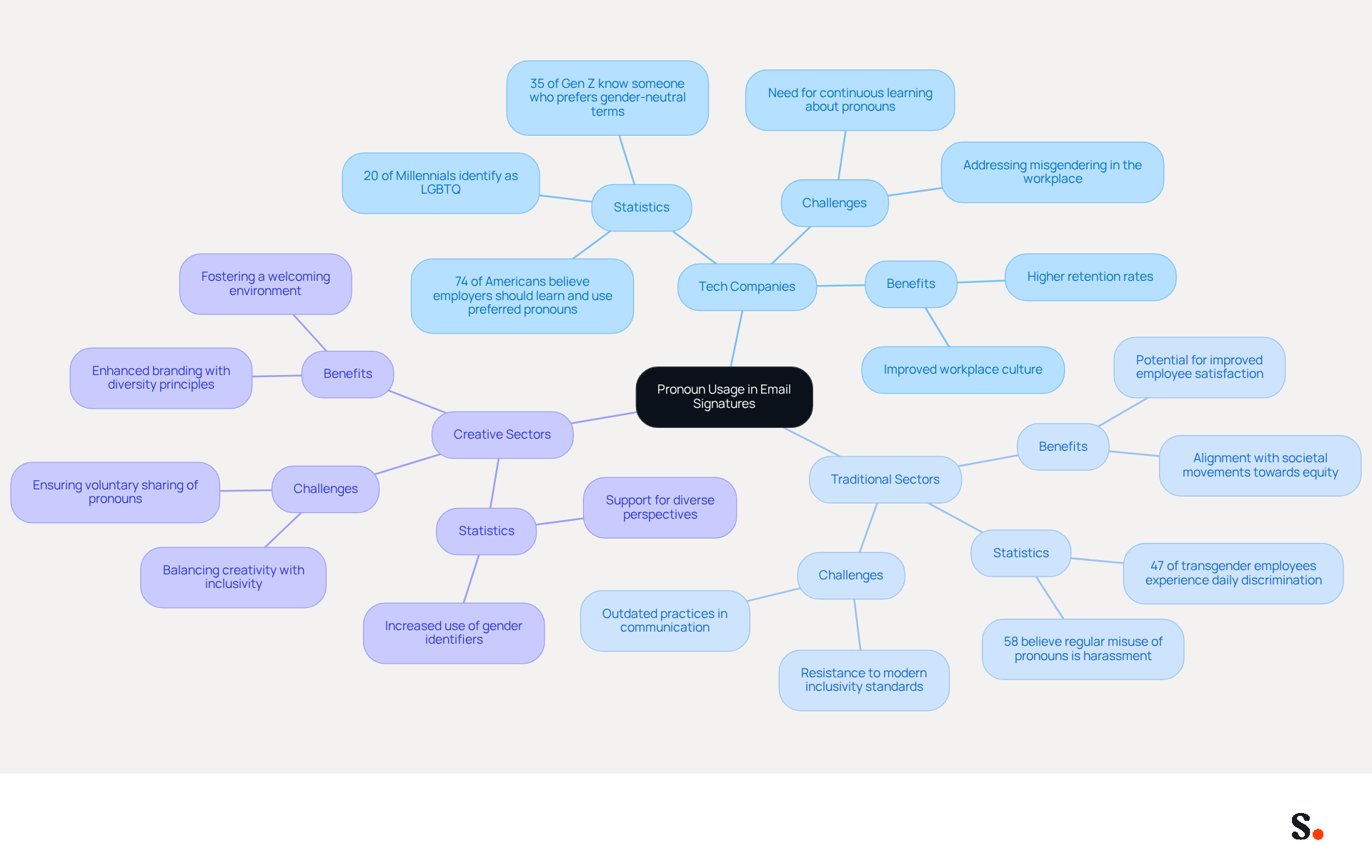
The integration of pronoun usage in email footers is becoming essential for fostering inclusivity in the workplace, with trends varying significantly across industries. A 2017 Harris Poll found that 20% of Millennials identify as LGBTQ, and 35% of Gen Z individuals know someone who prefers gender-neutral terms. This demographic shift is prompting tech companies to lead by example, integrating preferred terms into their email signatures to foster a welcoming environment.
In contrast, traditional sectors face challenges in adapting to modern inclusivity standards, often sticking to outdated practices that do not prioritize inclusivity. However, creative sectors are experiencing a significant rise in the use of gender identifiers, as organizations aim to align their branding with principles of diversity and inclusion. A survey shows that 74% of Americans think employers should learn and use individuals' preferred terms, emphasizing a rising expectation for companies to embrace inclusive communication practices.
Research shows that using personal identifiers in email footers can have a positive impact. For instance, organizations that promote employees to disclose their identities report improved workplace culture and employee satisfaction. By normalizing the practice of including pronouns in email signature examples, companies can create an environment where all identities are respected, ultimately leading to improved retention rates and reduced turnover costs. Furthermore, the emotional burden of suppressing one's identity can negatively impact workplace stress and overall well-being. As the conversation around gender identity continues to evolve, understanding these trends will enable organizations to adapt their strategies and remain competitive in an increasingly diverse marketplace. Organizations that embrace these changes will not only enhance their workplace culture but also position themselves as leaders in inclusivity.
Benefits of Pronouns: Fostering Respect and Belonging
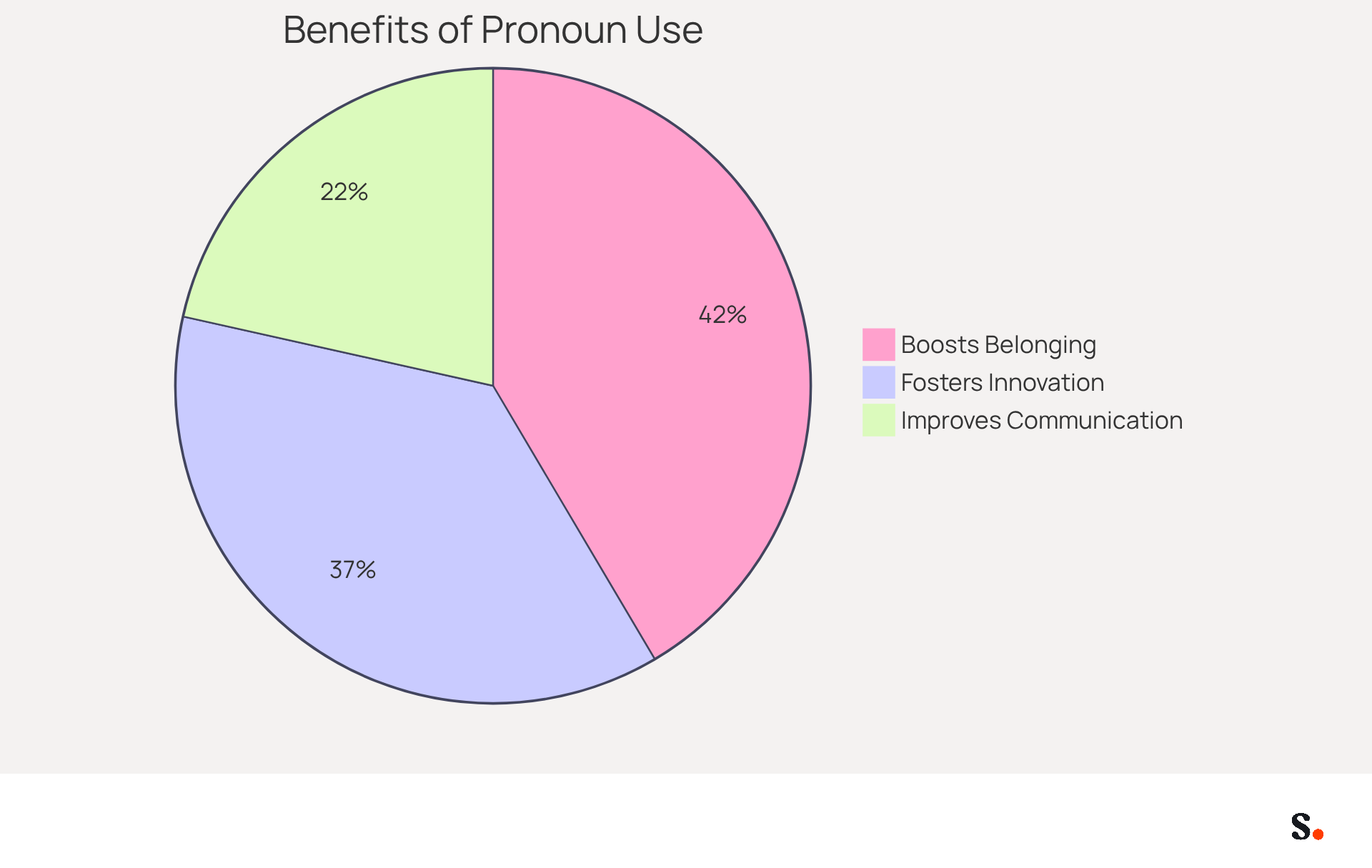
Incorporating personal identifiers into email signatures is a strategic move that significantly enhances workplace culture by fostering respect and belonging. This practice allows individuals to feel recognized and valued, greatly improving their overall workplace experience. When organizations normalize sharing gender identifiers, they can improve communication, reduce misunderstandings, and build a stronger community among employees.
Additionally, companies that embrace gendered language tend to be viewed as more progressive and inclusive, which attracts diverse talent. A significant 83% of individuals assert that using gendered terms at work boosts their sense of belonging, while 74% of millennials feel that organizations with inclusive cultures are more innovative.
As Katie Juran, Adobe's Senior Director of Diversity and Inclusion, states, 'Respecting everyone’s identities is one small way we can do that.'
Case studies show that organizations incorporating pronouns in email signature examples, as highlighted in recent research, have experienced improved staff engagement and satisfaction, ultimately leading to a more unified and supportive work atmosphere.
Ultimately, organizations that prioritize inclusivity through gender identifiers not only foster a supportive environment but also position themselves as leaders in attracting diverse talent.
Advocacy Guide: Communicating the Importance of Pronouns
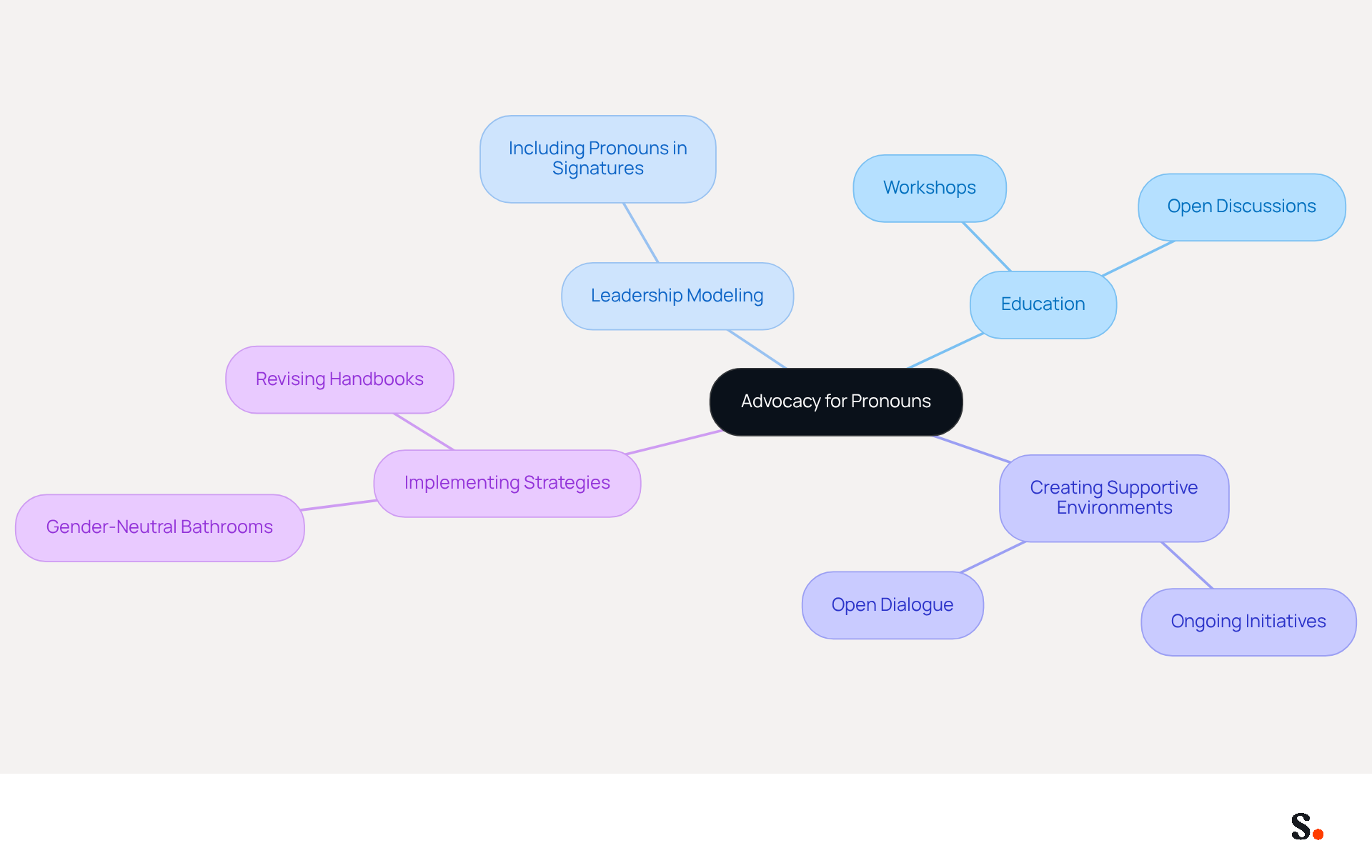
To promote inclusivity, organizations must educate staff on the importance of including pronouns in email signature examples. Incorrect gender references can lead to legal challenges for organizations, highlighting the need for accurate usage. Hosting workshops or training sessions can facilitate open discussions, allowing employees to voice concerns and learn from one another. Leadership should actively model this behavior by including their own pronouns in email signature examples, thereby setting a precedent for the rest of the organization.
As Abigail Braceros, Intuit Global Pride Advisor, states, "Whether you work at Intuit or any other company, everyone can help play a part in making sure all people, regardless of their gender, feel like they belong." Creating a supportive environment for individuals to share their identities is crucial; this commitment can be demonstrated through ongoing initiatives and open dialogue.
Additionally, implementing strategies such as:
- Creating gender-neutral bathrooms
- Revising employee handbooks to use gender-neutral language
can further reinforce the importance of this practice. Grasping the idea of privilege related to personal identifiers is also crucial, as it nurtures empathy and motivates individuals to use appropriate identifiers, contributing to a more inclusive workplace culture. Recognizing the impact of gender identifiers can transform workplace culture and enhance employee engagement.
Future Trends: Evolving Pronoun Usage in Email Signatures
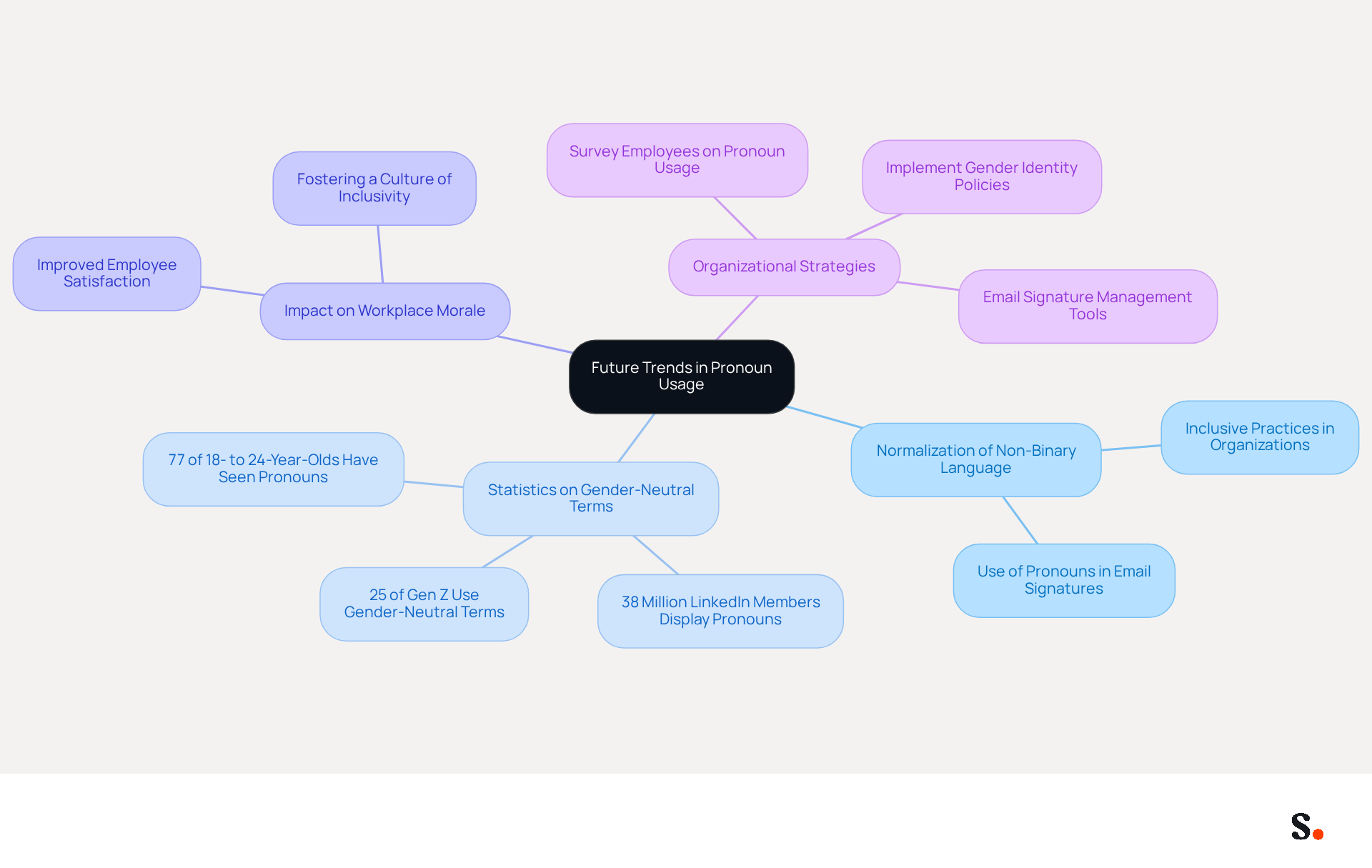
As society evolves, the professional landscape is poised for significant shifts in the use of gendered terms. Future trends suggest a growing normalization of non-binary language and an increased acceptance of diverse gender identities. Organizations are likely to implement more inclusive practices, allowing employees to choose how they wish to be identified, such as using pronouns in email signature examples. Statistics show that approximately 25% of Gen Z currently use gender-neutral terms, with expectations for this number to rise.
Moreover, advancements in technology will play a crucial role in integrating gendered terms into digital communication tools, simplifying the process for organizations to maintain consistency and inclusivity in their branding efforts. For instance, case studies reveal that companies implementing gender identity policies have seen improvements in workplace morale and inclusivity, fostering a culture that values diversity.
Organizations must stay informed about these trends to foster an inclusive workplace, as the inclusion of pronouns not only reflects respect for individual identities but also enhances overall employee satisfaction and engagement. Organizations that fail to adapt may find themselves at a disadvantage in attracting and retaining top talent in an increasingly diverse workforce.
Conclusion
Incorporating pronouns into email signatures is essential for fostering an inclusive workplace culture. By utilizing Scribe's automated solutions, organizations can seamlessly integrate preferred pronouns into their email communications, ensuring that every team member's identity is respected and acknowledged. This practice boosts brand visibility and helps create a workplace where diversity is truly valued.
Throughout the article, key insights highlight the importance of including pronouns in email signatures. The advantages, such as improved communication and increased employee morale, are evident. Organizations that embrace this practice demonstrate a commitment to inclusivity, which can lead to enhanced workplace culture and employee satisfaction. Furthermore, Scribe's compliance with SOC 2 Type II, GDPR, and CCPA ensures that data security is maintained while promoting these inclusive practices.
As the conversation around gender identity continues to evolve, organizations must adapt to these changes to remain competitive. Failing to adapt to these changes could result in a less inclusive workplace, impacting employee satisfaction and retention. By prioritizing the inclusion of pronouns in email signatures, companies not only foster respect and belonging but also position themselves as leaders in diversity and inclusion. By neglecting this practice, organizations risk alienating employees and missing out on the benefits of a diverse workforce.
Frequently Asked Questions
Why is it important to manage pronouns in email signatures?
Managing pronouns in email signatures is crucial for fostering inclusivity in the workplace, as it demonstrates respect for individual identities and enhances brand visibility.
How does Scribe help with pronoun integration in email signatures?
Scribe automates the inclusion of gender identifiers in email signatures by syncing data from the Aircall configuration, ensuring that every team member's preferred pronouns are consistently displayed without manual effort.
What are the recommended formats for including pronouns in email signatures?
Recommended formats include placing pronouns directly after the name, such as "John Doe (he/him)" or "Jane Smith (she/her)," which ensures professionalism and clarity.
What statistics support the importance of sharing pronouns in the workplace?
Research indicates that 25% of LGBTQ+ youth use terms beyond the traditional binary, and around 20% of Americans know someone who prefers a term other than 'he' or 'she,' highlighting the need for acknowledging diverse identities.
What are the most commonly used personal references for pronouns?
The three most frequently utilized personal references are: - They/Them/Their for non-binary individuals - He/Him/His for males - She/Her/Hers for females
How can organizations encourage the use of pronouns in email signatures?
Organizations can conduct team surveys to collect preferred terms, educate employees on the importance of identity markers, and provide a detailed guide to assist with the implementation of pronouns in email footers.
What are the potential challenges employees may face regarding pronoun usage?
Some employees may feel uncomfortable or uncertain about using gendered terms in their signatures. Educating them on the significance of identity markers can help reduce resistance and promote inclusivity.
What impact does incorporating pronouns in email signatures have on workplace culture?
Incorporating pronouns can enhance communication, foster a sense of belonging among staff, and reflect an organization's genuine commitment to diversity and respect for all employees.
List of Sources
- Scribe: Automate Pronoun Integration in Email Signatures
- How to List Pronouns in Your Email Signature: A Step-by-Step Guide (https://scribe-mail.com/en-US/blog/how-to-list-pronouns-in-your-email-signature-a-step-by-step-guide)
- Behind The Growing Use Of Pronouns In Email Signatures (https://mediapost.com/publications/article/345139/behind-the-growing-use-of-pronouns-in-email-signat.html)
- Pronouns in some reporters' email signatures get a stony response from Trump administration (https://nbcnews.com/nbc-out/out-politics-and-policy/pronouns-reporters-email-signatures-get-stony-response-trump-administr-rcna200838)
- Promote Inclusion: The Role of Gender Pronouns in Signatures
- Organizations embrace equity by sharing gender pronouns in email signatures (https://internationalwomensday.com/Missions/19523/Organizations-embrace-equity-by-sharing-gender-pronouns-in-email-signatures)
- How to List Pronouns in Your Email Signature: A Step-by-Step Guide (https://scribe-mail.com/en-US/blog/how-to-list-pronouns-in-your-email-signature-a-step-by-step-guide)
- Pronouns in email signatures: workplace inclusion guide (https://inclusiveemployers.co.uk/blog/why-we-use-pronouns-in-signatures)
- Creative Examples: Incorporating Pronouns in Email Signatures
- Gender pronouns in email signatures - how to use them and why (https://codetwo.com/blog/using-gender-pronouns-in-email-signatures)
- Should your email say if you're he, she or they? (https://bbc.com/news/business-51331571)
- Why I Put Pronouns on my Email Signature (and LinkedIn profile) and You Should Too (https://medium.com/gender-inclusivit/why-i-put-pronouns-on-my-email-signature-and-linkedin-profile-and-you-should-too-d3dc942c8743)
- Organizations embrace equity by sharing gender pronouns in email signatures (https://internationalwomensday.com/Missions/19523/Organizations-embrace-equity-by-sharing-gender-pronouns-in-email-signatures)
- Best Practices: Effective Placement of Pronouns in Signatures
- Sharing Gender Pronouns in Employee Bios, Email Signatures Helps Attract LGBTQ+ Applicants, Study Finds – Stories (https://stories.butler.edu/sharing-gender-pronouns-in-employee-bios-email-signatures-helps-attract-lgbtq-applicants-study-finds)
- Trans Day of Visibility: Requiring Pronouns In Email Signatures - Three Ears Media (https://threeearsmedia.com/requiring-pronouns-email-signature)
- Email signature statistics and trends in 2024 (https://wisestamp.com/blog/email-signature-statistics)
- 40+ Email Signature Statistics for 2026 (Data + Insights) (https://wavecnct.com/blogs/email-signature-statistics)
- Best Practices Designing Email Signatures - Lynne Golodner (https://lynnegolodner.com/articles/best-practices-designing-email-signatures)
- Impact Assessment: How Pronouns Influence Workplace Culture
- Importance of DEIB Initiatives for Employee Retention | Staffing Support Specialists (https://staffing-support.com/importance-of-deib-initiatives-when-it-comes-to-employee-retention)
- Why sharing gender pronouns is important in the workplace | Culture Amp (https://cultureamp.com/blog/gender-pronouns-in-workplace)
- The Importance of Using Pronouns in the Workplace — Talkspace (https://business.talkspace.com/articles/pronouns-in-the-workplace)
- Challenges and Considerations: Navigating Pronoun Use in Signatures
- Balancing Choice and Privacy: Employee Reactions to Pronoun Disclosure Policies - Journal of Business Ethics (https://link.springer.com/article/10.1007/s10551-026-06285-w)
- Why & How to Share Gender Pronouns at Work | Equality Institute (https://theequalityinstitute.com/equality-insights-blog/why-and-how-to-share-pronouns-at-work)
- Organizations embrace equity by sharing gender pronouns in email signatures (https://internationalwomensday.com/Missions/19523/Organizations-embrace-equity-by-sharing-gender-pronouns-in-email-signatures)
- Sharing Gender Pronouns in Employee Bios, Email Signatures Helps Attract LGBTQ+ Applicants, Study Finds – Stories (https://stories.butler.edu/sharing-gender-pronouns-in-employee-bios-email-signatures-helps-attract-lgbtq-applicants-study-finds)
- Industry Insights: Pronoun Usage in Different Sectors' Signatures
- Using Your Employees’ Preferred Pronouns Helps Build Your Firm’s Inclusivity (https://alanet.org/legal-management/2023/october/columns/using-your-employees-preferred-pronouns-helps-build-your-firms-inclusivity)
- Why Is Using Preferred Pronouns Crucial for Inclusive Communication in Tech? (https://womentech.net/en-nl/how-to/why-using-preferred-pronouns-crucial-inclusive-communication-in-tech)
- Recognizing employees’ gender pronouns is important | SAP (https://sap.com/blogs/respecting-employees-pronouns-important)
- Startups can’t ignore pronouns anymore (https://sifted.eu/articles/startup-gender-pronouns)
- Infographic: Gen Z More Familiar with Non-Binary Pronouns (https://statista.com/chart/20378/gen-z-non-binanary-pronouns?srsltid=AfmBOopqCmY53egYPRkWwRY98ghEvXtw9QXS7r7yT2IwCVb7CwLJXrz5)
- Benefits of Pronouns: Fostering Respect and Belonging
- Why sharing gender pronouns is important in the workplace | Culture Amp (https://cultureamp.com/blog/gender-pronouns-in-workplace)
- The Importance of Using Pronouns in the Workplace — Talkspace (https://business.talkspace.com/articles/pronouns-in-the-workplace)
- Recognizing employees’ gender pronouns is important | SAP (https://sap.com/blogs/respecting-employees-pronouns-important)
- LGBTQ Inclusion: Using Pronouns at Work (https://shrm.org/topics-tools/news/inclusion-diversity/lgbtq-inclusion-using-pronouns-work)
- Diversity in the workplace statistics to know this year | InStride (https://instride.com/insights/workplace-diversity-and-inclusion-statistics)
- Advocacy Guide: Communicating the Importance of Pronouns
- Whiteford, Taylor & Preston LLP | The Importance of Pronouns in the Workplace (https://whitefordlaw.com/news-events/the-importance-of-pronouns-in-the-workplace)
- Organizations embrace equity by sharing gender pronouns in email signatures (https://internationalwomensday.com/Missions/19523/Organizations-embrace-equity-by-sharing-gender-pronouns-in-email-signatures)
- Why Pronouns Are Important In The Workplace | Harding Evans (https://hardingevans.com/news/2023/10/18/international-pronouns-day-why-pronouns-are-important-in-the-workplace)
- The Importance of Gender Pronouns in the Workplace | Intuit (https://intuit.com/blog/social-responsibility/he-she-they-why-pronouns-in-the-workplace-matter)
- Future Trends: Evolving Pronoun Usage in Email Signatures
- Organizations embrace equity by sharing gender pronouns in email signatures (https://internationalwomensday.com/Missions/19523/Organizations-embrace-equity-by-sharing-gender-pronouns-in-email-signatures)
- The Evolution of Email Signatures | Rocketseed (https://rocketseed.com/blog/email-signature-evolution)
- How to Put Pronouns in Email Signature: A Step-by-Step Guide (https://scribe-mail.com/en-US/blog/how-to-put-pronouns-in-email-signature-a-step-by-step-guide)
- This is a great post from Chris Allan around use of pronouns in the work environment. | Samuel McGinty (https://linkedin.com/posts/samuelmcginty_this-is-a-great-post-from-chris-allan-around-activity-7348209374831534080-drf2)
- Sharing Gender Pronouns in Employee Bios, Email Signatures Helps Attract LGBTQ+ Applicants, Study Finds – Stories (https://stories.butler.edu/sharing-gender-pronouns-in-employee-bios-email-signatures-helps-attract-lgbtq-applicants-study-finds)
Get started with Scribe
Build a professional email signature
Free 14-day trial — no credit card.