4 Best Email Ending Phrases to Boost Engagement and Branding
Selecting the right closing phrase in an email can be more challenging than it seems, yet it holds the key to effective communication. The closing phrase plays
Sophie Grant
Email Signature Specialist, Scribe

On this page
- Introduction
- Understand the Importance of Tone and Context in Email Endings
- Utilize Effective Closing Phrases to Enhance Engagement
- Leverage Email Signatures for Consistent Branding and Marketing
- Avoid Common Mistakes in Email Closings to Maintain Professionalism
- Conclusion
- Frequently Asked Questions
- List of Sources
Introduction
Selecting the right closing phrase in an email can be more challenging than it seems, yet it holds the key to effective communication. The closing phrase plays a pivotal role in shaping the recipient's perception and response. By choosing the right ending, individuals can enhance engagement, foster professional relationships, and reinforce their brand identity. With countless options to choose from, selecting the most effective closing phrase can be daunting. This article explores four email closing phrases that can enhance engagement and strengthen branding, ensuring every communication makes a lasting impact.
Get started with Scribe
See why teams switch to Scribe
Free 14-day trial — no credit card.
Understand the Importance of Tone and Context in Email Endings
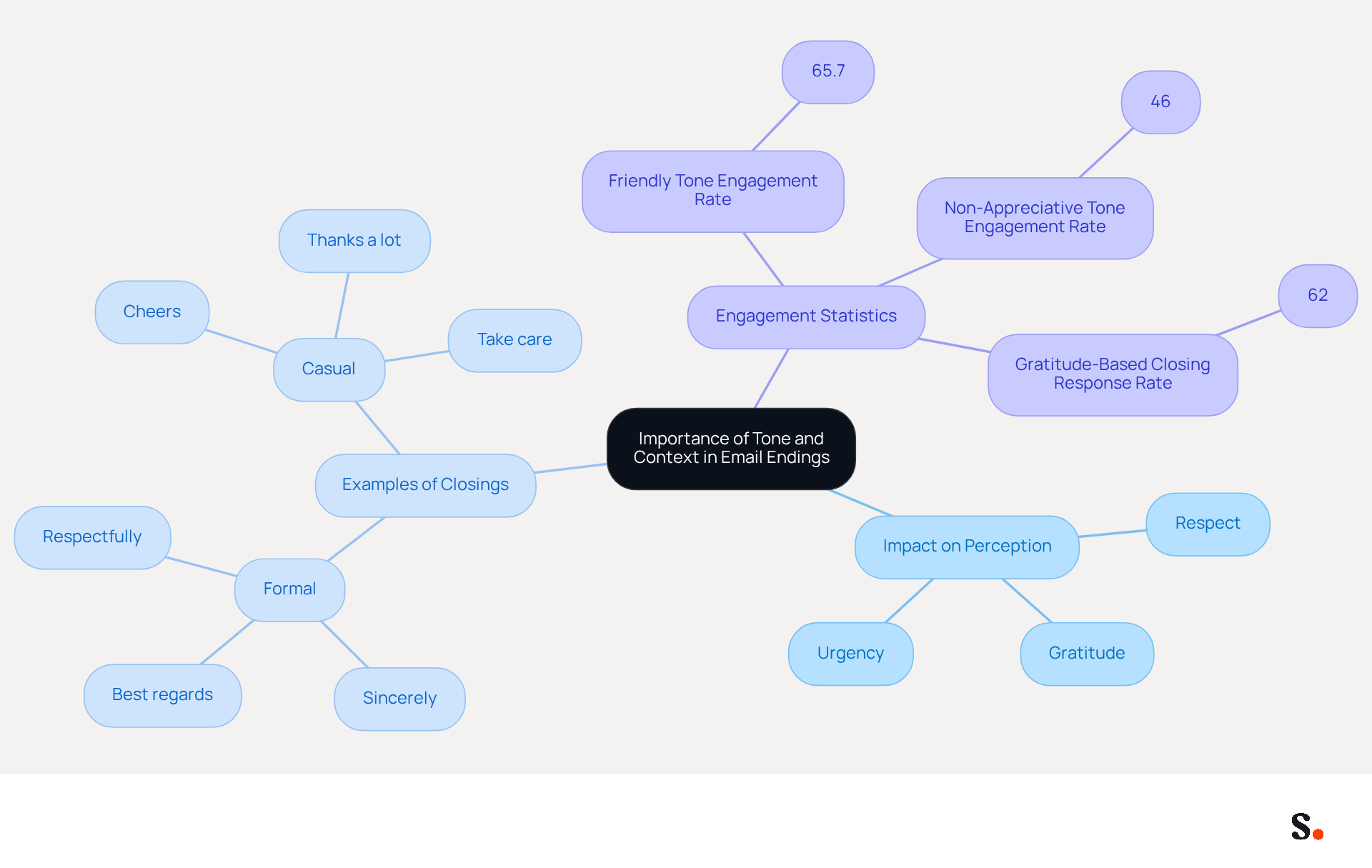
The tone of a message is not just a stylistic choice; it fundamentally shapes the recipient's perception and response. A carefully chosen email ending phrase can convey respect, gratitude, or urgency, tailored to the context of the message. For instance, formal correspondence to clients may benefit from closings like 'Sincerely' or 'Best regards,' while casual communications with colleagues might appropriately end with 'Cheers' or 'Thanks a lot.' Understanding these nuances is essential for ensuring the message is received as intended, fostering better relationships and encouraging positive responses.
Studies indicate that messages with a friendly tone can increase engagement rates significantly, highlighting the importance of tone in communication. Moreover, emails that convey appreciation in their conclusions achieve an impressive 65.7% engagement rate, in contrast to only 46% for those lacking such sentiments. This highlights why it’s important to match your conclusion with the tone of your message, as it can greatly affect the recipient's response and willingness to engage further. Ultimately, the right email ending phrase can transform a simple message into a powerful tool for fostering connections.
Utilize Effective Closing Phrases to Enhance Engagement
Crafting an effective email ending phrase can be the key to unlocking better engagement and response rates. Incorporating an effective email ending phrase can significantly enhance engagement and prompt a reaction from your recipients.
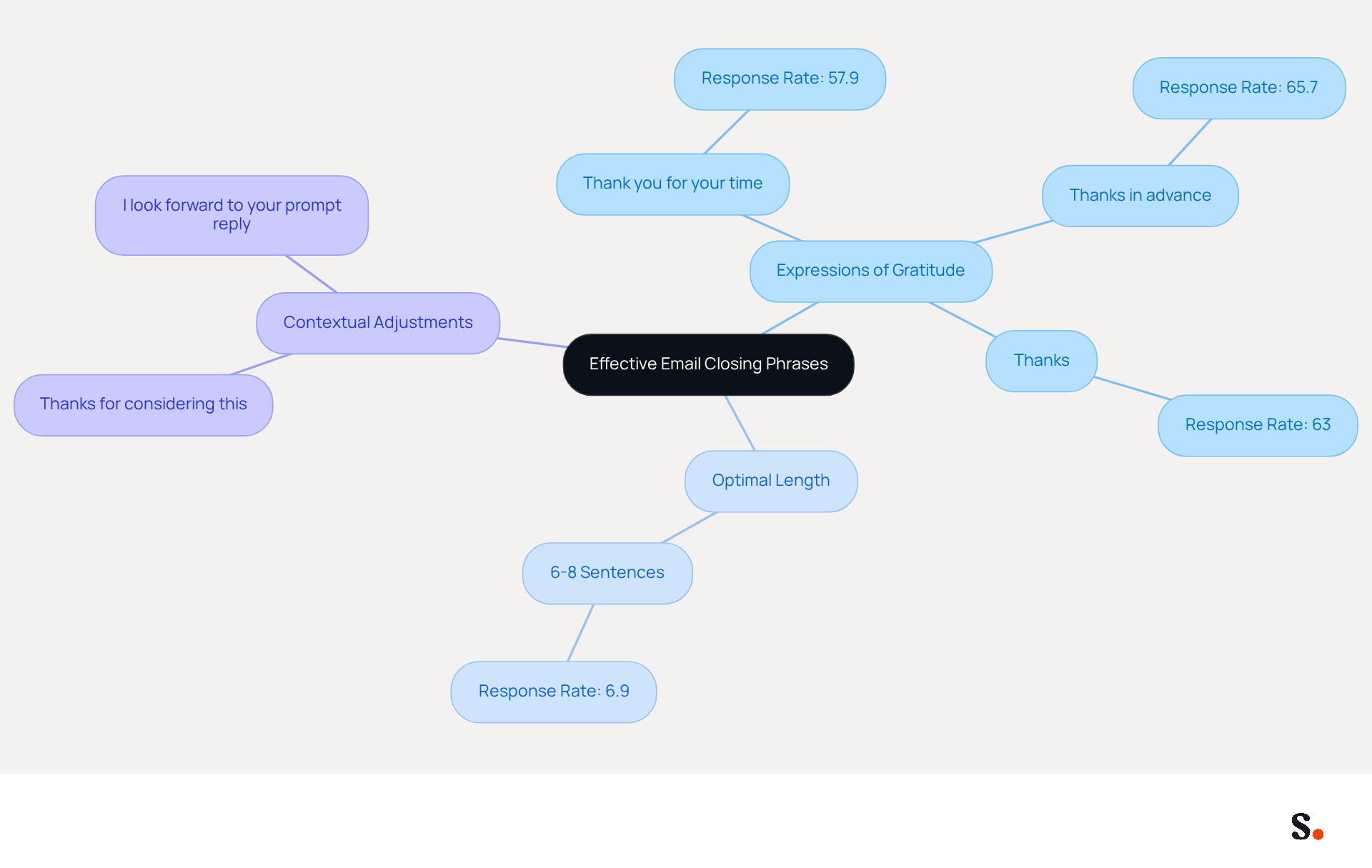
Expressions of gratitude, such as 'Thank you for your time' or 'I appreciate your help,' can strengthen professional relationships. Studies indicate that emails ending with expressions of gratitude can yield response rates between 54% and 66%, influenced by the principle of reciprocity, with 'Thanks in advance' producing the highest at 65.7%.
Furthermore, messages containing 6-8 sentences and clear calls to action achieve the highest response rates at 6.9%. Adjusting your email ending phrase based on the email's context can really change how the recipient views your message and their eagerness to respond.
For instance, using 'Thanks for considering this' works well for optional requests, while 'I look forward to your prompt reply' may come off as pushy. By being specific and authentic in your expressions of gratitude, you can foster a more positive interaction and encourage timely responses.
By refining your email closings, you not only enhance your communication but also foster stronger professional relationships.
Leverage Email Signatures for Consistent Branding and Marketing
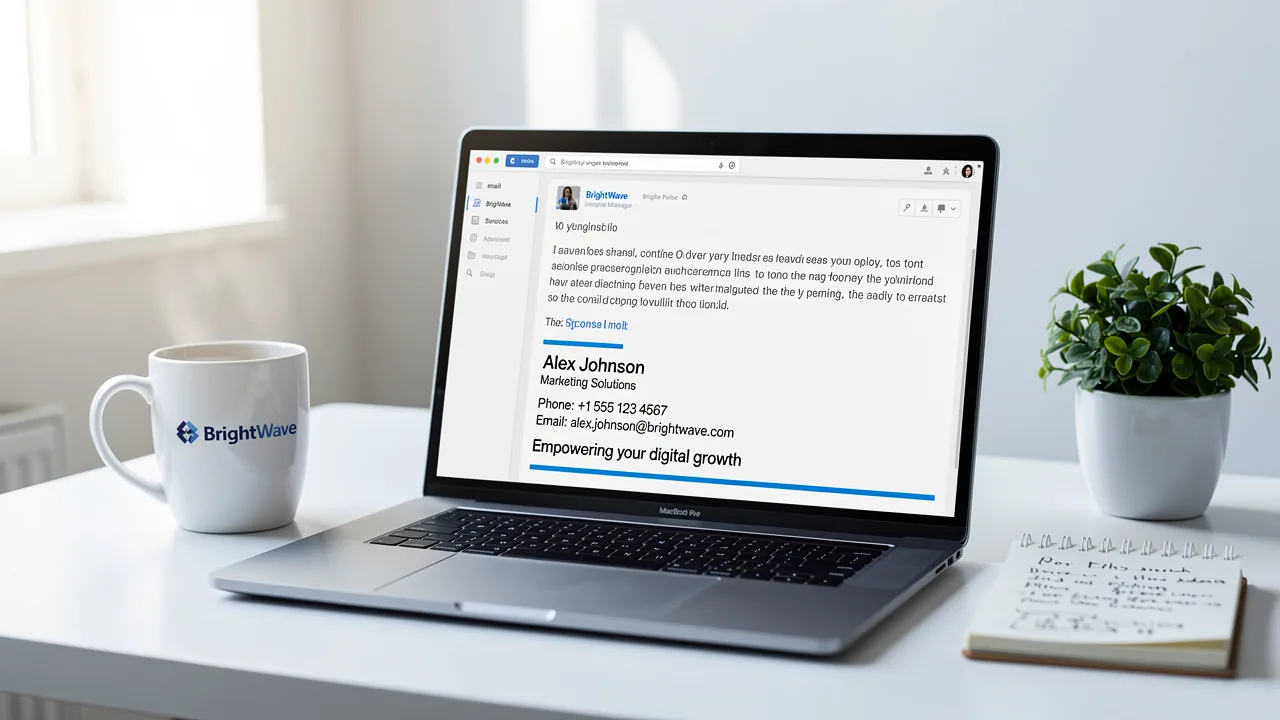
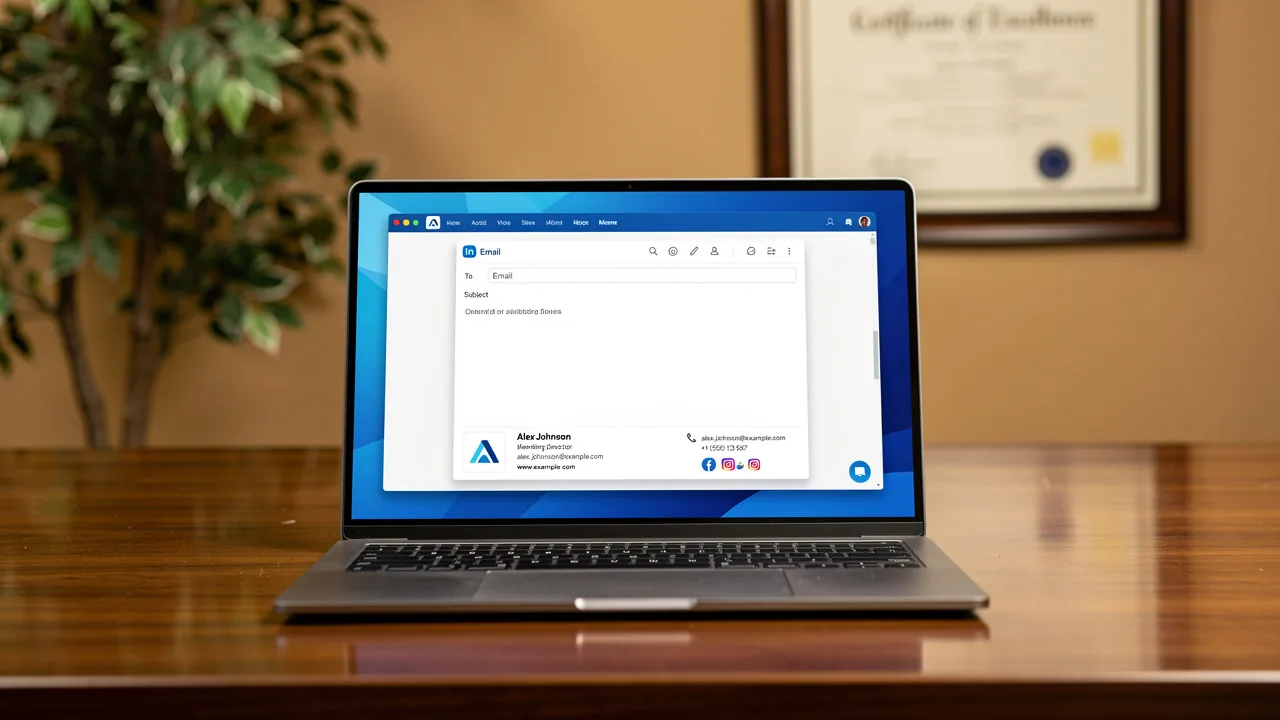
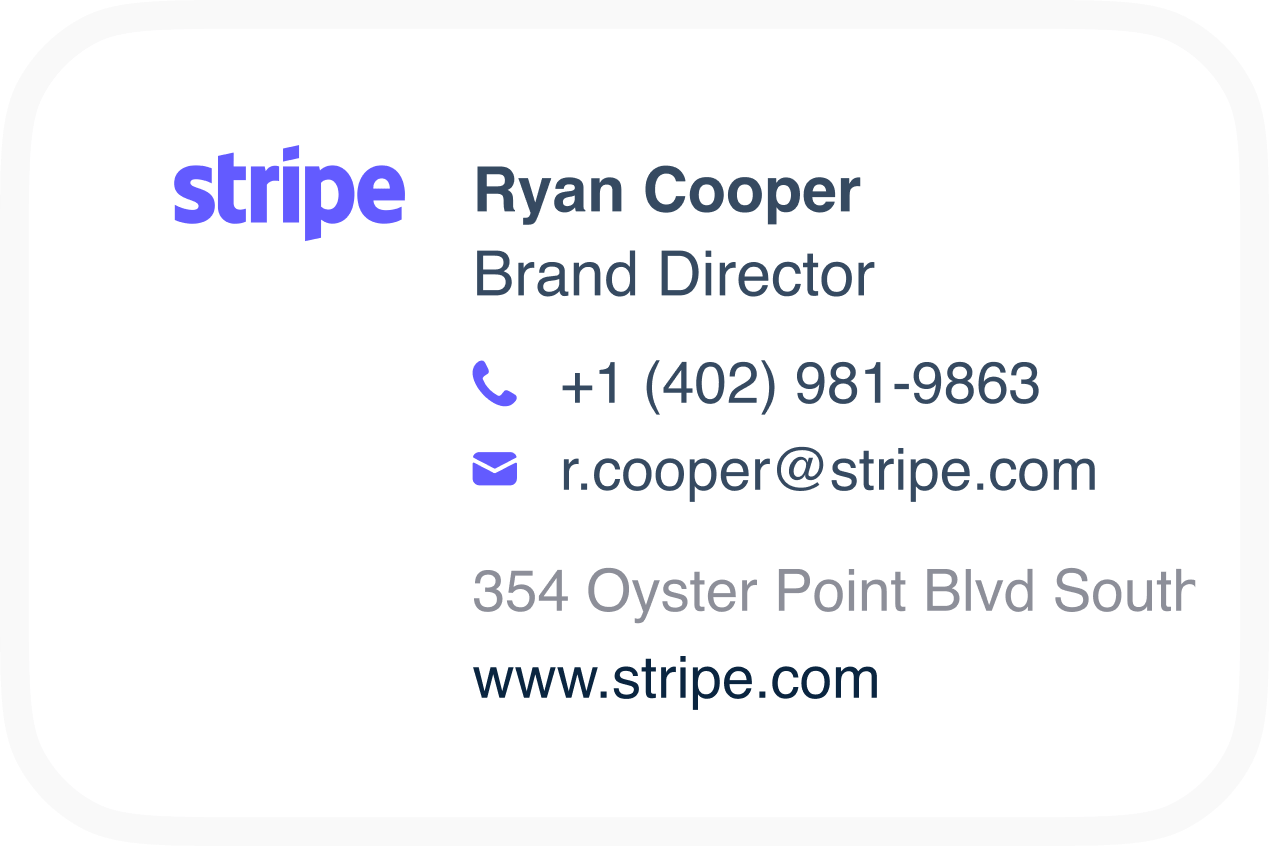
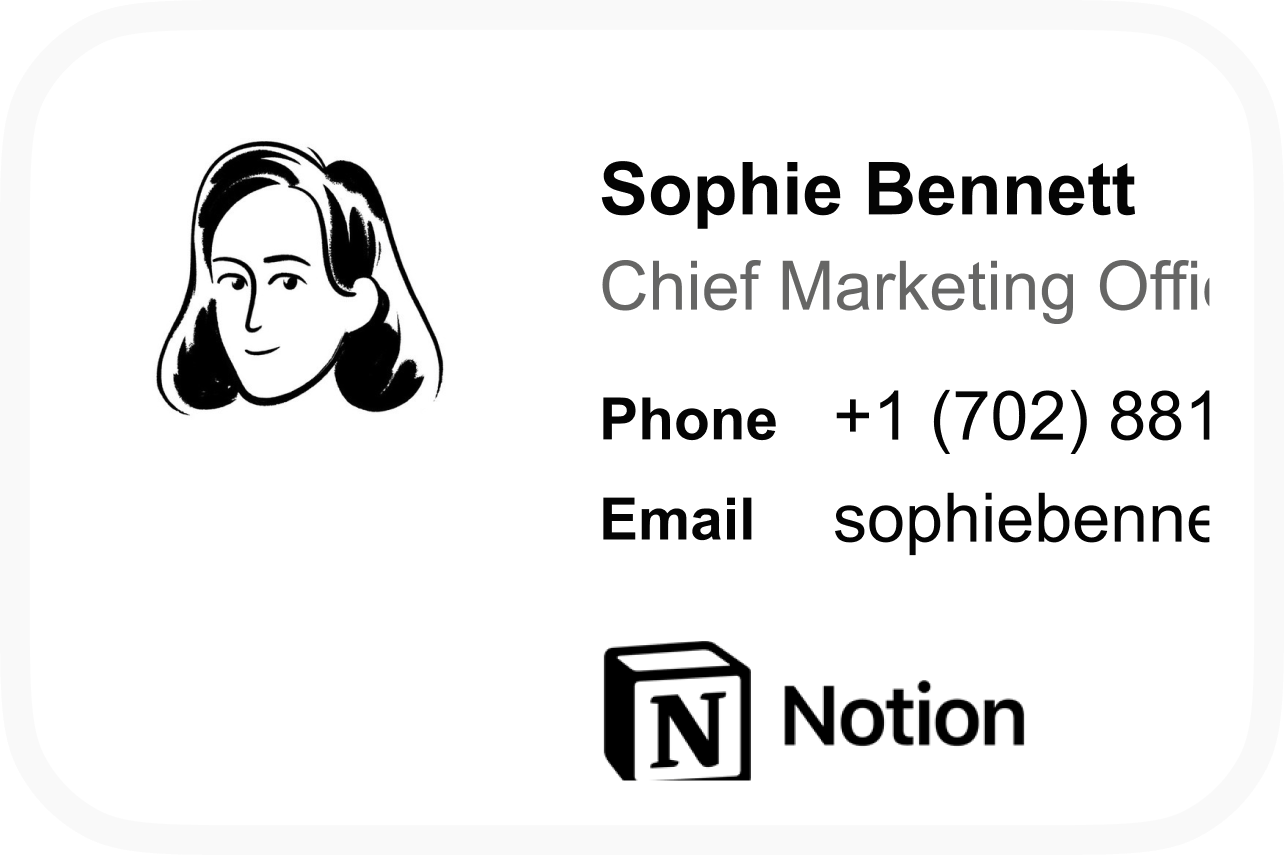
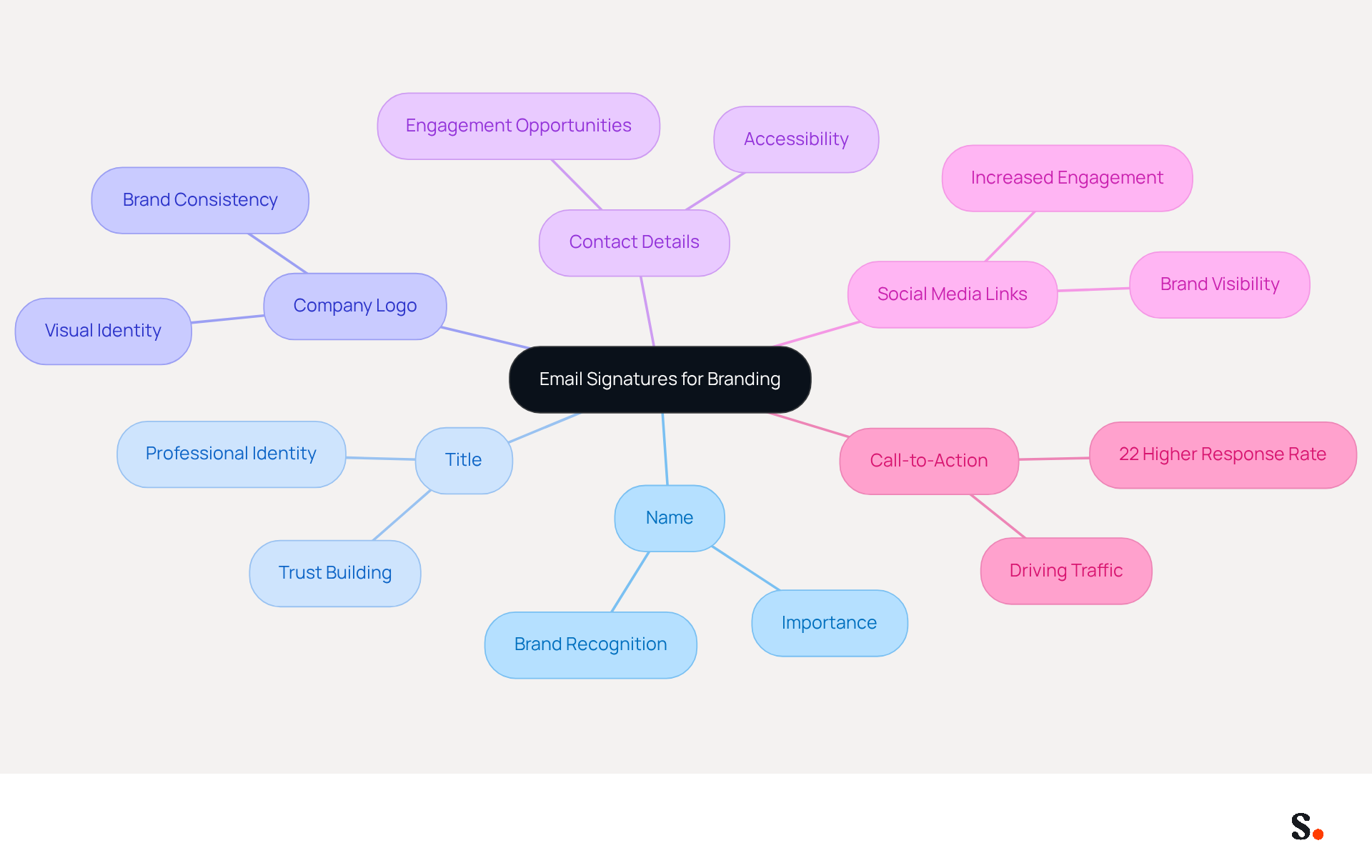
An email ending phrase serves as a critical extension of your brand identity, providing more than just a simple closure. To enhance its effectiveness, include key elements like your name, title, company logo, and contact details. Furthermore, incorporating links to social media profiles or an engaging call-to-action (CTA) can guide recipients to your website or specific campaigns, transforming each message into a valuable marketing tool. For instance, Scribe's automated management of electronic correspondence ensures that businesses uphold brand consistency effortlessly, aligning every team member's identification with the company's branding guidelines. With Scribe, any modifications made in your Aircall configuration will automatically be reflected in your communications, making management easier and helping ensure compliance with SOC 2 Type II standards and GDPR/CCPA regulations, giving you confidence in your data security.
Statistics indicate that messages with branded elements achieve a 22% higher response rate compared to those lacking them, highlighting the importance of a unified brand image. Moreover, case studies show that organizations employing digital identifiers for marketing purposes can achieve click-through rates (CTR) ranging from 2% to 5% for targeted campaigns, with peak ABM campaigns reaching 7%. Significantly, Scribe's average click-through rate on banners is 12%, demonstrating the effectiveness of these visuals in driving engagement and enhancing brand visibility. Ultimately, leveraging digital signatures can redefine how businesses engage with their audience, making every email a strategic branding opportunity by incorporating an effective email ending phrase.
Avoid Common Mistakes in Email Closings to Maintain Professionalism
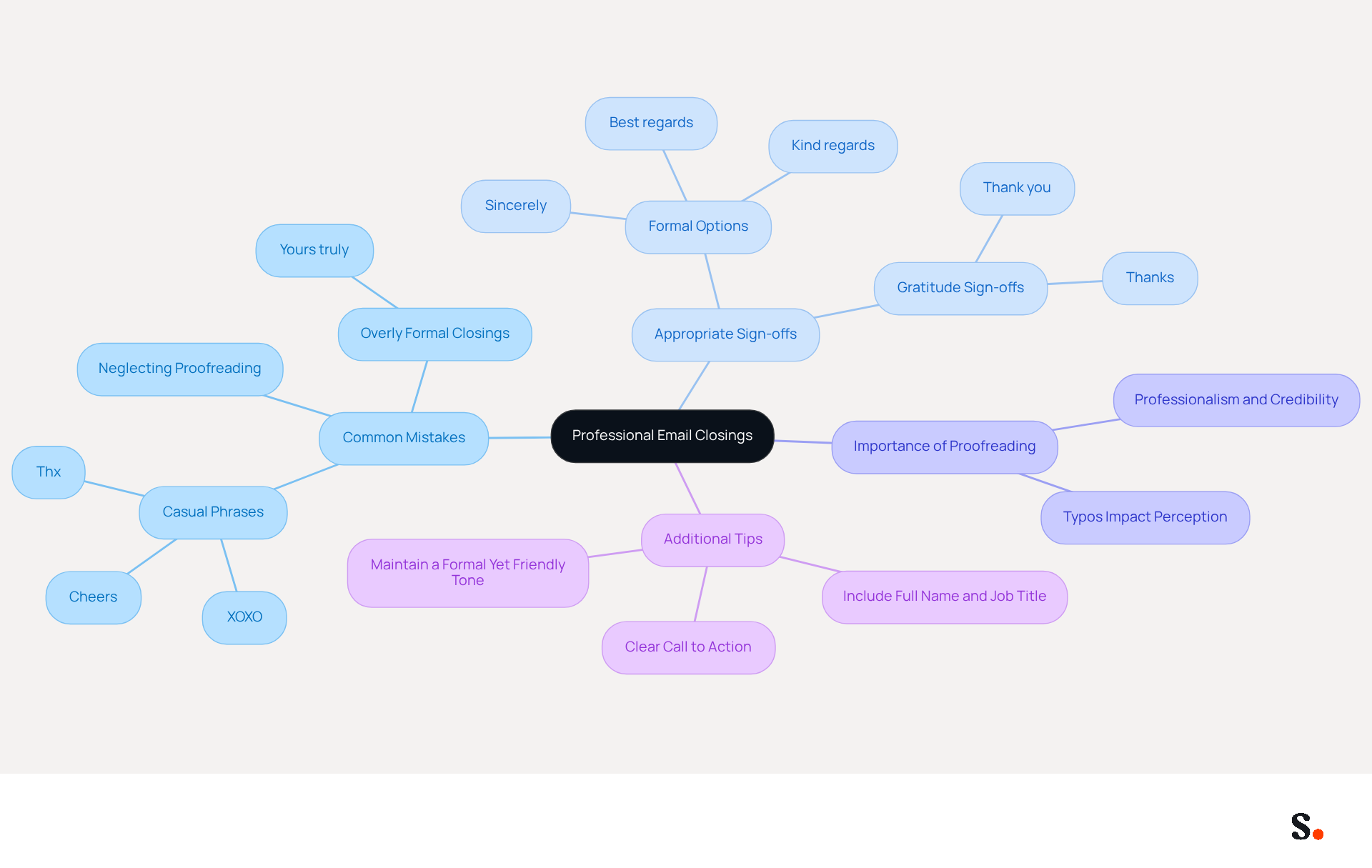
To maintain professionalism in written communication, it is crucial to avoid common pitfalls that can undermine your message. Using casual language like 'Cheers' or 'Later' might work in informal settings, but it can come off as unprofessional in business emails. Instead, match your sign-off to the tone of your message. For formal communications, choose an email ending phrase such as 'Sincerely' or 'Best regards.'
Neglecting to include an email ending phrase can make your message feel incomplete and may be perceived as rude. A well-crafted conclusion highlights your message's importance and encourages recipient engagement. Consider including a clear call to action, such as 'Please let me know if I may be of further assistance' or 'Thank you again,' to prompt a response.
Proofreading your message is equally essential; careless mistakes can undermine your professionalism and credibility. A study indicates that 48% of individuals assess typos in work messages more critically than in chat platforms, highlighting the need for careful review before hitting send. Furthermore, avoid overly casual sign-offs like 'XOXO' or 'Love,' as these are deemed unprofessional. Lastly, including your full name and job title in the closing helps the recipient identify who you are and how to respond. By adhering to these guidelines, you can significantly enhance your email communication and foster positive relationships.
Conclusion
The conclusion of an email can significantly influence the recipient's perception and response. Crafting the perfect email ending is essential for enhancing engagement and reinforcing brand identity. The right closing phrase not only conveys the intended tone but also encourages a positive response from the recipient. Understanding tone and context allows individuals to enhance their email communications for better engagement.
Key insights from this discussion highlight the importance of using effective closing phrases that resonate with the recipient. Expressions of gratitude and tailored sign-offs can significantly boost response rates, while maintaining professionalism is crucial in business communications. Additionally, leveraging email signatures as a branding opportunity can further enhance engagement, ensuring that every message aligns with the organization's identity and marketing goals.
Ultimately, the way emails are concluded can have a profound impact on communication effectiveness. By adopting best practices in email endings, professionals can foster stronger relationships, enhance their brand visibility, and drive engagement. By refining email endings, professionals not only enhance their communication but also strengthen their brand's presence in every interaction.
Frequently Asked Questions
Why is the tone of an email important?
The tone of an email fundamentally shapes the recipient's perception and response, influencing how the message is received.
How can email endings affect communication?
A carefully chosen email ending can convey respect, gratitude, or urgency, tailored to the context of the message, which fosters better relationships and encourages positive responses.
What are some appropriate email endings for formal correspondence?
Formal correspondence to clients may benefit from closings like 'Sincerely' or 'Best regards.'
What are some suitable email endings for casual communications?
Casual communications with colleagues might appropriately end with 'Cheers' or 'Thanks a lot.'
What impact does a friendly tone have on email engagement rates?
Studies indicate that messages with a friendly tone can significantly increase engagement rates.
How does expressing appreciation in email conclusions affect engagement?
Emails that convey appreciation in their conclusions achieve an impressive 65.7% engagement rate, compared to only 46% for those lacking such sentiments.
What is the overall significance of matching the email ending with the message tone?
Matching the conclusion with the tone of the message can greatly affect the recipient's response and willingness to engage further, transforming a simple message into a powerful tool for fostering connections.
List of Sources
- Understand the Importance of Tone and Context in Email Endings
- How Your Email Tone Impacts Email Marketing Results (https://netatlantic.com/resources/articles/how-your-email-tone-impacts-email-marketing-results)
- Your Emails Are 36 Percent More Likely to Get a Reply If You End Them This Way (https://inc.com/jessica-stillman/your-emails-are-36-percent-more-likely-to-get-a-reply-if-you-close-them-this-way.html)
- 7 Impactful Email Closing Lines for Lasting Impressions (https://brightcall.ai/blog/7-powerful-closing-email-lines-to-leave-a-lasting-impression)
- 50 Email Closing Lines That Leave Lasting Impressions (https://instantly.ai/blog/email-closing-lines)
- Utilize Effective Closing Phrases to Enhance Engagement
- Closing Email Phrases That Get Replies (2026 Data) (https://prospeo.io/s/closing-email-phrases)
- The Exact 3 Closing Words That Maximize Email Results (https://neurosciencemarketing.com/blog/articles/email-3-closing-words.htm)
- 12 Email Sign-Offs That Get Responses [2026 Data] (https://lagrowthmachine.com/email-sign-offs-get-responses)
- Leverage Email Signatures for Consistent Branding and Marketing
- Email signature statistics: Why every business should optimize their email signatures — Stripo.email (https://stripo.email/blog/email-signature-statistics-why-every-business-should-optimize-their-email-signatures)
- How to Use Email Signature Marketing: 10 Dos and Don’ts (https://exclaimer.com/email-signature-handbook/top-10-email-signature-marketing-dos-donts)
- Why Email Signatures Must Be In Your 2026 Marketing Plan | Rocketseed (https://rocketseed.com/blog/what-are-the-biggest-email-trends-for-2026)
- 12 clever ways to use your email signature to support your marketing campaigns (https://blog.hubspot.com/blog/tabid/6307/bid/31054/10-clever-ways-your-email-signature-can-support-your-marketing.aspx)
- 12 email signature marketing examples that drive clicks (2026) (https://signitic.com/en/resources/12-email-signature-marketing-examples-that-actually-drive-clicks)
- Avoid Common Mistakes in Email Closings to Maintain Professionalism
- The do's and don’ts of work email signoffs (https://today.com/money/work-email-signoffs-professional-closings-do-s-don-ts-t165648)
- The 2 biggest mistakes people make in work emails—and how to avoid them (https://cnbc.com/2024/04/10/the-biggest-mistakes-people-make-over-email-and-how-to-avoid-them.html)
- The Right Way to End an Email: Professional Sign-offs and Closings to Use (and Avoid) (https://infoglobaldata.com/blog/the-right-way-to-end-an-email-professional-sign-offs-and-closings-to-use)
- Email Etiquette: Dos and Don’ts of Professional Emails (https://businessnewsdaily.com/8262-email-etiquette-tips.html)
- How to Sign Off on an Email Correctly | Rocketseed (https://rocketseed.com/blog/correct-way-to-sign-off-emails)
Get started with Scribe
See why teams switch to Scribe
Free 14-day trial — no credit card.