4 Best Practices for an Effective Residency Email Signature
Many residents underestimate the power of their email signatures, which can either enhance or undermine their professional image. A residency email signature
Sophie Grant
Email Signature Specialist, Scribe
Introduction
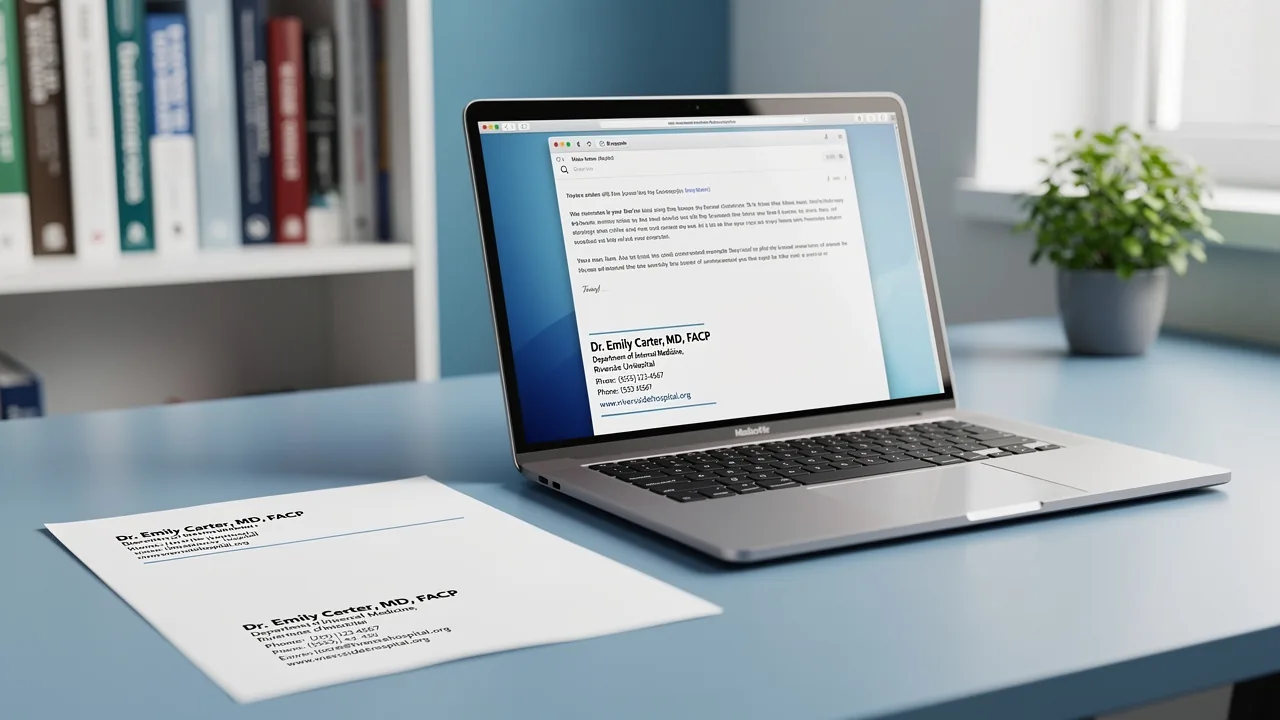
Many residents underestimate the power of their email signatures, which can either enhance or undermine their professional image. A residency email signature is more than just a digital sign-off; it serves as a vital tool for establishing professional identity and fostering trust in communications. By incorporating essential components and adhering to best practices, residents can enhance their credibility and brand consistency, ultimately improving engagement with colleagues and patients alike.
Let’s take a look at four best practices that can help you transform your email signature into a powerful asset:
- Include your full name and title.
- Add your contact information.
- Use a professional design.
- Keep it concise.
By implementing these best practices, residents can turn their email signatures into a strategic tool that fosters trust and enhances engagement.
Define Essential Components of a Residency Email Signature
A well-crafted residency email signature is essential for establishing professional identity and fostering trust in communications. It should include the following essential components:
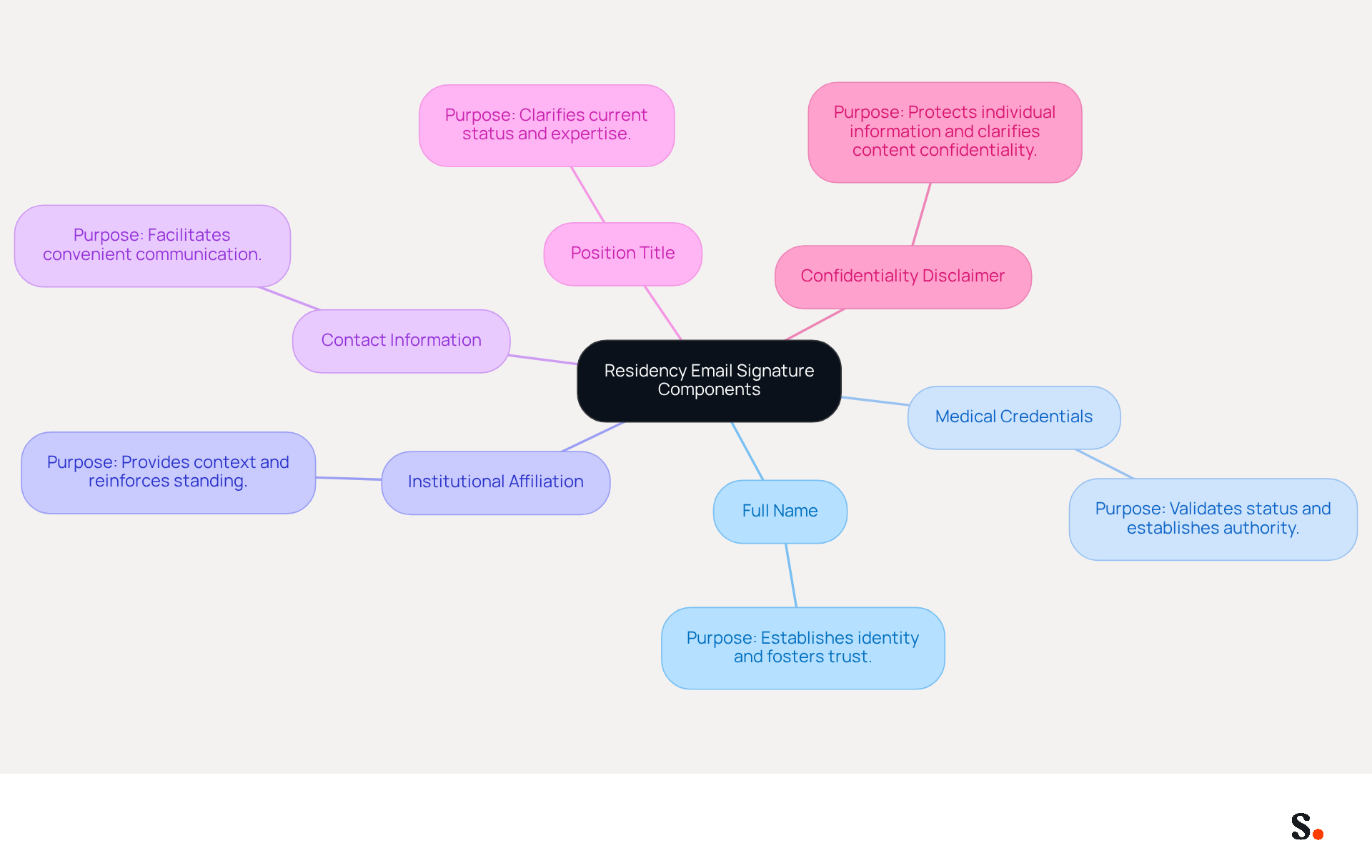
- Full Name: Clearly state your first and last name to ensure recipients know who they are communicating with. This establishes your identity and fosters trust.
- Medical Credentials: Include your degree (e.g., MD, DO) and any relevant certifications to validate your status. This helps you establish authority and credibility in your communications.
- Institutional Affiliation: Mention your residency program and institution to provide context and reinforce your standing in the field. This information helps recipients understand your role within the medical community.
- Contact Information: Provide your work contact address and phone number for convenient communication. Clear contact details reduce confusion and facilitate prompt responses.
- Position Title: Specify your role (e.g., PGY1 Resident) to clarify your current status. This helps recipients recognize your level of expertise and the context of your communications.
- Confidentiality Disclaimer: Including a confidentiality notice is essential to protect individual information and clarify that the message may contain confidential content.
Including these elements in your residency email signature not only identifies you but also enhances your professional standing within the medical community. Effective digital identifiers can greatly affect perceptions of authority and credibility, with studies indicating that 76% of recipients believe that branded digital identifiers enhance their trust in the sender. Furthermore, branded email footers can result in a 22% increase in response rates. Regularly updating your email footer ensures that it remains relevant and compliant with professional standards, and optimizing it for mobile viewing is crucial, as 42% of messages are accessed on mobile devices. With Scribe, you can automate the management of these approvals, ensuring that your information is always current and compliant with SOC 2 Type II standards. Scribe's integration with your HRIS enables automatic syncing of signing information, saving you time and ensuring ease of use for non-technical users, providing peace of mind regarding data security.
Ensure Brand Consistency in Email Signatures
To establish a strong brand identity in your residency email signature, it is crucial to follow specific best practices:
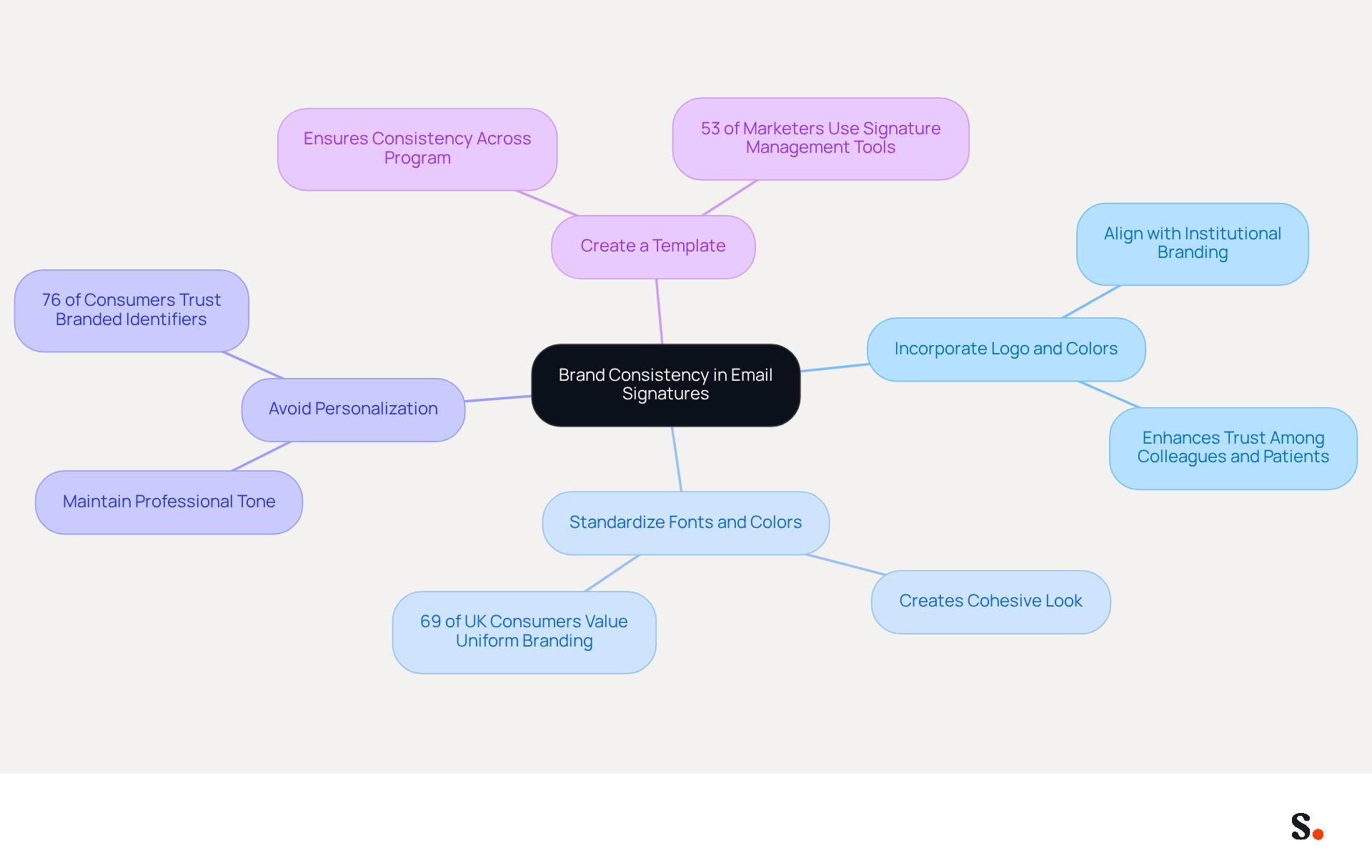
- Incorporate your institution's logo and colors to align your branding with the organization's guidelines. This not only reinforces brand identity but also enhances trust among colleagues and patients.
- Standardize Fonts and Colors: Utilize the same fonts and color schemes as your institution to create a cohesive look across all communications. Consistency in visual elements is essential, as 69% of UK consumers think a uniform branded identity is significant for businesses.
- Avoid Personalization: Keep personal quotes or images out of your email footer to maintain a professional tone. A consistent presentation fosters trust and credibility; without a standardized approach, maintaining professionalism can be challenging. In fact, 76% of consumers state that branded identifiers enhance their confidence in the sender.
- Create a Template: Utilize a standardized template for all residents to ensure consistency in endorsements across the program. This approach simplifies implementation and helps maintain brand standards. This is evident as 53% of marketers confirm that using email signature management tools helps maintain brand consistency.
By adhering to these practices, you can enhance the brand identity reflected in your residency email signature. This adherence not only builds trust but also enhances recognition among colleagues and patients. Inconsistent communication can undermine trust, making adherence to these practices essential for effective engagement.
Optimize Formatting and Design for Clarity
To create an effective residency email signature, it is important to focus on clarity and professionalism.
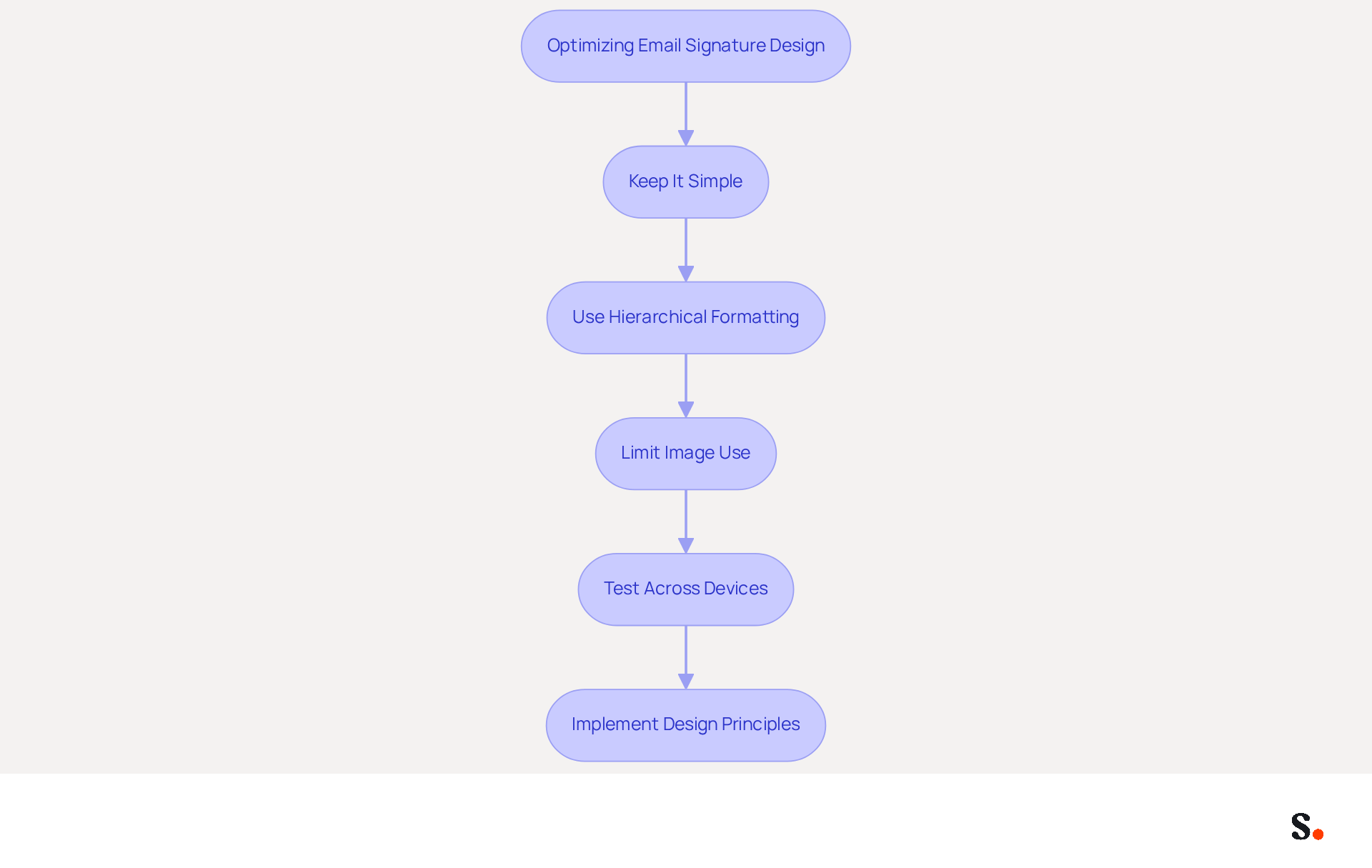
- Keep It Simple: Limit the number of elements in your sign-off to avoid clutter. A clean design enhances readability and ensures that essential information stands out. Research indicates that 76% of people feel more trust in senders who use branded electronic identifiers, highlighting the significance of clarity in your identification.
- Use Hierarchical Formatting: Organize information logically, using bold text for your name and role to draw attention. This approach helps recipients quickly identify who you are and your position, reinforcing your professional identity.
- Limit Image Use: If including images, such as logos, ensure they are appropriately sized and do not overwhelm the text. High-quality images sized between 150px-300px for logos can enhance professionalism without compromising clarity. Remember, overly complex designs may lead to your emails being filtered out, which can hinder communication.
- Test Across Devices: Verify how your mark appears on various devices and messaging clients to ensure consistency and clarity. With 60% of business correspondence now accessed on mobile devices, responsive design is essential for maintaining a polished appearance. Mobile users represent 41.6% of message openings, emphasizing the importance of optimizing your footer for mobile display. Failing to optimize for mobile can result in lost opportunities for engagement.
By focusing on these design principles, you create a residency email signature that’s both polished and practical, enabling recipients to swiftly access essential information. Implementing these strategies can significantly enhance your communication, reinforcing your professional identity and improving engagement. For example, case studies indicate that well-crafted digital identifiers can enhance marketing efforts and increase user engagement. Ignoring these design principles could hurt your professional image and limit your communication effectiveness.
Leverage Email Signatures for Marketing Opportunities
To maximize the marketing potential of your residency email signature, implementing targeted strategies is essential:
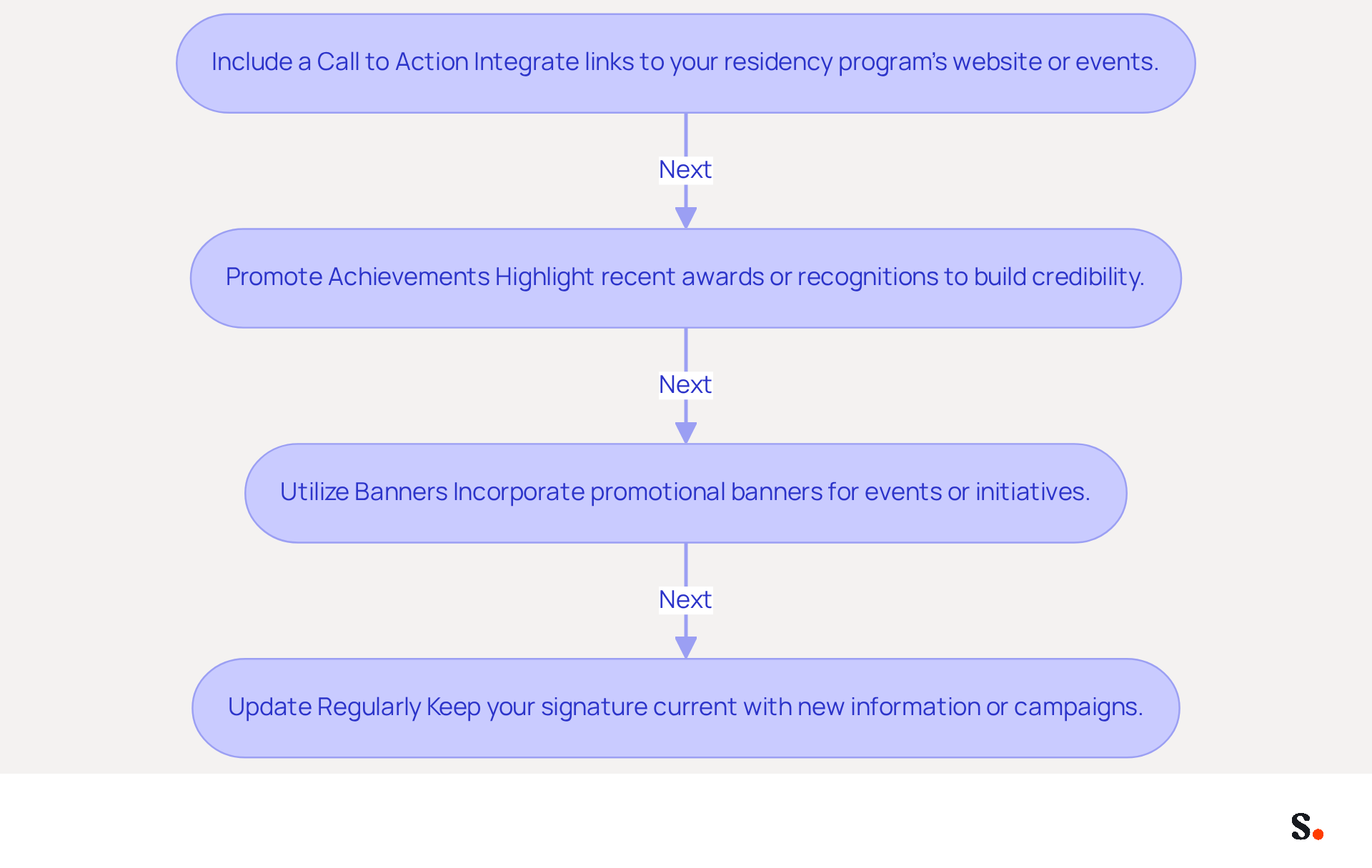
- Include a Call to Action: Integrate a link to your residency program's website or upcoming events, such as open houses or informational webinars. Each message sent serves as a valuable opportunity for business, particularly when it includes a clear call to action, encouraging recipients to explore more about your offerings and enhancing engagement.
- Promote Achievements: Highlight any recent awards or recognitions your program has received. This approach not only builds credibility but also draws in potential candidates and stakeholders by highlighting your program's achievements. Statistics indicate that branded email footers can boost response rates by 22% and increase trust by 76%, making this a vital aspect of your marketing strategy.
- Utilize Banners: Incorporate a promotional banner for events or initiatives within your email footer. Ensure that the banner aligns with the overall design of your branding to maintain a professional appearance while drawing attention to key messages. Adding dynamic banners can significantly increase click-through rates, as they serve as effective marketing touchpoints.
- Update Regularly: Keep your signature current with new information or campaigns. Without regular updates, your communications risk becoming stale and ineffective. Consistent communication builds trust with clients and stakeholders, maximizing the effect of each message sent.
Ultimately, leveraging residency email signatures effectively can redefine how your residency program engages with prospective candidates and stakeholders.
Conclusion
A well-crafted residency email signature is essential for establishing professional identity and fostering trust in communication. By incorporating key elements such as your full name, medical credentials, institutional affiliation, and clear contact information, the signature becomes a powerful tool for enhancing credibility and professionalism in the medical field.
The article outlines best practices that emphasize brand consistency, clarity in design, and the strategic use of email signatures for marketing opportunities. Key insights include:
- The importance of aligning with institutional branding
- Maintaining a clean and organized layout
- Leveraging signatures to effectively promote residency programs
These practices boost engagement and help create a professional image that connects with both colleagues and patients.
In a competitive landscape, the significance of a well-designed email signature cannot be overstated. It is an opportunity to reinforce brand identity, improve communication effectiveness, and even drive engagement through marketing strategies. Many residency programs fail to recognize the critical role that email signatures play in establishing professional identity and trust. This oversight can hinder their ability to effectively communicate and engage with colleagues and patients.
By implementing these best practices, residency programs can ensure that their email signatures are not only functional but also serve as a reflection of their commitment to professionalism and excellence in the medical community. Ultimately, neglecting the power of a well-designed email signature can limit a residency program's impact and recognition in the medical community.
Frequently Asked Questions
What is the purpose of a residency email signature?
A residency email signature establishes professional identity and fosters trust in communications.
What essential components should be included in a residency email signature?
A residency email signature should include your full name, medical credentials, institutional affiliation, contact information, position title, and a confidentiality disclaimer.
Why is it important to include your full name in the email signature?
Including your full name ensures recipients know who they are communicating with, establishing your identity and fostering trust.
How do medical credentials enhance the email signature?
Medical credentials, such as degrees and relevant certifications, validate your status and help establish authority and credibility in your communications.
What role does institutional affiliation play in a residency email signature?
Mentioning your residency program and institution provides context and reinforces your standing in the medical community.
Why is contact information important in an email signature?
Providing work contact details reduces confusion and facilitates prompt responses, making communication more convenient.
What should be specified as your position title in the email signature?
Your position title, such as PGY1 Resident, clarifies your current status and helps recipients recognize your level of expertise.
What is the significance of including a confidentiality disclaimer?
A confidentiality disclaimer protects individual information and clarifies that the message may contain confidential content.
How can a well-crafted email signature affect perceptions of authority and credibility?
Studies indicate that 76% of recipients believe that branded digital identifiers enhance their trust in the sender, and a branded email footer can result in a 22% increase in response rates.
Why is it important to regularly update your email footer?
Regular updates ensure that your email footer remains relevant and compliant with professional standards.
How does Scribe assist with managing residency email signatures?
Scribe automates the management of email signature approvals, ensuring that your information is always current and compliant with SOC 2 Type II standards, and integrates with your HRIS for automatic syncing of signing information.
List of Sources
- Define Essential Components of a Residency Email Signature
- Doctor Email Signature: Examples, Templates & Best Practices
- NEWOLDSTAMP (https://newoldstamp.com/blog/doctor-email-signatures)
- Email Signature for Doctors: Templates, Credentials & Confidentiality Best Practices (https://syncsignature.com/blog/email-signature-for-doctors)
- Best Practices for a Professional Medical Doctor Email Signature (https://scribe-mail.com/en-US/blog/best-practices-for-a-professional-medical-doctor-email-signature)
- 40+ Email Signature Statistics for 2026 (Data + Insights) (https://wavecnct.com/blogs/email-signature-statistics)
- Email Signature Management for Healthcare: A Complete Guide (https://exclaimer.com/email-signature-handbook/email-signature-management-for-healthcare)
- Ensure Brand Consistency in Email Signatures
- Exclaimer Research: 67% of Marketers Expect Email Signatures to Support With Lead Gen In 2023 (https://businesswire.com/news/home/20230612141095/en/Exclaimer-Research-67-of-Marketers-Expect-Email-Signatures-to-Support-With-Lead-Gen-In-2023)
- The impact of email signatures on your branding (https://signitic.com/en/resources/the-impact-of-email-signatures-on-your-branding)
- Branding statistics you need to know in 2026 (https://dash.app/blog/branding-statistics)
- Research Recap: Branded Email Signatures Increase Company Recognition, Trust - Demand Gen Report (https://demandgenreport.com/industry-news/research-recap-branded-email-signatures-increase-company-recognition-trust/47252)
- 20 Stats That Will Remind You of the Importance of Your Branding (https://info.zimmercommunications.com/blog/20-stats-that-will-remind-you-of-the-importance-of-your-branding)
- Optimize Formatting and Design for Clarity
- 4 Best Practices for a Modern Email Signature That Engages (https://scribe-mail.com/en-US/blog/4-best-practices-for-a-modern-email-signature-that-engages)
- Crafting the Perfect Email Signature: Tips, Types, and Best Practices for Today's Professionals - Frey Design (https://freydesigngroup.com/blog/crafting-the-perfect-email-signature)
- Optimise Your Email Signatures: Strategic Tips & Tools | Crossware365 (https://crossware365.com/blog/optimise-your-email-signatures-strategic-tips-tools)
- Email Signature Best Practices Guide With Examples - MailerLite (https://mailerlite.com/blog/email-signature-best-practices)
- Pro tips for optimizing your email signature (https://tbhcreative.com/blog/email-signature-marketing-design)
- Leverage Email Signatures for Marketing Opportunities
- 12 clever ways to use your email signature to support your marketing campaigns (https://blog.hubspot.com/blog/tabid/6307/bid/31054/10-clever-ways-your-email-signature-can-support-your-marketing.aspx)
- Why and how to add an effective CTA to your email signature? (https://signitic.com/en/resources/why-and-how-to-add-an-effective-cta-to-your-email-signature)
- 12 email signature marketing examples that drive clicks (2026) (https://signitic.com/en/resources/12-email-signature-marketing-examples-that-actually-drive-clicks)
- 40+ Email Signature Statistics for 2026 (Data + Insights) (https://wavecnct.com/blogs/email-signature-statistics)
Get started with Scribe
Manage signatures across your whole team
Free 14-day trial — no credit card.