10 Essential Email Disclaimers for HIPAA Compliance
In the intricate realm of healthcare communication, compliance with HIPAA regulations is essential for fostering patient trust. This article outlines ten
Sophie Grant
Email Signature Specialist, Scribe
On this page
- Introduction
- Scribe: Automated HIPAA Email Disclaimer Management
- Standard Confidentiality Disclaimer Template
- Encrypted Email Context Disclaimer Template
- Patient Choice and Consent Disclaimer Template
- Minimum Necessary Information Reminder Template
- Vendor and Third-Party Boundary Disclaimer Template
- Legal Considerations for HIPAA Email Disclaimers
- Clear Language in HIPAA Email Disclaimers
- Monitoring and Auditing HIPAA Email Disclaimers
- Regular Updates for HIPAA Email Disclaimers
- Conclusion
- Frequently Asked Questions
- List of Sources
Introduction
In the intricate realm of healthcare communication, compliance with HIPAA regulations is essential for fostering patient trust. This article outlines ten essential email disclaimers that healthcare organizations must implement to safeguard sensitive information and ensure compliance. Readers will discover how these disclaimers not only protect patient data but also enhance the overall security posture of their communications.
Navigating HIPAA regulations presents significant challenges for healthcare organizations. To effectively manage these disclaimers and mitigate the risk of costly breaches and legal repercussions, organizations must adopt a proactive approach.
Scribe: Automated HIPAA Email Disclaimer Management
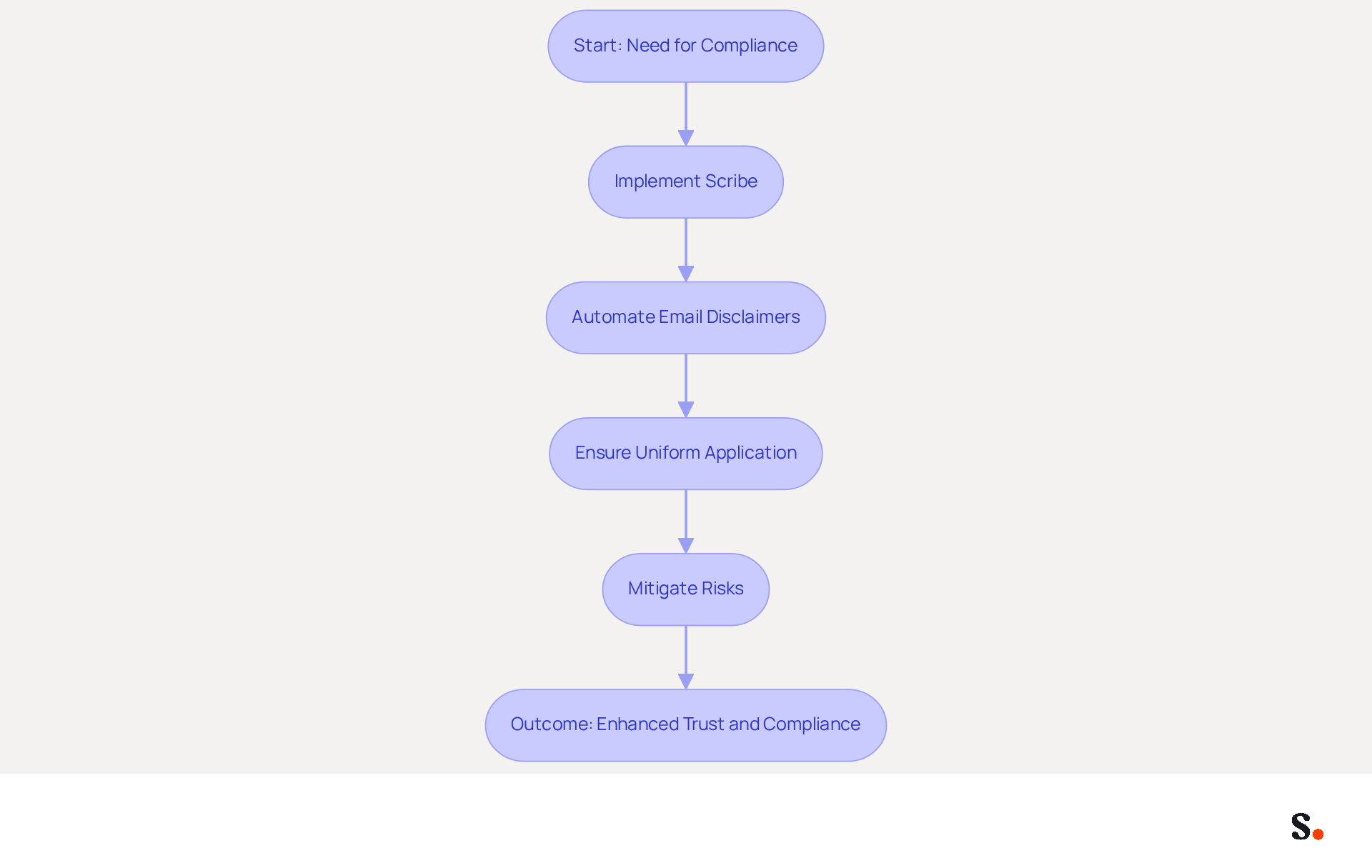
In an era where compliance is paramount, Scribe provides a vital solution for automating compliance notices, ensuring that every outgoing message from your organization includes an email disclaimer hipaa to equip it with the necessary legal protections. By automating this process, Scribe simplifies compliance and guarantees that notices are uniformly applied across all communications, a critical factor in meeting privacy regulations. Given that approximately 8% of annual data breaches stem from message misdeliveries, the urgency for automated solutions is clear.
Furthermore, experts emphasize that while a HIPAA notice alone does not ensure compliance, its consistent application can enhance the perception of security and trust among patients. By utilizing Scribe, organizations can effectively mitigate risks associated with digital communications, ensuring that they remain compliant while focusing on their core operations. By prioritizing automated compliance, organizations not only protect themselves but also foster trust with their patients, a crucial element in healthcare today.
Standard Confidentiality Disclaimer Template
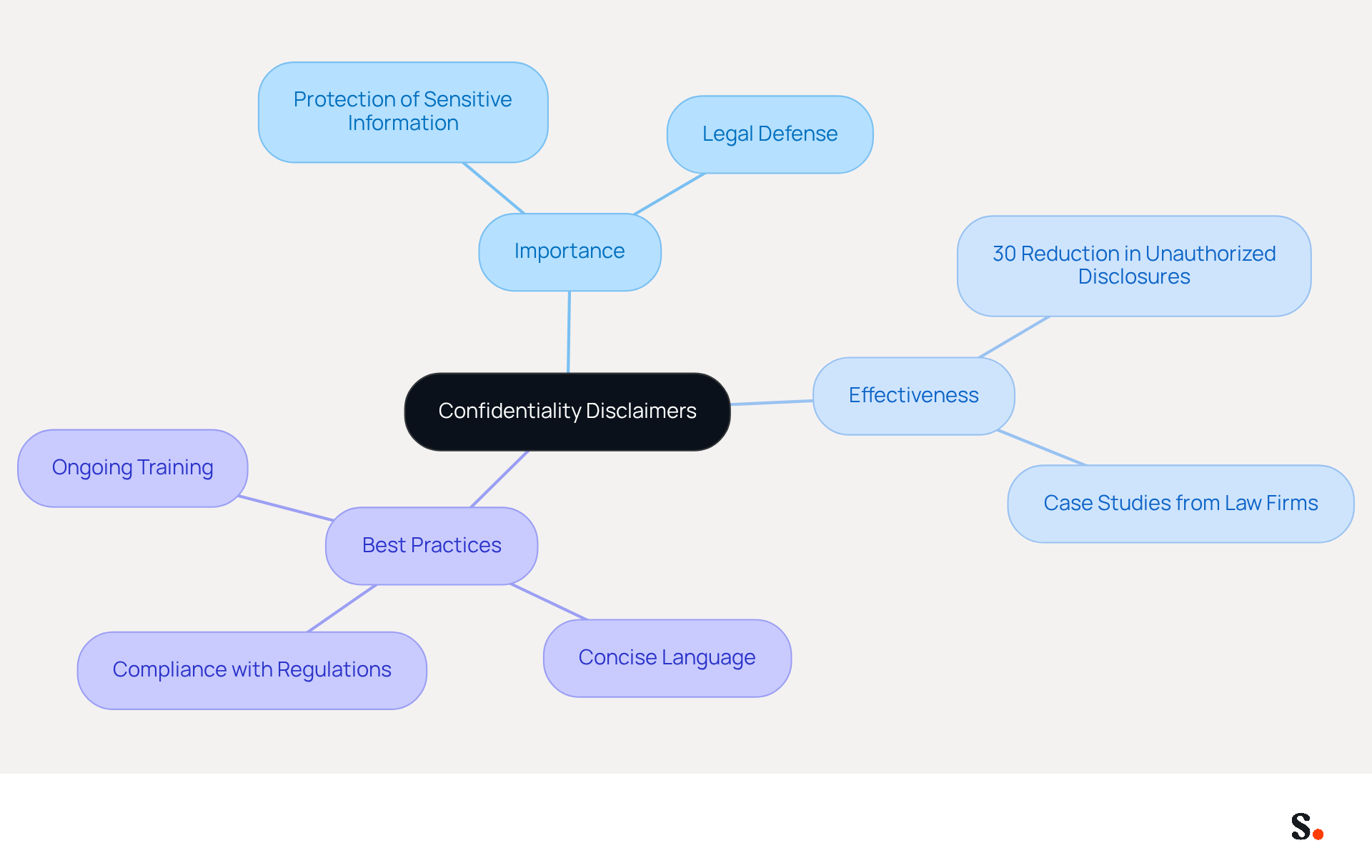
Confidentiality disclaimers are essential in protecting sensitive information in email communications. A standard confidentiality disclaimer template might state:
"This correspondence and any attachments may contain confidential and privileged material, including Protected Health Information (PHI). If you are not the intended recipient, please inform the sender and delete this message. Unauthorized use or disclosure of this information is prohibited."
This template clearly conveys the sensitive nature of the email's content and acts as a primary defense against unauthorized access and legal issues.
In healthcare, the implementation of such notices is crucial. A recent study published in [source] found that organizations implementing confidentiality statements experienced a 30% reduction in unauthorized disclosures, highlighting their effectiveness in safeguarding sensitive information. Additionally, case studies show that law firms using these statements have significantly lowered legal risks associated with misdirected correspondence, emphasizing the importance of clear communication concerning confidentiality.
Best practices for crafting these notices include:
- Using concise language
- Ensuring compliance with regulations like HIPAA and GDPR
- Regularly reviewing and updating the email disclaimer to reflect any changes in policies or legal requirements
Furthermore, ongoing training on confidentiality and secure handling of sensitive data is essential for effective implementation. By adhering to these guidelines, organizations can enhance their legal protections and maintain trust with clients and stakeholders. Failure to implement these best practices could expose organizations to significant legal and reputational risks.
Encrypted Email Context Disclaimer Template
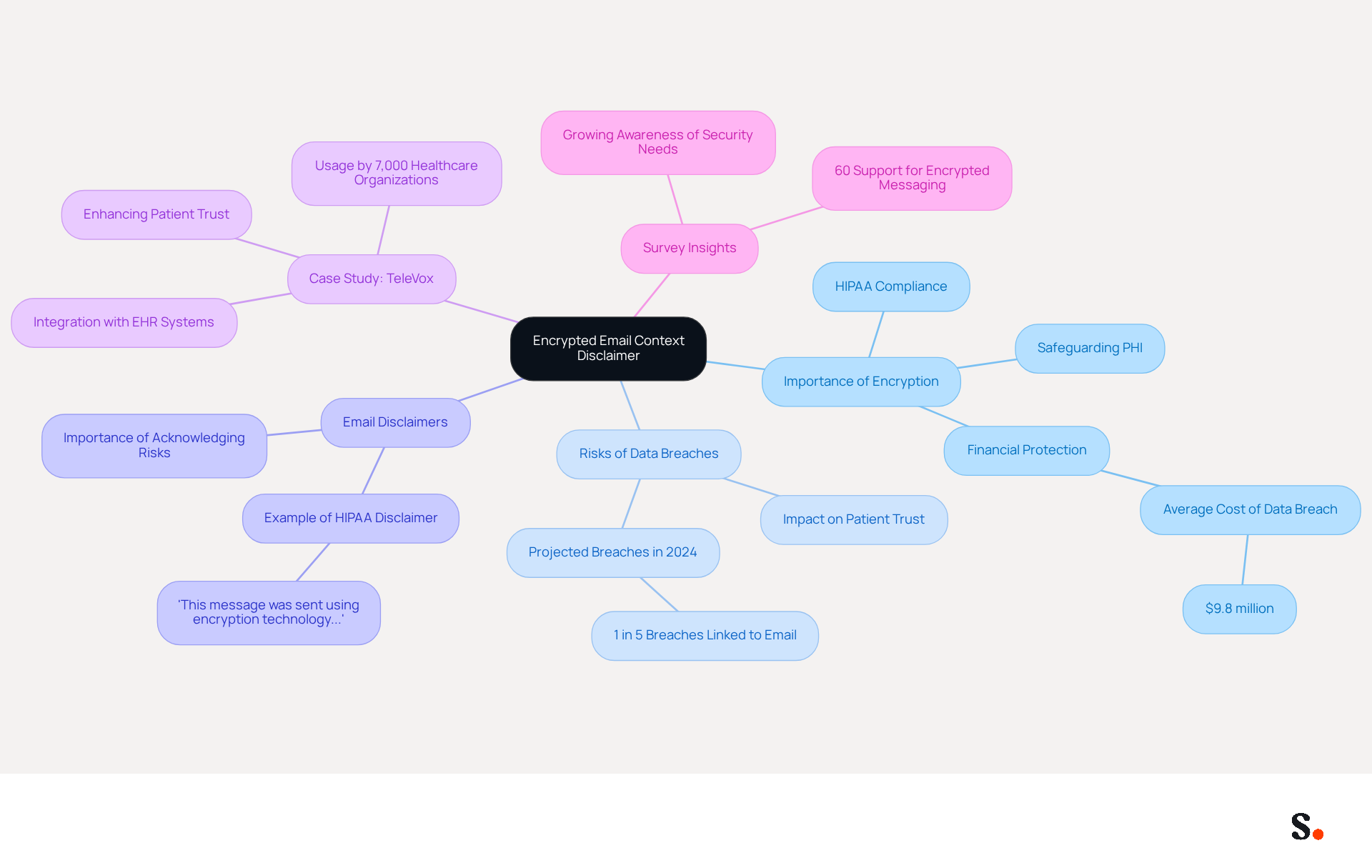
In an era where data breaches are increasingly common, the importance of encrypted communication cannot be overlooked. An effective email disclaimer HIPAA might indicate: 'This message was sent using encryption technology and may contain Protected Health Information (PHI).' If you are not the intended recipient, please inform the sender and delete this message. While encryption provides a layer of security, no method of transmission over the internet is 100% secure. This email disclaimer HIPAA highlights the importance of encryption and acknowledges the risks associated with email communication.
Such email disclaimers HIPAA are crucial, especially considering that nearly one in five data breaches projected for 2024 will involve communication methods. Healthcare organizations must prioritize the protection of PHI, as the average cost of a data breach in this sector is approximately $9.8 million. Failing to implement encryption can lead to devastating financial repercussions for healthcare organizations. Implementing encryption not only safeguards sensitive information but also fulfills HIPAA compliance requirements, which mandate detailed audit logs of patient information access.
Take, for instance, the case of TeleVox, a leader in secure messaging, which shows how effective encrypted messaging can be. TeleVox integrates encryption with electronic health record systems, allowing over 7,000 healthcare organizations to communicate securely. Their approach enhances patient trust and supports comprehensive engagement strategies, reinforcing the necessity of disclaimers to protect PHI.
Moreover, the use of encryption technology is gaining traction among healthcare providers. A survey indicated that 60% of respondents supported using encrypted messaging technology, reflecting a growing awareness of the need for secure communications. This trend is vital as healthcare communications often contain PHI, such as appointment reminders and lab results, making them particularly susceptible to interception.
Without proper encryption, healthcare organizations risk not only patient trust but also their financial stability and compliance with regulations.
Patient Choice and Consent Disclaimer Template
A patient choice and consent statement is crucial for ensuring clarity in electronic communications. By communicating with us through electronic mail, you consent to the use of your Protected Health Information (PHI) as outlined in our email disclaimer hipaa and privacy policies. If you do not wish to communicate through electronic mail, please contact us by phone or in person. This notice ensures that patients are aware of their rights and the implications of using electronic communication for sensitive matters.
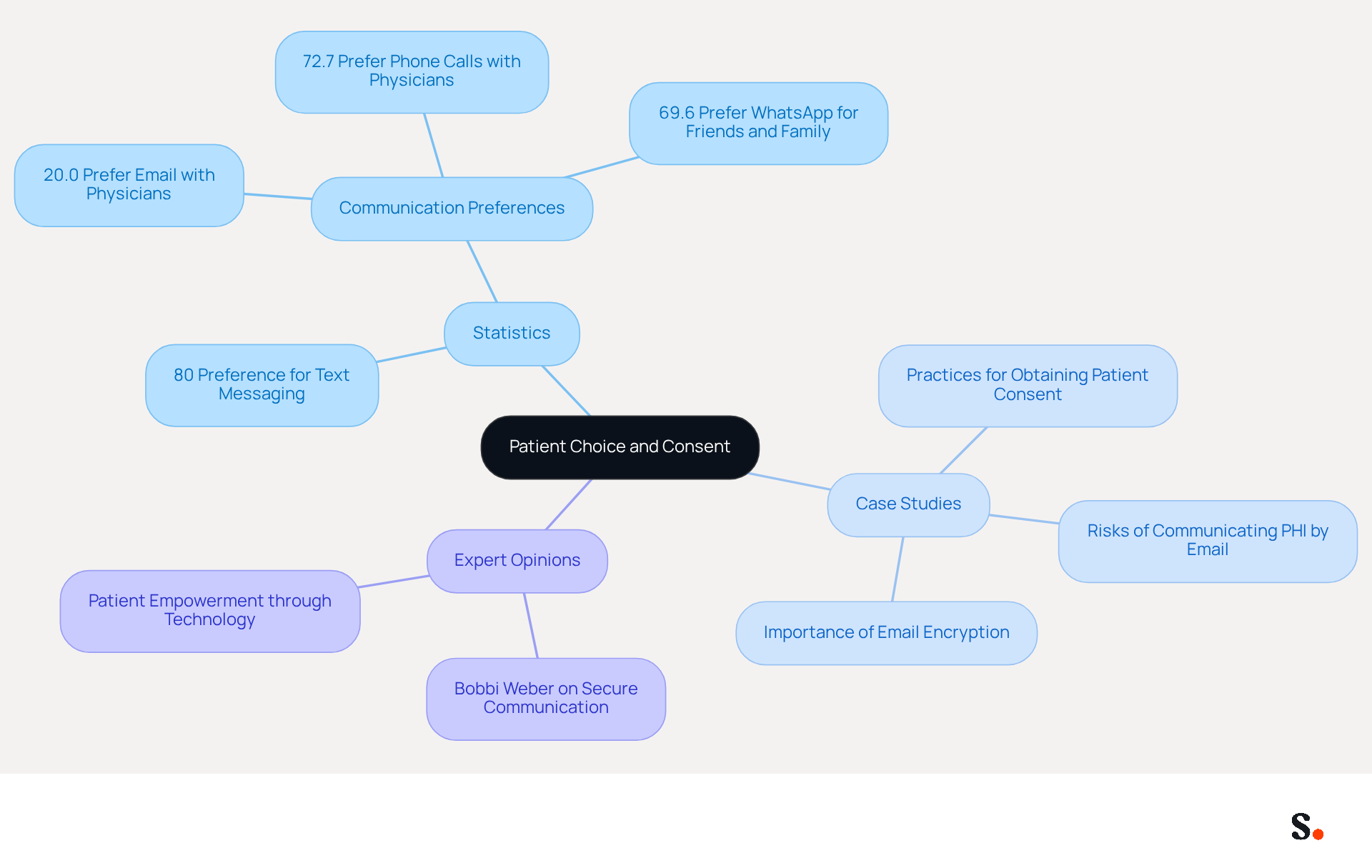
Statistics indicate that 80.0% of participants prefer typing text messages to communicate with their physician during clinical trials, demonstrating a clear preference for digital communication methods. This preference underscores the significance of clear consent through an email disclaimer hipaa in digital communications, as patients are increasingly engaging through online platforms.
Case studies highlight the importance of transparency in securing patient consent for digital communications. For instance, organizations that adopt an opt-in approach and educate patients about the revocable nature of consent can significantly enhance trust and compliance with HIPAA regulations. The case study titled "Practices for Obtaining Patient Consent" illustrates effective practices that healthcare organizations can implement to foster patient empowerment and transparency in the consent process.
Expert opinions indicate that while consent is not always legally necessary for electronic communications, it is advisable to ensure patient comfort and security. Bobbi Weber, Vice President of Marketing and Customer Success at QliqSOFT, notes that the evolution of healthcare will increase the need for secure text communication. By implementing an email disclaimer hipaa, healthcare providers can foster a more secure and trustworthy communication environment, ultimately improving patient engagement and satisfaction.
Minimum Necessary Information Reminder Template
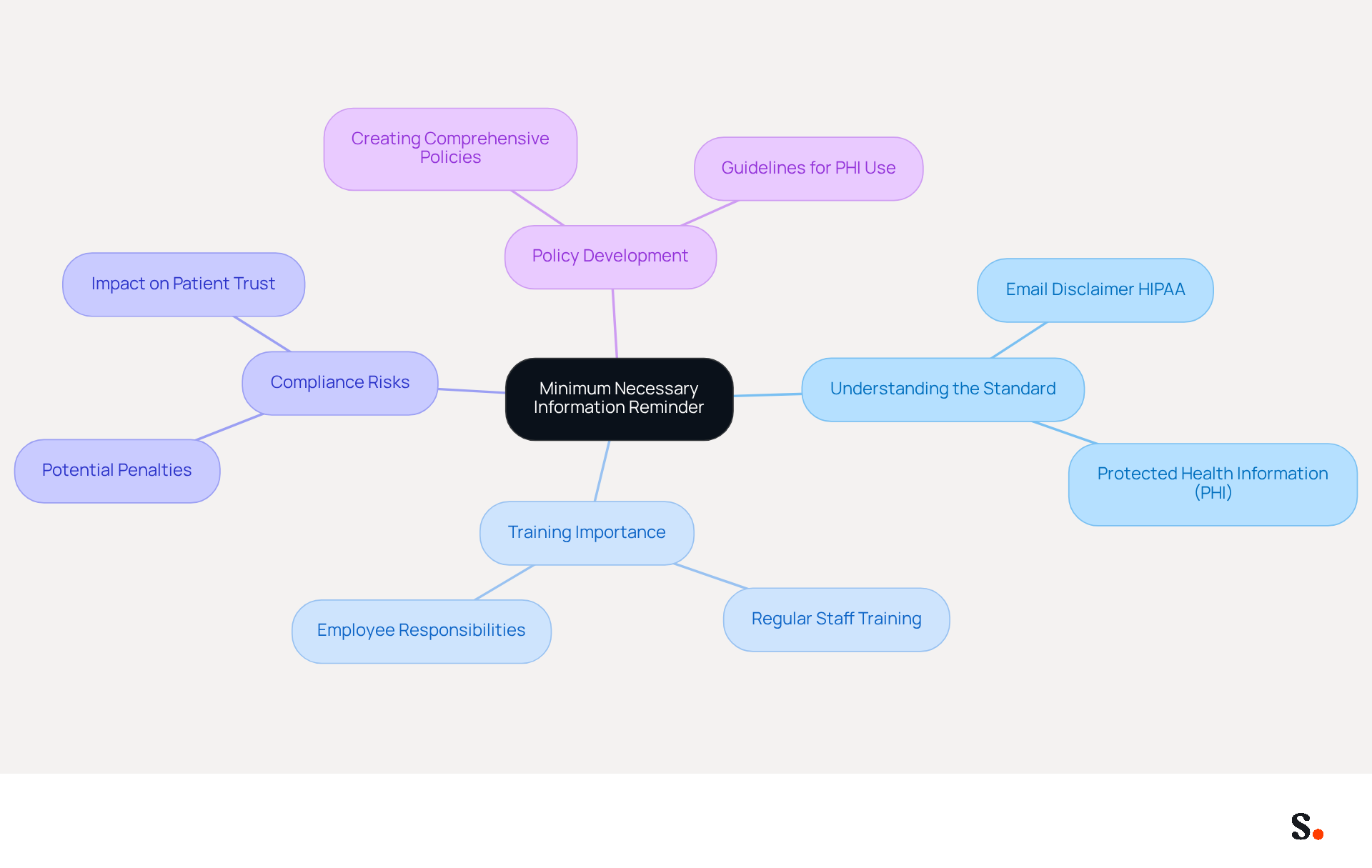
Understanding the minimum necessary standard is crucial for healthcare organizations to protect patient privacy and avoid compliance pitfalls. Please remember to include an email disclaimer HIPAA to ensure that the information shared in this email is limited to the minimum necessary for the intended purpose. This aligns with regulations to safeguard patient privacy. This reminder highlights the importance of discretion in managing Protected Health Information (PHI) and helps ensure compliance with relevant standards.
Case studies reveal that many healthcare organizations struggle with understanding and implementing the minimum necessary standard. This struggle often leads to confusion and potential compliance issues. For instance, a survey indicated that a significant portion of privacy and security professionals were unsure about the definition of this standard, with one-third reporting no policies in place to guide their practices. Without proper understanding, organizations risk breaches that can result in severe penalties, underscoring the need for data-driven communication and comprehensive training on privacy regulations.
Expert advice underscores the importance of regular training for staff on the minimum necessary rule, which mandates that only the essential PHI be disclosed for specific purposes. Organizations must create comprehensive policies that outline these guidelines, ensuring that employees are aware of their responsibilities when communicating via email, particularly regarding the email disclaimer HIPAA. Implementing these practices helps healthcare entities reduce risks related to PHI disclosures and improve compliance. Furthermore, it is essential to recognize that the minimum required standard does not pertain to disclosures for treatment purposes, which is a vital element of compliance with privacy regulations. Violating this standard can result in civil penalties ranging from $100 to $50,000 per violation, highlighting the importance of adherence to these regulations. Failure to comply with these regulations not only jeopardizes patient trust but also exposes organizations to severe financial penalties.
Vendor and Third-Party Boundary Disclaimer Template
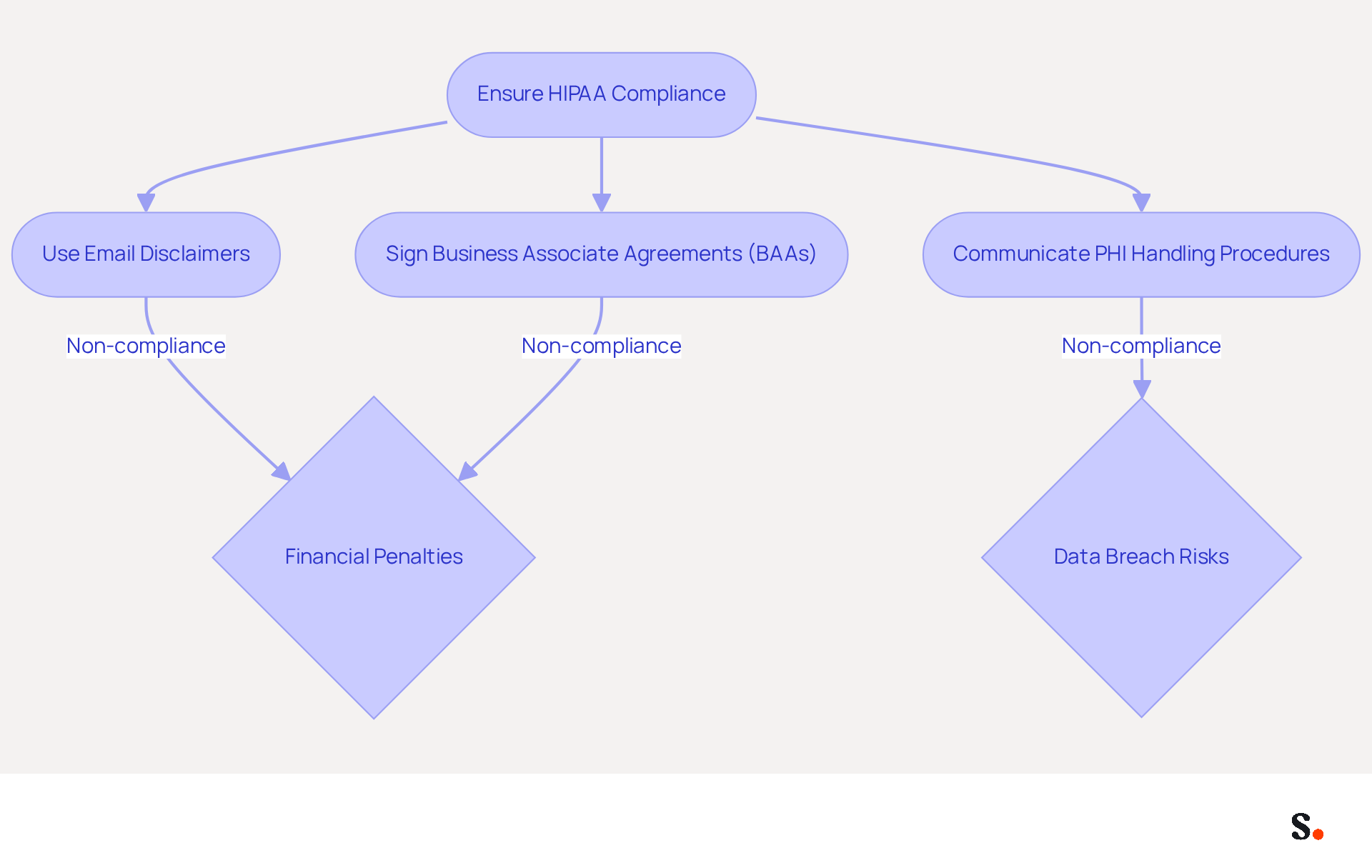
To ensure compliance with HIPAA regulations, a vendor and third-party boundary statement is essential. An effective email disclaimer HIPAA might state: 'This email may contain Protected Health Information (PHI) intended solely for the recipient.'. If you are a third party, please do not reveal this data without proper authorization. Unauthorized use or disclosure is prohibited. This statement clearly defines the limits of information sharing and emphasizes the importance of adhering to privacy regulations.
Case studies show the serious financial consequences of failing to comply. For instance, Medical Informatics Engineering, Inc. faced a $100,000 settlement due to a data breach affecting 3.5 million individuals, underscoring the risks associated with improper handling of PHI. Similarly, Touchstone Medical Imaging incurred $3 million in fines for multiple HIPAA violations, illustrating the financial repercussions of non-compliance. The typical expense of vendor-related data breaches is around $1.9 million, further highlighting the necessity for effective notices.
Statistics reveal that the healthcare industry spends approximately $23.7 billion annually on third-party risk management, with hospitals utilizing an average of 1,300 vendors. This complexity necessitates clear communication regarding PHI handling. Expert insights suggest that organizations must ensure all external vendors sign Business Associate Agreements (BAAs) to protect PHI, thereby mitigating compliance risks associated with third-party vendors. Elliot Dinkin, CEO, emphasizes that "covered entities should minimize risks by making BAs accountable for PHI security."
Using a clear boundary notice in digital communications helps protect sensitive information and builds trust online. Non-compliance can result in fines ranging from $100 per infraction to a maximum of $1.5 million each year, highlighting the importance of following privacy regulations. The financial stakes of non-compliance underscore the critical need for effective communication regarding PHI handling.
Legal Considerations for HIPAA Email Disclaimers
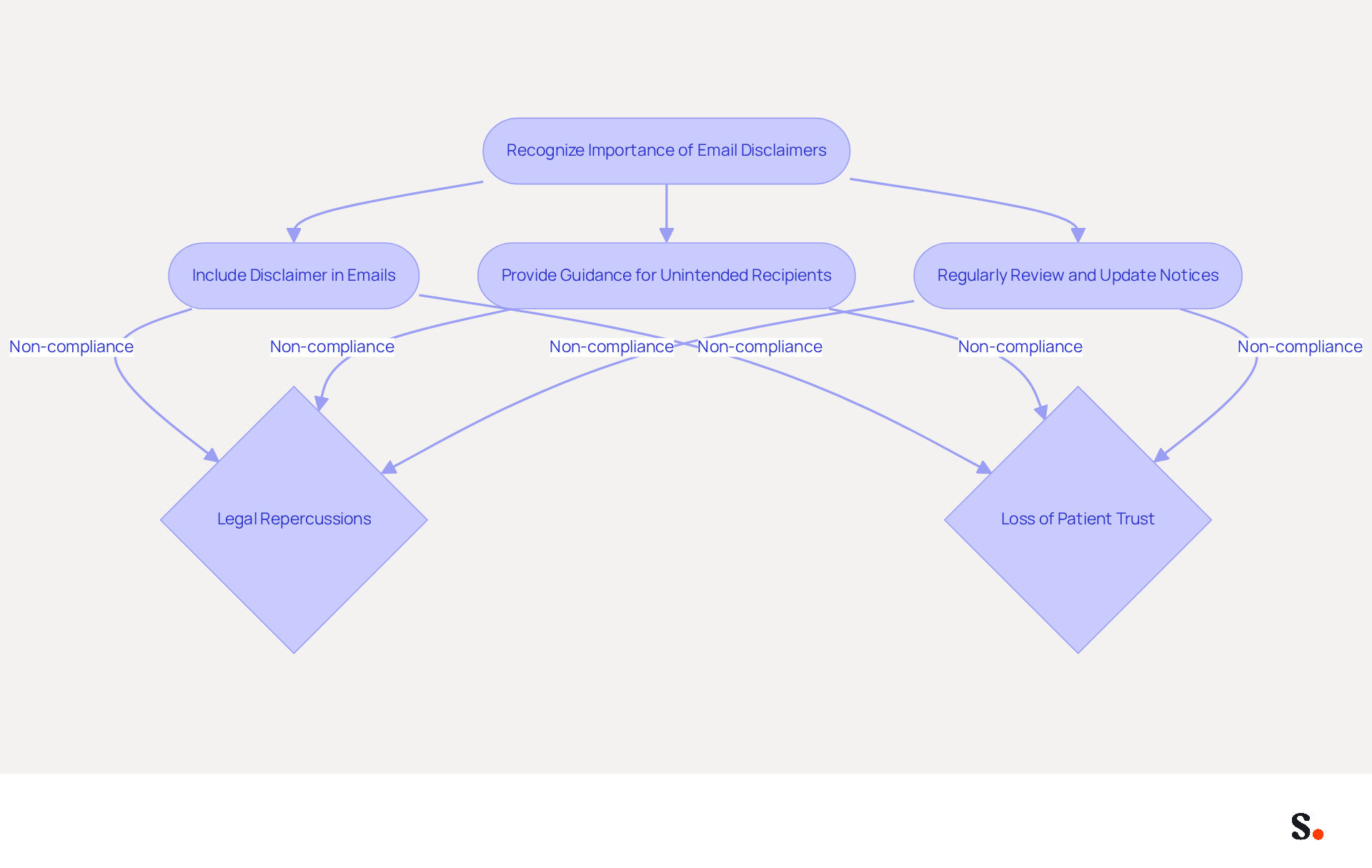
Organizations must recognize the critical importance of including an email disclaimer HIPAA in their communication notices to mitigate risks associated with HIPAA compliance. An email disclaimer HIPAA should clearly indicate that the message may contain protected health information (PHI) and provide guidance for unintended recipients. Without proper warnings, organizations risk facing severe legal repercussions, including hefty fines and loss of patient trust.
For instance, the University of Rochester Medical Center faced a $3 million settlement after impermissibly disclosing PHI through lost unencrypted devices, underscoring the financial risks associated with non-compliance. Furthermore, organizations such as Memorial Hermann Health System have faced penalties of $2.4 million for failing to protect patient data adequately, which emphasizes the essential need for strong email practices, including an email disclaimer HIPAA.
Regularly reviewing and updating notices is essential to align with evolving regulations and to mitigate potential liabilities. As emphasized by industry experts, identifying and addressing risks related to electronic protected health data is crucial for effective compliance with HIPAA regulations.
By syncing your Google Workspace with Scribe, organizations can streamline signature management, ensuring that all notices are consistently applied and updated automatically. This integration not only saves time by eliminating the need for manual updates but also helps maintain compliance and brand consistency across all communications. Moreover, Scribe's SOC 2 Type II certification and adherence to GDPR and CCPA bolster its credibility in managing sensitive data securely.
Clear Language in HIPAA Email Disclaimers
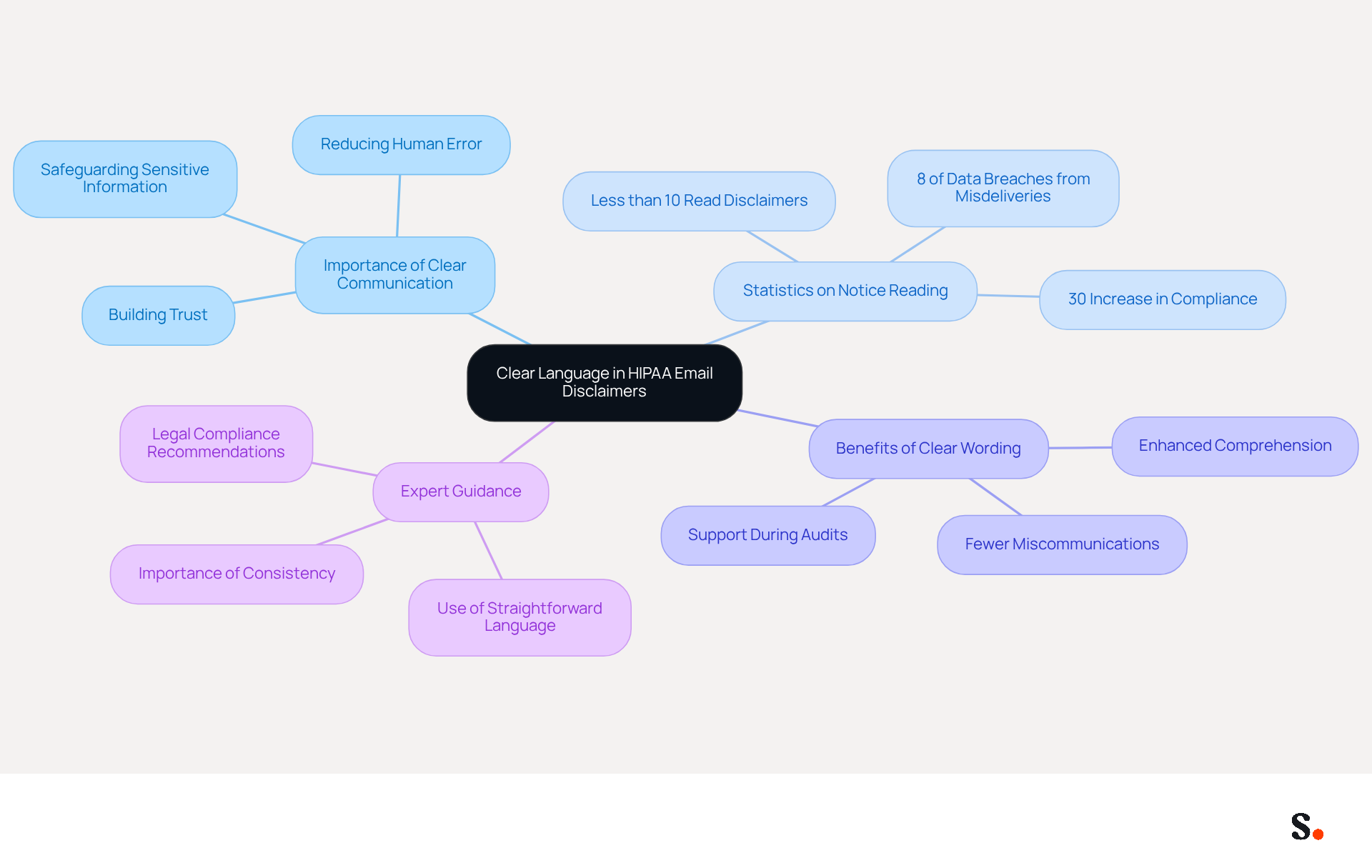
Clear communication is essential, especially when it comes to sensitive health information, which is why an email disclaimer HIPAA is important. For instance, rather than employing legal terminology, a notice could state: 'This message may include sensitive health information that requires careful handling.' If you are not the intended recipient, please delete it and notify the sender. This method not only boosts understanding but also highlights the importance of an email disclaimer HIPAA to maintain confidentiality.
Statistics indicate that fewer than 10% of email recipients actually read attached notices, highlighting the need for clarity. A well-organized statement can greatly enhance comprehension and adherence, as demonstrated by studies indicating that organizations with clear wording saw a 30% increase in compliance with privacy regulations. Organizations that implemented clear and straightforward statements reported fewer occurrences of miscommunication concerning sensitive matters.
Expert guidance emphasizes that using straightforward, clear language in health information privacy notices, such as an email disclaimer HIPAA, is crucial for effective communication. This not only aids in safeguarding sensitive health information but also reduces the likelihood of human error, ensuring that employees consistently incorporate the necessary notices when required. Ultimately, clarity in communication not only protects sensitive information but also fosters trust and compliance.
Monitoring and Auditing HIPAA Email Disclaimers
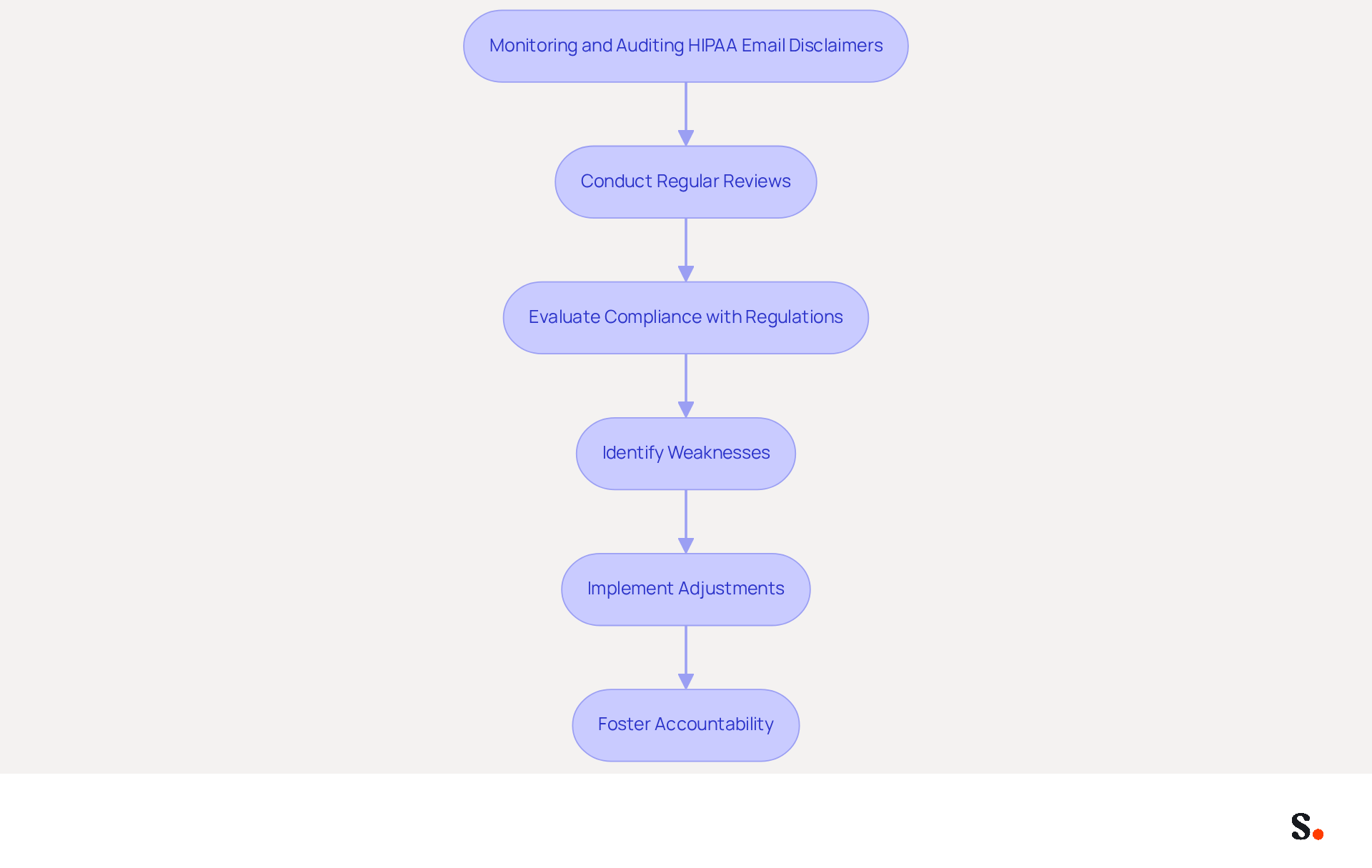
To effectively manage HIPAA communication notices, organizations must implement a rigorous monitoring and auditing process. This requires regular reviews of the content to confirm compliance with current regulations and to evaluate how well the disclaimers protect Protected Health Information (PHI). Regular audits are essential, as they can reveal weaknesses in the compliance strategy, allowing for timely adjustments to mitigate risks.
For instance, Steve Alder noted that an equal split of mail misdeliveries implies around 2,600 data breach events each year are attributable to messages being sent to the wrong recipients. This statistic highlights the urgent need for proactive compliance measures. Furthermore, expert insights suggest that organizations should conduct these audits at least annually, with some recommending semi-annual reviews to stay ahead of regulatory changes.
Steve Youngman, Vice President of Legal at Hushmail, emphasizes that "you might be tempted to threaten legal action if the wrong recipient doesn’t report the incident or mishandles the PHI, but you’re not actually in a position to do anything."
When organizations prioritize monitoring and auditing, they not only boost their compliance efforts but also foster a culture of accountability and awareness in handling sensitive data. By neglecting these essential audits, organizations risk not only compliance failures but also potential legal liabilities that could have been avoided.
Regular Updates for HIPAA Email Disclaimers
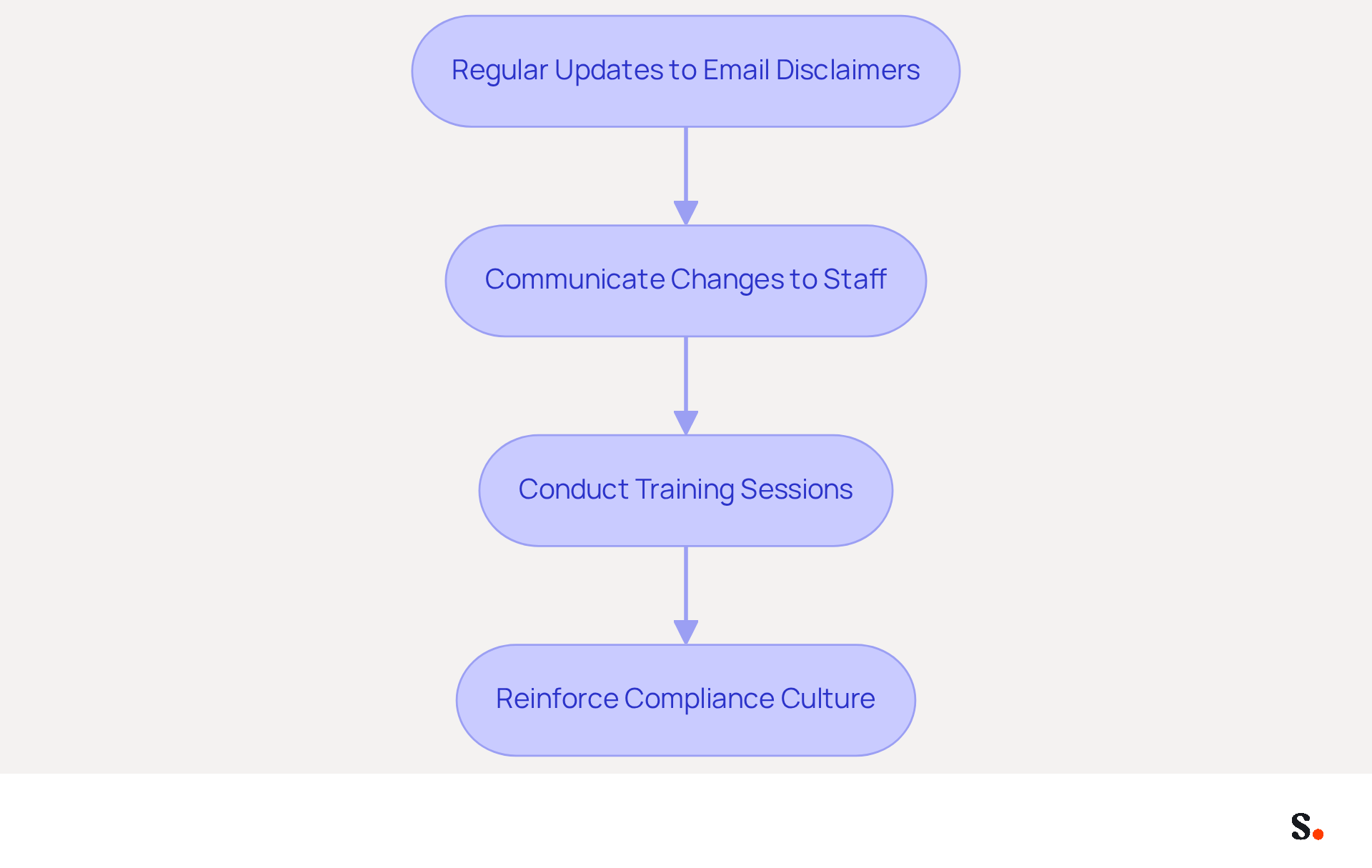
To effectively safeguard patient information, organizations must prioritize the regular updating of their email disclaimer HIPAA. Regular updates are crucial for maintaining the relevance and effectiveness of the email disclaimer HIPAA in protecting patient information. These updates help organizations adapt to evolving compliance standards and mitigate risks associated with outdated notices.
Furthermore, it is essential to communicate any changes to staff, ensuring that all team members are informed about the current email disclaimer HIPAA and understand their critical role in maintaining compliance. Organizations that prioritize regular updates not only improve compliance but also create a culture of awareness around HIPAA regulations.
Expert opinions suggest that consistent training and communication about these updates can significantly reduce the likelihood of violations, reinforcing the importance of a well-informed workforce in protecting sensitive health information. Ultimately, a well-informed workforce is crucial in minimizing the risk of HIPAA violations and ensuring the protection of sensitive health information.
Conclusion
Compliance with HIPAA regulations is essential for maintaining trust in healthcare communications. The implementation of essential email disclaimers serves as a safeguard for sensitive patient information, protecting organizations from potential legal repercussions while fostering a secure environment for patient interactions.
Throughout this article, key disclaimers have been highlighted, including:
- Confidentiality notices
- Encryption warnings
- Patient consent statements
Each serves a unique purpose in reinforcing the importance of safeguarding Protected Health Information (PHI) and ensuring that communications adhere to HIPAA standards. Automated solutions like Scribe enable organizations to streamline the management of these disclaimers, ensuring consistency and compliance across all communications.
Data breaches pose significant risks to both finances and reputation. Therefore, prioritizing HIPAA compliance through effective email disclaimers is essential. Organizations must not only implement these practices but also commit to regular updates and training to adapt to evolving regulations. This necessitates proactive measures to ensure compliance and security. Organizations that prioritize these practices will not only safeguard sensitive information but also enhance their reputation in the healthcare sector.
Frequently Asked Questions
What is Scribe and what does it offer?
Scribe is a solution that automates compliance notices, ensuring that every outgoing email from an organization includes a HIPAA email disclaimer for legal protection. It simplifies compliance and ensures uniform application of notices across all communications.
Why is automated HIPAA email disclaimer management important?
Automated HIPAA email disclaimer management is important because approximately 8% of annual data breaches stem from message misdeliveries. By automating this process, organizations can mitigate risks associated with digital communications and enhance their compliance with privacy regulations.
How does Scribe help organizations with compliance?
Scribe helps organizations by automating the application of HIPAA email disclaimers, which enhances the perception of security and trust among patients. This allows organizations to focus on their core operations while remaining compliant.
What is a standard confidentiality disclaimer template?
A standard confidentiality disclaimer template states: "This correspondence and any attachments may contain confidential and privileged material, including Protected Health Information (PHI). If you are not the intended recipient, please inform the sender and delete this message. Unauthorized use or disclosure of this information is prohibited."
Why are confidentiality disclaimers important in healthcare?
Confidentiality disclaimers are important in healthcare as they protect sensitive information in email communications. Organizations implementing these statements have experienced a 30% reduction in unauthorized disclosures, highlighting their effectiveness in safeguarding sensitive information.
What are best practices for crafting confidentiality notices?
Best practices for crafting confidentiality notices include using concise language, ensuring compliance with regulations like HIPAA and GDPR, regularly reviewing and updating the email disclaimer, and providing ongoing training on confidentiality and secure handling of sensitive data.
What is an encrypted email context disclaimer?
An encrypted email context disclaimer indicates that the message was sent using encryption technology and may contain Protected Health Information (PHI). It also advises unintended recipients to inform the sender and delete the message.
Why is encryption important for email communications in healthcare?
Encryption is important for email communications in healthcare because it provides a layer of security against data breaches, which are increasingly common. It also fulfills HIPAA compliance requirements and helps protect sensitive information, as the average cost of a data breach in healthcare is approximately $9.8 million.
What are the risks of not implementing encryption in healthcare communications?
Not implementing encryption in healthcare communications can lead to significant financial repercussions, loss of patient trust, and non-compliance with regulations, exposing organizations to legal and reputational risks.
List of Sources
- Scribe: Automated HIPAA Email Disclaimer Management
- What You Need to Know About HIPAA Email Disclaimer in 2025 - NEWOLDSTAMP (https://newoldstamp.com/blog/hipaa-email-disclaimer)
- The Bottom Line on HIPAA Compliance and Your Email – Spruce Blog (https://sprucehealth.com/blog/bottom-line-hipaa-compliance-email)
- What is a HIPAA Email Disclaimer? (https://hipaajournal.com/hipaa-email-disclaimer)
- HIPAA Compliant Email: The Definitive Guide (2026 Update) | Paubox (https://paubox.com/blog/hipaa-compliant-email)
- HIPAA Email Disclaimer: Do You Need One? Requirements, Examples & Templates (https://accountablehq.com/post/hipaa-email-disclaimer-do-you-need-one-requirements-examples-templates)
- Standard Confidentiality Disclaimer Template
- Disclaimer examples: Templates and best practices for business protection (https://complydog.com/blog/example-of-disclaimer)
- Confidential Email Disclaimers (Examples and Template Included!) (https://clio.com/blog/confidential-email-disclaimer)
- Email Disclaimer: What It Is, When Do You Need It + Examples | iubenda (https://iubenda.com/en/blog/email-disclaimer)
- What is a HIPAA Email Disclaimer? (https://hipaajournal.com/hipaa-email-disclaimer)
- The Importance of Email Disclaimers for Businesses - Tyler Law LLP (https://tylerlawllp.com/blog-posts/the-importance-of-email-disclaimers-for-businesses)
- Encrypted Email Context Disclaimer Template
- How to Encrypt PHI Data for Secure Transmission | Censinet (https://censinet.com/perspectives/how-to-encrypt-phi-data-for-secure-transmission)
- Encrypted Email for Healthcare: Ensuring Secure Communications for Providers | TeleVox (https://televox.com/blog/healthcare/encrypted-email-for-healthcare)
- HIPAA Encryption | HIPAA Encryption Requirements (https://mimecast.com/content/hipaa-encryption-requirements)
- New encrypted email system to protect the exchange of information | Immune Deficiency Foundation (https://primaryimmune.org/resources/news-articles/new-encrypted-email-system-protect-exchange-information)
- Use of electronic patient records and encrypted email patient communication among Swiss chiropractors: a population-based cross-sectional study - PMC (https://pmc.ncbi.nlm.nih.gov/articles/PMC10353203)
- Patient Choice and Consent Disclaimer Template
- Patients Want Secure Communication with Their Healthcare Providers – Here's Why | QliqSOFT (https://qliqsoft.com/blog/patients-want-secure-communication-with-healthcare-provides)
- Email communications between patients, physicians improve overall health (https://news-medical.net/news/20151222/Email-communications-between-patients-physicians-improve-overall-health.aspx)
- pmc.ncbi.nlm.nih.gov (https://pmc.ncbi.nlm.nih.gov/articles/PMC11789515)
- HIPAA Compliance for Email - Updated for 2026 (https://hipaajournal.com/hipaa-compliance-for-email)
- The elements of patient consent for email marketing (https://paubox.com/blog/the-elements-of-patient-consent-for-email-marketing)
- Minimum Necessary Information Reminder Template
- Minimum Necessary Requirement (https://hhs.gov/hipaa/for-professionals/privacy/guidance/minimum-necessary-requirement)
- The HIPAA Minimum Necessary Rule Standard - Updated for 2026 (https://hipaajournal.com/ahima-hipaa-minimum-necessary-standard-3481)
- HIPAA Compliance for Email - Updated for 2026 (https://hipaajournal.com/hipaa-compliance-for-email)
- What you need to know about the HIPAA Minimum Necessary Rule - Thoropass (https://thoropass.com/blog/hipaa-minimum-necessary-rule)
- HIPAA Minimum Necessary Rule (https://telehealth.org/news/hipaa-minimum-necessary-rule)
- Vendor and Third-Party Boundary Disclaimer Template
- HIPAA third-party assessment for stronger compliance in 2026 (https://trustcloud.ai/hipaa/hipaa-third-party-assessment)
- New HHS Guidelines Clarify Key Information For Marketers (https://targetcontinuum.com/new-hhs-guidelines-clarify-key-information-for-marketers)
- Recent Fines Illustrate the Importance of Third-Party Vendor HIPAA Compliance (https://corporatecomplianceinsights.com/third-party-hipaa-compliance)
- What is Third Party HIPAA Compliance? (https://compliancy-group.com/what-is-third-party-hipaa-compliance)
- Stevens & Lee | Full Service Law Firm (https://stevenslee.com/health-law-observer-blog/innovation-and-privacy-protection-managing-third-party-risks-in-data-driven-health-care)
- Legal Considerations for HIPAA Email Disclaimers
- Warby Parker slapped with $1.5 million penalty for HIPAA breach (https://aoa.org/news/advocacy/patient-protection/warby-parker-slapped-with-15-million-penalty-for-hipaa-breach)
- Recent HIPAA Enforcement Cases: Lessons Learned | Censinet (https://censinet.com/perspectives/hipaa-enforcement-cases-lessons-learned)
- HIPAA Violation Cases - Updated 2026 (https://hipaajournal.com/hipaa-violation-cases)
- HIPAA Violation Examples in 2025: 20 Common Violations With Real-World Enforcement Cases | Secureframe (https://secureframe.com/hub/hipaa/violations)
- Disastrous HIPAA Violation Cases | 7 Cases to Learn From - Providertech (https://providertech.com/disastrous-hipaa-violation-cases-7-cases-to-learn-from)
- Clear Language in HIPAA Email Disclaimers
- What You Need to Know About HIPAA Email Disclaimer in 2025 - NEWOLDSTAMP (https://newoldstamp.com/blog/hipaa-email-disclaimer)
- Let’s Have a Confidential Talk About Those Email Disclaimers (https://filevine.com/blog/about-those-email-disclaimers)
- Email Confidentiality Notice Austin TX - Cenkus Law (https://cenkuslaw.com/annoying-email-confidentiality-disclaimers)
- What is a HIPAA email disclaimer (https://paubox.com/blog/what-is-a-hipaa-email-disclaimer)
- What is a HIPAA Email Disclaimer? (https://hipaajournal.com/hipaa-email-disclaimer)
- Monitoring and Auditing HIPAA Email Disclaimers
- Do HIPAA email disclaimers work? (https://blog.hushmail.com/blog/hipaa-email-disclaimer?hs_amp=true)
- 6 HIPAA Compliant Email Disclaimers That Reduce Risk (https://etactics.com/blog/hipaa-email-disclaimer)
- What is a HIPAA Email Disclaimer? (https://hipaajournal.com/hipaa-email-disclaimer)
- The Essentials of Email Compliance (https://cloudficient.com/blog/the-essentials-of-email-compliance?hs_amp=true)
- Is a HIPAA Email Disclaimer Worthwhile? - The HIPAA Guide (https://hipaaguide.net/hipaa-email-disclaimer)
- Regular Updates for HIPAA Email Disclaimers
- HIPAA Compliance for Email - Updated for 2026 (https://hipaajournal.com/hipaa-compliance-for-email)
- Is a HIPAA Email Disclaimer Worthwhile? - The HIPAA Guide (https://hipaaguide.net/hipaa-email-disclaimer)
- HIPAA Privacy Notices Must Be Updated by February 16: Key Points for Group Health Plan Sponsors and Covered Entities (https://fisherphillips.com/en/insights/insights/hipaa-privacy-notices-must-be-updated-by-february-16)
Get started with Scribe
Keep every signature compliant
Free 14-day trial — no credit card.