4 Best Practices for Your Disclaimer Email Footer
In an era where legal compliance is paramount, the role of email disclaimers has never been more critical for businesses. They act as both a shield against
Sophie Grant
Email Signature Specialist, Scribe

Introduction
In an era where legal compliance is paramount, the role of email disclaimers has never been more critical for businesses. They act as both a shield against legal issues and a way to boost the professionalism and credibility of communications, especially in industries that handle sensitive information. With compliance requirements becoming more complex, how can organizations craft email disclaimers that are not only effective but also tailored to their unique needs? This article outlines four best practices for creating effective email disclaimers that protect businesses and promote trust in every interaction.
Define Email Disclaimers and Their Importance
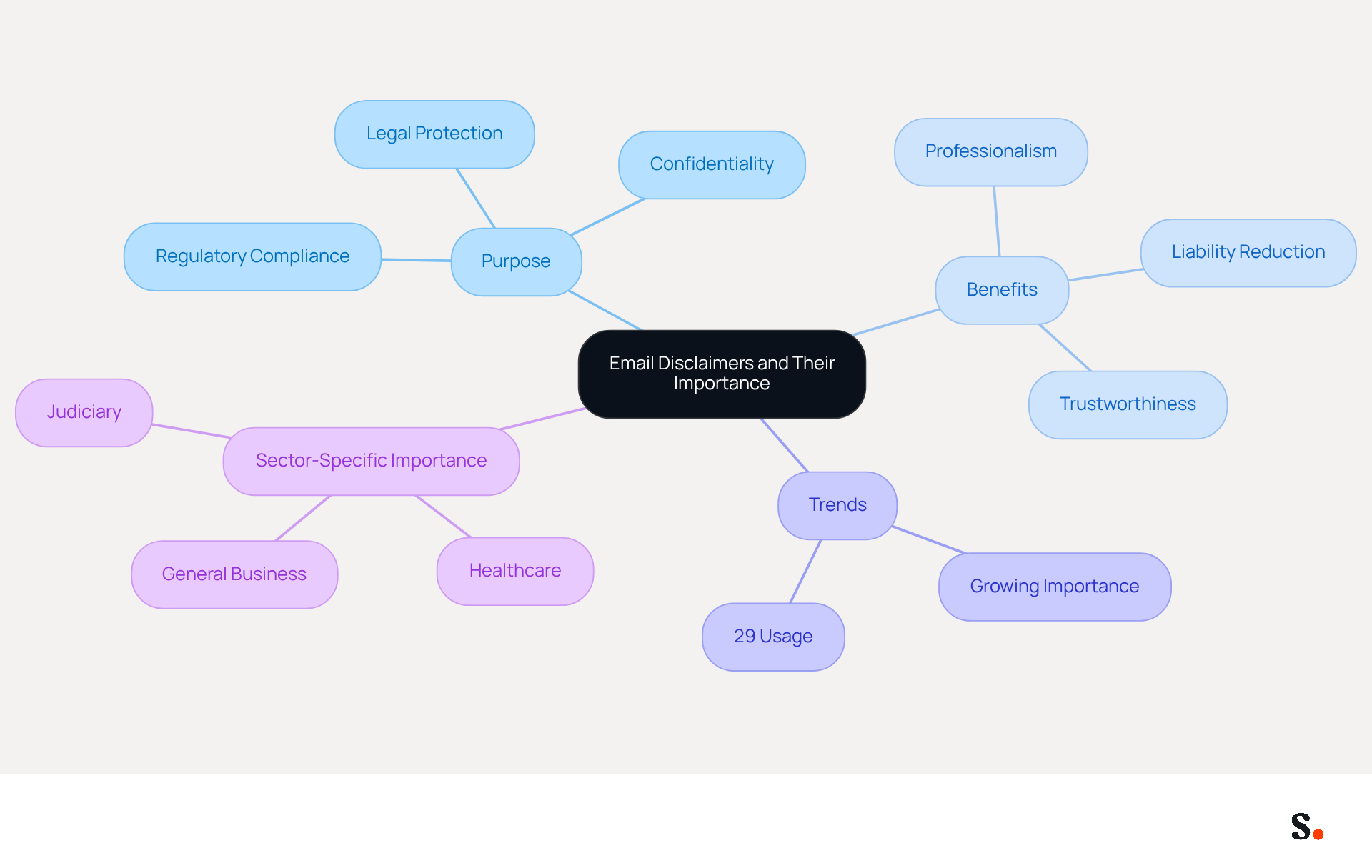
In an era where communication is paramount, the role of notices in email signatures has never been more critical. The disclaimer email footer contains vital statements included at the end of messages, serving multiple purposes such as legal protection, confidentiality, and adherence to regulations. They inform recipients about the nature of the message's content and the intended audience, significantly reducing the risk of misuse or misinterpretation. In 2026, the importance of these notices is clearer than ever, particularly for companies handling sensitive information. Notably, 29% of users now include notices in their signatures, underscoring their growing importance in professional communication.
For businesses, notices play a crucial role in reducing liability, especially in sectors where sensitive data is exchanged. They enhance professionalism and trustworthiness in communications, reinforcing the brand's commitment to transparency and security. With Scribe's SOC 2 Type II certification and GDPR observance, organizations can confidently manage their signatures, ensuring that notices are consistently applied and current. Additionally, Scribe's automated signature management features allow for real-time synchronization with business phone systems, making updates effortless and ensuring compliance with the latest regulations.
Research indicates that organizations, particularly in the judiciary sector, that effectively use notices have seen a reduction in disputes over confidentiality breaches, highlighting their protective significance. Expert insights further emphasize the importance of communication notices, especially for sectors like legal and healthcare, where confidentiality is crucial. The disclaimer email footer not only protects sensitive information but also serves as a clear guideline for recipients on how to manage the content, thereby promoting a culture of compliance and responsibility. As businesses navigate complex regulatory landscapes, integrating robust communication notices, alongside secure access through Scribe's SAML single sign-on, is essential for maintaining trust and credibility in their interactions. Failing to implement these notices not only jeopardizes compliance but also undermines the trust that is essential in professional relationships.
Identify Key Elements of an Effective Disclaimer
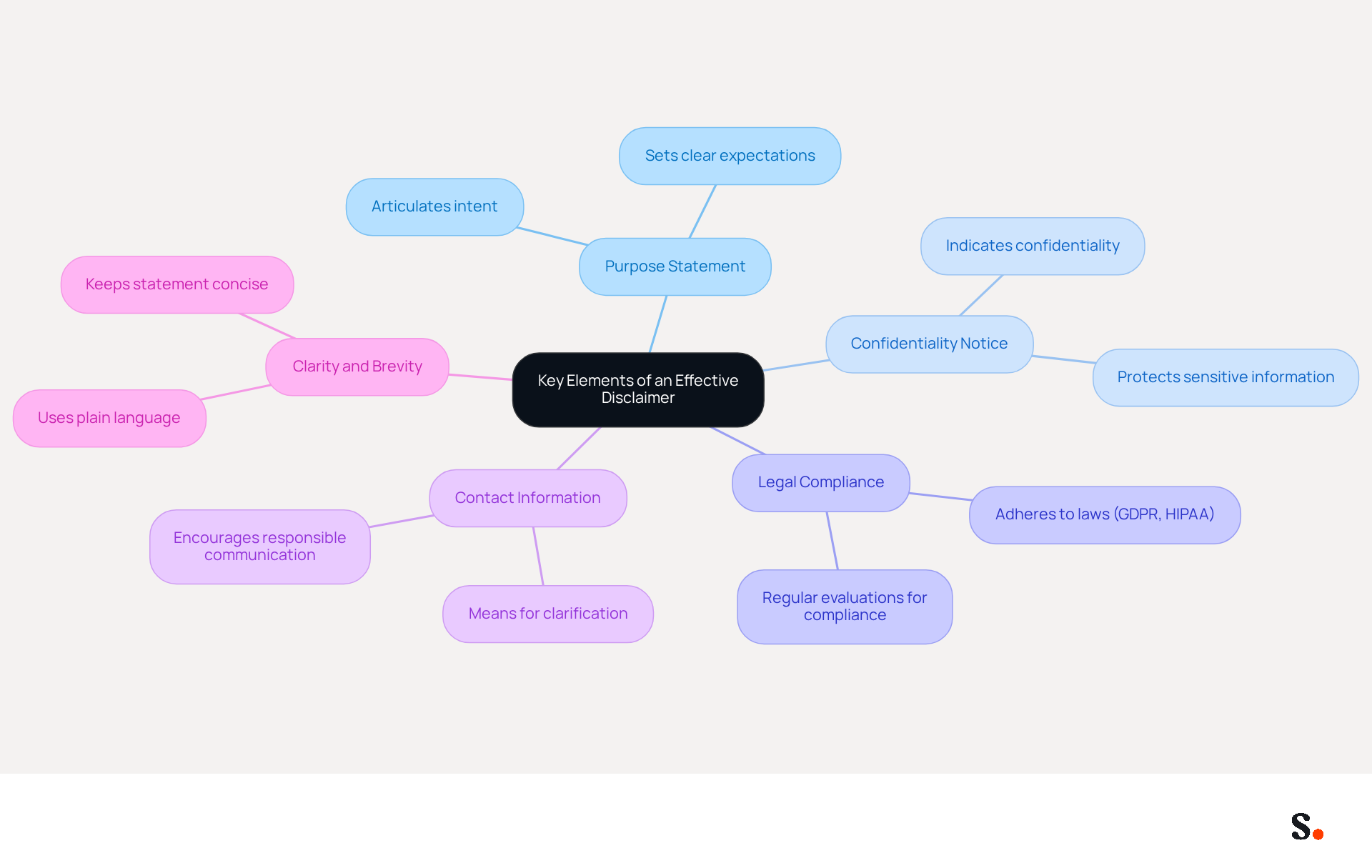
To safeguard sensitive information and mitigate legal risks, an effective email disclaimer must include several key elements:
- Purpose Statement: Clearly articulate the intent of the disclaimer, such as confidentiality or liability limitations. This helps set clear expectations for recipients about the message's content.
- Confidentiality Notice: Indicate that the email's content is confidential and intended solely for the specified recipient. This is crucial for protecting sensitive information and asserting legal rights. Without a proper disclaimer, sensitive information may be exposed, leading to potential legal issues.
- Legal Compliance: Ensure that the notice adheres to relevant laws and regulations, such as GDPR or HIPAA, depending on the industry. Thanks to Scribe's commitment to GDPR compliance and its seamless SAML single sign-on integration, organizations can manage signatures confidently. Regular evaluations of message notices are essential to uphold compliance, as non-compliance can lead to serious legal repercussions, highlighting the necessity of a well-structured disclaimer.
- Contact Information: Provide a means for recipients to reach out for clarification or to report misdirected messages. This fosters transparency and encourages responsible communication.
- Clarity and Brevity: Use plain language to avoid confusion and keep the statement concise, ideally under 150 words. This ensures that recipients can quickly understand their rights and responsibilities regarding the content.
Incorporating these elements not only improves the effectiveness of communication notices but also aids in reducing risks related to the disclaimer email footer. For instance, case studies have shown that including a confidentiality notice can protect businesses from potential litigation if sensitive information is inadvertently shared with unauthorized recipients. Furthermore, clear notices can assist users in managing confidential content securely, thus encouraging responsible communication practices. Research shows that clear notices can significantly reduce legal liability by making the intended use of information in messages clear. With Scribe's automated signature management, organizations can ensure that their notices are consistently applied across all communications, further enhancing adherence and brand integrity.
Tailor Disclaimers for Specific Business Needs
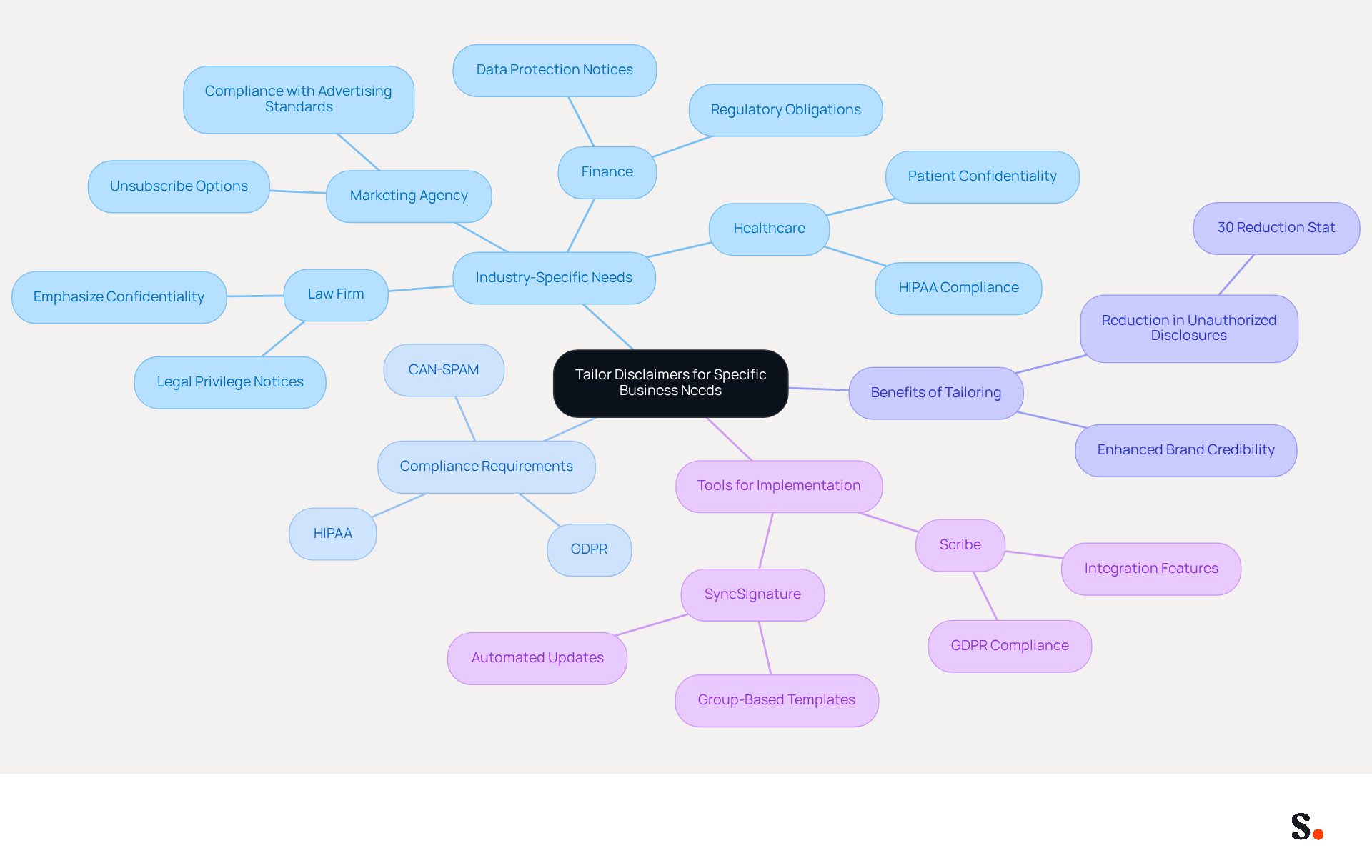
To effectively manage email communications, businesses must customize their notices to align with industry standards and audience expectations. For instance, a law firm may require a detailed statement emphasizing confidentiality and privilege, while a marketing agency might focus on compliance with advertising standards. In regulated sectors like healthcare and finance, notices must address specific legal obligations, such as HIPAA or GDPR compliance, to protect sensitive information and avoid significant penalties.
Regularly updating notices is crucial to stay compliant with changing laws and company policies, which helps maintain their relevance and protective value. Organizations that implement tailored notices can see a significant reduction in unauthorized disclosures, with statistics from recent studies showing a 30% reduction in unauthorized disclosures when notices are tailored. Moreover, expert insights indicate that clear and concise notices not only meet regulatory requirements but also enhance brand credibility and trust among recipients. Hanna De La Garza, a privacy writer, emphasizes that a disclaimer email footer at the bottom of messages helps to establish legal boundaries and set expectations.
By utilizing tools like Scribe, which provides strong integration features including SAML single sign-on and is fully GDPR compliant, businesses can automate the incorporation of customized notices into their communication. Scribe's practices, including its Data Processing Agreement and the use of sub-processors, ensure that organizations maintain compliance with GDPR while allowing marketing teams to manage signatures independently after the initial IT setup. This proactive approach not only mitigates risks but also enhances the organization's credibility in the eyes of clients and stakeholders. By prioritizing tailored notices, organizations not only protect themselves legally but also foster a culture of transparency and trust with their clients.
Implement Disclaimers Using Automated Solutions
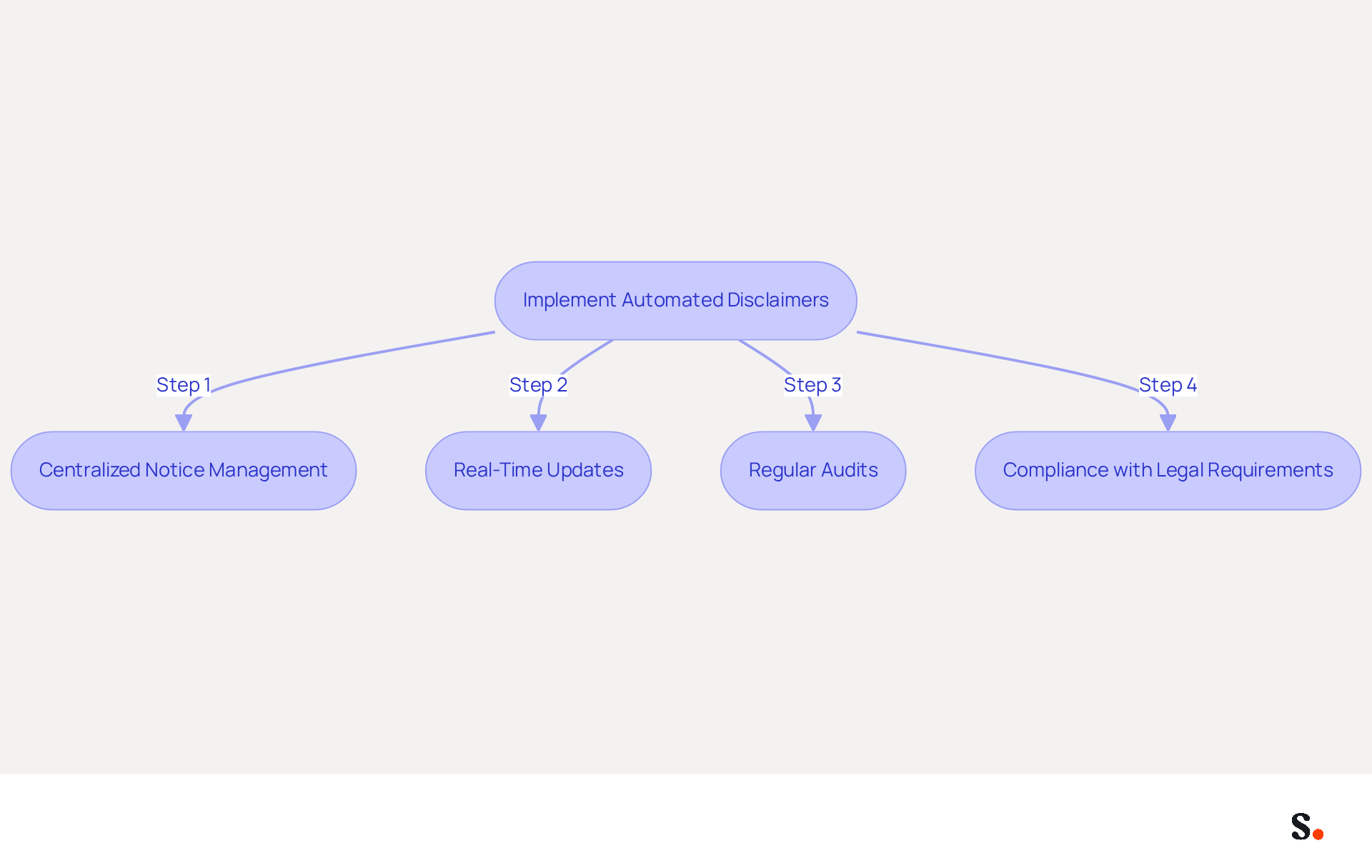
To maintain compliance and consistency in digital communications, businesses must address the challenges of manual notice application. Scribe enables organizations to create and manage notices centrally, ensuring that every outgoing email includes the correct notice without requiring manual input from individual employees. This automation enhances compliance and allows for real-time updates of teammates' signature information from your business phone system, ensuring changes are reflected in Scribe.
Regular audits of automated disclaimers are essential to keep them aligned with evolving legal requirements and company policies. Organizations that implement automated messaging solutions experience a notable reduction in regulatory risks and operational costs, with automation cutting expenses by 30%.
Case studies demonstrate that companies using Scribe have successfully streamlined their communication processes, reclaiming valuable time for strategic initiatives and enhancing brand consistency across all interactions. Furthermore, Scribe's SOC 2 Type II compliance ensures that your data is safe, making it an ideal choice for organizations focused on secure email signature automation.
Choosing Scribe not only mitigates risks but also empowers teams to prioritize strategic growth.
Conclusion
Incorporating effective email disclaimers is vital for businesses seeking to protect sensitive information and ensure legal compliance. These disclaimers act as a safeguard against potential liabilities while enhancing professionalism in communications. Using tools like Scribe, organizations can make sure their email footers are compliant and tailored to their industry needs, reinforcing their commitment to transparency and security.
Key elements of a strong disclaimer include:
- A clear purpose statement
- Confidentiality notice
- Legal compliance
- Contact information
- A focus on clarity and brevity
Tailoring these disclaimers to fit the unique requirements of different sectors can significantly reduce unauthorized disclosures and enhance brand credibility. Moreover, automating the implementation of these disclaimers through solutions like Scribe streamlines the process, ensuring that all communications are consistent and up-to-date, which is essential for maintaining a competitive edge in the market.
In the end, focusing on well-crafted email disclaimers goes beyond compliance; it builds trust and accountability in professional relationships. Organizations that embrace this practice will not only protect themselves legally but also enhance their reputation among clients and stakeholders. By leveraging automated solutions, businesses can concentrate on strategic growth while ensuring that their communications reflect the highest standards of professionalism and security.
Frequently Asked Questions
What are email disclaimers and why are they important?
Email disclaimers are vital statements included at the end of email messages that serve multiple purposes such as legal protection, confidentiality, and adherence to regulations. They inform recipients about the nature of the message's content and the intended audience, reducing the risk of misuse or misinterpretation.
How prevalent are email disclaimers in professional communication?
As of 2026, 29% of users include notices in their email signatures, highlighting their growing importance in professional communication.
What role do email disclaimers play for businesses?
Email disclaimers help reduce liability, especially in sectors that handle sensitive data. They enhance professionalism and trustworthiness in communications, reinforcing a brand's commitment to transparency and security.
How does Scribe assist organizations with email disclaimers?
Scribe provides automated signature management features that allow for real-time synchronization with business phone systems, ensuring that email disclaimers are consistently applied and current, while also complying with the latest regulations.
What impact do email disclaimers have on confidentiality breaches?
Research indicates that organizations, particularly in the judiciary sector, that effectively use email disclaimers have seen a reduction in disputes over confidentiality breaches, highlighting their protective significance.
Why are communication notices particularly important in certain sectors?
Communication notices are crucial in sectors like legal and healthcare, where confidentiality is essential. They protect sensitive information and provide clear guidelines for recipients on managing content, promoting a culture of compliance and responsibility.
What are the consequences of failing to implement email disclaimers?
Failing to implement email disclaimers can jeopardize compliance and undermine trust in professional relationships, which is essential for maintaining credibility in business interactions.
List of Sources
- Define Email Disclaimers and Their Importance
- Email signature statistics and trends in 2024 (https://wisestamp.com/blog/email-signature-statistics)
- Email Signature Statistics: A Closer Look at Email Signatures in 2026 (https://mysignature.io/blog/email-signature-statistics)
- Email Disclaimers: Recipient Beware (https://csklegal.com/newsroom/publications/email-disclaimers-recipient-beware)
- The Importance of Email Disclaimers for Businesses - Tyler Law LLP (https://tylerlawllp.com/blog-posts/the-importance-of-email-disclaimers-for-businesses)
- Identify Key Elements of an Effective Disclaimer
- The Importance of Email Disclaimers for Businesses - Tyler Law LLP (https://tylerlawllp.com/blog-posts/the-importance-of-email-disclaimers-for-businesses)
- Email signature statistics: Why every business should optimize their email signatures — Stripo.email (https://stripo.email/blog/email-signature-statistics-why-every-business-should-optimize-their-email-signatures)
- Email disclaimer: Definition, examples, and best practices | Zoho Zeptomail (https://zoho.com/zeptomail/articles/email-disclaimer.html)
- 100 Compelling Email Statistics for 2026 | PGM Solutions (https://porchgroupmedia.com/blog/100-compelling-email-statistics-to-inform-your-strategy-in-2023)
- Email Disclaimer Guide With 12 Templates & Examples - Termly (https://termly.io/resources/articles/email-disclaimers)
- Tailor Disclaimers for Specific Business Needs
- Master Email Disclaimers: Essential Practices for Marketing Success (https://scribe-mail.com/en-US/blog/master-email-disclaimers-essential-practices-for-marketing-success)
- Email Disclaimers: Tips for Business Communication | Mailchimp (https://mailchimp.com/resources/email-disclaimer)
- The Importance of Email Disclaimers for Businesses - Tyler Law LLP (https://tylerlawllp.com/blog-posts/the-importance-of-email-disclaimers-for-businesses)
- Email Disclaimer Guide With 12 Templates & Examples - Termly (https://termly.io/resources/articles/email-disclaimers)
- Email Disclaimer Examples: 25+ Templates by Industry, Region, and Use Case (https://syncsignature.com/blog/email-disclaimer-examples)
- Implement Disclaimers Using Automated Solutions
- Automating Email Signatures: How IT Teams Streamline Processes & Reduce Risk (https://exclaimer.com/blog/streamlining-it-processes-automated-email-signatures)
- 25 Email Sequence Statistics That Prove Automation Drives 320% More Revenue in 2026 | Landbase (https://landbase.com/blog/email-sequence-statistics)
- Checklist for Email Privacy Compliance 2026 (https://mailforge.ai/blog/checklist-for-email-privacy-compliance)
- Email Marketing Statistics | Ultimate List | CodeCrew (https://codecrew.us/blog/email-marketing-stats-you-need-to-know-the-ultimate-list)
- 2026 Email Signature Trends: Centralized Control & Automation | SIGNandGO posted on the topic | LinkedIn (https://linkedin.com/posts/signngo_email-signature-trends-to-watch-in-2026-activity-7401523471786217473-zAVL)
Get started with Scribe
Keep every signature compliant
Free 14-day trial — no credit card.